(7% discount is applied at checkout)
Cart is empty
Your go-to destination for cutting-edge server products
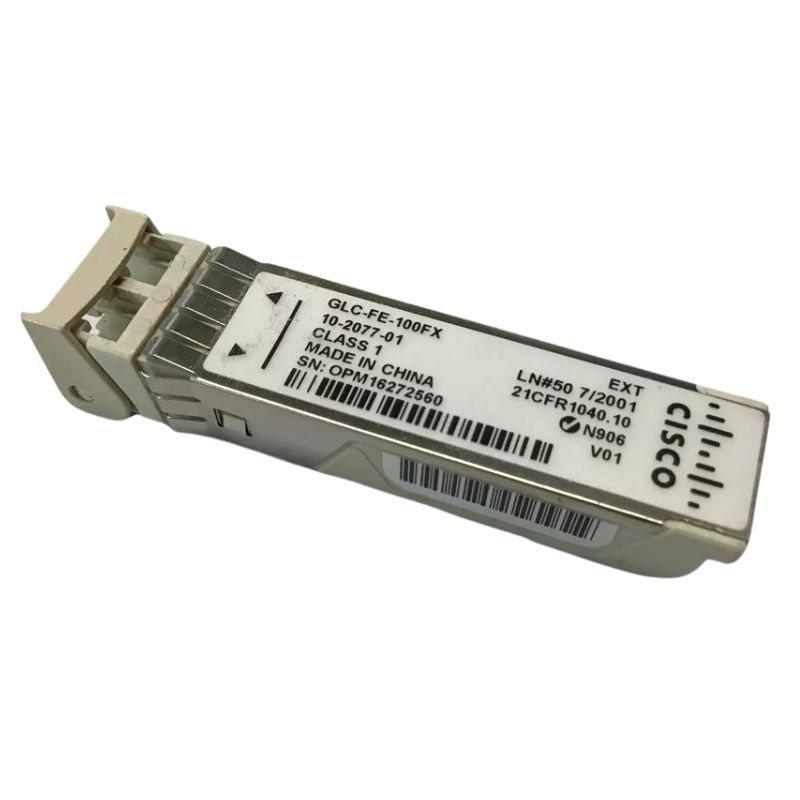


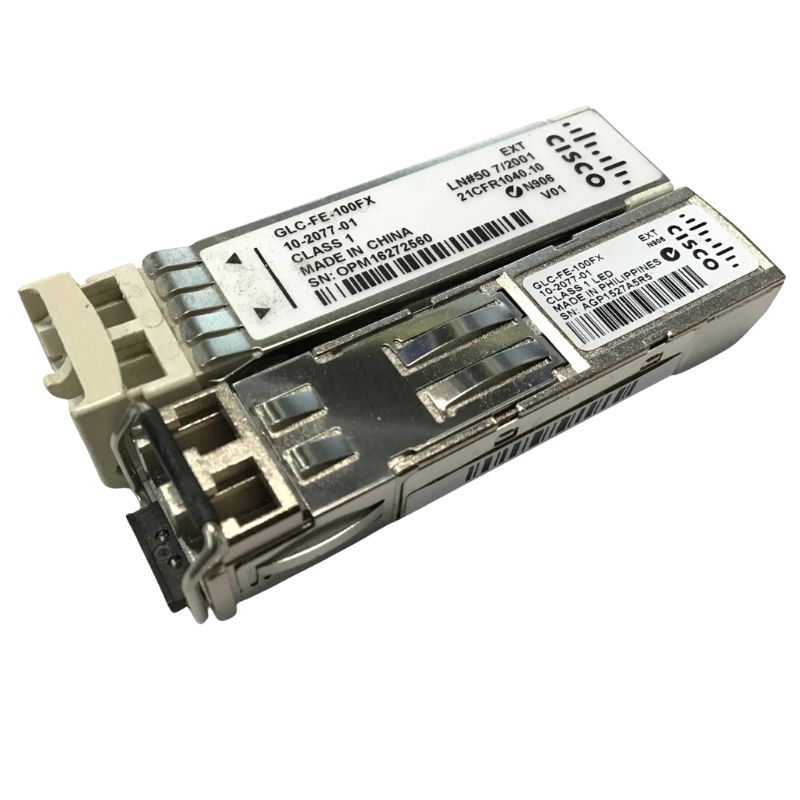
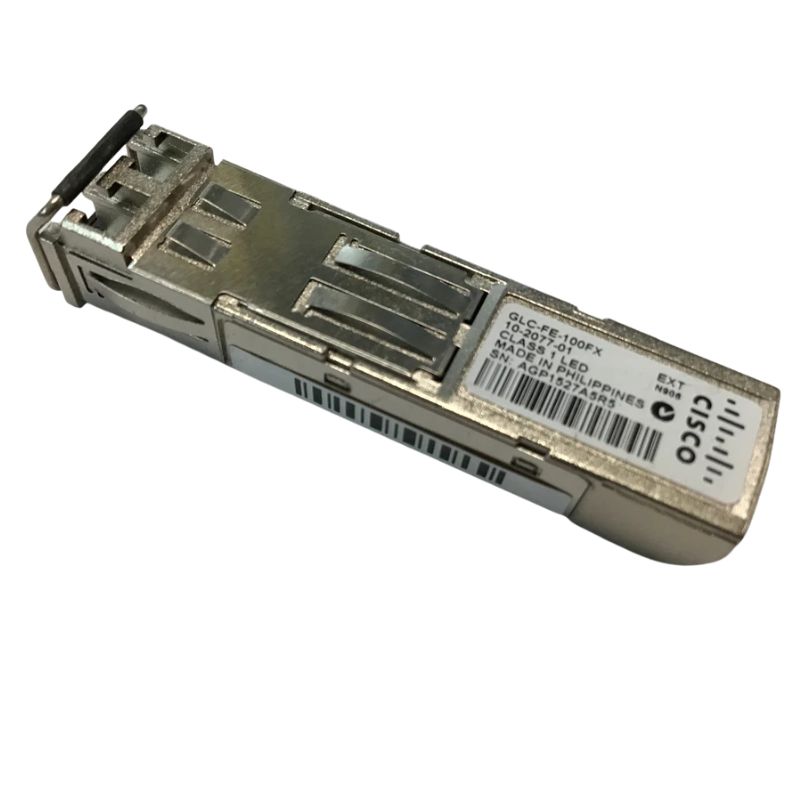
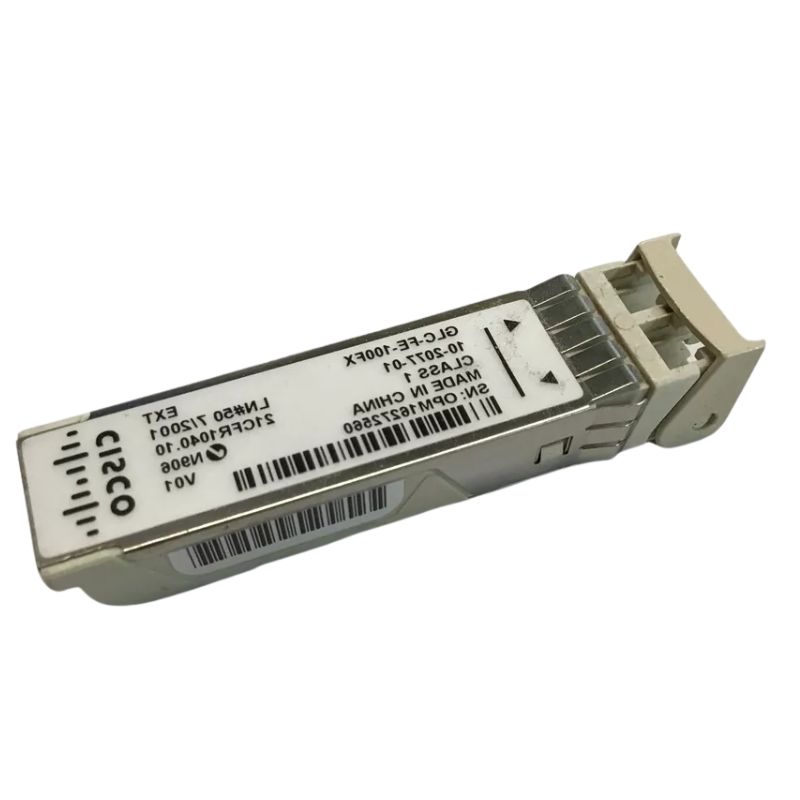
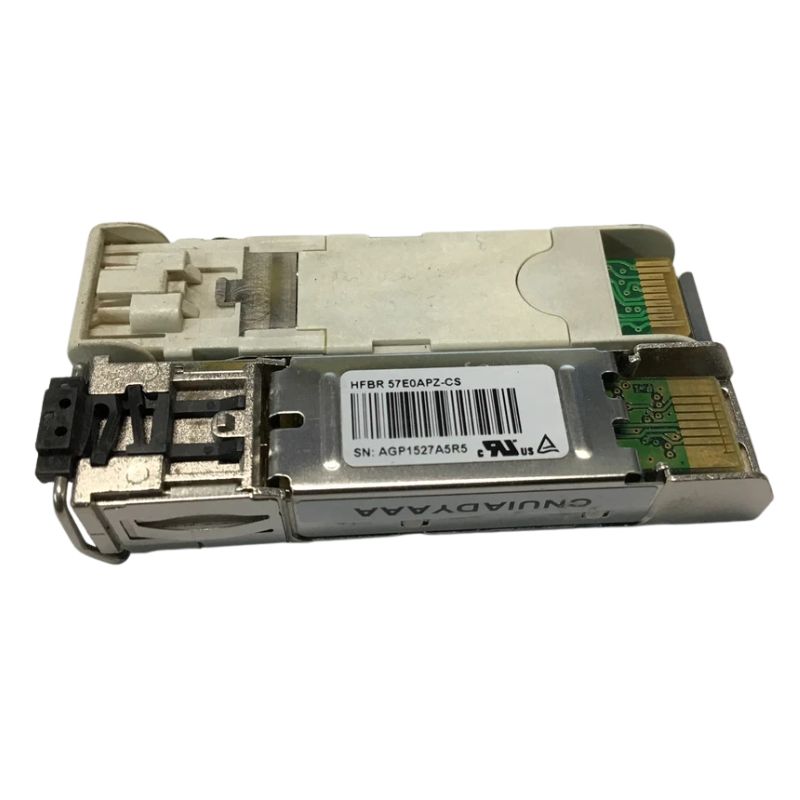
Cisco GLC-FE-100FX= 100MBPS Multi Mode Transceiver Module. Excellent Refurbished with 1 year replacement warranty
| SKU/MPN | Warranty | Price | Condition | You save |
|---|---|---|---|---|
| GLC-FE-100FX= | 1 Year Warranty | $115.00 | Factory-Sealed New in Original Box (FSB) | You save: $40.25 (26%) |
| GLC-FE-100FX= | 1 Year Warranty | $52.00 | Excellent Refurbished | You save: $18.20 (26%) |
The Cisco GLC-FE-100FX= is a compact 100Mbps Fast Ethernet transceiver module built for dependable fiber uplinks in enterprise, industrial, and campus networking environments. Designed as a hot-swappable plug-in module, it delivers 100BASE-FX optical connectivity over multimode fiber and uses a 1310 nm wavelength to support stable short-to-medium distance network links. This Cisco SFP module is a practical choice for organizations that still rely on Fast Ethernet fiber infrastructure and need a genuine Cisco solution for consistent performance, smooth deployment, and long-term network reliability.
The Cisco GLC-FE-100FX= 100MBPS Multi Mode Transceiver Module is built for Fast Ethernet optical networking environments that require dependable 100BASE-FX communication over multimode fiber infrastructure. In enterprise networks, campus deployments, industrial communication layers, and legacy fiber environments, this Cisco transceiver module serves as a practical option for extending Ethernet traffic over fiber while preserving signal integrity, link stability, and device compatibility. As a compact small form-factor pluggable transceiver, it is designed to fit into compatible Cisco networking equipment and enable optical uplinks or inter-device fiber connections where copper cabling is either impractical or insufficient.
In many organizations, not every segment of the network requires Gigabit or higher optical speeds. There are still large numbers of operational environments where Fast Ethernet remains useful for access control systems, industrial automation networks, monitoring equipment, legacy switches, remote cabinets, security devices, utility infrastructure, and specialized communication systems. The Cisco GLC-FE-100FX= transceiver addresses this type of deployment by offering 100 Mbps optical connectivity through a multimode fiber link, allowing older or purpose-built networks to maintain reliable communication without forcing a full infrastructure redesign.
This category is especially important for buyers who need original Cisco Fast Ethernet fiber modules for switch expansion, port replacement, fiber uplink deployment, or support of installed Cisco hardware platforms that continue to operate within 100BASE-FX environments. The module is often chosen for its compatibility with Cisco networking ecosystems, its support for multimode fiber runs, and its ability to provide stable optical transport for operational traffic, management traffic, industrial data exchange, or low-bandwidth enterprise services that still depend on Fast Ethernet architecture.
A 100BASE-FX SFP module is intended to convert electrical Ethernet signaling inside a switch or router into optical signaling that can travel across fiber cabling. The Cisco GLC-FE-100FX= module performs this role within Fast Ethernet deployments, supporting 100 Mbps communication over multimode fiber. This makes it valuable in environments where the physical distance between network devices is too great for copper Fast Ethernet cabling, or where electromagnetic interference, grounding concerns, or physical pathway requirements make fiber a better transport medium.
Within Cisco infrastructure, this type of module can be used to connect switches in separate rooms, connect control systems in industrial spaces, extend network service to remote equipment cabinets, or create optical uplinks from edge access devices back to a distribution layer. Because it is designed as a pluggable optical module, it supports flexible deployment models where network administrators can populate only the ports they need, replace failed optics without changing the host device, and choose different optical types according to cabling media and distance requirements.
The role of the Cisco GLC-FE-100FX= module is not limited to simple link extension. It also supports network design goals such as electrical isolation, better resilience in noisy environments, more secure cable pathways, and stable data transmission across buildings or large industrial floors. In settings where operational systems do not need Gigabit bandwidth but do require predictable and durable fiber communication, a Fast Ethernet multimode SFP remains highly relevant.
The Cisco GLC-FE-100FX= module belongs to the 100BASE-FX optical Ethernet family, a Fast Ethernet standard that uses fiber optic media rather than twisted-pair copper cabling. This standard is often used in environments where the advantages of fiber matter more than raw bandwidth growth. Fiber allows longer cable runs than standard Fast Ethernet copper links, provides immunity to electromagnetic interference, and helps preserve signal quality across installations where copper might be vulnerable to electrical noise, lightning exposure, or industrial equipment interference.
For network planners, the 100BASE-FX standard remains significant because it bridges the gap between legacy Ethernet environments and more modern structured fiber systems. Instead of abandoning installed multimode fiber or replacing older access devices, organizations can continue using supported Fast Ethernet optics where the application profile does not justify migration to higher optical speeds. The Cisco GLC-FE-100FX= module fits squarely into this use case, offering a Cisco-branded transceiver solution for equipment that supports 100 Mbps fiber uplinks through an SFP slot.
This transceiver category is associated with multimode fiber operation. Multimode fiber is often deployed inside buildings, across campuses, between wiring closets, and in industrial locations where the link distance fits within the supported optical budget of the module. Multimode fiber has historically been popular because it can be easier to deploy in short-to-medium distance enterprise environments, especially where installed fiber plant already exists. For many organizations, the existence of older multimode fiber cabling is one of the main reasons Fast Ethernet fiber modules like the Cisco GLC-FE-100FX= continue to be purchased.
The Cisco GLC-FE-100FX family is commonly associated with link distances up to approximately 2 kilometers over multimode fiber in supported conditions, making it suitable for many in-building and inter-building connections. That reach is useful for campus-style environments, manufacturing areas, utility compounds, educational facilities, transportation infrastructure, and branch locations where devices must be linked over fiber without requiring higher-speed optics. In practical terms, the available distance gives administrators flexibility when placing network devices in separate communications rooms, detached structures, security perimeters, or remote operational zones.
Link performance in real deployments still depends on the quality of the fiber plant, connector cleanliness, splice loss, patching architecture, and the host equipment’s compatibility. For that reason, the Cisco GLC-FE-100FX= module is typically selected not only by speed rating but also by optical design, fiber type, and the requirements of the attached Cisco platform.
The Cisco GLC-FE-100FX= module uses an LC optical connector interface, a common connector type in enterprise and telecom fiber deployments. LC connectors are valued for their compact size and their suitability for high-density patching panels, switch uplink trays, and space-constrained communications racks. Because many modern patch panels, fiber shelves, and switch accessories already support LC connectivity, the module integrates naturally into structured cabling environments where administrators need clean cable management and repeatable optical patching practices.
Compact SFP form factor design is another reason this module remains useful. The pluggable form factor allows a single switch model to support different media types depending on the installed transceiver. A Cisco switch port may remain empty until needed, then be populated with a compatible module for a specific fiber deployment. This supports staged upgrades, spare module management, simplified inventory planning, and field replacement without replacing the switch itself. In networks where uptime matters, the ability to replace a transceiver rather than an entire line card or chassis component can significantly reduce service disruption and maintenance cost.
The Cisco GLC-FE-100FX= 100MBPS Multi Mode Transceiver Module is often associated with organizations that maintain mixed-speed or mixed-generation network environments. Many campuses, hospitals, warehouses, manufacturing facilities, schools, transportation systems, and utility operators still run portions of their networks on Fast Ethernet, particularly in segments where endpoint devices, controllers, sensors, and field equipment do not require higher bandwidth. In these settings, the module serves as a bridge between Cisco switching hardware and multimode fiber cabling already installed in the environment.
One of the key reasons for continuing to deploy a 100 Mbps multimode transceiver is that network design is not always driven by speed alone. Reliability, compatibility, distance, environmental conditions, and application behavior can be more important than bandwidth. A control system that transmits status signals, event messages, device telemetry, and supervisory traffic may operate perfectly well at Fast Ethernet speeds. The same is true for security controllers, badge systems, utility metering gateways, alarm concentrators, industrial HMIs, and other systems with modest traffic requirements. When these systems need optical connectivity over multimode fiber, the Cisco GLC-FE-100FX= category becomes relevant.
Within a campus building or office complex, the module can be used to establish fiber uplinks between access switches and upstream distribution equipment. Some organizations preserve older access layers or special-purpose Fast Ethernet devices because they continue to perform their required tasks effectively. Instead of replacing an entire section of the network, administrators may use the Cisco GLC-FE-100FX= module to maintain a dependable optical uplink from a Fast Ethernet switch to another switch, aggregation point, or equipment cabinet.
In wiring closets, this kind of transceiver is especially useful when copper distance limitations would otherwise create design problems. Fiber uplinks avoid many of the grounding and electrical interference issues that can affect copper cabling, and they allow equipment to be distributed more flexibly throughout a building. In large facilities such as hospitals, universities, factories, and logistics centers, communications closets may be separated by long corridors, vertical risers, or multiple building sections. A multimode Fast Ethernet optical module can provide the necessary link without introducing complex media conversion hardware.
Legacy access networks often include older switches, specialized devices, or building systems that still rely on 100 Mbps Ethernet. These systems may not justify replacement if they remain operational, certified, and integrated with critical applications. In that scenario, the Cisco GLC-FE-100FX= module allows the network team to continue supporting those systems while using Cisco hardware that accepts pluggable optical modules. This is especially important in sectors where equipment replacement triggers expensive revalidation, service interruption, or compliance review.
Examples include building automation, access control, industrial control, transportation signaling, public safety systems, and environmental monitoring. In each case, the network connection may carry low-volume but highly important traffic. The requirement is not necessarily high throughput; it is dependable fiber communication, predictable compatibility, and stable operation over time. A Cisco Fast Ethernet multimode transceiver is well suited to that type of requirement.
The Cisco GLC-FE-100FX= category remains valuable because it delivers several operational benefits that go beyond the raw specification of 100 Mbps optical connectivity. These benefits relate to modularity, maintenance simplicity, cabling flexibility, installed-base support, and Cisco ecosystem alignment. For organizations that manage a large installed network, such characteristics can be more meaningful than headline bandwidth numbers.
One of the major strengths of SFP transceivers is their hot-swappable design in supported Cisco equipment. This allows a technician or network engineer to install or replace the module without powering down the switch or router chassis, reducing service interruption and simplifying maintenance windows. In a production network, this matters because even a small optical module can become a single point of failure for a remote cabinet, security network, or inter-closet uplink. Fast replacement minimizes downtime and makes spare inventory more useful.
Hot-swappable design also supports staged expansion. A business may purchase a Cisco switch with open SFP ports, then populate those ports with Cisco GLC-FE-100FX= modules only when a new fiber link is required. This is useful in phased building projects, industrial site expansions, branch rollouts, or infrastructure refresh cycles where not all links are activated on day one. Instead of paying for a fully populated optical configuration upfront, the organization can scale deployment according to project timing and actual port demand.
Many facilities contain existing multimode fiber runs that were installed years ago for Fast Ethernet or early Gigabit connectivity. Replacing that fiber can be expensive, disruptive, and unnecessary if the attached systems still meet business needs. The Cisco GLC-FE-100FX= module allows these multimode pathways to remain productive. Rather than discarding installed fiber or deploying media converters, administrators can use a supported Cisco optical transceiver to keep the link in service through a native SFP interface.
This preservation strategy can be financially attractive for schools, public institutions, factories, hospitals, and branch organizations that must extend the life of existing cabling investments. It can also be operationally attractive where fiber pathways are difficult to replace because they pass through secure walls, underground conduits, elevator shafts, clean rooms, or industrial zones with limited maintenance access.
Fiber networking is often selected not only for distance but also for its resistance to electromagnetic interference and its electrical isolation properties. In industrial facilities, transportation infrastructure, outdoor enclosures, and utility environments, electrical noise can affect copper links or create reliability concerns. Multimode fiber helps isolate network equipment from electrical disturbances, and a module like the Cisco GLC-FE-100FX= enables that fiber transport at the Fast Ethernet layer.
Electrical isolation is also useful between buildings, across different grounding zones, and in facilities with heavy motors, power equipment, or variable-frequency drives. When a network designer wants the simplicity of Fast Ethernet with the physical advantages of fiber, the Cisco GLC-FE-100FX= becomes a practical category choice.
Compatibility is one of the most important purchasing considerations for any optical transceiver. The Cisco GLC-FE-100FX= is intended for Cisco environments that support Fast Ethernet optical SFP modules, and it is typically selected by buyers who need predictable operation with Cisco switching or routing hardware. In enterprise procurement, original Cisco optics are often preferred when a project requires vendor-aligned compatibility, validated support pathways, and consistent hardware identification inside Cisco operating environments.
Cisco transceivers are commonly chosen for their integration with Cisco platforms, which may include recognition features, compatibility controls, platform qualification, and operational consistency across Cisco software and hardware families. This matters in managed environments where administrators want to reduce uncertainty during deployment, minimize troubleshooting variables, and preserve support alignment across the network stack.
An important point about the Cisco GLC-FE-100FX= category is that it is a Fast Ethernet optical transceiver, not a generic Gigabit SFP. Even though the physical form factor resembles many other SFP modules, the operational role is specific to 100 Mbps optical networking. That distinction matters because not every SFP slot or every network device will support a 100BASE-FX module. Buyers should always match the transceiver to the exact Cisco platform, software release, and port capabilities in use.
In practical deployment planning, this means the module is often found in Cisco equipment designed to work with Fast Ethernet optical modules or with dual-rate interfaces that explicitly support this operating mode. Network teams maintaining older Catalyst platforms, industrial devices, or specialized Cisco interfaces may use this transceiver to maintain a supported fiber link without forcing a speed conversion or media workaround.
Compatibility also extends to the physical fiber path. The Cisco GLC-FE-100FX= is associated with multimode fiber and LC optical termination, so it should be deployed in a link where both ends of the connection are designed for the same signaling family and connector arrangement. In mixed environments, planners need to verify not only the switch compatibility but also the remote optical module, patch panel type, connector polish, cable condition, and total optical path quality.
When this validation is done properly, the module can support a stable fiber link for long periods with minimal intervention. This is one of the reasons original transceiver categories remain active in the market even after many years. A correctly matched optical link tends to be dependable, and many organizations prefer to retain known-good designs rather than introduce unnecessary changes into stable operational systems.
Deploying the Cisco GLC-FE-100FX= successfully requires attention to both host platform compatibility and physical cabling design. While the module itself is straightforward, a stable optical link depends on the entire path from one device to the other. For this reason, experienced network teams usually validate the switch model, software support, port type, fiber type, connector condition, patching path, and remote transceiver compatibility before putting a new optical link into service.
The first planning step is to confirm that the Cisco switch or router supports the GLC-FE-100FX= transceiver on the intended port. Since this is a Fast Ethernet optical module rather than a standard Gigabit-only optic, the host device must explicitly support the module’s operating mode. In older Cisco environments or specific interface modules, this support may be well established. In mixed or refreshed environments, however, it is important to verify platform documentation or compatibility guidance before purchasing.
Administrators also consider whether the module will be used for an uplink, a cross-building connection, a field cabinet link, or a dedicated application segment. The role of the link influences patching strategy, spare planning, and the type of monitoring that will be applied after deployment.
Once platform support is confirmed, the next consideration is the optical path itself. Because the Cisco GLC-FE-100FX= is intended for multimode fiber operation, the installed cabling should match the module’s design. Patch cords, trunk fiber, splice points, and connector adapters all contribute to the final optical budget and link quality. In many older buildings, documentation may be incomplete, so teams often inspect patch panels, verify labeling, and test continuity before activating a new link.
Clean connectors are especially important. Fiber contamination is a frequent cause of poor optical performance, intermittent behavior, or failure to establish a stable link. Even a high-quality Cisco transceiver can underperform if inserted into a dirty or damaged optical path. For that reason, disciplined cleaning and inspection practices remain part of any serious fiber deployment, whether the network is running at 100 Mbps or much higher rates.
The Cisco GLC-FE-100FX= 100MBPS Multi Mode Transceiver Module remains a relevant category because real-world networks are rarely uniform. Many organizations operate a combination of modern backbone equipment, mid-life access switching, and long-lived operational systems. Within that mixed-speed reality, a Cisco Fast Ethernet multimode transceiver fills a very specific and still useful role. It allows Cisco devices to communicate over fiber in environments where 100BASE-FX remains the correct fit for the application, the installed cabling, and the equipment lifecycle.
Its value comes from several converging strengths: it supports multimode fiber connectivity for Fast Ethernet ports, it integrates with Cisco hardware ecosystems, it helps preserve installed fiber infrastructure, it offers the maintenance convenience of an SFP form factor, and it addresses practical use cases in enterprise, campus, industrial, and building-system networks. Rather than viewing it as merely an older optical module, it is more accurate to see it as a specialized infrastructure component for organizations that need dependable optical Fast Ethernet within a Cisco environment.
For category pages, that makes the Cisco GLC-FE-100FX= an important product family reference for buyers searching for Cisco 100BASE-FX SFP modules, Cisco 100Mbps multimode transceivers, Cisco Fast Ethernet fiber optics, Cisco LC multimode SFP modules, Cisco optical modules for legacy switch infrastructure, and Cisco-compatible fiber uplinks for enterprise and industrial networks. The category is closely associated with practical network continuity, multimode fiber transport, structured cabling reuse, and support for long-lived Cisco deployments where reliable 100 Mbps optical connectivity remains essential to day-to-day operations.


 Contact Us
 Information
 Catalog
 Solid State Drives (SSD)
 Network Switches
 Hard Disk Drives
 HBA & Controllers
 PC & Servers
 PC & Server Memory
 CPU & Processors
 Network Routers
 Power Supplies
 Tape Drives & Libraries
 Network Devices
 Computer & Network Cables