(7% discount is applied at checkout)
Cart is empty
Your go-to destination for cutting-edge server products
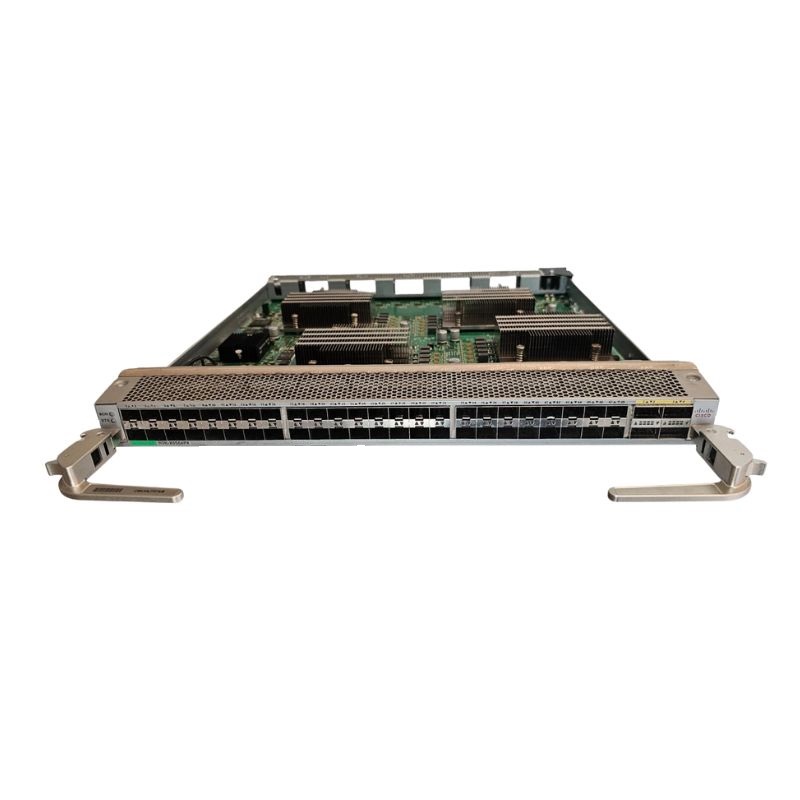


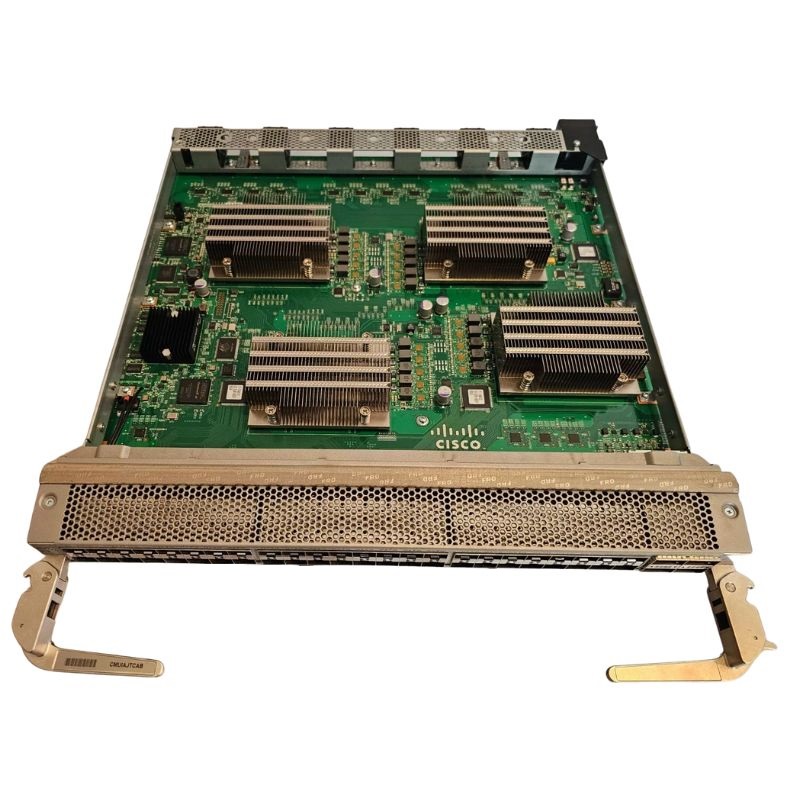
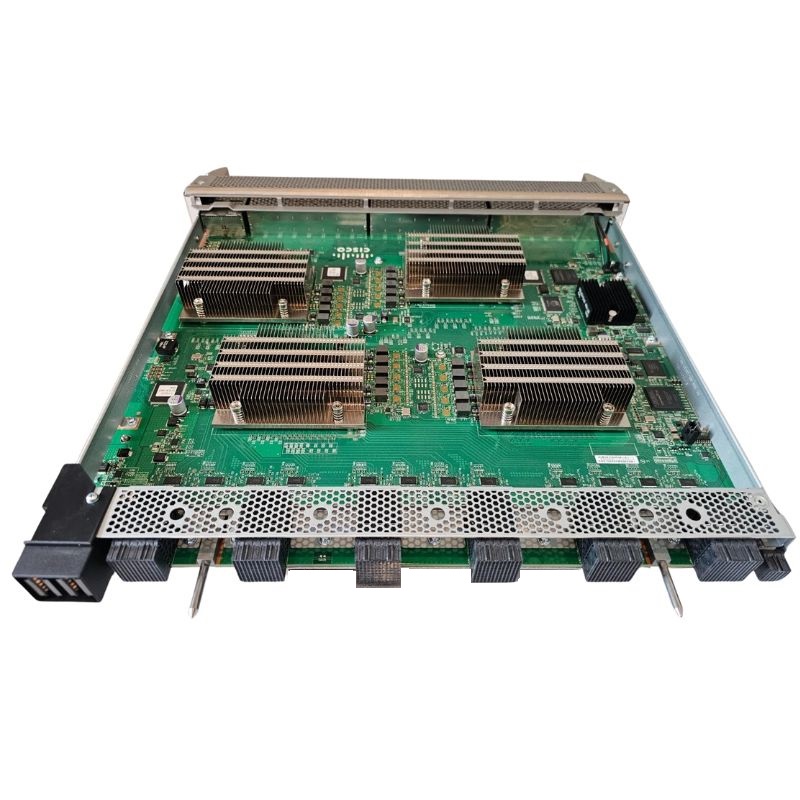
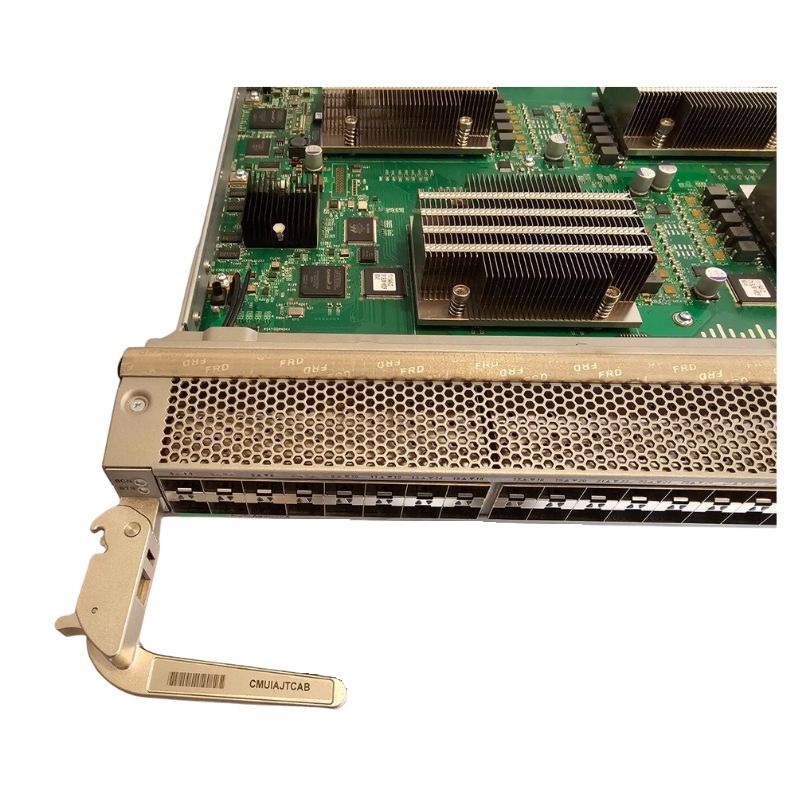
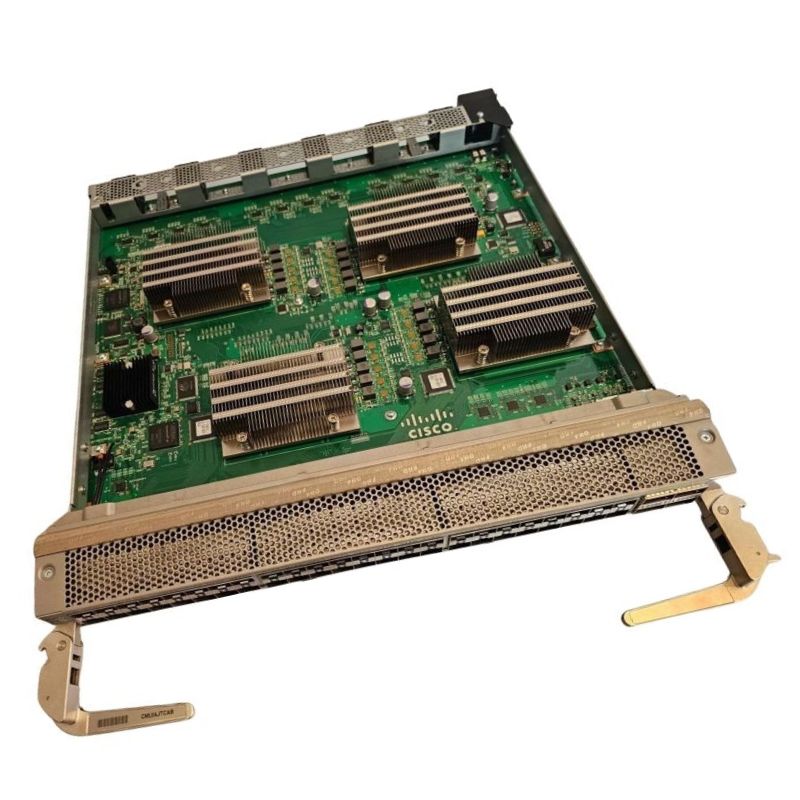
Cisco N9K-X9464PX-48 Nexus 9500 Line Card 48 Ports Expansion Module. Excellent Refurbished with 1 year replacement warranty
The Cisco N9K-X9464PX-48 Nexus 9500 Line Card Expansion Module is a high-performance, enterprise-grade switching component designed for large-scale data center environments. Manufactured by this advanced line card is engineered to extend the capabilities of the Cisco Nexus 9500 Series chassis, delivering scalable port density, enhanced switching performance, and flexible network architecture support.
Built for modern cloud computing, virtualization, and hyperscale data centers, this expansion module plays a critical role in optimizing network traffic distribution while ensuring high availability, low latency, and superior throughput performance. Its modular design allows organizations to expand infrastructure efficiently without replacing entire switching systems.
The Cisco N9K-X9464PX-48 Nexus 9500 Line Card 48 Ports Expansion Module represents a high-density modular switching component designed for large-scale enterprise and cloud data center environments. Built for integration within the Cisco Nexus 9500 Series chassis, this line card extends switching capacity, port density, and fabric scalability while maintaining consistent performance across mission-critical workloads. As part of the broader ecosystem developed by this module is engineered to support modern data center architectures that require high throughput, low latency, and flexible configuration options.
Within next-generation data centers, modular switching platforms like the Nexus 9500 series enable organizations to evolve their infrastructure without complete hardware replacement. The 48-port expansion capability of this line card allows administrators to scale network capacity dynamically while preserving investment in existing chassis systems. Its role is central to spine-leaf architectures, aggregation layers, and high-performance cloud networking deployments.
The Cisco Nexus 9500 platform is designed for environments where predictable performance, resiliency, and scalability are critical. It supports a fully modular architecture in which supervisors, fabric modules, and line cards operate together to create a unified high-speed switching system. The N9K-X9464PX-48 line card enhances this architecture by adding dense port availability for aggregation and core switching layers.
In modern enterprise deployments, this platform is often used to support virtualization, containerized workloads, and software-defined networking (SDN). The line card contributes to seamless traffic distribution across distributed systems while maintaining minimal latency and high bandwidth utilization.
The integration of this expansion module into a data center fabric enables highly efficient east-west traffic handling. As workloads move away from traditional client-server models toward distributed microservices architectures, the demand for inter-server communication increases significantly. The Nexus 9500 series, supported by high-density line cards, is designed to handle these workloads efficiently.
The modular nature of the system ensures that administrators can adapt network capacity according to evolving traffic patterns without redesigning the entire switching infrastructure. This adaptability makes it a core component in hyperscale and enterprise cloud environments.
The Cisco N9K-X9464PX-48 line card is engineered to deliver a high port density architecture suitable for demanding data center workloads. Its 48-port configuration allows for significant scaling within a single chassis slot, optimizing both physical rack space and power consumption efficiency. This density is especially valuable in environments where rack space optimization is a priority.
High-density line cards reduce the need for multiple standalone switches, thereby minimizing interconnect complexity and reducing latency introduced by multiple hops. This architectural efficiency plays a significant role in improving overall network performance.
Scalability is a fundamental requirement in modern networking environments. The Nexus 9500 platform allows incremental expansion by adding line cards like the N9K-X9464PX-48. This ensures that organizations can scale bandwidth and port capacity as workloads grow, rather than over-provisioning infrastructure at initial deployment.
The modular chassis design ensures backward compatibility and forward scalability, enabling businesses to extend the lifecycle of their network infrastructure investments.
Efficient utilization of chassis resources is achieved through intelligent allocation of fabric bandwidth and line card processing capabilities. Each installed module contributes to a unified switching fabric that distributes traffic evenly across available resources, ensuring balanced performance across all connected endpoints.
Performance is a defining characteristic of the Nexus 9500 line card architecture. The Cisco N9K-X9464PX-48 is designed to support high-throughput data transfer requirements across enterprise-grade applications, including virtualization clusters, storage networks, and cloud service platforms.
In environments where latency-sensitive applications such as financial trading systems, real-time analytics, and distributed databases operate, consistent switching performance is essential. The architecture of this line card supports deterministic latency behavior, enabling predictable network performance under heavy load conditions.
The switching fabric within the Nexus 9500 series is engineered for minimal packet processing delay. By integrating high-performance ASICs and optimized forwarding architectures, the line card ensures that packets are routed efficiently between ingress and egress ports without unnecessary buffering delays.
This low latency design is particularly beneficial for east-west traffic flows in cloud data centers, where rapid communication between virtual machines and containers is essential for application performance.
Traffic distribution across multiple network paths is handled through advanced load balancing mechanisms embedded within the Nexus switching architecture. The line card contributes to maintaining balanced utilization across available uplinks and fabric modules, preventing congestion and ensuring consistent throughput.
The Cisco Nexus 9500 ecosystem, supported by expansion modules such as the N9K-X9464PX-48, is widely used in cloud computing environments. These environments demand flexible, scalable, and programmable networking infrastructure capable of supporting dynamic workloads.
Virtualization technologies, including hypervisor-based systems and container orchestration platforms, rely heavily on high-performance switching infrastructure to maintain communication between compute nodes. This line card provides the necessary port density and bandwidth support for such environments.
Software-defined networking allows centralized control over distributed network resources. The Nexus 9500 platform integrates seamlessly with SDN controllers, enabling automated provisioning, policy enforcement, and dynamic traffic management.
The line card plays a key role in executing forwarding decisions made by SDN controllers, ensuring that policies are consistently enforced across the data center fabric.
Modern data center operations rely heavily on automation to reduce operational complexity. The Cisco Nexus architecture supports programmable interfaces that allow network administrators to automate configuration, monitoring, and optimization tasks.
This programmability enables integration with orchestration tools, cloud platforms, and DevOps pipelines, improving operational efficiency and reducing manual intervention.
High availability is achieved through a combination of redundant supervisors, fabric modules, and distributed line card processing. This ensures that the system remains operational even in the event of partial hardware failure.
The modular nature of the system allows for hot-swapping and non-disruptive upgrades, enabling maintenance without downtime.
The Cisco Nexus 9500 chassis design is optimized for large-scale rack deployments in enterprise and hyperscale data centers. The inclusion of high-density line cards like the N9K-X9464PX-48 reduces the number of physical switches required, thereby optimizing rack space utilization and simplifying cabling infrastructure.
This consolidation leads to improved airflow management, reduced power consumption per port, and lower operational overhead.
Energy efficiency is a critical consideration in modern data centers. The Nexus 9500 platform incorporates advanced thermal management systems designed to maintain optimal operating temperatures even under high load conditions.
Efficient cooling and power distribution systems help reduce overall operational costs while maintaining system reliability.
By reducing switch sprawl and consolidating network functions into a modular chassis, organizations can optimize rack density and improve overall infrastructure efficiency.
The Cisco N9K-X9464PX-48 Nexus 9500 line card is deployed across a wide range of enterprise and service provider environments. These include cloud service providers, large financial institutions, telecom operators, and research organizations.
Its ability to handle high-density traffic and support scalable architectures makes it suitable for mission-critical workloads that demand consistent performance and reliability.
In cloud environments, scalability and multi-tenancy are essential. The Nexus 9500 platform supports segmented network architectures that enable secure and isolated tenant environments while maintaining shared physical infrastructure efficiency.
High-performance computing and big data analytics workloads generate massive amounts of inter-node traffic. The line card’s high-density architecture ensures that data movement between compute nodes is efficient and does not become a bottleneck.
Security is integrated into the design philosophy of the Nexus 9500 series. The platform supports advanced segmentation techniques, including virtual routing and forwarding (VRF), access control policies, and micro-segmentation for workload isolation.
These capabilities are essential in environments where multiple applications or tenants share the same physical infrastructure.
Policy-based networking allows administrators to define rules that govern how traffic flows through the network. These policies can be enforced consistently across all line cards within the Nexus 9500 chassis.
Multi-tenant environments benefit from strong isolation mechanisms that prevent unauthorized access between workloads. The architecture of the Nexus 9500 ensures that such isolation is maintained at both the hardware and software levels.


 Contact Us
 Information
 Catalog
 Solid State Drives (SSD)
 Network Switches
 Hard Disk Drives
 HBA & Controllers
 PC & Servers
 PC & Server Memory
 CPU & Processors
 Network Routers
 Power Supplies
 Tape Drives & Libraries
 Network Devices
 Computer & Network Cables