(7% discount is applied at checkout)
Cart is empty
Your go-to destination for cutting-edge server products
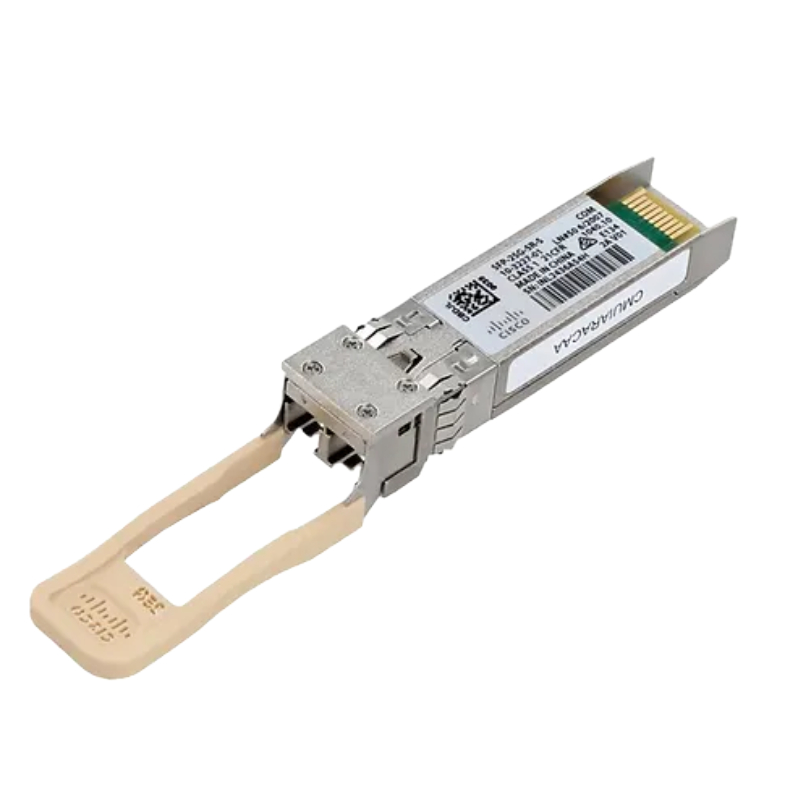


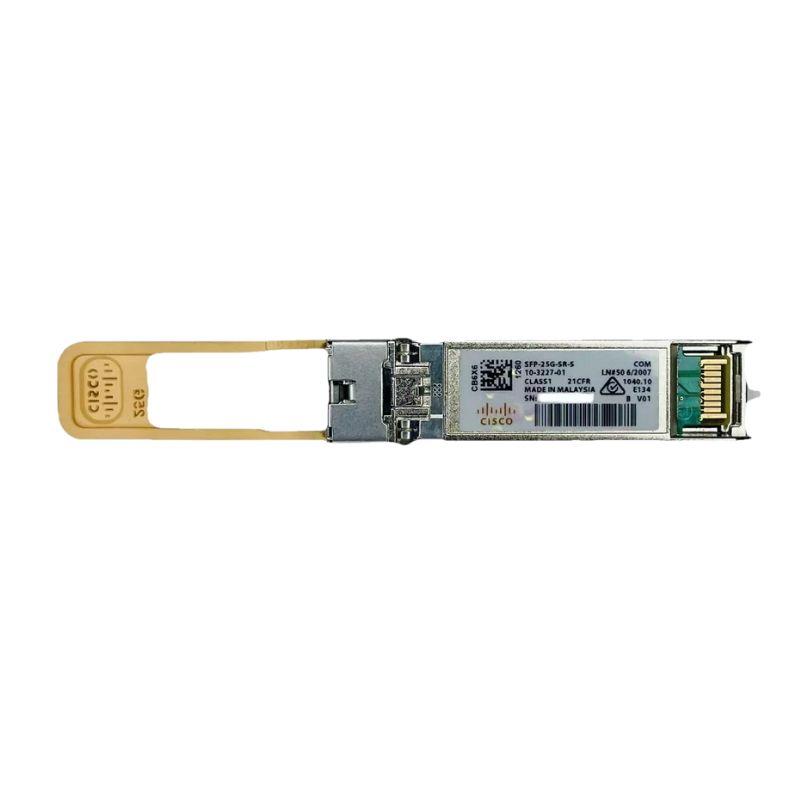
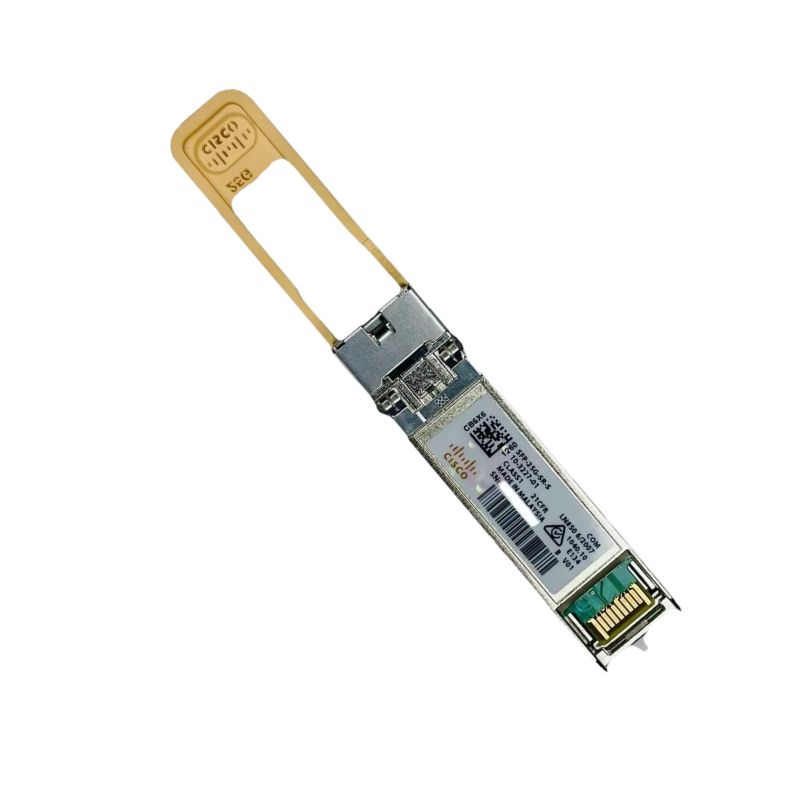
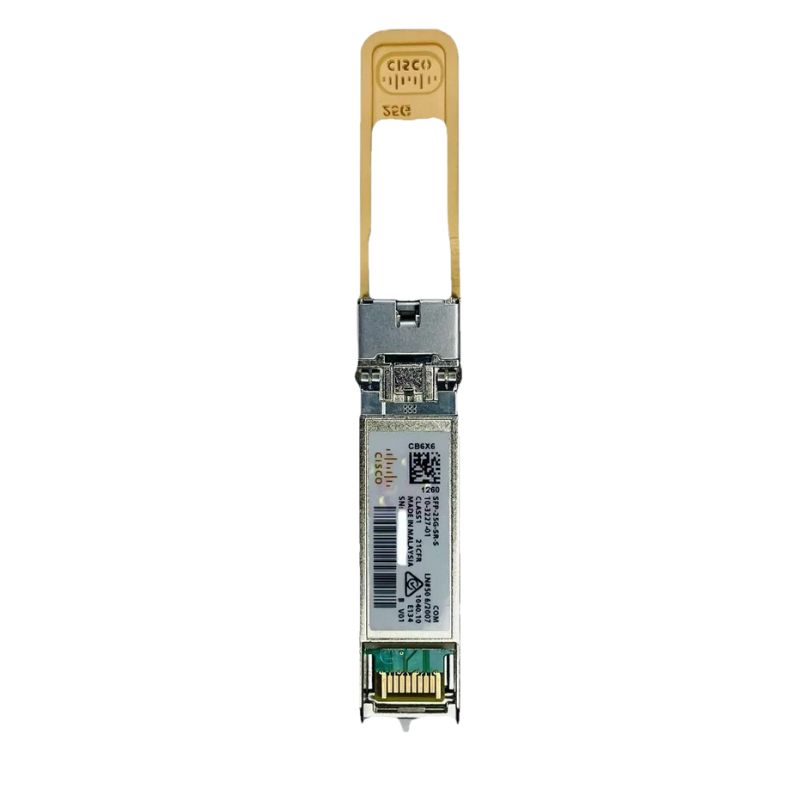
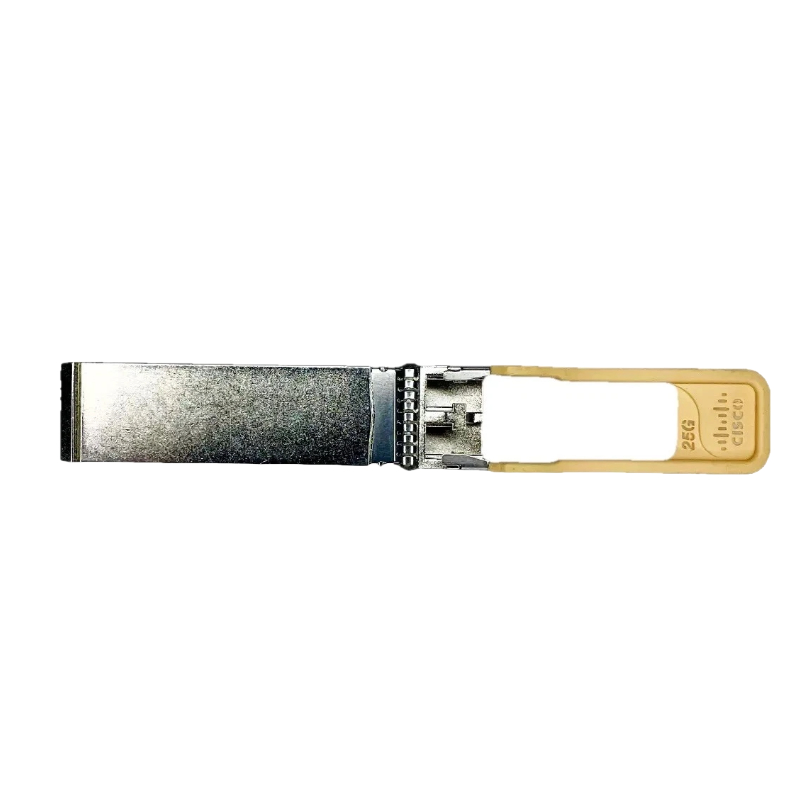
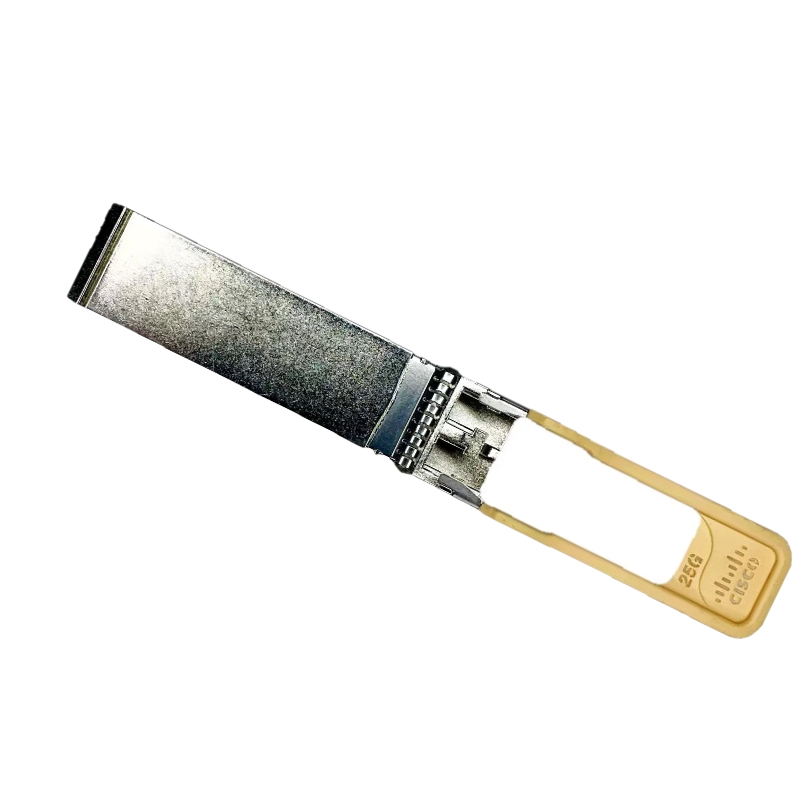
Cisco SFP-25G-SR-S= SFP28 Transceiver Module 25 Gigabit LC Connector. Excellent Refurbished with 1 year replacement warranty
| SKU/MPN | Warranty | Price | Condition | You save |
|---|---|---|---|---|
| SFP-25G-SR-S= | 1 Year Warranty | $245.00 | Factory-Sealed New Retail in Original Box (FSB) | You save: $85.75 (26%) |
| SFP-25G-SR-S= | 1 Year Warranty | $195.00 | Excellent Refurbished | You save: $68.25 (26%) |
The Cisco SFP-25G-SR-S= SFP28 transceiver module is engineered to deliver ultra-fast 25 Gigabit Ethernet connectivity for high-density enterprise environments. Designed for scalability, efficiency, and low-latency communication, this optical transceiver enhances network performance across data centers, cloud infrastructures, and enterprise switching systems.
Developed by a global leader in networking technologies, this module ensures reliable data transmission over multimode fiber using LC connectors, making it ideal for short-range high-speed communication links.
The demand for high-speed, low-latency, and scalable network connectivity continues to accelerate as enterprises expand cloud computing, virtualization, and high-performance data center environments. The Cisco SFP-25G-SR-S= SFP28 Transceiver Module 25 Gigabit LC Connector belongs to a specialized category of optical transceivers designed to deliver efficient short-reach data transmission over multimode fiber infrastructure. This class of networking components plays a crucial role in enabling reliable 25 Gigabit Ethernet (25GbE) performance across enterprise switches, aggregation layers, and hyperscale data centers.
Within the broader optical networking ecosystem, this module is part of the SFP28 transceiver family, which is engineered to support higher bandwidth per lane while maintaining backward compatibility with established fiber cabling standards. It is widely adopted in environments requiring high port density, energy efficiency, and cost-effective scaling from 10G to 25G architectures.
The SFP28 form factor represents an evolution of the earlier SFP+ standard, increasing per-lane signaling rates from 10 Gbps to 25 Gbps without requiring a change in physical connector design. This advancement allows network administrators to reuse existing LC duplex fiber infrastructure while achieving significantly improved throughput. The Cisco SFP-25G-SR-S= module is designed specifically for short-range multimode fiber transmission, making it ideal for intra-data center connectivity.
Modern data centers rely heavily on leaf-spine network topologies, where high-speed interconnects are essential to reduce congestion and improve east-west traffic flow. 25G transceivers are commonly deployed at the access and aggregation layers, replacing legacy 10G links. This shift enables higher port density per switch while optimizing power consumption and reducing operational overhead.
The adoption of SFP28 modules like Cisco’s SR-S variant helps organizations transition smoothly into higher bandwidth environments without redesigning the entire fiber plant.
The Cisco SFP-25G-SR-S 25G SR SFP28 LC MMF transceiver module is engineered for short-reach optical communication over multimode fiber (MMF), typically OM3 or OM4 cabling. It supports data rates of 25.78 Gbps and is optimized for low latency packet transmission across short distances within a rack or between adjacent racks.
This module utilizes LC duplex connectors, ensuring compatibility with widely deployed fiber patch panels and structured cabling systems. It is designed for seamless integration into Cisco networking hardware that supports SFP28 ports, enabling plug-and-play deployment with minimal configuration requirements.
The SR (Short Range) designation indicates that this transceiver is optimized for distances typically up to 70 meters on OM3 fiber and up to 100 meters on OM4 fiber. This makes it particularly suitable for intra-data center connectivity where high-speed links between top-of-rack (ToR) switches and aggregation switches are required.
The module uses 850nm wavelength vertical-cavity surface-emitting laser (VCSEL) technology, which is highly efficient for multimode fiber transmission. This ensures stable signal integrity, reduced attenuation, and consistent performance across supported distances.
SFP28 modules are designed with a compact, hot-swappable form factor that allows network operators to install or replace transceivers without powering down the system. This capability is critical in enterprise and carrier-grade environments where uptime is essential.
The Cisco SFP-25G-SR-S= integrates seamlessly into switch architectures, providing flexibility for network scaling and maintenance without service disruption.
One of the key advantages of SFP28 technology is its low power consumption relative to bandwidth capacity. The Cisco module is engineered to maintain efficient thermal performance, reducing overall cooling requirements in dense rack environments. This contributes to lower total cost of ownership (TCO) in large-scale deployments.
The electrical interface of the SFP28 module supports high-speed serial data transmission with optimized signal conditioning. Built-in equalization and error correction mechanisms help maintain data integrity across short-reach fiber links, reducing packet loss and retransmission overhead.
In leaf-spine network topologies, 25G transceivers are commonly deployed at the leaf layer to connect servers and storage systems, while spine switches aggregate traffic at higher speeds. The Cisco SFP-25G-SR-S= module ensures consistent throughput and low latency between these layers.
High-performance computing (HPC) clusters require extremely fast interconnects to handle distributed workloads. The 25G SR SFP28 module provides sufficient bandwidth to support compute-intensive applications such as AI training, scientific simulations, and real-time analytics.
Cloud service providers rely heavily on scalable and flexible network architectures. The adoption of 25G optical links enables higher virtual machine density and improved east-west traffic handling. The Cisco SFP-25G-SR-S= supports these environments by delivering consistent throughput and compatibility with modern switching platforms.
This transceiver is optimized for Cisco networking equipment that supports SFP28 interfaces. It ensures full compatibility with Cisco IOS and NX-OS environments, allowing seamless provisioning and monitoring through standard network management tools.
Although optimized for Cisco platforms, SFP28 transceivers often operate in multi-vendor environments depending on firmware and compatibility settings. This flexibility allows enterprises to integrate the module into heterogeneous network infrastructures where interoperability is essential.
SFP28 ports can sometimes support lower-speed SFP+ modules, allowing gradual network upgrades. However, to achieve full 25GbE performance, dedicated SFP28 modules such as the Cisco SFP-25G-SR-S= are required.
The module is designed for OM3 and OM4 multimode fiber, which are standard in modern data center environments. OM3 supports high-speed transmission up to 70 meters, while OM4 extends this range to approximately 100 meters for 25G links.
LC connectors are widely used in enterprise fiber networks due to their compact size and reliable performance. They support high-density patching environments, making them ideal for rack-mounted switch deployments where space optimization is critical.
Proper fiber management is essential for maintaining signal integrity and minimizing attenuation. The use of standardized patch panels, labeled fiber runs, and controlled bend radius ensures optimal performance of SFP28 transceivers in production environments.
The 25G SR module helps reduce latency by minimizing serialization delay and optimizing packet transmission rates. This is particularly beneficial in environments where microsecond-level response times are required.
Network engineers often deploy multiple 25G links in aggregation groups to increase total throughput. The Cisco SFP-25G-SR-S= supports such configurations, enabling scalable bandwidth expansion without redesigning the physical infrastructure.
Compared to legacy 10G deployments that require multiple links to achieve equivalent bandwidth, 25G technology reduces the number of active ports, lowering overall power consumption and cooling demands.
Cisco transceivers undergo rigorous testing to ensure reliability under enterprise workloads. This includes stress testing, optical performance validation, and environmental resilience assessments.
Advanced signal processing techniques ensure stable transmission even in electrically noisy data center environments. This reduces packet retransmissions and improves overall network efficiency.
In spine-leaf architectures, 25G links are often used at the aggregation layer to connect multiple leaf switches to spine switches. This ensures balanced traffic distribution and minimizes congestion points.
The Cisco SFP-25G-SR-S= is frequently deployed in top-of-rack switches to provide high-speed server connectivity. This enables modern servers equipped with 25G NICs to fully utilize available bandwidth.
Storage area networks (SANs) and software-defined storage environments benefit from 25G connectivity due to increased data throughput and reduced latency in read/write operations.
25G lanes are often used as building blocks for higher-speed interfaces such as 100G and 400G systems. This makes SFP28 technology a critical component in long-term network evolution strategies.
As cloud workloads continue to grow, scalable optical interconnects like the Cisco SFP-25G-SR-S= ensure that infrastructure can expand without performance bottlenecks.


 Contact Us
 Information
 Catalog
 Solid State Drives (SSD)
 Network Switches
 Hard Disk Drives
 HBA & Controllers
 PC & Servers
 PC & Server Memory
 CPU & Processors
 Network Routers
 Power Supplies
 Tape Drives & Libraries
 Network Devices
 Computer & Network Cables