(7% discount is applied at checkout)
Cart is empty
Your go-to destination for cutting-edge server products
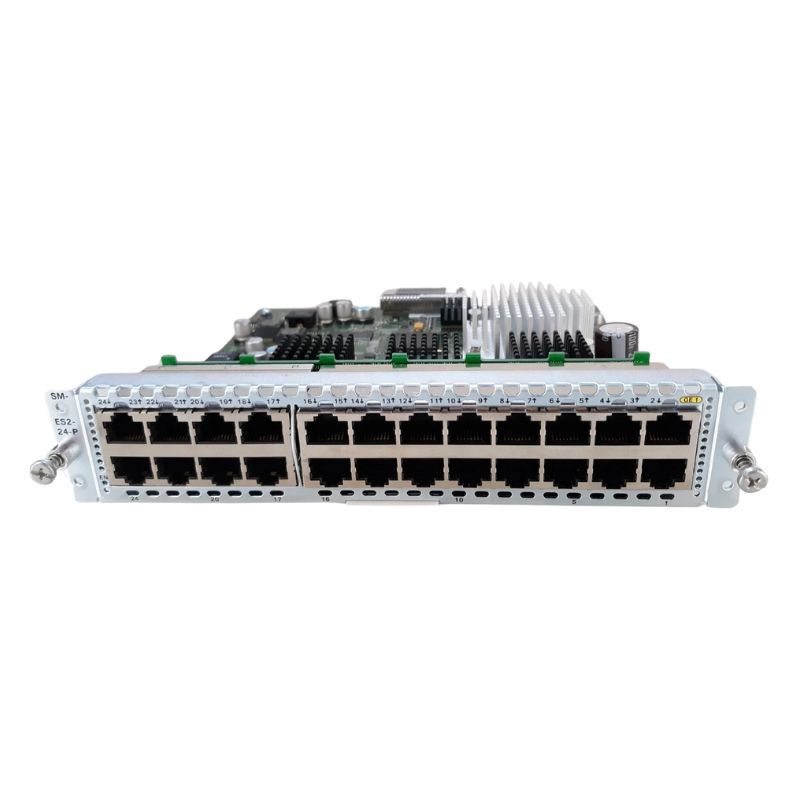


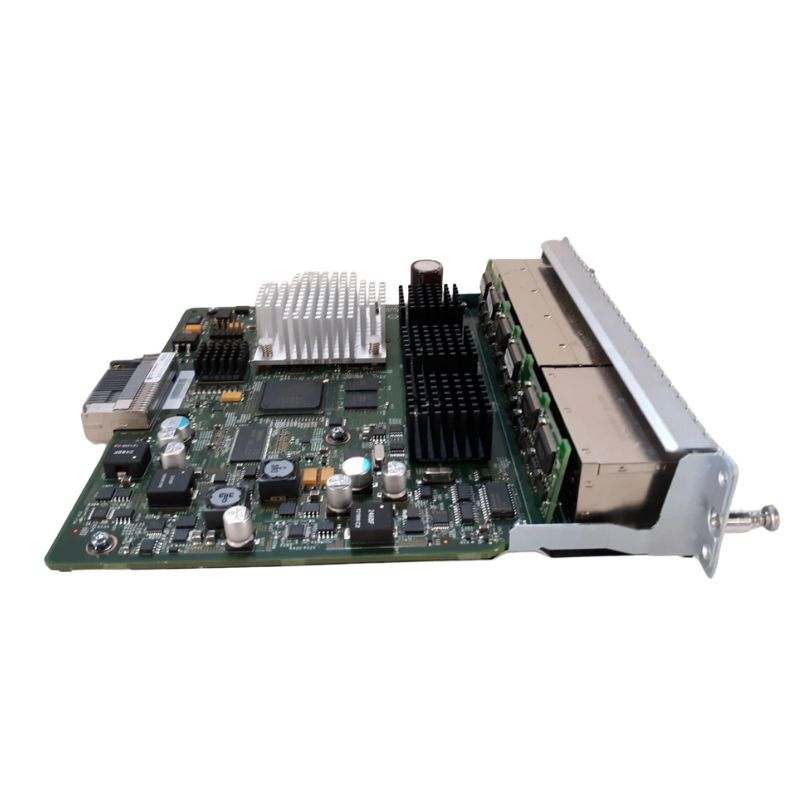
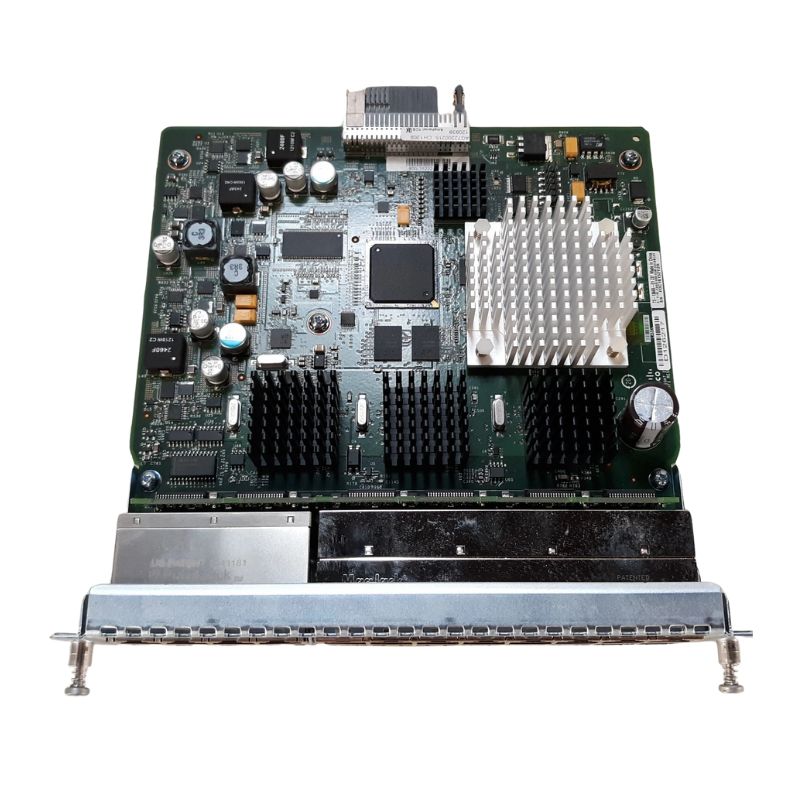
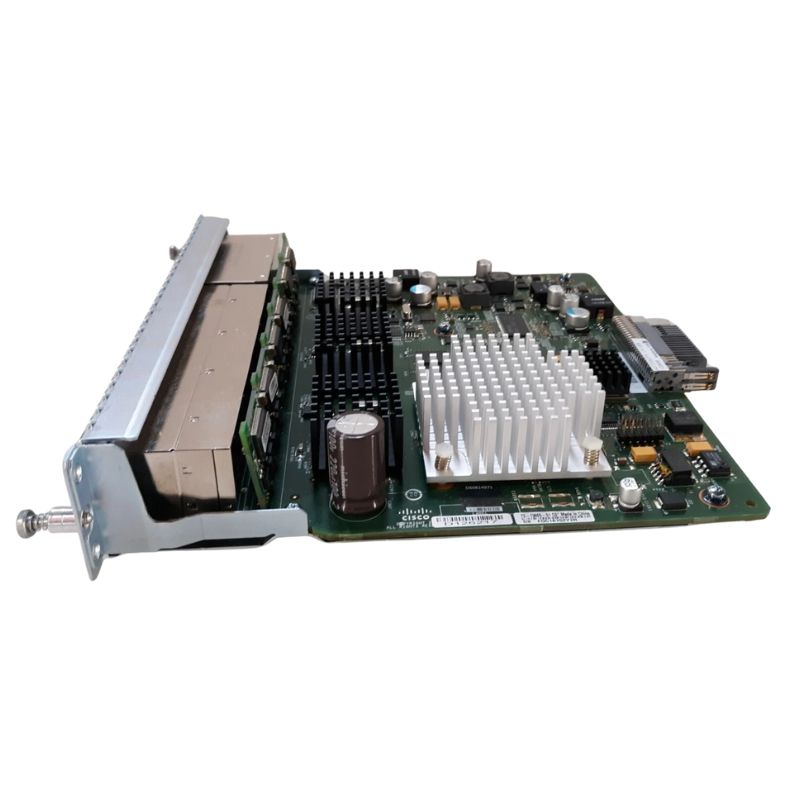
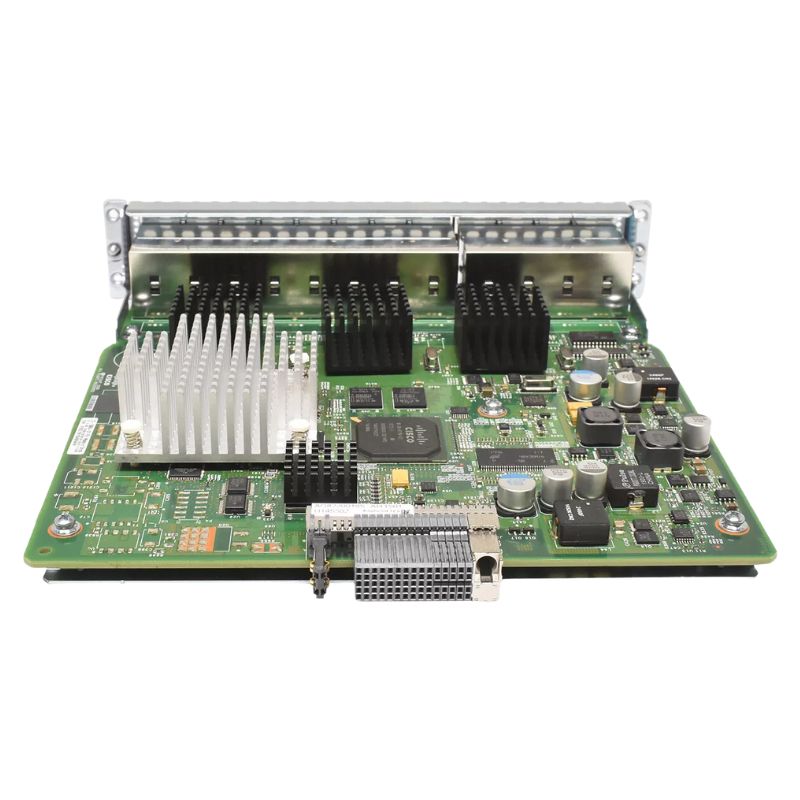
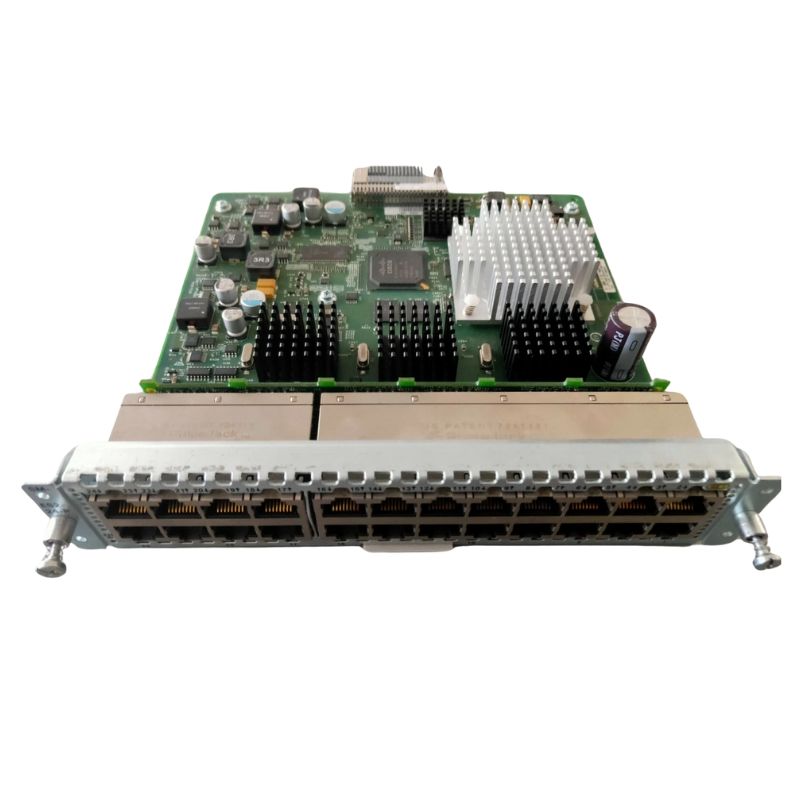
Cisco SM-ES2-24-P Enhanced EtherSwitch 24-Ports 10/100Base-TX Service Module. Excellent Refurbished with 1 year replacement warranty
| SKU/MPN | Warranty | Price | Condition | You save |
|---|---|---|---|---|
| SM-ES2-24-P | 1 Year Warranty | $1,680.00 | Factory-Sealed New Retail in Original Box (FSB) | You save: $588.00 (26%) |
| SM-ES2-24-P | 1 Year Warranty | $145.00 | Excellent Refurbished | You save: $50.75 (26%) |
The Cisco SM-ES2-24-P Enhanced EtherSwitch Service Module is a high-performance 24-port networking solution designed to deliver reliable Fast Ethernet connectivity and Gigabit uplink capabilities. Built for enterprise-grade switching environments, this service module enhances scalability, network efficiency, and secure data transmission within Cisco modular systems.
The Cisco SM-ES2-24-P Enhanced EtherSwitch 24-Port 10/100Base-TX Service Module represents a highly specialized networking expansion component designed for enterprise-grade modular routing environments. Built within the service module ecosystem of, this solution integrates switching capabilities directly into compatible Cisco Integrated Services Routers (ISR), enabling organizations to consolidate routing and switching functions into a single, streamlined infrastructure architecture. As part of the Enhanced EtherSwitch family, this module is engineered to deliver reliable Layer 2 switching performance while maintaining seamless interoperability with Cisco routing platforms, making it a critical component in branch office networking, distributed enterprise deployments, and managed service provider infrastructures.
The SM-ES2-24-P belongs to a class of modular service blades that are installed directly into supported Cisco router chassis, transforming a routing device into a hybrid routing-switching platform. This architecture eliminates the need for standalone access layer switches in smaller or mid-sized deployments, reducing both physical footprint and operational complexity. The design philosophy behind this category focuses on convergence, where switching intelligence is embedded within routing hardware to enable unified management and simplified network topology design.
In enterprise environments where branch scalability and centralized control are essential, the integration of switching modules into routers reduces latency between routing and switching domains. The SM-ES2-24-P supports this operational efficiency by providing 24 Fast Ethernet ports directly on the router platform, allowing endpoint devices to connect without requiring additional external switching equipment.
Branch office networking often demands compact yet powerful infrastructure solutions. The SM-ES2-24-P addresses this requirement by acting as a consolidated access-layer switch embedded within a router. This eliminates the need for multiple discrete devices, reduces cabling complexity, and simplifies deployment in distributed locations such as retail stores, remote offices, and temporary work environments.
The module’s design is particularly suited for environments where IT staff availability is limited, as centralized management through Cisco IOS simplifies configuration, monitoring, and troubleshooting. This makes the category ideal for enterprises seeking consistent policy enforcement across geographically dispersed sites.
At the core of the SM-ES2-24-P is a 24-port 10/100Base-TX Fast Ethernet switching fabric. Each port is capable of delivering auto-negotiated connectivity, ensuring compatibility with legacy and modern networked devices. This flexibility is essential in mixed-device environments where printers, IP phones, workstations, and industrial equipment may operate at varying network speeds.
The switching fabric is designed to handle Layer 2 traffic efficiently, ensuring that intra-VLAN communication remains fast and predictable. The architecture prioritizes low-latency forwarding, enabling stable performance for business-critical applications such as VoIP communications, file sharing, and internal web services.
The switching engine embedded within the service module operates in conjunction with the host router’s internal backplane. This integration ensures high-speed data exchange between routing and switching domains without the need for external uplinks. The internal architecture reduces bottlenecks that typically occur when traffic must traverse separate physical devices.
The Enhanced EtherSwitch architecture supports efficient packet forwarding, MAC address learning, and switching table management. These capabilities allow the module to operate as a fully functional access switch while still benefiting from the routing intelligence of the host device.
Performance optimization in the SM-ES2-24-P category is achieved through hardware-level forwarding mechanisms that reduce CPU overhead on the router. By offloading switching tasks to the service module, the system ensures that routing processes such as WAN connectivity, VPN handling, and policy enforcement remain unaffected by local LAN traffic loads.
This separation of duties between routing and switching enhances overall system stability and ensures predictable performance under varying traffic conditions. It also allows network architects to scale branch infrastructure without compromising central routing performance.
The “P” designation in the SM-ES2-24-P indicates integrated Power over Ethernet capability, enabling the module to supply electrical power directly to connected devices through Ethernet cabling. This functionality significantly reduces the need for external power adapters and simplifies endpoint deployment across office environments.
PoE support allows the module to power devices such as IP phones, wireless access points, and IP cameras, making it a central component in unified communications and security infrastructure. This integration is particularly valuable in environments where power outlet availability is limited or where centralized power management is preferred.
In modern enterprise networks, unified communications systems rely heavily on PoE-enabled infrastructure. The SM-ES2-24-P supports this requirement by providing consistent power delivery alongside data transmission. This ensures that voice and video endpoints remain operational even in environments where separate power provisioning would be impractical.
By consolidating power and data delivery into a single infrastructure layer, organizations reduce installation costs, simplify maintenance, and improve operational efficiency. This makes the module highly suitable for VoIP-heavy deployments and collaboration-centric workspaces.
The SM-ES2-24-P is designed to integrate directly into compatible Cisco Integrated Services Routers, forming a converged networking platform. This convergence enables a single hardware chassis to perform multiple networking roles, including WAN routing, LAN switching, security enforcement, and application optimization.
This integration reduces equipment sprawl and allows network administrators to manage both routing and switching from a unified control plane. It also improves physical space utilization in server rooms and wiring closets, which is especially valuable in branch deployments with limited infrastructure capacity.
Centralized management is a defining feature of this product category. Through Cisco IOS-based configuration, administrators can manage VLANs, interfaces, security policies, and routing protocols from a single interface. This reduces administrative overhead and ensures consistent configuration across distributed networks.
The integration between service module and router also supports automated failover and redundancy configurations, enhancing network resilience. This ensures continuous connectivity even in the event of partial system failures or interface disruptions.
The SM-ES2-24-P supports Virtual Local Area Network (VLAN) segmentation, enabling administrators to divide network traffic into logically separated domains. This improves security, enhances performance, and allows for more structured network design. VLAN implementation is particularly useful in environments where multiple departments or service groups share the same physical infrastructure.
Traffic segmentation ensures that broadcast domains are controlled, reducing unnecessary network congestion and improving overall efficiency. It also enables more granular policy enforcement, allowing organizations to apply security rules at the VLAN level.
To maintain network stability, the module supports Spanning Tree Protocol (STP) functionality. This ensures that redundant network paths do not create loops that could disrupt communication. By intelligently blocking and forwarding ports as needed, STP maintains a loop-free topology while still allowing redundancy for failover scenarios.
This capability is essential in enterprise environments where network reliability is a critical requirement. The SM-ES2-24-P ensures that redundancy can be implemented without compromising stability or performance.
Security is a fundamental aspect of the SM-ES2-24-P category. The module supports port-level security features that restrict unauthorized device access and enforce network integrity. By controlling which devices can connect to specific ports, administrators can prevent unauthorized network access and reduce the risk of intrusion.
This level of control is essential in environments where sensitive data is transmitted across internal networks. It ensures that only approved devices are permitted to communicate within the network infrastructure.
Access Control Lists (ACLs) provide additional security by allowing administrators to define rules for traffic flow across the network. These rules can be applied to filter traffic based on IP addresses, protocols, or ports, enabling fine-grained control over network communication.
The integration of ACLs within the service module ensures that security policies are enforced close to the access layer, reducing unnecessary traffic propagation and enhancing overall security posture.
The SM-ES2-24-P is widely used in branch office environments where compact infrastructure and centralized management are essential. Its ability to combine routing and switching within a single device makes it ideal for organizations with distributed operational models.
Branch offices benefit from simplified installation processes, reduced hardware requirements, and streamlined network management. This results in lower operational costs and improved deployment speed.
Retail and hospitality industries often require reliable, scalable, and easy-to-manage networking solutions. The SM-ES2-24-P provides the necessary infrastructure to support point-of-sale systems, guest Wi-Fi access points, and communication devices within a unified framework.
Its PoE capability further enhances its suitability for these environments by enabling the deployment of powered devices without additional electrical infrastructure.
Managed service providers benefit from the modular nature of the SM-ES2-24-P, as it allows them to deploy standardized network configurations across multiple client sites. The module’s integration with Cisco IOS simplifies remote management and ensures consistent service delivery.
This makes it an effective solution for scalable network deployment models where efficiency and repeatability are critical success factors.
The SM-ES2-24-P is designed with operational reliability in mind. Its integration with router-based redundancy mechanisms ensures that network services remain available even during partial system disruptions. This contributes to high availability network architectures suitable for mission-critical applications.
Redundant configurations and failover capabilities allow organizations to maintain continuity of service, minimizing downtime and operational disruption.
Quality of Service (QoS) mechanisms enable the prioritization of network traffic based on application requirements. This ensures that latency-sensitive applications such as voice and video communication receive priority handling over less critical data transfers.
By managing bandwidth allocation efficiently, the module ensures optimal performance across diverse network workloads, improving user experience and application reliability.


 Contact Us
 Information
 Catalog
 Solid State Drives (SSD)
 Network Switches
 Hard Disk Drives
 HBA & Controllers
 PC & Servers
 PC & Server Memory
 CPU & Processors
 Network Routers
 Power Supplies
 Tape Drives & Libraries
 Network Devices
 Computer & Network Cables