(7% discount is applied at checkout)
Cart is empty
Your go-to destination for cutting-edge server products
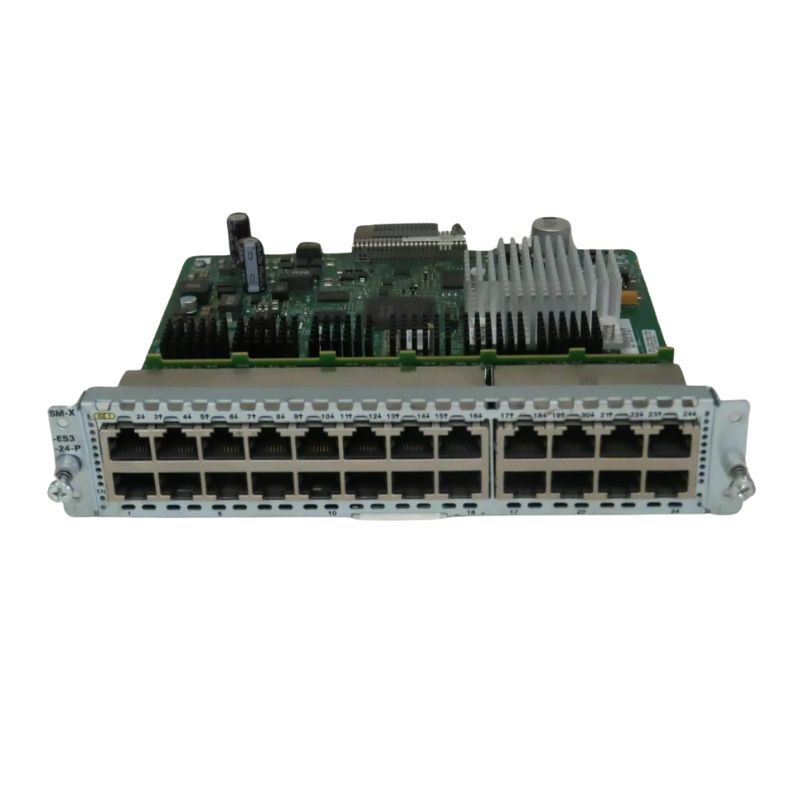


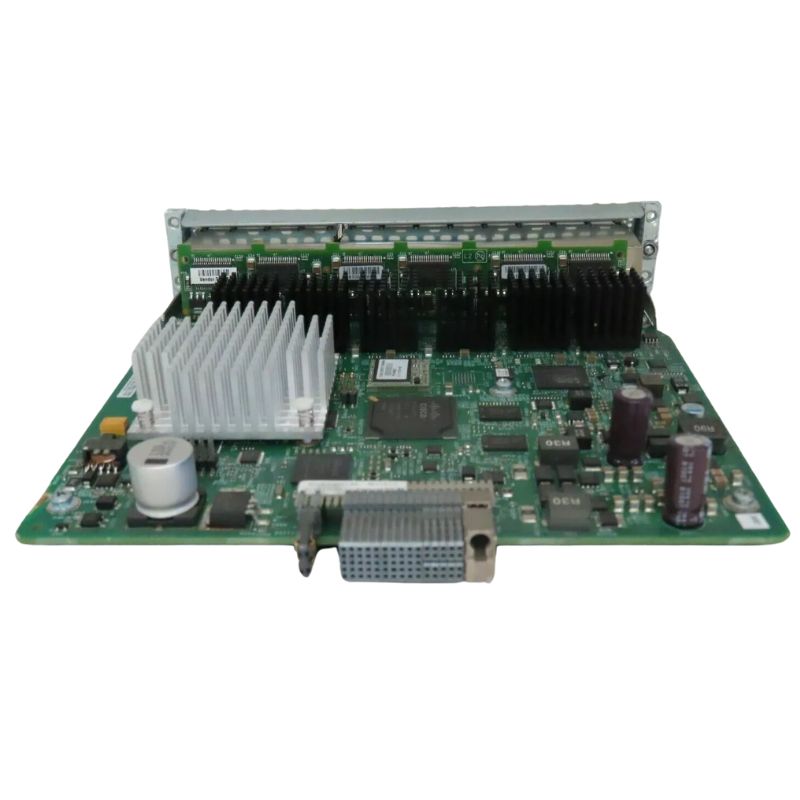
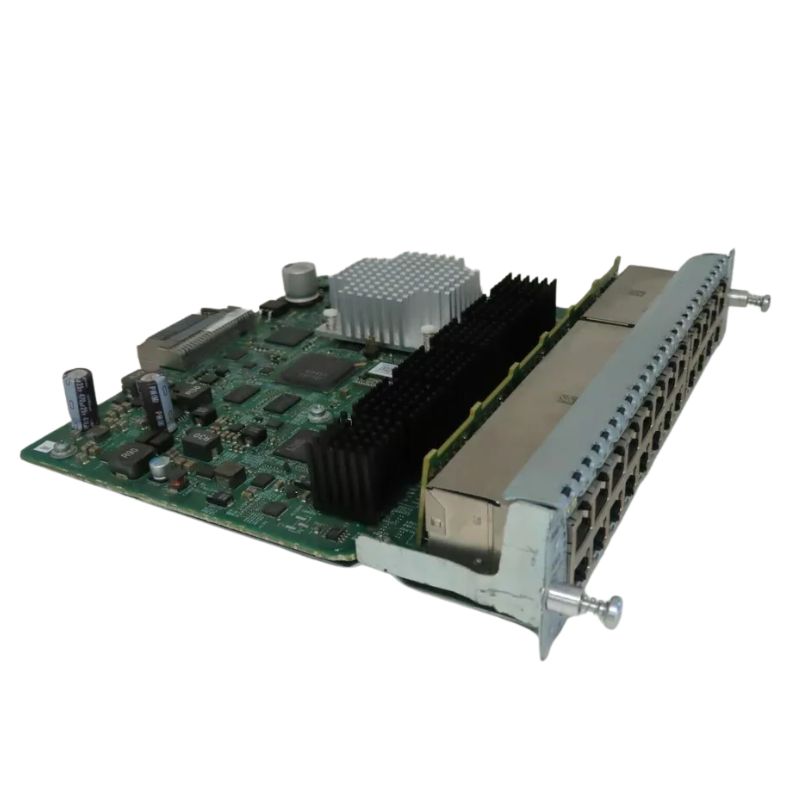
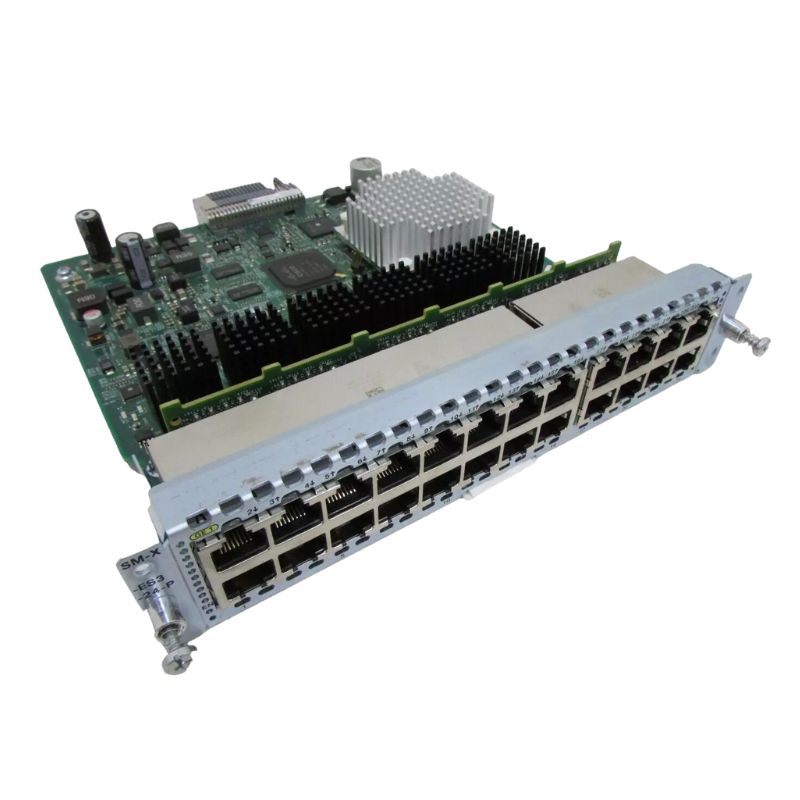
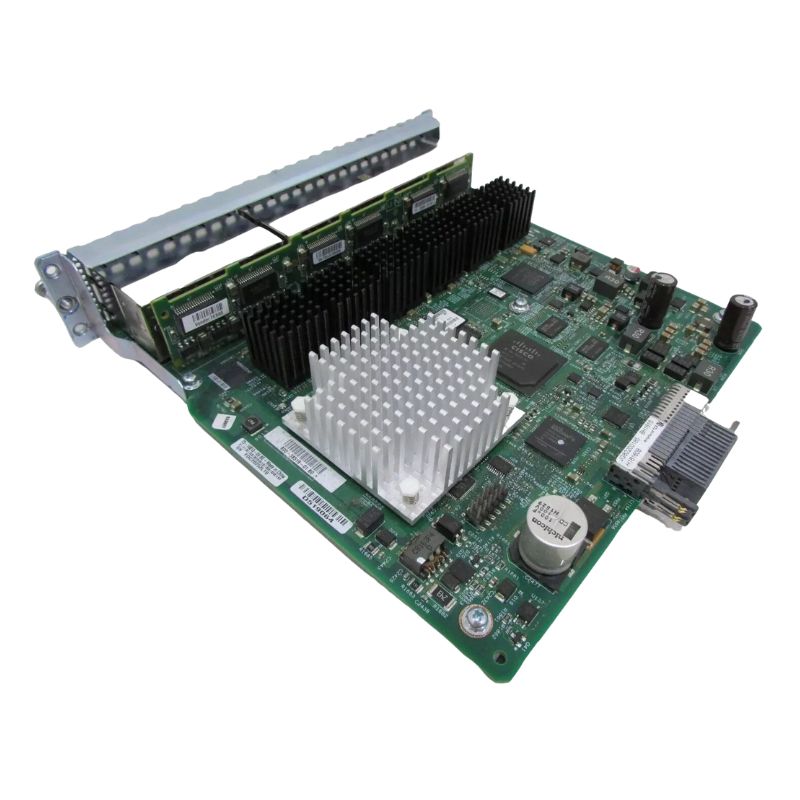
Cisco SM-X-ES3-24-P Service Module 24 Ports Ethernet Switch Module. Excellent Refurbished with 1 year replacement warranty.
| SKU/MPN | Warranty | Price | Condition | You save |
|---|---|---|---|---|
| SM-X-ES3-24-P | 1 Year Warranty | $175.00 | Excellent Refurbished | You save: $61.25 (26%) |
| SM-X-ES3-24-P | 1 Year Warranty | $1,495.00 | Factory-Sealed New Retail in Original Box (FSB) | You save: $523.25 (26%) |
The Cisco SM-X-ES3-24-P Service Module 24 Ports Ethernet Switch Module represents a specialized category of integrated switching solutions designed to extend the networking capabilities of Cisco Integrated Services Routers. This category focuses on service modules that combine routing intelligence with advanced Layer 2 and Layer 3 Ethernet switching functionality directly inside the router chassis. By embedding switching into the routing platform, organizations can achieve simplified network architectures, reduced hardware footprints, and centralized management while maintaining enterprise-grade performance and reliability.
This category addresses environments where branch offices, campus edge deployments, and distributed enterprise locations require high-density Ethernet connectivity, Power over Ethernet support, and advanced traffic handling without deploying standalone access switches. The SM-X-ES3-24-P module exemplifies how modular networking components can transform a single router into a multi-function platform capable of acting as a network core for smaller sites or as an intelligent access layer device in larger infrastructures.
The service module category is defined by its tight integration with Cisco ISR platforms, leveraging the router’s processing power, backplane connectivity, and IOS software ecosystem. The Cisco SM-X-ES3-24-P follows this architectural philosophy by delivering a fully managed Ethernet switch within the service module slot, eliminating the need for additional rack-mounted switches in many scenarios. This design allows organizations to consolidate networking functions while preserving modular scalability.
Unlike external switches, integrated service modules benefit from direct internal connectivity, which reduces latency and simplifies cabling. The category is optimized for environments where space, power efficiency, and operational simplicity are critical considerations. The embedded nature of the module also enhances security by reducing exposed physical interfaces and allowing unified policy enforcement across routing and switching domains.
Within this category, the 24-port configuration is especially relevant for branch offices and edge deployments that need to connect multiple endpoints such as IP phones, wireless access points, security cameras, and user workstations. The Cisco SM-X-ES3-24-P module provides ample port density to serve as a localized access layer, supporting typical enterprise device counts without requiring external expansion hardware.
The access layer focus of this category emphasizes reliable connectivity, consistent performance, and predictable traffic handling. Each Ethernet port is designed to deliver stable throughput while supporting enterprise networking standards. This makes the category suitable for environments that rely on real-time applications, including voice and video communications, which demand low latency and minimal packet loss.
A defining feature of this category is integrated Power over Ethernet capability, which allows the switch module to deliver both data and electrical power over standard Ethernet cabling. This functionality simplifies deployments by removing the need for separate power supplies for connected devices. The Cisco SM-X-ES3-24-P exemplifies this approach by supporting PoE for a wide range of enterprise endpoints.
PoE support within this category enables flexible device placement and reduces installation complexity, especially in branch environments where electrical outlets may be limited. By centralizing power delivery within the networking infrastructure, organizations can also implement more effective power management and backup strategies, ensuring critical devices remain operational during power disruptions.
The category of service module Ethernet switches is characterized by advanced switching features traditionally found in standalone enterprise switches. The Cisco SM-X-ES3-24-P Service Module incorporates these capabilities, allowing it to handle complex traffic patterns and support segmented network designs. This includes support for VLAN-based segmentation, which enables logical separation of traffic for security, performance, and organizational purposes.
Traffic management within this category focuses on maintaining consistent application performance across diverse workloads. Integrated quality of service mechanisms prioritize latency-sensitive traffic, ensuring voice and video streams receive appropriate bandwidth and low-latency handling even during periods of network congestion. This makes the category particularly valuable for unified communications deployments.
The category supports both Layer 2 switching and select Layer 3 routing functions, providing flexibility in network design. The Cisco SM-X-ES3-24-P can operate as a traditional access switch while also supporting inter-VLAN routing and advanced forwarding decisions when required. This dual capability reduces the need for additional routing hardware at the network edge.
By integrating Layer 3 features directly into the switching module, organizations can design flatter network topologies that reduce hop counts and improve overall performance. This approach aligns with modern enterprise networking practices that favor simplicity and efficiency without sacrificing control or scalability.
Quality of service is a central theme in this category, reflecting the growing importance of application-aware networking. The Cisco SM-X-ES3-24-P supports advanced QoS mechanisms that classify, mark, and prioritize traffic based on predefined policies. This ensures that mission-critical applications maintain performance levels even when network utilization is high.
QoS capabilities within this category are particularly relevant for environments that rely heavily on IP telephony, video conferencing, and cloud-based applications. By enforcing consistent traffic prioritization at the access layer, the service module helps maintain end-user experience and supports service-level objectives across distributed sites.
Efficient multicast handling is another important characteristic of this category. The Cisco SM-X-ES3-24-P supports multicast optimization techniques that minimize unnecessary traffic replication while ensuring timely delivery of multicast streams. This is essential for applications such as video distribution, real-time data feeds, and collaborative tools.
By managing multicast traffic effectively at the access layer, the service module reduces overall bandwidth consumption and prevents congestion from impacting unrelated applications. This capability contributes to a more efficient and predictable network environment, particularly in bandwidth-constrained branch locations.
Security is a foundational consideration within the service module Ethernet switch category. The Cisco SM-X-ES3-24-P is designed to enforce security policies directly at the point of network access, reducing the risk of unauthorized access and limiting the spread of potential threats. Integrated security features align with Cisco’s broader security architecture, enabling consistent enforcement across routing and switching components.
This category emphasizes the importance of securing endpoints and controlling network access without introducing excessive complexity. By embedding security capabilities within the switch module, organizations can implement robust defenses while maintaining streamlined network operations.
Port-level security is a defining element of this category, allowing administrators to control which devices can connect to the network and under what conditions. The Cisco SM-X-ES3-24-P supports mechanisms that authenticate endpoints and enforce access policies based on organizational requirements. This helps prevent unauthorized devices from gaining network access.
Access control capabilities within this category are particularly valuable in environments with high device turnover or where physical security cannot be guaranteed. By tying network access to authentication and policy enforcement, organizations can significantly reduce their attack surface.
Network segmentation is a critical security strategy supported by this category. The Cisco SM-X-ES3-24-P enables administrators to create isolated network segments that limit the impact of security incidents and protect sensitive resources. VLAN-based segmentation allows different user groups, device types, or application workloads to coexist securely on the same physical infrastructure.
This approach enhances compliance with regulatory requirements and internal security policies by ensuring that sensitive data flows are properly isolated. Integrated segmentation capabilities also simplify network design by reducing the need for additional security appliances at the access layer.
The service module category is designed to integrate seamlessly with centralized management and security platforms. The Cisco SM-X-ES3-24-P can participate in broader security frameworks, providing visibility and control across distributed deployments. This integration enables real-time monitoring, policy updates, and incident response from a centralized location.
Centralized visibility is essential for maintaining consistent security postures across multiple sites. By leveraging integrated management tools, organizations can quickly identify anomalies, enforce policy changes, and maintain compliance without manual intervention at each location.
The Cisco SM-X-ES3-24-P Service Module category is well-suited for a wide range of deployment scenarios, reflecting its versatility and modular design. Branch offices, retail locations, remote campuses, and industrial sites can all benefit from the integrated switching capabilities offered by this category. By consolidating routing and switching into a single platform, organizations can simplify deployments and reduce total cost of ownership.
This category supports both new network builds and upgrades to existing infrastructures. Organizations can extend the life of their router investments by adding service modules that deliver modern switching features without replacing core hardware.
Branch office environments often face constraints related to space, power, and IT staffing. The service module category addresses these challenges by providing a compact, integrated solution that reduces the need for multiple devices. The Cisco SM-X-ES3-24-P can serve as the primary access switch in such environments, delivering reliable connectivity for users and devices.
By minimizing the number of physical devices, organizations can reduce maintenance overhead and simplify troubleshooting. This is especially valuable for remote locations where on-site technical expertise may be limited.
Unified communications deployments benefit significantly from the capabilities of this category. The Cisco SM-X-ES3-24-P supports the power, performance, and traffic prioritization required for IP phones, video endpoints, and collaboration tools. Integrated QoS and PoE ensure that communication devices operate reliably and deliver consistent user experiences.
This makes the category an ideal choice for organizations standardizing on Cisco collaboration solutions or deploying converged voice and data networks at the edge.
Scalability is a core principle of the service module category. The modular design of the Cisco SM-X-ES3-24-P allows organizations to adapt their networks as requirements evolve. Additional modules can be added, or existing modules upgraded, to support new technologies and increased device counts.
This approach provides a level of future-proofing that is difficult to achieve with fixed-function networking hardware. By investing in modular platforms, organizations can respond to changing business needs without disruptive infrastructure overhauls.
Operational efficiency is a major focus of the service module Ethernet switch category. The Cisco SM-X-ES3-24-P is designed to be managed using familiar Cisco tools and interfaces, reducing the learning curve for network administrators. Unified management of routing and switching functions simplifies configuration and ongoing maintenance.
This category emphasizes centralized visibility and control, enabling administrators to monitor performance, troubleshoot issues, and apply configuration changes from a single management plane. This reduces operational complexity and improves overall network reliability.


 Contact Us
 Information
 Catalog
 Solid State Drives (SSD)
 Network Switches
 Hard Disk Drives
 HBA & Controllers
 PC & Servers
 PC & Server Memory
 CPU & Processors
 Network Routers
 Power Supplies
 Tape Drives & Libraries
 Network Devices
 Computer & Network Cables