(7% discount is applied at checkout)
Cart is empty
Your go-to destination for cutting-edge server products
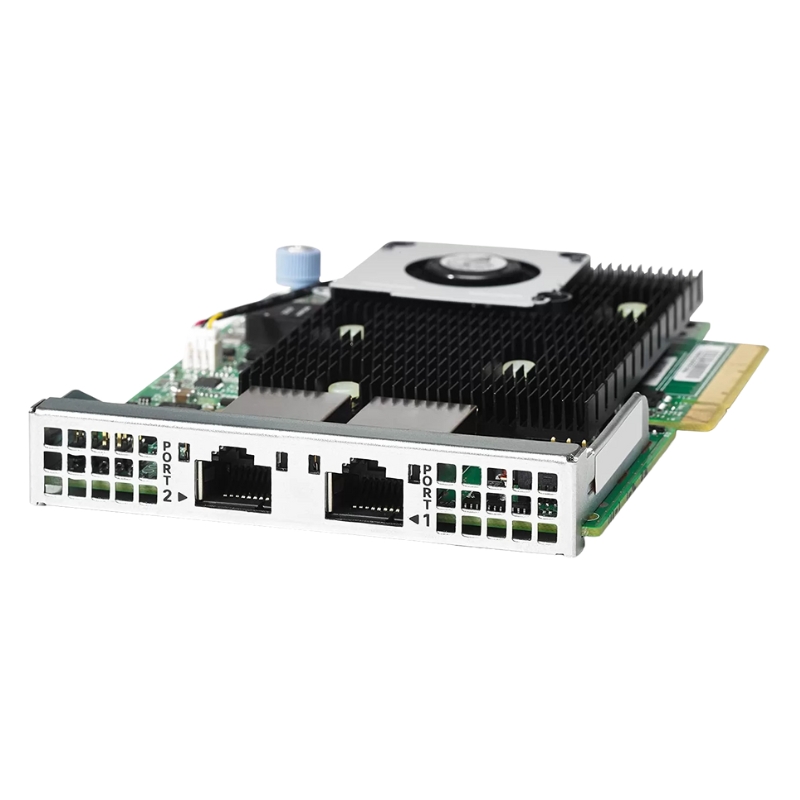


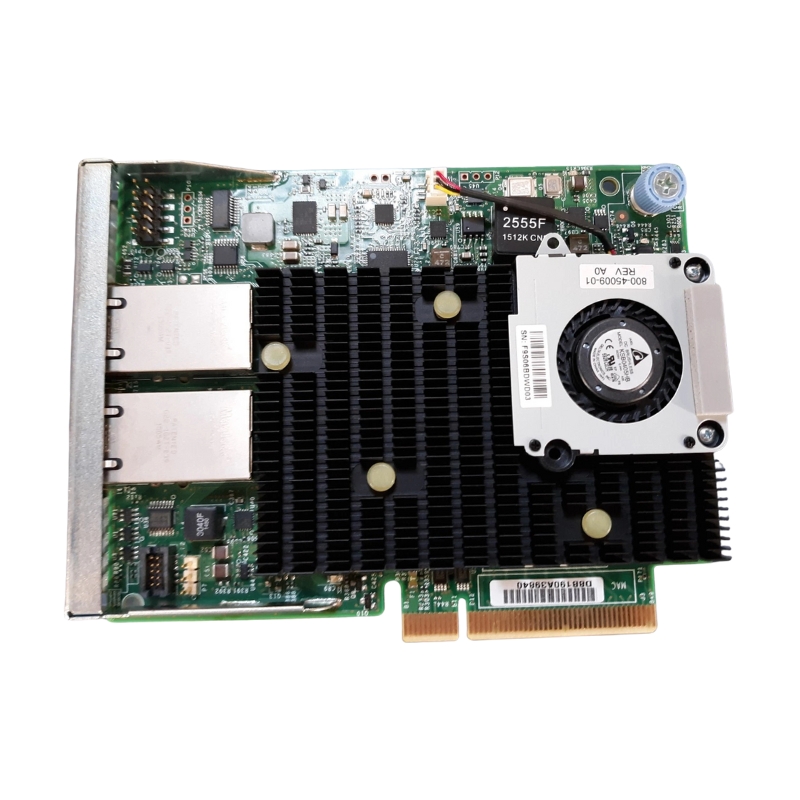
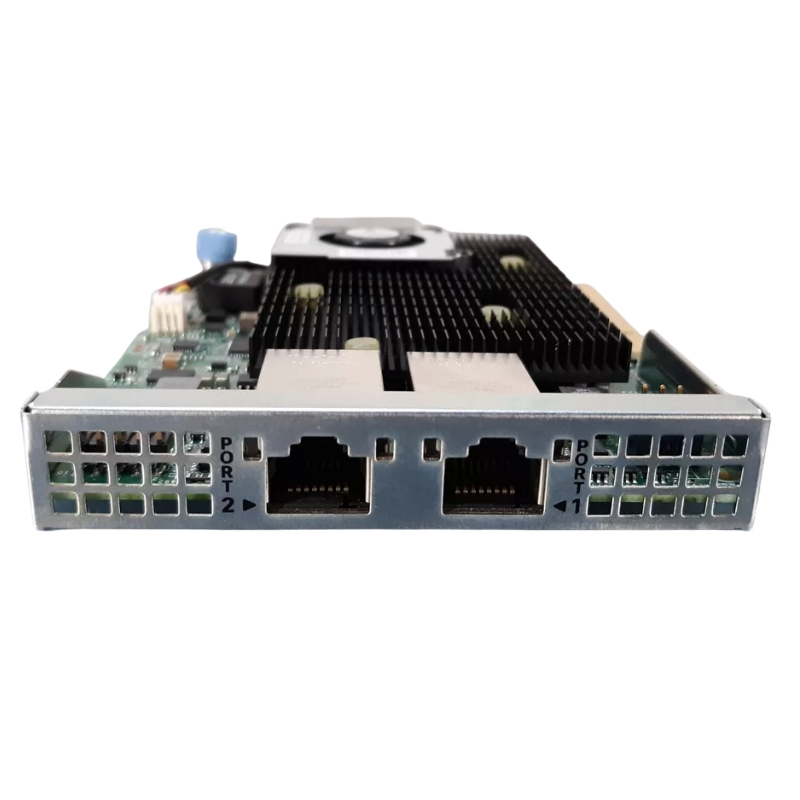
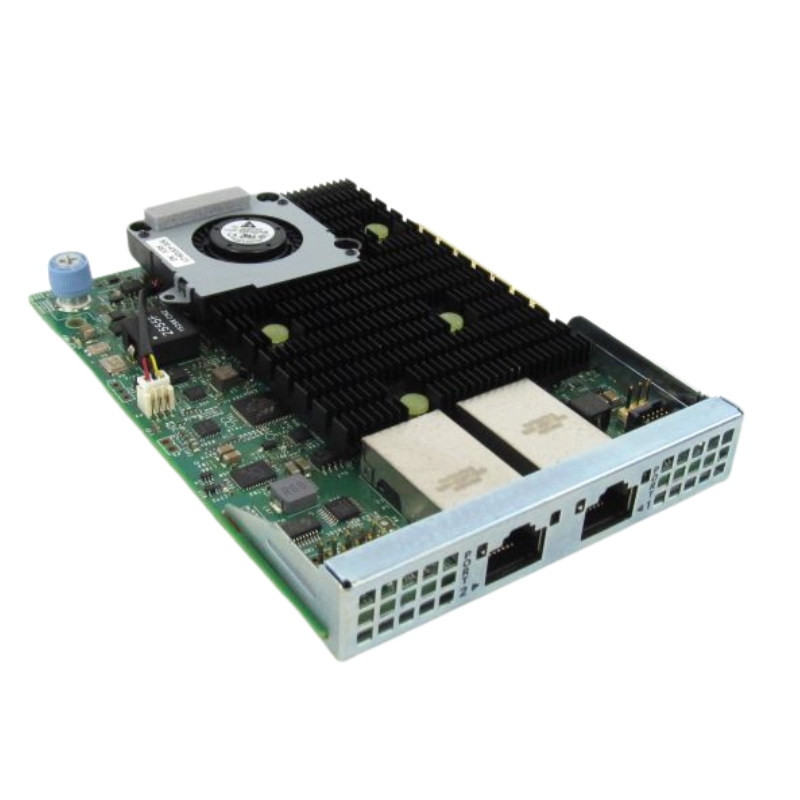
Cisco UCSC-MLOM-C10T-02 UCS Ethernet Virtual Interface Card. Excellent Refurbished with 1 year replacement warranty
| SKU/MPN | Warranty | Price | Condition | You save |
|---|---|---|---|---|
| UCSC-MLOM-C10T-02 | 1 Year Warranty | $480.00 | Factory-Sealed New Retail in Original Box (FSB) | You save: $168.00 (26%) |
| UCSC-MLOM-C10T-02 | 1 Year Warranty | $98.00 | Excellent Refurbished | You save: $34.30 (26%) |
The Cisco UCSC-MLOM-C10T-02 UCS Ethernet Virtual Interface Card is a high-performance network adapter designed to deliver reliable dual-port connectivity for modern enterprise and data center environments. Engineered this modular LAN-on-motherboard (MLOM) interface card enhances server networking capabilities by providing efficient, scalable, and stable Ethernet communication.
Built for virtualization, cloud computing, and enterprise workloads, this adapter ensures optimized data flow, reduced latency, and improved bandwidth management. It is widely deployed in Cisco UCS (Unified Computing System) environments where performance, reliability, and integration are essential.
The Cisco UCSC-MLOM-C10T-02 UCS Ethernet Virtual Interface Card belongs to the advanced family of Cisco Unified Computing System (UCS) network adapters designed to deliver high-density virtualization, flexible connectivity, and optimized Ethernet performance for modern enterprise data centers. This category of Ethernet Virtual Interface Cards (VICs) is engineered to support converged infrastructure environments where compute, networking, and storage traffic must coexist efficiently over a unified fabric. The UCS Ethernet Virtual Interface Card series plays a critical role in enabling scalable cloud architectures, virtual machine density optimization, and streamlined server-to-network communication within Cisco UCS C-Series rack servers.
As data centers evolve toward software-defined infrastructures, the demand for adaptable network interface solutions continues to increase. The UCSC-MLOM-C10T-02 model specifically supports 10GBase-T connectivity through a modular LAN on motherboard (MLOM) form factor, allowing seamless integration into Cisco UCS platforms. This design enhances bandwidth availability while maintaining cost-effective copper-based Ethernet connectivity for enterprise workloads requiring consistent throughput and low operational overhead.
The architecture of the Cisco UCS Ethernet Virtual Interface Card is built around a modular LAN on motherboard (MLOM) interface that connects directly to the server motherboard, minimizing physical footprint while maximizing bandwidth efficiency. This embedded approach eliminates the need for traditional PCIe slot consumption, preserving expansion capacity for other critical components. The MLOM architecture allows tight coupling with Cisco UCS firmware and management systems, ensuring that network resources are dynamically allocated based on workload demands.
A defining characteristic of this category is the virtual interface abstraction layer, which enables a single physical adapter to present multiple virtual network interfaces to the operating system or hypervisor. This abstraction is essential for cloud computing environments where isolation, multi-tenancy, and workload segmentation are required. Each virtual interface can be independently configured with specific bandwidth, Quality of Service (QoS), and security policies, enabling granular control over network traffic flows within the same physical hardware boundary.
The UCS Ethernet Virtual Interface Card operates as part of Cisco’s Unified Fabric architecture, which consolidates LAN, SAN, and management traffic onto a single network infrastructure. This convergence reduces infrastructure complexity, lowers cabling requirements, and enhances overall data center efficiency. The unified fabric approach ensures that Ethernet traffic and storage protocols such as FCoE can coexist without performance degradation, providing a streamlined networking model optimized for virtualization workloads.
One of the most important capabilities of the UCS Ethernet Virtual Interface Card is its ability to create multiple virtual network interfaces from a single physical adapter. This virtualization allows administrators to allocate dedicated network paths for virtual machines, containers, and application services without requiring additional physical NICs. The result is improved resource utilization and simplified network management across large-scale deployments.
The system supports dynamic allocation of virtual NIC resources, enabling real-time adjustments based on workload requirements. This flexibility is particularly beneficial in environments where workloads fluctuate rapidly, such as cloud service providers and enterprise virtualization clusters. The card ensures consistent performance even under variable traffic conditions by intelligently distributing bandwidth across active virtual interfaces.
The unified fabric connectivity provided by this category reduces network complexity by consolidating multiple traffic types into a single Ethernet infrastructure. This includes application data traffic, storage communication, and management signals. By eliminating the need for separate network adapters for each traffic type, the UCS Ethernet Virtual Interface Card significantly reduces hardware overhead while increasing operational efficiency.
Traffic convergence is achieved through advanced protocol handling and hardware-based optimization. The adapter efficiently processes mixed traffic streams while maintaining low latency and high throughput. This capability is essential in modern data centers where infrastructure simplification is a primary design objective.
The 10GBase-T interface of the UCSC-MLOM-C10T-02 ensures high-speed data transmission over standard copper cabling. This makes it a cost-effective solution for enterprises upgrading from 1G Ethernet environments to 10G infrastructures without replacing existing cabling systems. The support for twisted-pair copper also simplifies installation and maintenance while providing robust performance for bandwidth-intensive applications.
The card is optimized for low latency packet processing, which is critical for applications such as virtualization clusters, database systems, and high-performance computing environments. Hardware acceleration mechanisms reduce CPU overhead and ensure faster packet forwarding across virtual and physical interfaces.
The Cisco UCS Ethernet Virtual Interface Card integrates seamlessly with Cisco UCS Manager, providing centralized control over network configuration, provisioning, and monitoring. This integration allows administrators to define service profiles that automatically configure network settings when servers are deployed or reconfigured.
Service profiles enable stateless computing by decoupling server identity from physical hardware. The VIC card participates in this model by dynamically applying network configurations based on assigned profiles. This reduces deployment time and ensures consistency across multiple server nodes within the infrastructure.
The UCS Ethernet Virtual Interface Card is designed for compatibility with leading hypervisors and virtualization platforms. It supports environments such as VMware ESXi, Microsoft Hyper-V, and Linux-based KVM solutions. This broad compatibility ensures that enterprises can deploy the card across diverse infrastructure stacks without compatibility constraints.
By enabling multiple virtual NICs per physical adapter, the card increases virtual machine density per server. This allows organizations to maximize hardware utilization while maintaining isolated network paths for individual workloads.
The UCS Ethernet Virtual Interface Card incorporates hardware offload engines that handle tasks such as packet segmentation, checksum calculation, and routing acceleration. These offloads reduce CPU utilization and allow server processors to focus on application-level processing rather than network overhead.
By offloading network processing tasks, the adapter ensures that CPU resources remain available for compute-intensive workloads. This leads to improved overall system performance, especially in virtualized environments where compute resources are shared among multiple workloads.
Latency reduction is achieved through optimized packet processing pipelines and direct memory access techniques. These mechanisms minimize data transfer delays between network interfaces and system memory, ensuring consistent application responsiveness.
The architecture of the UCS Ethernet Virtual Interface Card is designed to scale alongside evolving data center requirements. As workloads increase, additional virtual interfaces can be provisioned without requiring hardware changes, enabling seamless scalability.
Elastic allocation of network resources allows administrators to dynamically adjust bandwidth distribution based on workload priority. This ensures optimal utilization of available network capacity across multiple applications.
The card is well-suited for multi-tenant environments where isolated network segments are required for security and performance. Each virtual interface can be assigned to a separate tenant or application domain, ensuring strict traffic separation within shared infrastructure.
Security is enhanced through hardware-based traffic segmentation, which ensures that virtual interfaces remain isolated at the physical layer. This reduces the risk of cross-traffic interference and unauthorized access between workloads.
Network policies can be enforced directly at the virtual interface level, enabling granular control over traffic flow, bandwidth allocation, and access permissions. This strengthens overall network security posture within enterprise environments.
The adapter supports secure transmission mechanisms that protect data integrity during network communication. This is essential for organizations handling sensitive workloads such as financial systems, healthcare applications, and enterprise databases.
In enterprise virtualization environments, the UCS Ethernet Virtual Interface Card supports high-density virtual machine deployments by providing multiple isolated network channels per server. This improves workload segmentation and enhances application performance consistency.
Cloud service providers benefit from the card’s ability to dynamically allocate network resources across tenants. This enables efficient infrastructure utilization while maintaining strict isolation between customer workloads.
Applications requiring high throughput and low latency, such as analytics platforms and transactional databases, benefit from the card’s optimized packet processing capabilities and 10GBase-T connectivity.
The MLOM form factor allows the adapter to be embedded directly onto compatible Cisco UCS servers, reducing physical expansion requirements and improving internal airflow efficiency. This compact design contributes to overall system reliability.
The hardware is designed with optimized thermal management features that ensure stable performance under sustained workloads. Power-efficient components help reduce overall energy consumption in large-scale deployments.
By consolidating multiple network functions into a single adapter, the UCS Ethernet Virtual Interface Card reduces the need for additional NICs and HBAs. This simplifies infrastructure design and reduces operational overhead.
Converged networking reduces cabling complexity by minimizing the number of physical connections required per server. This leads to cleaner data center layouts and easier maintenance processes.
The UCSC-MLOM-C10T-02 is designed for seamless integration with Cisco UCS C-Series servers, ensuring full compatibility with firmware, BIOS, and management systems. This tight integration enhances system stability and performance consistency.
The adapter is compatible with a wide range of enterprise networking environments, enabling interoperability with existing switching and routing infrastructure without requiring major architectural changes.


 Contact Us
 Information
 Catalog
 Solid State Drives (SSD)
 Network Switches
 Hard Disk Drives
 HBA & Controllers
 PC & Servers
 PC & Server Memory
 CPU & Processors
 Network Routers
 Power Supplies
 Tape Drives & Libraries
 Network Devices
 Computer & Network Cables