(7% discount is applied at checkout)
Cart is empty
Your go-to destination for cutting-edge server products
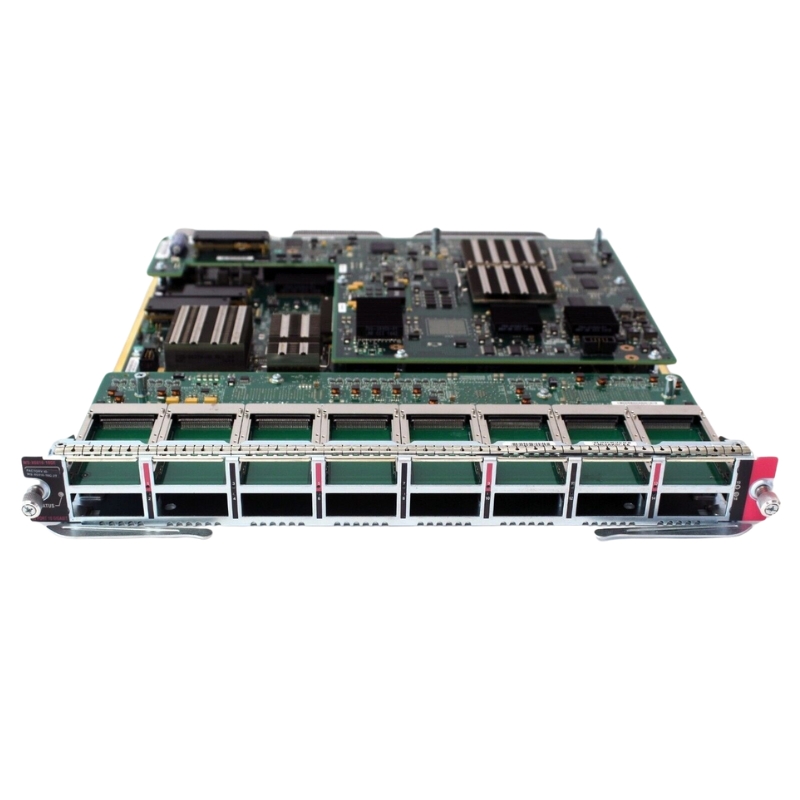


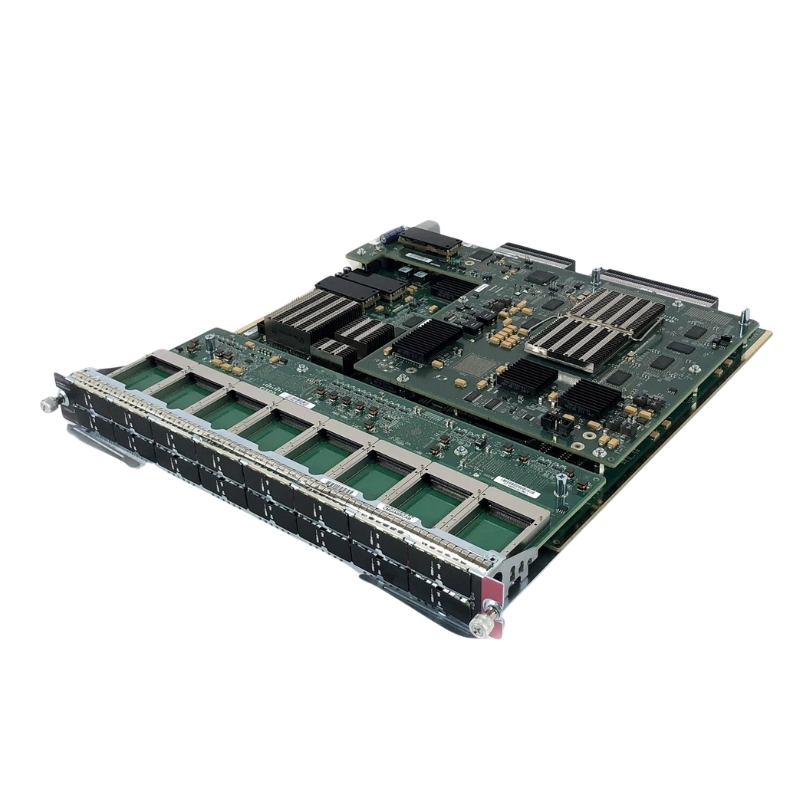
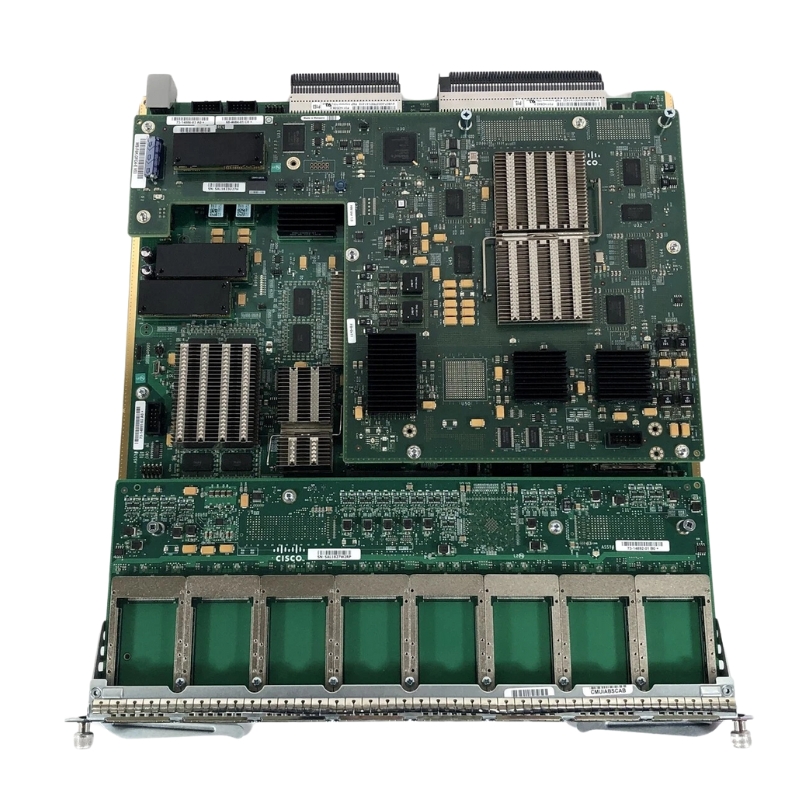
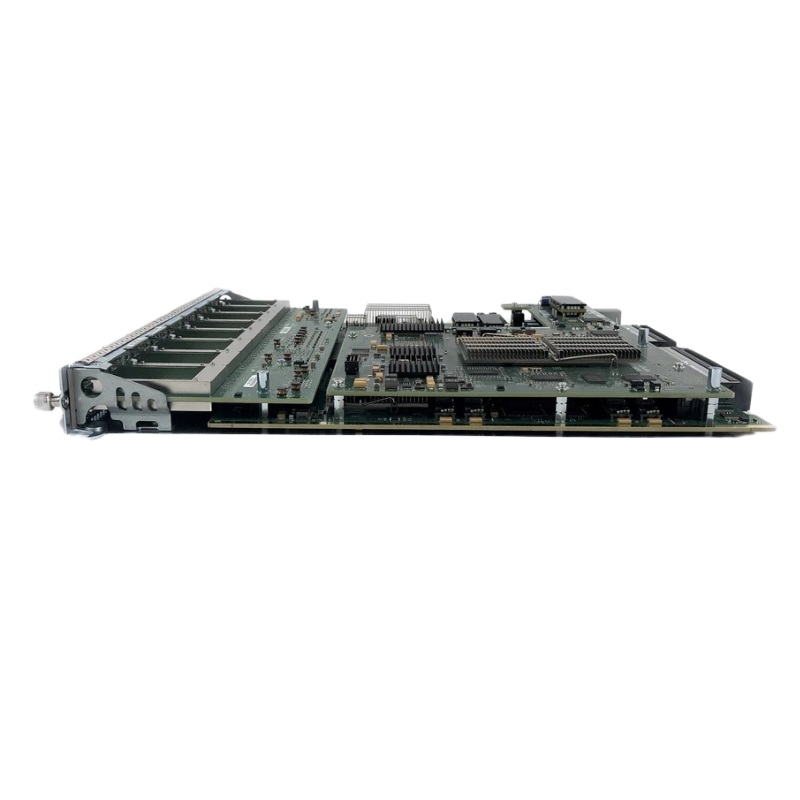
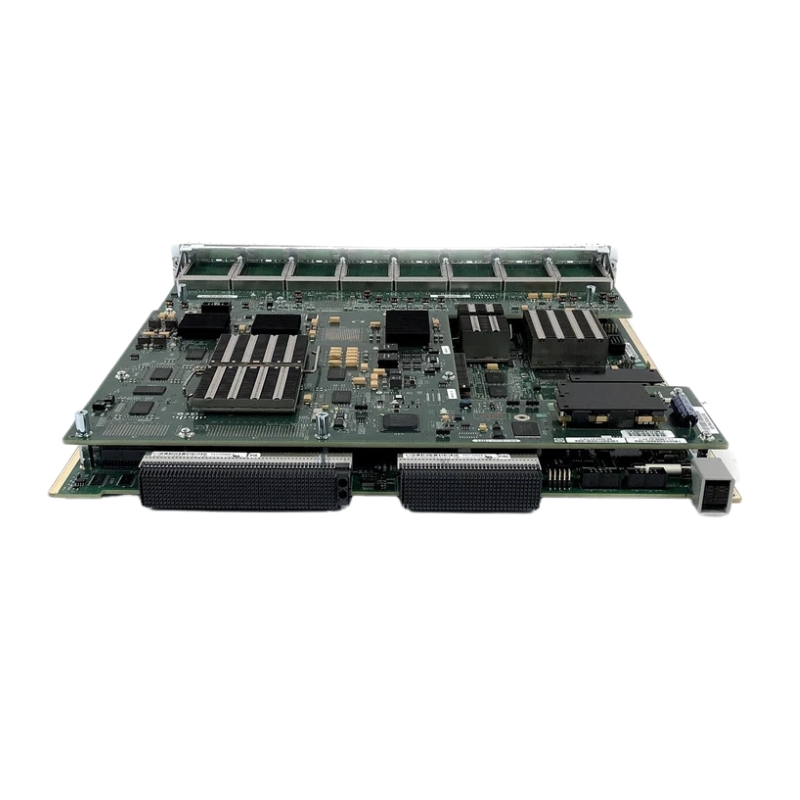
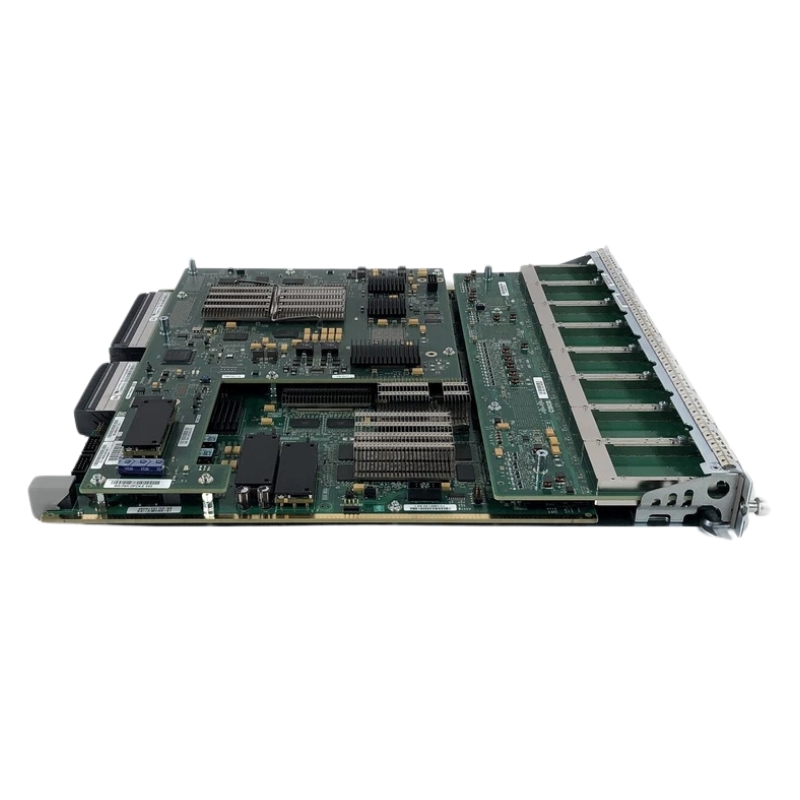
Cisco WS-X6816-10GE 16 Ports Expansion Module 10 Gigabit Ethernet. Excellent Refurbished with 1 year replacement warranty
The Cisco WS-X6816-10GE is a high-performance 10-Gigabit Ethernet expansion module designed to enhance enterprise and data center network infrastructures. This plug-in module delivers exceptional bandwidth, scalability, and reliability, making it an ideal choice for organizations seeking advanced networking solutions.
Built as a plug-in expansion card, the Cisco WS-X6816-10GE integrates effortlessly into compatible Cisco systems. Its modular architecture ensures flexible deployment and simplified upgrades.
This expansion module supports the 10-Gigabit Ethernet (10GbE) standard, enabling ultra-fast data transmission for bandwidth-intensive applications.
To fully appreciate the capabilities of the WS-X6816-10GE, one must understand its role within the modular Cisco ecosystem. It is not a standalone switch but a high-density line card designed for insertion into a supervisor-engine-driven chassis.
The module's performance is intrinsically linked to other chassis components, primarily the backplane and the Supervisor Engine.
The module features a 40 Gbps full-duplex connection to the Catalyst 6500 Series Switch Fabric. This architecture is critical, as it dictates the aggregate throughput available to all 16 ports. While each port supports 10 Gbps line rate, the shared fabric connection means that oversubscription ratios must be carefully considered during network design, especially for all-ports-at-full-capacity scenarios. This design is typical for aggregation modules, balancing cost and performance for real-world traffic patterns.
The WS-X6816-10GE requires a Supervisor Engine 720 or later (such as the VS-S720-10G) to operate. The Supervisor 720, with its integrated Multi-Gigabit Fabric, is essential for activating the module's fabric-enabled capabilities, allowing it to forward traffic at line rate across the fabric to other slots. Operating with earlier supervisors would severely limit performance, relegating traffic to the shared bus.
The module is a double-height card occupying a single slot in the chassis. Its front panel houses 16 fixed ports, each using XENPAK-based 10GBASE-XX transceivers.
As a double-height module, it consumes significant power and cooling resources within the chassis. Proper chassis power supply sizing and airflow management are prerequisites for stable operation. Early deployments often required upgrades to high-capacity AC or DC power supplies to support multiple such modules.
Each of the 16 ports is a 10-Gigabit Ethernet port that requires a separate XENPAK optical transceiver. The port type is defined by the transceiver installed (e.g., SR for short-range multi-mode, LR for long-range single-mode, ER for extended reach, and LX4 for legacy multi-mode support). This flexibility allowed network architects to tailor the module for diverse connectivity needs, from short-distance data center links (using 10GBASE-SR) to long-haul campus or metro connections (using 10GBASE-LR/ER).
Beyond raw speed, the WS-X6816-10GE inherited the rich, proven software feature set of the Catalyst 6500 Series, making it far more than a simple aggregation card.
Leveraging the distributed forwarding architecture of the Supervisor 720, the module can achieve high packets-per-second (PPS) rates. When operating in fabric-enabled mode, forwarding decisions are made locally on the module's dedicated ASICs, with only the payload traversing the switch fabric. This architecture minimizes latency and maximizes throughput for inter-module traffic.
The module supports the full suite of Catalyst Layer 2 features, including comprehensive IEEE 802.1Q VLAN trunking, Rapid Per-VLAN Spanning Tree Plus (RPVST+), and Multiple Spanning Tree (MST). Advanced features like Private VLANs, VLAN ACLs (VACLs), and robust broadcast/multicast storm control are fully supported, ensuring secure and stable network segmentation at 10GbE speeds.
When paired with a Supervisor 720 running the appropriate Cisco IOS® Software or Cisco IOS® XE Software image, the module becomes a fully functional Layer 3 routing interface. It supports static routing and dynamic routing protocols such as OSPF, EIGRP, and BGP at wire speed. The integration with the Cisco Express Forwarding (CEF) architecture ensures efficient routing table lookups and load balancing across multiple equal-cost paths.
The true value of the Catalyst platform lies in its ability to integrate services directly into the forwarding path.
The module implements sophisticated QoS policies to manage network congestion. It supports classification, marking, policing, and weighted random early detection (WRED) based on Layer 2, 3, and 4 parameters. This allows for the creation of service-level agreements (SLAs) for voice, video, and critical data traffic, even when aggregated over high-speed 10GbE links.
Security is enforced through hardware-based access control lists (ACLs). The module can apply standard and extended ACLs at line rate without impacting performance. Integration with Cisco TrustSec® for security group tagging (SGT) was possible with later software versions, providing role-based access control. Features like Dynamic ARP Inspection (DAI), IP Source Guard, and DHCP snooping help mitigate attacks at the aggregation layer.
The Cisco WS-X6816-10GE found its home in several critical network roles, often defining the performance ceiling for entire network blocks.
In the mid-to-late 2000s, as servers began to ship with 10GbE network interface cards (NICs), the WS-X6816-10GE became the ideal aggregation point for high-performance server racks or blade chassis enclosures. It would aggregate traffic from top-of-rack (ToR) switches or connect directly to high-end application and database servers, providing low-latency, high-throughput access to storage and other application tiers.
In large campus networks, this module served as the backbone of the network core. It provided the high-speed trunking links between distribution layer switches, consolidating traffic from hundreds of access switches. Its robust Layer 3 capabilities allowed it to function as the core routing layer, running OSPF or EIGRP to manage enterprise-wide subnets.
Before the widespread adoption of 40GbE and 100GbE, bundling multiple 10GbE links via EtherChannel (Link Aggregation Control Protocol - LACP) was the primary method to create resilient, high-bandwidth logical trunks. The WS-X6816-10GE, with its 16 ports, could create massive channel groups, providing up to 160 Gbps of full-duplex bandwidth between chassis for a truly non-blocking core.


 Contact Us
 Information
 Catalog
 Solid State Drives (SSD)
 Network Switches
 Hard Disk Drives
 HBA & Controllers
 PC & Servers
 PC & Server Memory
 CPU & Processors
 Network Routers
 Power Supplies
 Tape Drives & Libraries
 Network Devices
 Computer & Network Cables