(7% discount is applied at checkout)
Cart is empty
Your go-to destination for cutting-edge server products



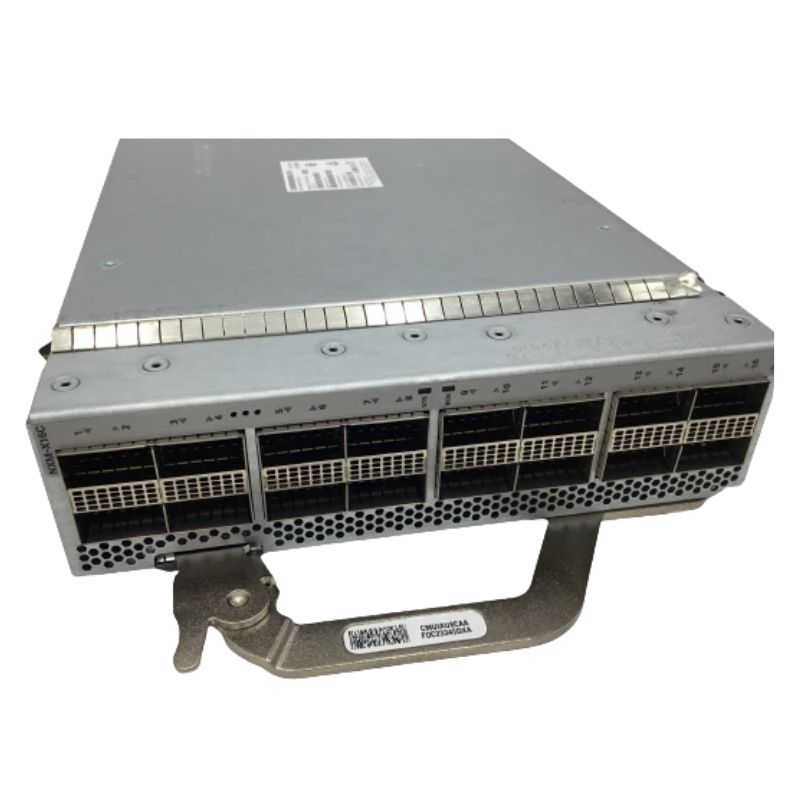
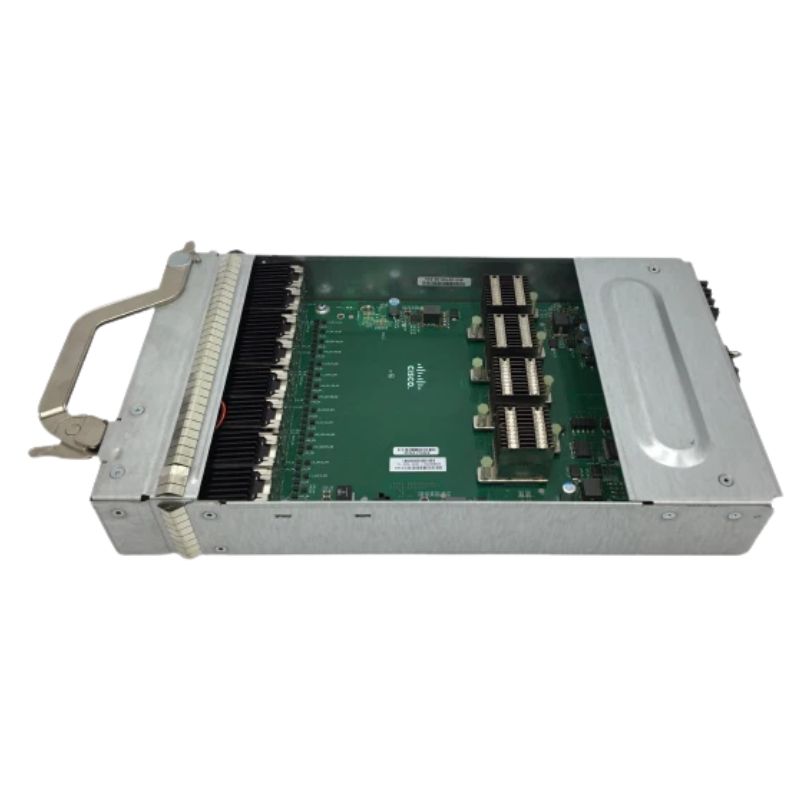
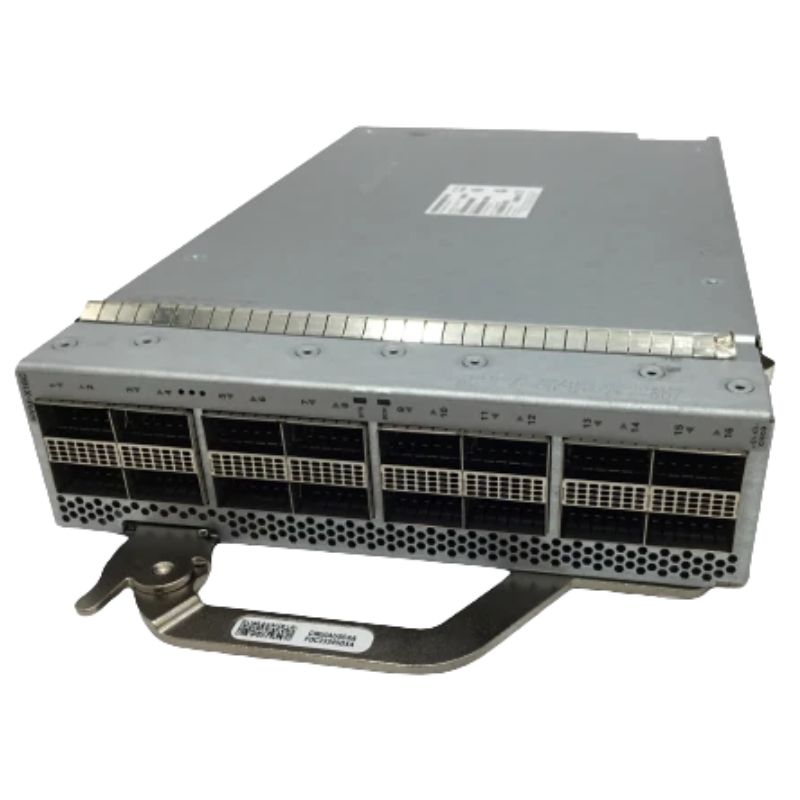
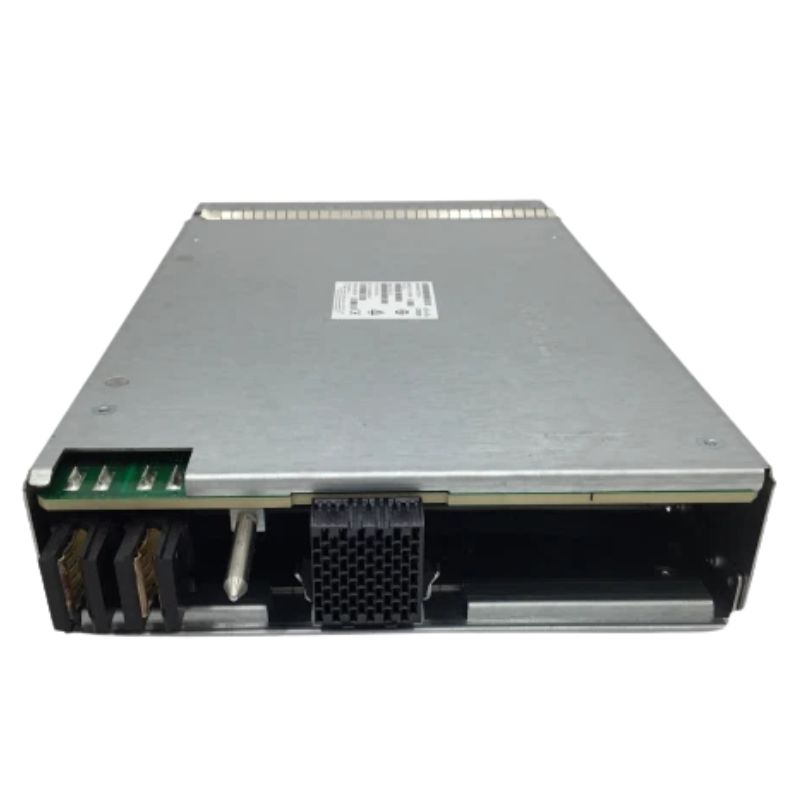
Cisco NXM-X16C Nexus 16 Ports 100G Line Expansion Module. Excellent Refurbished with 1 Year Replacement Warranty
Cisco Nexus 16-Port 100G Line Expansion Module
The Cisco NXM-X16C is a high-performance Nexus line expansion module engineered to increase network capacity, improve bandwidth, and deliver reliable data transmission for modern enterprise and data center environments. Supporting multiple Ethernet speeds, this expansion module offers exceptional flexibility for growing network infrastructures while ensuring seamless connectivity and outstanding performance.
Interface Type
The Cisco NXM-X16C Nexus 16 Ports 100G Line Expansion Module is a high-performance networking solution designed to meet the demands of modern data centers, enterprise infrastructures, and cloud environments. This expansion module provides sixteen 100G Ethernet ports, enabling organizations to scale their network capacity with efficiency and reliability. Built for the Cisco Nexus series, it integrates seamlessly into existing architectures, offering advanced throughput, low latency, and robust scalability for mission-critical applications.
The architecture of the Cisco NXM-X16C Nexus module emphasizes modularity and flexibility. Each of the sixteen 100G ports is engineered to deliver consistent performance across diverse workloads, from virtualization to high-frequency trading. The design incorporates advanced ASICs that optimize packet forwarding, reduce bottlenecks, and ensure deterministic latency. Its compact form factor allows easy installation into Cisco Nexus chassis, making it a practical choice for enterprises seeking to expand their networking capabilities without compromising space or energy efficiency.
The Cisco NXM-X16C module integrates seamlessly with the Cisco Nexus 9000 and 7000 series switches, enhancing their capabilities by adding high-density 100G connectivity. This integration supports spine-leaf architectures, enabling organizations to build scalable and resilient data center fabrics. By leveraging Cisco’s NX-OS operating system, the module ensures compatibility with advanced features such as segment routing, VXLAN, and EVPN, which are essential for modern cloud-native and containerized environments.
Performance optimization is at the core of the Cisco NXM-X16C design. Each port supports line-rate forwarding, ensuring that traffic is processed without drops or delays. The module’s hardware-based forwarding mechanisms reduce CPU overhead, allowing the system to handle millions of packets per second efficiently. This makes it ideal for applications requiring deterministic performance, such as financial trading platforms, AI workloads, and real-time analytics.
With sixteen 100G ports, the Cisco NXM-X16C provides exceptional port density, enabling organizations to connect multiple servers, storage systems, and other networking devices. This density supports scalability, allowing enterprises to expand their infrastructure as demands grow. The module’s ability to aggregate bandwidth across multiple ports ensures that even the most demanding workloads can be accommodated without performance degradation.
Energy efficiency is a critical consideration in modern data centers, and the Cisco NXM-X16C is designed with this in mind. The module incorporates advanced power management features that reduce energy consumption without compromising performance. Its efficient cooling design minimizes heat output, contributing to lower operational costs and improved sustainability. This makes it an ideal choice for organizations seeking to balance performance with environmental responsibility.
The Cisco NXM-X16C Nexus 16 Ports 100G Line Expansion Module is versatile, supporting a wide range of use cases across industries. It is particularly valuable in environments where high-speed connectivity and low latency are critical. From hyperscale data centers to enterprise IT infrastructures, the module provides the performance and reliability needed to support modern applications.
In data centers, the Cisco NXM-X16C enables the deployment of spine-leaf architectures that provide predictable performance and scalability. Its 100G ports support east-west traffic patterns, ensuring that workloads such as virtualization, cloud computing, and big data analytics can be processed efficiently. By reducing latency and increasing throughput, the module enhances overall data center performance.
Cloud environments demand high-speed connectivity to support virtual machines, containers, and microservices. The Cisco NXM-X16C provides the bandwidth necessary to ensure seamless communication between cloud resources. Its support for VXLAN and EVPN enables organizations to build scalable and secure cloud fabrics, making it a critical component in hybrid and multi-cloud deployments.
High-performance computing (HPC) workloads require deterministic performance and high bandwidth. The Cisco NXM-X16C delivers line-rate forwarding across all sixteen ports, ensuring that HPC clusters can communicate efficiently. Its low-latency design makes it ideal for scientific simulations, AI training, and other compute-intensive tasks.
The Cisco NXM-X16C Nexus module is equipped with advanced features that enhance its functionality and make it suitable for complex networking environments. These features include support for automation, programmability, and advanced security mechanisms.
Automation is essential in modern networking, and the Cisco NXM-X16C supports programmability through APIs and Cisco’s NX-OS. This enables administrators to automate configuration, monitoring, and troubleshooting tasks, reducing operational overhead. Programmability also allows integration with orchestration tools such as Ansible, Puppet, and Chef, streamlining network management in large-scale environments.
Security is a top priority in networking, and the Cisco NXM-X16C incorporates advanced security features to protect data and infrastructure. It supports access control lists (ACLs), role-based access control (RBAC), and encryption mechanisms to safeguard traffic. These features ensure that sensitive data remains secure, even in multi-tenant environments.
Quality of Service is critical for ensuring that mission-critical applications receive the bandwidth they need. The Cisco NXM-X16C supports advanced QoS features, including traffic shaping, prioritization, and congestion management. These features enable organizations to deliver consistent performance for applications such as VoIP, video conferencing, and real-time analytics.
Reliability is a hallmark of Cisco products, and the NXM-X16C is no exception. The module is designed with redundancy features that ensure continuous operation even in the event of hardware failures. Hot-swappable components allow for maintenance without downtime, while advanced monitoring tools provide real-time visibility into performance and health.
High availability is achieved through redundant power supplies, fans, and control planes. These features ensure that the module continues to operate even if one component fails. This makes it suitable for mission-critical environments where downtime is not an option.
The Cisco NXM-X16C supports resilient network fabrics that provide fault tolerance and load balancing. By distributing traffic across multiple paths, the module ensures that networks remain operational even in the event of link failures. This resilience is essential for maintaining service continuity in large-scale deployments.
As networking demands continue to evolve, the Cisco NXM-X16C provides a future-proof solution that can adapt to new technologies and workloads. Its support for emerging standards such as 400G Ethernet ensures that organizations can scale their infrastructure without replacing existing hardware. This makes it a cost-effective investment for enterprises seeking long-term value.
The Cisco NXM-X16C is designed to support emerging technologies such as artificial intelligence, machine learning, and edge computing. Its high-speed connectivity ensures that these workloads can be processed efficiently, enabling organizations to leverage new innovations without compromising performance.


 Contact Us
 Information
 Catalog
 Solid State Drives (SSD)
 Network Switches
 Hard Disk Drives
 HBA & Controllers
 PC & Servers
 PC & Server Memory
 CPU & Processors
 Network Routers
 Power Supplies
 Tape Drives & Libraries
 Network Devices
 Computer & Network Cables