(7% discount is applied at checkout)
Cart is empty
Your go-to destination for cutting-edge server products
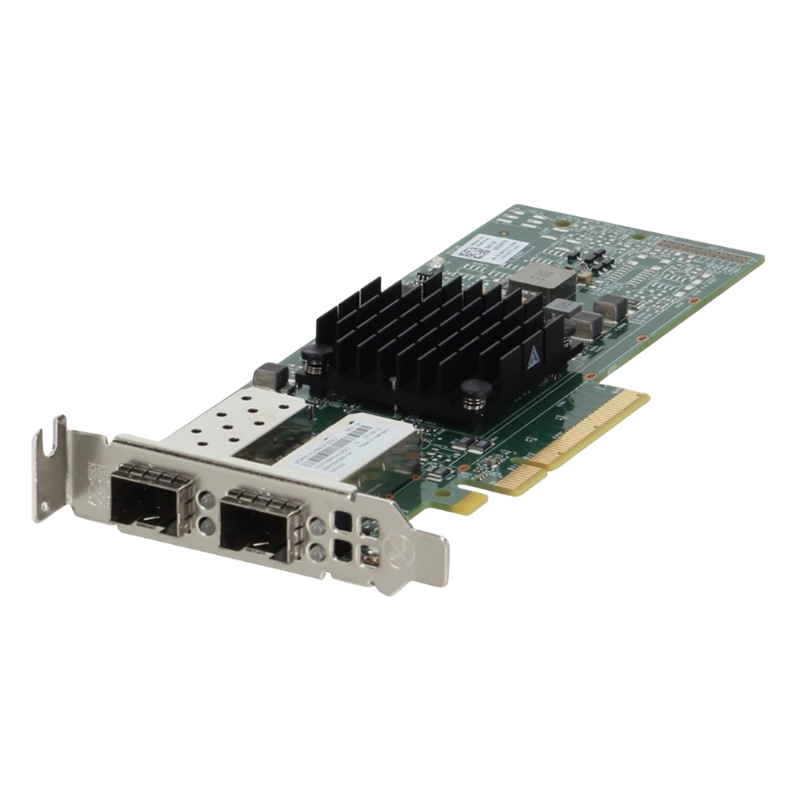


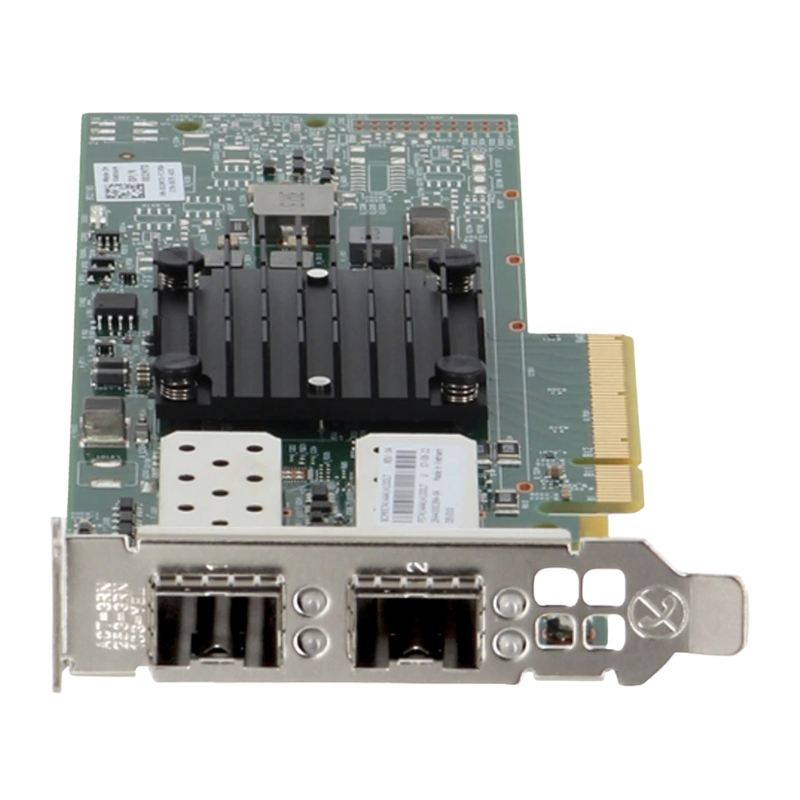
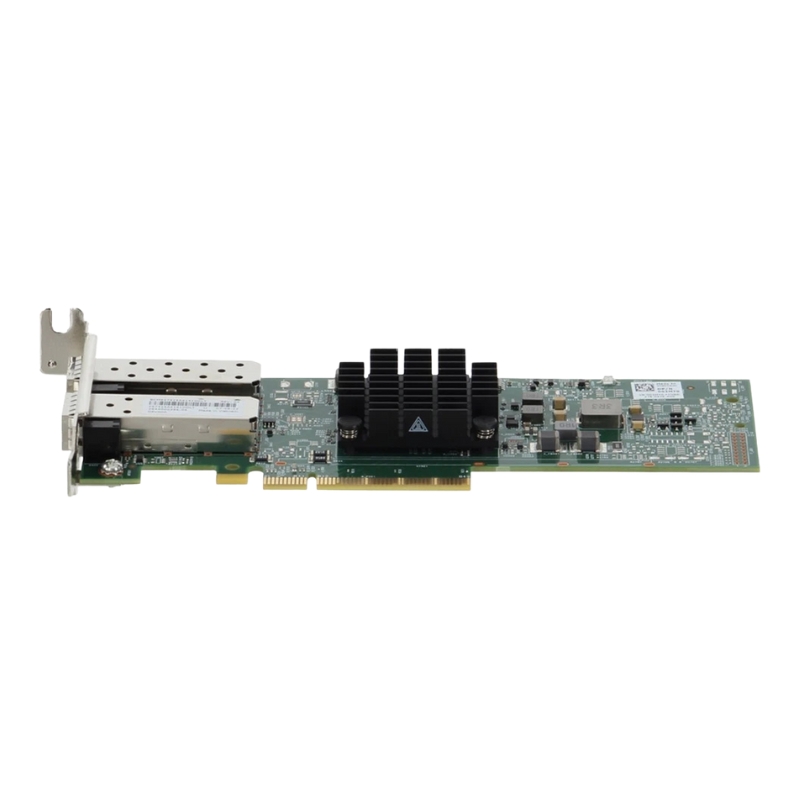
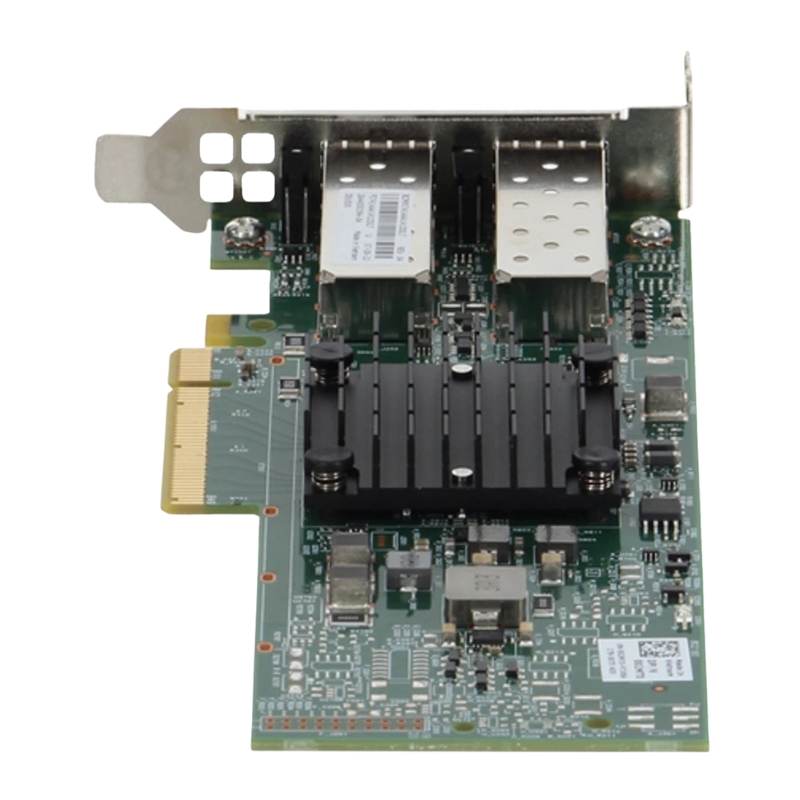
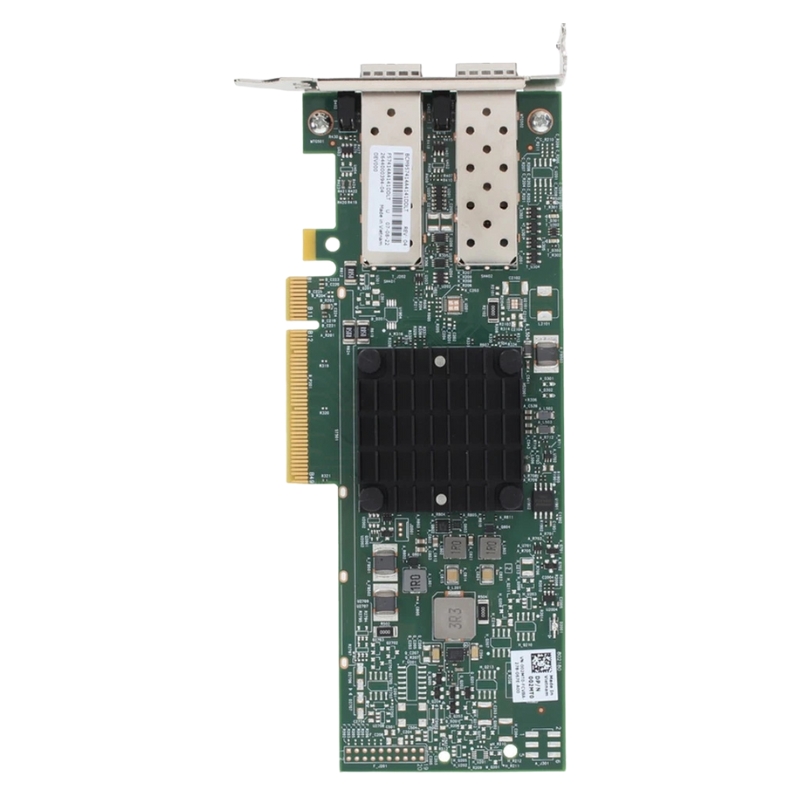
Dell 540-BDID Broadcom Dual Ports 10/25GbE SFP28 Adapter. Excellent Refurbished with 1 year replacement warranty
| SKU/MPN | Warranty | Price | Condition | You save |
|---|---|---|---|---|
| 540-BDID | 1 Year Warranty | $420.00 | New Sealed in Box (NIB) | You save: $147.00 (26%) |
| 540-BDID | 1 Year Warranty | $63.00 | Excellent Refurbished | You save: $22.05 (26%) |
The Dell 540-BDID Broadcom Dual-Port 10/25GbE SFP28 Adapter is a high-performance enterprise-grade networking solution engineered for ultra-fast connectivity. With PCI Express support and dual SFP28 ports, this adapter ensures reliable throughput, scalability, and efficiency for modern data centers, virtualization, and cloud infrastructures.
The Dell 540-BDID Broadcom Dual Ports 10/25GbE SFP28 Adapter represents a high-performance network interface solution engineered for modern enterprise data centers requiring scalable, low-latency, and high-throughput connectivity. Designed with advanced Broadcom controller technology and integrated into Dell server ecosystems, this adapter is optimized for virtualization, cloud workloads, high-performance computing, and storage-intensive applications. Built to deliver flexibility across both 10 Gigabit Ethernet and 25 Gigabit Ethernet environments, it provides a seamless upgrade path for organizations transitioning toward next-generation networking infrastructures.
As part of Dell’s enterprise networking portfolio, this adapter aligns with the broader server and infrastructure strategy of Dell Technologies, ensuring compatibility, reliability, and optimized firmware integration across supported platforms. The inclusion of Broadcom-based silicon from Broadcom enhances packet processing efficiency, offload capabilities, and virtualization readiness.
The dual-port configuration of the Dell 540-BDID adapter is designed to support simultaneous high-speed data transmission across two independent channels. This architecture enables balanced network traffic distribution, redundancy, and improved fault tolerance in mission-critical environments. Each port is capable of handling 10GbE or 25GbE SFP28 transceiver modules, allowing administrators to tailor deployment based on performance demands and infrastructure readiness.
By leveraging dual-port functionality, enterprises can optimize server-to-switch communication pathways while maintaining consistent throughput under heavy workloads. This ensures efficient utilization of available PCIe bandwidth and enhances scalability in virtualized environments.
The adapter utilizes SFP28 cages, supporting both direct attach copper (DAC) and optical transceivers. This flexibility allows seamless integration into diverse data center topologies, including short-range rack-level connectivity and long-distance inter-rack communication. The SFP28 standard ensures compatibility with existing SFP+ infrastructure while providing a clear upgrade path to higher bandwidth 25GbE networking.
The modular transceiver design enables organizations to adapt network configurations without replacing the entire hardware infrastructure, reducing operational costs and improving long-term scalability.
At the core of the Dell 540-BDID adapter is a Broadcom network controller optimized for enterprise-grade packet processing and hardware offloading. The controller is designed to minimize CPU overhead by handling compute-intensive networking tasks such as checksum offload, segmentation, and interrupt moderation directly on the adapter.
The integration of Broadcom networking technology ensures reliable throughput performance under sustained workloads, making it suitable for environments such as virtualization clusters, database servers, and cloud orchestration platforms. The hardware-level acceleration significantly enhances data processing efficiency while reducing latency in real-time applications.
The Dell 540-BDID adapter supports adaptive operation across both 10 Gigabit Ethernet and 25 Gigabit Ethernet modes, enabling dynamic bandwidth scaling based on network infrastructure capability. This dual-speed compatibility ensures smooth migration paths for organizations upgrading from legacy 10GbE systems to modern 25GbE architectures without requiring immediate infrastructure replacement.
This adaptive bandwidth functionality allows enterprises to maximize return on investment while maintaining operational continuity during network expansion phases. It also enables flexible deployment in mixed-speed environments commonly found in large-scale data centers.
The adapter is engineered for ultra-low latency communication, which is critical for high-frequency trading systems, real-time analytics platforms, and distributed computing clusters. Through optimized interrupt handling and intelligent queue management, the device reduces packet processing delays and ensures consistent response times even under heavy network congestion.
By offloading compute-intensive networking tasks from the host CPU, the adapter improves overall system efficiency and ensures that server resources are dedicated primarily to application workloads rather than network processing overhead.
Multi-queue architecture support allows the adapter to distribute network traffic across multiple processing queues, enhancing parallelism and improving overall throughput. This design is particularly beneficial in virtualized environments where multiple virtual machines require simultaneous network access.
Each queue operates independently, enabling efficient load balancing and minimizing bottlenecks during peak traffic conditions. This results in more predictable performance in enterprise workloads such as virtualization hosting, database replication, and distributed storage systems.
The Dell 540-BDID Broadcom adapter is highly optimized for virtualized environments including hypervisor-based platforms such as VMware, Hyper-V, and KVM. Its support for hardware offload and multi-queue processing ensures efficient virtual machine networking and reduced CPU contention.
Virtual machine density can be significantly increased due to the adapter’s ability to handle high volumes of concurrent network connections without degrading performance. This makes it ideal for private cloud deployments and enterprise virtualization clusters.
In cloud computing environments, network scalability and reliability are critical. The adapter supports high-bandwidth east-west traffic common in distributed cloud architectures, enabling efficient communication between compute nodes, storage systems, and orchestration layers.
Its compatibility with modern software-defined networking (SDN) architectures allows seamless integration into automated provisioning systems, enabling dynamic workload allocation and efficient resource utilization across cloud infrastructures.
The Dell 540-BDID adapter is also optimized for storage-intensive workloads, including network-attached storage (NAS) and storage area network (SAN) environments. High throughput and low latency ensure fast data retrieval and efficient replication across storage clusters.
This makes the adapter suitable for environments requiring rapid access to large datasets, such as media rendering farms, scientific computing clusters, and big data analytics platforms.
Designed for seamless integration with Dell Technologies server platforms, the 540-BDID adapter ensures optimized firmware compatibility and driver support across supported PowerEdge systems. This tight integration enhances stability, reduces configuration complexity, and ensures consistent performance across deployments.
The adapter is validated through extensive compatibility testing to ensure reliability under enterprise workloads and long-term operational stability in mission-critical environments.
The adapter supports major enterprise operating systems including Linux distributions, Windows Server environments, and virtualization hypervisors. Broadcom driver ecosystems provide continuous updates and optimization improvements, ensuring compatibility with evolving software stacks and security requirements.
This wide OS support ensures that enterprises can deploy the adapter across heterogeneous environments without compatibility concerns, simplifying IT infrastructure management.
The adapter utilizes a high-speed PCI Express interface designed to maximize data throughput between the network card and the host system. Efficient lane utilization ensures that bandwidth bottlenecks are minimized, allowing full exploitation of 10GbE and 25GbE capabilities.
This PCIe-based architecture also enhances scalability, enabling deployment in both entry-level and high-density server configurations without compromising performance.
One of the key advantages of the Dell 540-BDID adapter is its extensive hardware offloading capabilities. Functions such as TCP/IP checksum calculation, segmentation offload, and large receive offload are handled directly by the adapter, significantly reducing CPU workload.
This enables server processors to focus on application-level tasks, improving overall system efficiency and reducing power consumption in large-scale deployments.
Single Root Input/Output Virtualization (SR-IOV) support enables the adapter to allocate dedicated virtual functions to multiple virtual machines. This enhances performance isolation and reduces hypervisor overhead, ensuring predictable network performance for each virtual workload.
This capability is particularly beneficial in environments where multiple tenants or applications share the same physical infrastructure while requiring guaranteed performance levels.
The adapter incorporates intelligent traffic management mechanisms that prioritize network flows based on application requirements. This ensures that latency-sensitive applications receive priority bandwidth allocation while maintaining fair distribution across all network processes.
Such intelligent traffic handling improves service quality in enterprise environments where multiple critical applications operate simultaneously.
The Dell 540-BDID adapter integrates hardware-level security enhancements that support secure packet processing and encrypted data handling. These features reduce exposure to CPU-level vulnerabilities and ensure that sensitive data is processed securely within the network stack.
By leveraging hardware-based acceleration, the adapter contributes to maintaining compliance with enterprise security policies while ensuring minimal performance degradation.
Dual-port architecture inherently supports redundancy mechanisms that ensure continuous network availability even in the event of port or link failure. This enhances system resilience and reduces downtime in mission-critical environments.
Combined with intelligent failover configurations, the adapter ensures uninterrupted service delivery in enterprise-grade infrastructures.
The adapter is optimized for high-density rack deployments commonly found in modern data centers. Its compact form factor allows efficient utilization of server slots while maintaining high-performance networking capabilities.
This makes it ideal for large-scale deployments where space optimization and thermal efficiency are key operational considerations.
Energy-efficient design principles ensure reduced power consumption while maintaining high performance levels. Advanced thermal management features help maintain optimal operating temperatures even under sustained workloads.
This contributes to lower operational costs and improved sustainability in enterprise data center environments.


 Contact Us
 Information
 Catalog
 Solid State Drives (SSD)
 Network Switches
 Hard Disk Drives
 HBA & Controllers
 PC & Servers
 PC & Server Memory
 CPU & Processors
 Network Routers
 Power Supplies
 Tape Drives & Libraries
 Network Devices
 Computer & Network Cables