(7% discount is applied at checkout)
Cart is empty
Your go-to destination for cutting-edge server products
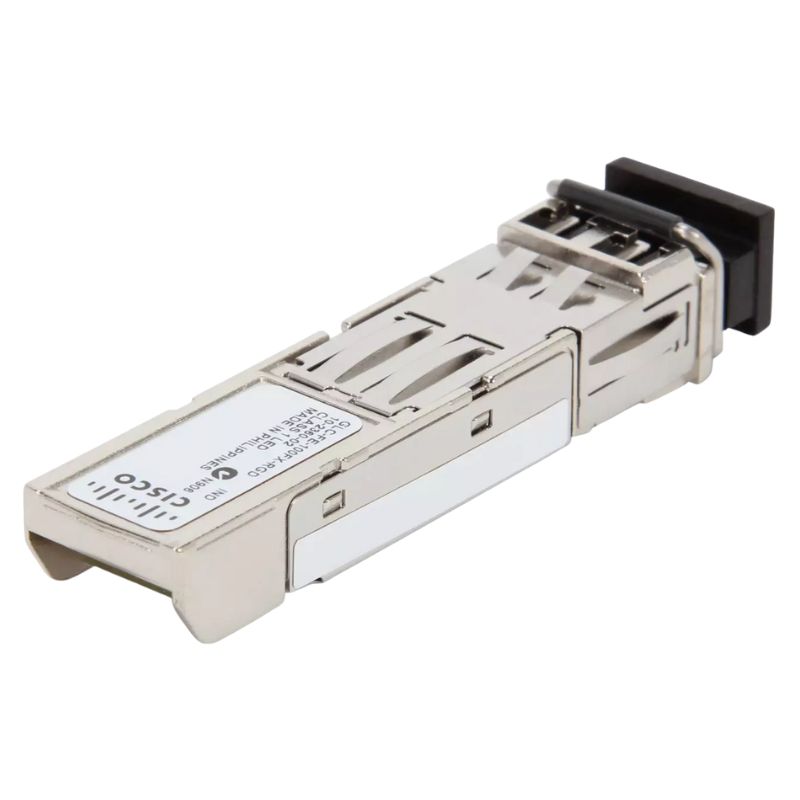


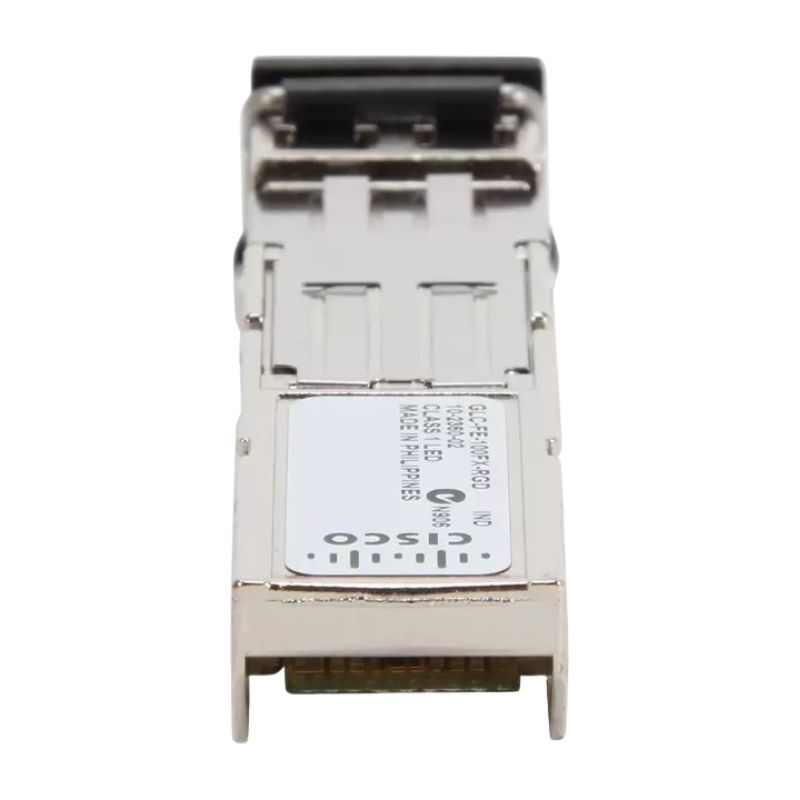
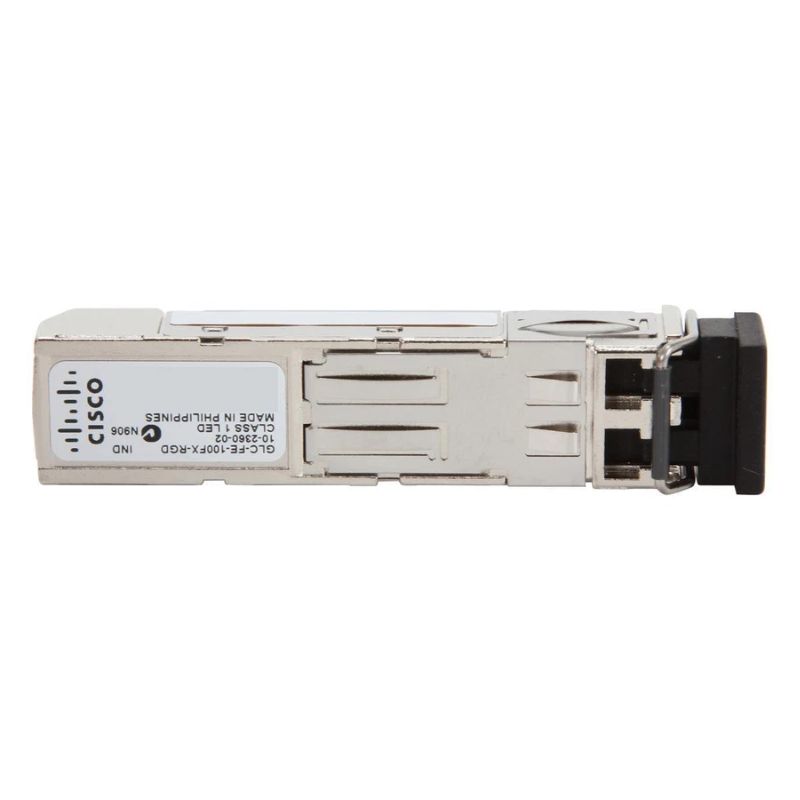
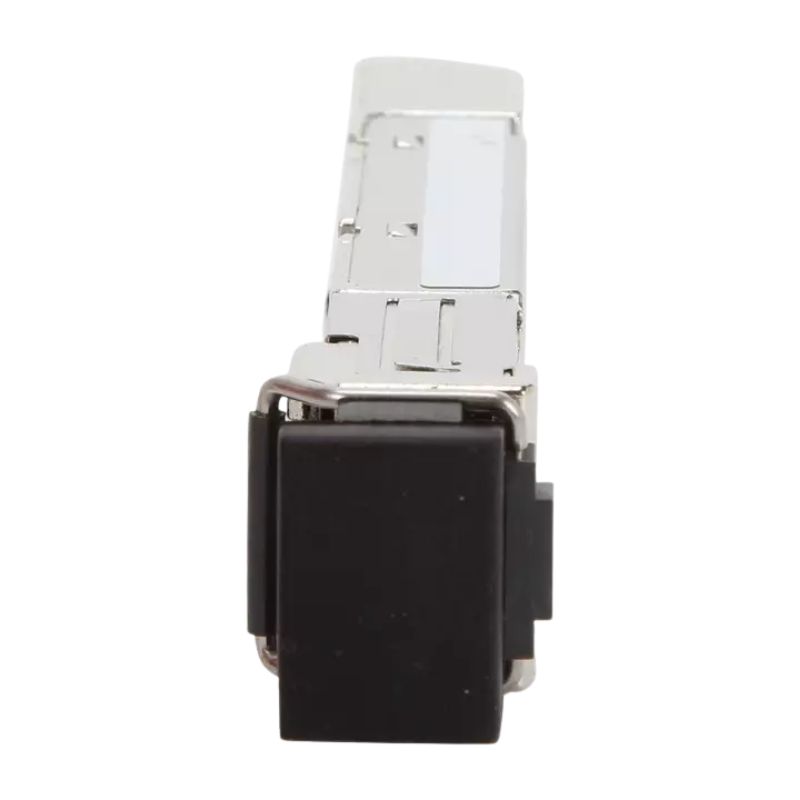
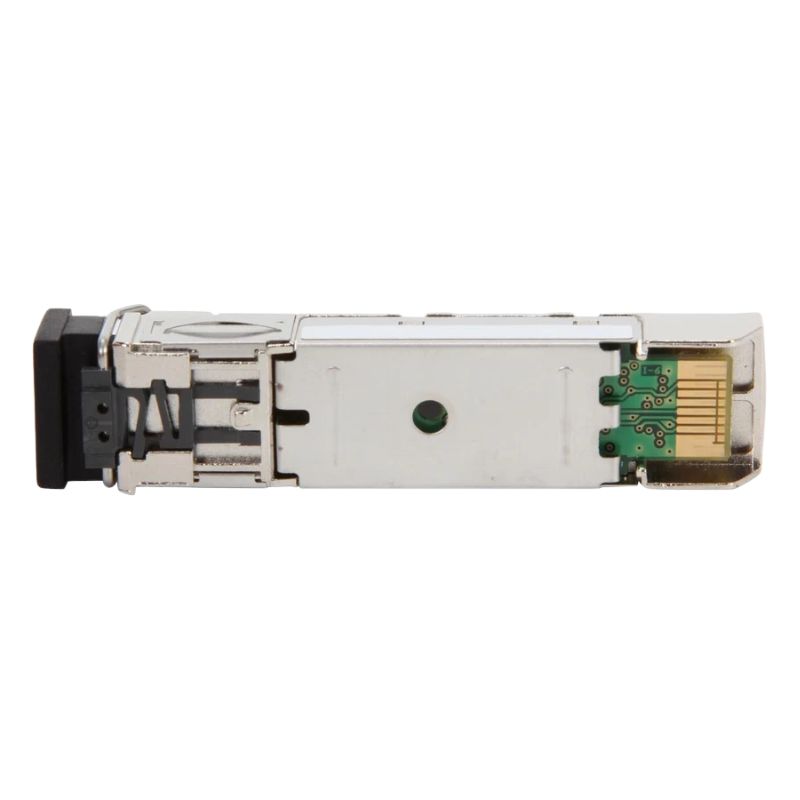
Cisco GLC-FE-100FX-RGD 100MBPS Mini GBIC Transceiver Module. Excellent Refurbished with 1 year replacement warranty
| SKU/MPN | Warranty | Price | Condition | You save |
|---|---|---|---|---|
| GLC-FE-100FX-RGD | 1 Year Warranty | $99.00 | Excellent Refurbished | You save: $34.65 (26%) |
| GLC-FE-100FX-RGD | 1 Year Warranty | $118.00 | Factory-Sealed New Retail in Original Box (FSB) | You save: $41.30 (26%) |
The Cisco GLC-FE-100FX-RGD is an industrial-grade 100Mbps Small Form-Factor Pluggable (SFP) transceiver engineered for reliable Fast Ethernet fiber connectivity in rugged network environments. Designed as a hot-swappable plug-in module, it supports 100BASE-FX optical networking over multimode fiber and is well suited for industrial switching, utility networks, transportation systems, outdoor cabinets, and other deployments where durable optical uplinks are required. This model is built for stable 100Mb Ethernet transmission, uses a 1310 nm optical wavelength, and enables long-distance fiber runs up to approximately 2 km, which is around 1.2 miles.
The Cisco GLC-FE-100FX-RGD 100MBPS Mini GBIC Transceiver Module belongs to the rugged Fast Ethernet optical transceiver category built for dependable fiber uplinks in industrial, utility, transportation, automation, and harsh-environment networking deployments. This module is engineered for organizations that still rely on stable 100BASE-FX optical infrastructure in environments where network equipment must handle vibration, dust, temperature variation, and long operating cycles without compromising link stability. As a compact pluggable transceiver, the Cisco GLC-FE-100FX-RGD extends the functionality of compatible Cisco switches and routers by enabling 100 Mbps fiber connections over multimode fiber while preserving the flexibility and serviceability associated with the Small Form-Factor Pluggable design.
In many industrial and field deployments, network design priorities are different from those in a traditional office LAN. Reliability, environmental resilience, consistent fiber connectivity, and predictable performance often matter more than simply pushing higher speeds. The Cisco GLC-FE-100FX-RGD addresses those priorities by supporting Fast Ethernet fiber connectivity in a ruggedized format suited to industrial Ethernet platforms and infrastructure placed in substations, roadside cabinets, manufacturing floors, energy facilities, remote utility sites, and transportation control environments. For businesses operating critical control networks, supervisory systems, and field communications, this transceiver category remains highly relevant because it bridges the gap between industrial networking requirements and modular Cisco access infrastructure.
The Mini GBIC form factor also gives network administrators flexibility when planning mixed-media access layers. Copper and fiber interfaces can coexist in the same switching environment, allowing engineers to match the right physical medium to each location. In electrically noisy areas, in long-distance runs between cabinets, or in segments where galvanic isolation is important, fiber often becomes the preferred transport medium. The Cisco GLC-FE-100FX-RGD supports that design choice with a compact optical module that can be installed, replaced, or standardized across a rugged Cisco deployment without redesigning the entire switching architecture.
The Cisco GLC-FE-100FX-RGD sits within the broader category of Cisco Fast Ethernet SFP transceivers, a family of optical modules developed to provide 100 Mbps connectivity over different fiber media types and distances. Within this family, the rugged 100BASE-FX model serves environments where the switching platform is not located in a climate-controlled data room but instead operates in industrial or outdoor-adjacent conditions. The transceiver category includes options for multimode and single-mode fiber, but the GLC-FE-100FX-RGD is particularly aligned with short-to-medium-distance multimode fiber deployments that need industrial-grade durability rather than standard commercial office conditions.
Fast Ethernet SFP modules remain useful in operational technology networks, legacy control environments, public infrastructure systems, and industrial segments where 100 Mbps bandwidth is sufficient for the application profile. Industrial automation traffic, telemetry streams, PLC communications, serial-over-IP gateways, remote monitoring systems, and low-latency control data often do not require gigabit throughput at every edge node. What they do require is consistent and deterministic connectivity over fiber, especially across noisy electrical environments or physically separated cabinets. In that context, the Cisco GLC-FE-100FX-RGD is less about consumer-facing bandwidth expectations and more about network integrity, optical resilience, and lifecycle compatibility with installed industrial Ethernet assets.
Because the module belongs to a modular SFP ecosystem, it also supports phased infrastructure upgrades. A network architect can standardize on a rugged Cisco switching platform and choose the transceiver type according to the cabling plant, distance requirement, and deployment environment. This modularity is important for industrial networks that evolve incrementally over time. Instead of replacing an entire switch to support a fiber run, the organization can simply deploy the appropriate transceiver. That makes the GLC-FE-100FX-RGD a practical category product for maintenance planning, spares management, and site-by-site expansion.
Although enterprise campus environments often prioritize gigabit and multigigabit access, 100BASE-FX continues to serve a meaningful role in specialized networking segments. Many industrial devices, embedded controllers, legacy automation systems, remote I/O platforms, and field communications endpoints are designed around Fast Ethernet rather than higher-rate optical interfaces. Replacing those endpoints solely to move from 100 Mbps to 1 Gbps may not be economically justified, especially when the application traffic load is modest and the installed equipment remains operationally critical.
Fiber-based Fast Ethernet also offers practical advantages where copper cabling is limited by electromagnetic interference, grounding concerns, lightning exposure, or long-distance requirements between enclosures. A rugged 100BASE-FX SFP can therefore be the right fit for monitoring networks, security systems, environmental sensors, rail signaling communications, smart utility cabinets, and industrial ring topologies where the performance requirement is moderate but the reliability requirement is high. In these scenarios, the Cisco GLC-FE-100FX-RGD becomes a purpose-built optical building block rather than an outdated speed tier.
One of the most important distinctions of the Cisco GLC-FE-100FX-RGD category is its rugged orientation. Rugged transceivers are selected for networks deployed outside standard office conditions, where temperature extremes, vibration, dust, humidity variation, and extended operating lifecycles are common. Industrial networking hardware must often remain in service for years in locations where maintenance windows are limited and physical access is inconvenient. As a result, component stability and compatibility matter as much as raw port count or peak throughput.
The rugged nature of this transceiver makes it suitable for use with Cisco industrial Ethernet platforms and rugged routers that support SFP uplinks for plant floor and field connectivity. In manufacturing sites, for example, network equipment may be installed near conveyor systems, motors, robotics cells, or heavy machinery. In utility environments, equipment may sit inside substation cabinets or roadside enclosures exposed to wide temperature swings. In transportation networks, modules may be used in rail infrastructure, roadside traffic control cabinets, or industrial vehicle depots where reliability under demanding conditions is essential. The GLC-FE-100FX-RGD category exists to address these realities with a form factor that combines modular serviceability with hardened operational intent.
Rugged optical modules are also valuable because industrial network refresh cycles tend to be longer than those of office access networks. Organizations often standardize on proven platforms for a decade or more, particularly when those platforms support production operations, public infrastructure, or regulated environments. A transceiver designed for rugged service helps preserve that investment by providing an optical option aligned with the same durability philosophy as the host switch or router.
Rugged fiber connectivity delivers operational benefits beyond simple link establishment. Optical transmission is immune to electromagnetic interference, which is a significant advantage in industrial spaces filled with high-voltage equipment, motors, transformers, and switching systems. Fiber links also provide electrical isolation between network segments, helping reduce certain grounding and surge-related concerns. When the transceiver itself is intended for industrial conditions, the overall solution becomes more suitable for field use than a standard office-rated optic would be.
For maintenance teams and network engineers, rugged optics can simplify standardization across geographically dispersed sites. A single module type can be stocked as a spare for substations, industrial campuses, remote pumping stations, municipal utility cabinets, or transportation control rooms, provided the distance and media type match the site design. This consistency reduces procurement complexity and supports faster restoration if a transceiver needs replacement in a critical network path.
The Cisco GLC-FE-100FX-RGD is part of the 100BASE-FX optical transceiver category, meaning it supports 100 Mbps Fast Ethernet over fiber. In practical terms, that makes it suitable for network segments carrying industrial control traffic, IP cameras in constrained environments, supervisory communications, access control traffic, telemetry, serial device servers, thin-client operational applications, and many legacy Ethernet-based machine interfaces. While 100 Mbps is modest compared with modern enterprise access expectations, it remains more than adequate for a broad range of industrial and infrastructure workloads where deterministic behavior and uptime are more important than media-rich end-user applications.
Fast Ethernet over fiber is often deployed for cabinet-to-cabinet uplinks, switch-to-switch interconnects, plant perimeter runs, remote building connections, or protected access links inside industrial campuses. Because the GLC-FE-100FX-RGD is an optical module rather than a fixed port, it allows the network engineer to maintain a flexible platform strategy. A rugged Cisco switch can be deployed at a site, and the optical module can be selected according to the required fiber type and link distance. If a location uses multimode fiber and falls within the supported reach, the GLC-FE-100FX-RGD becomes an efficient and clean fit.
From a network design standpoint, 100BASE-FX links can be especially useful where bandwidth demand is predictable and low to moderate, but where the cost or complexity of upgrading every endpoint to gigabit optics is unnecessary. In a water treatment facility, for instance, the network may mainly carry supervisory traffic, HMI sessions, PLC communications, and periodic data collection. In a utility substation, the link may serve protection relays, monitoring devices, engineering access, and management traffic. In those cases, the performance profile of Fast Ethernet can still align well with operational needs.
Industrial networks are often judged not by peak throughput benchmarks but by whether they keep devices reachable, keep telemetry flowing, and keep operations visible. Optical stability therefore becomes central to the value proposition of a transceiver like the Cisco GLC-FE-100FX-RGD. Consistent light transmission over the specified multimode fiber path helps maintain predictable communications between field switches, control systems, and aggregation layers. In locations where environmental stress could degrade lesser components over time, a rugged optical module helps preserve service continuity.
Optical Fast Ethernet links can also help isolate critical systems from the limitations of long copper runs. If a remote panel or equipment room sits beyond the practical range of twisted-pair Ethernet, fiber with a suitable SFP module can close that gap cleanly. The GLC-FE-100FX-RGD category is therefore valuable not only because it enables a 100 Mbps link, but because it enables that link in a modular, serviceable, Cisco-qualified form for demanding environments.
The Cisco GLC-FE-100FX-RGD is associated with multimode fiber connectivity for 100BASE-FX operation. In many industrial facilities, multimode fiber is already present for short and medium campus runs between control rooms, switch cabinets, machine cells, and distribution points. Multimode cabling can be a practical and cost-effective choice for these distances, especially when the infrastructure has been in place for years and the goal is to maintain compatibility while refreshing switching hardware.
When planning around this category of transceiver, network teams typically evaluate the existing fiber plant, connector type, patching environment, attenuation conditions, and path length. The GLC-FE-100FX-RGD is particularly well suited to sites where the required link span aligns with standard 100BASE-FX multimode reach. That makes it a strong candidate for industrial campus buildings, factory floor cabinets, utility control centers, and perimeter infrastructure nodes that need dependable optical Fast Ethernet without the cost profile or design shift associated with replacing an entire installed fiber ecosystem.
Multimode support also matters because it can simplify retrofit projects. If an organization is replacing aging industrial switches but wants to preserve the existing multimode backbone between plant areas, a compatible rugged Fast Ethernet SFP can allow the new Cisco platform to fit into the established cabling design. That reduces disruption, shortens implementation time, and supports incremental modernization rather than forced rip-and-replace upgrades.
Industrial fiber path design involves more than just nominal distance. Engineers must consider splice count, patch panel quality, route protection, vibration near termination points, enclosure cleanliness, and the long-term maintainability of the cabling route. A rugged transceiver does not eliminate the need for good fiber practices, but it complements those practices by providing a module intended for tougher operating conditions. In high-value sites such as substations, distribution centers, processing plants, and municipal infrastructure hubs, that alignment between cabling strategy and optic design can improve the overall resilience of the communications layer.
For organizations that manage multiple remote facilities, multimode Fast Ethernet optics may also remain attractive because technicians are already familiar with the cabling and testing procedures. This familiarity can reduce troubleshooting time, simplify spare stocking, and support standardized maintenance playbooks across many locations.
The Cisco GLC-FE-100FX-RGD is often described as a Mini GBIC transceiver module, a term widely associated with the SFP form factor. This compact pluggable design is one of the major reasons the product category remains useful across enterprise and industrial networking. Instead of relying on fixed optical ports, switches and routers can expose SFP slots that accept different transceiver types based on network requirements. That means the same host platform may support copper, multimode fiber, or single-mode fiber uplinks simply by changing the pluggable module.
This flexibility is especially valuable in rugged deployments because not every site has identical cabling conditions. One industrial cabinet may connect over copper to a nearby device, another may need a multimode uplink across a manufacturing building, and a third may require a longer single-mode run to a remote substation or perimeter location. By using a modular Cisco platform with SFP slots, network designers can tailor connectivity without changing the switch model at every site. The GLC-FE-100FX-RGD fits into that modular design strategy by covering the rugged 100BASE-FX multimode use case.
The compact nature of the Mini GBIC form factor also helps with port density and field serviceability. Multiple optical links can be delivered from a small switch footprint, which matters in constrained cabinets, wall-mounted enclosures, and industrial control panels where space is limited. If a transceiver must be replaced, a technician can remove the module and install a new one without swapping the entire switch. That lowers downtime risk and makes the overall access architecture easier to support in distributed environments.
Hot-swappable transceivers are particularly useful in operational networks where maintenance windows are narrow and service interruption has real business consequences. In industrial facilities, network downtime can affect production visibility, alarm delivery, monitoring, and device management. In public infrastructure networks, it can interfere with traffic systems, utility telemetry, or remote control functions. A hot-swappable SFP design allows the module to be serviced with minimal disruption compared with replacing a fixed-optic platform component.
For spare strategy planning, this modularity is equally helpful. Organizations can keep replacement optics on hand for common link types and deploy them as needed across multiple sites. In a rugged Cisco estate, the GLC-FE-100FX-RGD can therefore serve both as an installed component and as a standardized spare item that supports faster recovery in the event of field failure or damage.
A major strength of the Cisco GLC-FE-100FX-RGD category is its association with Cisco industrial Ethernet and rugged networking platforms. Rather than being a generic optic for any office switch, this module is intended for environments where Cisco rugged hardware is used to extend networking into operational spaces. Industrial Ethernet switches, smart grid networking platforms, rugged routers, and field-deployed aggregation devices frequently rely on modular optics to connect cabinets, substations, production lines, and remote equipment shelters.
Compatibility matters because industrial networks are often highly controlled environments with validated hardware standards. Operators want assurance that the optic, switch, and software platform are intended to work together within the same support framework. Cisco-qualified rugged optics help support that objective by aligning transceiver behavior with Cisco industrial switching ecosystems. This is especially important in sectors where unplanned downtime, certification issues, or unsupported combinations can create operational and compliance concerns.
For procurement teams, platform compatibility also supports cleaner lifecycle management. A site standard can specify a Cisco rugged switch family along with approved optics for multimode and single-mode uplinks. Field engineers can then deploy or replace hardware according to that standard rather than improvising module choices at each location. Over time, this improves consistency across the installed base and simplifies documentation, training, and troubleshooting.


 Contact Us
 Information
 Catalog
 Solid State Drives (SSD)
 Network Switches
 Hard Disk Drives
 HBA & Controllers
 PC & Servers
 PC & Server Memory
 CPU & Processors
 Network Routers
 Power Supplies
 Tape Drives & Libraries
 Network Devices
 Computer & Network Cables