(7% discount is applied at checkout)
Cart is empty
Your go-to destination for cutting-edge server products


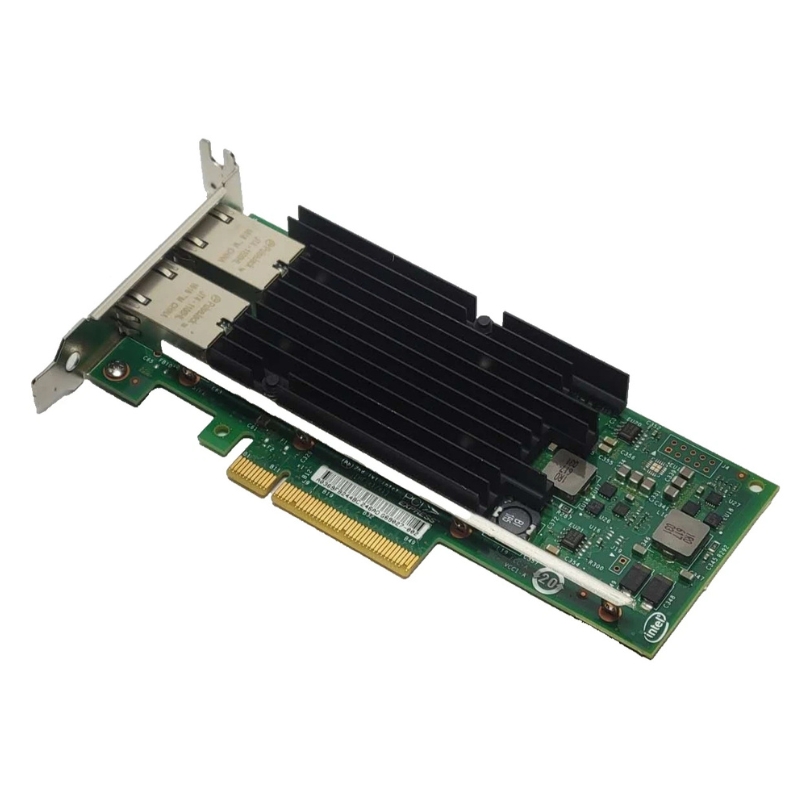
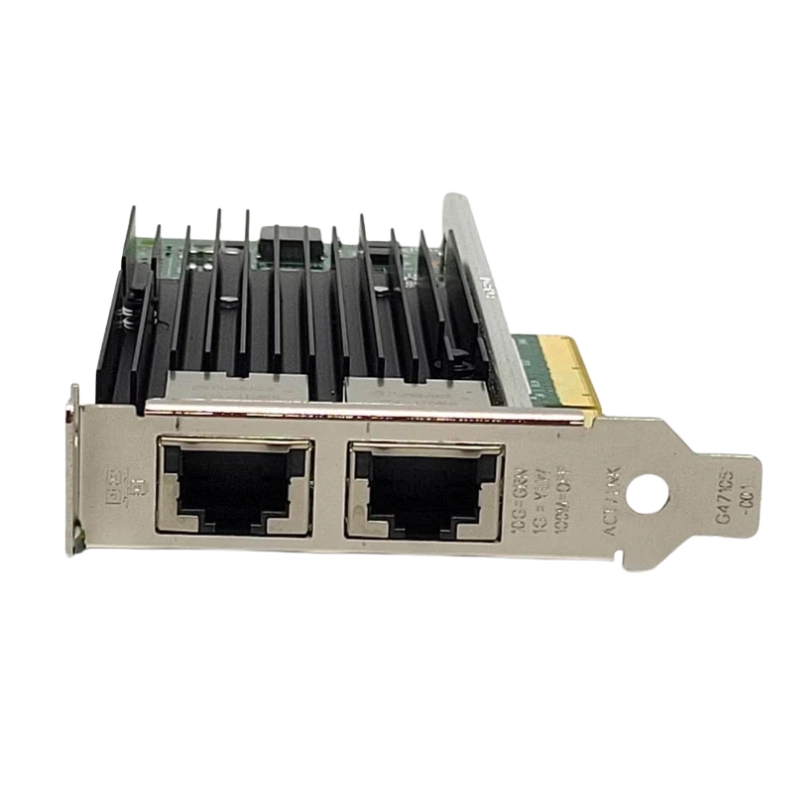
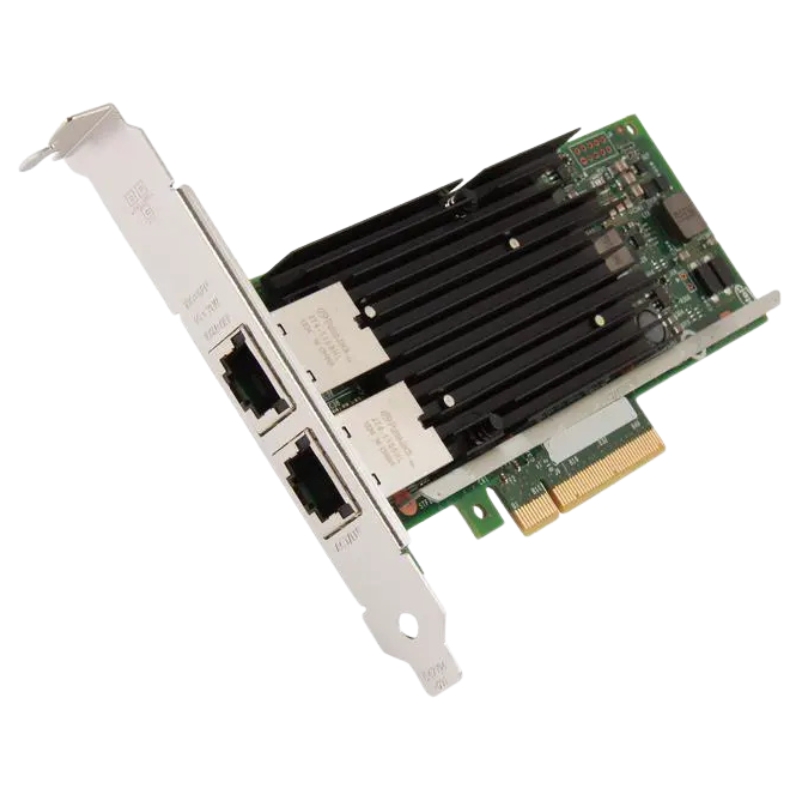
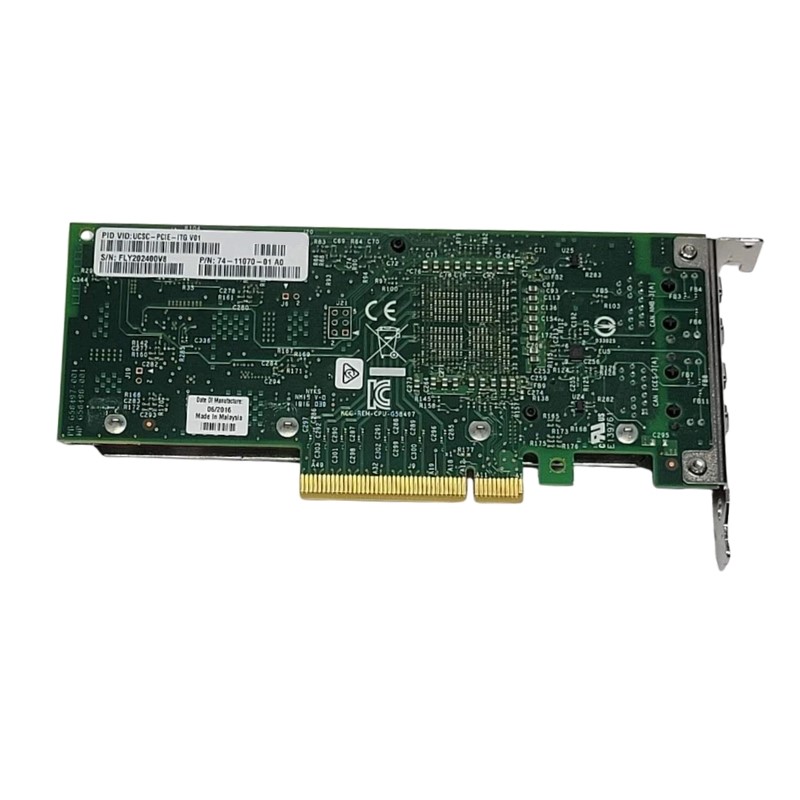
Intel X540-T2 Dual Port Adapter Plug-in Card Wires PCI-E 10GbE Converged. Excellent Refurbished with 1 year replacement warranty
| SKU/MPN | Warranty | Price | Condition | You save |
|---|---|---|---|---|
| X540-T2 | 1 Year Warranty | $61.00 | New Sealed in Box (NIB) | You save: $21.35 (26%) |
| X540-T2 | 1 Year Warranty | $51.00 | Excellent Refurbished | You save: $17.85 (26%) |
Overview of Intel X540-T2 2 Ports Converged Network Adapter
The Intel X540-T2 Dual Port Converged Network Adapter is engineered to deliver reliable, high-speed networking performance for modern enterprise infrastructures. Built as a dual-port adapter, it enables seamless data transmission across demanding server environments, virtualization platforms, and data-intensive applications.
The Intel X540-T2 Dual Port Converged Network Adapter represents a mature and highly optimized networking solution designed for enterprise-class servers, virtualization environments, and high-throughput data center infrastructures. Built on advanced 10 Gigabit Ethernet (10GbE) architecture, this adapter delivers robust throughput performance while maintaining backward compatibility with legacy Ethernet speeds. As part of the Intel server networking ecosystem developed by the X540 series is engineered to reduce CPU overhead, improve packet processing efficiency, and enhance overall network responsiveness in demanding workloads.
This adapter integrates two independent 10GBASE-T ports, enabling simultaneous high-speed communication channels over standard copper cabling. Its converged networking capabilities allow the consolidation of multiple network functions into a single interface, reducing hardware complexity and operational costs while improving scalability for enterprise deployments.
At the core of the Intel X540-T2 is a powerful Ethernet controller designed to offload compute-intensive networking tasks from the host CPU. This includes TCP/IP segmentation, checksum offloading, interrupt moderation, and advanced packet filtering. By shifting these workloads away from the processor, the adapter significantly improves system efficiency and frees CPU resources for application-level tasks such as virtualization, database processing, and analytics workloads.
The architecture is optimized for low-latency communication, ensuring consistent packet delivery even under heavy traffic conditions. This makes the adapter particularly suitable for environments where deterministic performance and minimal jitter are essential, such as financial trading systems, cloud service backbones, and large-scale virtualization clusters.
The dual-port configuration of the Intel X540-T2 provides built-in redundancy and failover capabilities. In enterprise networks, maintaining continuous connectivity is critical, and the presence of two independent network interfaces ensures that communication remains uninterrupted even if one port or link experiences degradation or failure.
This redundancy can be configured in multiple ways, including link aggregation and teaming modes, enabling administrators to balance traffic across both ports or configure active-passive failover scenarios. Such flexibility enhances network resilience and improves overall system uptime.
Beyond redundancy, the dual-port design enables intelligent load balancing, distributing network traffic across both interfaces to maximize throughput efficiency. This is particularly beneficial in virtualized environments where multiple virtual machines generate simultaneous network traffic streams.
By leveraging both ports in parallel, the adapter ensures that bandwidth is utilized effectively, preventing bottlenecks and improving application responsiveness across distributed workloads.
The Intel X540-T2 is classified as a converged network adapter, meaning it can handle multiple types of traffic, including traditional Ethernet data, storage traffic, and virtualized network streams. This convergence simplifies infrastructure design by reducing the need for separate NICs dedicated to storage and data communication.
In modern data centers, convergence is essential for minimizing hardware sprawl and improving efficiency. The adapter supports technologies that allow storage traffic, such as iSCSI, to operate alongside standard IP-based networking without compromising performance.
By integrating multiple networking roles into a single device, organizations can significantly reduce cabling complexity and switch port utilization. This not only lowers operational costs but also simplifies network management and troubleshooting. The result is a more streamlined infrastructure that is easier to scale and maintain.
One of the defining features of the Intel X540-T2 is its advanced offload engine, which handles computationally intensive networking tasks directly on the adapter hardware. This includes TCP segmentation offload, large receive offload, and checksum calculations. These features reduce the number of CPU cycles required for network processing, improving system efficiency and reducing latency.
To further optimize performance, the adapter implements interrupt moderation techniques that reduce the frequency of CPU interrupts caused by network traffic. Packet coalescing allows multiple packets to be processed in a single interrupt event, reducing CPU overhead and improving throughput stability under heavy load conditions.
The architecture of the X540-T2 includes optimized buffer management systems that enhance data transfer efficiency between the network interface and system memory. This reduces memory bottlenecks and ensures smooth data flow even during peak traffic periods in enterprise workloads.
The Intel X540-T2 is widely compatible with major server platforms and operating systems, including Linux distributions, Windows Server environments, and virtualization hypervisors. Its driver support ensures seamless integration into both legacy and modern infrastructures, making it a versatile choice for IT administrators managing mixed environments.
The adapter utilizes a PCI Express interface to connect with the host system, ensuring high-speed data transfer between the network card and system motherboard. This interface provides sufficient bandwidth to support dual 10GbE ports without creating internal bottlenecks.
In addition to supporting 10GbE speeds, the X540-T2 maintains backward compatibility with lower Ethernet speeds such as 1GbE and 100MbE. This allows organizations to deploy the adapter in environments where network infrastructure upgrades are gradual, ensuring smooth transition and interoperability.
The Intel X540-T2 is specifically designed to perform efficiently in virtualized environments where multiple virtual machines share the same physical network interface. Its hardware offload capabilities ensure that virtualization overhead is minimized, allowing hypervisors to allocate more resources to virtual workloads rather than network processing.
The adapter integrates seamlessly with virtual switching frameworks commonly used in cloud infrastructure environments. This enables efficient traffic routing between virtual machines while maintaining high throughput and low latency communication between virtual network segments.
In cloud deployments, scalability is essential. The X540-T2 supports scalable architectures where multiple adapters can be deployed across server clusters, enabling high-density networking environments that support large-scale cloud computing workloads.
The Intel X540-T2 is well-suited for high-performance computing clusters where rapid data exchange between nodes is critical. Its low latency and high bandwidth capabilities support distributed computing workloads such as scientific simulations, machine learning training, and real-time analytics.
In storage-intensive environments, the adapter supports efficient communication with storage arrays using IP-based protocols. This allows organizations to build scalable storage area networks using standard Ethernet infrastructure, reducing the need for specialized hardware.
For web hosting providers and application delivery networks, the adapter ensures consistent bandwidth availability and low latency response times. This is essential for maintaining user experience quality in high-traffic environments where performance fluctuations can impact service reliability.
The Intel X540-T2 supports advanced traffic segmentation techniques that allow administrators to isolate network flows based on security policies. This reduces the risk of unauthorized access and improves overall network governance.
By handling sensitive networking operations within the adapter hardware, the system reduces exposure to CPU-level vulnerabilities. This hardware-based processing approach contributes to a more secure networking environment in enterprise deployments.
The adapter is engineered for long-term stability in mission-critical systems. Its robust hardware design, combined with firmware-level optimizations, ensures consistent performance even in demanding operational conditions.


 Contact Us
 Information
 Catalog
 Solid State Drives (SSD)
 Network Switches
 Hard Disk Drives
 HBA & Controllers
 PC & Servers
 PC & Server Memory
 CPU & Processors
 Network Routers
 Power Supplies
 Tape Drives & Libraries
 Network Devices
 Computer & Network Cables