(7% discount is applied at checkout)
Cart is empty
Your go-to destination for cutting-edge server products
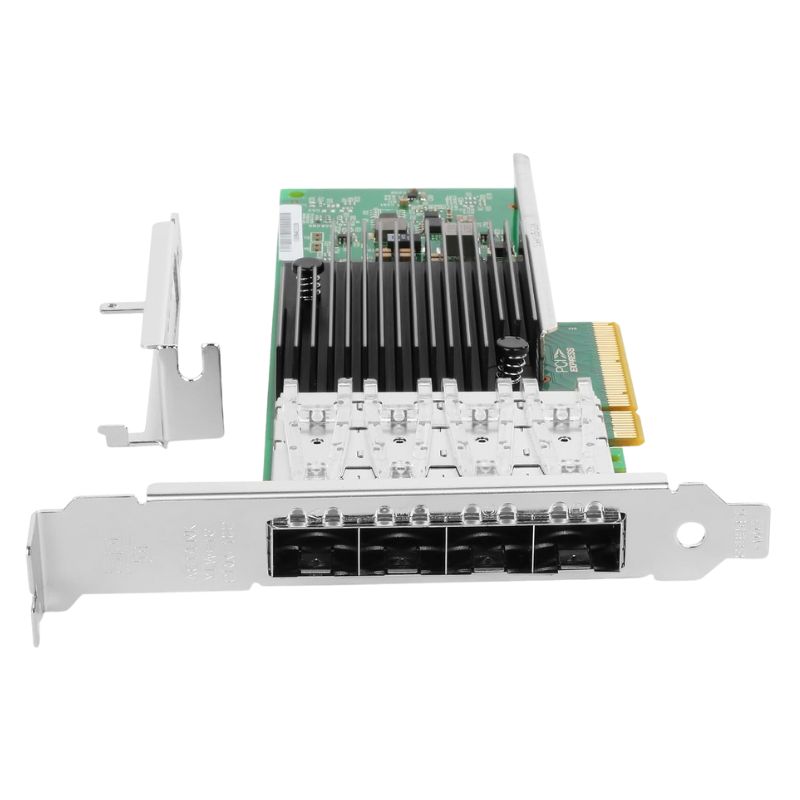


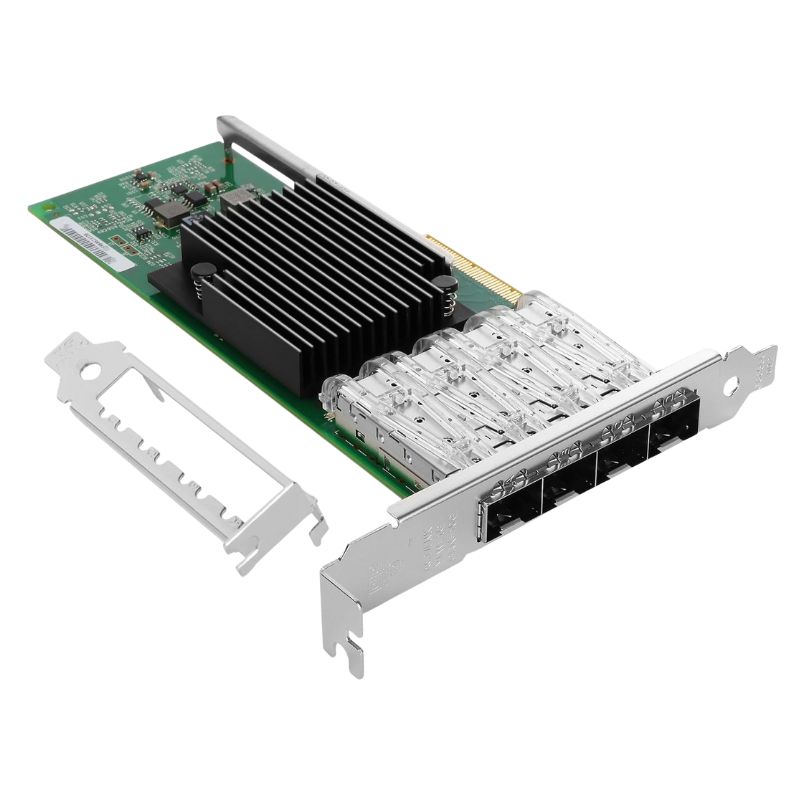
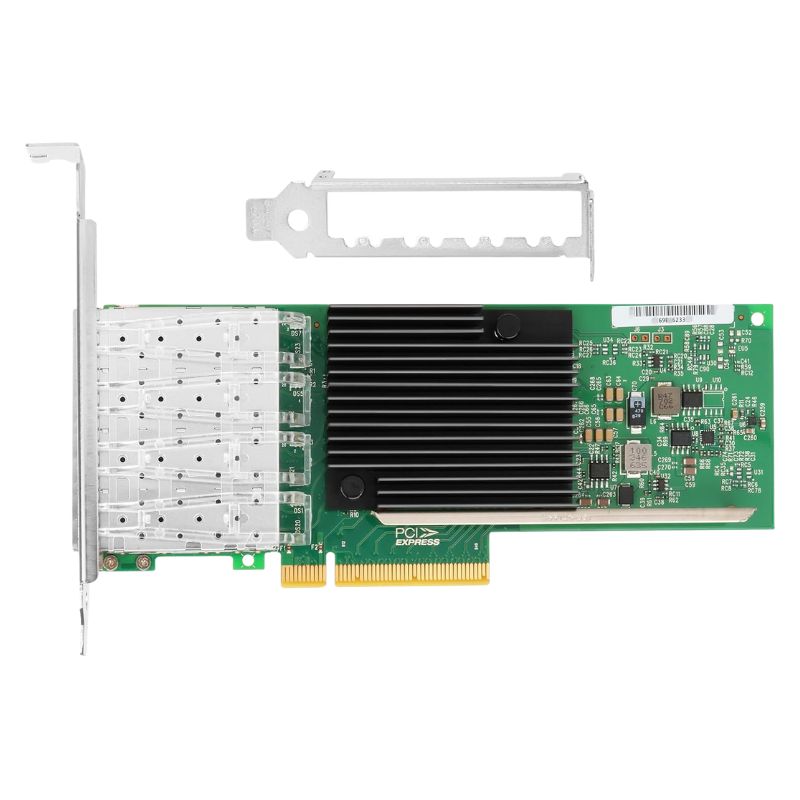
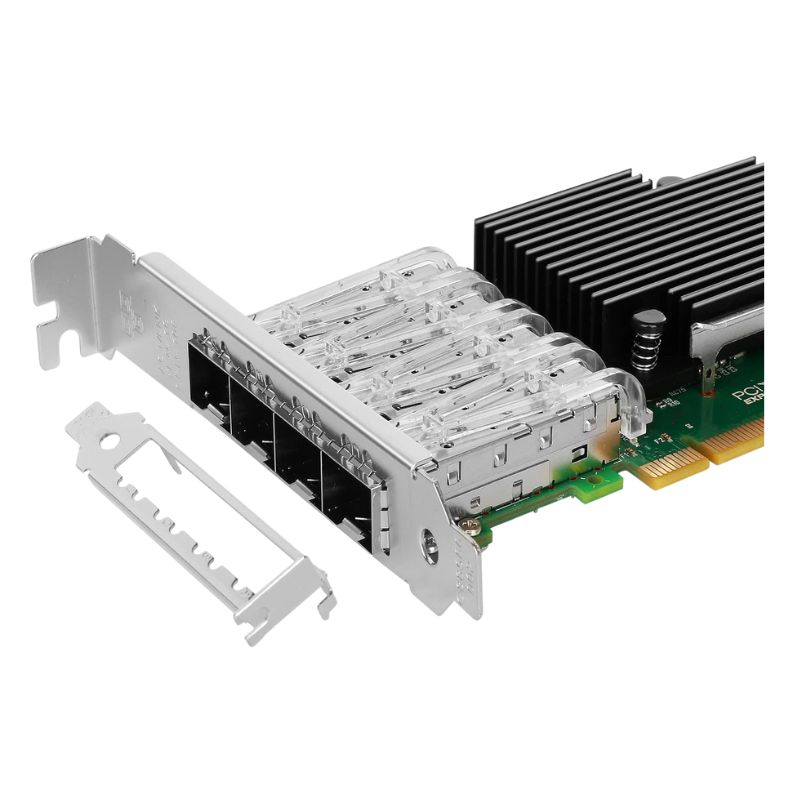
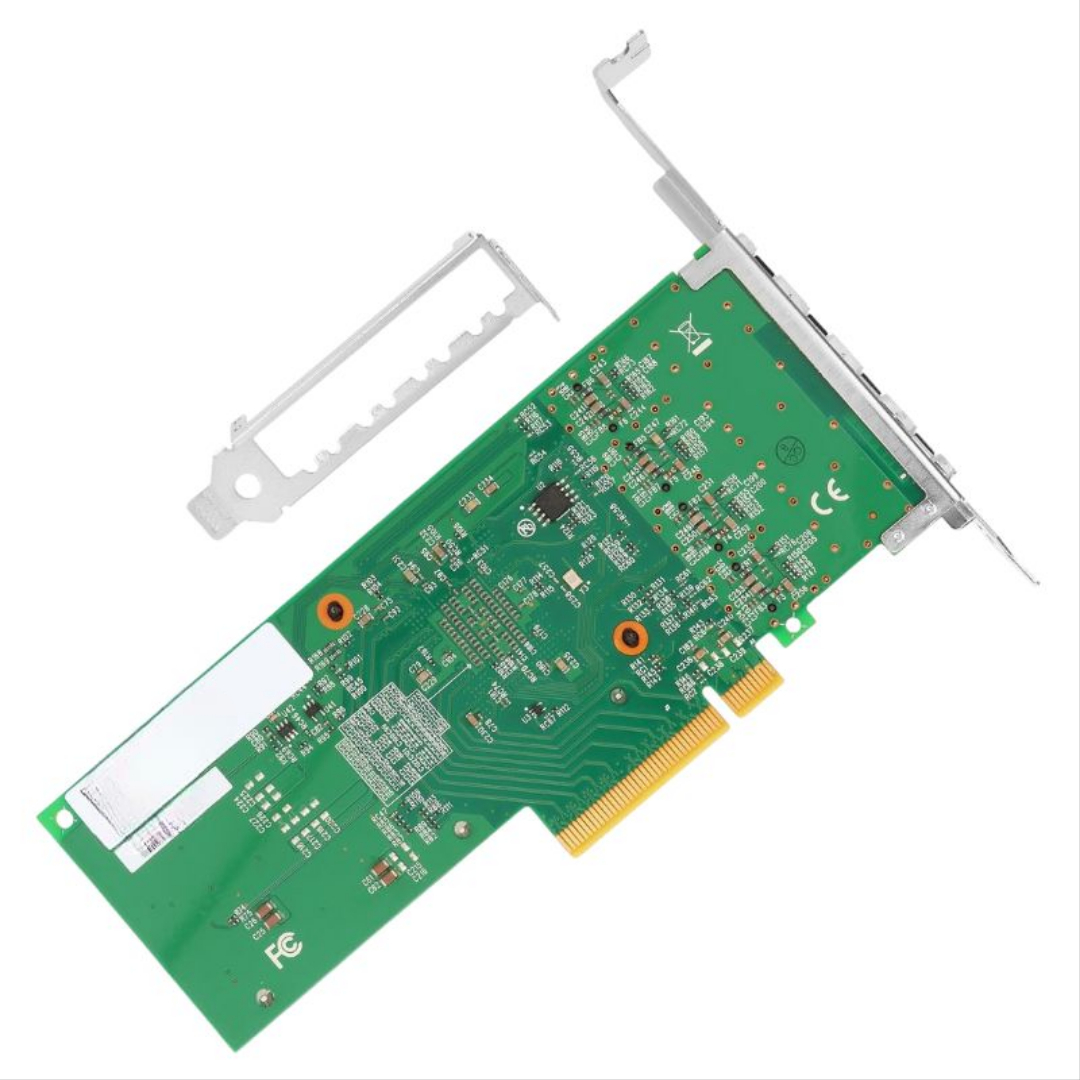
Intel X710DA4G2P5 10 GIGABIT SFP+ 10GBPS Ethernet PCI-E 3.0 X8 Converged Network Adapter. Excellent Refurbished with 1 year replacement warranty - Dell Version
The Intel X710DA4G2P5 10 Gigabit SFP+ Ethernet PCI Express 3.0 x8 converged network adapter is engineered to deliver high-speed, reliable, and scalable network connectivity for modern data-driven infrastructures. Designed with four SFP+ ports supporting 10Gbps throughput, this adapter enhances server performance, virtualization efficiency, and enterprise-level workload handling. It integrates advanced offloading capabilities and intelligent traffic management features to optimize network utilization, reduce CPU overhead, and support demanding storage and cloud environments with consistent stability.
The Intel X710DA4G2P5 10 Gigabit SFP+ 10Gbps Ethernet PCI Express 3.0 x8 Converged Network Adapter belongs to a high-performance class of network interface hardware designed for modern data center, enterprise, and cloud networking environments. This category of adapters is engineered to deliver stable, low-latency, and high-throughput connectivity across virtualized and bare-metal systems where network efficiency plays a central role in application performance.
Converged network adapters are designed to combine multiple networking functions into a single hardware platform. Instead of relying on separate controllers for traditional Ethernet traffic and storage protocols, this type of adapter consolidates workloads, reducing system overhead and improving overall efficiency. The X710 series is widely recognized for its ability to handle intensive workloads while maintaining predictable performance under sustained network pressure.
In environments where servers must handle virtualization, distributed storage access, and large-scale client connections simultaneously, the need for reliable 10 Gigabit connectivity becomes essential. This adapter category is positioned to serve those requirements by integrating advanced packet processing, hardware acceleration, and scalable architecture into a single expansion solution.
The internal architecture of the Intel X710-based adapter family is built around a highly optimized network processing engine that is capable of handling multiple data streams concurrently. The hardware design emphasizes parallel processing of network packets, reducing CPU dependency and freeing system resources for application-level workloads.
A key aspect of this category is the balance between performance and efficiency. The adapter is designed to operate within server-class environments where sustained data transfer rates are critical. The physical layout, thermal design, and electrical signaling are optimized to maintain stability under continuous load conditions, ensuring consistent throughput even in demanding enterprise deployments.
The PCI Express 3.0 x8 interface provides a high-bandwidth communication pathway between the network adapter and the host system. This interface ensures that the adapter can fully utilize the available 10 Gigabit per second Ethernet capacity without becoming constrained by system bus limitations.
By leveraging multiple lanes of PCI Express connectivity, the adapter can transmit and receive large volumes of network data simultaneously. This is particularly important in virtualized environments where multiple virtual machines may generate concurrent network traffic streams. The PCIe 3.0 standard also contributes to lower latency communication between the adapter and CPU, improving responsiveness in real-time applications.
The design ensures backward compatibility with supported server platforms while maximizing throughput efficiency. This makes it suitable for deployment in both modern infrastructure and existing systems that support PCI Express expansion slots.
The SFP+ interface subsystem enables flexible optical and copper connectivity options, depending on transceiver selection. This modular approach allows network administrators to tailor physical network connections based on distance requirements, bandwidth planning, and infrastructure design.
SFP+ ports are widely used in high-speed networking due to their compact form factor and ability to support a variety of media types. In enterprise environments, this flexibility allows the same adapter hardware to be used across different network segments, from short-range intra-rack connections to longer-distance inter-switch links.
The modular transceiver support also simplifies maintenance and upgrades, as individual optical modules can be replaced without changing the entire adapter. This contributes to reduced downtime and improved operational efficiency in large-scale environments.
Performance is a defining aspect of the Intel X710DA4G2P5 adapter category. It is engineered to support sustained 10 Gigabit Ethernet speeds across multiple ports while maintaining low latency and minimal packet loss. This is achieved through hardware-level packet processing and intelligent traffic handling mechanisms.
The adapter is capable of handling large packet flows and mixed traffic types simultaneously, making it suitable for environments with diverse workload demands. Whether supporting database replication, virtualization traffic, or storage access, the performance characteristics remain stable under load.
Another important aspect of performance is scalability. The adapter can efficiently distribute network processing tasks across available system resources, allowing servers to scale network-intensive applications without proportional increases in CPU utilization.
Virtualization support is a core feature of this adapter category. Modern data centers rely heavily on virtual machines and containerized workloads, which require efficient network resource sharing. The adapter supports hardware-based virtualization acceleration, enabling multiple virtual environments to share a single physical network interface without significant performance degradation.
Offloading capabilities reduce the burden on the host CPU by transferring specific networking tasks to the adapter hardware. These tasks may include checksum calculations, segmentation processing, and packet filtering operations. By handling these functions at the hardware level, the system achieves improved efficiency and reduced processing overhead.
This offloading approach is particularly beneficial in environments with high virtual machine density, where CPU resources must be preserved for application workloads rather than network processing tasks.
In data center environments, the adapter is commonly deployed in server racks requiring high-speed east-west and north-south traffic movement. East-west traffic refers to communication between servers within the same data center, while north-south traffic involves communication between internal systems and external networks.
The X710-based adapter supports both traffic types efficiently, making it suitable for cloud hosting platforms, enterprise application servers, and virtualization clusters. Its ability to maintain consistent throughput ensures that service-level expectations are met even during peak demand periods.
Data centers benefit from the adapter’s predictable latency characteristics, which are essential for applications such as real-time analytics, financial transaction processing, and distributed computing systems.
Storage networking is a critical component of enterprise infrastructure, and this adapter category is designed to support advanced storage protocols over Ethernet. By enabling efficient communication with storage arrays and distributed storage systems, it helps reduce latency in data retrieval and write operations.
The hardware acceleration features assist in managing storage traffic without overloading the host system. This is especially important in environments using network-attached storage or software-defined storage platforms where consistent performance is required.
The adapter’s ability to handle both standard network traffic and storage traffic within the same hardware unit contributes to simplified infrastructure design and reduced hardware complexity.
Cloud computing environments demand highly scalable and resilient network infrastructure. The Intel X710DA4G2P5 adapter category is well suited for such environments due to its ability to support multi-tenant workloads and dynamic resource allocation.
In cloud platforms, network traffic patterns can change rapidly as virtual machines are created, migrated, or terminated. The adapter’s architecture is designed to handle these fluctuations without performance instability.
Its support for advanced virtualization features ensures that cloud service providers can efficiently allocate network resources across multiple customers while maintaining isolation and performance consistency.
Reliability is a key requirement in enterprise networking, and this adapter category is designed with fault tolerance and stability in mind. It supports redundant configurations and failover mechanisms that ensure continuous network availability even in the event of hardware or link failures.
The hardware is built using enterprise-grade components that are tested for long-term operational stability. This includes thermal resilience, signal integrity optimization, and error correction mechanisms that reduce the likelihood of data corruption.
High availability configurations often involve pairing multiple adapters or integrating them into clustered server environments, allowing uninterrupted service delivery even during maintenance or unexpected disruptions.
A wide driver ecosystem supports this adapter category, ensuring compatibility with major operating systems used in enterprise and data center environments. These include Linux distributions, Windows Server platforms, and virtualization hypervisors.
The driver architecture is designed to expose advanced hardware features while maintaining stability across different software environments. This ensures that system administrators can deploy the adapter without extensive customization requirements.
Regular driver updates improve performance, security, and compatibility with evolving network standards, making long-term deployment more reliable.
Network optimization is achieved through a combination of hardware acceleration, intelligent packet processing, and traffic management features. These capabilities allow the adapter to handle complex networking tasks with reduced CPU intervention.
Traffic prioritization mechanisms help ensure that critical applications receive appropriate bandwidth allocation. This is particularly important in environments where multiple services share the same physical infrastructure.
The adapter also supports advanced buffering techniques that reduce packet loss during periods of high network congestion, maintaining consistent application performance.
Scalability is a defining requirement in enterprise networking, and this adapter category is designed to support growth in both network traffic and infrastructure size. As organizations expand their digital operations, network interfaces must adapt to increasing demands without requiring complete system redesign.
The modular nature of SFP+ connectivity and the high bandwidth capacity of PCI Express integration allow systems to scale efficiently. Multiple adapters can be deployed across server clusters to distribute network load evenly.
This scalability ensures that organizations can expand their infrastructure incrementally while maintaining consistent performance levels.
Traffic management features are integrated into the adapter to ensure balanced network utilization. These mechanisms help prioritize latency-sensitive applications while maintaining throughput for bulk data transfers.
The hardware is capable of handling multiple traffic classes simultaneously, ensuring that critical workloads such as database transactions or virtualization traffic are not impacted by lower-priority processes.
This structured approach to traffic handling improves overall system efficiency and contributes to predictable network behavior in complex environments.
Security is an integral aspect of modern network infrastructure. The adapter category includes features designed to support secure data transmission and reduce exposure to network-based threats.
Hardware-level packet inspection and filtering capabilities help enforce network policies without relying solely on host-based software solutions. This reduces system overhead while improving response times for security-related operations.
Data integrity mechanisms ensure that transmitted packets are verified and processed correctly, reducing the risk of corruption or unauthorized modification during transmission.


 Contact Us
 Information
 Catalog
 Solid State Drives (SSD)
 Network Switches
 Hard Disk Drives
 HBA & Controllers
 PC & Servers
 PC & Server Memory
 CPU & Processors
 Network Routers
 Power Supplies
 Tape Drives & Libraries
 Network Devices
 Computer & Network Cables