(7% discount is applied at checkout)
Cart is empty
Your go-to destination for cutting-edge server products
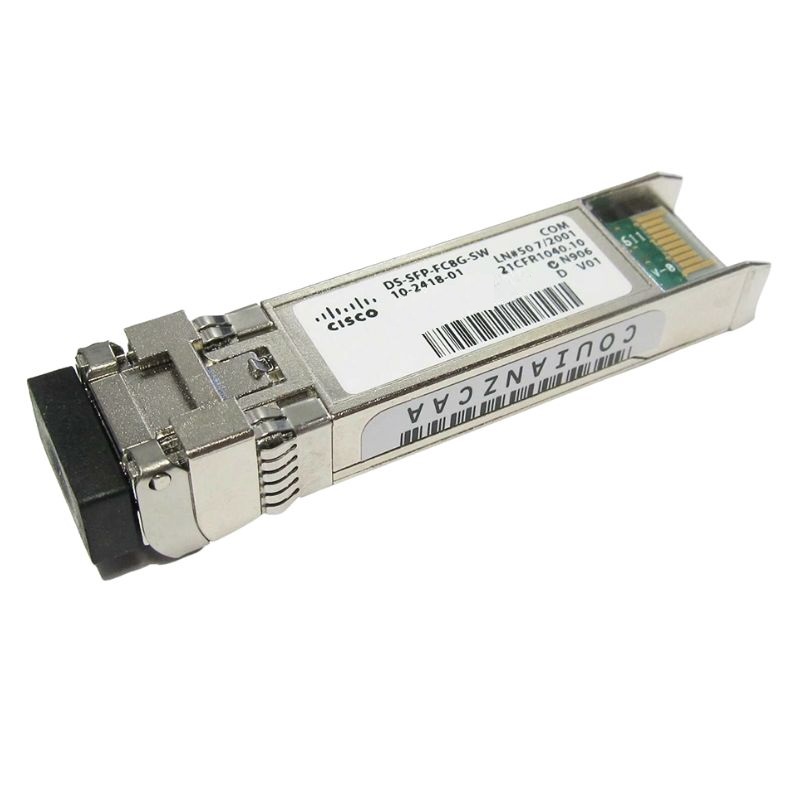


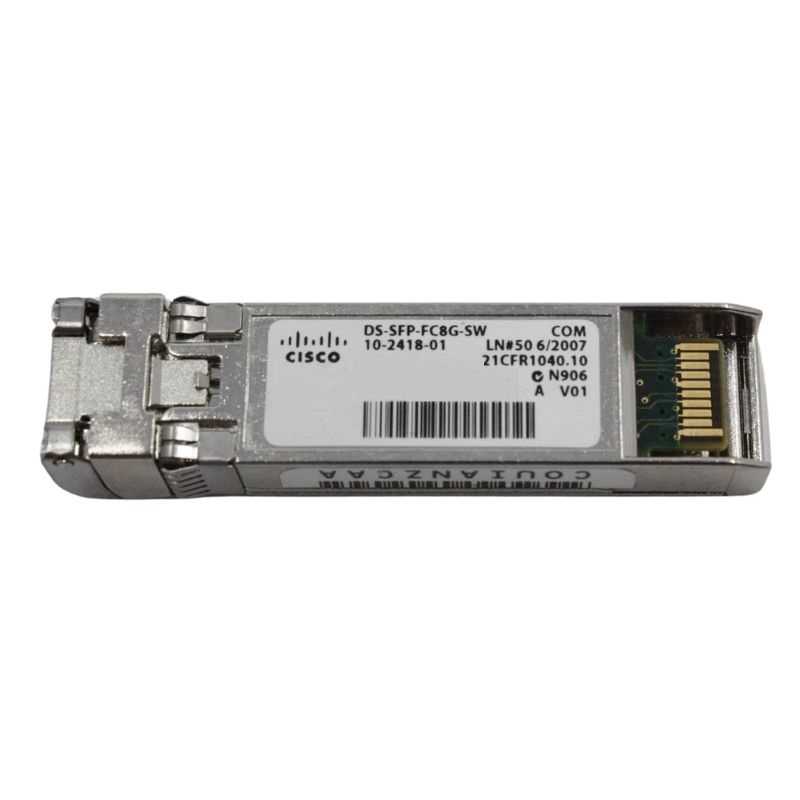
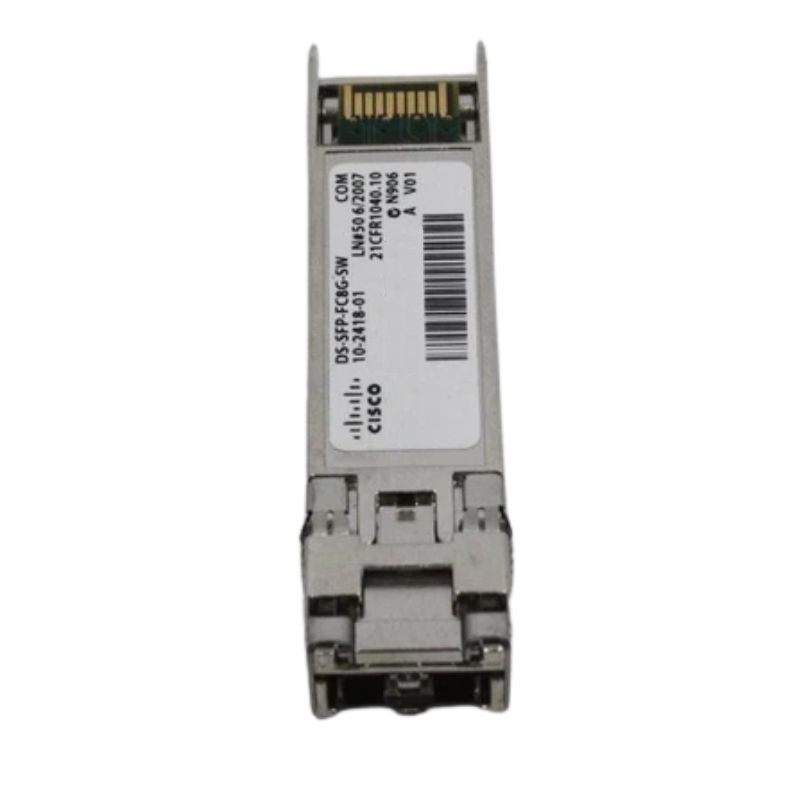
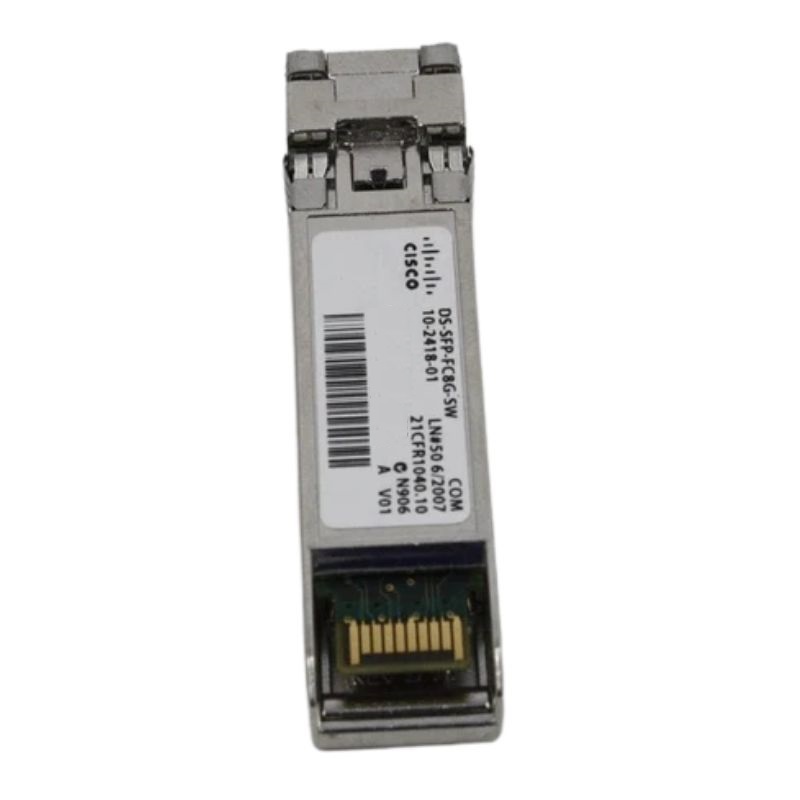
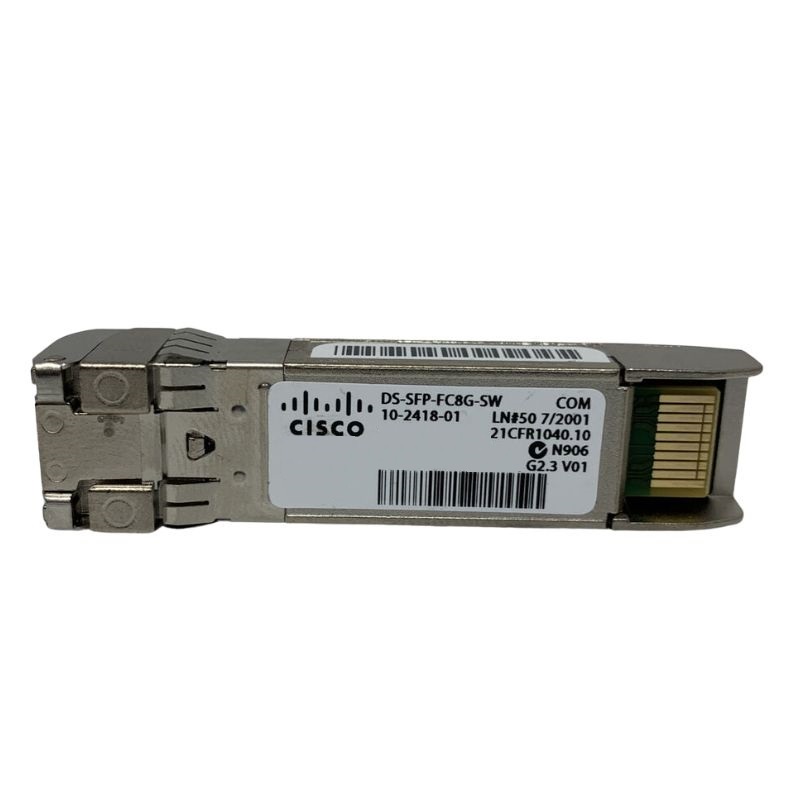
Cisco 10-2418-01 Short Wave 8GBPS Fibre Channel Transceiver. Factory-Sealed New in Original Box (FSB) with 1 year replacement warranty
| SKU/MPN | Warranty | Price | Condition | You save |
|---|---|---|---|---|
| 10-2418-01 | 1 Year Warranty | $60.00 | Factory-Sealed New in Original Box (FSB) | You save: $21.00 (26%) |
| 10-2418-01 | 1 Year Warranty | $48.00 | Excellent Refurbished | You save: $16.80 (26%) |
Cisco 10-2418-01 Short Wave 8Gbps Transceiver Overview
The Cisco 10-2418-01 Short Wave Fibre Channel Transceiver is a high-performance SFP+ optical module engineered to deliver reliable and fast data transmission across fiber optic infrastructures. Designed for enterprise networking and storage environments, this plug-in transceiver supports 8Gb Fibre Channel connectivity and enables stable communication for demanding network operations.
The
Within the broader ecosystem of fibre channel technology, this transceiver category is positioned to deliver consistent optical performance over multimode fiber cabling, making it suitable for medium-range data center deployments. Its engineering emphasizes signal integrity, power efficiency, and interoperability with a wide range of fibre channel switching equipment. The Cisco 10-2418-01 module is widely recognized for its role in maintaining robust storage communication in mission-critical IT infrastructures.
The architecture of the 8Gbps short wave fibre channel transceiver is centered on converting electrical signals into optical signals using advanced laser-based transmission systems. This process enables data to travel across multimode fibre with minimal attenuation and distortion. The module integrates both a transmitter and receiver within a compact form factor, ensuring bidirectional communication capabilities that are essential for storage networking environments.
Signal modulation within this transceiver category is optimized for maintaining high data fidelity across varying network conditions. The design ensures that jitter is minimized while maintaining synchronization across multiple fibre channel ports. This structural reliability is crucial in enterprise systems where even minor packet loss can affect storage replication and database performance.
Thermal management is a core consideration in the design of short wave fibre channel optics. The Cisco 10-2418-01 transceiver class incorporates low-power photonic components that reduce heat generation while maintaining stable transmission performance. This efficiency allows data center operators to deploy multiple transceivers within dense switching environments without excessive cooling overhead.
Power consumption optimization also contributes to sustainability in large-scale IT operations. By balancing optical output strength with energy-efficient circuitry, the module supports long-term operational stability while reducing total cost of ownership.
The defining characteristic of this transceiver category is its ability to support 8 gigabits per second of data throughput. This level of bandwidth is suitable for high-performance storage environments where rapid data transfer between servers and storage arrays is required. The consistent throughput ensures that virtualization workloads, database transactions, and backup operations can occur without bottlenecks.
At this speed tier, fibre channel networks achieve a balance between legacy compatibility and modern performance requirements. Many enterprise infrastructures continue to rely on 8Gbps technology due to its proven reliability and extensive hardware support ecosystem.
Latency reduction is a critical advantage of fibre channel optics, and the 10-2418-01 module is designed to maintain minimal transmission delays. By reducing signal conversion overhead and optimizing optical pathways, the transceiver ensures near-real-time communication between connected devices. This is especially important in environments that require synchronous replication or high-frequency transactional processing.
Unlike packet-switched networking technologies that may experience variable latency, fibre channel systems provide deterministic performance. This means that the transceiver maintains predictable transmission timing, which is essential for storage area networks that depend on consistent input/output operations per second (IOPS).
The Cisco 10-2418-01 short wave transceiver is designed for seamless integration with fibre channel switches, directors, and host bus adapters. This compatibility ensures that organizations can deploy the module across heterogeneous environments without encountering interoperability issues. The standardized design allows it to function effectively within multi-vendor SAN architectures.
This transceiver category is optimized for multimode fiber cabling, typically used in short-range data center connections. Multimode fiber supports efficient light propagation over shorter distances, making it ideal for intra-data center communication between racks and adjacent systems. The optical design ensures stable signal integrity across these fiber types, reducing the risk of transmission degradation.
In enterprise environments, compatibility across different generations of fibre channel technology is essential. The 8Gbps transceiver category maintains interoperability with both older and newer hardware systems, allowing gradual infrastructure upgrades without disrupting existing workflows. This flexibility is a key factor in long-term network planning.
One of the primary use cases for the Cisco 10-2418-01 transceiver is in storage area networks that support enterprise data centers. These environments rely heavily on fibre channel connectivity to link storage arrays with compute nodes. The transceiver ensures high-speed and reliable data transfer that supports mission-critical applications such as ERP systems, virtualization platforms, and large-scale databases.
In virtualized infrastructures, multiple virtual machines share underlying physical storage resources. The demand for efficient storage communication increases significantly in such scenarios. The 8Gbps fibre channel transceiver helps maintain consistent performance across virtual workloads, reducing latency spikes and improving overall system responsiveness.
Backup environments require sustained high-speed data transfer to replicate large volumes of information across storage arrays. The reliability of fibre channel optics ensures that backup windows are minimized and disaster recovery processes remain efficient. The transceiver supports continuous data replication without introducing performance bottlenecks.
Short wave laser technology forms the foundation of this transceiver category. Operating typically in the 850nm wavelength range, it enables efficient signal transmission over multimode fiber. The optical design ensures minimal dispersion and stable propagation characteristics, making it suitable for structured cabling environments.
Maintaining signal integrity is essential in high-speed optical communication. The Cisco 10-2418-01 transceiver incorporates error reduction mechanisms that minimize data corruption during transmission. These mechanisms ensure that retransmissions are kept to a minimum, improving overall network efficiency and reducing congestion.
Distance capabilities in short wave fibre channel systems are influenced by fiber type and installation quality. The transceiver is optimized for short to medium-range connections within data centers, ensuring stable performance across typical enterprise layouts. Proper cabling and connector quality further enhance signal reliability.
Scalability is a defining advantage of fibre channel infrastructure. The 8Gbps transceiver category allows organizations to expand storage capacity without redesigning the entire network architecture. This modular scalability supports growing data requirements in enterprise environments.
Enterprise systems demand high levels of uptime and reliability. Fibre channel transceivers contribute to this requirement by providing stable, low-error communication channels between storage and compute resources. This reliability is essential for industries such as finance, healthcare, and telecommunications.
Compared to earlier generations such as 4Gbps fibre channel modules, the 8Gbps category offers significantly improved throughput and efficiency. This improvement supports more demanding workloads and reduces congestion in storage networks.
While newer fibre channel standards such as 16Gbps and 32Gbps exist, the 8Gbps transceiver remains relevant in many environments due to its balance of cost efficiency and proven stability. Many enterprises continue to operate hybrid infrastructures that include multiple generations of fibre channel technology.
Before deploying fibre channel transceivers, organizations must evaluate their existing infrastructure, including switch compatibility, fiber type, and bandwidth requirements. Proper assessment ensures that the selected transceiver aligns with operational needs.
Cost considerations play a significant role in technology adoption. The 8Gbps fibre channel transceiver category offers a cost-effective solution for organizations that require reliable performance without transitioning to higher-cost next-generation systems.
The evolution of fibre channel technology continues to focus on increased speed, improved energy efficiency, and enhanced interoperability across hybrid cloud environments. While higher-speed transceivers dominate new deployments, established categories like the Cisco 10-2418-01 remain critical in supporting existing enterprise infrastructures. Their continued relevance highlights the importance of stability and backward compatibility in data center design strategies.


 Contact Us
 Information
 Catalog
 Solid State Drives (SSD)
 Network Switches
 Hard Disk Drives
 HBA & Controllers
 PC & Servers
 PC & Server Memory
 CPU & Processors
 Network Routers
 Power Supplies
 Tape Drives & Libraries
 Network Devices
 Computer & Network Cables