(7% discount is applied at checkout)
Cart is empty
Your go-to destination for cutting-edge server products
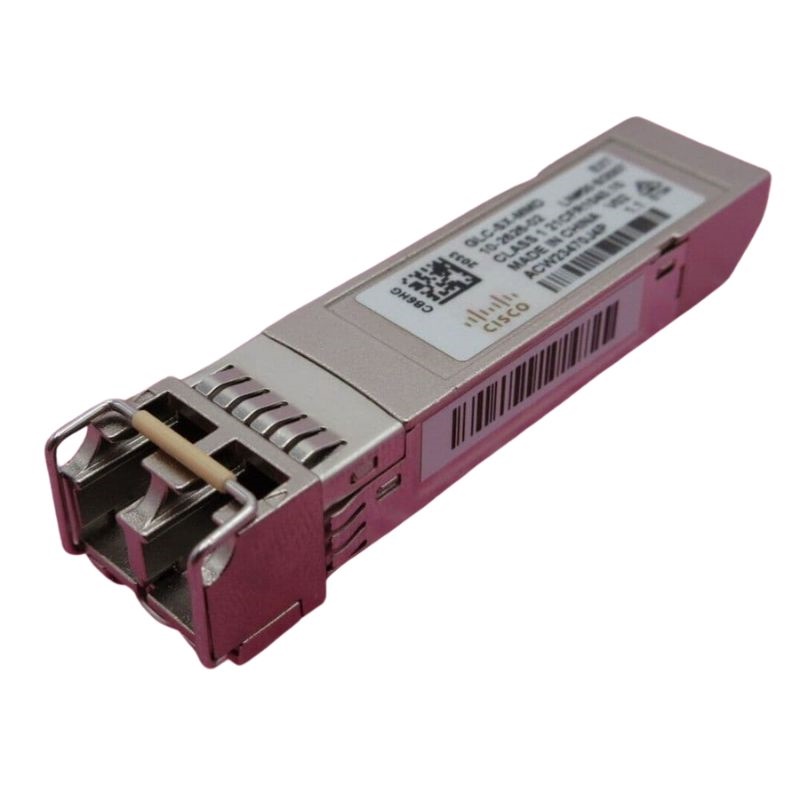


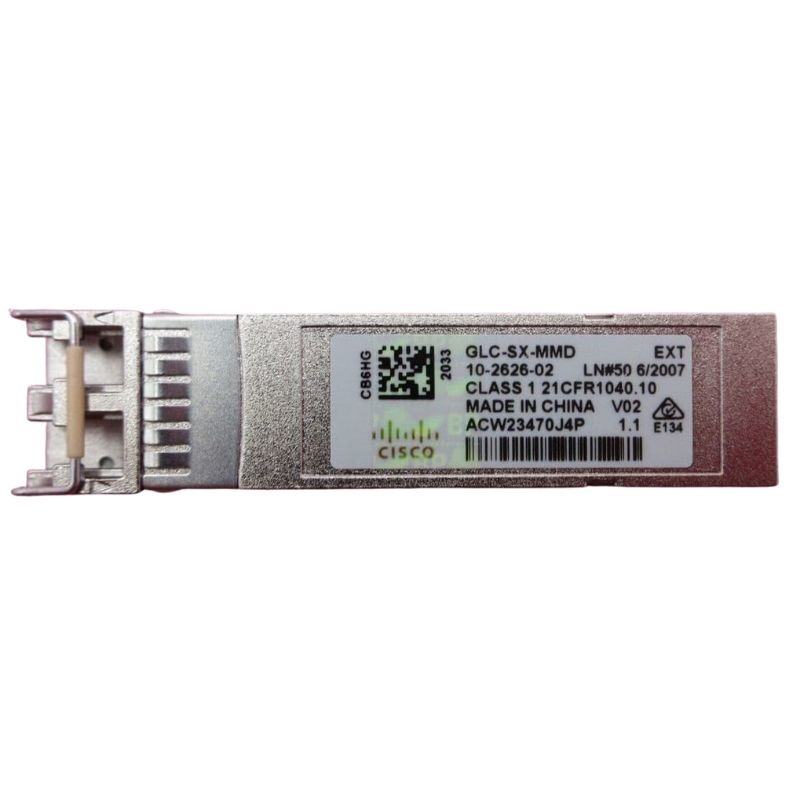
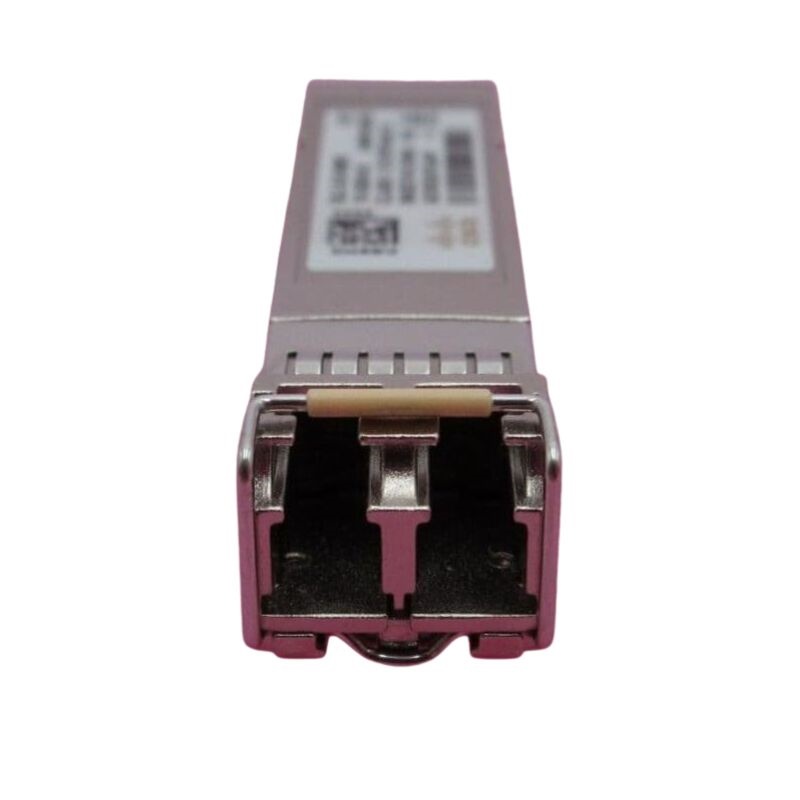
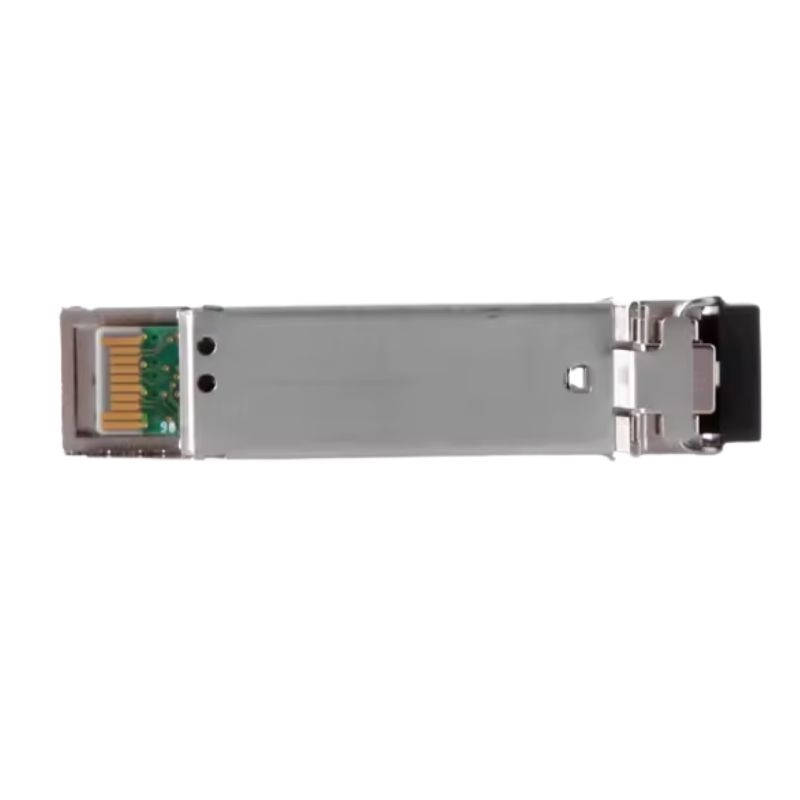
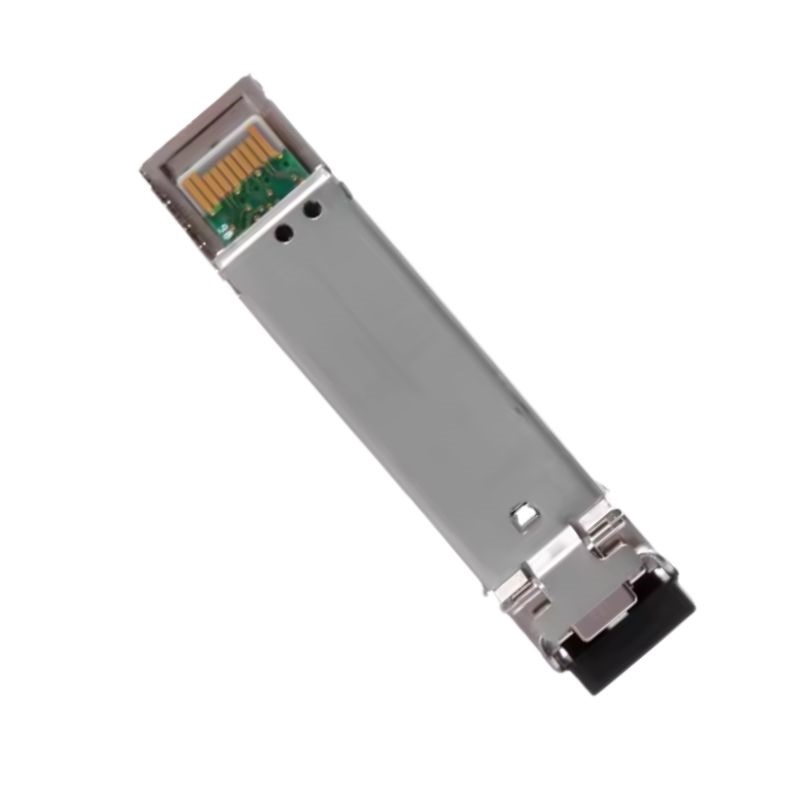
Cisco 10-2626-02 1GBPS SFP Transceiver Module. Excellent Refurbished with 1-Year Replacement Warranty
| SKU/MPN | Warranty | Price | Condition | You save |
|---|---|---|---|---|
| 10-2626-02 | 1 Year Warranty | $50.00 | Excellent Refurbished | You save: $17.50 (26%) |
| 10-2626-02 | 1 Year Warranty | $150.00 | Factory-Sealed New in Original Box (FSB) | You save: $52.50 (26%) |
The 1000BASE-SX SFP Transceiver Module is a high-performance, compact optical networking component designed for Gigabit Ethernet fiber connectivity. This plug-in module delivers reliable short-range data transmission over multi-mode fiber, making it a widely used solution in enterprise switching, routing, and data center environments.
The Cisco 10-2626-02 V01 V02 V03 1000BASE-SX SFP Transceiver Module represents a highly specialized segment within enterprise-grade fiber optic networking components, designed to deliver reliable, high-speed Gigabit Ethernet connectivity over multimode fiber infrastructure. As part of Cisco’s widely deployed Small Form-Factor Pluggable (SFP) ecosystem, this transceiver category is engineered to support scalable network architectures where performance, stability, and interoperability are essential for modern data communication environments. This category is commonly associated with enterprise switching systems, data center interconnects, campus networking solutions, and high-density aggregation layers where fiber-based transmission is required.
The 1000BASE-SX SFP transceiver family is widely used in optical networking deployments that require short-range fiber connectivity with high bandwidth efficiency. Within Cisco’s portfolio, the 10-2626-02 V01 V02 V03 module series is positioned to support 1 Gbps Ethernet transmission over multimode fiber using an 850nm wavelength optimized for short-distance communication. This makes it a preferred solution for intra-building connections, server rack uplinks, and campus backbone links where fiber runs typically remain within limited distances but demand high throughput and low latency.
The 1000BASE-SX standard is optimized for short-wave optical transmission over multimode fiber, allowing network designers to maintain high-speed connectivity without requiring long-haul optical infrastructure. The Cisco 10-2626-02 module series aligns with this specification by focusing on efficient optical signaling over OM1, OM2, OM3, and OM4 fiber types. This flexibility ensures compatibility across a wide range of legacy and modern fiber installations, enabling seamless upgrades in existing enterprise environments.
A defining characteristic of this transceiver category is its use of the 850nm wavelength. This wavelength is particularly effective for short-range optical communication because it balances signal strength with cost-effective fiber deployment. The Cisco 10-2626-02 V01 V02 V03 modules leverage this wavelength to provide stable data transmission with reduced signal degradation over supported multimode fiber distances, making it suitable for dense networking environments where multiple links are deployed in close proximity.
The Small Form-Factor Pluggable design is a core aspect of the Cisco 10-2626-02 transceiver category. The SFP form factor enables hot-swappable installation, allowing network administrators to deploy or replace modules without powering down networking equipment. This design approach enhances operational efficiency and reduces downtime in enterprise environments where continuous service availability is critical.
Hot-swappability is an essential feature of modern transceiver modules, particularly in high-availability networks. The Cisco 10-2626-02 V01 V02 V03 series is designed to be inserted or removed from compatible Cisco switches and routers while the system remains operational. This functionality supports dynamic network scaling, maintenance flexibility, and rapid hardware replacement strategies in mission-critical environments.
The LC duplex connector interface used in this category ensures precise fiber alignment and minimal signal loss during transmission. The mechanical structure is designed to withstand repeated insertion cycles while maintaining optical integrity. This durability is essential in enterprise data centers where frequent reconfiguration of fiber connections may occur due to infrastructure expansion or network optimization requirements.
Performance is a defining attribute of the Cisco 10-2626-02 V01 V02 V03 1000BASE-SX SFP Transceiver Module category. These modules are engineered to support Gigabit Ethernet speeds with consistent throughput and low latency performance. They are widely deployed in environments where deterministic network behavior is required, such as virtualization clusters, storage networks, and high-density switching fabrics.
Stable data transmission is achieved through advanced optical signal conditioning and precise calibration of laser output within the module. This ensures that packet loss and jitter remain minimized even under sustained network load conditions. The Cisco transceiver category is particularly valued for maintaining predictable performance in environments where multiple simultaneous data streams are processed.
Signal integrity plays a critical role in fiber optic communication. The 10-2626-02 series is designed to reduce bit error rates through optimized optical alignment and controlled emission characteristics. This enhances overall network reliability and reduces the likelihood of retransmissions, which can negatively impact application performance in latency-sensitive systems.
The Cisco 10-2626-02 V01 V02 V03 1000BASE-SX SFP Transceiver Module category is designed for seamless integration with a wide range of Cisco networking equipment. This includes enterprise switches, modular routers, and aggregation platforms that support SFP interfaces. Compatibility within the Cisco ecosystem ensures that administrators can deploy these modules without complex configuration or interoperability concerns.
Within structured network architectures, these transceivers are commonly used in access layer switches and distribution layer uplinks. Their role is to bridge high-speed connections between network segments while maintaining consistent performance standards across the infrastructure. This alignment supports scalable network design principles in both small enterprise networks and large data center deployments.
While optimized for Cisco systems, the module category is also designed with industry-standard compliance in mind, ensuring interoperability with compliant multimode fiber infrastructures. This allows organizations to integrate the transceivers into hybrid environments where multiple vendors may be present, supporting flexible network expansion strategies.
The Cisco 10-2626-02 V01 V02 V03 category is widely deployed across diverse networking scenarios. These include enterprise LAN backbones, server farm interconnects, campus-wide fiber networks, and storage area network uplinks. Each deployment scenario leverages the module’s ability to provide stable Gigabit connectivity over short-range fiber links.
In data center environments, these transceivers play a critical role in connecting top-of-rack switches to aggregation switches. The high port density and low latency characteristics of SFP-based systems allow administrators to optimize rack-level connectivity while maintaining scalable architecture design.
Server-to-switch communication requires consistent bandwidth availability to ensure smooth application performance. The Cisco 10-2626-02 modules enable efficient uplinks that support virtualization workloads, database operations, and distributed computing tasks without introducing network bottlenecks.
Within campus environments, these modules are frequently used to interconnect buildings or network closets through multimode fiber pathways. The short-range design is ideal for campus layouts where distances fall within the operational range of 1000BASE-SX standards, ensuring cost-effective and high-performance connectivity.
Educational institutions and corporate campuses often rely on scalable fiber infrastructure to accommodate growing bandwidth demands. The Cisco transceiver category supports this scalability by enabling additional fiber links without requiring major infrastructure redesigns.
Reliability is a core requirement for any enterprise networking component, and the Cisco 10-2626-02 V01 V02 V03 series is designed with this principle in mind. The modules are engineered to perform consistently under varying environmental and workload conditions, ensuring long-term operational stability.
These transceivers are designed to operate within standard enterprise temperature ranges, ensuring consistent performance even in densely packed networking equipment racks. Thermal efficiency contributes to reduced hardware stress and extended operational lifespan.
Low power consumption is another important aspect of this category. By minimizing energy usage while maintaining high-speed optical performance, the modules contribute to more energy-efficient network infrastructures, which is increasingly important in modern data center design strategies focused on sustainability.
Scalability is a defining characteristic of fiber-based networking solutions, and the Cisco 10-2626-02 category supports scalable deployment models that allow organizations to expand their network capacity as demand increases. The modular nature of SFP technology enables incremental upgrades without requiring complete infrastructure replacement.
Network administrators can deploy additional SFP modules as required to accommodate new devices, increased traffic loads, or expanded network segments. This modular approach reduces capital expenditure and improves long-term infrastructure adaptability.
By incorporating standardized SFP modules, organizations ensure that their network infrastructure remains adaptable to future technological advancements. The Cisco 10-2626-02 V01 V02 V03 series supports this philosophy by maintaining compatibility with widely adopted Gigabit Ethernet standards.
Long-term planning in network architecture often involves balancing performance requirements with cost efficiency and upgrade flexibility. The use of standardized transceiver modules simplifies this process by providing predictable performance characteristics and consistent integration pathways across multiple network generations.


 Contact Us
 Information
 Catalog
 Solid State Drives (SSD)
 Network Switches
 Hard Disk Drives
 HBA & Controllers
 PC & Servers
 PC & Server Memory
 CPU & Processors
 Network Routers
 Power Supplies
 Tape Drives & Libraries
 Network Devices
 Computer & Network Cables