(7% discount is applied at checkout)
Cart is empty
Your go-to destination for cutting-edge server products
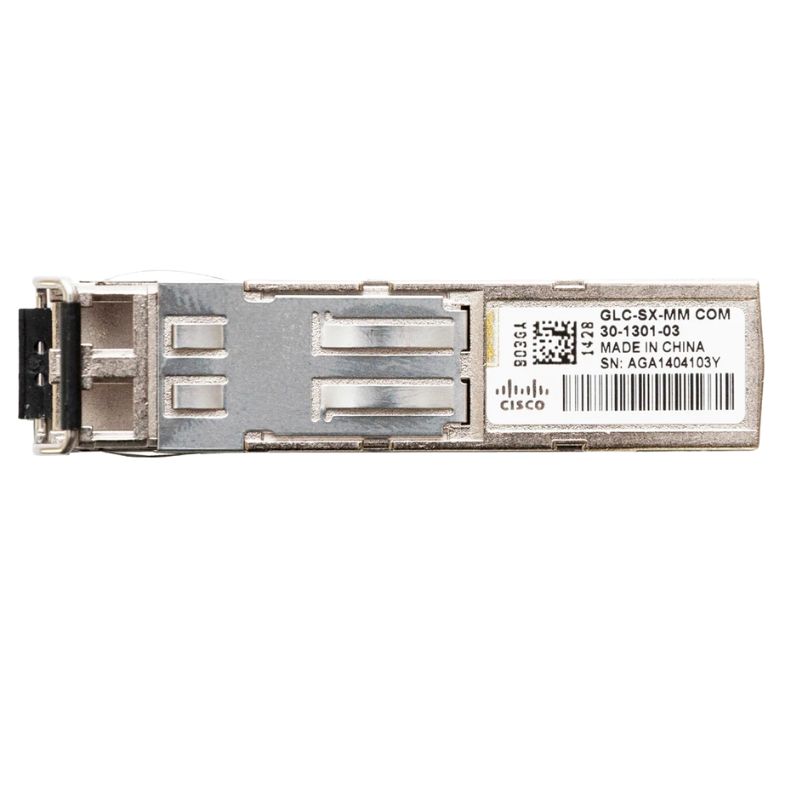


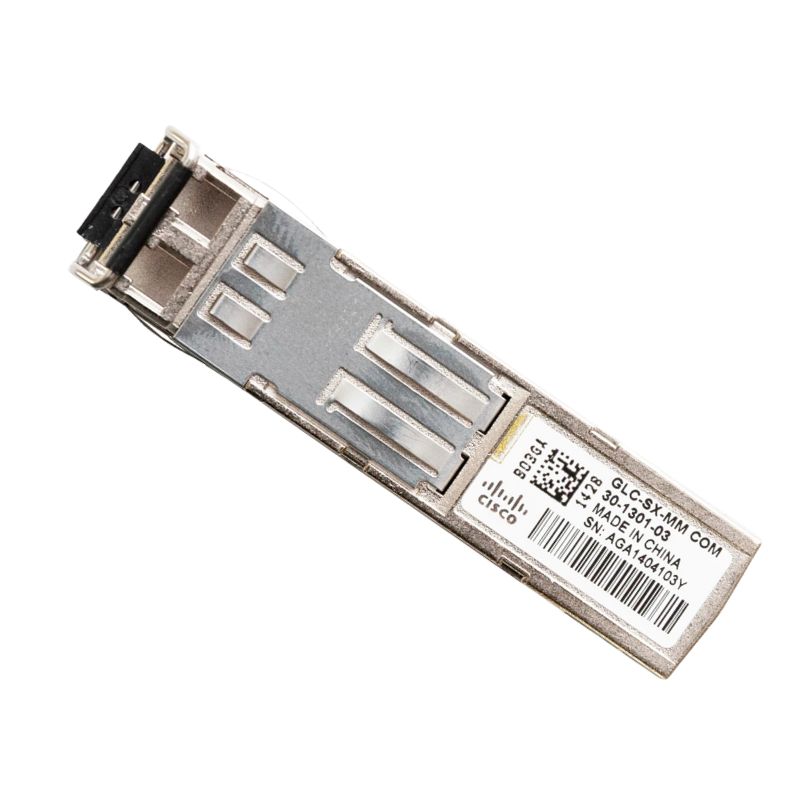
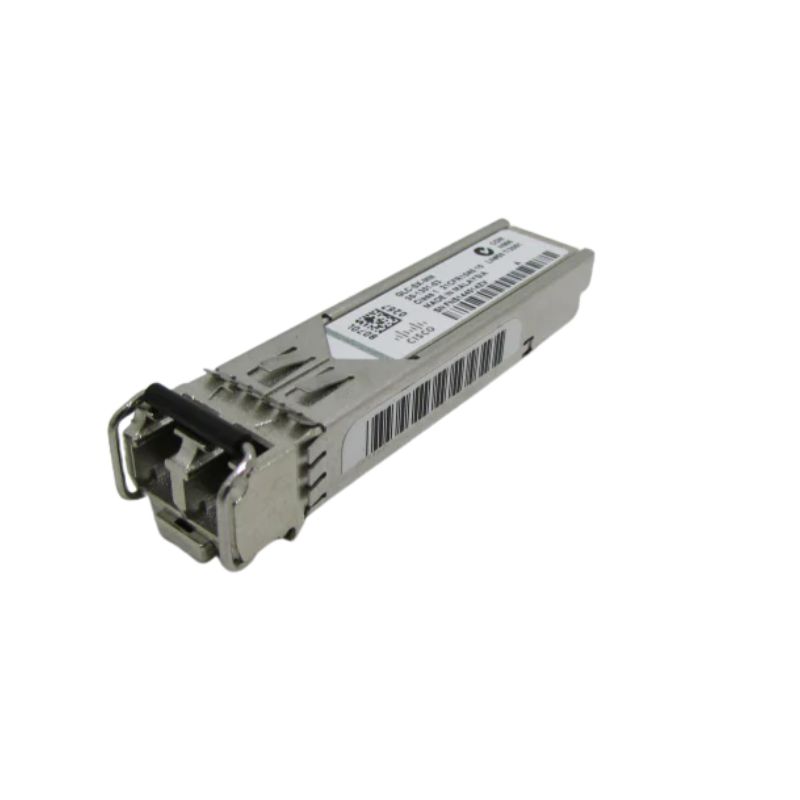
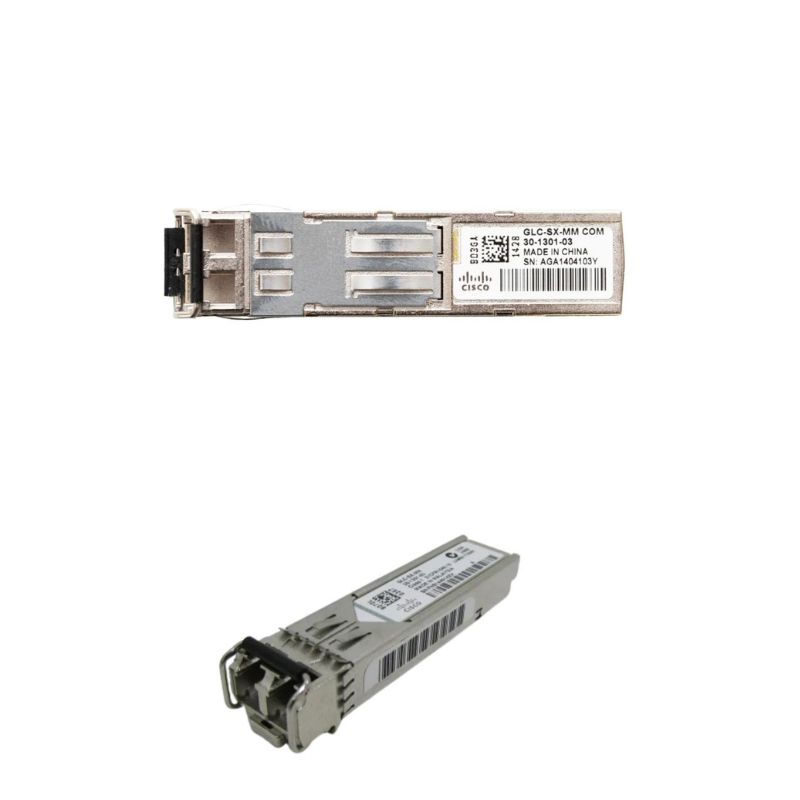
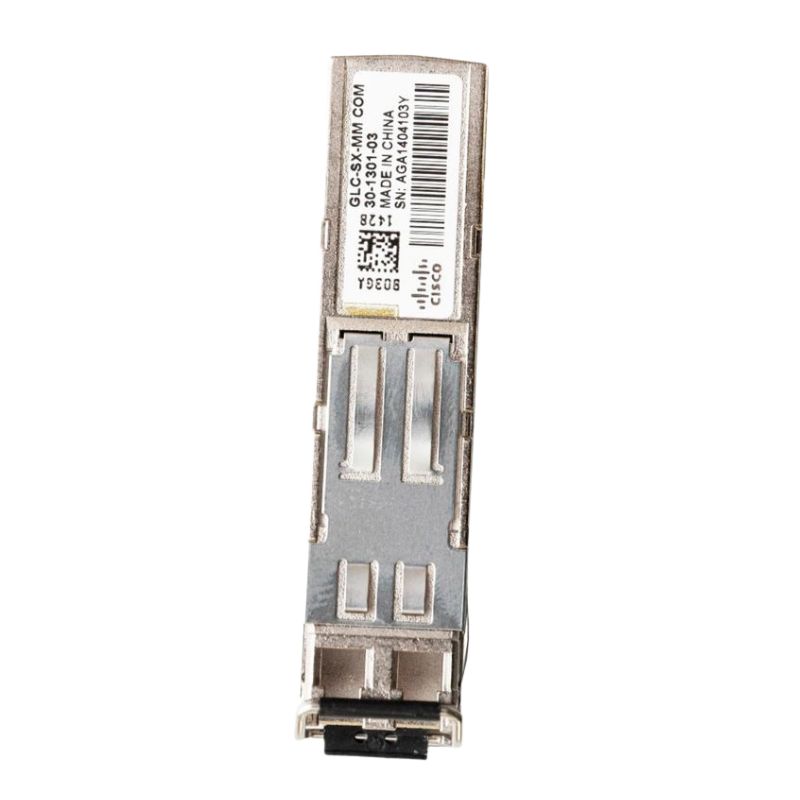
Cisco 30-1301-03 SFP (Mini-GBIC) Transceiver Module LC Multi-Mode. Factory-Sealed New in Original Box (FSB) with 1 year replacement warranty
| SKU/MPN | Warranty | Price | Condition | You save |
|---|---|---|---|---|
| 30-1301-03 | 1 Year Warranty | $50.00 | Excellent Refurbished | You save: $17.50 (26%) |
| 30-1301-03 | 1 Year Warranty | $85.00 | Factory-Sealed New Retail in Original Box (FSB) | You save: $29.75 (26%) |
Cisco stands as a global pioneer in advanced networking technologies. Its IP-based solutions form the backbone of modern communication, powering enterprises, educational institutions, and government infrastructures worldwide. With a comprehensive portfolio, Cisco enables seamless transmission of data, voice, and video across offices, campuses, and international networks. Every digital interaction—whether business-critical or personal—is delivered securely and efficiently through Cisco hardware, ensuring optimal performance, adaptability, and protection.
The Cisco 30-1301-03 SFP (Small Form-factor Pluggable) transceiver module represents Cisco's specific implementation of the Multi-Mode Fiber optic transceiver standard. This module is also commonly referred to by alternative part numbers including GLC-SX-MM, CISCO-SFP-GE-S, and WS-G5483, which may appear in different Cisco documentation or compatibility lists. The 30-1301-03 designation is Cisco's specific manufacturer part number that ensures compatibility with their networking equipment. This transceiver operates as a hot-swappable input/output device that plugs into an SFP port or slot of a Cisco switch, router, or network interface card, providing tremendous flexibility for network infrastructure design and implementation.
Following the standardized SFP (Mini-GBIC) form factor specifications, the Cisco 30-1301-03 module measures approximately 56.5mm (width) x 13.4mm (height) x 8.5mm (depth), conforming to the multi-source agreement (MSA) that ensures interoperability between different vendors' equipment. The compact design allows for high port density on networking equipment, enabling up to 48 or more SFP ports on a single switch. The module features a durable metal enclosure that provides electromagnetic interference (EMI) protection and superior thermal conductivity for heat dissipation during operation. The integrated LC duplex connector interface ensures secure fiber optic cable connections while maintaining the compact form factor essential for high-density network deployments.
The Cisco 30-1301-03 SFP transceiver incorporates a 850nm Vertical-Cavity Surface-Emitting Laser (VCSEL) transmitter optimized for multi-mode fiber optic networks. The transmitter delivers an optical output power ranging from -9.5dBm to -3dBm, with a center wavelength of 850nm ± 30nm. The spectral width of the transmitter is typically 0.85nm, ensuring minimal dispersion over the specified transmission distances. The transmitter section includes automatic power control (APC) circuitry to maintain consistent output power levels across varying operating conditions and throughout the module's operational lifespan. The extinction ratio is maintained at a minimum of 9dB to ensure reliable signal detection at the receiver end.
On the receiving end, the module features a high-sensitivity PIN photodetector capable of detecting incoming optical signals with a receive power ranging from -17dBm to 0dBm. The receiver sensitivity is specified at -17dBm, meaning it can accurately detect and decode optical signals as weak as -17dBm while maintaining a bit error rate (BER) better than 10⁻¹². The receiver incorporates automatic gain control (AGC) to handle varying input power levels and includes a signal detect function that provides a digital output indicating the presence of an incoming optical signal above the detection threshold. The receiver saturation level is 0dBm, ensuring the photodetector is not damaged by excessively strong optical inputs.
The Cisco 30-1301-03 SFP transceiver supports data rates from 1.0625Gbps (Fibre Channel) to 1.25Gbps (Gigabit Ethernet), making it compatible with multiple networking protocols including 1000BASE-SX Gigabit Ethernet, 1G Fibre Channel, and other proprietary protocols that operate within this data rate range. The module utilizes 8B/10B encoding scheme for Gigabit Ethernet applications, which provides sufficient transition density for clock recovery and includes error detection capabilities. For Fibre Channel applications, the encoding follows the FC-FS-2 specification. The transceiver maintains a typical power consumption of less than 1W during operation, contributing to energy-efficient network designs and reduced operating costs in large-scale deployments.
In data center environments, the Cisco 30-1301-03 SFP transceiver is commonly deployed for top-of-rack (ToR) switching connections, providing 1Gbps connectivity between servers and the network infrastructure. The multi-mode fiber compatibility makes it ideal for the relatively short-distance connections typical within a single data center hall or between adjacent racks. The hot-swappable nature of the SFP modules allows for maintenance and upgrades without disrupting other network connections. In storage area networks (SANs), this transceiver can be used for 1G Fibre Channel connections to storage arrays, supporting both fabric and arbitrated loop topologies with appropriate switching equipment.
For enterprise network backbones, the Cisco 30-1301-03 enables Gigabit Ethernet connections between wiring closet switches and distribution layer switches, typically spanning distances up to 550 meters depending on the fiber type. This facilitates high-speed connectivity for workgroup switching while maintaining the reliability of fiber optic media. The LC connector interface provides a secure connection that resists accidental disconnection, which is particularly important in high-traffic areas. When deployed in enterprise environments, these transceivers often connect Cisco Catalyst series switches including the 2960, 3560, 3750, 4500, and 6500 families, providing seamless integration into existing network management frameworks.
The transmission distance achievable with the Cisco 30-1301-03 SFP transceiver varies significantly depending on the type of multi-mode fiber deployed. On 62.5-micron core diameter multi-mode fiber (OM1), the maximum supported distance is 275 meters. When using 50-micron core diameter multi-mode fiber (OM2), the maximum distance increases to 550 meters. The transceiver is also compatible with newer 50-micron laser-optimized multi-mode fibers (OM3 and OM4), though the maximum distance remains 550 meters due to the 850nm VCSEL transmitter characteristics. It is important to note that these distance specifications assume a link power budget that accounts for connector losses, splice losses, and fiber attenuation typically specified at 3.5dB for the complete link.
The Cisco 30-1301-03 SFP transceiver is qualified for use across a broad range of Cisco switching platforms. For Catalyst series switches, compatible models include the Catalyst 2960, 2960-S, 2960-X, 2960-XR, 3560, 3560-E, 3560-X, 3750, 3750-E, 3750-X, 4500 (with Supervisor Engines II-Plus through VIII-E), 4500-X, 4900, 6500 (with appropriate line cards), and 6800 series. For Nexus series data center switches, compatibility includes the Nexus 2000 Fabric Extenders, Nexus 3000, Nexus 5000, Nexus 5500, Nexus 6000, and Nexus 7000 series (with appropriate M-series modules). The transceiver is also compatible with Cisco ME 3400, ME 3600, and ME 3800 series Metro Ethernet switches for service provider deployments.
Beyond switching platforms, the Cisco 30-1301-03 finds application in various routing platforms including the ASR 1000 series Aggregation Services Routers (with appropriate SFP-capable interfaces), ISR 4000 series Integrated Services Routers (with network interface modules supporting SFP), and the older 3800 and 2800 series Integrated Services Routers. The transceiver is also compatible with Cisco Firepower 2100 and 4100 series firewalls, Cisco Wireless LAN Controllers with SFP ports, and Cisco MDS 9000 series Multilayer Directors and Fabric Switches for storage networking applications. For server connectivity, it can be used with Cisco UCS fabric interconnects and compatible network interface cards that feature SFP cages.
Access to the DDM functions is provided through a two-wire serial ID interface that complies with the ATMEL AT24C01A/02/04 family specification, which is a variant of the I2C protocol. The interface operates at up to 100kHz clock frequency and provides access to 256 bytes of memory space that contains the transceiver's identification information, operational parameters, and alarm/warning threshold settings. Cisco networking equipment with SFP management capabilities automatically polls these parameters and makes them available through SNMP, the command-line interface, or web management interfaces. This integration allows for centralized monitoring of transceiver health across the entire network infrastructure and supports advanced features like optical power monitoring over time for trend analysis and predictive maintenance.
The Cisco 30-1301-03 SFP transceiver is designed to operate across commercial temperature ranges from 0°C to 70°C (32°F to 158°F), making it suitable for most controlled indoor environments. The storage temperature range is broader, from -40°C to 85°C (-40°F to 185°F), ensuring the module can withstand shipping and storage conditions outside normal operating environments. The transceiver is rated for operation at relative humidity levels from 5% to 85% non-condensing, with the capability to withstand higher transient humidity levels during installation or maintenance. The module can operate at altitudes up to 10,000 feet (3,000 meters) without performance degradation, accommodating installations in high-altitude locations.
The Cisco 30-1301-03 complies with numerous international safety and regulatory standards including Laser Class 1 FDA 21 CFR 1040.10 and 1040.11, IEC 60825-1 certification for eye safety, and RoHS compliance for restriction of hazardous substances. The module meets electromagnetic compatibility standards including FCC Part 15 Class B, EN 55022 Class B, and CISPR 22 Class B for radiated emissions. It also demonstrates immunity to electrostatic discharge (ESD) with protection up to 10kV for the case and 2kV for the electrical interface per IEC 61000-4-2. These compliance certifications ensure the transceiver can be safely deployed in various regulatory environments without causing interference to other electronic equipment or posing safety hazards to installation and maintenance personnel.
When connecting fiber optic cables to the Cisco 30-1301-03, always use LC-type multi-mode fiber optic patch cables with the appropriate core diameter matching the installed fiber plant. Before making connections, inspect the fiber end faces using a fiber microscope to ensure they are clean and free from defects or contamination. Dirty connectors are a leading cause of performance issues in fiber optic networks. Insert the LC connector into the transceiver port until it clicks into place, ensuring proper orientation of the connector key. Avoid bending fiber cables beyond their minimum bend radius (typically 20 times the cable diameter for installation and 10 times for long-term operation) to prevent microbending losses that can degrade signal quality. After installation, verify link establishment and check the optical power levels through the DDM interface to ensure they fall within the recommended operating range.
Intermittent connectivity or high error rates with the Cisco 30-1301-03 often indicate marginal optical power levels or excessive link loss. Through the DDM interface, check that both transmit and receive power levels are within the recommended operating range. Received power levels close to the receiver sensitivity threshold (-17dBm) may work initially but can become marginal as temperature changes or components age. High error rates can also result from dirty connectors, which cause backreflection and signal degradation. If power levels are appropriate, verify the fiber plant quality using an Optical Time Domain Reflectometer (OTDR) to identify any faults, excessive bends, or poor splices in the cable run. Additionally, ensure that the transceiver is not overheating; check the DDM-reported temperature to confirm it remains within the specified operating range, as excessive temperature can degrade laser performance and receiver sensitivity.


 Contact Us
 Information
 Catalog
 Solid State Drives (SSD)
 Network Switches
 Hard Disk Drives
 HBA & Controllers
 PC & Servers
 PC & Server Memory
 CPU & Processors
 Network Routers
 Power Supplies
 Tape Drives & Libraries
 Network Devices
 Computer & Network Cables