(7% discount is applied at checkout)
Cart is empty
Your go-to destination for cutting-edge server products
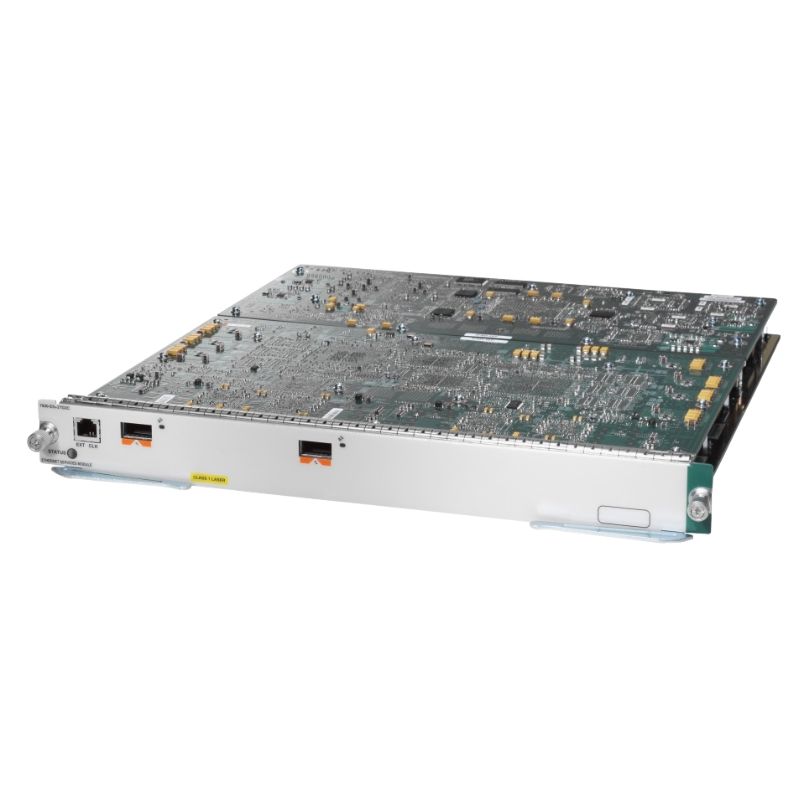


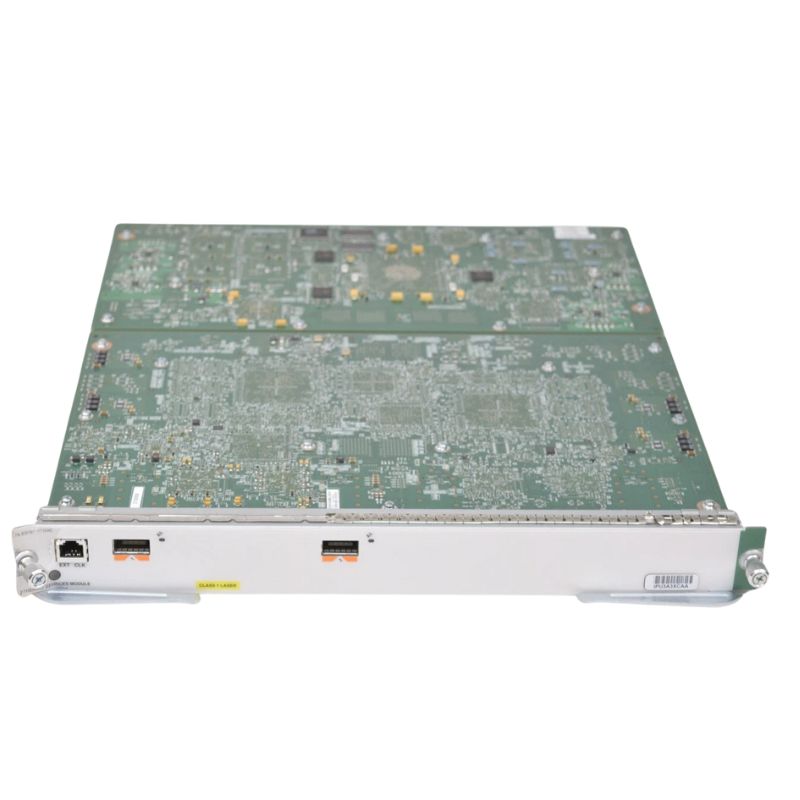
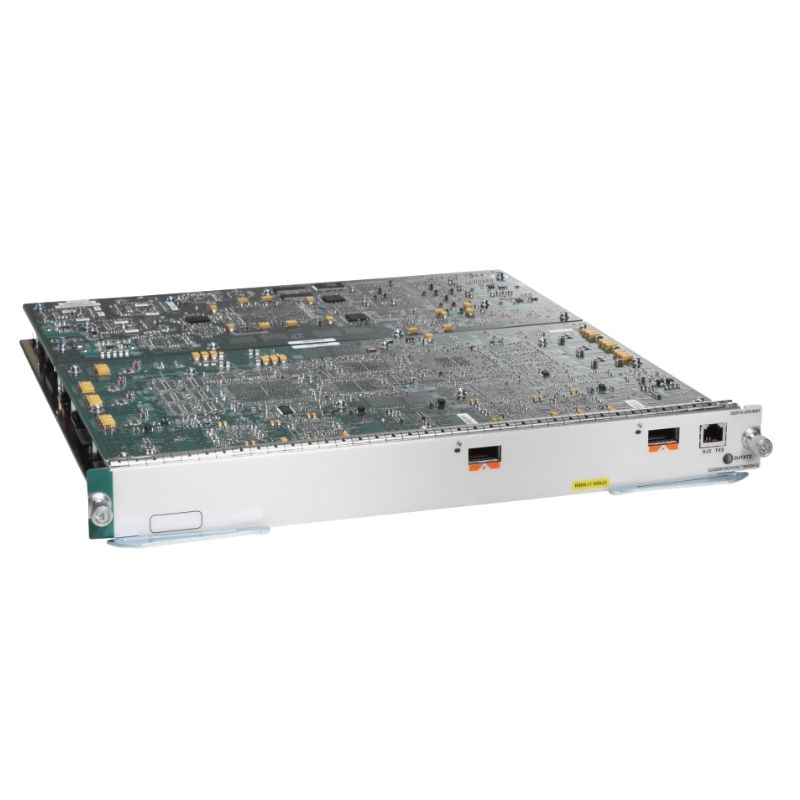
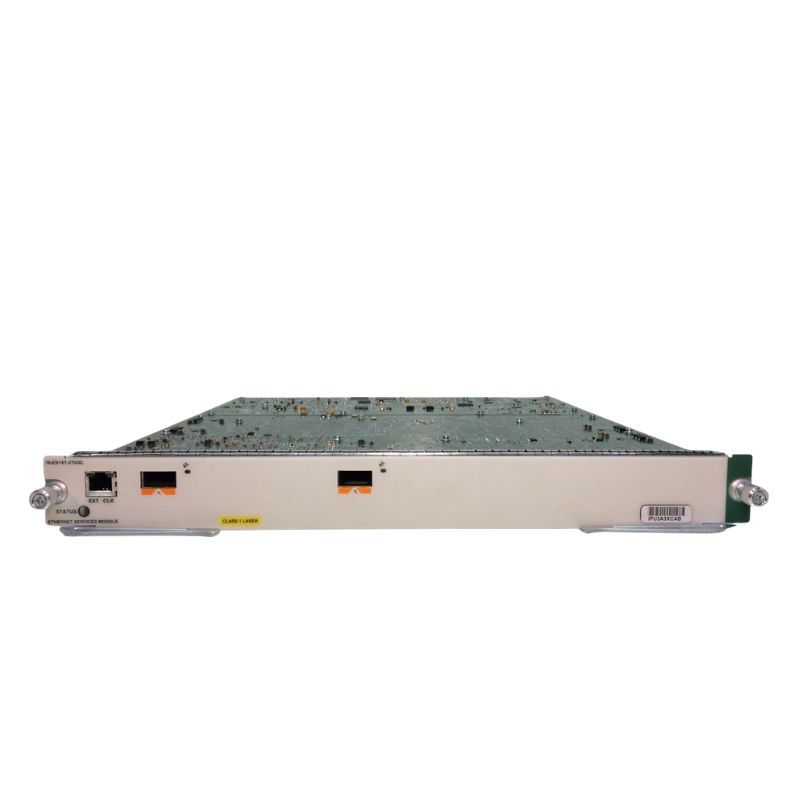
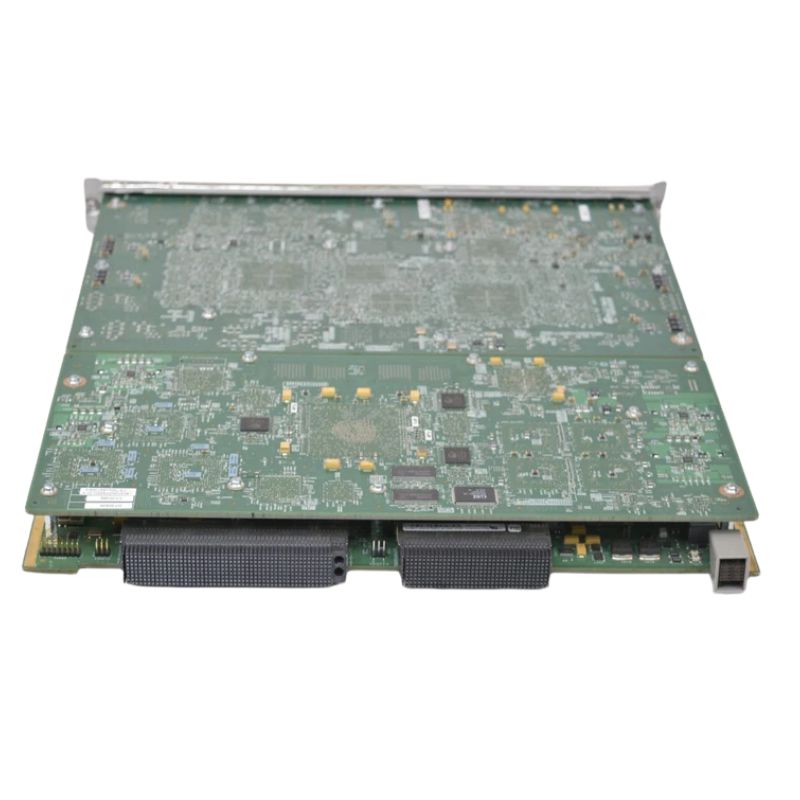
Cisco 76-ES+XT-2TG3C 7600 Series 2x 10GB XFP Router Line Card W/ DFC3C. Excellent Refurbished with 1 year replacement warranty
The Cisco 76-ES+XT-2TG3C is a high-performance router line card designed for the Cisco 7600 Series. It delivers advanced networking capabilities with dual 10GB XFP ports and integrated Distributed Forwarding Card (DFC3C).
The Cisco 76-ES+XT-2TG3C 7600 Series 2x 10GB XFP Router Line Card with DFC3C represents a high-performance switching and routing module designed for carrier-grade networks, service provider backbones, and large-scale enterprise aggregation environments. As part of the Cisco 7600 Series architecture, this line card is engineered to deliver high throughput, advanced Layer 2 and Layer 3 services, and distributed forwarding capabilities that significantly enhance routing efficiency and reduce latency in mission-critical network deployments. This category of router line cards plays a vital role in scalable IP/MPLS infrastructures where reliability, redundancy, and high-speed optical transport are essential for modern digital communication ecosystems.
Positioned within the modular chassis-based switching ecosystem, this line card enables network architects to expand system capacity while maintaining consistent service performance. Its dual 10 Gigabit Ethernet XFP interfaces provide flexible optical connectivity options that support high-speed backbone links, data center interconnects, and metropolitan area network aggregation layers. The inclusion of DFC3C (Distributed Forwarding Card) ensures that packet forwarding decisions are handled locally on the line card, reducing dependency on centralized processing and enabling deterministic forwarding performance even under heavy traffic loads.
The Cisco 7600 Series architecture is built around a modular chassis design that allows multiple line cards, supervisor engines, and service modules to operate in a unified system. The 76-ES+XT-2TG3C line card integrates seamlessly into this framework, leveraging the shared backplane to exchange data at extremely high speeds. This architecture is specifically designed to support carrier-grade scalability, enabling service providers to expand network capacity without redesigning core infrastructure.
The chassis-based design also ensures operational continuity, as line cards can be added, replaced, or upgraded without disrupting the entire system. This hot-swappable capability is essential for maintaining uptime in environments where network availability directly impacts revenue generation and service reliability.
At the core of the Cisco 76-ES+XT-2TG3C line card is an advanced packet processing engine capable of handling large volumes of data traffic with minimal latency. The integration of hardware-based forwarding paths allows the system to bypass CPU bottlenecks and directly process packets through ASIC-based pipelines. This ensures consistent throughput even when handling complex routing protocols, deep packet inspection, and QoS policies.
The forwarding architecture is optimized for both IPv4 and IPv6 traffic, making it suitable for modern dual-stack deployments. As service providers transition toward IPv6 adoption, this line card ensures compatibility without sacrificing performance or requiring additional hardware upgrades.
The dual 10 Gigabit Ethernet XFP ports on the Cisco 76-ES+XT-2TG3C line card provide high-bandwidth optical transport capabilities designed for backbone connectivity and aggregation networks. These interfaces support a wide range of optical transceivers, enabling flexible deployment across short-range, intermediate, and long-range fiber links.
The XFP form factor ensures modular optical flexibility, allowing network engineers to choose appropriate transceivers based on distance requirements, fiber type, and network topology. This adaptability is particularly useful in metropolitan fiber deployments and enterprise WAN interconnections.
Maintaining signal integrity over long-distance optical links is critical for carrier-grade performance. The Cisco 7600 Series line card incorporates advanced signal processing and error correction mechanisms to reduce packet loss and maintain consistent throughput. These enhancements ensure that optical transmission remains stable even in environments with high electromagnetic interference or extended fiber runs.
The line card is designed to support industry-standard XFP transceivers, ensuring interoperability with a wide range of optical modules. This compatibility allows organizations to integrate the card into existing optical infrastructures without requiring proprietary components or vendor lock-in. The flexibility of transceiver selection also supports cost optimization strategies in large-scale deployments.
The DFC3C (Distributed Forwarding Card 3C) is a critical component that enhances the performance capabilities of the Cisco 76-ES+XT-2TG3C line card. By enabling distributed packet forwarding, the DFC3C eliminates the need for centralized routing decisions, thereby reducing latency and improving throughput consistency across the system.
This distributed architecture allows each line card to independently compute forwarding decisions, which significantly reduces the processing load on the supervisor engine. As a result, the network can handle higher traffic volumes while maintaining predictable performance metrics.
One of the most significant advantages of the DFC3C architecture is its ability to minimize latency. Since forwarding decisions are made locally on the line card, packets do not need to traverse the shared switching fabric for every decision. This reduces hop-by-hop processing delays and ensures deterministic forwarding behavior, which is essential for latency-sensitive applications such as VoIP, real-time financial trading, and streaming media services.
Advanced QoS mechanisms integrated into the Cisco 7600 Series architecture enable precise traffic prioritization and bandwidth management. The line card supports multiple QoS policies that allow administrators to classify traffic based on application type, source, destination, or protocol. This ensures that mission-critical applications receive priority treatment even during periods of network congestion.
Traffic shaping capabilities allow network operators to control the rate at which data is transmitted, preventing congestion and maintaining consistent performance levels. Congestion control mechanisms dynamically adjust traffic flows based on real-time network conditions, ensuring optimal utilization of available bandwidth resources.
The Cisco 76-ES+XT-2TG3C line card supports Multiprotocol Label Switching (MPLS), a critical technology used in modern service provider networks. MPLS enables efficient packet forwarding by assigning labels to packets, allowing routers to make forwarding decisions based on labels rather than full IP lookups.
This label-based forwarding mechanism significantly improves routing efficiency and enables advanced network services such as traffic engineering, virtual private networks, and fast reroute capabilities.
MPLS traffic engineering allows network operators to optimize traffic flows across the network based on bandwidth availability, latency requirements, and link utilization. The Cisco 7600 Series line card supports these capabilities through its high-performance forwarding engine and distributed architecture, ensuring that traffic is routed along optimal paths.
Fast reroute mechanisms provide rapid recovery in the event of link or node failures. By precomputing backup paths, the system can redirect traffic almost instantaneously, minimizing downtime and ensuring service continuity for critical applications.
The Cisco 76-ES+XT-2TG3C line card is designed to support large-scale network environments where scalability is a primary requirement. Its high-throughput interfaces and distributed forwarding architecture allow it to handle increasing traffic demands without compromising performance.
As organizations grow their network infrastructure, additional line cards can be integrated into the chassis to expand capacity. This modular scalability ensures that investments in existing infrastructure are preserved while enabling future growth.
Bandwidth aggregation techniques allow multiple links to be combined into a single logical connection, increasing total throughput and improving redundancy. Load distribution mechanisms ensure that traffic is evenly distributed across available resources, preventing bottlenecks and maximizing efficiency.
High availability is a core requirement in carrier-grade networks, and the Cisco 7600 Series is engineered with redundancy at multiple levels. The line card operates in conjunction with redundant supervisor engines and power supplies to ensure continuous operation even in the event of hardware failures.
Redundant pathways within the switching fabric ensure that traffic can be rerouted automatically if a component fails, minimizing service disruption and maintaining network integrity.
Advanced monitoring systems continuously evaluate the health of network components. When a fault is detected, automatic recovery mechanisms initiate failover processes to restore service continuity. This proactive approach to fault management enhances system reliability and reduces downtime.
In service provider environments, the line card serves as a core routing component that handles large volumes of transit traffic. Its high-performance architecture ensures that backbone networks remain stable and scalable under heavy load conditions.
The Cisco 7600 Series architecture incorporates multiple layers of security to protect against unauthorized access and network attacks. Access control mechanisms, packet filtering, and routing policy enforcement ensure that only legitimate traffic is processed.
The Cisco 76-ES+XT-2TG3C line card supports advanced diagnostic tools that assist in identifying and resolving network issues. These tools provide detailed insights into packet flows, interface status, and hardware performance.
Predictive maintenance capabilities analyze historical performance data to anticipate potential failures before they occur. This proactive approach reduces downtime and improves overall system reliability.
Configuration of the line card involves integrating it into existing routing policies, VLAN structures, and MPLS configurations. Proper provisioning ensures that the card operates efficiently within the broader network ecosystem.


 Contact Us
 Information
 Catalog
 Solid State Drives (SSD)
 Network Switches
 Hard Disk Drives
 HBA & Controllers
 PC & Servers
 PC & Server Memory
 CPU & Processors
 Network Routers
 Power Supplies
 Tape Drives & Libraries
 Network Devices
 Computer & Network Cables