(7% discount is applied at checkout)
Cart is empty
Your go-to destination for cutting-edge server products
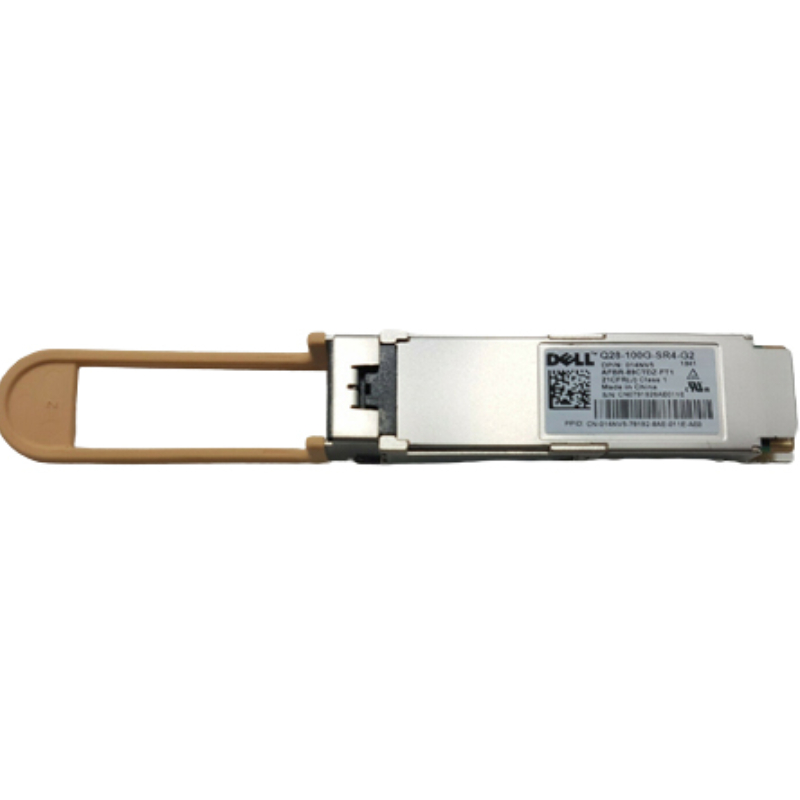


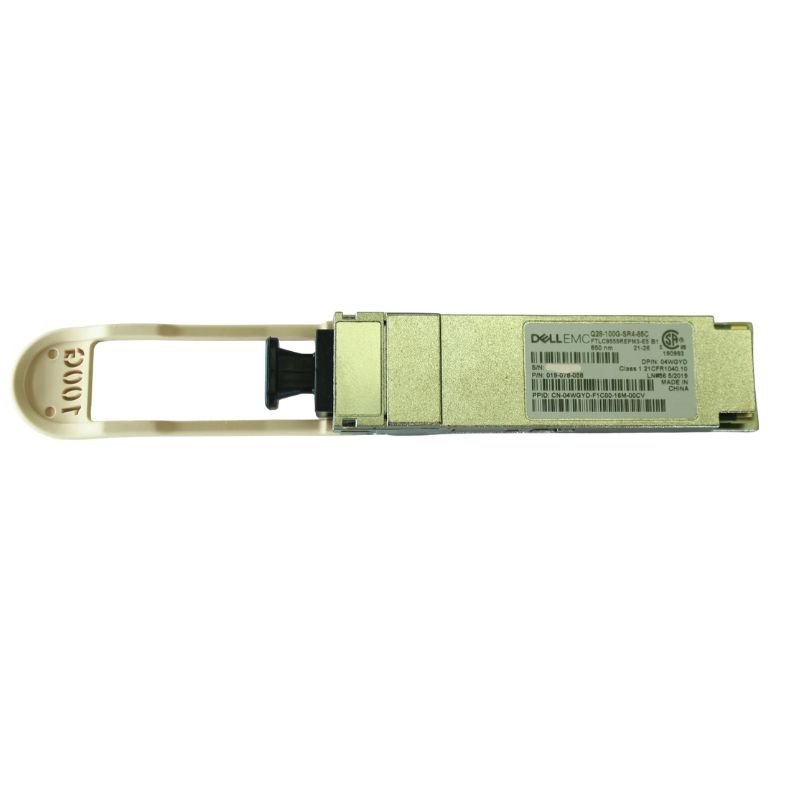
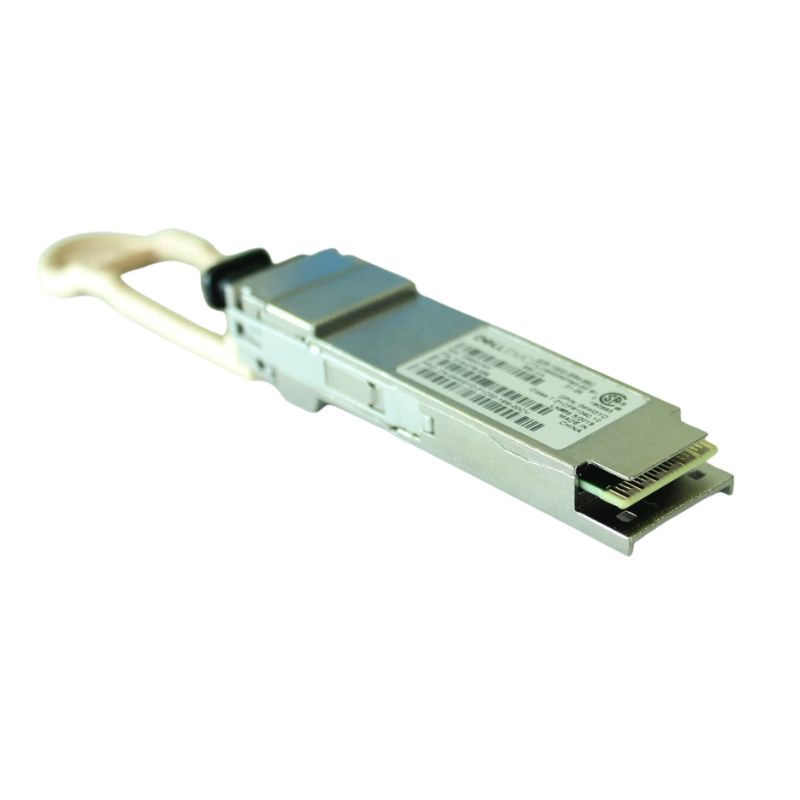
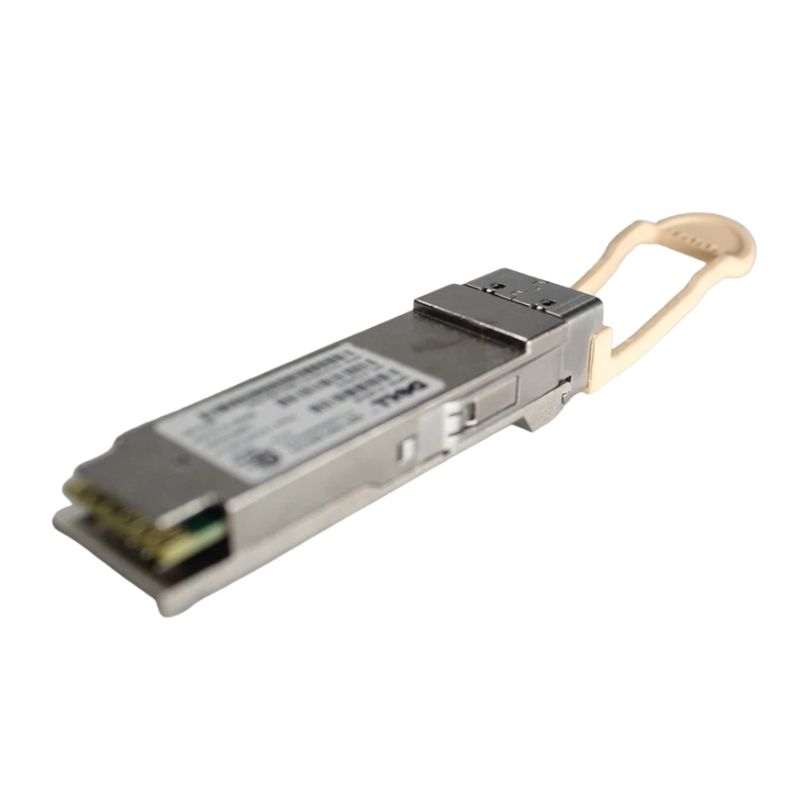
Dell 14NV5 100GBE QSFP28 SR4 MPO MMF 4X25GBE SFP28 SR Quad Mode Networking Transceiver. Excellent Refurbished with 1 year replacement warranty
| SKU/MPN | Warranty | Price | Condition | You save |
|---|---|---|---|---|
| 14NV5 | 1 Year Warranty | $114.00 | New Sealed in Box (NIB) | You save: $39.90 (26%) |
| 14NV5 | 1 Year Warranty | $105.00 | Excellent Refurbished | You save: $36.75 (26%) |
The Dell 14NV5 100GbE QSFP28 SR4 MPO multimode fiber transceiver module is a high-performance networking component engineered for modern high-speed data center environments. Designed to deliver ultra-fast connectivity and reliable optical transmission, this quad-mode transceiver supports advanced 100 Gigabit Ethernet applications using parallel multimode fiber architecture.
The Dell 14NV5 100GbE QSFP28 SR4 MPO MMF 4x25GbE SFP28 SR Quad Mode Networking Transceiver Module represents a highly advanced optical connectivity solution designed for enterprise-grade data centers, cloud computing infrastructures, and high-performance computing environments. As network demand continues to increase due to virtualization, containerization, artificial intelligence workloads, and real-time analytics, the need for reliable and scalable high-bandwidth interconnects has become critical. This transceiver module is engineered to address these demands by delivering ultra-fast 100 Gigabit Ethernet connectivity while maintaining backward compatibility with 25 Gigabit Ethernet breakout configurations.
In modern network architectures, scalability and flexibility are essential. The Dell 14NV5 module provides both by supporting multiple operational modes, allowing it to function as a unified 100GbE link or as four independent 25GbE links through breakout configurations. This versatility enables network engineers to optimize infrastructure utilization while minimizing hardware redundancy and cabling complexity.
Within enterprise environments, this module is commonly deployed in spine-leaf topologies, high-density switch fabrics, and storage area networks. It supports high-throughput communication between top-of-rack switches and aggregation layers, ensuring minimal latency and maximum bandwidth utilization. The SR4 multimode fiber design allows short-range data transmission within data centers, making it ideal for inter-rack and intra-facility connectivity.
The QSFP28 form factor is a compact, hot-pluggable optical transceiver design that supports up to 100Gbps data transmission. QSFP28 stands for Quad Small Form-factor Pluggable 28, where four channels each operate at 25Gbps. This architecture enables high-density port configurations in modern network switches and routers. The compact size of the module ensures efficient use of rack space while maintaining high thermal and electrical performance standards.
The electrical interface of QSFP28 is designed to support high-speed differential signaling, ensuring signal integrity even under high throughput conditions. Advanced signal conditioning and error correction mechanisms are often integrated within compatible switch ASICs to maintain stability across long operational periods.
The Dell 14NV5 module achieves its 100GbE throughput using a four-lane architecture, where each lane operates at 25 Gigabits per second. These lanes function in parallel, allowing simultaneous data transmission and reception. This parallelism is essential for maintaining low latency while achieving high bandwidth efficiency. The lanes are mapped to optical fibers through the MPO connector, ensuring precise alignment and minimal signal loss.
SR4, which stands for Short Range 4-lane, refers to the optical transmission standard used in this module. It is optimized for multimode fiber (MMF), typically OM3 or OM4 grade fiber types. SR4 technology is specifically designed for short-distance communication, usually within 100 meters depending on fiber quality. This makes it ideal for intra-data center connectivity where long-distance transmission is not required.
Multimode fiber technology allows multiple light paths within a single fiber core, enabling efficient short-range data transmission. The use of vertical-cavity surface-emitting lasers (VCSELs) in SR4 optics enhances performance while reducing power consumption and manufacturing cost.
The MPO (Multi-fiber Push-On) connector plays a crucial role in distributing optical signals across multiple fiber strands. In the Dell 14NV5 module, the MPO interface typically supports 8 or 12 fiber configurations, allowing precise alignment of transmit and receive channels. This connector system simplifies high-density cabling and reduces installation complexity in enterprise environments.
MPO connectors are designed for fast deployment and reliable performance. They ensure minimal insertion loss and high repeatability during repeated connections and disconnections. The polarity management in MPO cabling is critical for maintaining correct signal directionality and is an important consideration during deployment planning.
One of the most powerful features of the Dell 14NV5 module is its quad mode capability, which enables interoperability between 100GbE and 25GbE network configurations. This allows a single 100GbE port to be split into four independent 25GbE SFP28 connections. This functionality is particularly useful in environments where legacy infrastructure coexists with modern high-speed systems.
Network engineers can leverage this flexibility to optimize port utilization and reduce capital expenditure. Instead of deploying multiple discrete transceivers, a single module can serve multiple endpoints, thereby increasing efficiency and reducing physical infrastructure complexity.
In breakout mode, the 100GbE signal is divided into four distinct 25GbE channels. These channels can be routed to different servers, switches, or storage nodes. This configuration is commonly used in leaf-spine architectures where aggregation switches distribute traffic to multiple access-layer devices.
The breakout functionality also supports dynamic scalability, allowing administrators to reconfigure network topology without replacing hardware. This adaptability is essential in cloud computing environments where workloads frequently shift.
The Dell 14NV5 transceiver is optimized for low latency and high throughput environments. By using parallel optical lanes and advanced modulation techniques, it ensures minimal delay in data transmission. This is critical for latency-sensitive applications such as high-frequency trading platforms, real-time analytics systems, and distributed storage synchronization.
Bandwidth efficiency is further enhanced through optimized encoding schemes that reduce overhead while maintaining signal integrity. This ensures maximum usable throughput for enterprise workloads.
Signal integrity is a key performance factor in high-speed optical communication. The module incorporates advanced error detection and correction mechanisms that help maintain stable transmission even in electrically noisy environments. Careful calibration of optical power levels ensures consistent performance across varying deployment conditions.
In cloud computing environments, the Dell 14NV5 module is widely used to support distributed workloads across large-scale server farms. Its ability to deliver high bandwidth with low latency makes it suitable for virtual machine migration, container orchestration, and microservices communication.
High-performance computing (HPC) clusters require extremely fast interconnects to process large datasets efficiently. The 100GbE capability of this module ensures rapid data exchange between compute nodes, significantly reducing processing bottlenecks. Scientific simulations, machine learning training, and financial modeling systems benefit greatly from such high-speed interconnectivity.
Storage area networks (SANs) rely on fast and reliable communication between storage arrays and servers. The Dell 14NV5 module supports high-throughput data replication and backup operations, ensuring minimal downtime and rapid recovery in enterprise storage systems.
The module is designed to integrate seamlessly with Dell Networking switches that support QSFP28 interfaces. This includes high-end data center switches optimized for spine-leaf architectures. Compatibility ensures plug-and-play functionality, reducing configuration complexity and deployment time.
Proper operation of the module requires alignment between switch firmware and transceiver firmware. Dell ensures compatibility through validated firmware releases that optimize performance and stability. This synchronization helps maintain consistent link performance across diverse network environments.
The modular design of the Dell 14NV5 enables scalable network expansion without requiring significant infrastructure overhaul. Its breakout capability allows gradual upgrades from 25GbE to 100GbE, ensuring investment protection for enterprises.
By combining multiple channels into a single transceiver module, organizations can significantly reduce the number of physical components required. This leads to lower operational costs, reduced power consumption, and simplified maintenance processes.
The module is engineered for low power consumption while maintaining high performance. Efficient thermal design ensures stable operation even in densely packed switch environments. This reduces cooling requirements and improves overall data center energy efficiency.
The performance of the Dell 14NV5 module is closely tied to the quality of multimode fiber used. OM3 and OM4 fibers are recommended due to their optimized bandwidth-distance characteristics. These fiber types support high-speed transmission with minimal attenuation.
Temperature, humidity, and electromagnetic interference can affect optical performance. Data centers must maintain controlled environments to ensure consistent transceiver operation. Proper airflow design and rack organization contribute to system reliability.
As data consumption continues to grow, networking technologies are evolving toward 200GbE and 400GbE standards. However, 100GbE remains a foundational technology in many enterprise environments due to its balance of cost, performance, and compatibility.
Modular transceivers like the Dell 14NV5 will continue to play a crucial role in enabling flexible and scalable network architectures. Their ability to support multiple modes of operation ensures longevity and relevance in rapidly evolving technological landscapes.


 Contact Us
 Information
 Catalog
 Solid State Drives (SSD)
 Network Switches
 Hard Disk Drives
 HBA & Controllers
 PC & Servers
 PC & Server Memory
 CPU & Processors
 Network Routers
 Power Supplies
 Tape Drives & Libraries
 Network Devices
 Computer & Network Cables