(7% discount is applied at checkout)
Cart is empty
Your go-to destination for cutting-edge server products
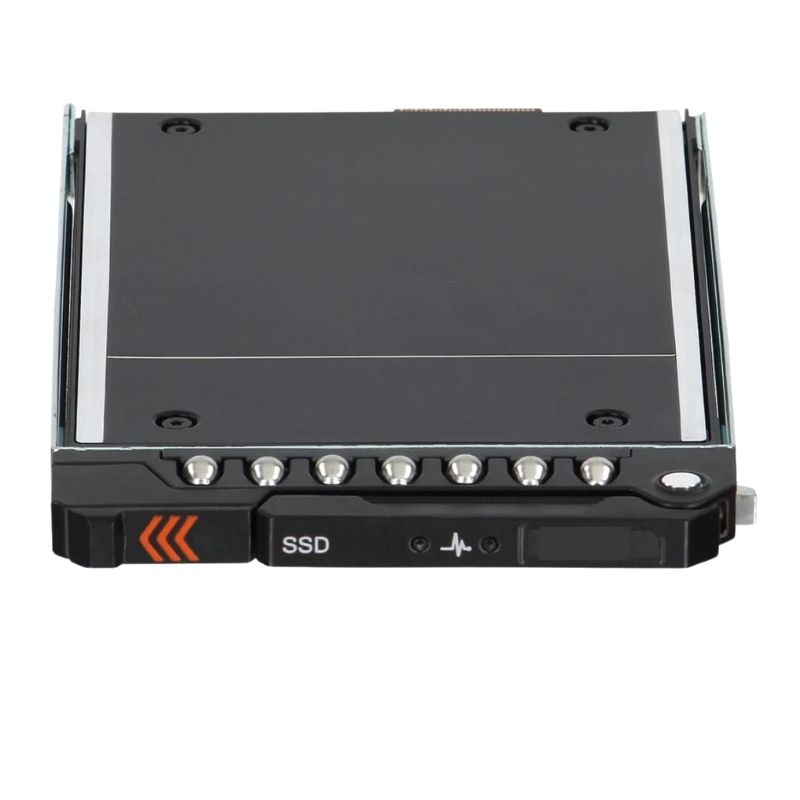


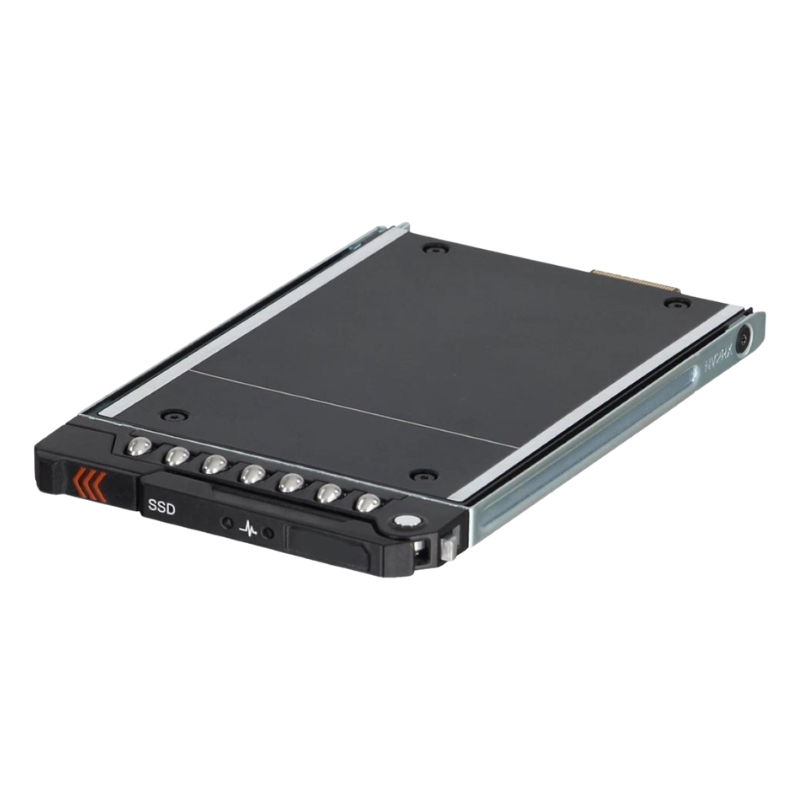
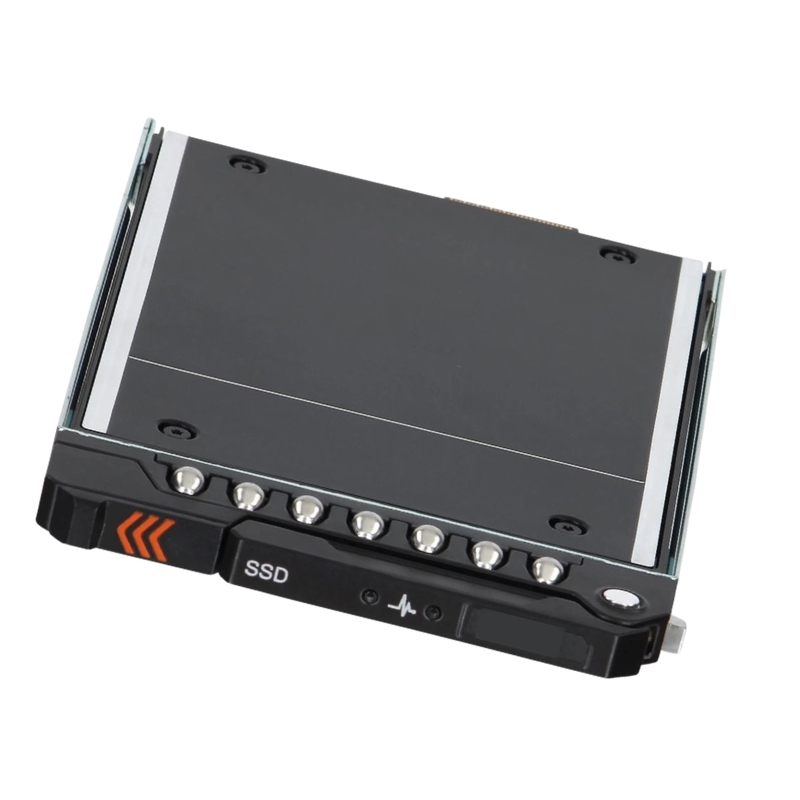
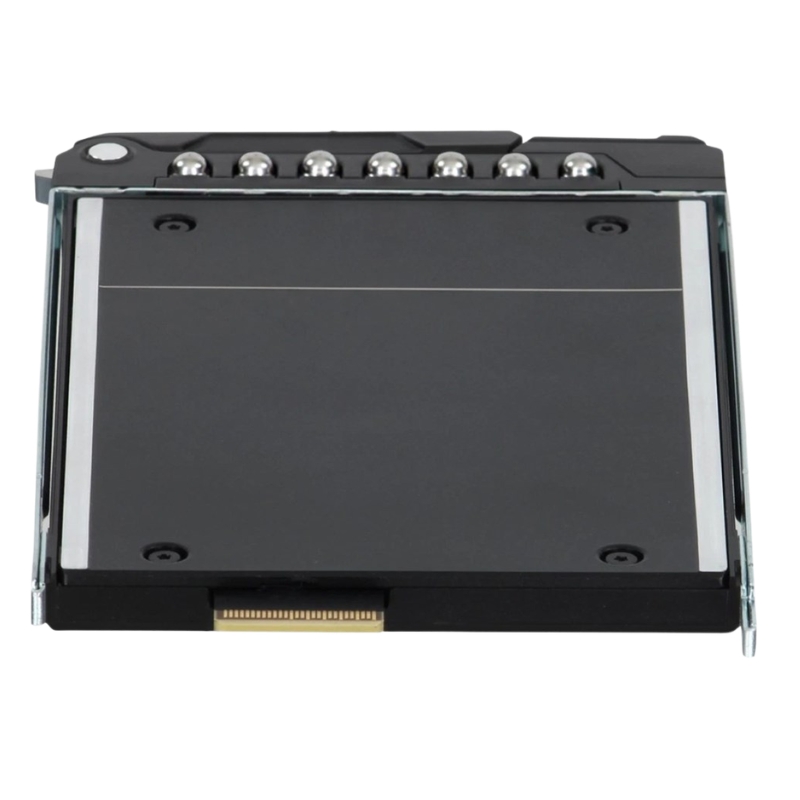
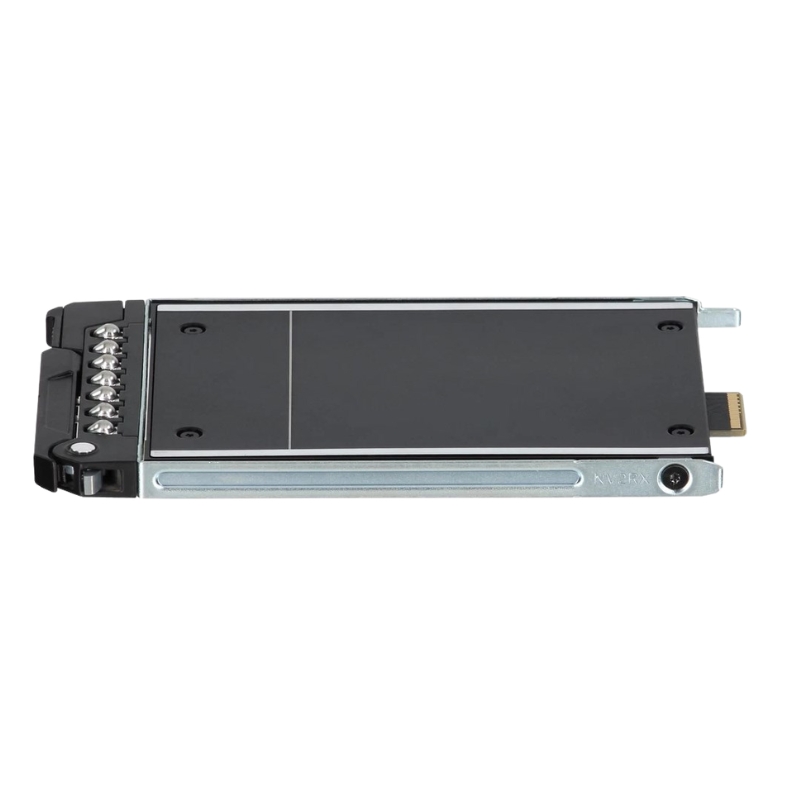
Dell 345-BKBC 3.2TB NVMe E3.s 2.5 inch PCIe EDSSF Gen 5.0 X4 Mixed Use TLC Enterprise Solid State Drive With Tray For Server. Excellent Refurbished with 1 year Replacement Warranty
The Dell 345-BKBC is a high-performance enterprise-grade solid state drive engineered for demanding workloads. With advanced PCIe Gen 5.0 technology and E3.s form factor, it ensures exceptional speed, reliability, and endurance for server environments.
The Dell 345-BKBC 3.2TB NVMe E3.s 2.5 inch PCIe EDSSF Gen 5.0 X4 Mixed Use TLC Enterprise Solid State Drive with Tray for Server is engineered for enterprise-grade computing environments where performance, endurance, reliability, and scalability are critical. Designed for modern server platforms and high-density infrastructure deployments, this enterprise SSD combines next-generation PCIe Gen 5.0 bandwidth with advanced TLC NAND architecture to deliver exceptional responsiveness and sustained throughput across demanding workloads. Organizations deploying virtualization clusters, hyperconverged infrastructure, database systems, analytics environments, AI training frameworks, edge computing deployments, and enterprise cloud platforms can leverage this drive to support continuous data-intensive operations.
Built using the E3.s Enterprise and Datacenter Standard Form Factor specification, this Dell enterprise SSD aligns with evolving data center design priorities focused on thermal efficiency, serviceability, storage density, and future-ready interoperability. The inclusion of a server tray enables simplified deployment into compatible Dell server environments while maintaining enterprise serviceability standards expected in mission-critical systems. PCIe Gen 5.0 support dramatically increases available bandwidth compared to previous generations, enabling reduced latency and significantly improved data transfer performance for modern enterprise applications.
NVMe technology has fundamentally transformed enterprise storage by eliminating bottlenecks associated with traditional SATA and SAS interfaces. The Dell 345-BKBC enterprise SSD leverages the NVMe protocol over a PCIe Gen 5.0 x4 interface to deliver extremely low latency communication between storage media and system processors. This architecture allows server environments to process millions of input and output operations efficiently while supporting increasingly complex workloads requiring real-time data access.
Enterprise organizations transitioning from legacy spinning disks or older-generation SSD platforms benefit from the reduced command overhead and parallel processing capabilities inherent in NVMe architecture. The Dell 345-BKBC drive is optimized to sustain consistent performance under heavy enterprise workloads where multiple virtual machines, database transactions, and storage-intensive applications are operating simultaneously. Reduced latency improves application responsiveness, while higher throughput accelerates data movement across enterprise systems.
The PCIe Gen 5.0 x4 connectivity layer significantly expands bandwidth potential compared to PCIe Gen 4.0 environments. This enhanced data path enables the SSD to support modern computational demands associated with artificial intelligence, machine learning, software-defined storage, and enterprise analytics platforms. Data centers adopting next-generation server hardware can utilize this SSD to maximize throughput efficiency and reduce storage-related performance constraints.
The Enterprise and Datacenter Standard Form Factor initiative was developed to address growing enterprise storage challenges involving thermal limitations, storage density, serviceability, and interoperability. The E3.s form factor used in the Dell 345-BKBC SSD offers a modernized approach to enterprise storage deployment compared to older 2.5 inch U.2 and M.2 storage formats. By leveraging E3.s architecture, enterprise servers can support improved airflow management and higher storage density while maintaining hot-swap capabilities and operational reliability.
Thermal optimization plays a major role in modern server infrastructure. As PCIe Gen 5.0 storage devices operate at substantially higher speeds, heat generation becomes increasingly significant. The E3.s design helps improve cooling efficiency through optimized airflow pathways and compact physical dimensions that integrate effectively within dense server chassis configurations. This contributes to sustained performance consistency even during continuous high-throughput workloads.
The E3.s architecture also supports scalable deployment strategies for enterprise organizations planning long-term infrastructure modernization. As server platforms evolve toward composable infrastructure and modular compute environments, EDSFF-based drives provide a standardized approach to integrating high-performance storage resources. Dell enterprise servers equipped to support E3.s drives can benefit from simplified maintenance procedures and future scalability improvements.
PCIe Gen 5.0 technology represents a substantial leap forward in enterprise storage bandwidth. Compared to PCIe Gen 4.0, Gen 5.0 effectively doubles throughput capacity, enabling storage devices like the Dell 345-BKBC to support increasingly demanding enterprise computing workloads. High-frequency transactional environments, real-time analytics systems, and AI-driven infrastructure benefit significantly from this expanded bandwidth potential.
Modern enterprise applications generate enormous volumes of structured and unstructured data. Traditional storage architectures often struggle to maintain consistent responsiveness under sustained concurrent access scenarios. PCIe Gen 5.0 NVMe SSDs help address these limitations by enabling rapid data movement with minimal latency overhead. This is especially important for mission-critical environments where delays can directly impact business operations and service delivery.
Database acceleration is one of the primary advantages associated with PCIe Gen 5.0 enterprise SSD deployment. Relational databases, NoSQL platforms, transactional systems, and distributed database architectures require rapid read and write operations to maintain application responsiveness. The Dell 345-BKBC SSD enables faster query execution, improved transaction processing efficiency, and lower storage latency across enterprise database environments.
Virtualized infrastructure also benefits substantially from Gen 5.0 storage technology. Hypervisors managing numerous virtual machines generate highly randomized I/O patterns that can overwhelm slower storage systems. Enterprise NVMe drives equipped with PCIe Gen 5.0 interfaces help maintain consistent performance even under heavily consolidated virtualization environments.
The Dell 345-BKBC SSD is classified as a mixed use enterprise drive, meaning it is designed to balance read-intensive and write-intensive operational demands. Mixed use SSDs are particularly valuable for enterprise environments where workloads fluctuate dynamically between transactional writes, analytics processing, virtualization traffic, application hosting, and content delivery operations.
Unlike read-optimized SSDs that primarily target static data retrieval scenarios, mixed use drives are engineered to handle more substantial write endurance while maintaining excellent read performance characteristics. This balance makes the Dell 345-BKBC suitable for broad enterprise deployment across multiple application categories without compromising durability.
Enterprise resource planning systems, customer relationship management platforms, cloud-hosted applications, and virtualization clusters often involve continuous read and write activity throughout operational cycles. Mixed use SSD architecture ensures these workloads can operate efficiently without excessive NAND wear or performance degradation over time.
Storage consistency is particularly important in enterprise infrastructure where unpredictable latency spikes can negatively affect application performance. The Dell 345-BKBC enterprise SSD is engineered to sustain stable response times under mixed operational conditions, enabling organizations to maintain predictable service-level expectations across business-critical environments.
Triple-Level Cell NAND flash technology provides an effective balance between storage density, endurance, and performance within modern enterprise SSD solutions. The Dell 345-BKBC utilizes enterprise-grade TLC NAND architecture to deliver high-capacity storage efficiency while maintaining reliability standards required for data center deployment.
Enterprise TLC implementations differ substantially from consumer-grade storage products. Enterprise SSDs incorporate advanced firmware algorithms, sophisticated wear-leveling technologies, power-loss protection capabilities, and enhanced error correction mechanisms to ensure operational integrity under sustained workloads. These enterprise optimizations allow TLC-based SSDs to support demanding server applications while maintaining predictable endurance characteristics.
Capacity optimization is another major advantage of TLC NAND technology. The 3.2TB storage capacity provided by the Dell 345-BKBC SSD enables organizations to consolidate workloads efficiently while reducing physical storage footprint requirements. This is particularly valuable in environments where rack space optimization and power efficiency are strategic priorities.
Advanced flash management technologies help maximize NAND lifespan by distributing write operations intelligently across storage cells. Enterprise controllers continuously monitor wear patterns and dynamically allocate resources to maintain balanced usage distribution. This contributes to longer operational life and improved reliability in continuous-use server environments.
Enterprise data centers require storage devices capable of maintaining operational integrity under constant utilization. The Dell 345-BKBC SSD incorporates enterprise endurance engineering designed to support sustained workloads over extended deployment periods. Reliability features play a critical role in minimizing downtime risks and preserving business continuity.
Error correction technologies continuously monitor stored data integrity and help identify potential corruption before it impacts application operations. Enterprise SSD controllers utilize advanced ECC algorithms to maintain data accuracy even during intensive read and write cycles. This contributes to long-term operational stability across enterprise deployments.
Power-loss protection mechanisms are essential for safeguarding data consistency during unexpected power interruptions. Enterprise SSDs often integrate capacitors or firmware-based safeguards that help ensure in-flight data is properly written during abrupt power events. This minimizes corruption risks and supports transactional consistency within critical applications.
Wear leveling technology further enhances durability by distributing write operations evenly across NAND memory cells. Without wear leveling, certain portions of flash memory could degrade prematurely due to uneven usage concentration. Enterprise controllers intelligently manage write distribution to extend overall drive lifespan and preserve performance consistency.
Modern data centers are evolving rapidly to support cloud-native applications, distributed computing environments, edge infrastructure, and AI-driven analytics platforms. Enterprise SSD solutions such as the Dell 345-BKBC are central to enabling scalable infrastructure modernization initiatives. By delivering high throughput and low latency within compact form factors, these drives support increasingly dense and performance-oriented server architectures.
Infrastructure scalability requires storage solutions capable of accommodating growing data volumes without introducing operational bottlenecks. The 3.2TB capacity offered by this enterprise SSD provides significant storage density while maintaining high-performance characteristics essential for enterprise application responsiveness.
Cloud service providers and enterprise IT departments increasingly rely on software-defined infrastructure models where storage resources are abstracted and dynamically allocated. High-performance NVMe SSDs enhance the efficiency of these architectures by enabling rapid provisioning, low-latency access, and scalable storage pools capable of supporting multi-tenant environments.
Edge computing deployments also benefit from enterprise-grade SSD technology. Edge infrastructure frequently operates in environments requiring compact hardware footprints and reliable local processing capabilities. PCIe Gen 5.0 SSDs help edge systems process data rapidly while supporting AI inference workloads, localized analytics, and distributed application hosting.
Virtualization platforms place unique demands on storage infrastructure due to highly randomized I/O patterns generated by multiple simultaneous virtual machines. The Dell 345-BKBC enterprise SSD is engineered to support these demanding conditions by delivering rapid response times and sustained throughput consistency.
Hyper converged infrastructure environments combine compute, storage, and networking resources within unified platforms designed for simplified scalability and operational efficiency. NVMe enterprise SSDs play a foundational role in HCI architectures by enabling fast distributed storage access across clustered nodes. Reduced latency directly improves VM responsiveness, application availability, and overall infrastructure efficiency.
Storage-intensive virtualization workloads involving virtual desktop infrastructure, database virtualization, and containerized applications require enterprise SSDs capable of handling fluctuating I/O demands without performance collapse. Mixed use SSD engineering helps ensure reliable operation across dynamic enterprise workload conditions.
Organizations consolidating multiple workloads into shared infrastructure platforms depend on predictable storage performance to maintain quality-of-service standards. PCIe Gen 5.0 enterprise SSDs provide the throughput necessary to support increasingly dense virtualization environments while minimizing contention-related delays.
Enterprise databases rely heavily on low-latency storage systems to maintain efficient query execution and transaction processing. The Dell 345-BKBC SSD supports accelerated database performance through high-speed NVMe architecture and reduced access latency. Database administrators deploying SQL databases, NoSQL platforms, in-memory processing frameworks, or distributed data systems can benefit from improved storage responsiveness.
Analytics workloads frequently involve processing massive datasets across parallel compute environments. Storage throughput limitations can significantly affect analytics completion times and reporting responsiveness. PCIe Gen 5.0 SSDs help eliminate bottlenecks by enabling faster ingestion, indexing, retrieval, and processing of enterprise data.
Machine learning and AI frameworks also depend heavily on high-speed storage infrastructure. Training datasets can involve enormous volumes of structured and unstructured information requiring rapid access during iterative processing cycles. Enterprise NVMe SSDs reduce data loading delays and support faster computational workflows.
Real-time business intelligence applications benefit from low-latency enterprise storage by enabling faster dashboard updates, accelerated reporting, and improved responsiveness for operational decision-making systems. Organizations operating in finance, healthcare, manufacturing, logistics, and telecommunications sectors can leverage these capabilities to improve operational efficiency.
Transactional enterprise environments such as e-commerce platforms, banking systems, reservation platforms, and ERP applications require consistent low-latency performance during peak operational periods. Storage delays can negatively affect customer experiences, application stability, and transaction processing throughput.
The Dell 345-BKBC SSD is engineered to sustain stable performance under continuous transactional loads. Advanced controller technologies manage queue depths and parallel processing operations efficiently to maintain responsiveness even during intensive simultaneous access scenarios.
Reduced latency contributes directly to improved application scalability. As user demand increases, enterprise systems must process larger transaction volumes without degradation in service quality. High-performance NVMe SSDs help support this scalability by minimizing storage-related response delays.
Predictable storage performance is particularly important for service-level agreement compliance within enterprise environments. Organizations hosting customer-facing applications depend on reliable infrastructure performance to maintain uptime guarantees and operational continuity.
Enterprise storage infrastructure must maintain stringent data protection standards to safeguard sensitive business information and ensure regulatory compliance. The Dell 345-BKBC SSD incorporates enterprise reliability and security engineering intended to preserve data integrity across mission-critical environments.
Advanced error correction mechanisms continuously validate stored information to identify and mitigate potential corruption risks. Data integrity safeguards become increasingly important as enterprise systems process growing volumes of transactional and analytical information.
Secure erase functionality supports storage sanitization procedures required during hardware repurposing or decommissioning activities. Enterprise organizations frequently implement strict data destruction policies to protect confidential information and comply with industry regulations.
Operational reliability directly influences overall infrastructure security posture. Unexpected storage failures can disrupt critical business operations and expose organizations to data availability risks. Enterprise SSD engineering focuses heavily on minimizing these risks through durable hardware architecture and intelligent firmware management.
Thermal management is increasingly important within modern high-density data centers. PCIe Gen 5.0 storage devices operate at elevated performance levels that generate substantial thermal output. The E3.s form factor and enterprise thermal engineering of the Dell 345-BKBC SSD help maintain efficient cooling characteristics within compact server environments.
Efficient airflow integration contributes to stable long-term performance by reducing thermal throttling risks. Sustained high temperatures can negatively affect SSD performance consistency and component lifespan. Optimized thermal design helps ensure reliable operation during intensive workloads.
Power efficiency is another critical consideration for enterprise infrastructure planning. Data centers consume significant electrical resources, and improving storage power efficiency contributes to lower operational costs and reduced environmental impact. Modern enterprise SSDs generally consume less power per I/O operation compared to legacy spinning disk systems while delivering dramatically superior performance.
Reduced power consumption additionally supports higher-density deployments by minimizing rack-level thermal accumulation and infrastructure cooling demands. Organizations pursuing sustainability initiatives can benefit from transitioning toward more efficient enterprise NVMe storage architectures.
Cloud service providers require scalable, low-latency storage infrastructure capable of supporting highly dynamic workloads across multi-tenant environments. The Dell 345-BKBC SSD provides the throughput and responsiveness needed to maintain efficient cloud application delivery while supporting rapid provisioning and workload migration capabilities.
Cloud-native applications often rely on distributed microservices architectures that generate continuous storage access activity. NVMe enterprise SSDs help reduce latency between application layers and storage resources, contributing to improved service responsiveness and operational scalability.
Financial institutions rely heavily on low-latency storage infrastructure to support trading systems, transaction processing, fraud detection analytics, and customer-facing banking applications. The Dell 345-BKBC SSD delivers rapid response times essential for maintaining operational accuracy and customer experience standards.
Transactional consistency and reliability are especially important in regulated financial environments where data integrity failures can produce severe operational consequences. Enterprise SSD engineering helps support these stringent reliability requirements.
Healthcare organizations increasingly depend on high-performance storage infrastructure to manage electronic health records, medical imaging systems, telemedicine platforms, and research analytics environments. Enterprise NVMe SSD enable faster data retrieval and improved application responsiveness across healthcare systems.
Medical imaging workloads involving high-resolution diagnostic files generate substantial storage demands requiring rapid throughput capabilities. PCIe Gen 5.0 SSDs help accelerate imaging workflows while supporting efficient archival and retrieval processes.
Media production workflows involving high-resolution video editing, rendering, transcoding, and content distribution require substantial storage performance capabilities. Enterprise NVMe SSDs support accelerated media processing operations and enable rapid access to large digital assets.
Streaming platforms and content delivery environments additionally benefit from low-latency storage systems capable of sustaining continuous high-bandwidth data transfers. Enterprise SSD technology helps ensure smooth media distribution and reduced buffering delays.
The Dell 345-BKBC 3.2TB NVMe E3.s PCIe Gen 5.0 enterprise SSD represents a forward-looking storage solution designed to align with emerging enterprise infrastructure trends. As organizations continue adopting AI-driven analytics, software-defined infrastructure, edge computing, and cloud-native application models, storage performance requirements will continue increasing substantially.
PCIe Gen 5.0 architecture provides the bandwidth foundation necessary to support next-generation computational workloads while reducing infrastructure bottlenecks associated with older storage technologies. The E3.s form factor further positions this SSD for compatibility with evolving data center design standards emphasizing density, thermal efficiency, and modular scalability.
Enterprise organizations planning long-term infrastructure investments require storage solutions capable of adapting to future operational demands without requiring immediate replacement cycles. High-performance enterprise SSDs enable more efficient workload consolidation, accelerated application responsiveness, and improved operational scalability across modern computing environments.
The combination of enterprise TLC NAND, mixed use endurance optimization, PCIe Gen 5.0 throughput, and EDSFF form factor engineering makes the Dell 345-BKBC SSD a strategic storage solution for organizations modernizing mission-critical infrastructure. Whether deployed within virtualization clusters, AI platforms, cloud environments, analytics systems, or transactional enterprise applications, this enterprise SSD delivers the reliability, scalability, and performance characteristics necessary for modern data center operations.


 Contact Us
 Information
 Catalog
 Solid State Drives (SSD)
 Network Switches
 Hard Disk Drives
 HBA & Controllers
 PC & Servers
 PC & Server Memory
 CPU & Processors
 Network Routers
 Power Supplies
 Tape Drives & Libraries
 Network Devices
 Computer & Network Cables