(7% discount is applied at checkout)
Cart is empty
Your go-to destination for cutting-edge server products
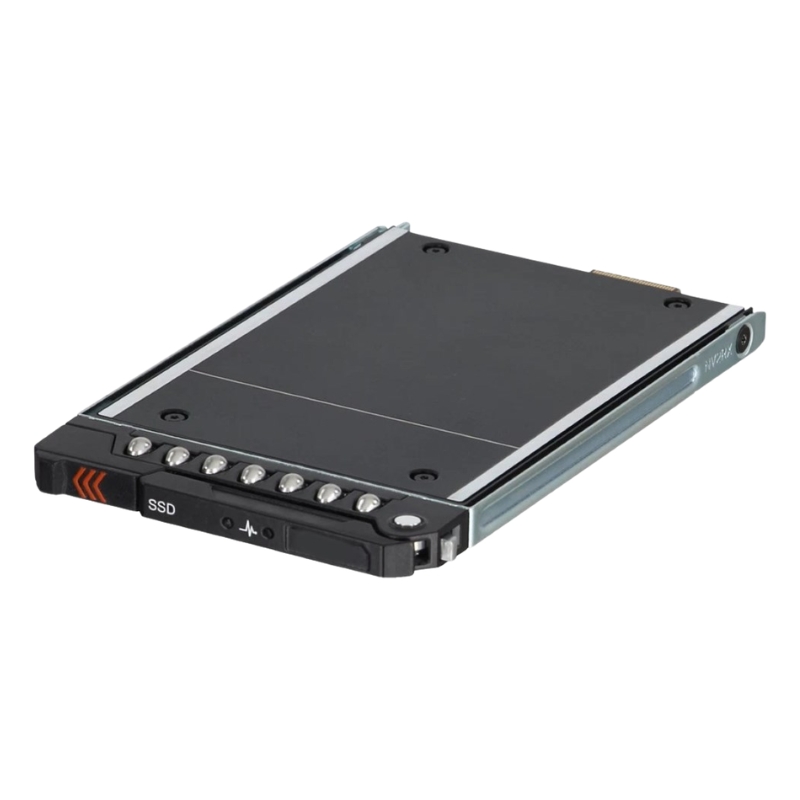


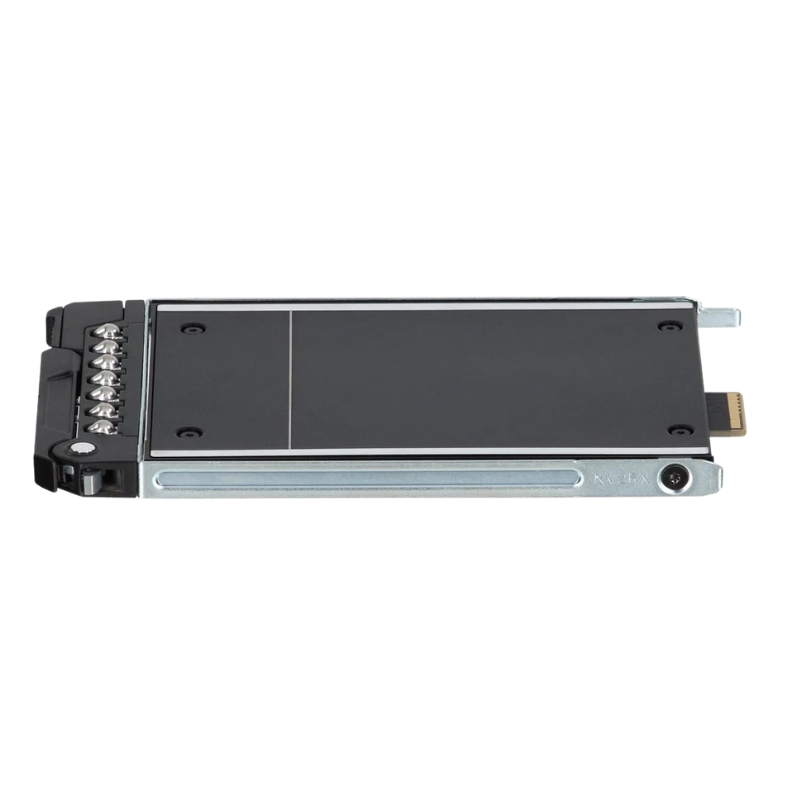
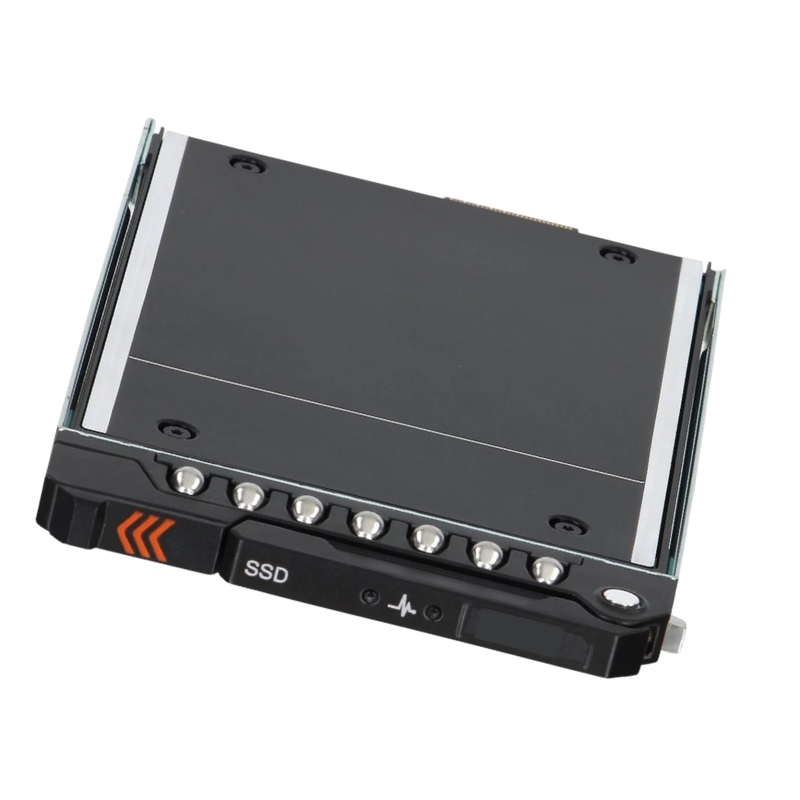
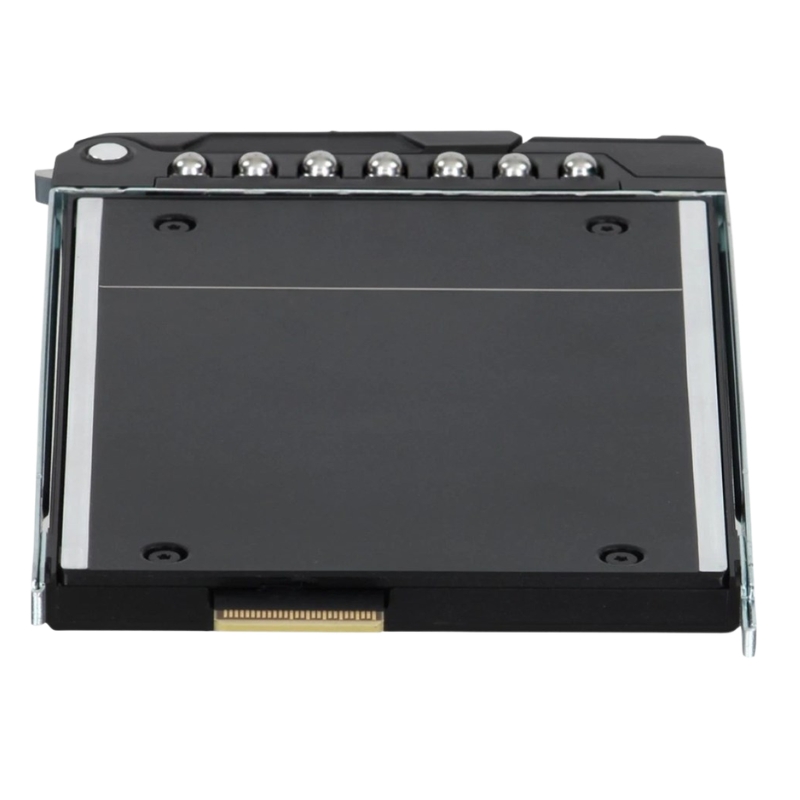
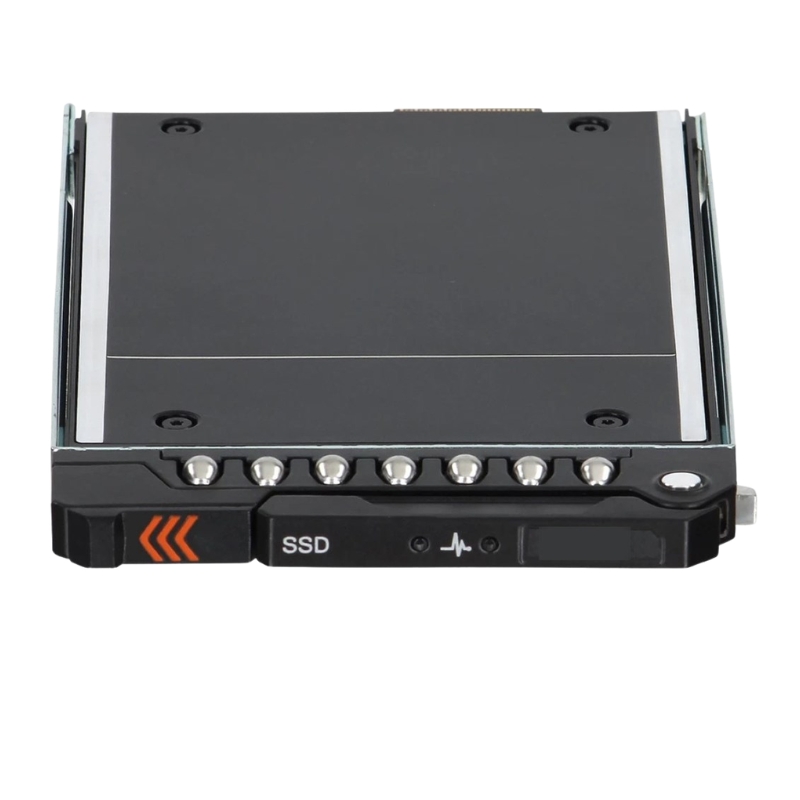
Dell 345-BKBG 3.2TB NVMe E3.s 2.5 inch PCIe Gen 5.0 X4 EDSSF Mixed Use TLC Enterprise Solid State Drive With Tray For Server. Excellent Refurbished with 1 year Replacement Warranty
The Dell 345-BKBG is a high-performance enterprise-grade solid state drive designed for demanding server environments. With advanced PCIe Gen 5.0 technology and robust endurance, it ensures reliable data storage and rapid access speeds.
The Dell 345-BKBG 3.2TB NVMe E3.s 2.5 inch PCIe Gen 5.0 x4 EDSSF Mixed Use TLC Enterprise Solid State Drive with Tray for Server is engineered for organizations that demand exceptional data throughput, low latency performance, enterprise endurance, and long-term reliability inside mission-critical computing environments. Designed specifically for enterprise servers, virtualization platforms, cloud deployments, AI workloads, analytics engines, and modern storage architectures, this high-capacity enterprise SSD combines PCIe Gen 5.0 bandwidth with advanced TLC NAND technology to support demanding read and write operations across continuously active data center environments.
As enterprise infrastructures continue transitioning from legacy SATA and SAS technologies toward NVMe-driven architectures, the Dell 345-BKBG SSD represents a major advancement in storage optimization. The drive utilizes the E3.s Enterprise and Datacenter Standard Form Factor, commonly referred to as EDSSF, enabling superior thermal management, improved scalability, denser storage deployment, and optimized airflow within modern server chassis. With 3.2TB of available storage capacity, this enterprise-grade SSD supports high-density virtualized workloads while maintaining consistent performance under intensive operational conditions.
One of the defining characteristics of the Dell 345-BKBG enterprise SSD is its PCIe Gen 5.0 x4 interface architecture. PCIe Gen 5.0 delivers dramatically increased bandwidth compared to previous PCIe generations, allowing servers to handle larger data sets, faster transactional operations, and more concurrent requests without storage bottlenecks. This next-generation interface is particularly valuable in enterprise environments where real-time analytics, machine learning computations, and virtualization density require ultra-fast data access.
The PCIe Gen 5.0 x4 configuration enables significantly improved sequential read and write performance while also enhancing random IOPS capabilities. This is essential for modern enterprise applications that rely heavily on parallel processing and rapid database interaction. Whether deployed in edge computing systems, enterprise virtualization clusters, or high-frequency transactional databases, the Dell 345-BKBG SSD ensures storage responsiveness remains stable under sustained workloads.
Organizations adopting PCIe Gen 5.0 infrastructure gain immediate advantages in workload acceleration, storage scalability, and operational efficiency. The increased data transfer capabilities reduce latency during intensive application execution while improving server responsiveness across distributed computing environments. This directly impacts performance-sensitive workloads such as AI training, large-scale virtualization, financial modeling, scientific simulations, and cloud-native microservices.
The Dell 345-BKBG SSD leverages the bandwidth potential of PCIe Gen 5.0 to maximize throughput consistency while reducing storage congestion within enterprise storage pools. This ensures better quality of service for applications operating simultaneously across shared server environments.
Latency reduction remains one of the most important goals in enterprise storage optimization. The Dell 345-BKBG enterprise SSD minimizes access delays during high-volume read and write operations, making it suitable for applications that require near-instantaneous data retrieval. Financial systems, healthcare analytics platforms, e-commerce databases, and enterprise ERP systems benefit substantially from lower latency storage architectures.
By integrating PCIe Gen 5.0 connectivity with NVMe protocol optimization, the drive allows server processors to communicate with storage more efficiently than traditional interfaces. This streamlined communication model improves overall server responsiveness while supporting higher operational concurrency.
The 3.2TB storage capacity of the Dell 345-BKBG SSD provides a balanced combination of high-density storage and enterprise performance. Organizations increasingly require scalable storage solutions capable of supporting expanding datasets, hybrid cloud infrastructure, and rapidly growing application environments. This SSD offers sufficient capacity for demanding enterprise operations while maintaining excellent endurance characteristics.
In modern server deployments, storage density directly influences infrastructure efficiency. The ability to deploy larger capacities within compact server footprints enables organizations to reduce rack space requirements, simplify storage management, and improve operational scalability. The 3.2TB configuration is ideal for enterprises seeking a balance between performance acceleration and practical storage consolidation.
The Enterprise and Datacenter Standard Form Factor E3.s design represents an important advancement in modern enterprise storage engineering. Unlike traditional storage form factors, E3.s focuses specifically on improving thermal efficiency, serviceability, airflow optimization, and storage density inside contemporary data center architectures.
The Dell 345-BKBG SSD utilizes the E3.s form factor to deliver improved cooling characteristics while supporting high-performance PCIe Gen 5.0 operation. Thermal management is essential in enterprise environments because high-performance NVMe drives can generate substantial heat during sustained operation. The E3.s design allows servers to maintain better thermal equilibrium while enabling higher-density SSD deployment.
Modern data centers prioritize airflow optimization to maintain stable operating temperatures across compute and storage systems. The E3.s architecture contributes to more efficient cooling by aligning with advanced server airflow strategies. This helps reduce thermal throttling risks while maintaining consistent storage performance under heavy workloads.
By improving thermal distribution and reducing heat concentration, the Dell 345-BKBG SSD supports longer operational stability and improved hardware reliability. Enterprises deploying large NVMe storage arrays benefit from enhanced cooling efficiency, which can positively impact infrastructure longevity and energy consumption.
The E3.s form factor also improves serviceability for enterprise IT teams. Hot-swappable deployment compatibility enables administrators to replace or upgrade drives with minimal downtime. This capability is critical in mission-critical environments where uninterrupted service availability is required.
Efficient maintenance procedures reduce operational disruptions while simplifying large-scale storage management. Enterprises running continuous applications such as cloud services, enterprise resource planning systems, and virtualization clusters benefit from easier hardware servicing and infrastructure expansion.
The Dell 345-BKBG enterprise SSD is classified as a mixed-use drive, meaning it is specifically optimized to handle balanced read and write workloads within enterprise environments. Mixed-use SSDs are ideal for applications that generate significant write activity alongside frequent data retrieval operations.
This balanced performance profile makes the drive suitable for a broad range of enterprise applications including virtual desktop infrastructure, transactional databases, web hosting environments, analytics engines, software-defined storage systems, and hybrid cloud deployments. The SSD is engineered to sustain reliable performance across continuously active workloads without experiencing rapid endurance degradation.
The drive incorporates TLC NAND flash technology, which provides an effective balance between storage density, cost efficiency, and endurance. Modern enterprise TLC NAND solutions have evolved significantly, enabling reliable performance characteristics suitable for demanding data center workloads.
Enterprise-grade TLC architectures integrate advanced error correction algorithms, wear leveling technologies, and intelligent firmware optimization to maintain reliability under continuous operation. The Dell 345-BKBG SSD combines these capabilities to ensure stable enterprise performance while maximizing storage efficiency.
Endurance is one of the most critical considerations for enterprise SSD deployment. The Dell 345-BKBG SSD is engineered to support sustained operational cycles within data-intensive environments. Mixed-use endurance ratings ensure the drive can tolerate repeated write activity while maintaining data integrity and operational consistency.
Enterprise organizations rely on predictable endurance metrics to manage infrastructure lifecycle planning. By utilizing enterprise-focused firmware and robust NAND management systems, the drive supports long-term deployment stability across mission-critical server applications.
NVMe technology revolutionized enterprise storage by enabling direct communication between SSDs and server processors over the PCIe interface. Compared to legacy storage protocols, NVMe dramatically reduces command overhead while supporting parallel processing capabilities required for modern computing environments.
The Dell 345-BKBG SSD utilizes NVMe architecture to maximize performance efficiency and workload responsiveness. This technology enables organizations to reduce storage bottlenecks while increasing application scalability across enterprise server infrastructures.
NVMe supports thousands of simultaneous command queues, allowing enterprise applications to process massive volumes of concurrent storage requests efficiently. This capability is especially important in virtualization clusters, cloud computing environments, and enterprise database systems where multiple applications interact with storage resources simultaneously.
The Dell 345-BKBG SSD leverages NVMe queue optimization to improve response times under high concurrency conditions. This contributes to better user experiences, improved application responsiveness, and enhanced infrastructure scalability.
Virtualized environments often generate unpredictable storage workloads due to multiple virtual machines operating concurrently on shared hardware. The Dell 345-BKBG SSD provides the low latency and high IOPS performance necessary to maintain stable virtualization performance.
Organizations deploying VMware, Hyper-V, Kubernetes, or containerized application infrastructures benefit from the SSD’s ability to sustain consistent storage throughput during fluctuating workload demands. This helps reduce virtual machine latency while improving resource utilization efficiency.
Enterprise SSD firmware plays a crucial role in maintaining long-term storage stability. The Dell 345-BKBG SSD includes firmware optimization features that support wear leveling, bad block management, error correction, and predictive failure analysis.
These reliability-focused technologies help enterprises reduce downtime risks while improving overall storage availability. Predictable firmware behavior is especially important in mission-critical environments where data integrity and uptime are top operational priorities.
Modern enterprise environments require robust data protection mechanisms to secure sensitive business information and maintain regulatory compliance. Enterprise SSDs must deliver not only performance but also reliable data integrity under demanding operational conditions.
The Dell 345-BKBG SSD incorporates enterprise-class reliability features designed to protect data during active workloads and unexpected power conditions. Advanced error correction technologies improve storage consistency while reducing the likelihood of data corruption.
Enterprise SSDs commonly include sophisticated protection mechanisms that preserve stored information even during hardware interruptions or unexpected system events. These technologies support enterprise continuity requirements by reducing the risk of data loss.
The Dell 345-BKBG SSD is engineered with enterprise-grade NAND management and error correction capabilities that help maintain data accuracy across intensive workloads. This contributes to infrastructure reliability and operational confidence.
Power interruptions can present serious risks to enterprise storage systems. Enterprise SSD architectures often include protection technologies that preserve in-flight data during sudden power events. These capabilities are especially important in financial systems, enterprise databases, and transactional environments where data consistency is critical.
The Dell 345-BKBG SSD is designed for deployment within enterprise-grade server infrastructures where operational continuity and data preservation remain essential priorities.
Cloud platforms demand highly scalable storage solutions capable of supporting dynamic workloads and multi-tenant environments. The Dell 345-BKBG SSD provides the performance consistency necessary for cloud-native applications, distributed computing frameworks, and software-defined storage environments.
Its high-density capacity and NVMe architecture help cloud providers optimize infrastructure efficiency while maintaining predictable service performance for end users.
Enterprise databases generate substantial transactional workloads requiring rapid storage interaction. The Dell 345-BKBG SSD accelerates database operations by minimizing latency and improving random read and write performance.
Applications such as SQL databases, NoSQL environments, enterprise ERP systems, and financial transaction platforms benefit from faster query execution and improved data retrieval consistency.
Input/output operations per second are essential metrics for enterprise storage evaluation. The Dell 345-BKBG SSD significantly outperforms traditional storage interfaces by supporting higher IOPS throughput across random workload conditions.
This increased operational capacity enables enterprises to support more simultaneous users, applications, and transactions without compromising responsiveness. Virtualization clusters, analytics systems, and transactional databases particularly benefit from higher IOPS availability.
Storage bottlenecks can negatively impact application responsiveness and overall infrastructure efficiency. By implementing PCIe Gen 5.0 NVMe storage, organizations can reduce latency constraints while improving server resource utilization.
The Dell 345-BKBG SSD helps enterprises unlock the full processing capabilities of modern server CPUs by minimizing delays associated with storage communication and data retrieval operations.
High-density enterprise storage enables organizations to maximize computing capacity within limited physical rack space. The E3.s form factor supports compact deployment while maintaining thermal efficiency and serviceability.
Data centers deploying high-density NVMe storage arrays benefit from improved scalability and more efficient use of infrastructure resources. This helps organizations reduce operational costs while increasing overall computational capacity.


 Contact Us
 Information
 Catalog
 Solid State Drives (SSD)
 Network Switches
 Hard Disk Drives
 HBA & Controllers
 PC & Servers
 PC & Server Memory
 CPU & Processors
 Network Routers
 Power Supplies
 Tape Drives & Libraries
 Network Devices
 Computer & Network Cables