(7% discount is applied at checkout)
Cart is empty
Your go-to destination for cutting-edge server products
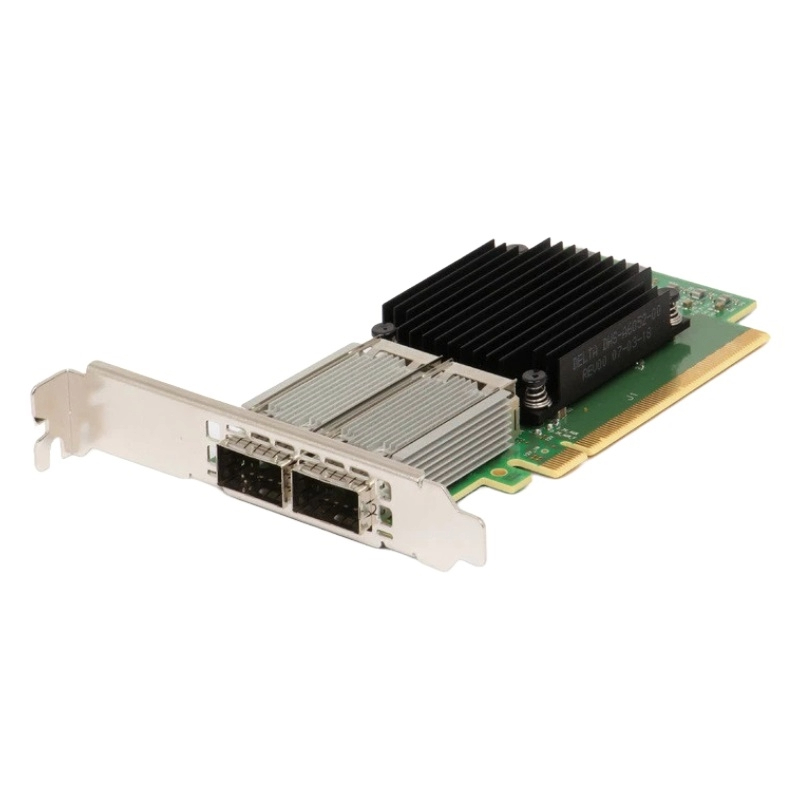


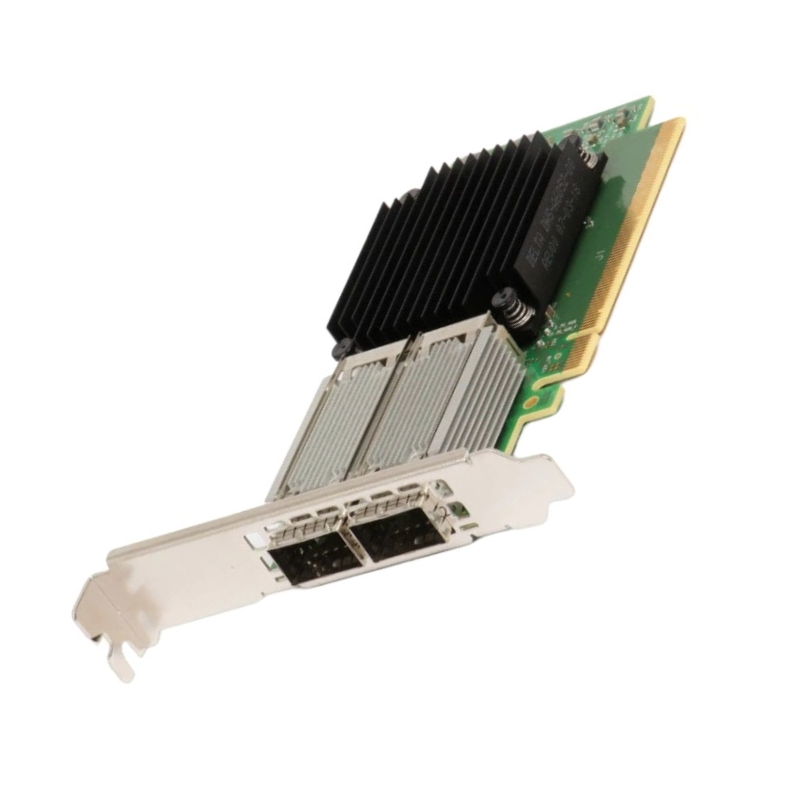
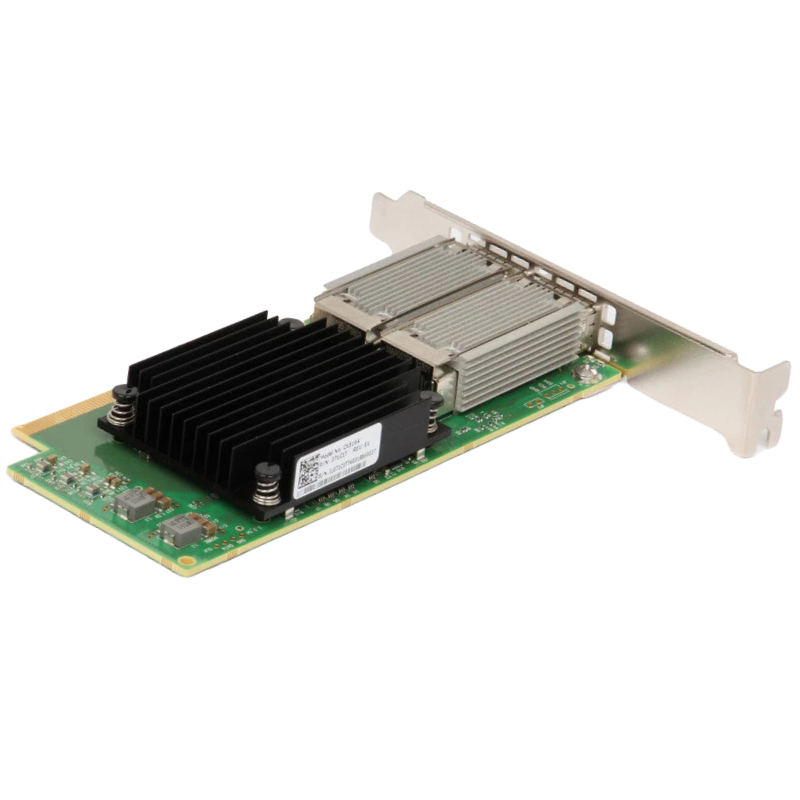
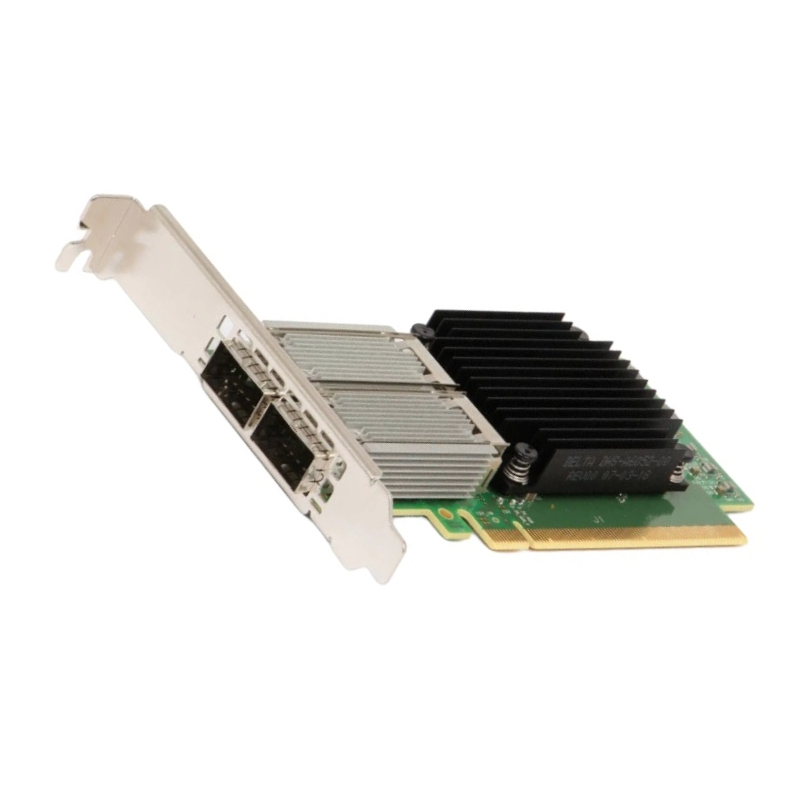
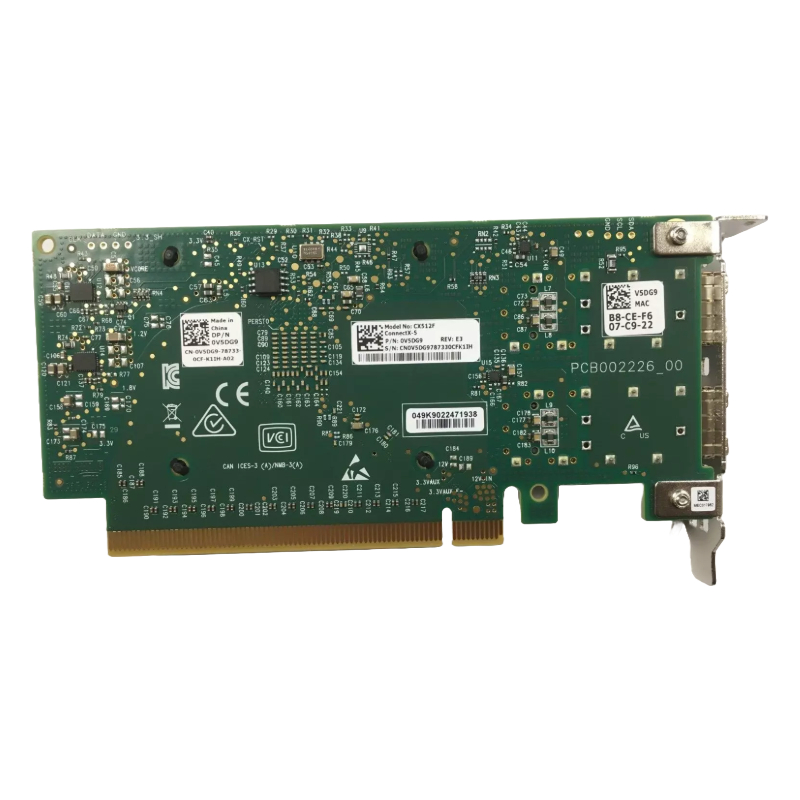
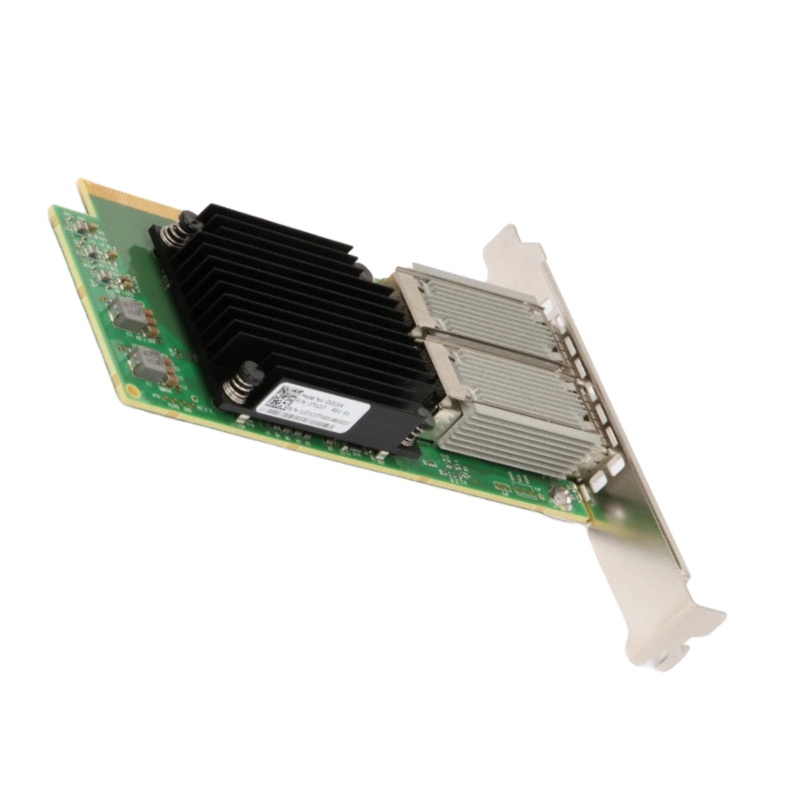
Dell 540-BCIV ConnectX-5 Ex EN 100GbE 2-Ports QSFP28 PCIe4.0 x16 Network Interface Card. Excellent Refurbished with 1 year replacement warranty
| SKU/MPN | Warranty | Price | Condition | You save |
|---|---|---|---|---|
| 540-BCIV | 1 Year Warranty | $455.00 | Excellent Refurbished | You save: $159.25 (26%) |
| 540-BCIV | 1 Year Warranty | $594.00 | New Sealed in Box (NIB) | You save: $207.90 (26%) |
The Dell 540-BCIV ConnectX-5 Ex EN Network Interface Card is a high-performance enterprise networking solution designed to deliver ultra-fast 100 Gigabit Ethernet connectivity for modern data centers, cloud infrastructures, and high-performance computing environments. Built on PCIe 4.0 architecture, this dual-port QSFP28 network adapter ensures exceptional throughput, low latency, and advanced hardware acceleration for demanding workloads such as virtualization, storage networking, and large-scale distributed applications.
The 540-BCIV ConnectX-5 Ex EN 100GbE 2-Port QSFP28 PCIe 4.0 x16 Network Interface Card represents a high-performance networking solution designed for modern enterprise, hyperscale data centers, cloud infrastructures, and high-performance computing environments. Built to deliver ultra-low latency, extreme throughput, and advanced offload capabilities, this network interface card (NIC) is engineered to support the most demanding workloads including virtualization, software-defined networking, storage acceleration, and real-time analytics processing. The architecture of this adapter is centered around the ConnectX-5 Ex Ethernet technology, which is widely recognized for its efficiency in handling high-bandwidth workloads with minimal CPU overhead.
The dual-port QSFP28 interface is one of the defining features of this network adapter, enabling aggregate throughput that is suitable for large-scale distributed computing environments. Each port supports 100 Gigabit Ethernet connectivity, allowing simultaneous data transmission across multiple channels. This architecture significantly improves redundancy and load balancing in mission-critical systems where continuous uptime and predictable performance are essential.
The PCI Express 4.0 x16 host interface provides a substantial increase in bandwidth compared to previous generations. This enables the network card to fully utilize its 100GbE capabilities without bottlenecking at the host interface level. The enhanced data transfer rate of PCIe 4.0 ensures that high-volume packet flows, storage traffic, and virtual machine networking operations are handled efficiently, making it a critical component in next-generation server architectures.
At the core of this adapter is the ConnectX-5 Ex Ethernet controller developed under advanced networking silicon architectures. This controller is optimized for RDMA over Converged Ethernet (RoCE), GPUDirect acceleration, and intelligent traffic management. It significantly reduces CPU utilization by offloading networking tasks, allowing server processors to focus on compute-intensive workloads instead of packet processing overhead.
Remote Direct Memory Access (RDMA) is a crucial feature in this NIC, enabling direct memory-to-memory communication between servers without involving the CPU. This reduces latency dramatically and increases throughput in distributed computing environments. Applications such as high-frequency trading, real-time analytics, and AI model training benefit significantly from this capability.
The adapter incorporates extensive hardware offload engines that handle tasks such as TCP/IP processing, encryption, tunneling, and virtualization encapsulation. By shifting these operations away from the CPU, system efficiency improves, power consumption is reduced, and overall system scalability is enhanced in dense compute environments.
In cloud environments, network performance is a critical factor that determines application responsiveness and scalability. The Dell 540-BCIV ConnectX-5 Ex EN NIC supports high-density virtualized workloads by providing consistent bandwidth allocation and reducing network congestion. Cloud service providers rely on such adapters to maintain predictable service levels across multi-tenant environments.
High-performance computing clusters demand extremely low latency and high throughput interconnects. This network interface card plays a vital role in HPC setups where scientific simulations, molecular modeling, and complex data computations require rapid inter-node communication. The RDMA capabilities ensure that data exchange occurs with minimal delay, maximizing computational efficiency.
Modern storage architectures often utilize NVMe over Fabrics (NVMe-oF) to extend high-speed storage access across the network. This NIC is optimized to handle such workloads, enabling remote storage devices to behave almost like locally attached storage. This improves application performance and reduces storage access latency significantly in enterprise environments.
Virtualized environments benefit significantly from high-bandwidth network adapters such as this model. It supports large numbers of virtual machines per physical host by efficiently distributing network resources. This reduces contention and ensures stable performance even under heavy virtual machine workloads.
Single Root I/O Virtualization (SR-IOV) enables the network adapter to divide physical resources into multiple virtual functions. This allows secure and isolated network channels for different virtual machines or containers. Such isolation is essential in multi-tenant cloud architectures where security and performance consistency must be maintained simultaneously.
The adapter is designed to integrate seamlessly with Software-Defined Networking (SDN) frameworks, enabling centralized network control and dynamic traffic management. SDN compatibility allows administrators to define network policies programmatically, ensuring efficient traffic routing and resource allocation across distributed infrastructures.
In modern data centers, automation plays a key role in reducing operational complexity. This network interface card supports advanced orchestration tools that automate network provisioning, monitoring, and optimization tasks. This results in reduced manual intervention and improved operational efficiency.
Latency is a critical metric in enterprise networking, and this adapter is engineered to minimize it through hardware-based packet processing pipelines. By reducing software intervention in packet handling, data is transmitted and received with minimal delay, improving responsiveness across distributed systems.
Beyond bandwidth, packet-per-second processing capability is essential for modern workloads involving microservices and containerized applications. The Dell 540-BCIV NIC efficiently handles massive packet rates, ensuring stability even under extreme traffic conditions commonly found in hyperscale environments.
One of the key advantages of advanced network adapters is their ability to offload networking tasks from the CPU. This NIC significantly reduces CPU overhead by handling encryption, tunneling, and transport layer processing directly in hardware, allowing compute resources to be allocated to application workloads instead.
Security is integrated at the hardware level in this network interface card. It supports encryption offload capabilities that ensure secure transmission of data without burdening the system CPU. This is particularly important in environments handling sensitive financial, healthcare, or enterprise data.
In virtualized environments, maintaining isolation between workloads is critical. The adapter supports secure virtualization technologies that prevent data leakage between virtual machines while maintaining high performance and low latency communication channels.
Data integrity is ensured through advanced error detection and correction mechanisms embedded in the hardware. These features reduce packet loss and ensure reliable data transmission even in congested or high-interference network conditions.
The Dell 540-BCIV ConnectX-5 Ex EN NIC is designed for seamless integration into enterprise-grade servers and data center hardware platforms. It is commonly deployed in rack-mounted servers, blade systems, and modular compute nodes where high-speed networking is required.
The adapter supports a wide range of enterprise operating systems and hypervisors. Its driver ecosystem ensures compatibility with Linux-based distributions, Windows Server environments, and major virtualization platforms, allowing flexible deployment across heterogeneous infrastructures.
Lifecycle management is an important aspect of enterprise networking hardware. This NIC supports firmware updates that enhance performance, security, and compatibility over time. Administrators can deploy updates without disrupting network operations, ensuring long-term stability.
Hyperscale data centers require networking hardware that can scale efficiently across thousands of nodes. This adapter is built with scalability in mind, supporting distributed workloads and high-density server configurations without performance degradation.
In clustered computing environments, inter-node communication speed is critical. The high-bandwidth dual-port configuration ensures that nodes can communicate efficiently, reducing bottlenecks and improving overall cluster performance in distributed computing tasks.
With increasing demand for bandwidth-intensive applications such as AI training, machine learning, and big data analytics, this NIC is designed to remain relevant for future workloads. Its PCIe 4.0 interface and 100GbE capability ensure long-term usability in evolving infrastructure ecosystems.
AI and machine learning workloads often rely on GPU clusters that require extremely fast data exchange between nodes. This network interface card supports GPUDirect technologies that enable direct GPU-to-GPU communication across the network, reducing latency and accelerating training processes.
In distributed AI training scenarios, synchronization between nodes is essential. The high-speed capabilities of this adapter ensure that model updates and gradient exchanges occur rapidly, improving training efficiency and reducing time-to-insight for complex models.
Efficient data ingestion is crucial in AI workloads. This NIC enhances data pipeline throughput, ensuring that large datasets are transferred quickly from storage systems to compute nodes, minimizing idle compute time and maximizing GPU utilization.
Despite its high performance capabilities, the Dell 540-BCIV NIC is engineered for efficient power usage. Advanced silicon design techniques help reduce energy consumption while maintaining maximum throughput, making it suitable for large-scale deployments where energy efficiency is critical.
Thermal management is essential in high-density server environments. This network adapter is designed to maintain stable performance under sustained load conditions, ensuring reliable operation even in thermally constrained data center racks.


 Contact Us
 Information
 Catalog
 Solid State Drives (SSD)
 Network Switches
 Hard Disk Drives
 HBA & Controllers
 PC & Servers
 PC & Server Memory
 CPU & Processors
 Network Routers
 Power Supplies
 Tape Drives & Libraries
 Network Devices
 Computer & Network Cables