(7% discount is applied at checkout)
Cart is empty
Your go-to destination for cutting-edge server products
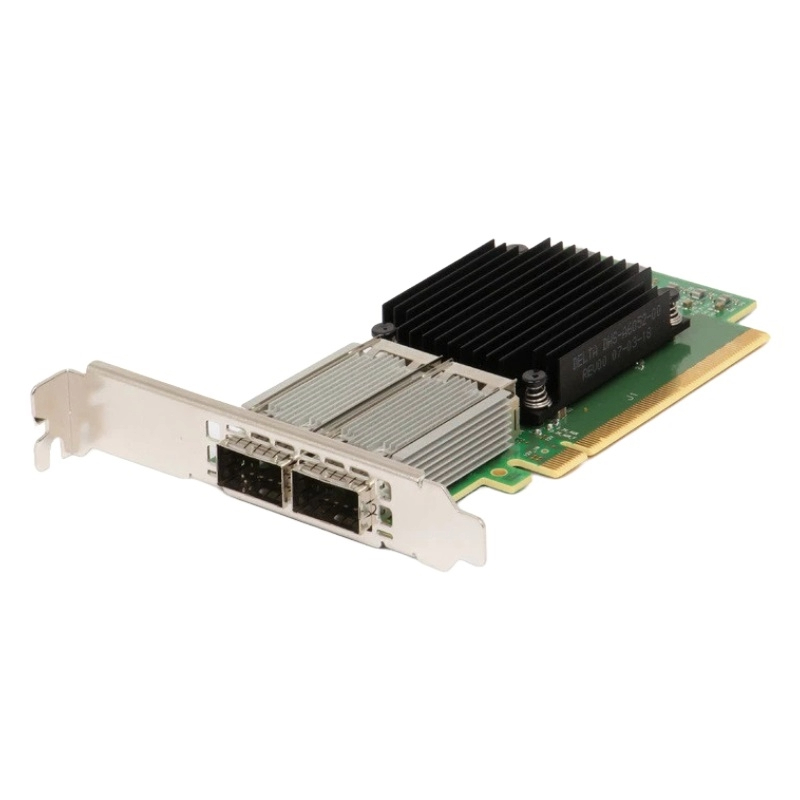


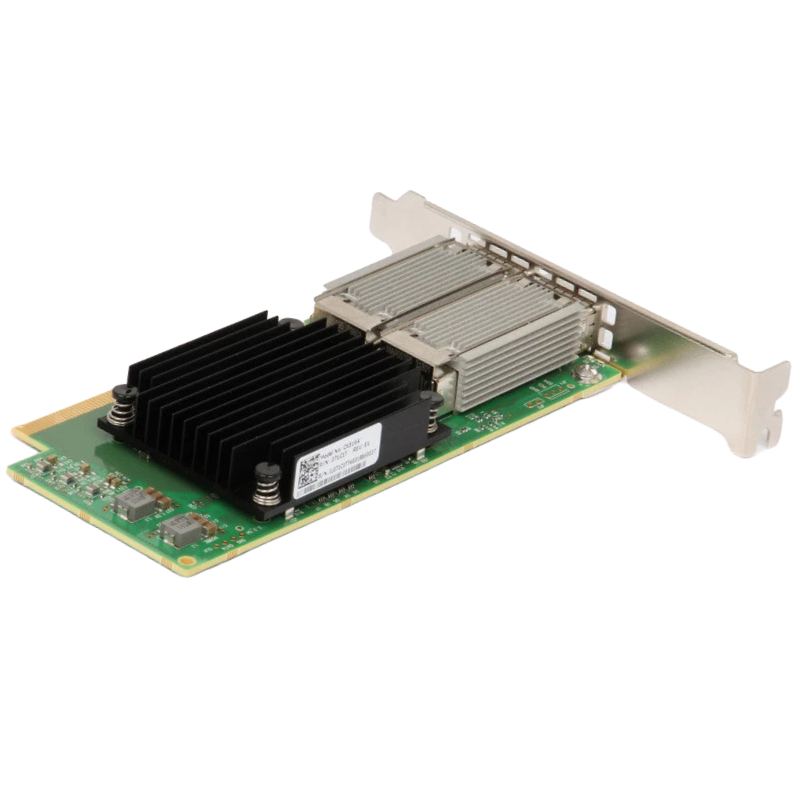
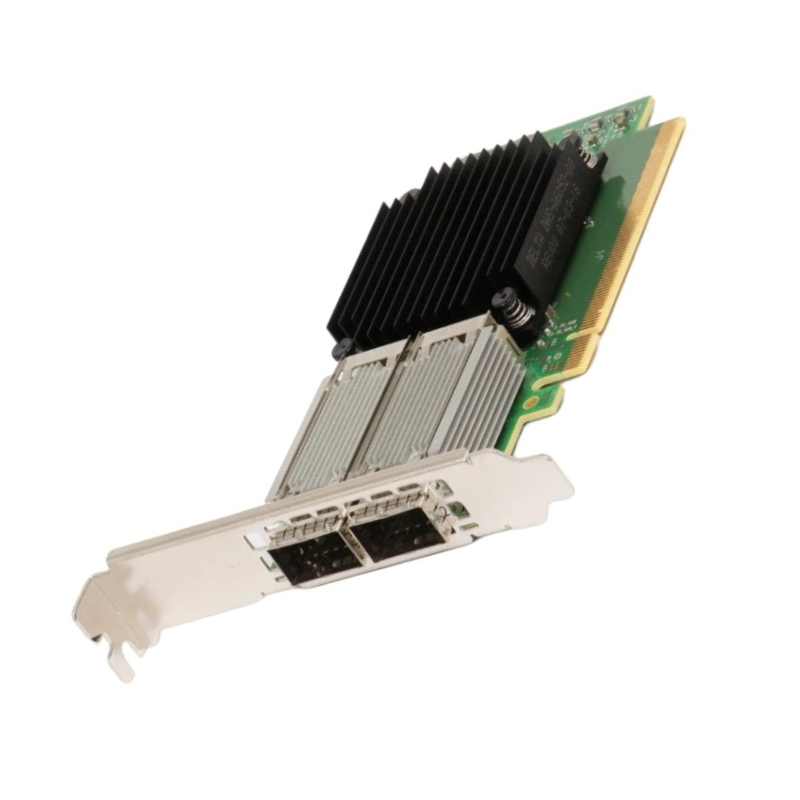
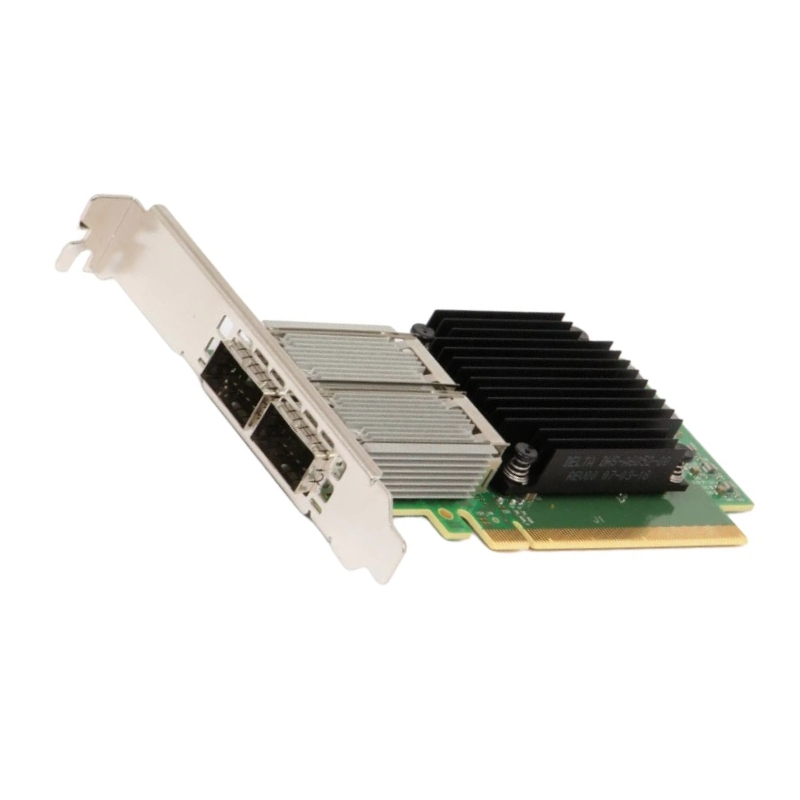
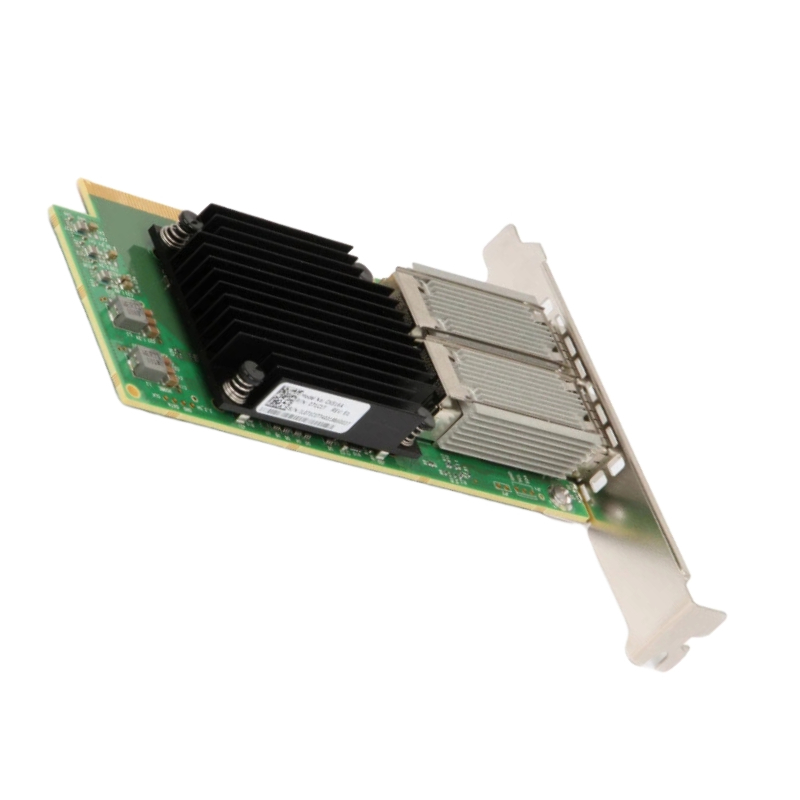
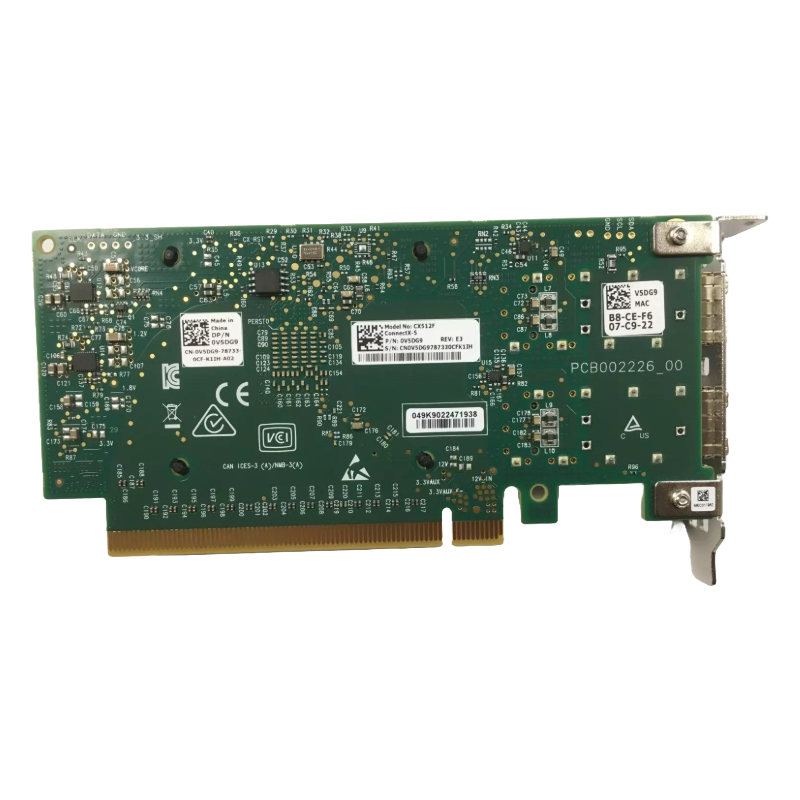
Dell 540-BCIV ConnectX-5 Ex EN 100GbE 2-Ports QSFP28 PCIe 4.0 x16 Network Interface Card. New Sealed in Box (NIB) with 1 Year Warranty
| SKU/MPN | Warranty | Price | Condition | You save |
|---|---|---|---|---|
| 540-BCIV | 1 Year Warranty | $455.00 | Excellent Refurbished | You save: $159.25 (26%) |
| 540-BCIV | 1 Year Warranty | $594.00 | New Sealed in Box (NIB) | You save: $207.90 (26%) |
The Dell 540-BCIV ConnectX-5 Ex EN Network Interface Card is a high-performance enterprise-grade networking solution designed to deliver ultra-fast 100GbE connectivity for modern data centers, cloud infrastructures, and high-performance computing environments. Built with advanced Mellanox ConnectX-5 technology, this dual-port adapter ensures exceptional throughput, low latency, and scalable network acceleration for demanding workloads.
The Dell 540-BCIV ConnectX-5 Ex EN 100GbE 2-Ports QSFP28 PCIe 4.0 x16 Network Interface Card represents a high-performance networking solution engineered for modern enterprise data centers, cloud infrastructures, and high-performance computing environments. Built to support ultra-low latency and extreme throughput requirements, this advanced adapter integrates cutting-edge Ethernet capabilities with PCI Express Gen4 architecture, enabling next-generation server connectivity and scalable network performance for mission-critical workloads.
As organizations continue to scale their digital infrastructure, demand for high-speed interconnectivity becomes essential. This network interface card is designed to deliver consistent and reliable 100 Gigabit Ethernet performance while ensuring compatibility with enterprise-grade Dell PowerEdge server ecosystems. It is particularly suited for environments where bandwidth density, virtualization efficiency, and data throughput optimization are essential for operational continuity.
At the core of this network interface card lies the ConnectX-5 Ex EN controller technology developed for high-efficiency Ethernet operations. This architecture is optimized to handle massive data flows with minimal latency overhead, making it suitable for distributed computing environments. The controller enhances packet processing efficiency and reduces CPU utilization by offloading networking tasks directly to the adapter hardware, enabling improved system responsiveness and computational balance.
The integration of this controller ensures that workloads involving data-intensive applications, such as virtualization clusters and distributed storage systems, can operate without network bottlenecks. The design also supports advanced offload capabilities that streamline operations across multi-tenant infrastructures.
The PCI Express 4.0 x16 interface provides double the bandwidth of the previous generation PCIe 3.0 standard, enabling significantly improved data transfer rates between the network adapter and the host system. This high-bandwidth interface ensures that the full potential of 100GbE connectivity is realized without internal bus limitations.
By leveraging PCIe 4.0 architecture, the adapter ensures efficient communication with modern CPU and memory systems. This becomes especially important in environments that require high-throughput packet processing, such as financial trading systems, AI workloads, and large-scale virtualization platforms.
The 100GbE capability of this network interface card enables extremely high data transmission speeds, allowing enterprises to handle massive volumes of data traffic with stability and consistency. This level of throughput is critical for organizations that rely on real-time analytics, distributed databases, and high-speed storage replication systems.
The Ethernet implementation is optimized for low latency, ensuring that data packets are transmitted and received with minimal delay. This performance characteristic is essential for applications where timing precision directly impacts system efficiency and operational reliability.
The dual-port QSFP28 configuration enhances flexibility and redundancy in network design. Each port supports high-speed optical connectivity, enabling simultaneous data streams that can be configured for load balancing or failover scenarios. This dual-port design increases resilience and ensures uninterrupted network availability in mission-critical deployments.
With QSFP28 interfaces, organizations can integrate a variety of optical transceivers and cabling options depending on their infrastructure requirements. This adaptability makes the adapter suitable for both short-range intra-rack connectivity and long-distance data center interconnects.
Modern data centers require scalable networking solutions that can grow alongside computational demands. The Dell 540-BCIV network adapter supports scalable architectures by providing high-density bandwidth per server node. This ensures that large-scale deployments can maintain consistent performance even as workload intensity increases.
The architecture is optimized for distributed environments where multiple nodes communicate simultaneously. This ensures smooth traffic handling across clustered systems, reducing congestion and improving overall network efficiency.
Virtualized environments benefit significantly from the advanced offload capabilities integrated into this network interface card. By reducing CPU overhead associated with network processing, more system resources can be allocated to virtual machines and containerized workloads.
This enables enterprises to achieve higher virtual machine density per physical server while maintaining predictable performance levels. Multi-tenant cloud infrastructures also benefit from secure and isolated network pathways that ensure consistent service delivery across diverse workloads.
High-performance computing clusters require extremely fast and reliable interconnects to handle parallel processing workloads. The Dell 540-BCIV adapter provides the necessary bandwidth and latency characteristics to support scientific simulations, AI model training, and large-scale data analytics.
Its ability to handle simultaneous high-volume data transfers makes it ideal for workloads that require distributed computation across multiple nodes. This ensures synchronization efficiency and reduces computation delays caused by network congestion.
Machine learning workloads depend heavily on fast data ingestion and distributed processing. The network interface card enables rapid transfer of training datasets between storage systems and compute nodes, accelerating model training cycles and improving iteration speed.
This performance enhancement is particularly valuable in environments where continuous model refinement and real-time data processing are required to maintain competitive AI systems.
The adapter supports RDMA technology, which allows data to be transferred directly between system memories without involving the CPU. This reduces latency and improves throughput for storage-heavy applications, such as distributed file systems and high-speed database replication.
By minimizing CPU intervention, RDMA enhances overall system efficiency and ensures predictable performance under heavy network loads. This is particularly beneficial in environments where storage access speed directly impacts application responsiveness.
The network interface card is well-suited for integration into storage area networks where high-speed data exchange between servers and storage arrays is critical. Its high bandwidth capacity ensures that backup operations, data replication, and real-time storage synchronization occur seamlessly.
This capability improves data availability and resilience, ensuring that enterprise systems can maintain continuous operation even during high-demand periods.
Virtualization platforms rely heavily on efficient network communication between virtual machines and physical infrastructure. This adapter reduces network overhead by offloading processing tasks, allowing hypervisors to allocate more resources to compute-intensive workloads.
This results in improved VM performance consistency and better resource utilization across virtualized environments. It also supports large-scale cloud deployments where thousands of virtual instances may operate concurrently.
Modern container orchestration systems require fast and reliable networking layers to maintain service reliability. The network interface card ensures that containerized applications can communicate efficiently across nodes without experiencing latency spikes or bandwidth constraints.
This makes it highly suitable for microservices architectures where inter-service communication is frequent and performance-sensitive.
Security operations can be partially offloaded to the network interface card, reducing CPU burden while maintaining secure data transmission. This includes encryption acceleration and packet inspection features that help protect sensitive enterprise data in transit.
Such hardware-assisted security ensures that encryption processes do not negatively impact system performance, maintaining a balance between protection and efficiency.
The adapter is engineered to maintain high levels of data integrity across all transmission channels. Error correction mechanisms and advanced buffering techniques help prevent packet loss and ensure reliable communication across complex network topologies.
This reliability is critical for industries such as finance, healthcare, and telecommunications where data accuracy is essential.
This network interface card is optimized for seamless integration with Dell PowerEdge servers, ensuring compatibility with enterprise hardware configurations. This tight integration improves system stability and reduces deployment complexity in large-scale environments.
As part of the broader Dell ecosystem, it aligns with enterprise-grade reliability standards and lifecycle management processes that support long-term infrastructure planning.
The adapter benefits from optimized firmware and driver support designed for enterprise workloads. These optimizations ensure consistent performance across different operating systems and virtualization platforms, enhancing deployment flexibility.
Regular updates help maintain compatibility with evolving network protocols and security standards, ensuring long-term usability in dynamic IT environments.
The architecture of the Dell 540-BCIV adapter is optimized to minimize latency across all network operations. This includes streamlined packet processing paths and reduced interrupt overhead, which collectively contribute to faster response times.
Lower latency is particularly beneficial for applications requiring real-time data processing, such as online transaction systems and streaming analytics platforms.
Efficient bandwidth utilization ensures that available network capacity is fully leveraged without unnecessary congestion. The adapter distributes traffic intelligently across available channels, improving throughput consistency under variable workloads.
This optimization allows enterprises to maximize return on infrastructure investments by ensuring efficient use of high-speed networking resources.


 Contact Us
 Information
 Catalog
 Solid State Drives (SSD)
 Network Switches
 Hard Disk Drives
 HBA & Controllers
 PC & Servers
 PC & Server Memory
 CPU & Processors
 Network Routers
 Power Supplies
 Tape Drives & Libraries
 Network Devices
 Computer & Network Cables