(7% discount is applied at checkout)
Cart is empty
Your go-to destination for cutting-edge server products
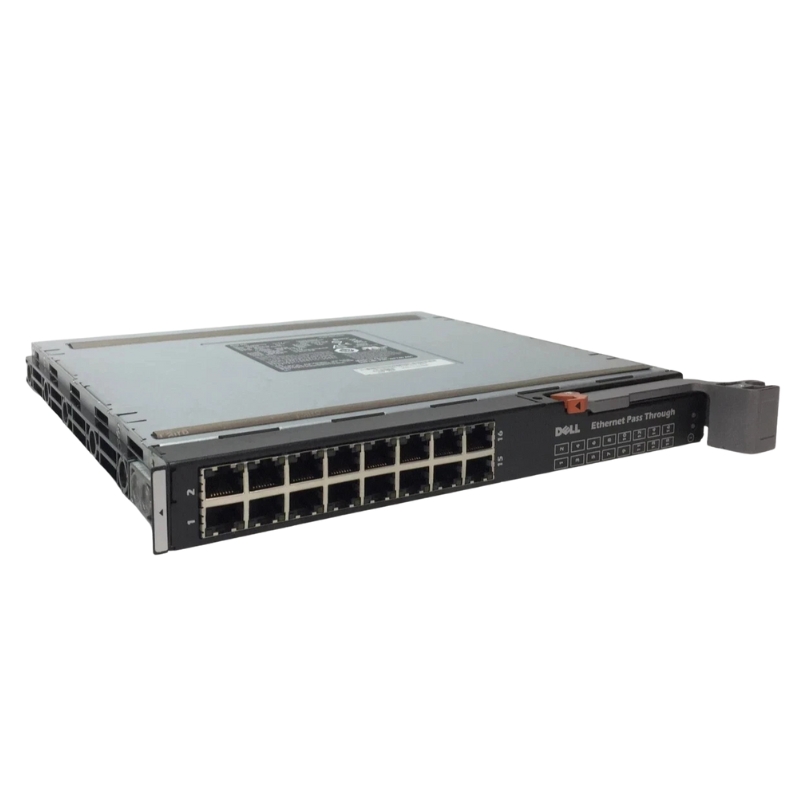


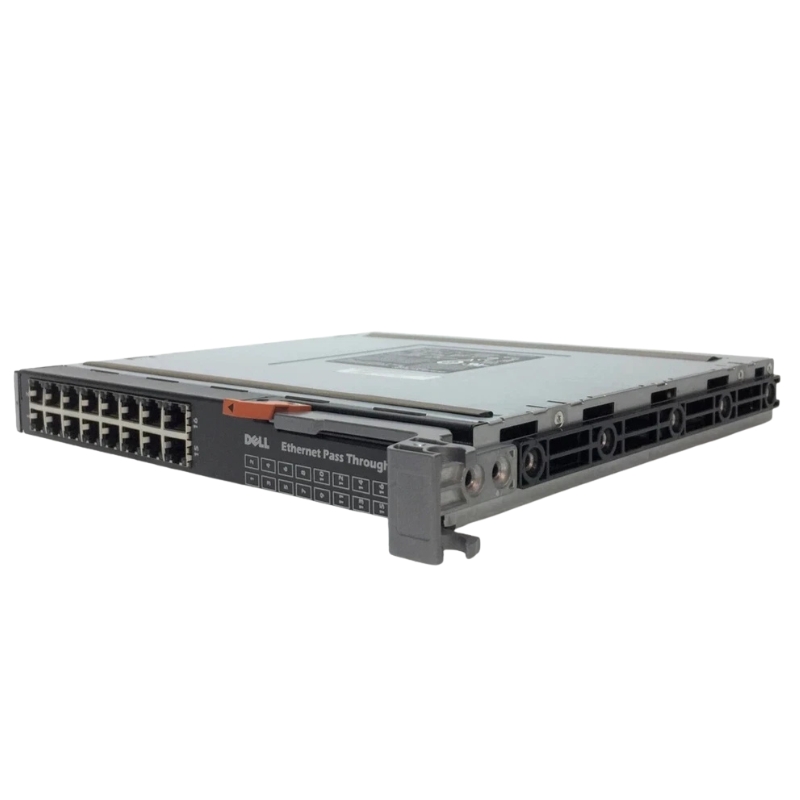
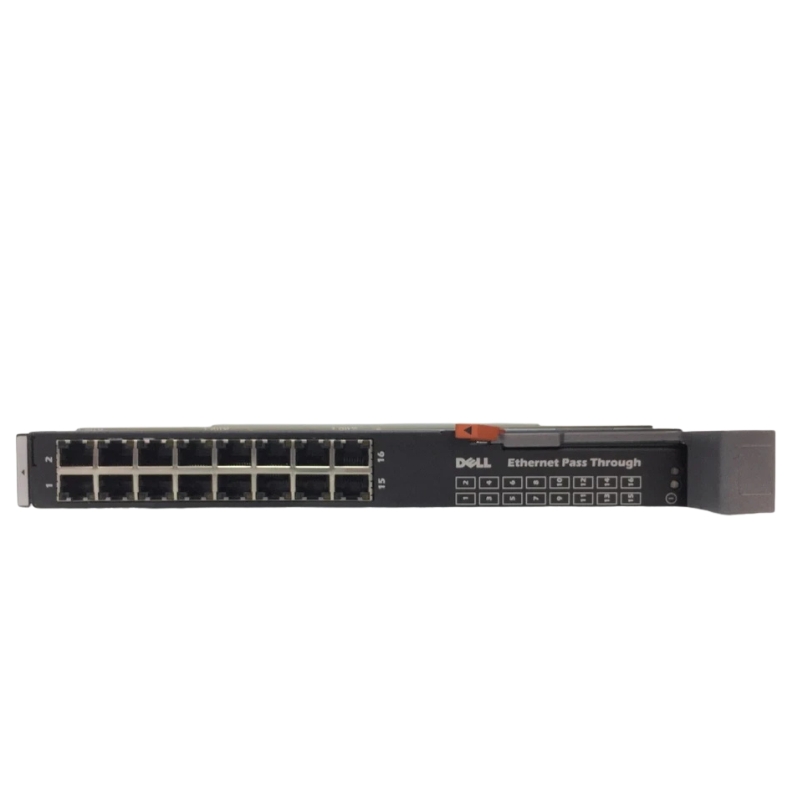
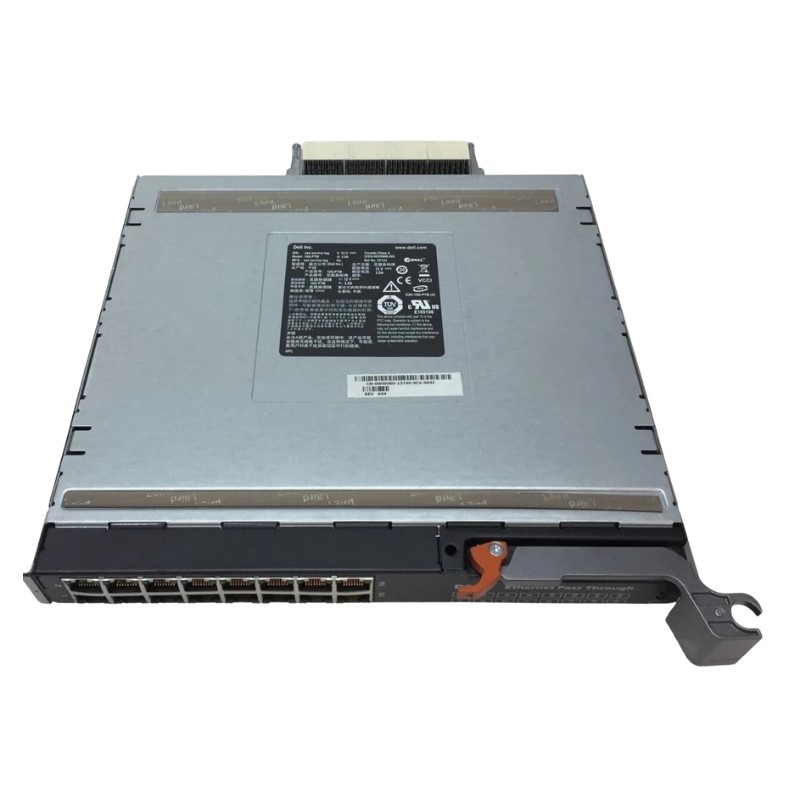
Dell WW060 Poweredge M1000E 16-Port Ethernet Pass Through Module. Excellent Refurbished with 1 year replacement warranty
The Dell WW060 PowerEdge M1000e 16-Port Ethernet Pass-Through Module is a high-performance networking expansion component designed to enhance blade server connectivity within enterprise data center environments. Built for seamless integration into the Dell PowerEdge M1000e chassis, this module delivers efficient, low-latency, and direct Ethernet communication between blade servers and external networking infrastructure.
The Dell WW060 PowerEdge M1000e 16-Port Ethernet Pass Through Module is engineered to deliver direct, low-latency, and highly efficient Ethernet connectivity for blade server environments built on the Dell PowerEdge M1000e chassis platform. Designed and this pass-through module plays a critical role in simplifying network architecture by eliminating the need for internal switching logic while ensuring each blade server maintains a dedicated, physical uplink path to external network infrastructure. This architecture is particularly valuable in enterprise data centers where deterministic performance, simplified troubleshooting, and maximum throughput are required.
Unlike traditional blade switching modules that rely on embedded switching ASICs, the WW060 operates as a transparent Layer 2 pass-through interface. This allows each blade server within the chassis to communicate directly with external network switches, reducing complexity and enhancing compatibility with diverse enterprise networking environments. The module is purpose-built for environments requiring predictable network behavior, such as virtualization clusters, high-performance computing workloads, and mission-critical enterprise applications.
Within the PowerEdge M1000e chassis ecosystem, the WW060 module serves as a direct conduit for Ethernet signals between server blades and upstream network devices. Each of the 16 ports corresponds to dedicated pathways that map directly to server interfaces, ensuring that traffic is not aggregated or processed by intermediary switching logic. This design minimizes potential bottlenecks and provides consistent bandwidth allocation per blade, which is essential in workloads requiring steady network performance.
The pass-through architecture also simplifies operational management by allowing network administrators to manage blade connectivity using standard external switch configurations. This reduces the learning curve and operational overhead typically associated with managing proprietary blade switching systems.
The Dell WW060 module integrates 16 Ethernet pass-through ports designed to support high-speed connectivity between blade servers and external network switches. Each port is physically mapped to corresponding blade interfaces within the M1000e chassis midplane, ensuring deterministic routing of Ethernet signals. This design enables consistent throughput performance while maintaining minimal signal degradation across the internal chassis interconnect.
The module’s architecture emphasizes signal integrity and low-latency transmission. By eliminating active switching components, the WW060 reduces processing overhead and ensures that network packets traverse the system with minimal delay. This makes it particularly suitable for latency-sensitive workloads such as financial trading systems, distributed database clusters, and real-time analytics platforms.
The pass-through design leverages passive signal routing technology, meaning that Ethernet frames are transmitted without modification or inspection at the module level. This approach significantly reduces power consumption and heat generation compared to active switching modules. It also enhances reliability by minimizing the number of electronic components subject to wear or failure.
The passive nature of the module ensures that network behavior is fully determined by upstream and downstream devices, providing a predictable and transparent networking layer that integrates seamlessly into existing enterprise infrastructure.
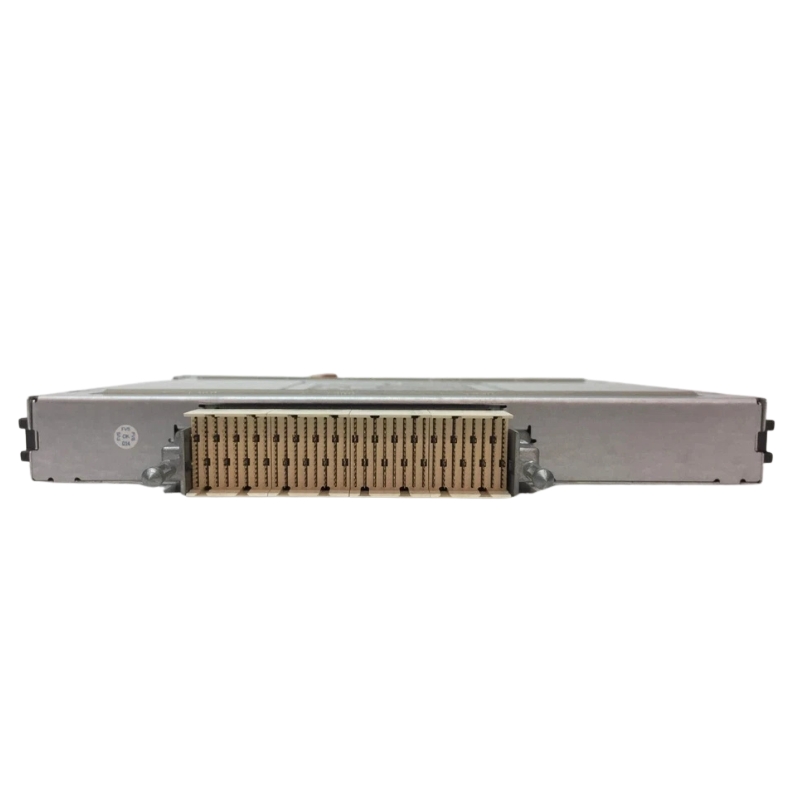
The Dell WW060 module interfaces directly with the PowerEdge M1000e chassis midplane, which serves as the central interconnect between blade servers and I/O modules. Through this midplane, Ethernet signals are distributed from each server blade to the corresponding external port on the pass-through module. This direct mapping ensures that network paths remain consistent and traceable, simplifying diagnostics and troubleshooting.
The midplane design also supports high-density computing environments by consolidating cabling and reducing external wiring complexity. This contributes to improved airflow management and reduced physical infrastructure clutter within the data center rack.
One of the primary benefits of the WW060 pass-through module is its ability to deliver extremely low-latency data transmission. Because the module does not perform packet switching, buffering, or inspection, Ethernet frames pass directly from blade servers to external network switches with minimal delay. This is particularly important in high-performance computing environments where microseconds of latency can significantly impact system performance.
The absence of active processing components ensures that latency remains consistent under varying workloads. This deterministic behavior is a key advantage in environments where predictable network response times are essential.
Each of the 16 ports on the WW060 module maintains a dedicated physical link, ensuring that bandwidth is preserved for individual blade servers. Unlike oversubscribed switching architectures, the pass-through model avoids contention between server nodes at the module level. This guarantees that each blade can fully utilize its allocated network capacity without interference from neighboring nodes.
This architecture is particularly beneficial in virtualization environments where multiple virtual machines depend on stable and consistent network throughput. It also supports storage-heavy workloads that require sustained data transfer rates across distributed systems.
The Dell WW060 module is designed to maintain high signal integrity across all ports. By minimizing internal electronic processing, the module reduces electromagnetic interference and signal distortion. This ensures that data transmitted between blade servers and network switches remains accurate and reliable, even under heavy network load conditions.
Stable signal transmission is essential in enterprise environments where packet loss or corruption can lead to system instability or degraded application performance. The pass-through architecture provides a robust foundation for maintaining consistent network reliability.
The WW060 module is widely deployed in virtualization environments where multiple virtual machines operate on blade server infrastructure. By providing direct network paths, the module ensures that virtual workloads can communicate efficiently with external storage systems, application servers, and cloud orchestration platforms.
In private cloud deployments, the module supports scalable network architectures that allow enterprises to expand compute capacity without redesigning their network topology. This flexibility makes it a preferred choice for organizations adopting hybrid cloud strategies.
High-performance computing clusters require extremely low-latency and high-bandwidth interconnects between compute nodes and external systems. The WW060 module’s pass-through architecture provides an ideal foundation for such environments by eliminating switching overhead and ensuring direct connectivity to high-speed network fabrics.
Scientific computing, simulation modeling, and data-intensive research applications benefit significantly from the deterministic network performance provided by this module. It ensures that compute nodes can exchange data efficiently without network-induced bottlenecks.
In traditional enterprise data centers, the WW060 module simplifies network design by reducing dependency on internal blade switching modules. This leads to more streamlined infrastructure management and easier integration with existing network equipment. The result is a more efficient and maintainable data center architecture.
Organizations can leverage the module to standardize their networking layer across multiple blade chassis, improving consistency and reducing operational complexity.
The WW060 module is specifically designed for integration with the Dell PowerEdge M1000e blade chassis platform. This compatibility ensures seamless physical and logical alignment with the chassis midplane architecture, enabling direct mapping between server blades and external network ports.
The M1000e chassis is widely used in enterprise environments due to its modular design and scalability. The inclusion of the WW060 module enhances its networking capabilities by providing a straightforward and efficient connectivity solution.
Because the WW060 module operates as a pass-through device, it is fully interoperable with a wide range of external Ethernet switches. This includes enterprise-grade Layer 2 and Layer 3 switches from multiple vendors. The module imposes no proprietary switching logic, allowing organizations to maintain flexibility in their network infrastructure choices.
This interoperability is particularly important for enterprises with heterogeneous network environments, where consistency and compatibility across different hardware platforms are required.
In large-scale data center environments, multiple PowerEdge M1000e chassis may be deployed in parallel. The WW060 module supports scalable networking designs by ensuring that each chassis maintains independent and direct network connections. This simplifies expansion and reduces complexity when scaling compute infrastructure horizontally.
As organizations grow their compute clusters, the pass-through architecture allows for predictable scaling of network resources without requiring significant architectural redesign.
The Dell WW060 module embodies a transparent networking philosophy, where the focus is on providing direct physical connectivity rather than embedded processing or routing intelligence. This approach aligns with modern data center design principles that emphasize simplicity, predictability, and scalability.
By removing unnecessary abstraction layers, the module allows network engineers to design infrastructure with greater precision and control over traffic flow and performance characteristics.
Modern data center architectures increasingly favor disaggregated and modular networking designs. The WW060 module fits seamlessly into this paradigm by separating compute and network responsibilities while maintaining tight integration through the chassis midplane.
This separation of concerns enhances flexibility and allows organizations to independently upgrade or modify compute and networking components without affecting overall system integrity.


 Contact Us
 Information
 Catalog
 Solid State Drives (SSD)
 Network Switches
 Hard Disk Drives
 HBA & Controllers
 PC & Servers
 PC & Server Memory
 CPU & Processors
 Network Routers
 Power Supplies
 Tape Drives & Libraries
 Network Devices
 Computer & Network Cables