(7% discount is applied at checkout)
Cart is empty
Your go-to destination for cutting-edge server products
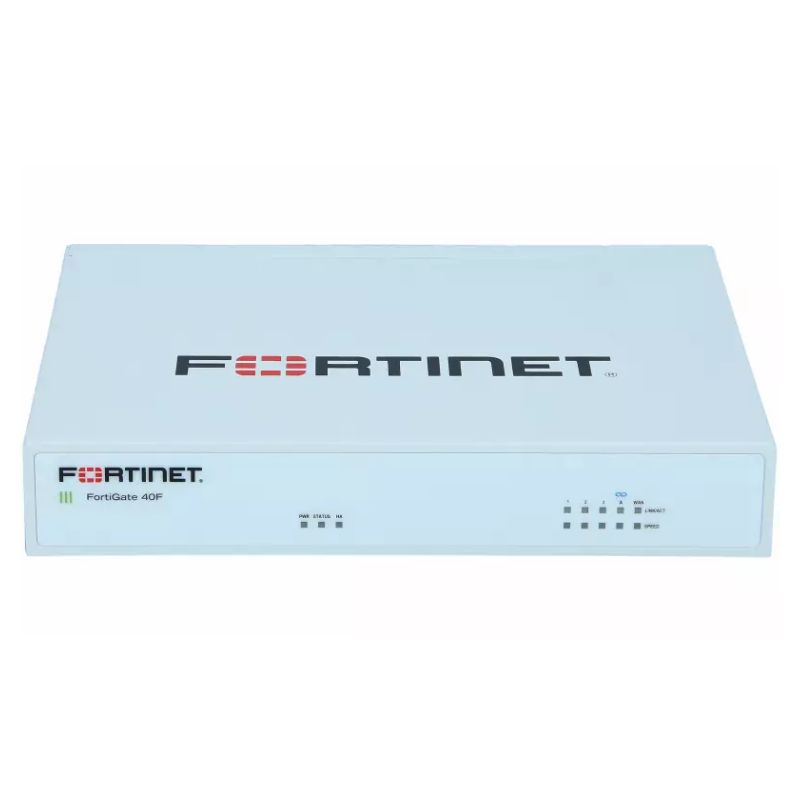


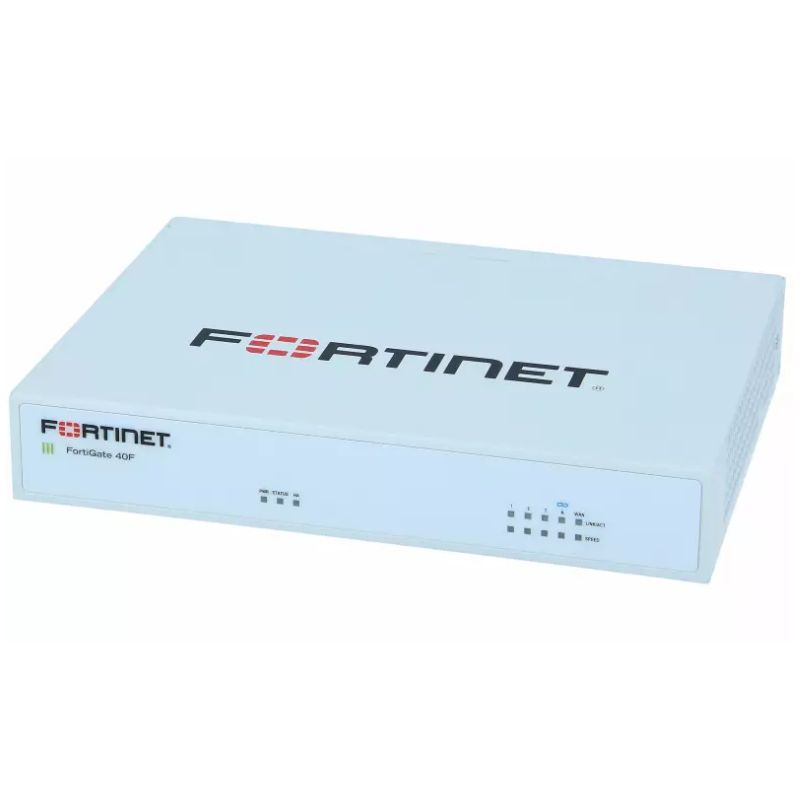
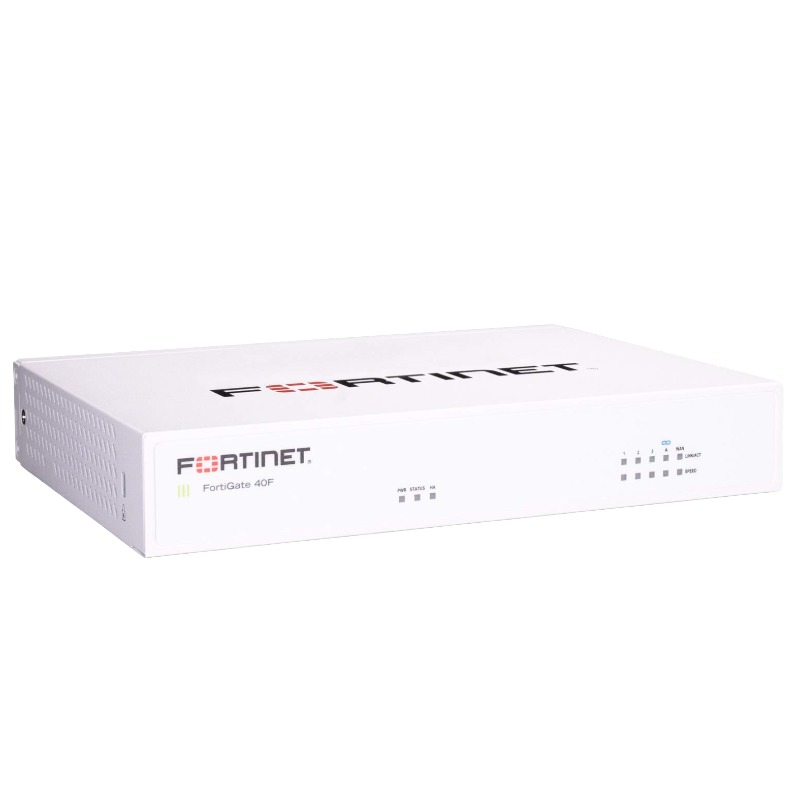
FORTINET FG-40F-BDL-950-36 5-Ports Fortigate 40f Network Security Firewall Appliance. New Sealed with 1-Year Replacement Warranty
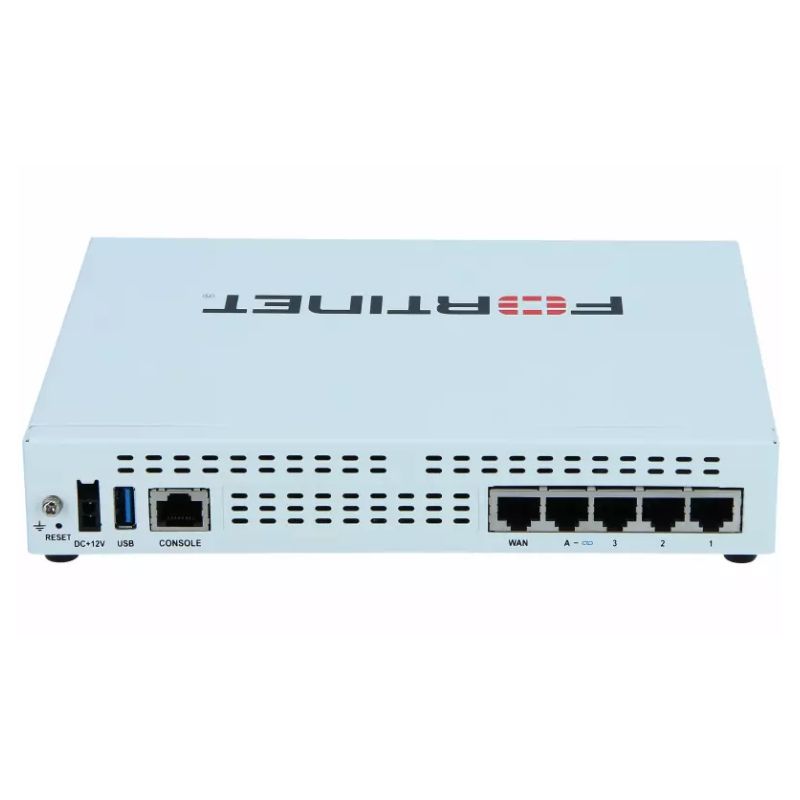
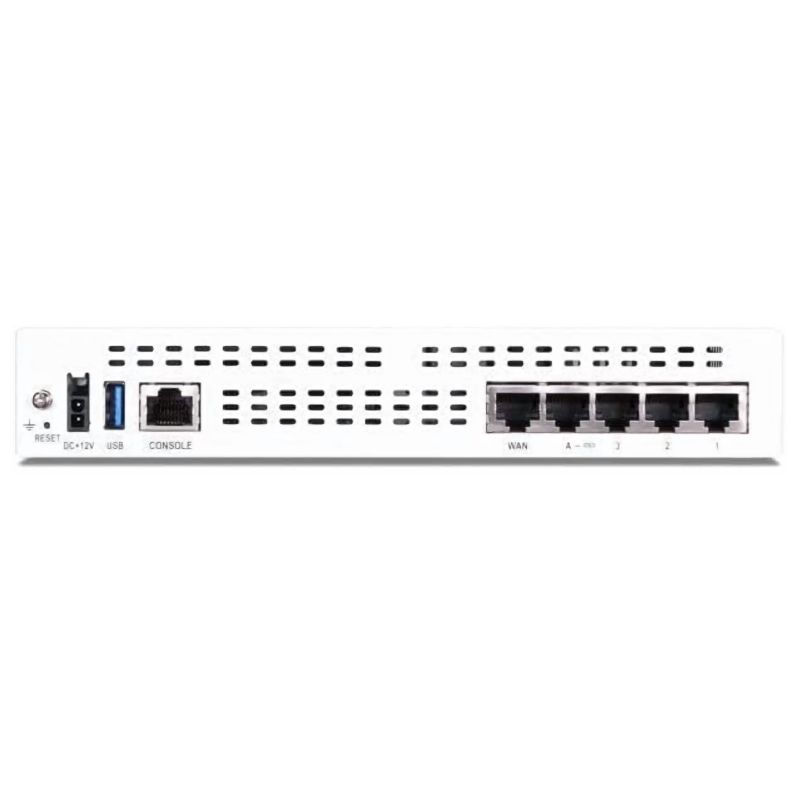
The FORTINET FG-40F-BDL-950-36 FortiGate 40F is a compact yet powerful advanced network security firewall appliance designed to deliver reliable protection, secure connectivity, and streamlined threat management for branch offices, small businesses, and distributed enterprise environments. Built with five integrated Gigabit Ethernet ports, this FortiGate firewall helps organizations strengthen perimeter defense, control network traffic, and support secure access across wired infrastructures. As part of Fortinet’s security-driven networking portfolio, the FG-40F-BDL-950-36 combines firewall performance, threat prevention, and centralized security features in a space-saving form factor, making it a practical choice for businesses that need dependable protection, simplified deployment, and long-term network security value.
Brand: FORTINET
Part Number: FG-40F-BDL-950-36
Product Type: Advanced Network Security Firewall Appliance
The FORTINET FG-40F-BDL-950-36 5-Ports FortiGate 40F Network Security Firewall Appliance is built for organizations that need dependable network protection, application-aware traffic control, secure remote access, and advanced threat defense in a compact security platform. As part of the FortiGate desktop firewall family, this model is designed to support small business environments, branch offices, distributed enterprises, retail locations, clinics, educational offices, professional firms, and remote corporate sites that need enterprise-grade security without the complexity of oversized infrastructure. The appliance combines firewall enforcement, intrusion prevention, traffic inspection, web filtering, malware defense, and secure VPN connectivity in a streamlined hardware solution that can fit easily into space-conscious business environments.
Network security requirements have changed dramatically as organizations move applications to cloud platforms, support remote employees, connect smart devices, and handle increasingly sophisticated cyber threats. A basic perimeter defense is no longer enough for businesses that manage customer records, payment transactions, confidential internal documents, cloud-hosted applications, or voice and video traffic. The FORTINET FG-40F-BDL-950-36 category is therefore important for buyers looking for a next-generation firewall appliance that combines performance, intelligence, and centralized security functions into one manageable platform. It addresses the practical need for secure internet access, protected branch connectivity, encrypted communication, and visibility into application usage while helping businesses reduce risk across wired and distributed network environments.
The bundled nature of the FORTINET FG-40F-BDL-950-36 package also makes it attractive for organizations that want more than just hardware. In many buying scenarios, businesses prefer a firewall appliance category that includes not only the physical security gateway but also service coverage designed to support threat intelligence, software updates, security subscriptions, and ongoing protection features over a defined period. This makes the category especially relevant for businesses that want predictable ownership planning, a simplified procurement process, and access to the broader Fortinet security ecosystem.
The purpose of this category is to provide a compact but powerful security platform for edge protection, branch security, and office perimeter defense. Rather than relying on separate products for firewalling, VPN, intrusion prevention, web access control, and basic malware protection, organizations can deploy a single FortiGate 40F appliance to consolidate these security functions. This approach helps reduce administrative overhead, lowers infrastructure sprawl, and creates a more unified security posture for small and midsize locations.
For branch offices and distributed business sites, security appliances in the FortiGate 40F class serve as the front-line enforcement point between internal users and the public internet, between branch staff and headquarters resources, and between business systems and cloud-hosted applications. The category is particularly valuable where there is a need to control outbound browsing, inspect inbound and outbound traffic, isolate suspicious activity, and maintain reliable access for approved applications such as productivity platforms, accounting systems, ERP tools, VoIP services, and collaboration suites.
Because the FortiGate platform is designed around integrated security services, the category is also important for organizations that want a scalable path into broader security transformation. A business may start with a single appliance at one office and later extend security policies across multiple sites, add secure SD-WAN capabilities, connect remote workers through VPN, and centralize monitoring through Fortinet management tools. The FG-40F-BDL-950-36 category supports this progression by offering a practical entry point into a larger network security architecture.
The FORTINET FG-40F-BDL-950-36 5-Ports FortiGate 40F Network Security Firewall Appliance is especially relevant for environments where physical space, ease of deployment, and straightforward cabling matter. The compact desktop form factor allows the appliance to be installed in branch offices, reception-side network closets, retail back offices, small server rooms, professional service suites, or telecommunication cabinets without requiring a large rack footprint. This makes the category suitable for businesses that want enterprise-level security features in locations where traditional large appliances would be impractical.
The presence of five network ports expands deployment flexibility. In many small office and branch scenarios, multiple ports can be used to separate WAN uplinks, trusted LAN segments, guest access zones, management networks, VoIP devices, surveillance systems, or partner connections. Port-based segmentation is useful for enforcing policy boundaries between business-critical systems and less trusted traffic types. For example, a company may isolate point-of-sale terminals from employee browsing traffic, separate management devices from guest internet usage, or place IP cameras on their own monitored segment. This kind of separation supports better security hygiene and allows more granular rule enforcement at the firewall level.
In real-world deployments, five ports can support a variety of network topologies. One port may be assigned as the primary WAN connection, another as a secondary internet path or backup link, and the remaining interfaces can be mapped to internal network zones. This design is useful for small offices that need dependable internet access while maintaining clear traffic boundaries. A branch office can use one internal interface for employee desktops, another for voice systems, and another for secure back-office equipment. Retail environments can separate checkout terminals from store management systems. Clinics can segment administrative devices from clinical systems and guest Wi-Fi. Professional firms can keep confidential internal resources apart from visitor internet access.
This category is therefore not only about internet access control. It is also about how an organization structures trust boundaries inside the office. Port-based design can improve operational clarity, strengthen internal segmentation, and support compliance-focused network layouts. Even in smaller environments, segmentation reduces the blast radius of compromise and improves visibility into which users, devices, or applications are communicating across the network.
A defining strength of the FORTINET FG-40F-BDL-950-36 category is its role as a next-generation firewall appliance rather than a simple packet-filtering device. Modern networks require visibility into applications, users, destinations, and content types. Traditional firewalls that rely only on ports and protocols are often insufficient because many modern applications use common web ports, encrypted sessions, or cloud delivery models that hide their behavior from basic inspection. A next-generation firewall is designed to go deeper by identifying applications, applying more intelligent security policies, and enforcing control based on business context rather than only network addresses.
For organizations deploying the FortiGate 40F appliance, this means the ability to build rules around business needs. A company can prioritize approved collaboration applications while limiting bandwidth-heavy streaming platforms. It can block unauthorized remote administration tools, restrict risky file-sharing services, and control access to categories of web content that may introduce security or productivity concerns. Application-aware inspection helps the appliance distinguish between permitted business traffic and unwanted or suspicious activity that simply happens to use standard internet ports.
One of the most important benefits of application-aware firewalling is visibility. Businesses need to know how their internet connection is being used, which services consume the most bandwidth, which devices communicate with external platforms, and whether employees or unmanaged devices are connecting to unsanctioned applications. In a small office, poor visibility can lead to performance issues, compliance gaps, and security blind spots. The FortiGate 40F category helps address these challenges by providing the inspection and policy framework needed to understand traffic behavior in greater detail.
Visibility supports better decision-making. If a branch office experiences slow performance, administrators can investigate whether cloud backups, software updates, streaming traffic, large downloads, or non-business applications are consuming available bandwidth. If an organization needs to tighten data protection, it can identify services that move files externally and create rules to limit or monitor them. If suspicious activity appears, traffic inspection can help security teams understand whether an endpoint is attempting unusual outbound connections. The firewall becomes not only a gatekeeper but also a source of operational intelligence.
Policy granularity matters because not every user, department, device, or application should be treated the same way. An accounting team may need access to banking portals and cloud financial systems that should not be broadly available to all staff. Voice traffic may need priority treatment to maintain call quality. Guest users may require internet access without any route to internal systems. Security appliances in the FortiGate 40F category allow organizations to define more tailored controls so the network reflects actual business priorities rather than a one-size-fits-all model.
Granular control also supports safer growth. As a business adopts new software, adds remote workers, or expands to more locations, the ability to shape traffic and enforce differentiated rules becomes increasingly valuable. The FortiGate 40F category is therefore not just about blocking threats; it is about enabling secure operations through intelligent traffic governance.
The FORTINET FG-40F-BDL-950-36 category is strongly associated with active threat prevention rather than passive filtering alone. Businesses today face a broad range of security risks including malware downloads, phishing-driven payload delivery, command-and-control communication, exploit attempts, lateral movement activity, credential theft, and malicious web destinations. A firewall appliance designed for modern security needs must therefore inspect traffic patterns, identify known attack behavior, and enforce protective actions in real time.
Threat prevention features within the FortiGate 40F class help organizations create a stronger defense against internet-borne risks and suspicious internal-to-external communication. Instead of simply allowing traffic because it uses an expected port, the appliance can inspect it more deeply and compare patterns against threat intelligence, intrusion signatures, malicious destination indicators, or policy-based controls. This matters in small and midsize environments because these locations are frequently targeted but may not have large dedicated security teams. A consolidated appliance that performs multiple protective functions can therefore significantly improve the security posture of a lean IT environment.
Intrusion prevention is important because many attacks do not rely on users intentionally downloading malicious files. Attackers often exploit vulnerable services, misconfigured applications, outdated systems, or exposed protocols. A firewall with intrusion prevention capabilities can help detect and block exploit patterns as traffic passes through the perimeter. This creates an additional protective layer for organizations that may have a mix of legacy systems, newly deployed devices, third-party applications, or remote endpoints connecting through the branch network.
For example, a business may run point-of-sale systems, office printers, wireless access points, IP phones, desktop systems, and file-sharing services on the same office network. Some of these systems may not be patched immediately or may have vendor-specific update cycles. Intrusion prevention at the firewall helps reduce exposure by monitoring traffic for known malicious behavior directed toward these assets or originating from them after compromise. This is especially useful in distributed organizations where every branch may not have local technical staff to troubleshoot threats on site.
Malware defense remains a core expectation for network security appliances because users continue to access email links, download documents, browse external sites, and connect to third-party platforms. Malicious code can arrive through compromised websites, infected downloads, deceptive attachments, or exploit kits embedded in otherwise normal-looking sessions. The FortiGate 40F category is relevant for businesses that want the network perimeter to participate in malware defense by inspecting traffic flows and helping prevent harmful content from reaching internal systems.
Content inspection becomes especially valuable in environments where endpoints are diverse and not every device has the same protection profile. Retail devices, contractor laptops, VoIP systems, kiosks, thin clients, and specialty business systems may not all support identical endpoint security tools. A security appliance that helps inspect and filter content at the network edge provides another layer of protection that complements endpoint controls rather than replacing them.
The FORTINET FG-40F-BDL-950-36 5-Ports FortiGate 40F Network Security Firewall Appliance is highly relevant in organizations that support remote employees, distributed branches, mobile staff, consultants, and secure site-to-site communication. VPN functionality is one of the most practical reasons businesses invest in a security appliance of this class. Remote work, outsourced services, regional offices, and cloud application access have made encrypted connectivity a basic requirement rather than a specialized feature.
Secure remote access allows employees to connect to internal resources from home offices, customer sites, temporary workspaces, or while traveling. Site-to-site VPN capabilities allow a branch office to communicate securely with headquarters, a warehouse to connect to a central ERP system, or a retail location to transmit protected business traffic to the main data center. For many organizations, these secure tunnels are essential for everyday operations because they carry finance data, inventory information, customer records, communications, and application traffic that should not traverse public networks without encryption.
Hybrid work has changed how businesses think about the network edge. Instead of all employees working inside a single office perimeter, many organizations now have a mixture of in-office staff, home-based workers, regional managers, outsourced partners, and roaming professionals who need controlled access to internal systems. The FortiGate 40F category fits well into this model because it can serve as the secure edge point that terminates remote sessions, enforces policy, and protects the office location while still allowing authorized users to connect from elsewhere.
For small businesses and branch locations, this matters because they often do not have the resources to deploy separate VPN concentrators, standalone security gateways, and independent access-control systems. A consolidated firewall appliance with remote access capabilities simplifies architecture and makes secure connectivity more attainable for smaller IT teams. It also supports business continuity because employees can continue working even if access to the physical office is disrupted.
Organizations with multiple sites often need dependable encrypted tunnels between offices, warehouses, clinics, stores, and headquarters. Site-to-site VPN capability within the FortiGate 40F category helps create a secure wide-area foundation for file sharing, application access, reporting, backup traffic, and administrative communications. A retail branch may need to connect point-of-sale data to a central business platform. A healthcare satellite office may need secure access to patient scheduling systems. A legal office may need to reach document repositories housed at the main site. These are all common scenarios in which a branch security appliance serves as the secure communications anchor for the location.
When site-to-site connectivity is integrated into the firewall platform, administrators gain the advantage of unified policy control. Security rules, traffic inspection, and encrypted transport can all be managed within the same appliance context. This reduces operational fragmentation and helps ensure that traffic moving through VPN tunnels is still subject to meaningful security oversight.
The FORTINET FG-40F-BDL-950-36 category is also important for organizations that want to control internet usage, reduce exposure to unsafe browsing destinations, and align employee internet access with business policy. Web filtering is not simply a productivity tool; it is a meaningful layer of risk reduction. Many attacks begin with user interaction on malicious or compromised websites, deceptive advertising networks, fake login pages, or risky file-sharing services. Restricting access to categories of harmful or non-business destinations can therefore reduce both security incidents and misuse of network resources.
Application governance extends this concept by focusing not just on websites but on the services and platforms running over the network. A business may want to allow approved cloud productivity tools while restricting unsanctioned data-sharing platforms. It may want to permit conferencing applications but prevent gaming traffic, anonymous proxy services, or consumer remote-access tools that create unmanaged access paths. The FortiGate 40F category provides value in environments where this kind of policy enforcement is necessary for both security and operational discipline.
Employees and connected devices access the internet for a wide range of reasons, from research and vendor communication to cloud software and software updates. Without web filtering, a business has less control over whether users browse to malicious domains, phishing pages, unsafe downloads, or inappropriate content categories that may create legal or reputational concerns. Security appliances in the FortiGate 40F class help organizations implement a more structured browsing policy that supports acceptable use, compliance expectations, and safer day-to-day operations.
This is especially useful in education, healthcare, finance, hospitality, and retail environments where staff may share workstations, access many external portals, or use web-based services throughout the day. The firewall becomes a practical mechanism for applying consistent internet usage standards across the site, regardless of which employee is using which device.
Web and application controls also help with performance management. In smaller offices with limited WAN bandwidth, recreational streaming, oversized downloads, unapproved cloud synchronization, and social media media-heavy usage can interfere with business-critical traffic. A next-generation firewall can apply rules that reduce non-essential bandwidth consumption and preserve performance for the applications that matter most to the organization. This is particularly important for branch locations that depend on cloud ERP, VoIP, CRM systems, video meetings, or centralized line-of-business applications.
By combining traffic awareness with policy enforcement, the FortiGate 40F category helps businesses align network usage with actual operational priorities. This does not merely improve speed; it supports a more reliable user experience for the applications that drive revenue, customer service, and internal productivity.
The FORTINET FG-40F-BDL-950-36 model designation indicates a bundled offering, and that bundle-oriented nature is an important part of the category’s appeal. Businesses often prefer firewall appliance packages that include service-backed security features over a defined term because this simplifies budgeting, licensing, deployment planning, and lifecycle management. Instead of purchasing hardware first and later trying to determine which subscriptions or services are required, the bundled category can provide a more complete and procurement-friendly security solution.
Service bundles are especially valuable because modern security effectiveness depends on more than the hardware itself. Threat intelligence feeds, filtering databases, inspection updates, firmware support pathways, and subscription-enabled protective services all contribute to the long-term value of the appliance. A bundled FortiGate category can therefore be positioned as a more comprehensive security investment for organizations that want predictable protection and a cleaner purchasing path.
From an operational perspective, bundled firewall offerings can reduce administrative friction. Procurement teams have clearer visibility into what is included. IT teams can plan deployment with fewer licensing uncertainties. Finance teams can align the purchase with a defined service period. Security teams benefit from the expectation that key protection services are available as part of the package rather than requiring piecemeal activation. For smaller organizations and branch-heavy enterprises, this simplicity can be a major advantage because it reduces the chance of under-licensing or delayed security activation.
Another benefit is lifecycle predictability. Businesses know that the appliance is being positioned not as a bare network box but as a managed security platform supported by a package of services intended to maintain relevance over time. That distinction matters when the firewall is expected to remain in service for multiple years and protect increasingly cloud-connected, mobile, and application-rich business operations.
One of the strongest use cases for the FORTINET FG-40F-BDL-950-36 category is branch standardization. Many organizations operate multiple smaller sites rather than one large headquarters. These may include retail branches, medical satellite offices, local banking branches, franchise locations, regional service centers, educational departments, construction offices, or logistics hubs. In such environments, standardizing on a compact firewall appliance family helps simplify rollout, policy consistency, support, and lifecycle replacement planning.
A standardized branch appliance model makes it easier to replicate security architecture across locations. Templates can be reused. Network zoning approaches can be repeated. VPN connectivity to headquarters can be deployed consistently. Web filtering and application control rules can be aligned across the business. Troubleshooting becomes more predictable because branch sites share a common platform and similar policy structure. The FortiGate 40F category is therefore valuable not only as a single-site firewall but also as a building block for distributed security design.
Distributed businesses often struggle with inconsistent controls between sites. One branch may have a mature setup while another uses a minimal router or an outdated firewall with different rules. This inconsistency increases operational risk because security posture becomes uneven across the organization. Standardizing on a FortiGate 40F class appliance helps create a repeatable security baseline. Each location can receive a similar level of protection, traffic inspection, remote access support, and internet usage control.
Consistency also improves compliance efforts. When leadership needs to show that business locations follow common security standards, a unified firewall platform helps support that narrative. It becomes easier to document access rules, content filtering, segmentation logic, and remote connectivity controls when the same product family is used throughout the environment.
Rolling out network security to multiple sites can be expensive and time-consuming if every location uses a different product or requires custom engineering. A category like the FORTINET FG-40F-BDL-950-36 helps reduce that burden because it fits the common branch-office profile: compact, security-focused, flexible, and capable of serving as the primary perimeter device for a smaller site. For organizations opening new offices or refreshing aging branch hardware, this kind of standardized appliance can speed deployment and reduce the number of unique support scenarios the IT team must handle.
The modern office is increasingly cloud-connected. Even smaller organizations rely on cloud-hosted email, collaboration suites, CRM platforms, accounting software, customer support tools, identity platforms, and file storage services. As a result, the branch firewall is no longer just protecting access to a few web pages; it is mediating a large share of the organization’s business operations. The FORTINET FG-40F-BDL-950-36 category is therefore well suited to businesses whose users spend much of the day interacting with SaaS platforms and cloud applications.
Cloud-heavy environments require security appliances that can recognize application traffic, enforce browsing and access rules, protect credentials and sessions from common threats, and preserve performance for important services. They also need appliances that can support secure VPN or SD-WAN style connectivity where appropriate and maintain visibility into which external services are being used by staff and devices. The FortiGate 40F category aligns with these requirements by acting as both a protective control point and a traffic management platform for cloud-oriented work.
When staff rely on cloud platforms for accounting, communications, document storage, ticketing, and sales management, the internet connection effectively becomes part of the internal business backbone. A disruption or compromise at the edge can affect productivity across the entire office. The FortiGate 40F category helps organizations secure this cloud dependency by inspecting traffic, enforcing policy, and helping prevent access to malicious or unauthorized destinations that could undermine user trust or expose data.
Cloud application protection is not only about blocking threats. It is also about making sure the right services receive the right network treatment. A branch office may need reliable access to video meetings, CRM updates, cloud telephony, and synchronized document systems all at once. Firewall-based policy and traffic awareness help create a more stable and controlled cloud experience for end users.
As cloud adoption grows, so does the risk of shadow IT. Employees may begin using unsanctioned storage tools, messaging platforms, remote access software, or personal productivity services that bypass official governance. Even if these services are not intentionally malicious, they can create compliance concerns, increase data leakage risk, and fragment business workflows. A next-generation firewall in the FortiGate 40F category helps organizations identify and govern these behaviors more effectively. Visibility into application usage gives IT teams a clearer picture of how internet-connected services are being consumed across the office, which in turn supports better policy and safer software adoption decisions.
The FORTINET FG-40F-BDL-950-36 5-Ports FortiGate 40F Network Security Firewall Appliance category is highly relevant for organizations that want stronger segmentation inside small and midsize environments. Internal segmentation is no longer reserved for very large enterprises. Even small offices now contain a diverse mix of endpoints, including employee laptops, printers, phones, IoT devices, cameras, point-of-sale terminals, wireless guest devices, building systems, and specialized business equipment. Treating all of these devices as equally trusted on a flat network can increase the impact of malware, credential theft, misconfiguration, or unauthorized access.
By using multiple interfaces and firewall policies to create separate zones, businesses can reduce unnecessary trust relationships between device groups. This makes it harder for a compromise in one area of the office to spread freely to every other area. It also supports better monitoring because traffic crossing from one zone to another can be inspected and governed more deliberately.
Security appliances are most valuable when they are not only powerful but manageable. The FORTINET FG-40F-BDL-950-36 category appeals to organizations that want meaningful security capabilities without turning branch administration into a full-time engineering project. Smaller businesses, branch offices, and distributed teams often need a platform that supports configuration clarity, operational visibility, and practical day-to-day maintenance. A compact FortiGate appliance is therefore attractive because it consolidates many security functions under one platform rather than forcing administrators to manage separate web filters, VPN appliances, and firewall devices independently.
Administrative efficiency has both technical and financial value. When a single appliance can provide perimeter defense, policy enforcement, remote access support, content filtering, and security inspection, the organization spends less time stitching together multiple products and troubleshooting cross-vendor issues. This can reduce downtime, accelerate deployments, and simplify staff training. It can also help managed service providers support multiple customer locations more consistently because the security stack at each site is less fragmented.


 Contact Us
 Information
 Catalog
 Solid State Drives (SSD)
 Network Switches
 Hard Disk Drives
 HBA & Controllers
 PC & Servers
 PC & Server Memory
 CPU & Processors
 Network Routers
 Power Supplies
 Tape Drives & Libraries
 Network Devices
 Computer & Network Cables