(7% discount is applied at checkout)
Cart is empty
Your go-to destination for cutting-edge server products
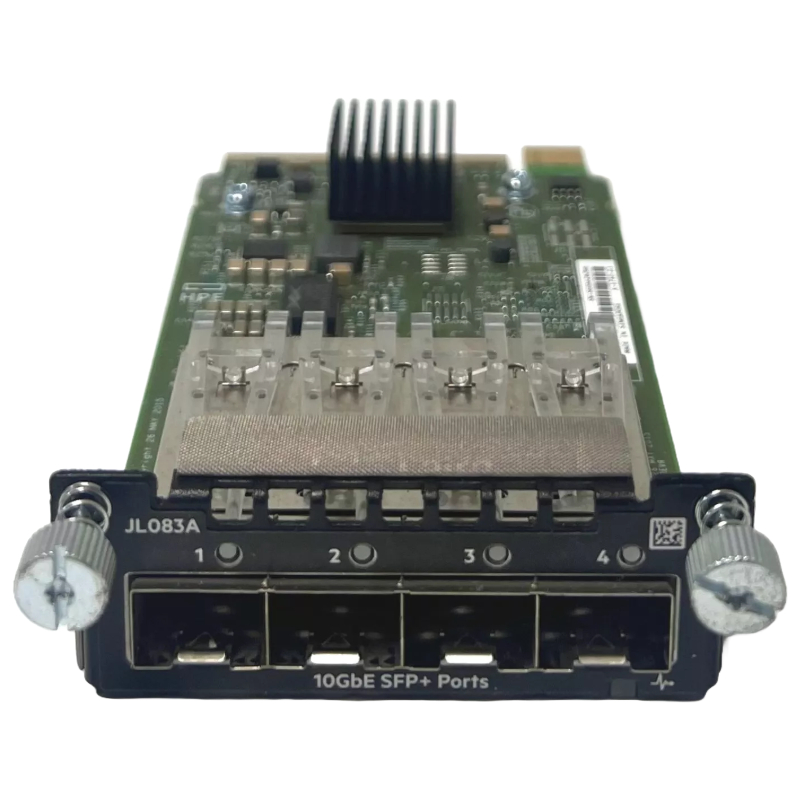


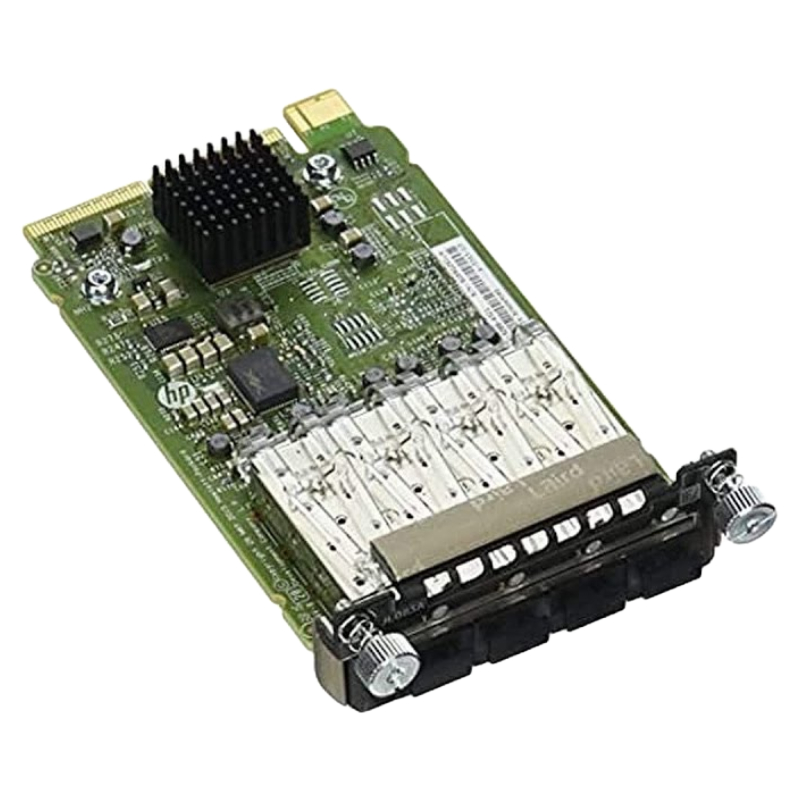
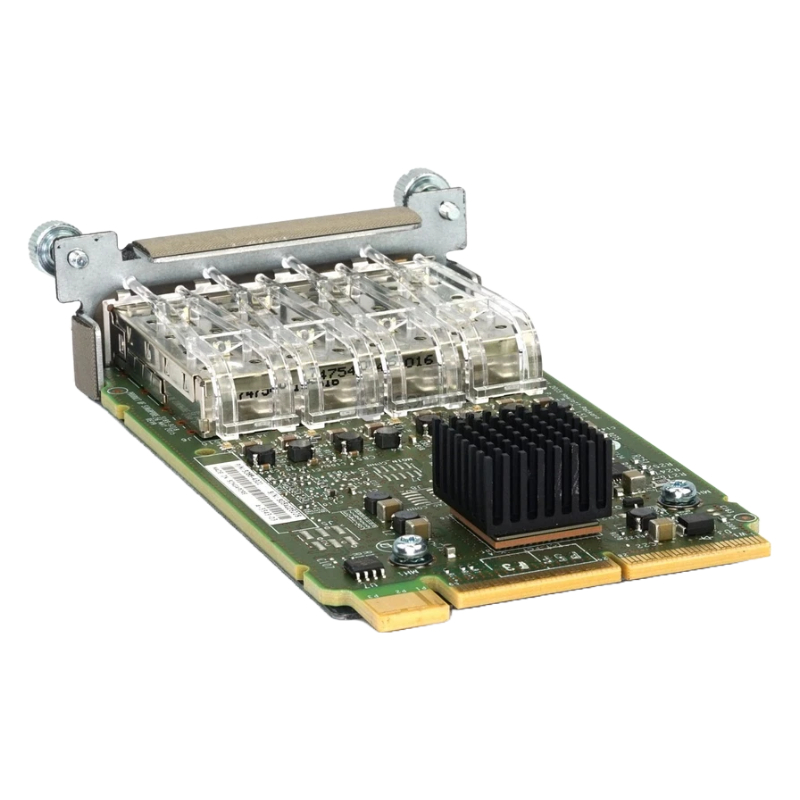
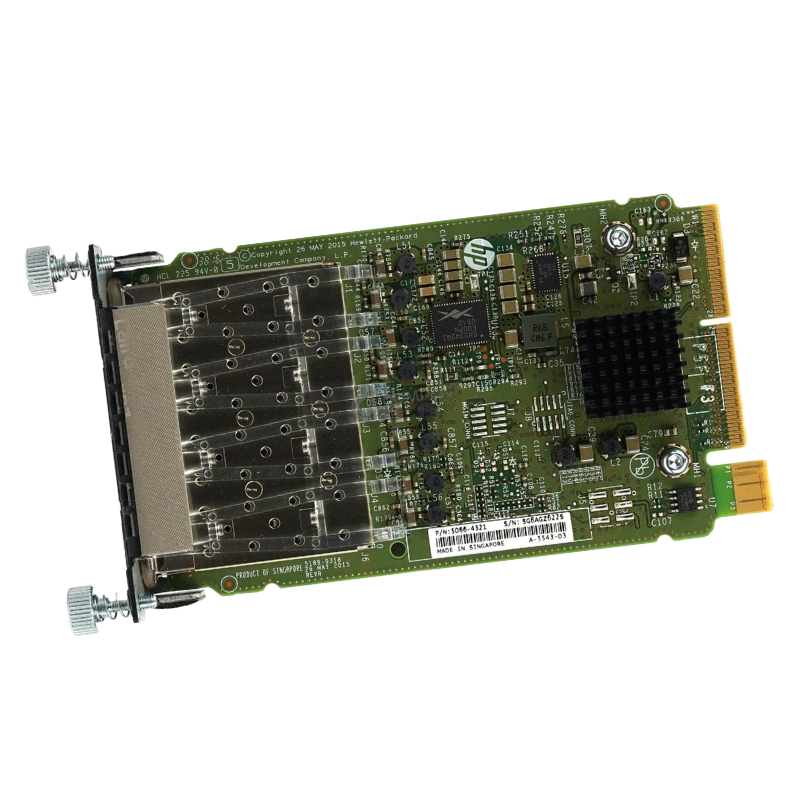
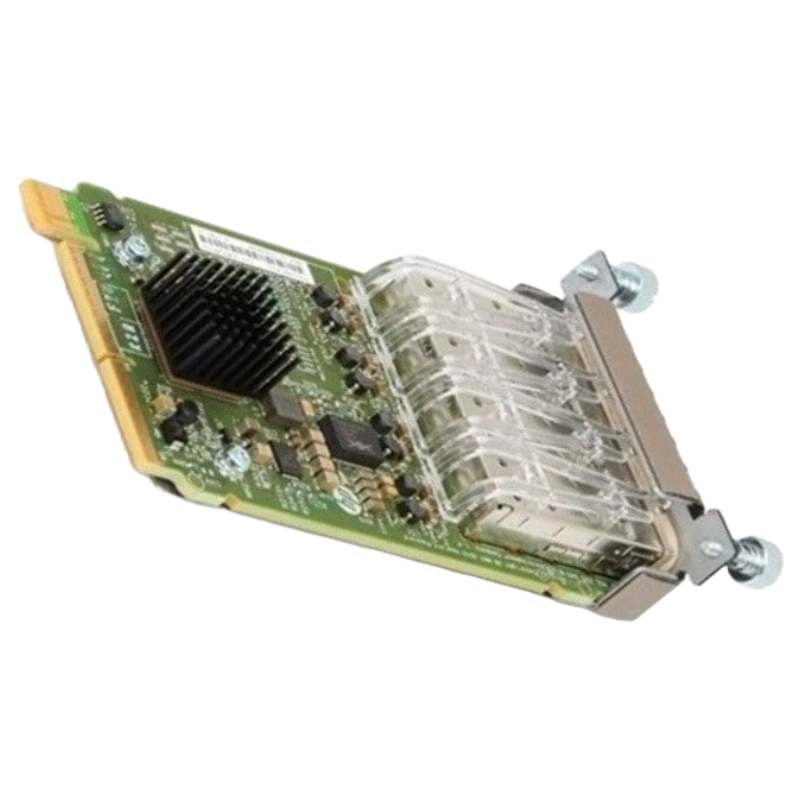
HPE JL084-61001 Aruba 3810M 4-Port Stacking Module. Excellent Refurbished with 1 year replacement warranty
| SKU/MPN | Warranty | Price | Condition | You save |
|---|---|---|---|---|
| JL084-61001 | 1 Year Warranty | $49.00 | Excellent Refurbished | You save: $17.15 (26%) |
| JL084-61001 | 1 Year Warranty | $125.00 | Factory-Sealed New in Original Box (FSB) | You save: $43.75 (26%) |
The HPE JL084-61001 Aruba 3810M Stacking Module enhances switch performance by providing four dedicated stack ports designed for high‑speed inter‑switch communication. Built for scalable enterprise deployments, this module enables efficient stacking architecture, improved bandwidth distribution, and seamless integration across Aruba’s modular switching platforms, supporting resilient campus networks and streamlined management.
The HPE JL084-61001 Aruba 3810M 4-Port Stacking Module is engineered to extend the operational capabilities of enterprise-grade switching environments by enabling high-performance stacking between compatible switches in the Aruba 3810M series. This module is designed to support resilient network topologies where multiple switches function as a unified logical system, improving manageability, scalability, and operational efficiency across complex infrastructure deployments. In modern enterprise environments, stacking modules play a critical role in consolidating switching layers, reducing configuration overhead, and enhancing redundancy across distributed network nodes.
Within the Aruba ecosystem, stacking technology provides a framework for simplifying switch management while ensuring high availability. By integrating this module into supported chassis, network administrators can interconnect multiple switches through dedicated high-speed stacking ports, allowing them to operate as a single virtual switching entity. This design significantly reduces administrative complexity and supports seamless expansion of network capacity without introducing operational fragmentation.
The stacking module provides multiple dedicated ports that facilitate high-speed inter-switch communication. These ports are optimized for low latency and high throughput, ensuring that data synchronization, control plane communication, and traffic forwarding between stacked devices occur efficiently. In enterprise environments where time-sensitive applications operate, such as voice communications, virtualization workloads, and real-time analytics platforms, consistent inter-switch performance is essential.
The architecture of the module ensures that stacking bandwidth is distributed evenly across connected devices, minimizing bottlenecks while supporting predictable network performance. This becomes especially important in environments with high-density port utilization, where aggregated traffic flows must be managed without degradation of service quality. The module’s engineering supports deterministic forwarding behavior, ensuring that stacked switches maintain consistent performance characteristics under varying load conditions.
One of the primary advantages of integrating the Aruba 3810M stacking module is its ability to facilitate modular network growth. Enterprises frequently encounter scenarios where network expansion is required due to increased user demand, application growth, or infrastructure modernization. Rather than deploying isolated switching units, administrators can integrate additional switches into an existing stack, preserving a unified management plane.
This modular expansion capability allows organizations to scale their network infrastructure horizontally without introducing unnecessary complexity. Each additional switch integrated into the stack becomes part of a single logical system, sharing configuration settings, firmware versions, and operational policies. This reduces the administrative burden associated with managing multiple independent devices and ensures consistent policy enforcement across the entire network segment.
The stacking module contributes significantly to network resilience by enabling redundancy mechanisms across interconnected switches. In a stacked configuration, multiple physical devices operate in coordination, allowing for failover scenarios where traffic is rerouted automatically in the event of hardware or link failures. This ensures uninterrupted service continuity for critical enterprise applications.
High availability is achieved through synchronized control plane operations, where stack members continuously exchange state information. If a primary control element becomes unavailable, another unit within the stack can assume operational responsibilities without manual intervention. This mechanism reduces downtime and enhances the overall reliability of the network infrastructure.
Additionally, redundant stacking links provide protection against single points of failure. By utilizing multiple interconnect paths, the system ensures that communication between stack members remains intact even if one path experiences disruption. This design is essential for mission-critical environments where continuous network availability is mandatory.
A major operational benefit of the Aruba 3810M stacking module is the consolidation of network management tasks. Instead of configuring each switch individually, administrators can manage the entire stack as a single entity. This unified approach reduces configuration errors and improves consistency across the network environment.
The management interface presents the stack as a single logical switch, simplifying tasks such as VLAN configuration, routing policy deployment, access control implementation, and firmware upgrades. This centralized approach reduces operational overhead and improves efficiency for network teams responsible for large-scale infrastructure management.
In addition, troubleshooting becomes more streamlined in a stacked environment. Diagnostic tools can analyze the stack holistically, enabling administrators to identify and resolve issues more efficiently. This reduces mean time to repair and enhances overall network stability.
The stacking module is specifically designed for compatibility with Aruba 3810M series switches. These switches are widely deployed in enterprise campus networks, branch environments, and data aggregation layers due to their reliability and performance characteristics. The module integrates seamlessly into the chassis architecture, ensuring that physical installation and logical configuration align with Aruba’s operational standards.
When installed, the module enables direct interconnection between supported switches, forming a high-speed backplane that supports synchronized switching operations. This compatibility ensures that organizations investing in Aruba infrastructure can extend their deployment without requiring major architectural redesigns.
The physical design of the module is optimized for integration into Aruba 3810M switch chassis. It is engineered for secure installation, ensuring stable connectivity between stacked devices. The hardware is designed to withstand continuous operational loads typical in enterprise environments, where network equipment operates under 24/7 conditions.
The module’s form factor allows it to be inserted into designated expansion slots within the switch chassis. Once installed, it becomes an integral part of the switching system, enabling direct communication between stack members through dedicated interfaces. The hardware design prioritizes signal integrity, minimizing interference and ensuring stable data transmission across stacking links.
The Aruba stacking module supports a wide range of deployment scenarios, including campus networks, enterprise branch offices, and distributed infrastructure environments. In campus deployments, multiple access layer switches can be combined into a single logical unit, simplifying management across large user populations.
In branch environments, stacking enables centralized configuration control, allowing IT teams to maintain consistent network policies across geographically distributed locations. This reduces operational complexity and ensures that remote sites adhere to enterprise-wide standards.
In aggregation layers, stacking improves bandwidth utilization and ensures that upstream traffic is distributed efficiently. This is particularly important in environments where multiple access switches feed into higher-tier network systems.
The stacking module is designed to maintain consistent performance under varying network loads. By enabling direct high-speed communication between switches, it reduces the need for external routing or switching paths, thereby minimizing latency. This is particularly beneficial in environments that rely on real-time data processing or high-frequency transactions.
Latency reduction is achieved through optimized forwarding mechanisms that ensure packets are transmitted across the shortest possible internal path within the stack. This improves application responsiveness and enhances user experience across network-connected systems.
As enterprise networks continue to evolve, scalability becomes a critical requirement. The stacking module provides a future-ready foundation for network expansion by allowing additional switches to be seamlessly integrated into existing stacks. This ensures that infrastructure investments remain adaptable to changing business needs.
The ability to expand network capacity without redesigning the entire architecture reduces long-term operational costs and supports sustainable infrastructure growth. Organizations can incrementally increase switching capacity while maintaining a consistent management framework.
The Aruba 3810M stacking module integrates seamlessly into broader enterprise network ecosystems. It aligns with modern infrastructure strategies that prioritize modularity, scalability, and centralized management. By functioning as part of a larger Aruba networking framework, the module supports cohesive integration with routing, switching, and security solutions.
This ecosystem alignment ensures that organizations can build cohesive network architectures that support evolving digital transformation initiatives, including cloud integration, IoT expansion, and distributed application deployment.
The stacking module delivers long-term value by enabling stable and scalable network growth. Its integration into enterprise environments supports consistent performance, simplified administration, and enhanced redundancy. These characteristics make it a critical component in infrastructure planning for organizations seeking reliable and expandable networking solutions.
By enabling multiple switches to operate as a unified system, the module reduces operational fragmentation and enhances infrastructure coherence. This contributes to improved efficiency across network operations and supports sustained enterprise performance requirements.


 Contact Us
 Information
 Catalog
 Solid State Drives (SSD)
 Network Switches
 Hard Disk Drives
 HBA & Controllers
 PC & Servers
 PC & Server Memory
 CPU & Processors
 Network Routers
 Power Supplies
 Tape Drives & Libraries
 Network Devices
 Computer & Network Cables