(7% discount is applied at checkout)
Cart is empty
Your go-to destination for cutting-edge server products
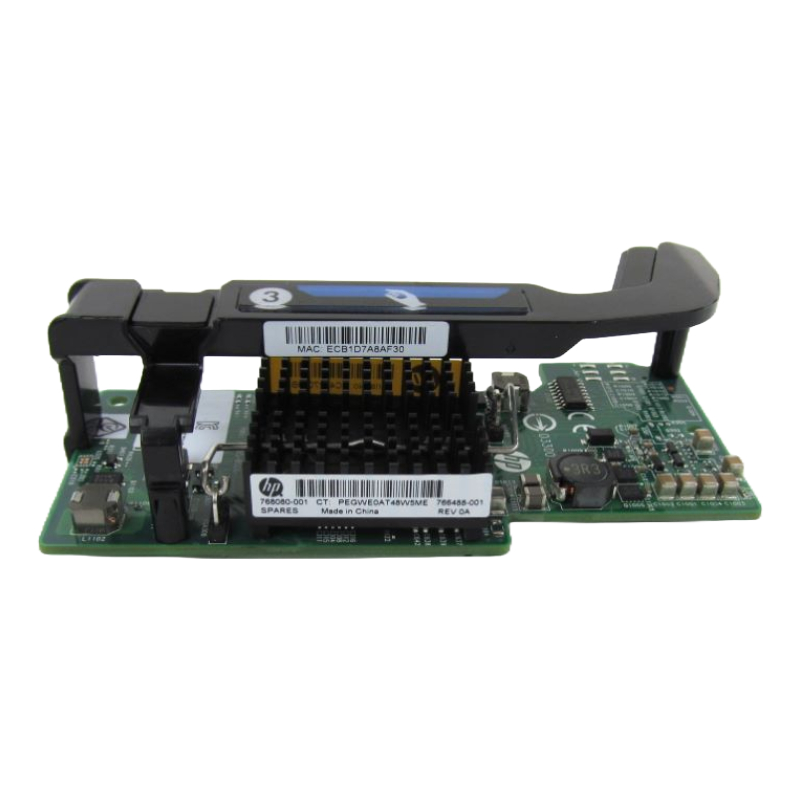


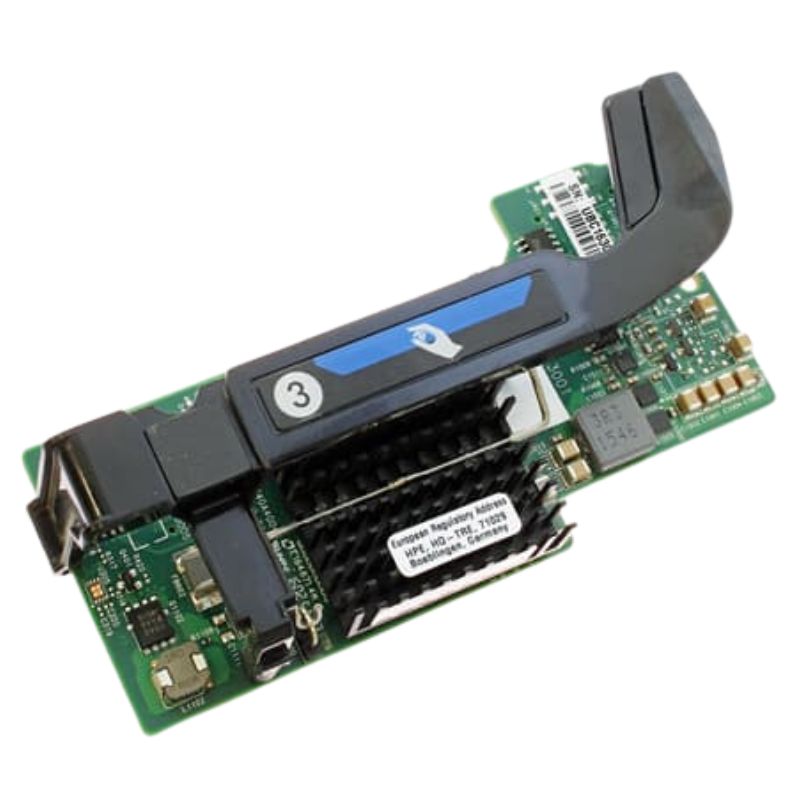
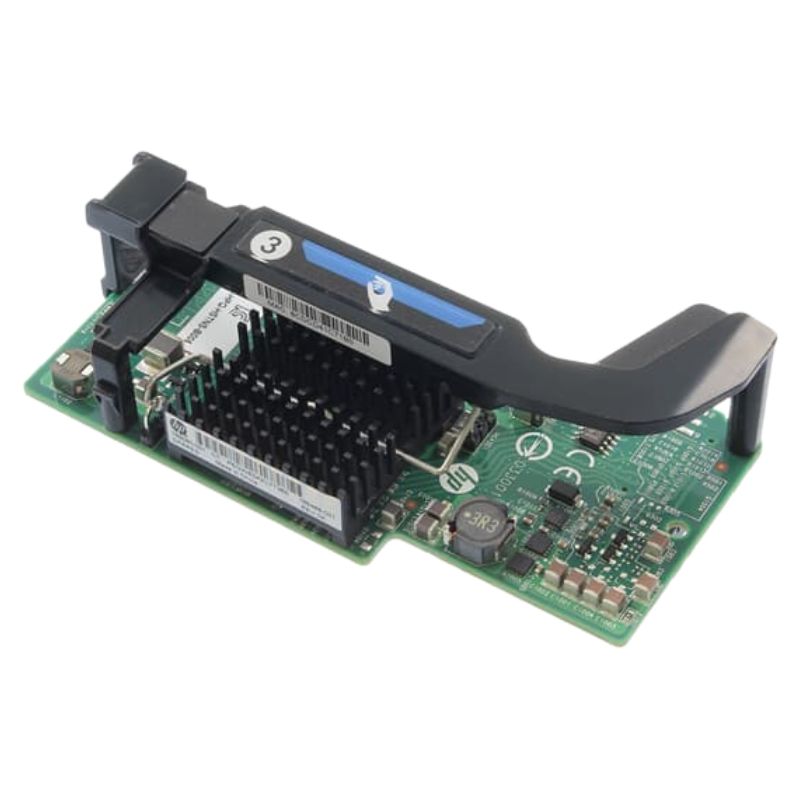
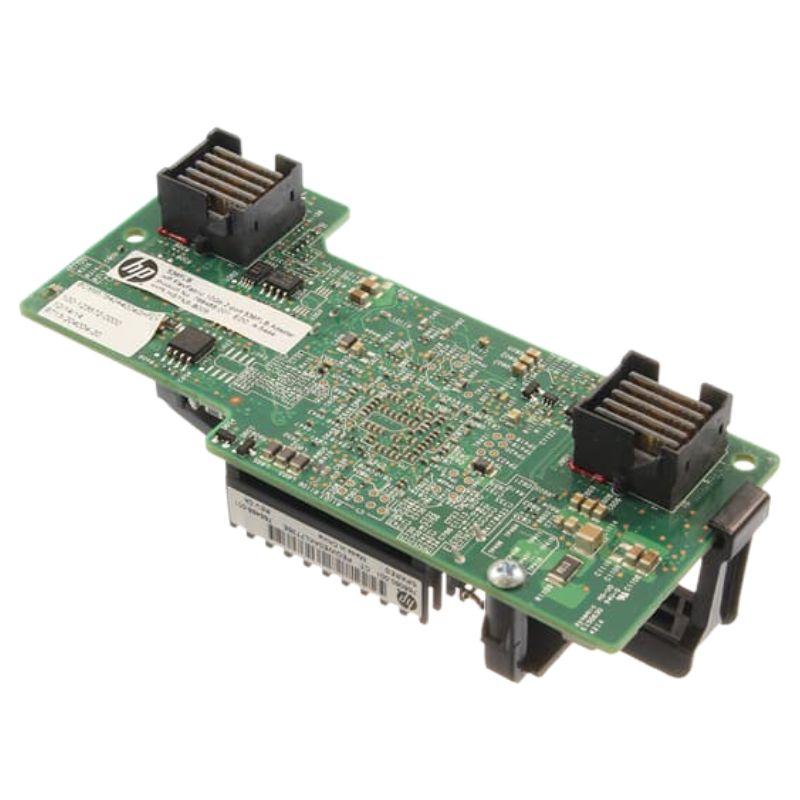
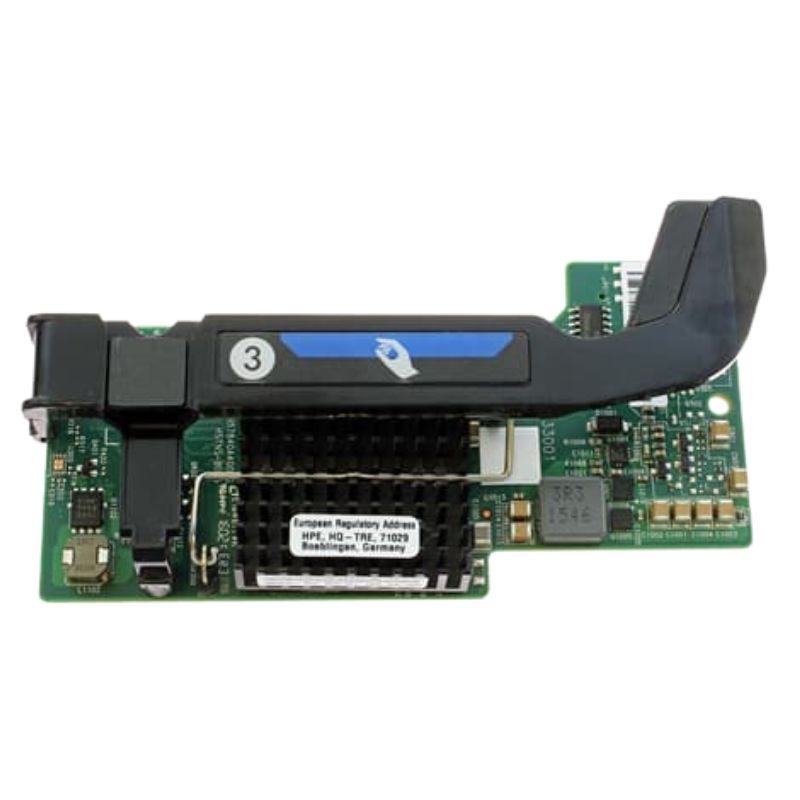
HPE 766488-001 10GB 2-Port Flexfabric 536FLB Adapter. New Sealed with 1-Year Replacement Warranty
| SKU/MPN | Warranty | Price | Condition | You save |
|---|---|---|---|---|
| 766488-001 | 1 Year Warranty | $49.00 | Excellent Refurbished | You save: $17.15 (26%) |
| 766488-001 | 1 Year Warranty | $70.00 | New Sealed in Box (NIB) | You save: $24.50 (26%) |
The HPE 766488-001 FlexFabric 10Gb 2-Port 536FLB Adapter is a high-performance enterprise-grade network interface solution designed to deliver ultra-fast connectivity, advanced virtualization capabilities, and hardware-accelerated data processing for modern data center environments. Built for scalability and reliability, this adapter is optimized for HPE ProLiant blade servers and ensures seamless integration with high-density computing infrastructures.
The HPE 766488-001 FlexFabric 10Gb 2-Port 536FLB Adapter is a high-performance converged network interface solution designed for enterprise-class blade server environments where bandwidth efficiency, virtualization readiness, and data center consolidation are essential. This adapter belongs to the HPE FlexFabric family, engineered to support modern data center networking demands by delivering high-speed Ethernet connectivity while enabling advanced virtualization and converged network operations within HPE BladeSystem infrastructures.
Positioned as a dual-port 10 Gigabit Ethernet solution, this adapter is optimized for workloads that require predictable throughput, low latency communication, and flexible network segmentation. It plays a critical role in simplifying network architectures by reducing the number of physical adapters required in server deployments while still maintaining high availability and redundancy in mission-critical systems.
At the core of the HPE FlexFabric 536FLB Adapter is a converged network adapter architecture that integrates multiple networking functionalities into a single hardware platform. This design allows Ethernet networking and storage transport protocols to coexist over the same physical infrastructure, reducing hardware sprawl and improving overall data center efficiency. The adapter is engineered to handle intensive packet processing tasks while maintaining optimized CPU offload capabilities, ensuring that server processors remain focused on application workloads rather than network overhead.
The adapter utilizes a PCI Express interface that ensures high-throughput communication between the server motherboard and network fabric. This high-bandwidth channel is essential for maintaining stable 10GbE performance across both ports, particularly in environments with heavy virtual machine density or large-scale transactional processing. The internal data path architecture is designed to minimize bottlenecks, ensuring that packet flows are processed efficiently even under sustained network load conditions.
The dual-port configuration of the adapter provides both redundancy and load balancing capabilities. Each port operates independently, allowing administrators to segment traffic or implement failover configurations. This design enhances service continuity in enterprise environments where downtime is not acceptable. The architecture ensures that if one link experiences disruption, the secondary link can maintain uninterrupted connectivity without compromising application performance.
The HPE FlexFabric technology embedded in this adapter represents a significant evolution in converged networking. It enables the consolidation of traditional LAN and SAN traffic over a unified fabric, simplifying network architecture while improving utilization of existing infrastructure. This convergence reduces complexity in cable management, switch configuration, and network provisioning.
One of the defining characteristics of FlexFabric adapters is the ability to partition a physical network interface into multiple virtual NICs. This Flex-10 capability allows administrators to allocate bandwidth dynamically across different workloads, ensuring predictable performance for virtual machines and multi-tenant environments. Each partition can be configured independently, enabling granular control over traffic prioritization and bandwidth allocation.
The adaptive bandwidth allocation system allows dynamic redistribution of network resources based on workload demand. In virtualized environments where workloads fluctuate, this capability ensures that critical applications receive the necessary bandwidth without manual reconfiguration. This automation contributes to higher operational efficiency and reduces administrative overhead in large-scale deployments.
The adapter is engineered to support sustained 10GbE throughput across both ports, making it suitable for data-intensive applications such as virtualization clusters, database servers, and cloud computing platforms. Its optimized packet processing engine reduces latency and ensures that network performance remains consistent even under heavy load conditions.
The adapter incorporates advanced I/O acceleration techniques that streamline packet processing and reduce CPU utilization. These mechanisms enhance overall system efficiency by ensuring that data movement between network and compute layers occurs with minimal overhead. The result is improved application performance and more efficient resource utilization across the server infrastructure.
The HPE 766488-001 adapter is specifically designed for integration into HPE BladeSystem environments. Its mezzanine form factor ensures compatibility with supported blade servers, enabling high-density computing configurations without sacrificing network performance. This tight integration simplifies deployment and ensures consistent performance across all blades within an enclosure.
The mezzanine slot architecture allows the adapter to be installed directly onto the server blade, reducing the need for external network cabling and additional interface modules. This design improves airflow efficiency within the enclosure and contributes to better thermal management, which is essential for maintaining system stability in high-density data centers.
As a Converged Network Adapter, the HPE FlexFabric 536FLB supports both traditional Ethernet traffic and storage protocols over a unified infrastructure. This convergence enables organizations to reduce the number of physical adapters required per server while still supporting complex networking requirements.
The HPE 766488-001 adapter is adapter is optimized for virtualized environments where multiple virtual machines share the same physical network resources. It supports efficient traffic segmentation and prioritization, ensuring that each virtual machine receives predictable network performance. This is critical for maintaining service level agreements in enterprise cloud deployments.
The adapter provides robust traffic isolation capabilities that ensure secure and efficient separation of workloads. This is essential in multi-tenant environments where different applications or business units share the same physical infrastructure. By isolating traffic streams, the adapter enhances both performance stability and security compliance.
The HPE FlexFabric 10Gb adapter supports storage over Ethernet technologies, enabling data centers to consolidate storage and networking traffic onto a single infrastructure. This reduces complexity and eliminates the need for separate storage networks in many deployments, improving overall infrastructure efficiency.
By supporting low-latency storage transport protocols, the adapter ensures efficient communication between compute nodes and storage arrays. This improves application performance in storage-intensive environments such as virtualization clusters and database systems where rapid data access is critical.
Security is integrated into the design of the adapter through hardware-assisted processing and secure data handling mechanisms. These features help protect data in transit while maintaining high performance levels. The adapter ensures that security processing does not become a bottleneck for network throughput.
Network segmentation capabilities enable administrators to enforce strict access control policies across different traffic streams. This ensures that sensitive workloads remain isolated from less critical systems, improving overall security posture within the data center environment.Optimized Resource Utilization in Virtual Environments
The HPE 766488-001 adapter is adapter enhances virtualization efficiency by enabling multiple workloads to share a single physical network interface without compromising performance. This reduces hardware costs while maximizing server utilization rates.
As data center demands grow, the adapter provides scalable networking capabilities that can support expanding workloads. Its flexible architecture ensures that organizations can scale their infrastructure without redesigning their entire network topology.


 Contact Us
 Information
 Catalog
 Solid State Drives (SSD)
 Network Switches
 Hard Disk Drives
 HBA & Controllers
 PC & Servers
 PC & Server Memory
 CPU & Processors
 Network Routers
 Power Supplies
 Tape Drives & Libraries
 Network Devices
 Computer & Network Cables