(7% discount is applied at checkout)
Cart is empty
Your go-to destination for cutting-edge server products
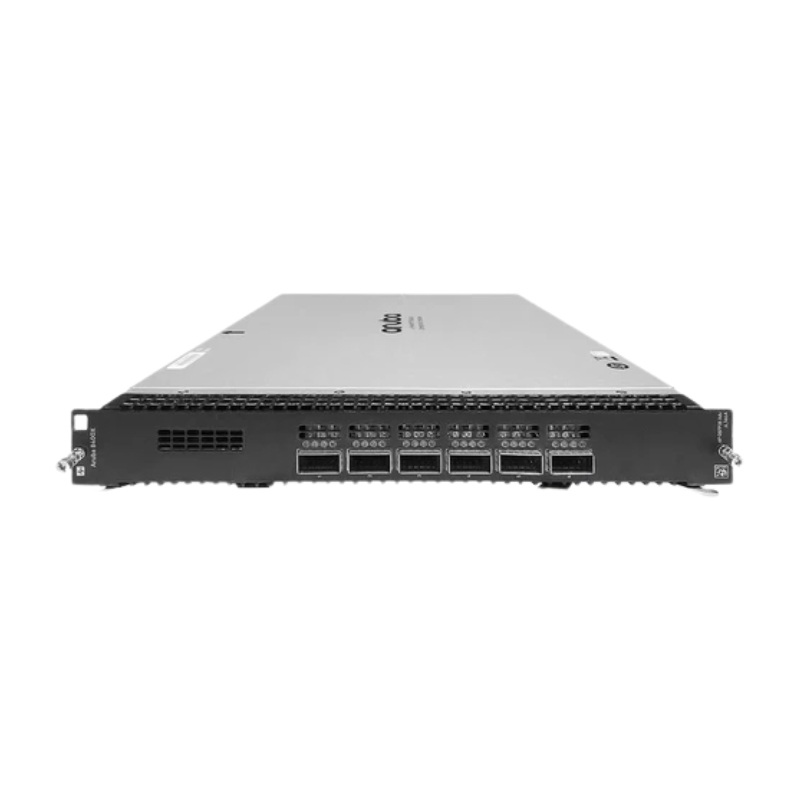


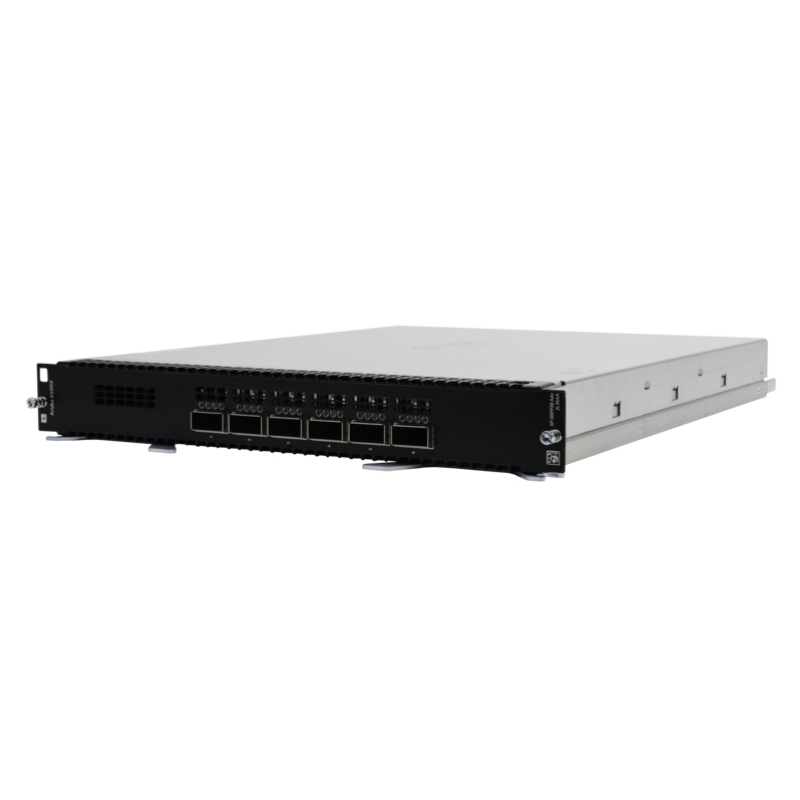
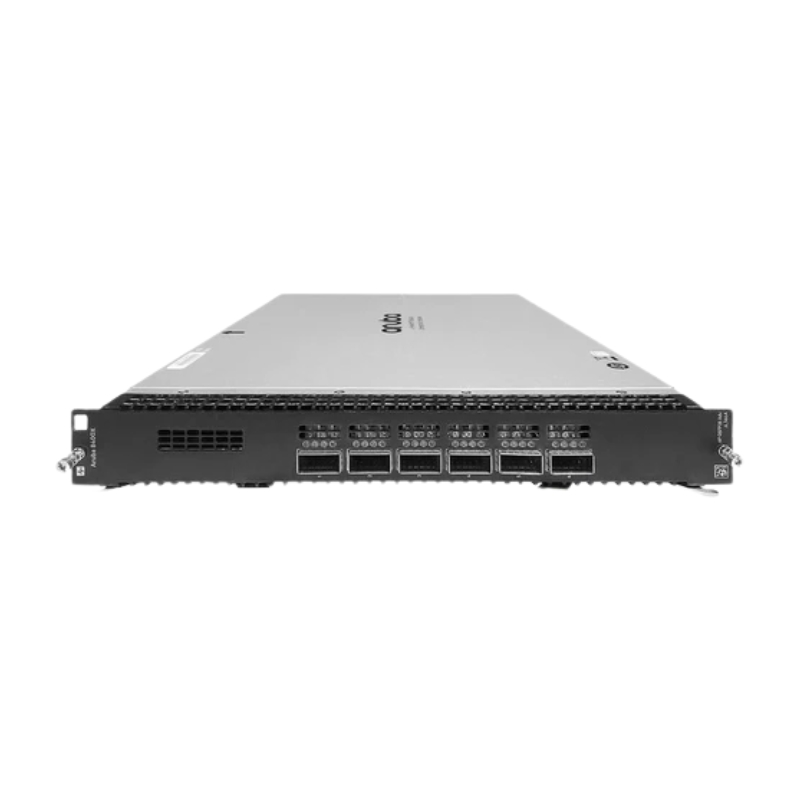
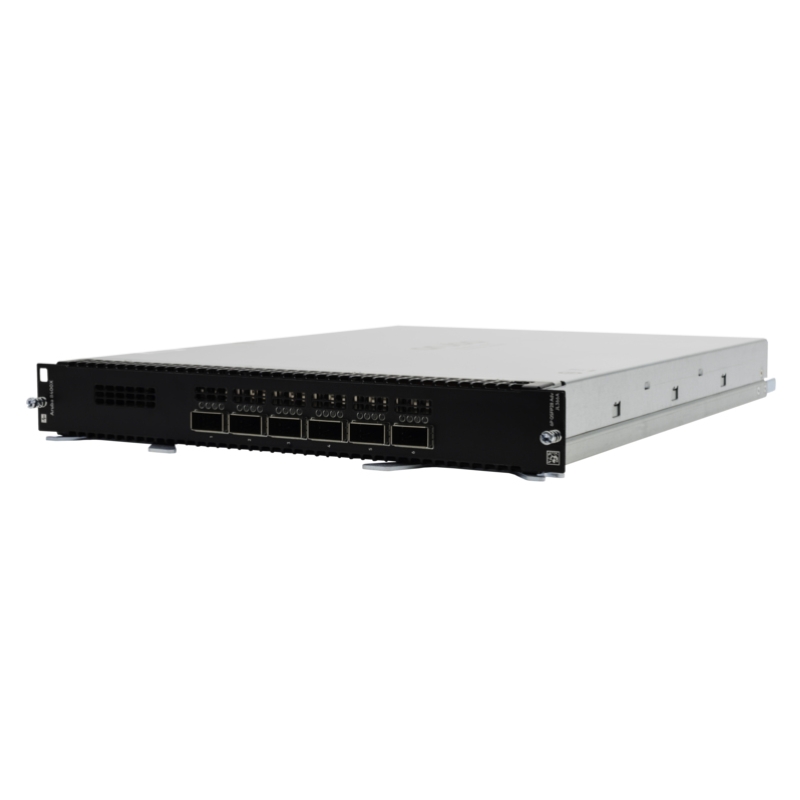
HPE JL366-61001 Aruba 8400X 6-Port 40GbE/100GbE QSFP28 Advanced Module. Factory-Sealed New in Original Box (FSB) with 3 Years Warranty
The HPE JL366-61001 Aruba 8400X Advanced Module elevates network efficiency with six QSFP28 ports supporting both 40GbE and 100GbE speeds. Built for high‑capacity infrastructures, it delivers exceptional bandwidth, stable wired connectivity, and multi‑protocol support to accommodate evolving enterprise demands. Its robust engineering ensures smooth integration into Aruba 8400X systems, offering reliable, long‑term performance for data‑intensive environments.
The HPE JL366-61001 Aruba 8400X 6-Port 40GbE/100GbE QSFP28 Advanced Module represents a high-performance switching expansion component engineered for advanced enterprise and data center networking environments. Designed for integration within the Aruba 8400X modular switching platform, this module provides flexible high-speed uplink and downlink capabilities using QSFP28 optical transceiver interfaces. It enables network architects to build scalable, resilient, and high-throughput infrastructures that support modern workloads including cloud computing, virtualization, storage aggregation, and high-frequency data processing.
Built with a focus on modular scalability, this advanced line card enhances the capability of the Aruba 8400X chassis by adding six high-density ports capable of operating at both 40 Gigabit Ethernet and 100 Gigabit Ethernet speeds. This flexibility allows organizations to optimize port utilization according to network design requirements, ensuring smooth migration paths from legacy 40GbE deployments toward next-generation 100GbE architectures without requiring immediate full infrastructure replacement.
The architecture of the HPE Aruba 8400X 6-Port QSFP28 Advanced Module is centered on delivering deterministic performance and wire-speed throughput under heavy network loads. Each port is engineered to support advanced packet processing capabilities, ensuring minimal latency across switching fabrics. The module integrates seamlessly into the Aruba 8400X series chassis, leveraging the platform’s distributed forwarding architecture to maximize efficiency and throughput consistency.
This modular design allows network administrators to scale capacity as demand grows, enabling incremental investment strategies rather than full system replacement. The advanced module contributes to the chassis’ overall switching fabric by providing additional high-bandwidth interfaces that support aggregation, spine-leaf architectures, and core network interconnectivity in enterprise environments.
Within the Aruba 8400X ecosystem, the module operates as part of a high-speed non-blocking switching fabric. This ensures that data packets are efficiently routed between ports without congestion under typical deployment scenarios. The integration of hardware-based forwarding engines enhances deterministic performance, especially in environments where consistent latency and throughput are critical, such as financial trading systems, cloud data centers, and large-scale enterprise backbones.
The switching fabric architecture reduces dependency on centralized processing by distributing forwarding decisions across the system. This design improves scalability and ensures that performance remains stable even as additional modules are inserted into the chassis.
The QSFP28 interface technology utilized in the HPE JL366-61001 module is a key factor in its ability to deliver high-speed connectivity. QSFP28 supports 100 Gigabit Ethernet signaling while maintaining backward compatibility with 40 Gigabit Ethernet configurations. This dual-speed capability provides significant flexibility for network deployment strategies.
Each port is designed to accommodate a wide range of optical transceivers and direct attach copper cables, depending on the distance and bandwidth requirements of the deployment. This makes the module suitable for both short-range intra-rack connections and long-range inter-data center links when paired with appropriate optical modules.
One of the defining characteristics of this module is its ability to support both 40GbE and 100GbE connectivity modes. This allows organizations to transition gradually from older infrastructure to higher-speed networking without disrupting existing operations. The module supports mixed-mode environments where certain ports may operate at 40GbE while others operate at 100GbE, depending on transceiver configuration and network design.
This flexibility is particularly valuable in hybrid environments where legacy systems coexist with modern cloud-native infrastructure. It reduces capital expenditure while maintaining long-term scalability.
Performance is a central focus of the HPE JL366-61001 Aruba 8400X Advanced Module. With six high-speed QSFP28 ports, the module delivers aggregate bandwidth suitable for demanding workloads such as big data analytics, distributed computing clusters, and large-scale virtualization infrastructures.
Each port is designed for line-rate forwarding, ensuring that packets are processed without bottlenecks. The module supports advanced buffering techniques and intelligent traffic management to maintain performance consistency even during traffic spikes.
Low latency is a critical requirement in modern data center networks. The architecture of this module minimizes hop latency by utilizing hardware-accelerated forwarding paths. This ensures that time-sensitive applications such as real-time analytics, voice over IP systems, and financial transaction processing maintain optimal performance levels.
The reduction of software-based processing overhead contributes significantly to predictable network behavior, which is essential for service-level agreement compliance in enterprise environments.
Scalability is a fundamental advantage of the Aruba 8400X modular ecosystem. The HPE JL366-61001 module allows organizations to scale their network capacity vertically by adding additional high-speed ports to an existing chassis. This eliminates the need for complete infrastructure replacement when bandwidth requirements increase.
In spine-leaf architectures, this module can function as a high-speed interconnect component, enabling efficient east-west traffic flow between server clusters. Its high port density and flexible speed configuration make it suitable for rapidly expanding cloud environments.
Modern cloud infrastructures rely heavily on high-bandwidth, low-latency switching fabrics. The module supports these requirements by providing reliable high-speed connectivity between virtualization hosts, storage systems, and application clusters. It ensures consistent throughput for workloads that depend on distributed computing resources.
Virtual machine migration, container orchestration, and software-defined networking operations benefit significantly from the module’s high-speed interconnect capabilities.
The HPE JL366-61001 Aruba 8400X 6-Port Advanced Module is commonly deployed in large-scale data center environments where high-performance switching is essential. It is suitable for core switching layers, aggregation layers, and spine roles in modern network topologies.
In hyperscale environments, the module supports rapid data movement between compute clusters and storage arrays. Its ability to handle both 40GbE and 100GbE traffic makes it adaptable to evolving infrastructure requirements.
Within enterprise core networks, the module plays a critical role in ensuring fast and reliable data transmission between business-critical systems. It supports high-volume traffic flows while maintaining stability and redundancy across network paths.
Organizations implementing digital transformation initiatives rely on such high-speed modules to ensure that legacy systems and modern applications can coexist within a unified infrastructure.
Service providers benefit from the HPE JL366-61001 module due to its ability to handle large-scale traffic aggregation and backbone connectivity. Carrier-grade networks require consistent performance, and this module delivers predictable throughput under heavy load conditions.
It is suitable for metro aggregation, edge routing, and core backbone applications where high-speed data transmission and minimal packet loss are essential.
In service provider environments, traffic aggregation is a critical function. The module consolidates multiple high-speed links into a unified switching fabric, enabling efficient routing across backbone networks. This reduces congestion and improves overall network utilization efficiency.
The ability to support mixed-speed environments allows service providers to maintain compatibility with diverse customer infrastructures while upgrading backbone capacity incrementally.
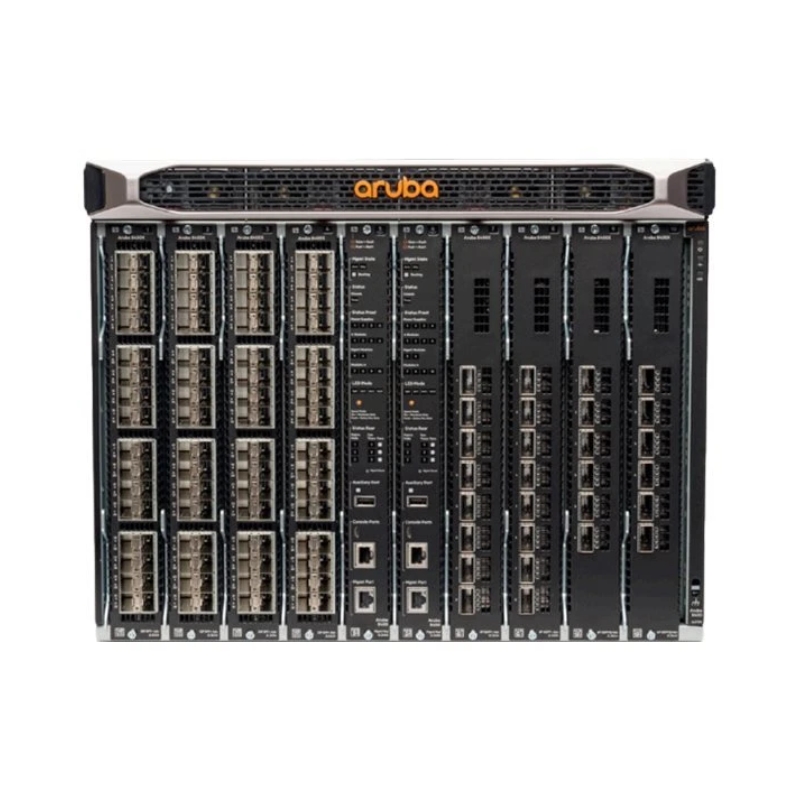
The HPE JL366-61001 module is specifically designed for the Aruba 8400X series chassis, ensuring tight hardware and software integration. The Aruba 8400X platform is a high-performance modular switching system designed for core, aggregation, and data center roles. The advanced module slots into the chassis and becomes an integral part of its switching capacity.
Compatibility extends across supported ArubaOS-CX environments, where advanced network operating system features manage traffic flows, redundancy, telemetry, and policy enforcement. This ensures that the module operates within a fully programmable and automated network environment.
When deployed within redundant Aruba 8400X configurations, the module contributes to system-level high availability. Failover mechanisms ensure that traffic is rerouted through alternative paths in the event of hardware or link failure. This resilience is essential for mission-critical applications where downtime is not acceptable.
The chassis architecture supports redundant management, power, and cooling systems, which further enhances the stability of the module’s operation in enterprise environments.


 Contact Us
 Information
 Catalog
 Solid State Drives (SSD)
 Network Switches
 Hard Disk Drives
 HBA & Controllers
 PC & Servers
 PC & Server Memory
 CPU & Processors
 Network Routers
 Power Supplies
 Tape Drives & Libraries
 Network Devices
 Computer & Network Cables