(7% discount is applied at checkout)
Cart is empty
Your go-to destination for cutting-edge server products
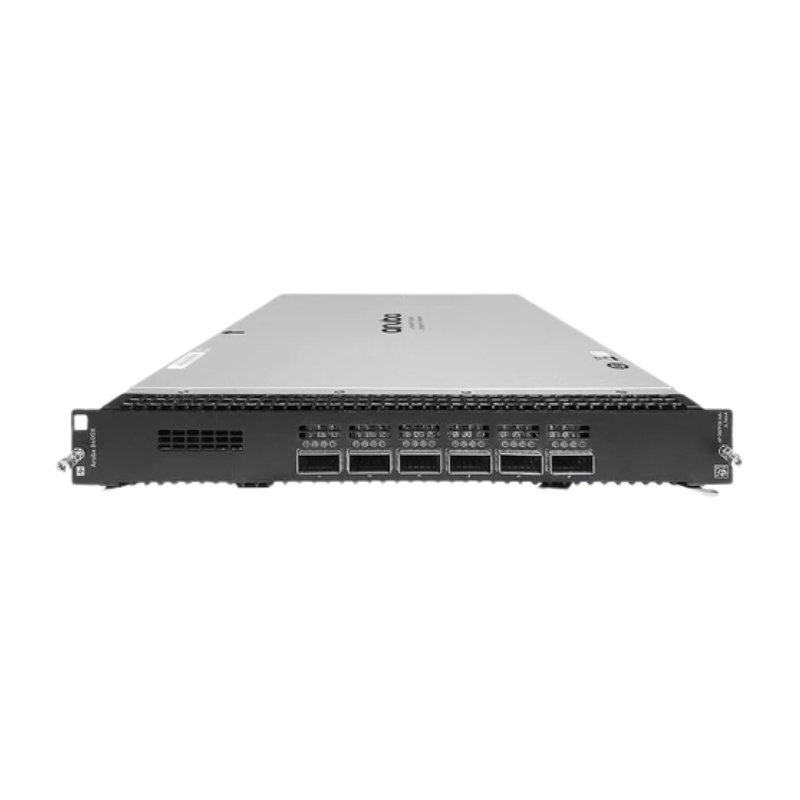


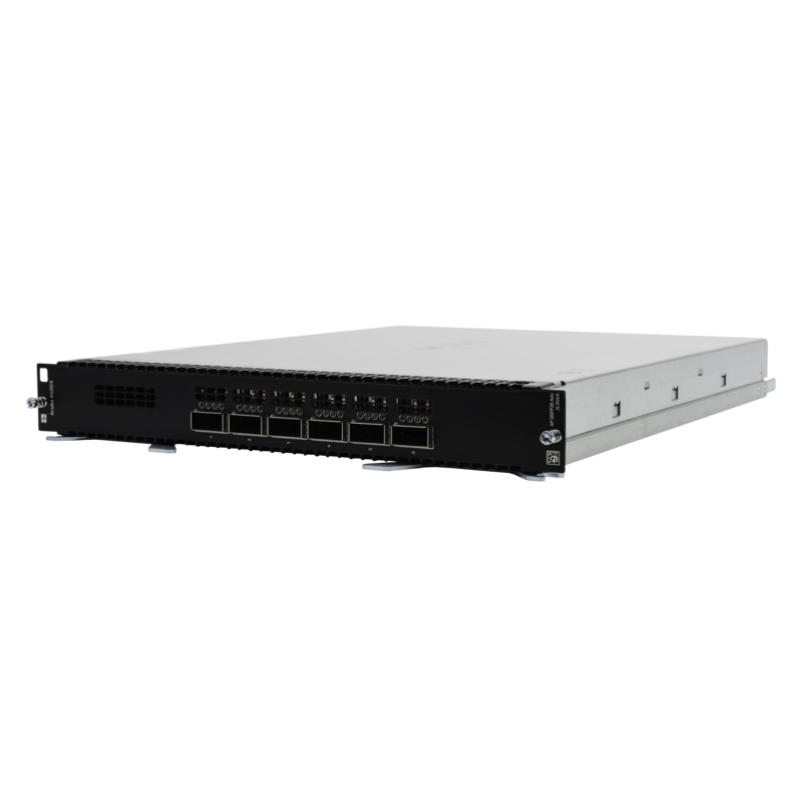
HPE JL366A Aruba 8400X 6-Port 40GbE/100GbE QSFP28 Advanced Module. Factory-Sealed New in Original Box (FSB) with 3 Years Warranty
| SKU/MPN | Warranty | Price | Condition | You save |
|---|---|---|---|---|
| JL366A | 1 Year Warranty | $5,937.00 | Excellent Refurbished | You save: $2,077.95 (26%) |
| JL366A | 1 Year Warranty | $14,199.00 | Factory-Sealed New in Original Box (FSB) | You save: $4,969.65 (26%) |
The HPE JL366A Aruba 8400X 6‑Port QSFP28 Advanced Module enhances high‑performance network infrastructures by delivering flexible 40GbE and 100GbE connectivity across six ultra‑fast ports. Built for demanding enterprise environments, this module boosts throughput, strengthens backbone capacity, and supports modern data‑intensive workloads with exceptional stability and efficiency.
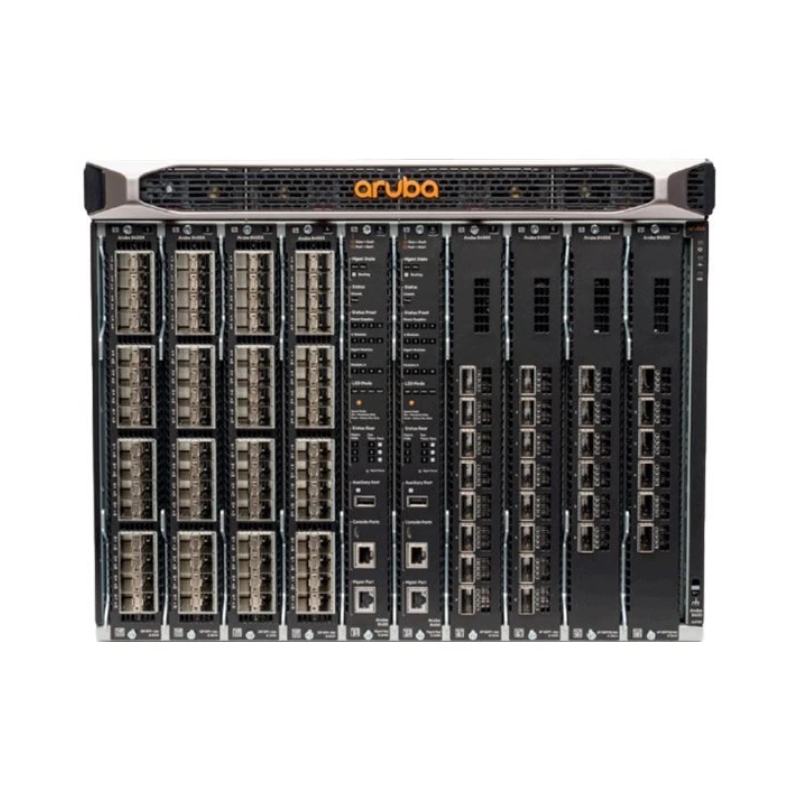
The HPE Aruba 8400X 6-Port 40GbE/100GbE QSFP28 Advanced Module represents a high-density, high-performance networking expansion component engineered for next-generation enterprise core and data center switching environments. Designed for integration into the Aruba 8400X modular switch platform, this advanced module extends the chassis capabilities by delivering flexible, high-bandwidth connectivity options that support both 40 Gigabit Ethernet and 100 Gigabit Ethernet configurations through QSFP28 interfaces. Its architecture is optimized for scalability, enabling organizations to build resilient, low-latency, and future-ready network infrastructures that can accommodate rapidly growing data traffic demands.
At its core, this module is engineered to support mission-critical workloads where deterministic performance and consistent throughput are essential. The QSFP28 ports are designed to deliver ultra-high-speed data transmission with minimal packet loss, ensuring smooth handling of east-west and north-south traffic patterns commonly seen in modern distributed applications, virtualization clusters, and cloud-native environments. The modular design also ensures that network architects can tailor the switching fabric of the Aruba 8400X chassis according to evolving requirements without replacing the entire system.
The module integrates six QSFP28 ports, each capable of supporting either 40GbE or 100GbE optical connectivity. This dual-rate capability ensures compatibility with a wide range of transceivers and cabling infrastructures, providing flexibility in deployment scenarios. In environments where legacy 40GbE infrastructure still exists, the module allows seamless interoperability while also enabling gradual migration toward full 100GbE adoption.
Each QSFP28 port is engineered with high signal integrity design principles, ensuring stable transmission over both short-range and long-range optical connections. The module supports advanced forward error correction mechanisms, which significantly enhance reliability in high-speed data transmission environments. This makes it suitable for hyperscale data centers, financial trading networks, cloud service providers, and large enterprise campuses.
The dual-speed capability allows organizations to optimize bandwidth allocation dynamically. When operating in 40GbE mode, the module provides stable aggregation of high-throughput services, while in 100GbE mode it unlocks maximum bandwidth for latency-sensitive workloads such as real-time analytics, high-performance computing clusters, and large-scale virtualization systems. This adaptability ensures long-term investment protection and reduces the need for frequent hardware upgrades.
QSFP28 technology enables the use of both optical transceivers and direct attach copper solutions, offering deployment flexibility depending on rack design and distance requirements. Optical transceivers are ideal for long-distance interconnects between data center racks or buildings, while direct attach copper cables are efficient for short-range, low-latency intra-rack connectivity. The module intelligently accommodates both deployment types without requiring configuration changes at the hardware level.
One of the defining strengths of this advanced module is its scalability. In modern network architectures, scalability is not only about increasing port density but also about maintaining performance consistency as traffic grows. The Aruba 8400X platform, combined with this module, enables a non-blocking switching architecture that ensures predictable performance even under heavy load conditions.
As organizations transition toward cloud-first strategies, the need for scalable backbone infrastructure becomes critical. This module allows seamless expansion of network capacity without redesigning the core architecture. It supports spine-leaf topologies, where high-speed interconnects are essential for minimizing latency and maximizing throughput across distributed computing environments.
The modular nature of the Aruba 8400X system ensures that the 6-port QSFP28 module can be added or replaced without service disruption in properly designed redundant configurations. This allows network administrators to scale incrementally based on business requirements, ensuring cost efficiency and operational continuity.
The inclusion of 100GbE readiness ensures that the infrastructure remains relevant as bandwidth demands increase over time. This future-proof design reduces total cost of ownership by extending the lifecycle of the switching platform while supporting emerging technologies such as edge computing, artificial intelligence workloads, and distributed cloud ecosystems.
Performance optimization is a critical aspect of this advanced module. It is designed to minimize latency and maximize packet forwarding efficiency across all active ports. The internal switching fabric of the Aruba 8400X system works in conjunction with the module to ensure line-rate performance across all interfaces, even under simultaneous full-duplex data transmission scenarios.
The module supports advanced traffic management capabilities that allow intelligent distribution of network flows. This ensures that bandwidth is utilized efficiently and that congestion points are minimized. The hardware-based architecture reduces dependency on CPU processing, enabling faster packet forwarding and improved overall system responsiveness.
Low latency is essential for environments such as financial trading systems, real-time communication platforms, and high-frequency data processing applications. The architecture of this module is optimized to reduce hop-to-hop delay, ensuring that data packets traverse the network with minimal processing overhead.
Efficient traffic handling is achieved through deep integration with the Aruba switching ecosystem. The module is capable of managing large volumes of concurrent data streams without degradation in performance. This makes it particularly suitable for environments with unpredictable traffic spikes and high concurrency workloads.
The HPE Aruba 8400X 6-Port 40GbE/100GbE QSFP28 Advanced Module is designed for deployment in a wide range of enterprise and service provider environments. Its flexibility and high throughput capabilities make it suitable for both core and aggregation layers in large-scale network architectures.
In data center environments, it serves as a critical component in spine-leaf architectures, enabling high-speed interconnectivity between compute clusters, storage systems, and application servers. In enterprise campus networks, it provides backbone connectivity for distributed buildings and high-density user environments.
Within data centers, this module ensures that east-west traffic between virtual machines and containerized workloads flows efficiently. It supports modern virtualization platforms and distributed storage systems that require consistent high-speed connectivity to maintain performance and availability.
In campus environments, the module acts as a backbone interconnect, linking multiple access and distribution layers. This ensures seamless communication between departments, applications, and centralized services while maintaining high availability and redundancy.
Reliability is a key design principle of the Aruba 8400X platform and its advanced modules. The system is engineered with redundant power, cooling, and switching components to ensure continuous operation even under failure conditions. The QSFP28 module itself is built with high-quality components that support long-term operational stability.
Fault tolerance mechanisms are integrated at both hardware and system levels. In the event of a port failure, traffic can be rerouted dynamically through alternative paths without impacting overall network performance. This ensures high availability for critical applications and services.
High availability is achieved through redundant network paths and intelligent failover mechanisms. The modular architecture allows for rapid replacement or reconfiguration of components without affecting the operational status of the entire system.
The module is designed to operate in environments with continuous high traffic loads and varying environmental conditions. Its thermal design ensures efficient heat dissipation, maintaining stable performance even in densely populated rack installations.
The versatility of the 40GbE/100GbE QSFP28 module enables its use in a wide range of advanced networking scenarios. It supports modern application architectures that require high bandwidth, low latency, and consistent throughput.
In cloud computing environments, it supports multi-tenant infrastructure where isolated workloads must communicate efficiently without interference. In big data analytics platforms, it ensures rapid data movement between storage and compute nodes, accelerating processing times and improving overall system efficiency.
Cloud environments require scalable and flexible networking solutions. This module provides the necessary bandwidth and adaptability to support dynamic workload distribution and elastic resource allocation across virtualized environments.
High performance computing clusters depend on ultra-fast interconnects to distribute workloads across multiple nodes. The low latency and high throughput capabilities of this module make it suitable for scientific simulations, AI model training, and complex computational tasks.
The module contributes significantly to overall network optimization strategies by enabling efficient traffic engineering. It supports load balancing techniques that distribute data flows evenly across available links, preventing bottlenecks and ensuring consistent performance.
Traffic engineering capabilities allow network administrators to prioritize critical applications and allocate bandwidth dynamically based on operational requirements. This ensures that essential services maintain performance even during peak usage periods.
Efficient bandwidth allocation ensures that no single application monopolizes network resources. The system intelligently distributes available capacity across all active connections, optimizing overall network utilization.
Congestion management features help maintain stable network performance during traffic surges. By dynamically adjusting traffic flows, the system reduces packet loss and maintains low latency across all active connections.


 Contact Us
 Information
 Catalog
 Solid State Drives (SSD)
 Network Switches
 Hard Disk Drives
 HBA & Controllers
 PC & Servers
 PC & Server Memory
 CPU & Processors
 Network Routers
 Power Supplies
 Tape Drives & Libraries
 Network Devices
 Computer & Network Cables