(7% discount is applied at checkout)
Cart is empty
Your go-to destination for cutting-edge server products
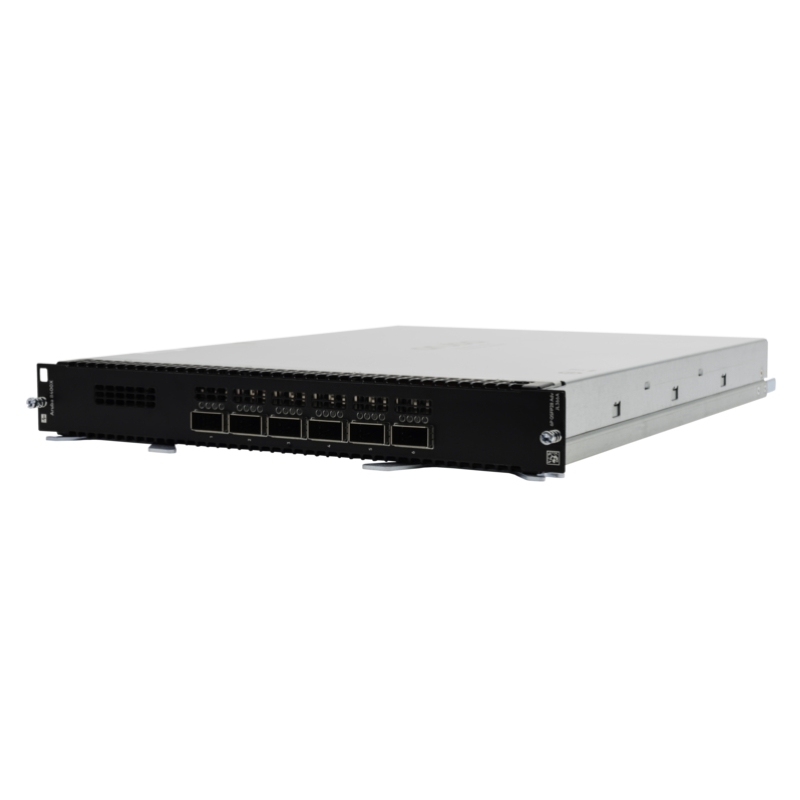


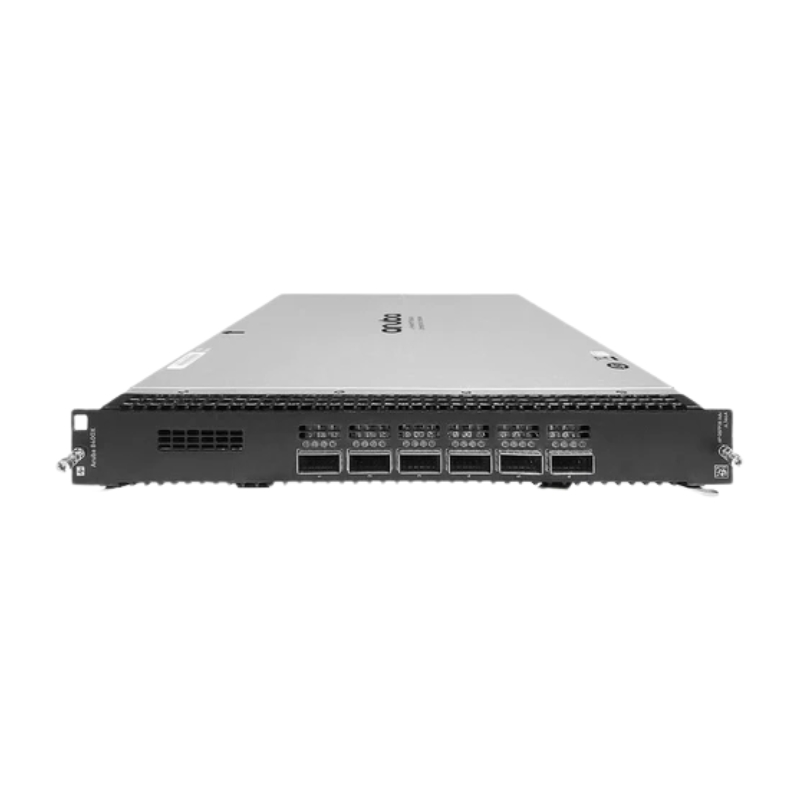
HPE JL366A Aruba 8400X 6-Port 40GbE/100GbE QSFP28 Advanced Module. Excellent Refurbished with 1 year replacement warranty
| SKU/MPN | Warranty | Price | Condition | You save |
|---|---|---|---|---|
| JL366A | 1 Year Warranty | $5,937.00 | Excellent Refurbished | You save: $2,077.95 (26%) |
| JL366A | 1 Year Warranty | $14,199.00 | Factory-Sealed New in Original Box (FSB) | You save: $4,969.65 (26%) |
The HPE JL366A Aruba 8400X 6‑Port QSFP28 Advanced Module delivers high‑capacity uplink performance for demanding enterprise networks, offering versatile 40GbE and 100GbE connectivity across six ports. Engineered for robust scalability, this plug‑in module enhances data throughput, optimizes traffic flow, and supports modern high‑bandwidth applications with exceptional reliability.
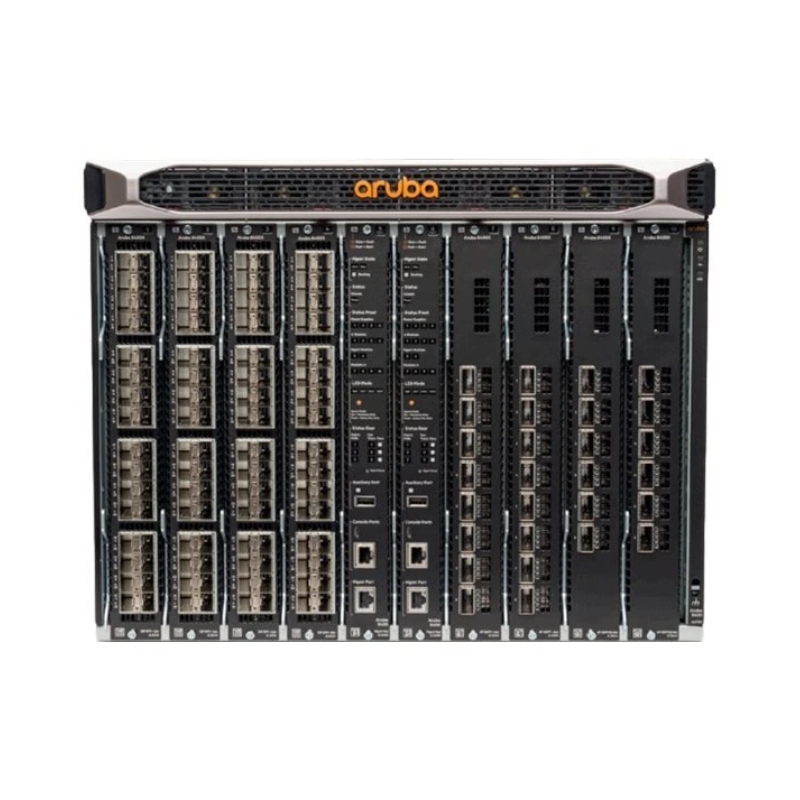
The HPE JL366A Aruba 8400X 6-Port 40GbE/100GbE QSFP28 Advanced Module represents a high-performance networking expansion component engineered for advanced modular switching environments. It is designed to extend the capabilities of the Aruba 8400X series chassis, enabling ultra-high-speed connectivity through a combination of 40GbE and 100GbE QSFP28 interfaces. This class of advanced module is positioned for enterprise data centers, cloud infrastructures, and service provider backbones where scalability, throughput, and deterministic performance are essential for modern workloads.
Within high-density switching ecosystems, this module plays a critical role in enabling flexible port deployment strategies. It supports evolving network architectures that require seamless bandwidth scaling without replacing entire switching systems. By leveraging modular expansion, organizations can align infrastructure growth with operational demand, reducing both capital expenditure and long-term operational complexity.
The 6-port QSFP28 configuration is specifically engineered to support both 40 Gigabit Ethernet and 100 Gigabit Ethernet transceiver standards. This dual-speed compatibility ensures interoperability across mixed-generation network environments, allowing administrators to integrate legacy systems with next-generation switching fabrics. In dense enterprise environments, this flexibility is essential for maintaining performance continuity while gradually upgrading infrastructure.
The architecture of the module emphasizes low-latency packet forwarding and optimized switching paths. This enables data-intensive applications such as virtualization clusters, distributed storage systems, and real-time analytics platforms to operate without bottlenecks. Each port is designed to handle sustained high-throughput traffic, ensuring stable performance even under peak network utilization conditions.
Modern data centers require infrastructure that can scale dynamically. This advanced module supports scalable port expansion within the Aruba 8400X chassis ecosystem, allowing network administrators to increase backbone capacity without redesigning the entire switching architecture. The modular design approach ensures that organizations can expand incrementally, aligning infrastructure investment with actual workload growth.
This scalability is particularly valuable in cloud computing environments where resource demands fluctuate significantly. The ability to deploy high-speed ports on demand allows for efficient load balancing across distributed systems, improving both application responsiveness and resource utilization.
At the core of this module lies QSFP28 interface technology, which provides high-density optical connectivity for 100GbE networking. QSFP28 modules are widely adopted in modern data center architectures due to their compact form factor and high bandwidth capabilities. By supporting both 40GbE and 100GbE standards, the module ensures backward compatibility while maintaining forward-looking performance capabilities.
The physical interface design minimizes signal loss and optimizes thermal performance, which is critical in high-density switching environments. Efficient signal integrity ensures that long-distance and short-distance optical transmissions remain stable, reducing packet loss and retransmission overhead.
High-performance switching modules generate significant heat due to continuous high-speed data processing. This advanced module is engineered with optimized thermal dissipation pathways that integrate seamlessly into the Aruba 8400X chassis airflow design. Efficient cooling ensures sustained performance even under heavy traffic loads.
Power efficiency is another critical design factor. The module is designed to operate within optimized power envelopes, reducing energy consumption while maintaining full throughput capacity. This contributes to lower operational costs and improved sustainability in large-scale data center deployments.
This advanced module is commonly deployed in core and aggregation layers of enterprise networks. In these roles, it functions as a high-speed interconnect system between distribution switches and backbone infrastructure. Its ability to handle 100GbE throughput makes it suitable for high-capacity aggregation points where multiple network segments converge.
In large enterprise environments, core switching infrastructure must support continuous data flow without degradation. The module ensures consistent packet forwarding performance, enabling stable communication between mission-critical systems such as ERP platforms, cloud services, and storage clusters.
Cloud computing environments rely heavily on high-bandwidth interconnects to ensure seamless virtualization and workload migration. This module supports such environments by providing reliable high-speed links between compute nodes and storage networks. Its support for 100GbE uplinks is particularly valuable in distributed cloud architectures where latency reduction is a priority.
The ability to support dynamic traffic patterns makes it well-suited for software-defined networking environments. Network administrators can configure traffic flows programmatically, optimizing resource allocation and ensuring consistent service delivery.
Latency is a critical metric in high-performance networking environments. The module is designed to minimize switching delays, ensuring that data packets are processed and forwarded with minimal buffering. This is essential for applications such as financial trading systems, real-time analytics platforms, and high-frequency transaction processing systems.
By reducing internal processing delays, the module enhances end-to-end network performance. This results in improved application responsiveness and more efficient utilization of compute resources across the infrastructure.
Enterprise networks require continuous uptime and fault tolerance. This module supports redundant configurations within the Aruba 8400X chassis, enabling failover capabilities in case of hardware or link failures. High availability configurations ensure uninterrupted network services even in the event of component degradation.
Redundant architecture design helps maintain business continuity and minimizes service disruption risks. This is particularly important for industries such as finance, healthcare, and telecommunications, where downtime can result in significant operational impact.
In large enterprise campuses, backbone networks require high-capacity interconnects to support thousands of endpoints. This module provides the necessary bandwidth to aggregate traffic from access layer switches into centralized core systems. Its ability to handle both 40GbE and 100GbE connections ensures compatibility across diverse network segments.
Campus networks benefit from reduced congestion and improved traffic segmentation, enabling better performance for enterprise applications such as unified communications, video conferencing, and cloud-based productivity platforms.
High-performance computing clusters depend on ultra-fast interconnects to synchronize workloads across distributed nodes. This module supports such environments by providing high-throughput, low-latency connectivity between compute and storage nodes. Its performance characteristics make it suitable for scientific simulations, AI model training, and big data processing workloads.
Efficient data movement between nodes ensures that computational resources are fully utilized, reducing idle time and improving overall processing efficiency.
Data center equipment must operate continuously under high load conditions. This module is engineered for long-term durability, ensuring stable performance across extended operational cycles. Its components are designed to withstand thermal stress and continuous data processing demands.
Reliable hardware performance reduces maintenance frequency and improves overall system uptime, contributing to lower total cost of ownership.
Efficient lifecycle management is critical in large-scale network deployments. The modular nature of this component allows for easy replacement and upgrades without disrupting the entire system. This simplifies maintenance operations and reduces downtime during hardware refresh cycles.
By enabling targeted upgrades, organizations can extend the lifecycle of their existing infrastructure while integrating newer technologies as needed.
As network demands continue to evolve, infrastructure must support emerging architectures such as software-defined networking and intent-based networking. This module provides the high-speed foundation necessary for these advanced architectures to function efficiently.
Its high bandwidth capabilities ensure readiness for future applications requiring significantly increased data throughput, including AI-driven analytics, edge computing, and real-time cloud orchestration.
Investing in high-performance modular networking components ensures long-term infrastructure stability. This module allows organizations to future-proof their data center environments by providing scalable, high-speed connectivity options that remain relevant as network demands increase.
The combination of flexibility, performance, and reliability makes it a strategic component in modern enterprise networking ecosystems.
The module is specifically designed for integration with Aruba 8400X series chassis systems. Its form factor ensures seamless installation within designated expansion slots, enabling rapid deployment without complex configuration changes. This compatibility ensures that organizations can upgrade network capabilities without replacing existing infrastructure.
The tight integration with chassis architecture ensures optimized airflow, power distribution, and backplane communication efficiency.
Network environments often include mixed-generation equipment. This module supports interoperability with both 40GbE and 100GbE systems, allowing gradual migration to higher-speed infrastructures. This reduces the need for immediate large-scale hardware replacement and enables phased upgrade strategies.
Such flexibility is essential in enterprise environments where budget planning and infrastructure lifecycle management must be carefully balanced.


 Contact Us
 Information
 Catalog
 Solid State Drives (SSD)
 Network Switches
 Hard Disk Drives
 HBA & Controllers
 PC & Servers
 PC & Server Memory
 CPU & Processors
 Network Routers
 Power Supplies
 Tape Drives & Libraries
 Network Devices
 Computer & Network Cables