Overview of HPE JH180A Expansion Module
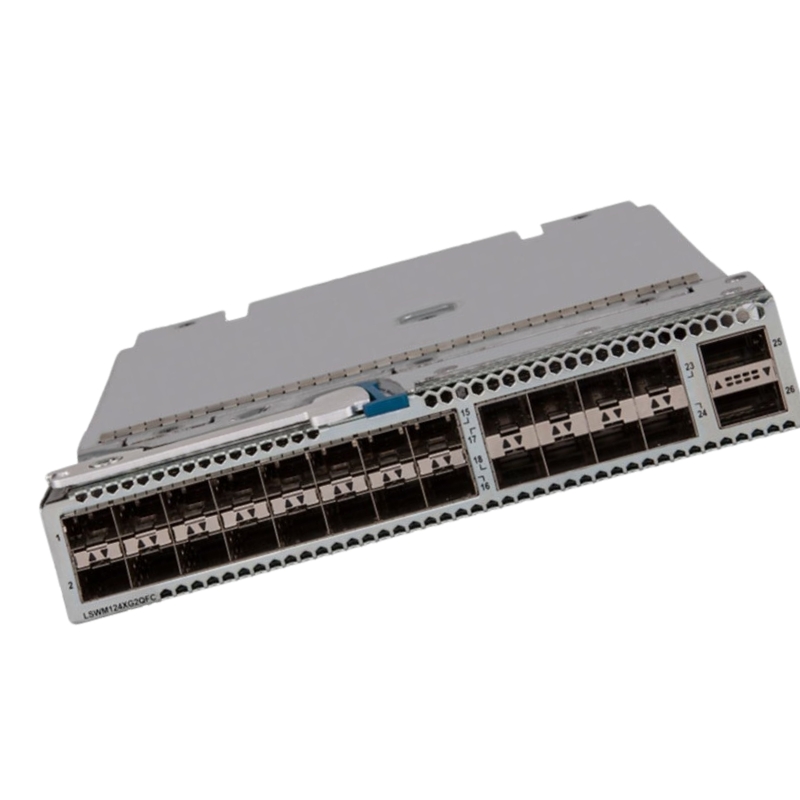
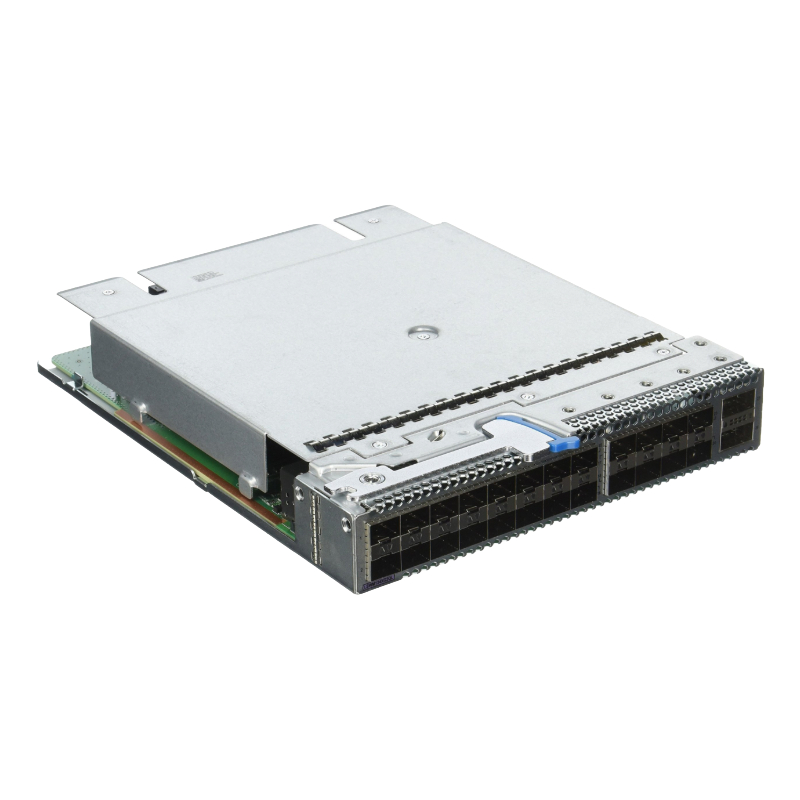
The HPE JH180A expansion module is a high-performance networking component engineered to extend switch capabilities with enhanced port density and flexible connectivity. Designed for modern enterprise environments, this plug-in module delivers scalable uplink and downlink options, supporting high-speed data transmission and optimized network performance.
General Information
- Brand: HPE
- Part Number: JH180A
- Type: Expansion / interface module
Technical Specification
- Expansion module designed for scalable networking
- Supports 2 QSFP+ high-speed uplink ports
- Includes 24 SFP/SFP+ flexible connectivity ports
- Optimized for 10 Gigabit Ethernet environments
- Wired connectivity for stable and reliable data transfer
Port Breakdown
- 2 × QSFP+ ports for high-capacity uplink connections
- 24 × SFP+/SFP ports for flexible network access and aggregation
Key Performance Benefits
- High-speed 10GbE support for demanding workloads
- Efficient traffic distribution across multiple ports
- Reduced network bottlenecks in enterprise environments
Deployment Highlights
- Quick installation into compatible HPE switching platforms
- Minimal configuration requirements after integration
- Designed for enterprise IT environments with high uptime needs
Interface Composition
- 2 × QSFP+ interfaces for high-capacity uplinks and backbone connectivity
- 24 × SFP/SFP+ ports for flexible device and switch connections
Optimization Advantages
- Improved bandwidth allocation across ports
- Balanced load distribution for stable performance
- Reduced packet loss in high-traffic scenarios
Deployment Advantages in Enterprise Infrastructure
- Easy integration with compatible HPE switching systems
- Supports high-density enterprise networking needs
- Enhances switch longevity through modular upgrades
- Suitable for scalable IT infrastructure planning
Outline of HPE JH180A 5930 24-Port SFP+ and 2-Port Module
Enterprise-Class High-Speed Switching Module for Data Center Environments
The HPE JH180A 5930 24-port SFP+ and 2-port module represents a high-performance networking component designed for enterprise data center environments where bandwidth density, scalability, and reliability are critical. As part of the HPE 5930 series ecosystem, this module is engineered to support demanding workloads, high-throughput applications, and modern virtualization-driven infrastructures. It integrates seamlessly into compatible HPE switching platforms, delivering a combination of high-speed optical connectivity and modular flexibility that aligns with next-generation data center architecture.
This category of networking hardware is specifically targeted at organizations requiring robust 10 Gigabit Ethernet (10GbE) performance through SFP+ interfaces. The architecture is optimized for low-latency switching, ensuring that mission-critical applications such as cloud computing, storage replication, and distributed databases operate without performance bottlenecks. The inclusion of additional expansion ports further enhances its role as a scalable solution within complex networking environments.
Role of the HPE 5930 Series in Modern Networking
Data Center Switching Evolution
The HPE 5930 switch series is designed to address the increasing demands of modern data centers transitioning toward virtualization, hybrid cloud computing, and software-defined networking. Within this context, the HPE JH180A module plays a crucial role in expanding port density and enabling high-speed interconnectivity between servers, storage systems, and core network infrastructure.
The evolution of enterprise networking has shifted from simple connectivity to intelligent traffic handling, requiring switching modules that can support advanced features such as link aggregation, dynamic routing protocols, and enhanced buffering capabilities. This module is engineered to align with these requirements while maintaining operational efficiency and hardware reliability.
Importance of Modular Networking Design
Modular switch architecture allows enterprises to scale their network infrastructure without replacing entire switching units. The HPE JH180A 24-port SFP+ and 2-port module exemplifies this design philosophy by enabling administrators to expand optical connectivity within existing chassis systems. This reduces capital expenditure and ensures long-term investment protection.
The modular approach also supports improved fault tolerance. In case of port failure or performance degradation, the modular design allows targeted replacement or upgrade, minimizing downtime and maintaining service continuity in critical environments.
Technical Architecture of HPE JH180A Module
24-Port SFP+ High-Speed Connectivity
The primary feature of this module is its 24 SFP+ ports, each capable of supporting 10GbE connections. These ports are designed for high-performance optical transceivers, allowing for flexible deployment across short-range and long-range fiber optic networks.
The SFP+ interface provides compatibility with a wide range of optical modules, enabling organizations to tailor their infrastructure based on distance requirements, environmental conditions, and bandwidth demands. This flexibility is particularly valuable in large-scale data centers where inter-rack and inter-building connectivity must be optimized for both speed and cost efficiency.
Each port is engineered to support full-duplex communication, ensuring simultaneous transmission and reception of data streams without congestion. This is essential for environments where latency-sensitive applications such as financial trading systems or real-time analytics are deployed.
Dual-Port Expansion Capability
In addition to the 24 SFP+ ports, the module includes a 2-port expansion design that enhances uplink flexibility and backbone connectivity. These ports are typically used for aggregation or high-speed inter-switch communication, enabling seamless integration into larger network fabrics.
The dual-port configuration ensures that the module can support redundant uplinks, improving network resilience and reducing the risk of single points of failure. This is especially important in mission-critical environments where continuous uptime is a mandatory requirement.
Backplane Integration and Internal Switching Fabric
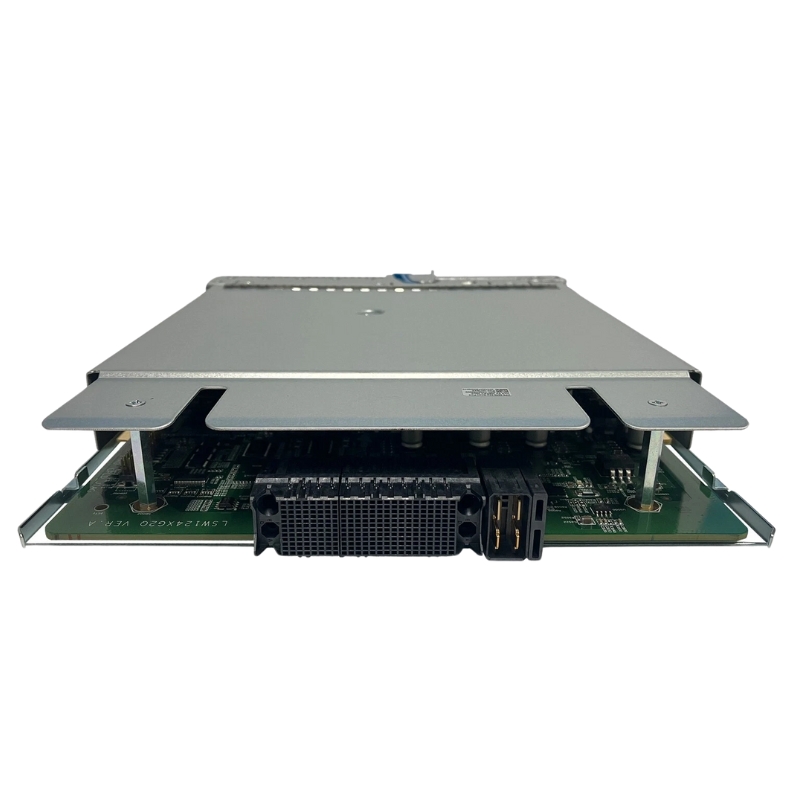
The HPE JH180A module integrates into the switching chassis via a high-speed backplane that ensures efficient data transfer between modules and the main switching engine. This architecture minimizes internal latency and maximizes throughput across all active ports.
The internal switching fabric is optimized for distributed processing, allowing traffic to be handled efficiently without overloading centralized processing units. This ensures consistent performance even under heavy network loads.
Performance Characteristics and Optimization
Low-Latency Packet Processing
One of the key performance advantages of the HPE 5930 24-port SFP+ module is its ability to deliver ultra-low latency packet forwarding. This is achieved through hardware-based forwarding mechanisms that reduce dependency on software processing.
Low latency is particularly important in environments such as high-performance computing clusters and cloud service providers, where even microsecond delays can impact system efficiency and application performance.
High Throughput and Bandwidth Efficiency
The module is designed to handle aggregated traffic loads that reach multiple hundreds of gigabits per second, depending on chassis configuration and uplink design. This high throughput capability ensures that the network can support bandwidth-intensive applications such as virtualization clusters, large-scale data replication, and multimedia streaming services.
Bandwidth efficiency is further enhanced through intelligent traffic management features that optimize packet distribution and reduce congestion across active links.
Traffic Prioritization and Quality of Service
Quality of Service (QoS) mechanisms are integral to the functionality of the HPE JH180A module. These mechanisms allow network administrators to prioritize critical traffic types such as voice, video, and application data.
By implementing traffic classification and prioritization rules, the module ensures that essential services maintain performance levels even during peak network usage. This is crucial for enterprises running converged networks where multiple types of traffic coexist.
Deployment Scenarios and Use Cases
Enterprise Data Centers
In enterprise data centers, the HPE 5930 24-port SFP+ module is commonly deployed as part of the aggregation or core switching layer. Its high-density port configuration enables efficient consolidation of server connections, reducing cabling complexity and improving airflow management within rack systems.
Organizations benefit from its ability to support virtualization platforms, enterprise resource planning systems, and large-scale database infrastructures without performance degradation.
Cloud Infrastructure Environments
Cloud service providers rely heavily on high-speed, scalable switching infrastructure. The HPE JH180A module supports cloud environments by enabling rapid data movement between compute nodes, storage arrays, and management systems.
Its scalability ensures that cloud operators can expand capacity dynamically as demand increases, without requiring major architectural changes to the underlying network.
High-Performance Computing Clusters
High-performance computing environments require extremely fast and reliable interconnects. The 10GbE SFP+ ports on this module provide the necessary bandwidth to support parallel computing workloads, scientific simulations, and data-intensive research applications.
Low latency and high throughput are essential in these environments, where computational efficiency depends on rapid communication between processing nodes.
Network Security and Reliability Features
Advanced Access Control Mechanisms
The module supports advanced access control features that help secure network infrastructure against unauthorized access. These include port-based authentication and integration with network access control systems.
Such mechanisms ensure that only authorized devices can communicate through the network, enhancing overall security posture in enterprise environments.
Redundancy and Failover Capabilities
Network redundancy is a core requirement in enterprise deployments. The HPE JH180A module supports redundant path configurations that allow traffic to be rerouted automatically in the event of link or port failure.
This failover capability ensures continuous network availability and minimizes downtime, which is critical for business continuity planning.
Error Detection and Correction
Built-in error detection mechanisms ensure data integrity across network transmissions. These systems identify packet errors and initiate retransmission processes when necessary, maintaining high levels of reliability across all communication channels.
Integration with Data Center Architecture
Compatibility with Virtualized Environments
The HPE 5930 24-port SFP+ module is optimized for virtualized environments where multiple virtual machines operate on shared physical infrastructure. Its high bandwidth capacity ensures that virtual workloads receive consistent network performance.
Integration with virtualization platforms allows for dynamic resource allocation and improved workload balancing across network segments.
Support for Software-Defined Networking
Software-defined networking (SDN) architectures benefit significantly from modular switching components like the HPE JH180A module. Its programmability and compatibility with network controllers enable centralized management of network resources.
This allows administrators to automate network configurations, optimize traffic flows, and improve overall operational efficiency.
Scalability in Layered Network Designs
In layered network architectures, this module functions effectively in both aggregation and core layers. Its scalability ensures that it can handle increasing traffic loads as networks expand horizontally and vertically.Strategic Importance in Modern IT Infrastructure
Enabling Digital Transformation
As organizations undergo digital transformation, network infrastructure becomes a critical enabler of new technologies such as artificial intelligence, machine learning, and big data analytics. The HPE 5930 24-port SFP+ module supports these initiatives by providing the necessary high-speed connectivity backbone.
Supporting Hybrid Cloud Architectures
Hybrid cloud environments require seamless integration between on-premises infrastructure and cloud platforms. This module facilitates high-speed data exchange between these environments, ensuring consistent performance and data availability.
Future-Proof Networking Investment
Investing in scalable modular solutions such as the HPE JH180A ensures that enterprises can adapt to future technological advancements without major infrastructure overhauls. Its flexible architecture supports evolving networking standards and increasing bandwidth demands.





 Contact Us
 Information
 Catalog
 Solid State Drives (SSD)
 Network Switches
 Hard Disk Drives
 HBA & Controllers
 PC & Servers
 PC & Server Memory
 CPU & Processors
 Network Routers
 Power Supplies
 Tape Drives & Libraries
 Network Devices
 Computer & Network Cables