(7% discount is applied at checkout)
Cart is empty
Your go-to destination for cutting-edge server products
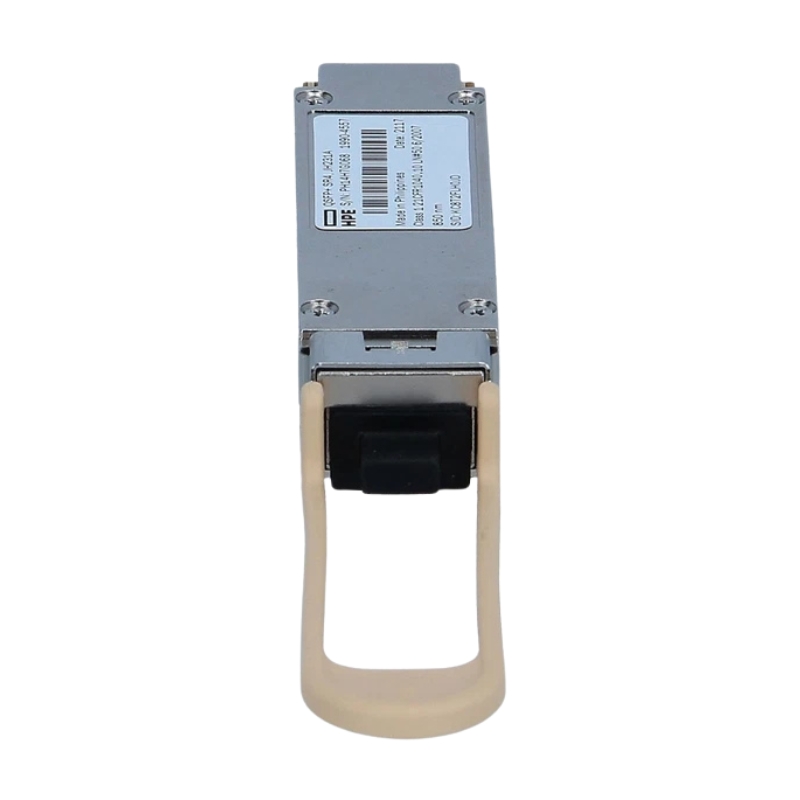


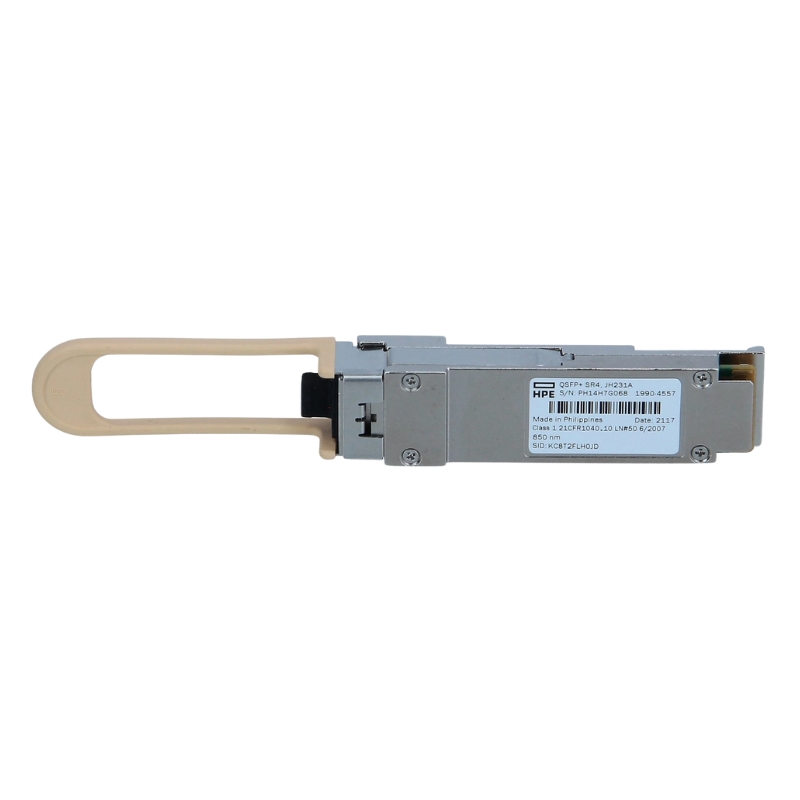
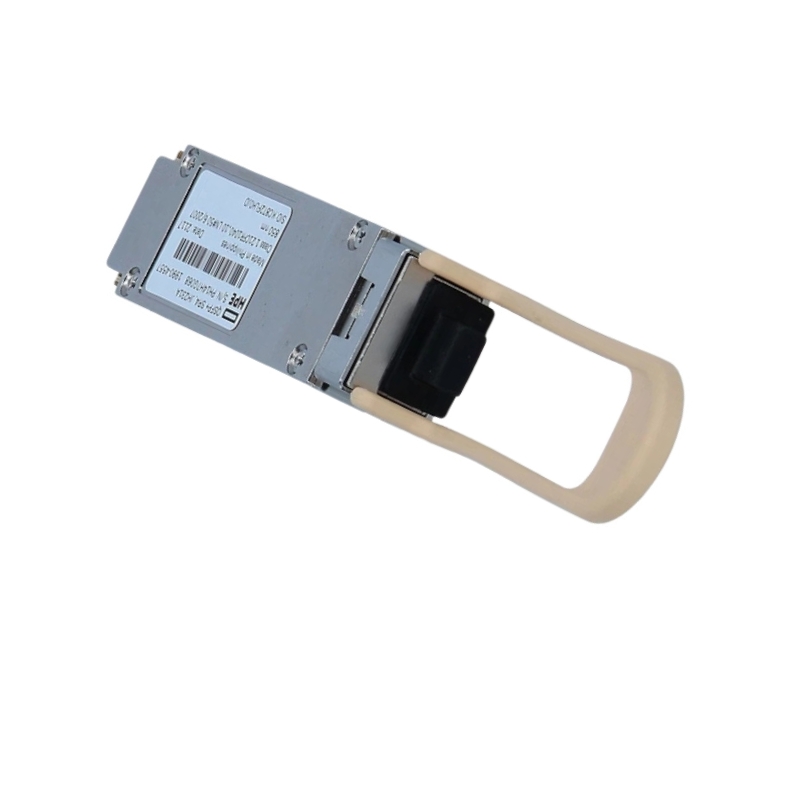
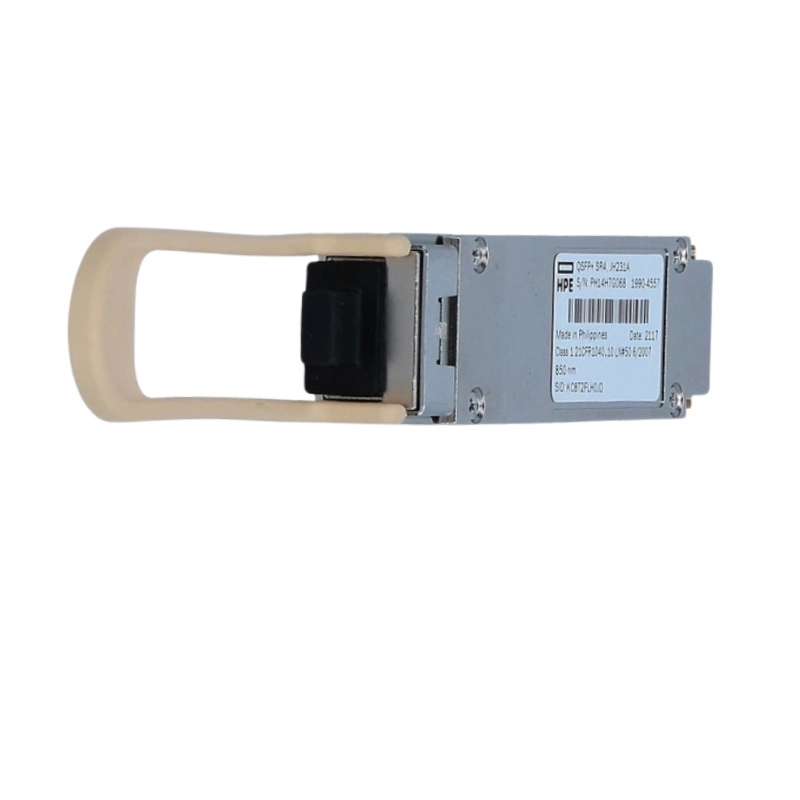
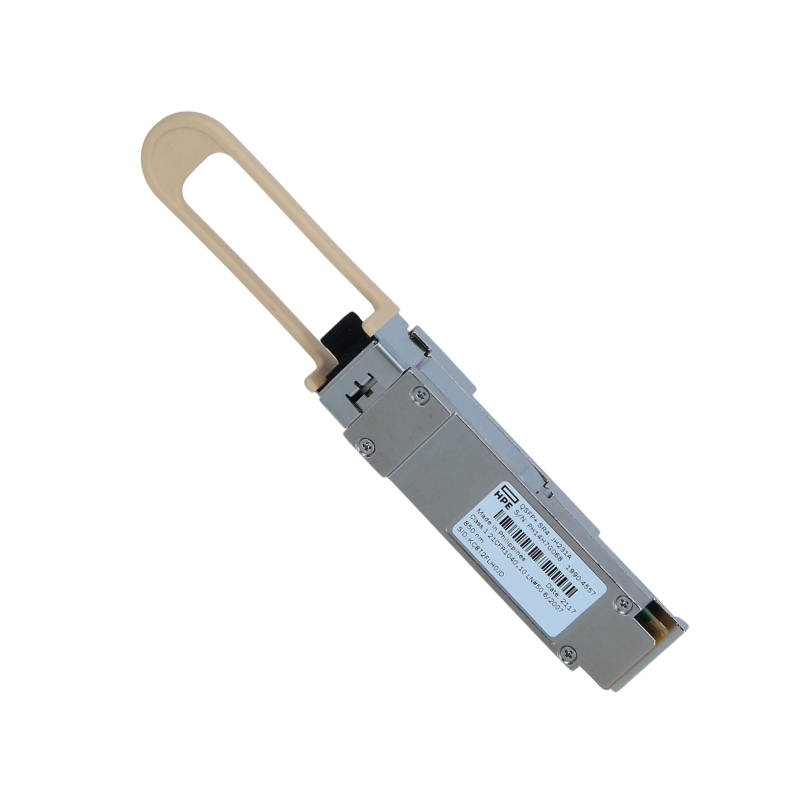
The HPE JH232-61001 X142 QSFP+ transceiver module is engineered to deliver reliable and ultra-fast 40 Gigabit Ethernet performance for modern enterprise networks and data center environments. Designed as a compact plug-in optical module, it ensures stable long-distance connectivity with optimized bandwidth efficiency and low latency transmission.
Brand: HPE
Part Number
This optical transceiver operates under the 40 Gigabit Ethernet standard, ensuring robust throughput performance for bandwidth-intensive applications such as cloud computing, virtualization, and high-volume data exchange systems.
The module is equipped with a single LC duplex interface optimized for 40GBASE-LR4 transmission standards, making it suitable for high-speed backbone and inter-rack connectivity in enterprise environments.
Built in a QSFP+ (Quad Small Form-factor Pluggable Plus) design, this module provides a compact yet powerful solution for high-density networking environments. Its plug-in architecture ensures quick installation and replacement without system downtime.
This transceiver is widely used in enterprise-grade networking infrastructures where high throughput and reliable optical connectivity are essential. It is particularly effective in backbone switching, server interconnects, and cloud data center architectures.
The module enhances overall network performance by ensuring consistent bandwidth delivery and reduced latency across fiber-optic links. It is optimized for scalability, making it suitable for expanding network infrastructures.
The HPE JH232-61001 module is designed to maintain consistent performance under heavy network traffic conditions. Its robust construction ensures durability and long operational lifespan in mission-critical environments.
With its plug-and-play QSFP+ design, deployment is straightforward and efficient, allowing network administrators to upgrade or replace modules without complex configurations.
The HPE JH232-61001 40 Gigabit X142 QSFP+ Transceiver Module Ethernet represents a critical component within high‑speed networking environments that demand exceptional bandwidth, low latency, and reliable optical connectivity. As part of the broader HPE transceiver ecosystem, this module is engineered to support 40 Gigabit Ethernet links through QSFP+ technology, enabling organizations to build scalable, high‑performance infrastructures capable of supporting modern workloads. Its design aligns with the needs of data centers, enterprise networks, cloud environments, and high‑density aggregation layers where rapid data movement and consistent throughput are essential. The module integrates seamlessly with compatible HPE switches and routers, ensuring optimized performance and dependable interoperability across diverse deployment scenarios.
The category of 40 Gigabit QSFP+ transceiver modules has grown significantly as enterprises transition from legacy architectures to high‑speed optical networks. The HPE JH232-61001 module stands out due to its robust engineering, adherence to industry standards, and ability to support demanding applications such as virtualization, distributed storage, real‑time analytics, and high‑performance computing. Its optical interface enables long‑distance transmission with minimal signal degradation, making it suitable for both intra‑data‑center and inter‑building connectivity. As organizations continue to expand their digital infrastructure, modules like the HPE JH232-61001 play a vital role in ensuring that network performance remains stable, predictable, and future‑ready.
The evolution of network architectures has led to increased reliance on high‑speed transceivers capable of supporting large volumes of east‑west and north‑south traffic. The HPE JH232-61001 40 Gigabit X142 QSFP+ Transceiver Module Ethernet is designed to meet these demands by providing a reliable optical interface for 40GbE connectivity. QSFP+ technology enables compact, high‑density port configurations, allowing network engineers to maximize bandwidth within limited rack space. This is particularly important in environments where scalability and efficiency are top priorities, such as hyperscale data centers and enterprise cloud deployments.
As virtualization and containerization continue to reshape workload distribution, the need for rapid communication between servers, storage arrays, and application clusters becomes increasingly critical. The HPE JH232-61001 module supports these dynamic environments by enabling fast, low‑latency connections that ensure smooth workload migration, distributed processing, and real‑time data access. Its optical design reduces interference and signal loss, providing consistent performance even under heavy traffic loads. This reliability is essential for maintaining service‑level objectives and ensuring that applications remain responsive.
Storage networks also benefit significantly from 40GbE transceivers. Modern storage solutions such as NVMe over Fabrics, all‑flash arrays, and distributed storage clusters require high‑bandwidth links to maintain optimal performance. The HPE JH232-61001 module enables organizations to build dedicated storage fabrics or converge storage and data traffic on unified infrastructures. Its ability to support long‑distance optical transmission ensures that storage nodes can be placed strategically throughout the data center without compromising performance.
The HPE JH232-61001 40 Gigabit X142 QSFP+ Transceiver Module Ethernet leverages advanced optical technology to deliver high‑speed connectivity with exceptional reliability. QSFP+ transceivers are designed to support four independent lanes of 10Gbps each, which combine to form a 40GbE link. This architecture allows for efficient data transmission while maintaining compact form factors suitable for high‑density deployments. The module’s optical components are engineered to minimize signal distortion, ensuring accurate data transmission across varying distances.
Optical transceivers like the HPE JH232-61001 are built with precision components that include lasers, photodiodes, multiplexers, and demultiplexers. These elements work together to convert electrical signals into optical signals and vice versa. The module’s design ensures that these conversions occur with minimal latency, making it ideal for environments where real‑time communication is essential. The optical interface also provides immunity to electromagnetic interference, which is a significant advantage over copper‑based solutions in electrically noisy environments.
The engineering behind the HPE JH232-61001 module emphasizes durability and long‑term reliability. Its components undergo rigorous testing to ensure consistent performance under varying temperature conditions, heavy workloads, and continuous operation. This makes the module suitable for mission‑critical environments where downtime is not an option. The module’s adherence to industry standards ensures compatibility with a wide range of HPE networking equipment, simplifying deployment and integration.
The HPE JH232-61001 40 Gigabit X142 QSFP+ Transceiver Module Ethernet is designed to integrate seamlessly with HPE switches, routers, and other networking devices that support QSFP+ interfaces. This compatibility ensures that organizations can deploy the module without concerns about interoperability or performance inconsistencies. HPE’s networking ecosystem is built around standardized interfaces and rigorous quality control, allowing transceivers like the JH232-61001 to function optimally across various platforms.
Integration with HPE switches enables organizations to leverage advanced networking features such as link aggregation, intelligent traffic management, and automated failover. These capabilities enhance network resilience and performance, ensuring that the transceiver module contributes to a stable and efficient infrastructure. The module’s compatibility also simplifies maintenance and upgrades, as IT teams can rely on consistent behavior across different HPE devices.
The HPE JH232-61001 module is also compatible with various optical cables and connectors, allowing organizations to tailor their connectivity solutions to specific distance and performance requirements. This flexibility is essential for environments with diverse physical layouts, such as multi‑building campuses or large data centers with distributed racks.
Performance is a defining attribute of the HPE JH232-61001 40 Gigabit X142 QSFP+ Transceiver Module Ethernet. Its ability to support 40GbE links ensures that organizations can handle large volumes of data traffic without experiencing bottlenecks. The module’s optical design provides low latency, making it suitable for applications that require real‑time communication, such as financial trading platforms, scientific simulations, and interactive cloud services.
The module’s high throughput is complemented by its stability under continuous operation. It is engineered to maintain consistent performance even during peak traffic periods
| SKU/MPN | Warranty | Price | Condition | You save |
|---|---|---|---|---|
| JH232-61001 | 1 Year Warranty | $1,757.00 | New Sealed in Box (NIB) | You save: $614.95 (26%) |
| JH232-61001 | 1 Year Warranty | $430.00 | Excellent Refurbished | You save: $150.50 (26%) |
The HPE JH232-61001 X142 QSFP+ transceiver module is engineered to deliver reliable and ultra-fast 40 Gigabit Ethernet performance for modern enterprise networks and data center environments. Designed as a compact plug-in optical module, it ensures stable long-distance connectivity with optimized bandwidth efficiency and low latency transmission.
Technical Specifications
The HPE JH232-61001 40 Gigabit X142 QSFP+ Transceiver Module Ethernet represents a critical component within high‑speed networking environments that demand exceptional bandwidth, low latency, and reliable optical connectivity. As part of the broader HPE transceiver ecosystem, this module is engineered to support 40 Gigabit Ethernet links through QSFP+ technology, enabling organizations to build scalable, high‑performance infrastructures capable of supporting modern workloads. Its design aligns with the needs of data centers, enterprise networks, cloud environments, and high‑density aggregation layers where rapid data movement and consistent throughput are essential. The module integrates seamlessly with compatible HPE switches and routers, ensuring optimized performance and dependable interoperability across diverse deployment scenarios.
The category of 40 Gigabit QSFP+ transceiver modules has grown significantly as enterprises transition from legacy architectures to high‑speed optical networks. The HPE JH232-61001 module stands out due to its robust engineering, adherence to industry standards, and ability to support demanding applications such as virtualization, distributed storage, real‑time analytics, and high‑performance computing. Its optical interface enables long‑distance transmission with minimal signal degradation, making it suitable for both intra‑data‑center and inter‑building connectivity. As organizations continue to expand their digital infrastructure, modules like the HPE JH232-61001 play a vital role in ensuring that network performance remains stable, predictable, and future‑ready.
The evolution of network architectures has led to increased reliance on high‑speed transceivers capable of supporting large volumes of east‑west and north‑south traffic. The HPE JH232-61001 40 Gigabit X142 QSFP+ Transceiver Module Ethernet is designed to meet these demands by providing a reliable optical interface for 40GbE connectivity. QSFP+ technology enables compact, high‑density port configurations, allowing network engineers to maximize bandwidth within limited rack space. This is particularly important in environments where scalability and efficiency are top priorities, such as hyperscale data centers and enterprise cloud deployments.
As virtualization and containerization continue to reshape workload distribution, the need for rapid communication between servers, storage arrays, and application clusters becomes increasingly critical. The HPE JH232-61001 module supports these dynamic environments by enabling fast, low‑latency connections that ensure smooth workload migration, distributed processing, and real‑time data access. Its optical design reduces interference and signal loss, providing consistent performance even under heavy traffic loads. This reliability is essential for maintaining service‑level objectives and ensuring that applications remain responsive.
Storage networks also benefit significantly from 40GbE transceivers. Modern storage solutions such as NVMe over Fabrics, all‑flash arrays, and distributed storage clusters require high‑bandwidth links to maintain optimal performance. The HPE JH232-61001 module enables organizations to build dedicated storage fabrics or converge storage and data traffic on unified infrastructures. Its ability to support long‑distance optical transmission ensures that storage nodes can be placed strategically throughout the data center without compromising performance.
The HPE JH232-61001 40 Gigabit X142 QSFP+ Transceiver Module Ethernet leverages advanced optical technology to deliver high‑speed connectivity with exceptional reliability. QSFP+ transceivers are designed to support four independent lanes of 10Gbps each, which combine to form a 40GbE link. This architecture allows for efficient data transmission while maintaining compact form factors suitable for high‑density deployments. The module’s optical components are engineered to minimize signal distortion, ensuring accurate data transmission across varying distances.
Optical transceivers like the HPE JH232-61001 are built with precision components that include lasers, photodiodes, multiplexers, and demultiplexers. These elements work together to convert electrical signals into optical signals and vice versa. The module’s design ensures that these conversions occur with minimal latency, making it ideal for environments where real‑time communication is essential. The optical interface also provides immunity to electromagnetic interference, which is a significant advantage over copper‑based solutions in electrically noisy environments.
The engineering behind the HPE JH232-61001 module emphasizes durability and long‑term reliability. Its components undergo rigorous testing to ensure consistent performance under varying temperature conditions, heavy workloads, and continuous operation. This makes the module suitable for mission‑critical environments where downtime is not an option. The module’s adherence to industry standards ensures compatibility with a wide range of HPE networking equipment, simplifying deployment and integration.
The HPE JH232-61001 40 Gigabit X142 QSFP+ Transceiver Module Ethernet is designed to integrate seamlessly with HPE switches, routers, and other networking devices that support QSFP+ interfaces. This compatibility ensures that organizations can deploy the module without concerns about interoperability or performance inconsistencies. HPE’s networking ecosystem is built around standardized interfaces and rigorous quality control, allowing transceivers like the JH232-61001 to function optimally across various platforms.
Integration with HPE switches enables organizations to leverage advanced networking features such as link aggregation, intelligent traffic management, and automated failover. These capabilities enhance network resilience and performance, ensuring that the transceiver module contributes to a stable and efficient infrastructure. The module’s compatibility also simplifies maintenance and upgrades, as IT teams can rely on consistent behavior across different HPE devices.
The HPE JH232-61001 module is also compatible with various optical cables and connectors, allowing organizations to tailor their connectivity solutions to specific distance and performance requirements. This flexibility is essential for environments with diverse physical layouts, such as multi‑building campuses or large data centers with distributed racks.
Performance is a defining attribute of the HPE JH232-61001 40 Gigabit X142 QSFP+ Transceiver Module Ethernet. Its ability to support 40GbE links ensures that organizations can handle large volumes of data traffic without experiencing bottlenecks. The module’s optical design provides low latency, making it suitable for applications that require real‑time communication, such as financial trading platforms, scientific simulations, and interactive cloud services.
The module’s high throughput is complemented by its stability under continuous operation. It is engineered to maintain consistent performance even during peak traffic periods, ensuring that critical applications remain responsive. This reliability is essential for maintaining user satisfaction and meeting service‑level agreements. The module’s optical components are designed to minimize error rates, ensuring accurate data transmission across varying distances.
The HPE JH232-61001 module also supports advanced networking features such as link aggregation, which allows multiple transceivers to be combined into a single logical link. This enhances throughput and provides redundancy, ensuring that network performance remains stable even if individual links fail. The module’s compatibility with HPE’s intelligent traffic management features further enhances its performance capabilities.
Scalability is a critical consideration for modern network infrastructure, and the HPE JH232-61001 module is designed to support long‑term growth. As organizations expand their digital operations, the need for high‑bandwidth links increases. The module’s 40GbE capability provides a foundation for scalable architectures that can accommodate future demands. Its QSFP+ interface allows organizations to add additional transceivers as needed, enabling incremental upgrades without requiring major infrastructure changes.
The module’s future‑ready design is evident in its compatibility with emerging technologies and evolving standards. As data centers transition toward 100GbE and beyond, QSFP+ modules like the HPE JH232-61001 can serve as stepping stones in migration strategies. Organizations can deploy the module today while planning for future upgrades, ensuring that their infrastructure remains adaptable and cost‑effective.
Scalability also extends to multi‑site and hybrid cloud deployments. The module’s optical interface supports long‑distance transmission, making it suitable for connecting geographically distributed data centers. This capability is essential for organizations that rely on hybrid cloud architectures, disaster recovery solutions, and distributed computing environments.
In enterprise environments, the HPE JH232-61001 40 Gigabit X142 QSFP+ Transceiver Module Ethernet is commonly used to build high‑performance backbone networks that connect core switches, aggregation layers, and distribution points. Its 40GbE capability ensures that critical applications receive the bandwidth they need to operate efficiently. Enterprises hosting virtualized workloads, private cloud services, and distributed applications rely on fast, reliable connectivity to maintain performance.
The module is also used to support dedicated networks for specific workloads. For example, analytics clusters, development environments, and backup systems benefit from isolated high‑bandwidth links that ensure optimal performance. By deploying the HPE JH232-61001 module, enterprises can tailor their network infrastructure to the unique requirements of different applications.
Digital transformation initiatives also benefit from the module’s capabilities. As organizations modernize their applications and adopt cloud‑native architectures, network demands evolve rapidly. The HPE JH232-61001 module provides a foundation for agile network designs that can adapt to these changes, supporting microservices, container orchestration, and hybrid cloud integration.
Cloud providers and service operators require networking solutions that deliver high performance, scalability, and reliability at scale. The HPE JH232-61001 module is well‑suited to these environments, where dense, high‑speed interconnects are essential for supporting multi‑tenant workloads and large volumes of traffic. By deploying the module in compatible HPE switches, cloud providers can build spine‑leaf architectures that support rapid scaling and efficient traffic distribution.
In cloud environments, the module connects clusters of compute and storage nodes, forming the backbone of infrastructure‑as‑a‑service and platform‑as‑a‑service offerings. Its QSFP+ ports enable high‑bandwidth links between racks and pods, supporting features such as live migration, distributed storage, and load balancing. This is particularly important in public and private cloud deployments where resource utilization and performance must be optimized.
Managed service providers also benefit from the module’s capabilities. By using the HPE JH232-61001 module to build high‑speed interconnects between service platforms and customer environments, providers can deliver consistent performance and reliability. The module’s optical design ensures stable connectivity even under heavy workloads.
Government and public sector networks often have unique requirements related to security, reliability, and long‑term stability. The HPE JH232-61001 module supports these needs by providing high‑performance optical connectivity suitable for critical services such as public safety, healthcare, education, and administrative operations. Its optical design ensures stable performance even in environments with strict uptime requirements.
In government data centers, the module connects servers and storage systems hosting sensitive applications and data. Its QSFP+ ports enable fast, reliable communication between infrastructure components, ensuring that services remain available and responsive. This is particularly important for applications supporting citizen services, emergency response, and inter‑agency collaboration.
Public sector organizations participating in shared services or regional initiatives also benefit from the module’s capabilities. By using the HPE JH232-61001 module to build interconnects between data centers and agencies, these organizations can support collaborative projects, data sharing, and centralized services.
Reliability is a cornerstone of any network infrastructure, and the HPE JH232-61001 module is engineered to deliver consistent performance under demanding conditions. Its optical components undergo rigorous testing to ensure durability and stability, making it suitable for mission‑critical environments where downtime is unacceptable. The module’s design emphasizes long‑term reliability, ensuring that it can operate continuously without performance degradation.
Operational stability is further enhanced by the module’s support for redundancy and failover strategies. Organizations can configure multiple transceivers in aggregated links or redundant paths, ensuring that network performance remains stable even if individual links fail. The module’s compatibility with HPE’s intelligent traffic management features ensures rapid recovery and traffic rerouting.
The module’s reliability extends to its long‑term support and compatibility. As part of the HPE networking portfolio, the HPE JH232-61001 module benefits from ongoing firmware updates, security patches, and feature enhancements. This ensures alignment with evolving standards and best practices.
Effective management and monitoring are essential for maintaining network performance and reliability. The HPE JH232-61001 module integrates with HPE’s management tools and frameworks, enabling administrators to configure, monitor, and troubleshoot the module using familiar interfaces. This integration simplifies operations and reduces the learning curve for IT teams.
Through centralized management platforms, administrators can monitor port status, track traffic patterns, and identify potential issues before they impact services. The module supports detailed telemetry and logging, providing insights into link utilization, error rates, and performance metrics. This information can be used to fine‑tune network configurations, plan capacity upgrades, and implement proactive maintenance strategies.
Operational efficiency is further enhanced by the module’s ease of deployment and configuration. The HPE JH232-61001 module is designed for straightforward installation in compatible HPE switches, with clear documentation and support resources available to guide IT teams. Its compatibility with standard QSFP+ transceivers and cabling simplifies deployment.
Security is a critical consideration in any network design, particularly in environments handling sensitive data or supporting critical services. While the HPE JH232-61001 module focuses on connectivity and performance, it operates within a broader security framework provided by HPE networking solutions. This framework includes access control lists, segmentation, encryption, and threat detection, helping protect traffic flowing through the module’s optical links.
Optical transceivers inherently provide security advantages due to their resistance to electromagnetic interference and difficulty of tapping compared to copper‑based solutions. This makes the HPE JH232-61001 module suitable for environments where data confidentiality is a priority. Its optical design ensures stable, secure transmission even under challenging conditions.
In high‑speed networks, security must be implemented without compromising performance. The HPE JH232-61001 module supports architectures incorporating security controls at multiple layers, ensuring that encryption gateways, firewalls, and intrusion detection systems operate effectively without becoming bottlenecks. This balance between security and performance is essential for maintaining a high‑quality user experience.


 Contact Us
 Information
 Catalog
 Solid State Drives (SSD)
 Network Switches
 Hard Disk Drives
 HBA & Controllers
 PC & Servers
 PC & Server Memory
 CPU & Processors
 Network Routers
 Power Supplies
 Tape Drives & Libraries
 Network Devices
 Computer & Network Cables