(7% discount is applied at checkout)
Cart is empty
Your go-to destination for cutting-edge server products
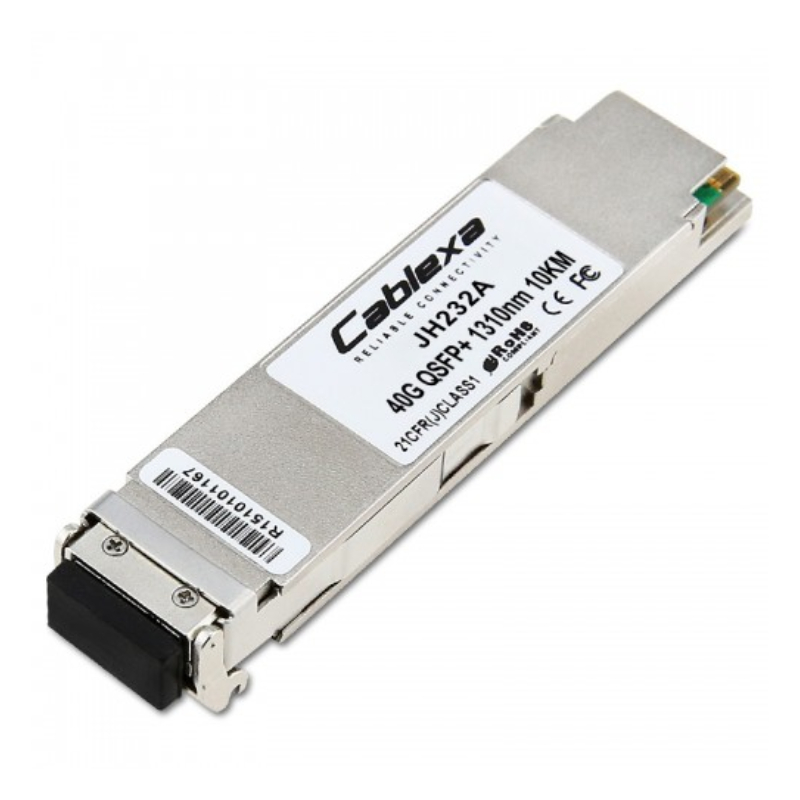


HPE JH232A X142 Qsfp+ Transceiver Module 40 Gigabit Ethernet. New Sealed in Box (NIB) with 3 Years Warranty
| SKU/MPN | Warranty | Price | Condition | You save |
|---|---|---|---|---|
| JH232A | 1 Year Warranty | $1,757.00 | New Sealed in Box (NIB) | You save: $614.95 (26%) |
| JH232A | 1 Year Warranty | $430.00 | Excellent Refurbished | You save: $150.50 (26%) |
The HPE JH232A X142 QSFP+ Transceiver Module is engineered to provide dependable 40 Gigabit Ethernet connectivity for enterprise-class networking environments. Designed as a compact plug-in module, it delivers high-bandwidth optical communication over single-mode fiber while supporting 40GBASE-LR4 standards. Organizations deploying data centers, cloud infrastructure, virtualization platforms, and campus networks benefit from its reliable optical transmission, excellent signal integrity, and seamless integration with compatible HPE networking equipment.
As modern enterprises continue to increase network capacity, the demand for scalable optical transceivers has grown significantly. The HPE JH232A addresses this requirement by combining long-distance optical performance, energy efficiency, and consistent data throughput into a compact QSFP+ form factor that simplifies installation and maintenance.
Technical Specification
Applications Benefiting from 40 Gbps Bandwidth
The HPE JH232A X142 QSFP+ Transceiver Module 40 Gigabit Ethernet is designed as a high-performance optical interface solution for modern data center, enterprise, and cloud networking environments that demand reliable 40G connectivity. As part of the HPE X142 transceiver family, this QSFP+ module delivers a balance of bandwidth, efficiency, and interoperability, making it a preferred choice for organizations standardizing on HPE networking platforms. The module is engineered to support 40 Gigabit Ethernet links over compatible fiber cabling, enabling aggregation, core, and high-density access deployments that require consistent throughput and low latency.
In a typical deployment, the HPE JH232A X142 QSFP+ Transceiver Module 40 Gigabit Ethernet is used to connect top-of-rack switches, spine switches, and aggregation layers, providing a scalable path for bandwidth growth. It is optimized for environments where high-speed inter-switch links are essential for applications such as virtualization, big data analytics, high-frequency trading, and large-scale storage replication. By leveraging QSFP+ technology, this transceiver module offers a compact form factor that supports multiple lanes of data, allowing network architects to design dense, efficient, and flexible infrastructures without compromising on performance or reliability.
The category of HPE QSFP+ transceiver modules, including the JH232A X142, focuses on delivering standards-based 40G Ethernet connectivity that integrates seamlessly with HPE switches and routers. This ensures that organizations can deploy consistent hardware across their network, simplifying management, monitoring, and lifecycle planning. The HPE JH232A X142 QSFP+ Transceiver Module 40 Gigabit Ethernet is built to meet stringent quality and compatibility requirements, supporting key Ethernet standards and offering robust diagnostics and monitoring capabilities through digital diagnostics interfaces. As a result, it becomes a foundational component in building resilient, high-speed network fabrics.
The HPE JH232A X142 QSFP+ Transceiver Module 40 Gigabit Ethernet is characterized by its QSFP+ form factor, which is widely adopted for 40G applications due to its compact size and multi-lane architecture. QSFP+ modules typically support four lanes of data, each operating at 10 Gbps, which are aggregated to deliver a total bandwidth of 40 Gbps. This design allows the HPE JH232A X142 module to provide high throughput while maintaining efficient power consumption and thermal performance, making it suitable for dense deployments in racks and chassis where space and cooling are critical considerations.
Another defining characteristic of the HPE JH232A X142 QSFP+ Transceiver Module 40 Gigabit Ethernet is its adherence to industry standards for 40G Ethernet, ensuring interoperability with a wide range of HPE switches and compatible third-party equipment. The module is typically designed to support specific optical interfaces and reach specifications, such as short-range multimode fiber connections or longer-range single-mode fiber links, depending on the exact variant and configuration. This flexibility allows network designers to choose the appropriate transceiver type for each link, optimizing cost and performance across the network.
The HPE JH232A X142 QSFP+ Transceiver Module 40 Gigabit Ethernet also incorporates advanced features such as digital diagnostics monitoring, which provides real-time information about parameters like optical power, temperature, and voltage. These diagnostics help administrators proactively manage the health of their optical links, detect potential issues before they impact service, and perform accurate troubleshooting when necessary. By integrating these capabilities into the transceiver, HPE ensures that the JH232A X142 module contributes to a more manageable and transparent network environment.
The QSFP+ form factor used by the HPE JH232A X142 QSFP+ Transceiver Module 40 Gigabit Ethernet is designed to maximize port density while maintaining ease of installation and replacement. QSFP+ modules are hot-swappable, allowing technicians to insert or remove them from compatible HPE switch ports without powering down the device. This feature is essential in environments where uptime is critical and maintenance windows are limited. The mechanical design of the module includes a robust housing, latch mechanism, and standardized dimensions that ensure consistent fit and alignment in QSFP+ cages.
The compact size of the HPE JH232A X142 QSFP+ Transceiver Module 40 Gigabit Ethernet enables network equipment manufacturers to offer high port counts on a single switch or line card. This density is particularly valuable in spine-and-leaf architectures, where many 40G or higher-speed links are required to interconnect switches and provide non-blocking bandwidth. By using QSFP+ modules like the JH232A X142, organizations can build scalable fabrics that support growing traffic demands without needing to expand rack space or significantly increase power consumption.
The mechanical design also takes into account thermal management, ensuring that the HPE JH232A X142 QSFP+ Transceiver Module 40 Gigabit Ethernet operates within safe temperature ranges even in densely populated environments. The module is engineered to dissipate heat effectively, and HPE switches are designed with airflow patterns that help maintain optimal operating conditions. This synergy between transceiver and switch design contributes to long-term reliability and reduces the risk of performance degradation due to overheating.
The optical interface of the HPE JH232A X142 QSFP+ Transceiver Module 40 Gigabit Ethernet is tailored to support specific fiber types and link distances, depending on the exact variant. In many deployments, QSFP+ modules are used with multimode fiber for short-range connections within the same data hall or between adjacent racks. These links typically support distances of up to several hundred meters, making them ideal for top-of-rack to aggregation or spine connections. The module’s optical interface is designed to provide stable signal transmission, low bit error rates, and consistent performance across supported distances.
For longer-range connections, certain variants of the HPE JH232A X142 QSFP+ Transceiver Module 40 Gigabit Ethernet may support single-mode fiber, enabling links that span multiple buildings or extended campus environments. These long-haul connections are essential for organizations that need to interconnect data centers, disaster recovery sites, or remote facilities with high-speed 40G Ethernet. By offering compatibility with different cabling options, the HPE JH232A X142 module provides flexibility in network design, allowing architects to choose the most appropriate fiber type and reach for each segment.
The module’s optical interface is also designed to work with standardized connectors and patch panels, simplifying installation and maintenance. Technicians can use familiar LC or MPO connectors, depending on the specific QSFP+ variant, to quickly establish or modify links. This standardization reduces training requirements and minimizes the risk of errors during deployment. The HPE JH232A X142 QSFP+ Transceiver Module 40 Gigabit Ethernet thus fits seamlessly into existing structured cabling systems, supporting both new builds and upgrades to legacy environments.
Performance is a central consideration for any 40G transceiver, and the HPE JH232A X142 QSFP+ Transceiver Module 40 Gigabit Ethernet is engineered to deliver consistent, high-throughput connectivity across a variety of workloads. By aggregating four 10G lanes into a single 40G interface, the module supports applications that require sustained bandwidth, such as large-scale virtualization clusters, high-performance computing workloads, and intensive storage traffic. The module’s design ensures low latency and minimal jitter, which are critical for real-time applications and services that depend on predictable network behavior.
Reliability is equally important, and the HPE JH232A X142 QSFP+ Transceiver Module 40 Gigabit Ethernet is built to meet rigorous quality standards. Each module undergoes extensive testing to verify its performance under different environmental conditions and workloads. This includes validation of optical power levels, signal integrity, and error rates, ensuring that the module can maintain stable links even in challenging scenarios. The robust construction and adherence to industry standards help minimize the risk of failures, contributing to higher overall network availability.
In addition to hardware reliability, the HPE JH232A X142 QSFP+ Transceiver Module 40 Gigabit Ethernet supports features that enhance operational resilience. Digital diagnostics monitoring allows administrators to track key parameters and identify potential issues before they lead to outages. For example, gradual changes in optical power or temperature may indicate a developing problem with cabling or environmental conditions. By providing visibility into these metrics, the module enables proactive maintenance and reduces the likelihood of unexpected link failures.
Latency and throughput are critical metrics for evaluating the performance of the HPE JH232A X142 QSFP+ Transceiver Module 40 Gigabit Ethernet in real-world deployments. The module is designed to minimize latency by ensuring efficient signal processing and transmission across its four data lanes. This low-latency behavior is essential for applications such as financial trading, real-time analytics, and interactive services, where even small delays can impact user experience or business outcomes. By providing predictable latency characteristics, the module helps organizations meet stringent performance requirements.
Throughput is equally important, and the HPE JH232A X142 QSFP+ Transceiver Module 40 Gigabit Ethernet delivers full 40G bandwidth under typical operating conditions. This allows network architects to design non-blocking fabrics that can handle peak traffic loads without congestion. In spine-and-leaf architectures, for example, multiple 40G links between switches ensure that east-west traffic flows smoothly, supporting large-scale virtualization and microservices deployments. The module’s ability to sustain high throughput makes it a key component in building modern, high-capacity networks.
The combination of low latency and high throughput provided by the HPE JH232A X142 QSFP+ Transceiver Module 40 Gigabit Ethernet enables organizations to support diverse workloads on a single network infrastructure. Whether the traffic consists of storage replication, virtual machine migrations, or user-facing applications, the module ensures that data flows efficiently and reliably. This versatility is one of the reasons why 40G QSFP+ transceivers remain a popular choice for core and aggregation layers in enterprise and cloud networks.
Signal integrity is a fundamental aspect of the HPE JH232A X142 QSFP+ Transceiver Module 40 Gigabit Ethernet, as it directly affects the reliability and performance of 40G links. The module is designed to maintain clean, stable signals across its optical interface, minimizing bit errors and ensuring accurate data transmission. This is achieved through careful engineering of the optical components, adherence to standards for modulation and encoding, and rigorous testing during manufacturing. As a result, the module can deliver consistent performance even in environments with potential sources of interference or signal degradation.
Error handling mechanisms are also built into the 40G Ethernet standards supported by the HPE JH232A X142 QSFP+ Transceiver Module 40 Gigabit Ethernet. These mechanisms help detect and correct errors that may occur during transmission, improving overall link reliability. While the goal is to minimize errors through robust design, the presence of error detection and correction features provides an additional layer of protection against transient issues. This combination of signal integrity and error handling contributes to the module’s ability to support mission-critical applications.
Administrators can monitor error rates and other performance metrics through the digital diagnostics interface provided by the HPE JH232A X142 QSFP+ Transceiver Module 40 Gigabit Ethernet. By analyzing these metrics, they can identify patterns that may indicate emerging problems, such as deteriorating fiber quality or connector contamination. Early detection allows for targeted maintenance, reducing the risk of service disruptions and ensuring that the network continues to operate at peak performance.
One of the key advantages of the HPE JH232A X142 QSFP+ Transceiver Module 40 Gigabit Ethernet is its seamless integration with HPE networking platforms. HPE designs its switches, routers, and transceivers to work together as a cohesive ecosystem, simplifying deployment and management for customers. When used in compatible HPE switches, the JH232A X142 module is automatically recognized and configured according to best practices, reducing the need for manual intervention. This tight integration ensures that organizations can leverage the full capabilities of their HPE hardware.
The HPE JH232A X142 QSFP+ Transceiver Module 40 Gigabit Ethernet is typically supported across a range of HPE switch families, including data center, campus, and aggregation platforms. This broad compatibility allows organizations to standardize on a single transceiver type for multiple parts of their network, simplifying inventory management and reducing complexity. Whether the module is used in top-of-rack switches, core switches, or specialized appliances, it provides consistent performance and behavior, making it easier to design and operate large-scale networks.
Integration with HPE management tools further enhances the value of the HPE JH232A X142 QSFP+ Transceiver Module 40 Gigabit Ethernet. Administrators can use HPE’s network management software to monitor transceiver status, view diagnostics data, and perform configuration tasks across multiple devices. This centralized approach streamlines operations and provides a holistic view of the network, enabling faster troubleshooting and more informed decision-making. By combining hardware integration with software visibility, HPE delivers a comprehensive solution for managing 40G transceiver deployments.
The HPE JH232A X142 QSFP+ Transceiver Module 40 Gigabit Ethernet is designed to be compatible with a variety of HPE switch families, each targeting different segments of the networking market. In data center environments, the module is commonly used with high-performance switches that support spine-and-leaf architectures, providing the 40G links needed to interconnect leaf switches with spine switches. This compatibility ensures that organizations can build scalable fabrics using standardized components, simplifying design and procurement.
In campus networks, the HPE JH232A X142 QSFP+ Transceiver Module 40 Gigabit Ethernet may be used to connect core switches with distribution or access layers, providing high-speed uplinks that support growing traffic demands. As more applications move to the cloud and more devices connect to the network, the need for higher bandwidth between campus layers increases. By deploying 40G links using the JH232A X142 module, organizations can future-proof their campus infrastructure and support new services without major redesigns.
Specialized HPE platforms, such as those used for storage networking or high-performance computing, can also benefit from the HPE JH232A X142 QSFP+ Transceiver Module 40 Gigabit Ethernet. In these environments, the module provides the high-speed connectivity required to move large volumes of data between servers, storage arrays, and compute nodes. Compatibility with these platforms ensures that organizations can leverage HPE’s end-to-end solutions for demanding workloads, using the same transceiver technology across multiple domains.
Management and monitoring integration is a crucial aspect of deploying the HPE JH232A X142 QSFP+ Transceiver Module 40 Gigabit Ethernet in production networks. HPE’s management tools provide detailed visibility into transceiver status, including information about link state, optical power levels, temperature, and error rates. This data is accessible through standard interfaces, allowing administrators to incorporate it into their existing monitoring frameworks and dashboards. By providing granular insights into transceiver performance, HPE helps organizations maintain high levels of service quality.
The integration of the HPE JH232A X142 QSFP+ Transceiver Module 40 Gigabit Ethernet with HPE management platforms also supports automated workflows and policy-based configurations. For example, administrators can define thresholds for certain metrics, such as temperature or error rates, and configure alerts or automated actions when those thresholds are exceeded. This proactive approach to management reduces the time required to identify and resolve issues, improving overall network reliability and efficiency.
In addition to real-time monitoring, HPE’s tools can collect historical data about the performance of the HPE JH232A X142 QSFP+ Transceiver Module 40 Gigabit Ethernet. This historical perspective allows organizations to analyze trends, identify recurring patterns, and plan capacity upgrades based on actual usage. By combining real-time and historical insights, HPE enables data-driven decision-making that supports long-term network optimization and growth.
The HPE JH232A X142 QSFP+ Transceiver Module 40 Gigabit Ethernet is used in a wide range of scenarios where high-speed, reliable connectivity is essential. One common use case is in data center spine-and-leaf architectures, where the module provides 40G links between leaf switches and spine switches. These links form the backbone of the data center network, supporting east-west traffic between servers and enabling efficient communication for virtualized workloads, microservices, and distributed applications. By using the JH232A X142 module, organizations can build scalable fabrics that support current and future bandwidth requirements.
Another important use case for the HPE JH232A X142 QSFP+ Transceiver Module 40 Gigabit Ethernet is in storage networking. High-performance storage systems, such as all-flash arrays and distributed storage clusters, require fast, low-latency connections to deliver optimal performance. The 40G links provided by the JH232A X142 module enable rapid data movement between storage nodes and application servers, supporting workloads such as database transactions, analytics, and backup operations. By deploying 40G transceivers in storage networks, organizations can reduce bottlenecks and improve overall system responsiveness.
Campus and enterprise networks also benefit from the HPE JH232A X142 QSFP+ Transceiver Module 40 Gigabit Ethernet. As more users connect to the network and more applications rely on high-bandwidth connections, the need for faster uplinks between access, distribution, and core layers grows. The JH232A X142 module provides the 40G connectivity required to support these uplinks, ensuring that traffic flows smoothly and that users experience consistent performance. This is particularly important for organizations that rely on cloud services, unified communications, and rich media applications.
In modern data centers, spine-and-leaf architectures have become the standard for building scalable, high-performance networks. The HPE JH232A X142 QSFP+ Transceiver Module 40 Gigabit Ethernet plays a central role in these architectures by providing the 40G links that connect leaf switches to spine switches. Each leaf switch typically connects to multiple spine switches using 40G or higher-speed links, creating a fabric that supports non-blocking bandwidth and efficient traffic distribution. The JH232A X142 module’s performance and reliability make it well-suited for these critical inter-switch connections.
The use of the HPE JH232A X142 QSFP+ Transceiver Module 40 Gigabit Ethernet in spine-and-leaf architectures supports a variety of workloads, including virtualization, containerized applications, and big data analytics. These workloads generate significant east-west traffic as data moves between servers and services within the data center. By providing high-speed 40G links, the JH232A X142 module helps ensure that this traffic is handled efficiently, reducing latency and preventing congestion. This contributes to better application performance and a more responsive infrastructure.
Scalability is another key benefit of using the HPE JH232A X142 QSFP+ Transceiver Module 40 Gigabit Ethernet in spine-and-leaf architectures. As demand grows, organizations can add more leaf switches and spine switches, using additional 40G links to expand the fabric. The standardized QSFP+ form factor and compatibility with HPE switches make it easy to scale the network without introducing complexity. This scalability supports long-term growth and allows organizations to adapt to changing requirements.
High-performance storage and backup networks require fast, reliable connections to ensure that data can be written, read, and replicated without delays. The HPE JH232A X142 QSFP+ Transceiver Module 40 Gigabit Ethernet provides the 40G bandwidth needed to support these operations, enabling rapid data movement between storage arrays, backup appliances, and application servers. This is particularly important for workloads such as online transaction processing, real-time analytics, and large-scale backup and recovery, where performance directly impacts business outcomes.
In storage networks, the HPE JH232A X142 QSFP+ Transceiver Module 40 Gigabit Ethernet can be used to connect storage controllers to switches, creating high-speed paths for data traffic. These paths help reduce latency and prevent bottlenecks, ensuring that storage systems can deliver their full performance potential. The module’s reliability and diagnostics capabilities also contribute to the stability of storage networks, allowing administrators to monitor link health and address issues before they affect data availability.
Backup and disaster recovery operations also benefit from the 40G connectivity provided by the HPE JH232A X142 QSFP+ Transceiver Module 40 Gigabit Ethernet. When large volumes of data need to be replicated to remote sites or backup targets, high-speed links help reduce the time required for these operations. This enables organizations to meet tighter recovery point and recovery time objectives, improving their overall resilience. By deploying 40G transceivers in backup networks, organizations can ensure that their data protection strategies are supported by robust infrastructure.
Energy efficiency is an important consideration for any network component, and the HPE JH232A X142 QSFP+ Transceiver Module 40 Gigabit Ethernet is designed to balance performance with power consumption. QSFP+ modules are generally more efficient than older, larger form factors, allowing organizations to achieve high port densities without significantly increasing power usage. This efficiency is particularly valuable in data centers, where power and cooling costs represent a substantial portion of operational expenses. By choosing energy-efficient transceivers, organizations can reduce their total cost of ownership.
Operational considerations for the HPE JH232A X142 QSFP+ Transceiver Module 40 Gigabit Ethernet include installation, maintenance, and lifecycle management. The module’s hot-swappable design simplifies installation and replacement, allowing technicians to perform upgrades or repairs without disrupting service. This is especially important in environments where downtime must be minimized. Clear labeling and standardized interfaces further streamline operational tasks, reducing the risk of errors during deployment.
Lifecycle management is another key aspect of operating the HPE JH232A X142 QSFP+ Transceiver Module 40 Gigabit Ethernet. Organizations need to plan for the long-term use of their transceivers, including considerations such as firmware updates, compatibility with new switch models, and eventual replacement. HPE provides guidance and support to help customers manage these lifecycle stages, ensuring that the JH232A X142 module remains a reliable part of the network over time. By incorporating lifecycle planning into their operations, organizations can maintain a stable, high-performing infrastructure.
Power consumption and thermal management are closely related aspects of deploying the HPE JH232A X142 QSFP+ Transceiver Module 40 Gigabit Ethernet. The module is designed to operate within specific power budgets, ensuring that it does not place undue strain on the host switch’s power supply. This careful design helps maintain overall system stability and reduces the risk of power-related issues. In addition, the module’s efficient power usage contributes to lower energy costs, which is an important consideration for large-scale deployments.
Thermal management is equally important, as transceivers generate heat during operation. The HPE JH232A X142 QSFP+ Transceiver Module 40 Gigabit Ethernet is engineered to dissipate heat effectively, and HPE switches are designed with airflow patterns that support optimal cooling. Proper thermal management helps prevent overheating, which can lead to performance degradation or hardware failures. By ensuring that transceivers operate within safe temperature ranges, organizations can maintain reliable service and extend the lifespan of their equipment.
Administrators can monitor temperature and other environmental metrics through the digital diagnostics interface provided by the HPE JH232A X142 QSFP+ Transceiver Module 40 Gigabit Ethernet. This visibility allows them to identify potential cooling issues, such as blocked airflow or malfunctioning fans, and take corrective action. By proactively managing power and thermal conditions, organizations can optimize the performance and reliability of their 40G transceiver deployments.
Deploying the HPE JH232A X142 QSFP+ Transceiver Module 40 Gigabit Ethernet effectively requires adherence to best practices for installation, cabling, and maintenance. During installation, technicians should ensure that the module is properly seated in the QSFP+ port and that the latch mechanism is engaged. This helps prevent accidental disconnections and ensures stable operation. Care should also be taken when handling fiber cables and connectors, as contamination or damage can affect signal quality.
Cabling best practices for the HPE JH232A X142 QSFP+ Transceiver Module 40 Gigabit Ethernet include using high-quality fiber cables that meet the required specifications for the link distance and type. Proper cable management, such as avoiding sharp bends and maintaining appropriate slack, helps preserve signal integrity and reduces the risk of physical damage. Labeling cables and documenting connections also support efficient troubleshooting and future modifications.
Maintenance best practices involve regular inspection of transceivers and cabling, monitoring diagnostics data, and performing timely replacements when necessary. The digital diagnostics interface of the HPE JH232A X142 QSFP+ Transceiver Module 40 Gigabit Ethernet provides valuable information that can guide maintenance decisions. By following these best practices, organizations can ensure that their 40G links remain reliable and that the transceivers continue to deliver optimal performance throughout their lifecycle.
Future-proofing is a key consideration for organizations investing in network infrastructure, and the HPE JH232A X142 QSFP+ Transceiver Module 40 Gigabit Ethernet plays an important role in this strategy. While higher-speed technologies such as 100G and 400G are emerging, 40G Ethernet remains a practical and widely adopted option for many environments. The JH232A X142 module provides a cost-effective way to achieve high-speed connectivity today, while also supporting migration paths to future technologies. By deploying 40G transceivers, organizations can build networks that meet current demands and can be upgraded as needs evolve.
The HPE JH232A X142 QSFP+ Transceiver Module 40 Gigabit Ethernet supports future-proofing by offering compatibility with a range of HPE switches and platforms that can be integrated into evolving architectures. As organizations adopt new designs, such as more advanced spine-and-leaf fabrics or hybrid cloud connectivity models, the module can continue to serve as a reliable building block. This flexibility helps protect investments and reduces the need for frequent hardware replacements.
In addition, the HPE JH232A X142 QSFP+ Transceiver Module 40 Gigabit Ethernet supports standards-based interoperability, which is essential for future-proofing. By adhering to established Ethernet and optical standards, the module can operate alongside new equipment that also follows these standards. This interoperability ensures that organizations are not locked into proprietary solutions and can integrate new technologies as they become available. As a result, the JH232A X142 module contributes to a network infrastructure that is both robust and adaptable.
Many organizations are in the process of migrating from 10G to 40G Ethernet to support growing bandwidth requirements. The HPE JH232A X142 QSFP+ Transceiver Module 40 Gigabit Ethernet provides a straightforward path for this migration, as it aggregates four 10G lanes into a single 40G interface. This design allows organizations to leverage existing 10G infrastructure while adding 40G links where needed, such as between core and aggregation layers. The module’s compatibility with HPE switches simplifies the migration process and reduces the risk of interoperability issues.
As organizations look beyond 40G to higher-speed technologies, the HPE JH232A X142 QSFP+ Transceiver Module 40 Gigabit Ethernet can still play a role in transitional architectures. For example, 40G links may be used to connect legacy equipment to newer 100G or 400G fabrics, providing a bridge between different generations of technology. This approach allows organizations to upgrade their networks incrementally, avoiding the need for wholesale replacements and minimizing disruption.
The migration from 10G to 40G and beyond is driven by increasing demands for bandwidth, low latency, and scalability. By deploying the HPE JH232A X142 QSFP+ Transceiver Module 40 Gigabit Ethernet, organizations can address these demands while maintaining flexibility for future upgrades. The module’s performance, reliability, and standards-based design make it a valuable component in any long-term network strategy.
Hybrid and multi-cloud connectivity is becoming increasingly important as organizations distribute workloads across on-premises data centers and public cloud environments. The HPE JH232A X142 QSFP+ Transceiver Module 40 Gigabit Ethernet supports this trend by providing high-speed links within data centers that connect to cloud gateways, edge devices, and interconnect platforms. These 40G links help ensure that data can move quickly and reliably between different parts of the hybrid infrastructure, supporting applications that span multiple environments.
In hybrid and multi-cloud architectures, the HPE JH232A X142 QSFP+ Transceiver Module 40 Gigabit Ethernet can be used to connect core switches to devices that provide connectivity to cloud providers, such as routers, firewalls, and dedicated interconnect appliances. The high bandwidth and low latency of 40G links help minimize the performance impact of moving data between on-premises and cloud environments. This is particularly important for applications that require real-time access to cloud resources or that rely on distributed data processing.
By supporting robust hybrid and multi-cloud connectivity, the HPE JH232A X142 QSFP+ Transceiver Module 40 Gigabit Ethernet contributes to a flexible, future-ready network infrastructure. Organizations can adopt new cloud services, adjust their deployment models, and scale their environments without being constrained by network limitations. The module’s role in enabling high-speed, reliable connectivity makes it a key component in modern, cloud-integrated architectures.


 Contact Us
 Information
 Catalog
 Solid State Drives (SSD)
 Network Switches
 Hard Disk Drives
 HBA & Controllers
 PC & Servers
 PC & Server Memory
 CPU & Processors
 Network Routers
 Power Supplies
 Tape Drives & Libraries
 Network Devices
 Computer & Network Cables