(7% discount is applied at checkout)
Cart is empty
Your go-to destination for cutting-edge server products
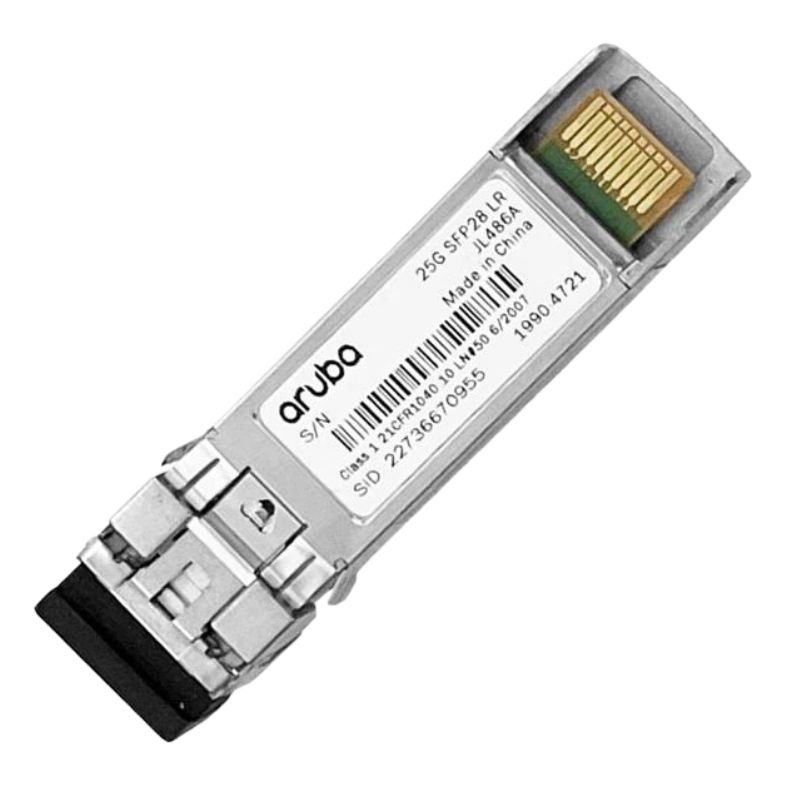


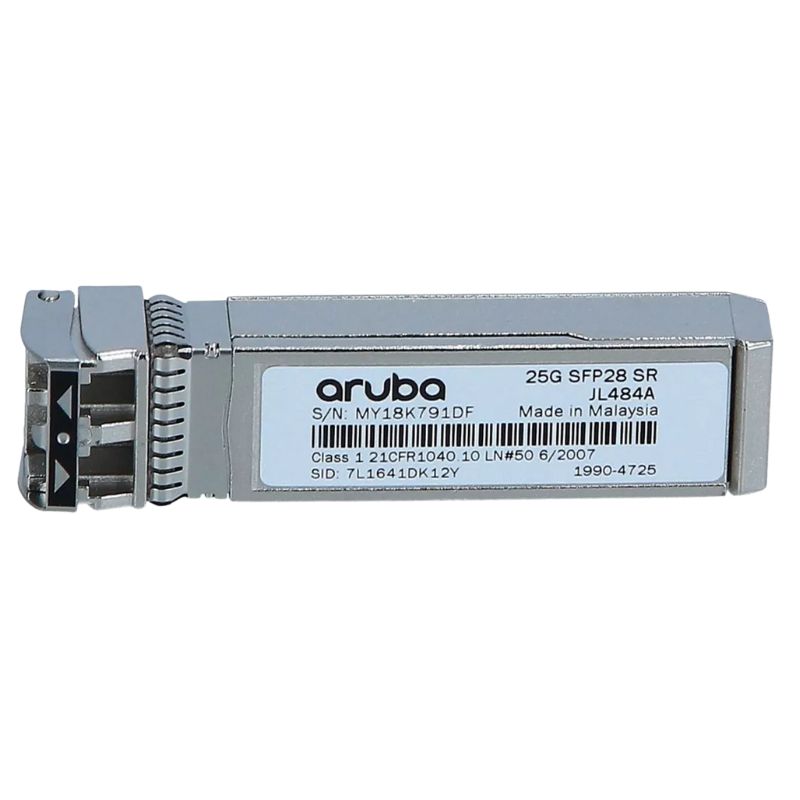
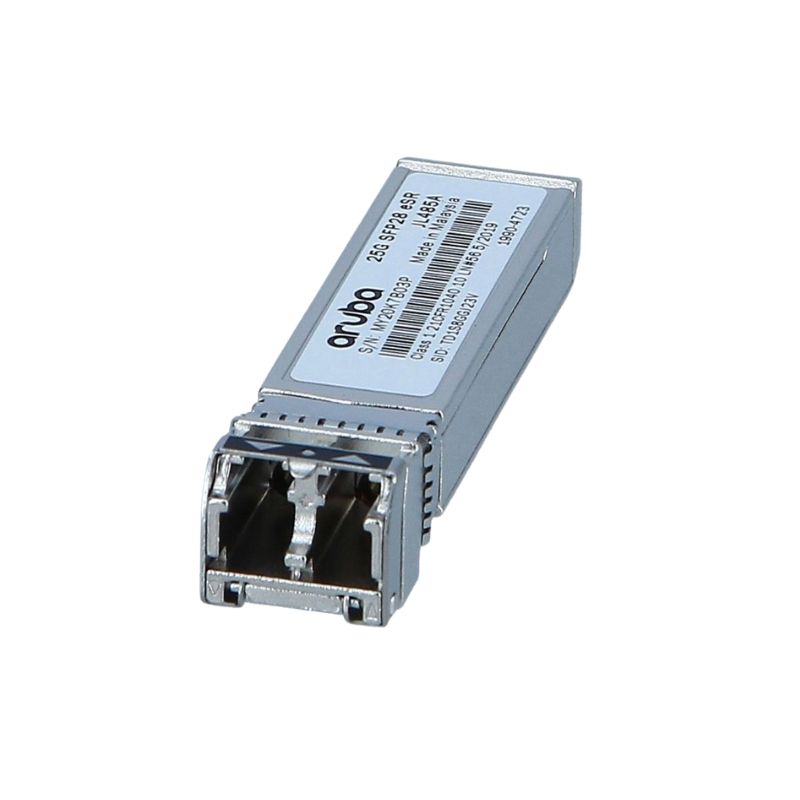
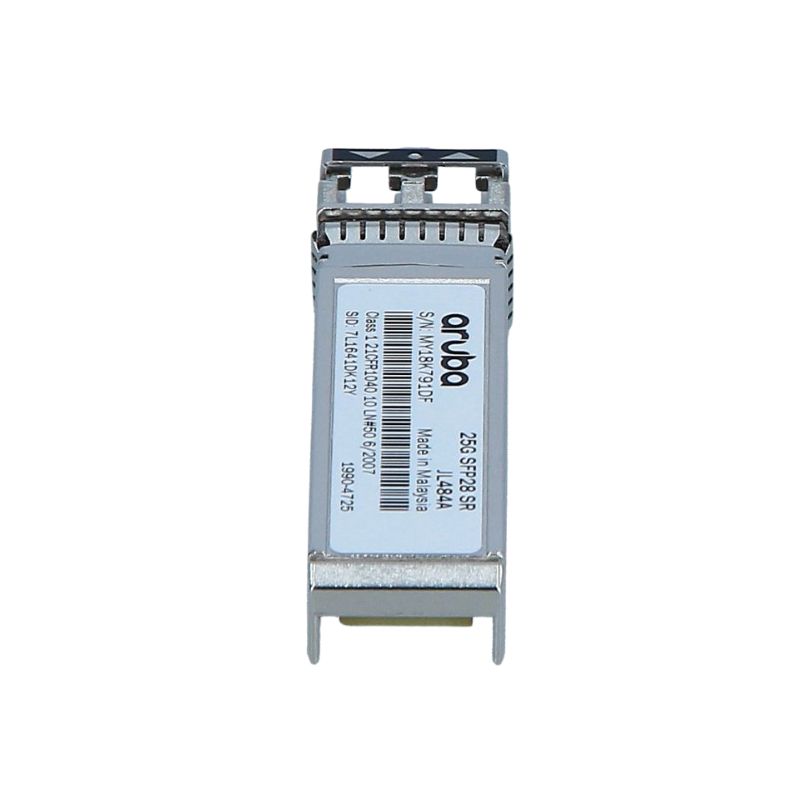
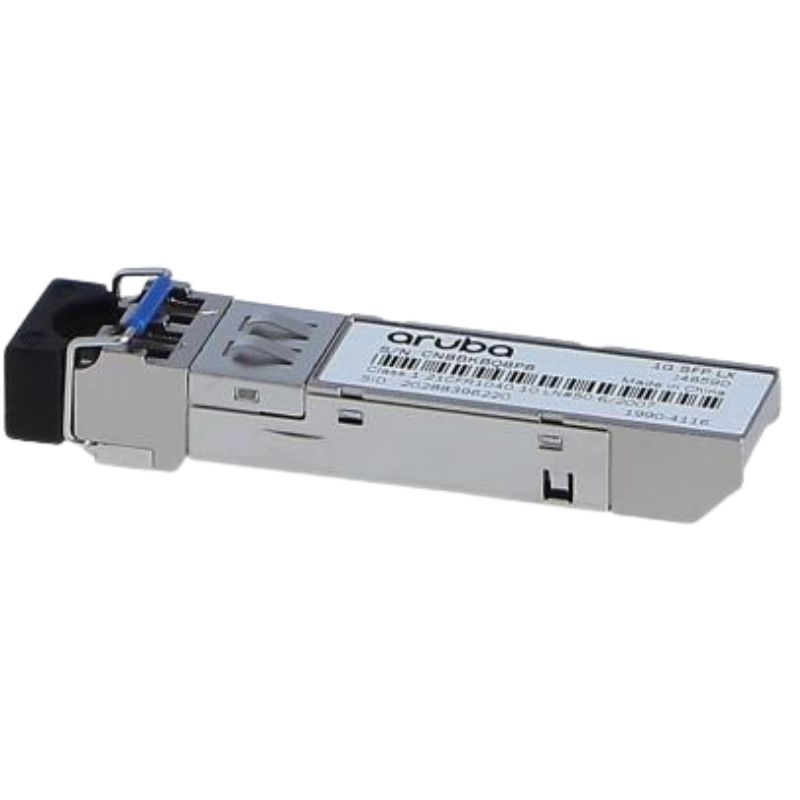
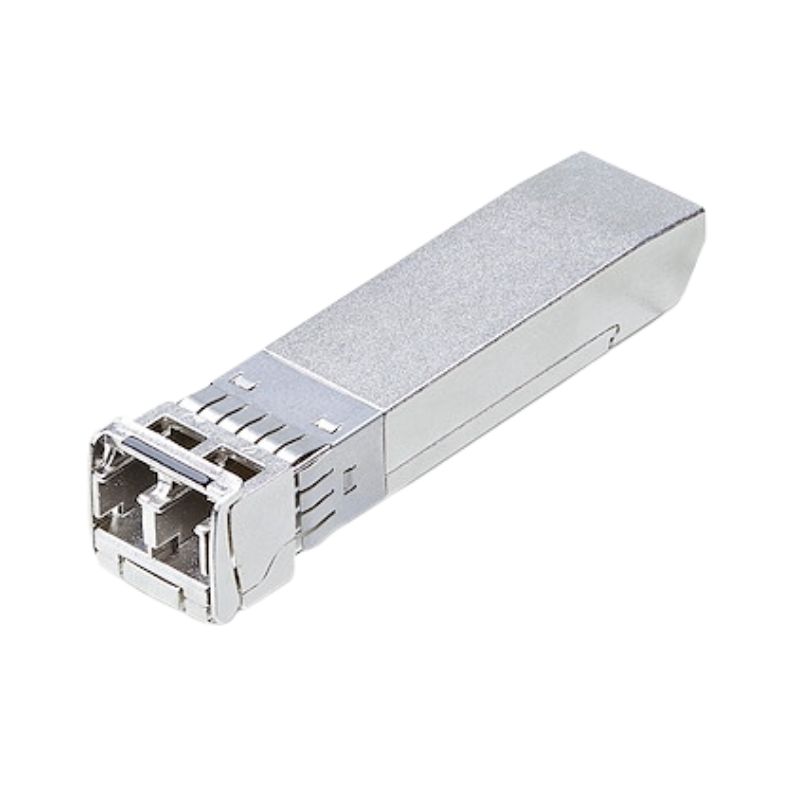
HPE JL486A Aruba Sfp28 Transceiver Module. New Sealed Spare with 1 year replacement warranty
| SKU/MPN | Warranty | Price | Condition | You save |
|---|---|---|---|---|
| JL486A | 1 Year Warranty | $912.00 | New Factory-Sealed Spare | You save: $319.20 (26%) |
| JL486A | 1 Year Warranty | $1,078.00 | Factory-Sealed New in Original Box (FSB) | You save: $377.30 (26%) |
The HPE JL486A Aruba SFP28 Transceiver Module is a high-performance optical networking component engineered to deliver ultra-fast data transmission across modern enterprise and data center environments. Designed for next-generation switching and routing infrastructures, this transceiver ensures stable, low-latency, and energy-efficient connectivity. It supports 25 Gigabit Ethernet operations over single-mode fiber, making it an ideal solution for high-bandwidth applications, cloud computing workloads, and backbone network expansion. With advanced optical engineering, it provides reliable long-distance communication while maintaining signal integrity and minimizing packet loss, enabling seamless integration into scalable network architectures.
The HPE JL486A Aruba SFP28 transceiver module represents a high-performance optical networking component designed for next-generation enterprise and data center infrastructures. It is engineered to support 25 Gigabit Ethernet transmission rates over fiber optic cabling, enabling dense, low-latency, and energy-efficient network architectures. Developed under the networking portfolio and integrated within the Aruba Networking ecosystem, this module plays a critical role in scaling modern switching environments where bandwidth demand continues to rise due to cloud computing, virtualization, artificial intelligence workloads, and distributed applications.
The module is designed in a compact SFP28 form factor, which is an evolution of earlier SFP and SFP+ standards. This form factor allows network engineers to achieve higher port density on compatible switches while maintaining thermal efficiency and power optimization. The JL486A module is particularly suited for environments where space constraints and performance requirements must be balanced without compromise. Its architecture ensures reliable optical performance across multimode fiber infrastructure, typically using LC duplex connectors for stable signal transmission.
The engineering foundation of the JL486A module focuses on precision optical alignment, signal modulation stability, and minimized insertion loss. Each transceiver is built with strict calibration to ensure consistent performance across varying environmental conditions. The internal laser diode assembly is optimized for short-range optical transmission, making it ideal for intra-data center connectivity, top-of-rack to spine switching, and high-speed aggregation layers.
The SFP28 standard builds upon the SFP+ ecosystem by increasing per-lane data throughput from 10 Gbps to 25 Gbps while maintaining similar physical dimensions. This advancement allows network architects to upgrade bandwidth capacity without significantly altering existing switch chassis designs. The JL486A module leverages this advancement to deliver enhanced throughput while maintaining backward compatibility in certain network configurations where multi-speed negotiation is supported.
This transition is essential in modern enterprise networks where application performance demands have increased exponentially. Workloads such as real-time analytics, high-definition video streaming, distributed storage synchronization, and containerized microservices require predictable and high-capacity transport layers. The SFP28 framework provides a balanced solution between cost efficiency and performance scalability.
At the physical layer, the module uses advanced signal encoding mechanisms to ensure data integrity over multimode fiber. The modulation techniques reduce noise susceptibility and improve bit error rates across supported transmission distances. The optical transmitter converts electrical signals into light pulses with precise wavelength control, while the receiver reconstructs the signal using high-sensitivity photodiodes.
Modern data centers rely heavily on spine-leaf network topologies to eliminate bottlenecks and improve east-west traffic flow. The JL486A module is commonly deployed in top-of-rack switches to connect servers to aggregation layers at 25G speeds. This ensures that server clusters can communicate efficiently without congestion, supporting virtualization platforms and distributed computing systems.
In spine-layer switches, the module contributes to high-bandwidth uplinks that aggregate traffic from multiple leaf switches. This architecture enhances scalability and ensures that network expansion can occur without significant redesign of existing infrastructure.
Cloud service providers depend on high-density optical interconnects to maintain performance across distributed environments. The JL486A module supports these requirements by enabling efficient interconnectivity between compute nodes, storage arrays, and network fabrics. Its low-latency characteristics ensure that virtual machines and container workloads maintain consistent performance even under heavy traffic loads.
As cloud-native applications continue to grow, the need for reliable and scalable optical connectivity becomes increasingly important. The module’s design ensures that bandwidth can be allocated dynamically across virtualized environments without physical network reconfiguration.
The JL486A transceiver is optimized for multimode fiber environments, typically supporting short-range data transmission within data center facilities. This allows organizations to deploy cost-effective fiber infrastructure while still achieving high-speed connectivity. The module is engineered to maintain signal stability over distances commonly required in rack-to-rack or row-to-row communication.
Multimode fiber compatibility ensures reduced installation costs compared to long-range single-mode solutions while maintaining high throughput capabilities. The optical characteristics are tuned to reduce modal dispersion, ensuring that signal integrity remains strong even in complex cabling environments.
One of the critical performance factors of optical transceivers is the ability to minimize error rates during continuous transmission. The JL486A module incorporates advanced error mitigation techniques at the physical layer, reducing retransmissions and improving overall network efficiency. This results in improved application responsiveness and reduced network congestion.
Signal stability is maintained through precise alignment of optical components and consistent laser output calibration. This ensures that performance does not degrade significantly over time or under variable temperature conditions.
Reliability is a core design objective of the JL486A module. It is engineered to maintain stable performance across extended operational lifecycles, even under continuous high-load conditions. The internal components are selected to withstand prolonged thermal exposure and electrical stress, ensuring minimal degradation over time.
This durability is essential in enterprise environments where downtime can result in significant operational disruption. The module’s stable performance characteristics contribute to predictable network behavior and reduced maintenance requirements.
Energy efficiency plays a significant role in modern data center design. The JL486A module is optimized for low power consumption relative to its throughput capabilities. This helps reduce overall energy usage across densely populated switch environments where hundreds or thousands of transceivers may be deployed.
Efficient thermal design also reduces the burden on cooling systems, contributing to lower operational costs and improved sustainability metrics within enterprise infrastructure.
As digital transformation continues to accelerate, network bandwidth requirements are expected to grow significantly. The JL486A module provides a scalable foundation for accommodating these increasing demands without requiring major architectural overhauls. Its 25G capability positions it as a transitional technology between 10G legacy systems and higher-speed 40G or 100G backbone infrastructures.
This scalability ensures that organizations can gradually upgrade their networks while maintaining operational continuity and cost efficiency.
In software-defined networking environments, physical transceivers like the JL486A serve as essential hardware components that support abstracted network control. These modules provide the physical layer connectivity required for programmable network architectures, enabling dynamic traffic management and automated configuration.
Through integration with centralized network controllers, the module supports adaptive bandwidth allocation, policy enforcement, and performance optimization across distributed systems.
High-performance computing environments require extremely fast and reliable interconnects between compute nodes. The JL486A module supports these requirements by enabling low-latency communication across clustered systems. This is particularly important in scientific computing, financial modeling, and artificial intelligence training workloads.
Storage area networks also benefit from the module’s high throughput capabilities, enabling rapid synchronization and data replication across distributed storage arrays. This ensures data availability and resilience in enterprise storage architectures.
Applications that depend on real-time data processing require deterministic network behavior. The JL486A module contributes to this requirement by maintaining consistent latency characteristics across transmission paths. This is essential for industries such as telecommunications, financial trading systems, and real-time analytics platforms.
By minimizing variability in packet delivery times, the module helps ensure predictable application performance even under high network load conditions.
The JL486A module is designed to integrate seamlessly within Aruba Networking switch platforms, ensuring compatibility with modern enterprise switching environments. As part of the broader networking ecosystem developed by, it aligns with software-defined networking principles and centralized management frameworks.
This integration allows network administrators to manage optical interfaces through unified control systems, enabling simplified provisioning, monitoring, and troubleshooting. The module is recognized by supported switches, allowing automatic configuration of link parameters and diagnostic reporting.
The transceiver is designed to operate effectively within a wide range of network architectures, including hybrid cloud environments, enterprise campus networks, and high-performance computing clusters. Its standardized form factor ensures compatibility with a broad selection of SFP28-enabled switch ports.
This interoperability reduces complexity in procurement and deployment, allowing organizations to standardize their optical networking components across multiple infrastructure layers.


 Contact Us
 Information
 Catalog
 Solid State Drives (SSD)
 Network Switches
 Hard Disk Drives
 HBA & Controllers
 PC & Servers
 PC & Server Memory
 CPU & Processors
 Network Routers
 Power Supplies
 Tape Drives & Libraries
 Network Devices
 Computer & Network Cables