(7% discount is applied at checkout)
Cart is empty
Your go-to destination for cutting-edge server products
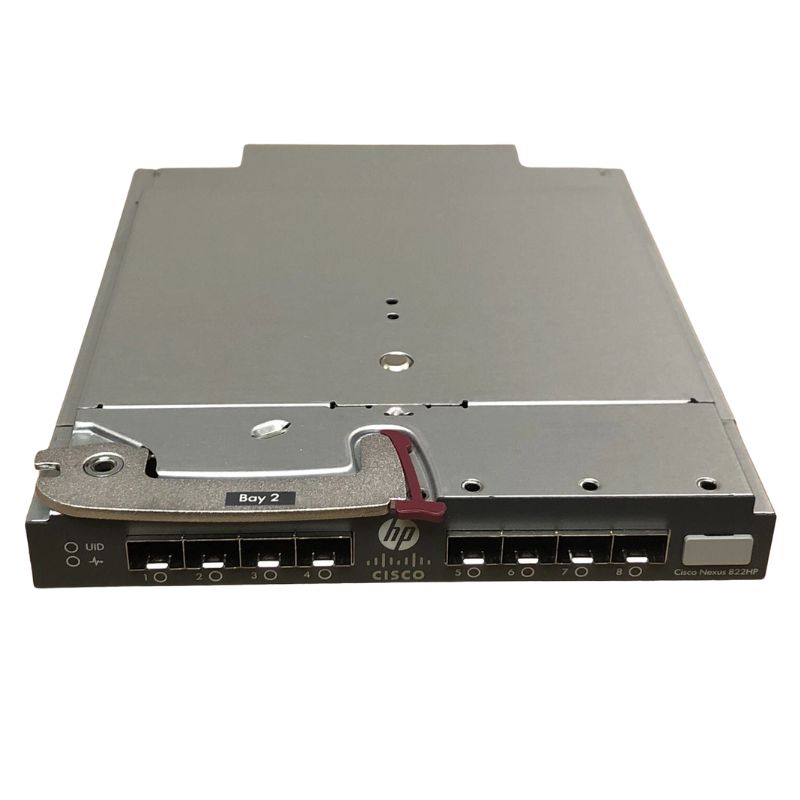


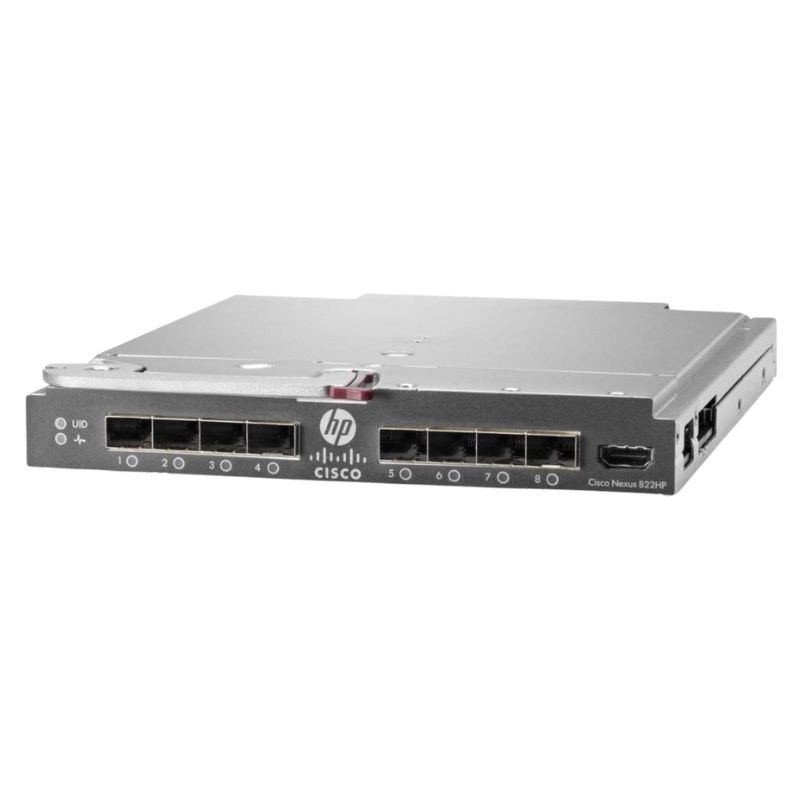
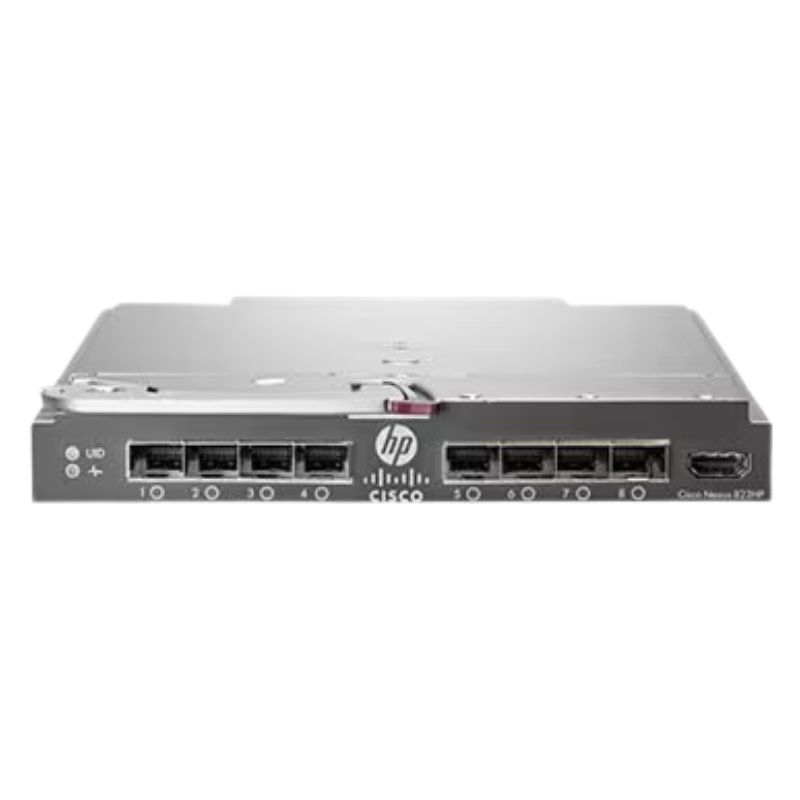
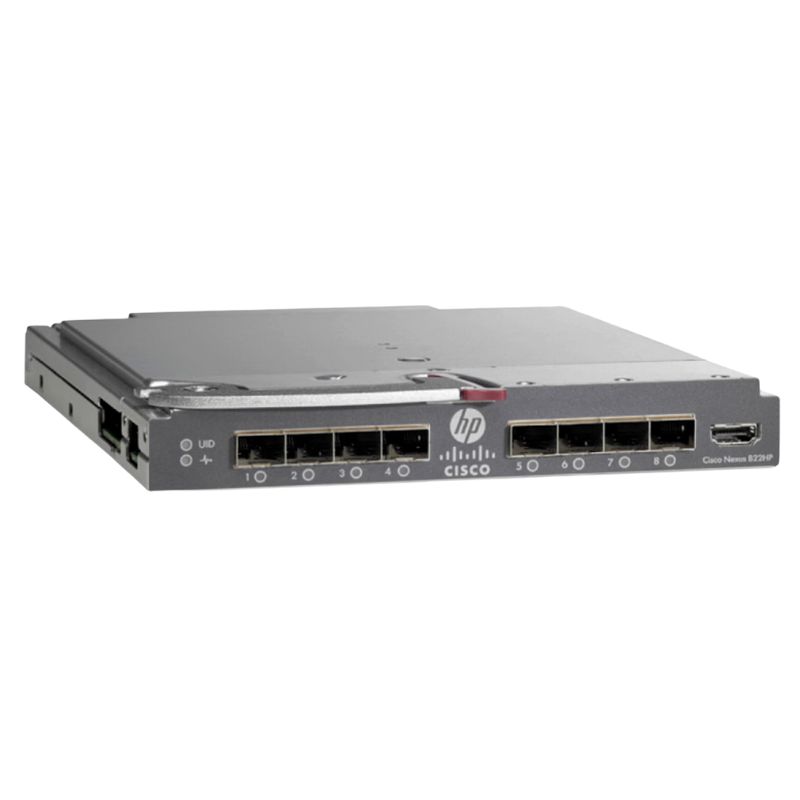
HPE 657787-B21 Cisco Nexus B22 Fabric Extender Expansion Module with 16 Ports. Excellent Refurbished with 1 year replacement warranty
The HPE 657787-B21 Cisco Nexus B22 Fabric Extender Expansion Module is a high-performance blade enclosure networking component designed to simplify data center architecture while improving scalability and efficiency. This fabric extender acts as a remote line card for Cisco Nexus parent switches, enabling centralized management and reduced network complexity.
The HPE 657787-B21 Cisco Nexus B22 Fabric Extender Expansion Module with 16 Ports represents a highly specialized networking component designed for modern enterprise data center architectures where scalability, high-speed connectivity, and centralized network management are essential. Positioned within the advanced ecosystem of fabric extender technology, this module acts as an extension of a parent switch, enabling organizations to simplify network operations while expanding port density across blade servers and modular infrastructures. Built through the collaboration of Hewlett Packard Enterprise and Cisco Systems, this module delivers seamless integration capabilities for enterprise-grade environments that demand consistent throughput and low-latency communication.
In high-density computing environments, the need for streamlined connectivity between compute resources and switching infrastructure becomes increasingly critical. This fabric extender module is engineered to reduce complexity by functioning as a remote line card of the parent Nexus switch. It eliminates the need for multiple access-layer switches inside the rack, thus reducing operational overhead while maintaining robust data transmission performance across all connected nodes.
The architecture of the Cisco Nexus B22 Fabric Extender Expansion Module is rooted in a centralized switching model, where intelligence resides in the parent switch while the extender focuses on physical port expansion. This design approach ensures that configuration, policy enforcement, and traffic management are all handled at the core level, allowing the extension module to operate as a transparent forwarding plane. This architecture significantly reduces configuration duplication and minimizes the risk of inconsistencies across the network infrastructure.
By extending the capabilities of the parent Cisco Nexus switch, the module allows enterprises to manage multiple endpoints as if they were directly connected to the core switch itself. This unified approach simplifies administration and enhances scalability, especially in environments where rapid deployment of additional compute nodes is required.
The data flow within the fabric extender system is designed to ensure minimal latency and optimized throughput. Traffic from connected devices is forwarded to the parent switch over high-speed uplinks, where intelligent forwarding decisions are made. This ensures that even in dense computing environments, data packets are efficiently routed without unnecessary processing at the edge.
The reduction of local switching intelligence on the extender reduces hardware overhead and enables consistent policy enforcement. This approach also enhances security, as all traffic inspection and control mechanisms remain centralized within the parent switching infrastructure.
The 16-port configuration of the HPE 657787-B21 Cisco Nexus B22 module is specifically designed to accommodate a broad range of server connectivity requirements. Each port functions as an extension of the parent switch fabric, enabling high-speed access for blade servers, storage nodes, and virtualization hosts. This level of port density is particularly useful in enterprise data centers where rack space optimization is a critical consideration.
With 16 dedicated ports, the module allows administrators to consolidate network connections, reducing cable clutter and improving airflow within server enclosures. This also contributes to improved maintenance efficiency and reduced downtime during hardware upgrades or system reconfigurations.
The module is engineered to support high-speed Ethernet interconnects, ensuring that bandwidth-intensive applications such as virtualization clusters, cloud computing platforms, and storage replication systems operate without bottlenecks. The fabric extender design allows for consistent performance across all connected endpoints, ensuring predictable latency and throughput behavior even under heavy workloads.
As enterprise environments evolve, the need for scalable network expansion becomes increasingly important. The 16-port design ensures that organizations can incrementally expand their infrastructure without requiring a complete redesign of the switching architecture. Additional fabric extenders can be integrated seamlessly into the existing network fabric, enabling linear scalability that aligns with business growth.
The Cisco Nexus B22 Fabric Extender Expansion Module operates as a subordinate extension of a parent Nexus switch, forming a unified switching system. This dependency allows administrators to manage all connected endpoints from a single control plane. The parent switch provides all configuration, monitoring, and policy enforcement, while the extender focuses purely on port expansion and forwarding.
This integration significantly reduces operational complexity in large-scale deployments. Instead of managing multiple independent switches, network engineers can control a distributed set of endpoints through a single interface, improving efficiency and reducing administrative overhead.
Unified management is a critical advantage of fabric extender technology. By centralizing network intelligence within the parent switch, organizations benefit from simplified configuration workflows and consistent policy application across all connected devices. This ensures that security policies, quality of service rules, and traffic prioritization mechanisms remain uniform across the entire infrastructure.
The integration with Cisco Nexus environments supports automation frameworks that enable rapid deployment of network configurations. This ensures that new devices connected through the extender are automatically assigned appropriate policies and operational parameters, reducing manual intervention and minimizing configuration errors.
The HPE 657787-B21 Cisco Nexus B22 module is optimized for low-latency communication, making it suitable for high-performance computing environments where microsecond-level delays can impact application performance. The direct forwarding mechanism between endpoints and the parent switch ensures minimal processing delay at the edge of the network.
This performance optimization is particularly valuable in environments such as financial trading systems, real-time analytics platforms, and large-scale virtualization clusters where deterministic network behavior is essential.
Efficient bandwidth utilization is achieved through intelligent traffic aggregation and centralized switching logic. The module ensures that network traffic is distributed evenly across available uplinks, preventing congestion and maximizing overall throughput. This design reduces the likelihood of bottlenecks and ensures consistent application performance.
Virtualization environments benefit significantly from the fabric extender architecture, as multiple virtual machines can share high-speed uplinks without compromising performance. The module supports dense virtual machine deployments by providing consistent and predictable network performance across all connected compute nodes.
One of the primary use cases for the Cisco Nexus B22 Fabric Extender Expansion Module is integration within blade server enclosures. These environments require high-density connectivity solutions that can support multiple server blades within a compact physical footprint. The 16-port configuration provides sufficient connectivity for a wide range of blade configurations.
By consolidating connectivity through a fabric extender, data center operators can reduce the number of physical switches required within each enclosure, leading to improved space utilization and reduced power consumption.
Cloud computing environments rely heavily on scalable and flexible networking infrastructure. The fabric extender model supports these requirements by allowing rapid expansion of compute resources without requiring complex reconfiguration of the network topology. This makes it ideal for private cloud deployments and hybrid cloud infrastructures.
Enterprise application hosting environments benefit from the consistent performance and simplified management provided by the extender module. Applications such as ERP systems, CRM platforms, and large-scale databases require reliable network connectivity to ensure uninterrupted service delivery.
By eliminating the need for multiple independent access-layer switches, the Cisco Nexus B22 Fabric Extender reduces overall hardware complexity within the data center. This results in lower capital expenditure and reduced maintenance requirements. Fewer devices also mean fewer potential points of failure, improving overall system reliability.
The centralized architecture allows organizations to streamline their networking infrastructure, resulting in more efficient use of physical space and power resources.
Data centers are increasingly focused on energy efficiency and sustainability. The fabric extender architecture contributes to these goals by minimizing the number of active switching devices within each rack. This reduces both power consumption and cooling demands, leading to lower operational costs over time.
Over the lifecycle of a data center deployment, the reduced complexity and centralized management model result in significant operational savings. The ability to scale without major architectural changes ensures that infrastructure investments remain relevant as organizational needs evolve.
The HPE 657787-B21 Cisco Nexus B22 Fabric Extender Expansion Module is built with enterprise-grade reliability in mind. Its design ensures continuous connectivity even in demanding operational environments. Redundant uplink capabilities and integration with resilient parent switch architectures help maintain high availability.
This reliability is essential in mission-critical environments where network downtime can result in significant operational disruptions and financial losses.
The fabric extender architecture supports fault-tolerant networking configurations that ensure uninterrupted service delivery. In the event of a link failure or hardware issue, traffic can be rerouted through alternative paths within the parent switch infrastructure, maintaining system stability.
One of the key advantages of this module is its predictable operational behavior. Since most of the intelligence resides in the parent switch, troubleshooting becomes more straightforward, and network behavior remains consistent across deployments.
As organizations transition toward modern, software-defined data centers, the role of fabric extenders becomes increasingly important. The Cisco Nexus B22 module aligns with this transformation by supporting centralized control, automation, and scalable architecture principles that define next-generation IT infrastructure.
This alignment ensures that enterprises can adopt cloud-ready architectures without requiring a complete overhaul of their existing networking systems.
Hybrid and multi-cloud strategies require consistent networking performance across distributed environments. The fabric extender model provides a stable foundation for such deployments by ensuring that local data center connectivity remains efficient and manageable, even as workloads extend into external cloud platforms.


 Contact Us
 Information
 Catalog
 Solid State Drives (SSD)
 Network Switches
 Hard Disk Drives
 HBA & Controllers
 PC & Servers
 PC & Server Memory
 CPU & Processors
 Network Routers
 Power Supplies
 Tape Drives & Libraries
 Network Devices
 Computer & Network Cables