(7% discount is applied at checkout)
Cart is empty
Your go-to destination for cutting-edge server products
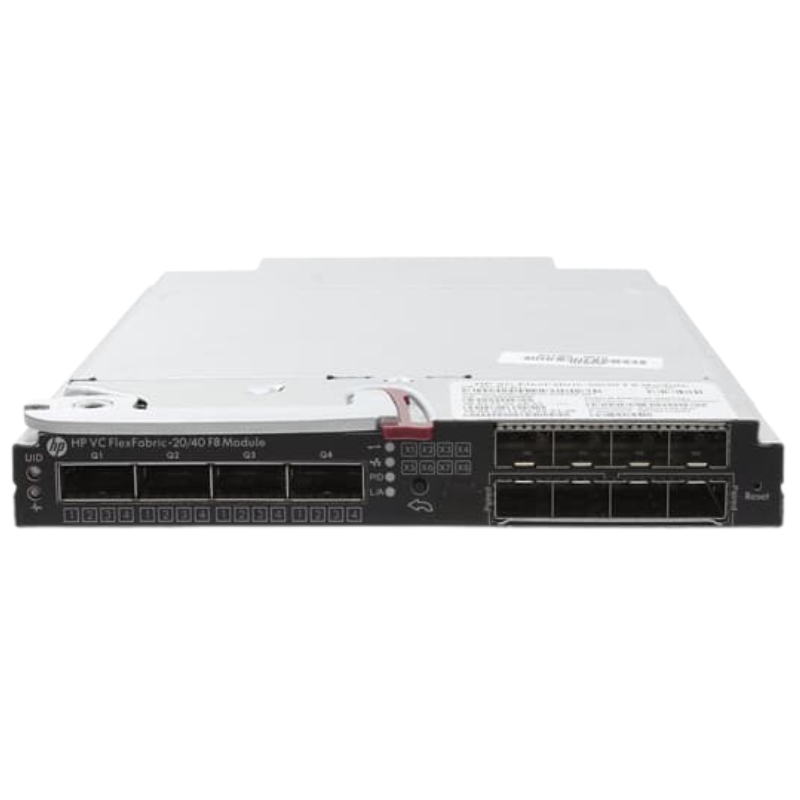


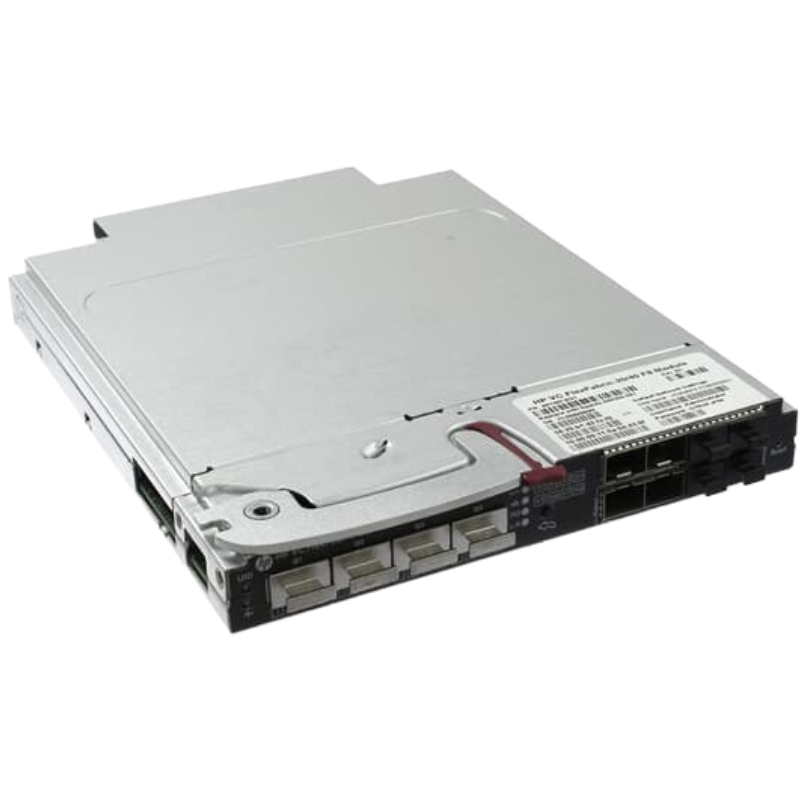
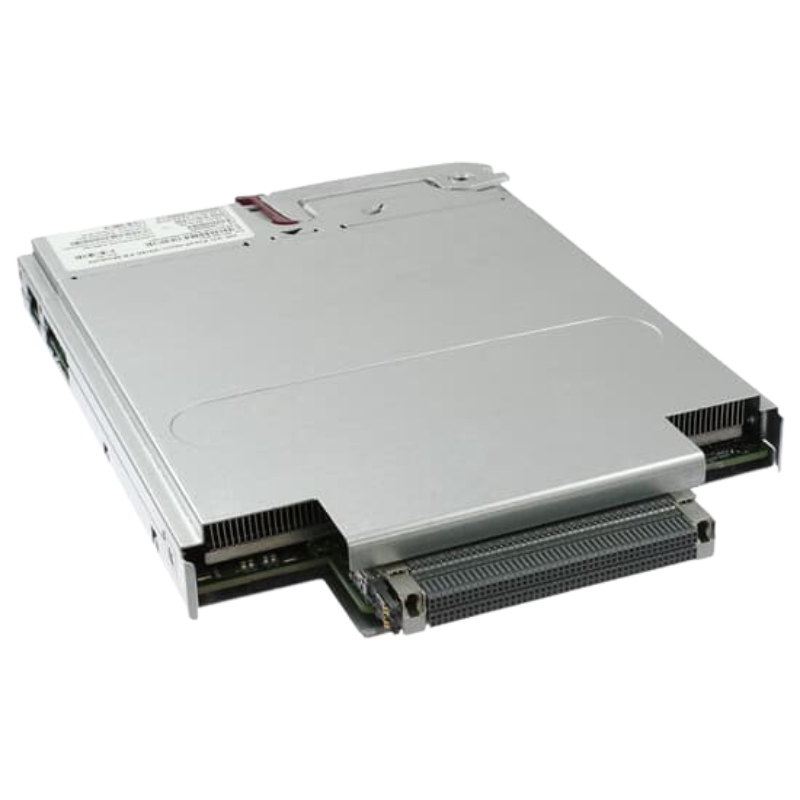
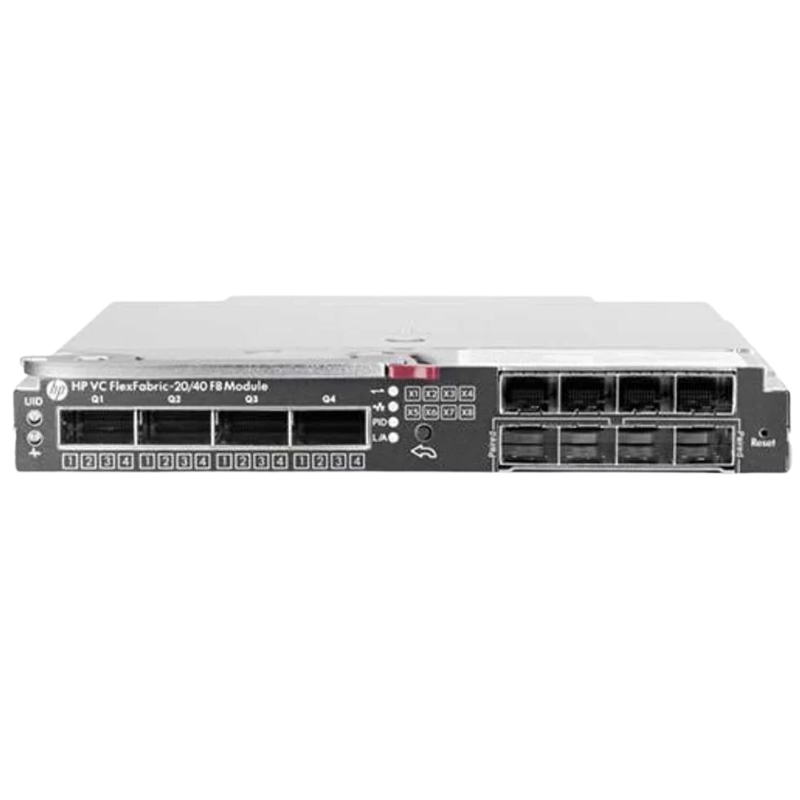
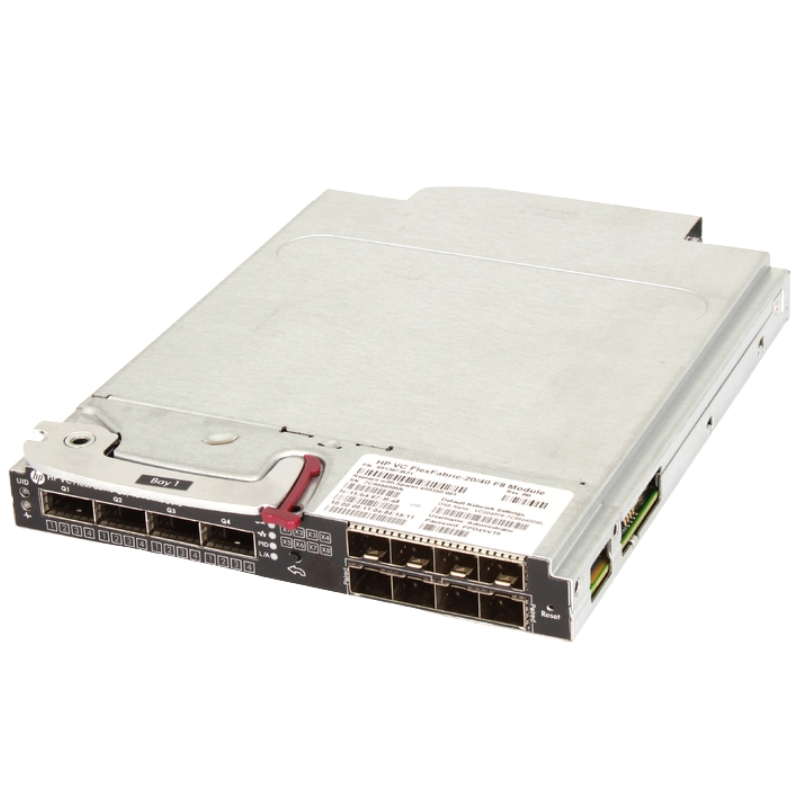
HPE 691367-B22 Virtual Connect FlexFabric-20/40 F8 Module. Excellent Refurbished with 1 year replacement warranty
The HPE 691367-B22 VC FlexFabric-20/40 F8 Module is a powerful expansion solution engineered for enterprise blade systems. This advanced networking module delivers high throughput, versatile connectivity, and intelligent virtualization features for modern data centers.
The HPE 691367-B22 Virtual Connect FlexFabric-20/40 F8 Module is a high-performance converged networking component designed for HPE BladeSystem environments, delivering advanced fabric virtualization and optimized data center interconnect capabilities. This module is engineered to simplify network infrastructure while improving bandwidth utilization, reducing cable complexity, and enabling flexible server connectivity within enterprise-grade environments. It integrates seamlessly into HPE BladeSystem c-Class enclosures, providing a unified approach to Ethernet and Fibre Channel over Ethernet (FCoE) traffic management.
At its core, the FlexFabric-20/40 F8 Module functions as a virtualization layer between server blades and external networks, abstracting physical network configurations and replacing traditional top-of-rack switching dependencies. This abstraction enables administrators to define server profiles that remain persistent regardless of hardware changes, dramatically reducing operational overhead and downtime during server maintenance or replacement activities.
The Virtual Connect architecture is designed to optimize the way compute resources connect to external networks. Instead of requiring multiple individual switches per blade enclosure, Virtual Connect consolidates networking into a shared fabric layer. The HPE 691367-B22 module enhances this concept by delivering FlexFabric capabilities that support both Ethernet and storage traffic through a unified infrastructure.
This approach reduces network sprawl while increasing scalability, allowing data centers to efficiently expand without redesigning their entire network topology. The module enables dynamic assignment of network connections, ensuring workloads can be balanced and redistributed with minimal manual intervention. This leads to improved agility in modern IT operations, where rapid provisioning and adaptability are critical.
The FlexFabric 20/40 F8 design is centered on delivering high throughput with minimal latency. Supporting both 20Gb and 40Gb uplink configurations, it ensures compatibility with next-generation data center requirements where high-bandwidth applications such as virtualization clusters, big data processing, and cloud workloads demand consistent performance.
The module architecture is built to support converged traffic types, including traditional Ethernet, FCoE, and storage traffic, without requiring separate physical networks. This convergence reduces infrastructure complexity while maintaining deterministic performance for mission-critical workloads. The internal switching logic is optimized for packet forwarding efficiency, ensuring minimal processing delay even under heavy traffic loads.
At the hardware level, the module integrates directly into the BladeSystem enclosure midplane, enabling high-speed communication between server blades and external uplinks. This integration eliminates the need for individual NIC-to-switch cabling, reducing potential points of failure and simplifying physical deployment.
The FlexFabric module leverages advanced ASIC-based switching technology to handle high-volume traffic routing. This ensures that workloads such as virtual machine migration, distributed storage access, and clustered application communication operate efficiently without network congestion.
The HPE 691367-B22 module is specifically engineered for compatibility with HPE BladeSystem c-Class enclosures, including the c7000 and similar enterprise chassis. This compatibility ensures seamless deployment within existing HPE infrastructure without requiring extensive redesign or additional hardware investment.
The module fits into designated interconnect bays, where it operates as part of a redundant fabric system. This placement allows administrators to deploy multiple modules within a single enclosure, ensuring load balancing and failover capabilities are maintained at all times. The tight integration with the enclosure backplane ensures high-speed communication between compute blades and network fabrics.
Within the BladeSystem chassis, the FlexFabric-20/40 F8 Module occupies specific interconnect bays designed for high-speed networking modules. These bays are strategically positioned to optimize airflow, cable management, and signal integrity. The modular design allows multiple FlexFabric modules to be installed side by side, enabling horizontal scalability across the enclosure.
As enterprise demands grow, additional modules can be added to increase aggregate bandwidth without disrupting existing workloads. This scalability is particularly valuable in cloud computing environments where workload density fluctuates dynamically.
The BladeSystem backplane plays a critical role in enabling communication between server blades and the FlexFabric module. It provides a high-speed, low-latency pathway that eliminates the need for external patching between servers and switches. This architecture significantly reduces cable clutter and improves airflow efficiency within the data center rack.
Backplane connectivity also enhances reliability by minimizing physical connection points that could otherwise become points of failure. The result is a more stable and resilient networking environment that supports mission-critical workloads with consistent uptime.
The HPE 691367-B22 FlexFabric module is designed to deliver exceptional networking performance through its support for 20Gb and 40Gb Ethernet uplinks. This high bandwidth capability ensures that modern enterprise workloads, including virtualization clusters, database systems, and high-performance computing applications, can operate without network bottlenecks.
The module dynamically manages traffic distribution across available uplinks, ensuring optimal utilization of available bandwidth. This intelligent load distribution reduces congestion and improves application responsiveness, particularly in environments with heavy east-west traffic such as virtualized data centers.
The dual-speed support architecture allows organizations to transition gradually from 20Gb to 40Gb networking without replacing existing infrastructure. This flexibility ensures investment protection while enabling performance upgrades as business requirements evolve.
Each uplink is designed to handle high-throughput data flows with minimal packet loss, ensuring that latency-sensitive applications maintain stable performance even under peak load conditions. This is particularly important in environments supporting real-time analytics, financial transactions, and large-scale virtualization.
The module incorporates advanced traffic optimization techniques that distribute workloads efficiently across available network paths. By analyzing traffic patterns in real time, it ensures that no single uplink becomes a bottleneck. This dynamic balancing improves overall network efficiency and reduces the likelihood of performance degradation during peak usage periods.
Additionally, intelligent buffering mechanisms help manage burst traffic, ensuring that short-term spikes do not impact overall network stability. This is essential in modern cloud environments where workload variability is common.
The FlexFabric-20/40 F8 Module supports converged networking technologies, enabling Ethernet and Fibre Channel over Ethernet (FCoE) traffic to coexist on a single physical infrastructure. This convergence eliminates the need for separate storage and data networks, significantly reducing infrastructure complexity.
FCoE support allows storage traffic to be transmitted over Ethernet networks while maintaining the performance characteristics of traditional Fibre Channel systems. This enables organizations to consolidate storage and data networking into a unified fabric, improving efficiency and reducing operational costs.
By converging storage and data traffic, the module simplifies network design and reduces the number of required adapters and switches. This leads to lower capital expenditure and reduced maintenance overhead, while still maintaining enterprise-grade performance for storage-intensive applications.
The module ensures data integrity by maintaining strict protocol handling rules for FCoE traffic, preventing packet loss and ensuring consistent delivery. This is essential for storage systems where data reliability is critical.
One of the key advantages of the HPE Virtual Connect architecture is its ability to decouple server identity from physical hardware. The FlexFabric module supports server profile management, allowing administrators to define network configurations that are independent of physical NICs or switch ports.
This abstraction enables rapid provisioning of new servers, as network configurations can be applied automatically through predefined profiles. It also simplifies hardware replacement, as server identities can be reassigned without reconfiguring network settings.
The module plays a critical role in enabling stateless computing environments, where server identity and configuration are managed centrally rather than tied to physical hardware. This improves operational agility and reduces downtime during maintenance activities.
Automated provisioning reduces manual configuration errors and accelerates deployment times. Server profiles can be cloned and assigned dynamically, ensuring consistency across large-scale deployments.
The FlexFabric-20/40 F8 Module contributes significantly to data center efficiency by reducing the number of physical switches and network cables required in BladeSystem environments. This consolidation improves airflow, reduces power consumption, and simplifies rack management.
By integrating multiple networking functions into a single module, organizations can reduce hardware footprint while increasing overall network capacity. This leads to more sustainable and cost-effective data center operations.
Reduced hardware complexity translates directly into lower power consumption and cooling requirements. The module’s efficient design minimizes heat output, contributing to improved thermal management within dense blade environments.
The HPE 691367-B22 module supports redundant configurations to ensure continuous network availability. Multiple modules can be deployed within a single enclosure to provide failover capabilities in the event of hardware or link failure.
This redundancy ensures that critical applications remain operational even during maintenance or unexpected outages. The system automatically reroutes traffic through available paths, maintaining service continuity without manual intervention.
In the event of a link failure, traffic is automatically redirected to alternate paths within the fabric. This ensures uninterrupted communication between server blades and external networks.


 Contact Us
 Information
 Catalog
 Solid State Drives (SSD)
 Network Switches
 Hard Disk Drives
 HBA & Controllers
 PC & Servers
 PC & Server Memory
 CPU & Processors
 Network Routers
 Power Supplies
 Tape Drives & Libraries
 Network Devices
 Computer & Network Cables