(7% discount is applied at checkout)
Cart is empty
Your go-to destination for cutting-edge server products
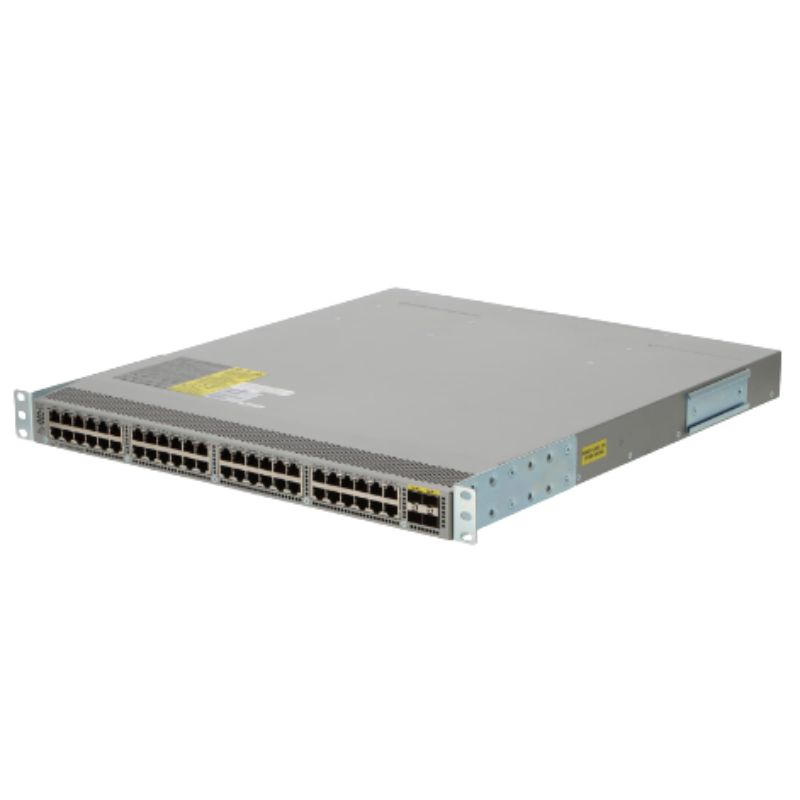


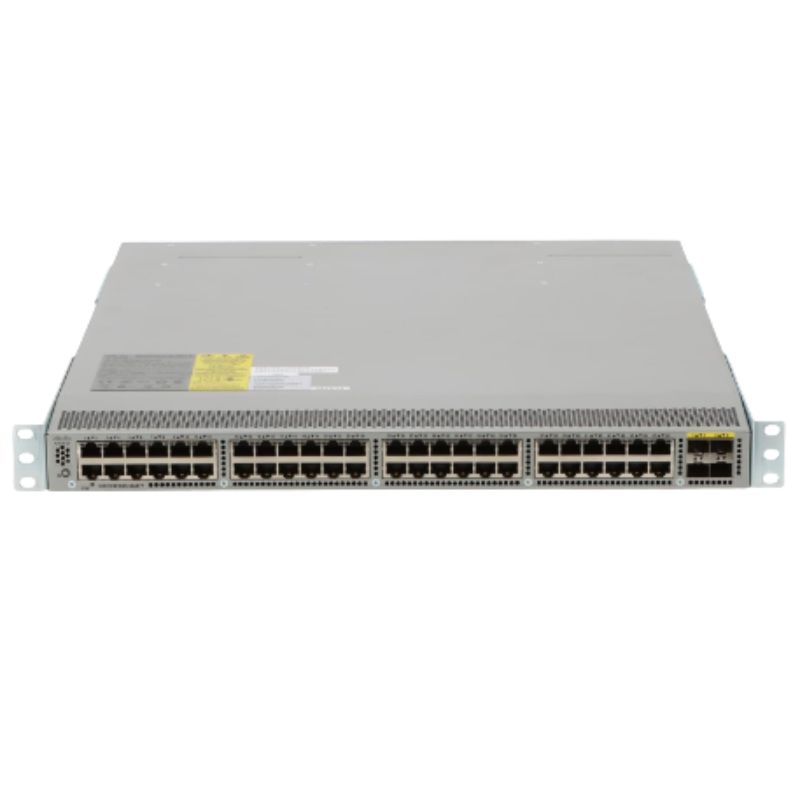
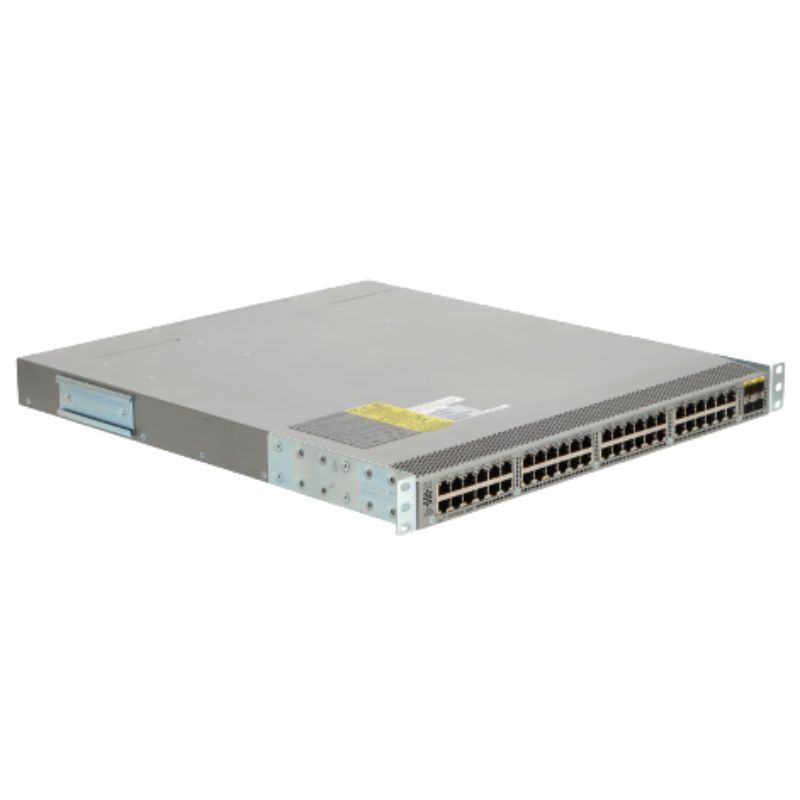
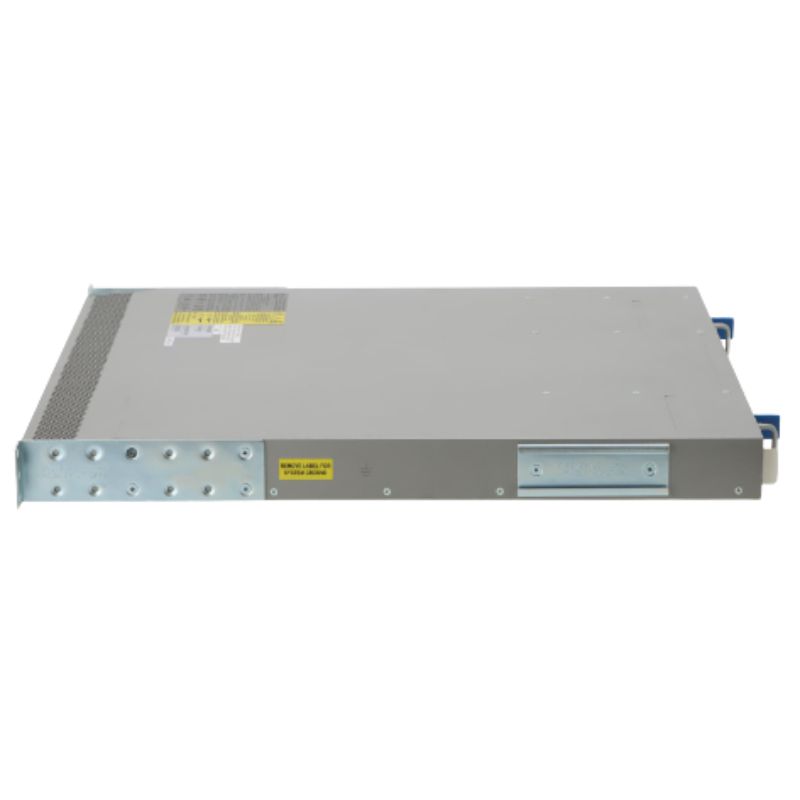
Cisco C1-N3K-C3048TP One Nexus 3048tp-1GE 48 ports managed Switch. Factory-Sealed New in Original Box (FSB) with 1 year replacement warranty
The Cisco C1-N3K-C3048TP Nexus 3048TP is a high-performance, enterprise-grade managed network switch designed to deliver reliable Layer 3 switching for modern data centers and business networks. With extensive port density, advanced routing capabilities, and robust throughput, this switch is ideal for scalable and high-availability infrastructures.
The Cisco C1-N3K-C3048TP, commonly known as the Nexus 3048TP, is a pivotal 1RU managed switch designed to deliver robust, low-latency, and cost-effective Layer 2 and Layer 3 switching for the top-of-rack (ToR) and small-to-midsize business (SMB) network tiers. As part of the esteemed Cisco Nexus 3000 Series, this 48-port Gigabit Ethernet switch is engineered with a fixed, compact form factor that belies its powerful feature set. It serves as a critical bridge between high-speed servers, storage, and the network core, providing the essential intelligence and reliability required for modern, unified fabric architectures. Its support for a comprehensive suite of features, including comprehensive virtualization protocols, advanced quality of service (QoS), and sophisticated security mechanisms, makes it an enduring choice for organizations seeking to build a scalable, high-performance, and operationally efficient network foundation.
At its heart, the Nexus 3048TP is built to provide wire-speed performance across all ports with a non-blocking architecture. This ensures that data flows seamlessly without internal congestion, a non-negotiable requirement for bandwidth-intensive applications and virtualized server environments.
The switch boasts a high-bandwidth switching fabric capable of forwarding packets at line rate across all 48 ports simultaneously. With a forwarding rate of up to 130.95 Mpps (million packets per second) and a switching capacity of 176 Gbps, it can handle the aggregated traffic of densely populated server racks with ease. This performance headroom is crucial for preventing bottlenecks, especially in scenarios involving east-west traffic between virtual machines or server-to-storage communications.
The defining characteristic of the 3048TP model is its port composition: 48 copper 10/100/1000BASE-T RJ-45 ports. These auto-sensing, auto-negotiating ports provide seamless connectivity to a vast array of devices, from traditional servers and PCs to IP phones and network-attached storage. For uplink connectivity, the switch is equipped with four 1 Gigabit Ethernet SFP-based ports. These ports offer critical flexibility, allowing network administrators to choose between copper or optical SFP transceivers to connect to distribution or core switches over longer distances using fiber optic cabling. This hybrid design balances cost-effective access-layer connectivity with versatile and higher-performance uplink options.
The four SFP ports are not merely an afterthought; they are integral to the switch's design for scalable growth. Administrators can populate these slots with a variety of Cisco-compatible SFPs, such as 1000BASE-T for additional copper runs, 1000BASE-SX for multimode fiber, or 1000BASE-LX/LH for single-mode long-haul connections. This flexibility enables the switch to fit into diverse physical plant environments without requiring a forklift upgrade.
Beyond raw hardware specifications, the true value of the Nexus 3048TP lies in its comprehensive software capabilities, driven by Cisco NX-OS. This robust, data center-class operating system provides stability, modularity, and a rich feature set typically found in higher-end modular switches.
The switch supports a unified fabric architecture, converging traditional LAN traffic with storage networking. It is a full-fledged Fibre Channel over Ethernet (FCoE) transit switch. This capability allows it to carry both IP and native Fibre Channel storage traffic over a single, converged Ethernet cable, reducing cabling complexity, capital and operational expenditures, and power/ cooling requirements in the server rack. By acting as a consolidation point for server I/O, it paves the way for a more streamlined data center infrastructure.
In virtualized server environments, network attributes like VLANs and QoS policies must follow virtual machines (VMs) as they move across physical hosts. The Nexus 3048TP excels here with its support for key virtualization protocols:
The switch supports Edge Virtual Bridging (EVB) and Cisco's VN-Tag technology. These standards enable a more efficient and scalable connection between hypervisor virtual switches and the physical network switch. They provide better visibility and policy control for individual VMs, improving security and management in virtualized deployments.
While primarily a Layer 2 switch, the Nexus 3048TP offers robust Layer 3 static routing and Routing Information Protocol (RIP) capabilities for basic routing needs. More importantly, it supports Cisco FabricPath, a breakthrough technology that creates a massively scalable, low-latency Layer 2 fabric. FabricPath simplifies network design by eliminating the spanning-tree protocol (STP) and enabling active-active multipathing, leading to superior bandwidth utilization and faster convergence.
Deploying a network switch is one task; managing it efficiently over its lifecycle is another. The Nexus 3048TP is equipped with a suite of tools designed to simplify operations, guarantee application performance, and harden the network against threats.
Management can be performed via a familiar Command-Line Interface (CLI), similar to Cisco IOS, reducing the learning curve for network engineers. Additionally, it offers a web-based GUI (Graphical User Interface) for day-to-day monitoring and configuration tasks. For modern, automated operations, the switch supports XML-based programmatic interfaces and integrates with broader management systems like Cisco Data Center Network Manager (DCNM). Features like Switched Port Analyzer (SPAN) and Embedded Event Manager (EEM) scripts provide powerful traffic analysis and automated response capabilities.
To ensure critical applications receive the necessary bandwidth and low latency, the switch implements a sophisticated QoS model. It supports classification, marking, policing, and shaping based on Layer 2, 3, and 4 parameters. This allows network administrators to create precise policies that prioritize voice, video, or storage traffic over less time-sensitive data flows, ensuring optimal performance for all users and applications even during periods of congestion.
A key aspect of its QoS and performance is its shared buffer architecture. Unlike switches with small, dedicated per-port buffers, the Nexus 3048TP utilizes a larger, globally shared buffer pool. This design is exceptionally effective at absorbing micro-bursts of traffic common in data center environments (e.g., during VM migrations or backup operations), preventing packet loss and maintaining smooth application performance.
Security is built into the switch's design. It offers a complete set of features to control access, contain threats, and maintain integrity:
The switch supports IEEE 802.1X for port-based network access control (NAC), ensuring only authorized users and devices can connect to the network. It works in concert with RADIUS and TACACS+ servers for centralized authentication, authorization, and accounting (AAA). MACsec (IEEE 802.1AE) support provides hop-by-hop encryption for data confidentiality and integrity on specific links.
Features like Dynamic ARP Inspection (DAI), IP Source Guard, and DHCP snooping work together to prevent common layer-2 attacks such as ARP spoofing and IP/MAC address spoofing. ACLs (Access Control Lists) can be applied at both Layer 2 and Layer 3 to filter traffic with granular precision. These combined capabilities create a strong defensive perimeter at the network edge.
The versatility of the Cisco Nexus 3048TP allows it to serve as a cornerstone in several common and critical networking scenarios.
This is its primary design use case. Installed in a server rack, it provides direct, high-bandwidth connectivity to 48 rack-mounted servers or blade chassis. Its low latency is ideal for clustered applications and virtualized environments. The SFP uplinks aggregate traffic to end-of-row (EoR) or core switches. Its FCoE capability is particularly valuable here, allowing servers to connect to both LAN and SAN over a simplified cable plant.
In enterprise campus networks or performance-sensitive workgroups (like engineering or multimedia departments), the 3048TP can act as a high-density access switch. Its 48 Gigabit Ethernet ports can connect a large number of desktops, IP phones, and wireless access points, while its Layer 3 features and robust QoS ensure reliable and prioritized service for voice, video, and data applications.
For small to medium-sized businesses, the Nexus 3048TP can serve as a powerful core or aggregation switch, connecting multiple access switches and providing inter-VLAN routing. Its reliability, comprehensive feature set, and 10 Gigabit uplink potential (via future upgrades or twinning) offer a growth path for expanding organizations without the complexity and cost of larger modular chassis.
Network uptime is paramount. The Nexus 3048TP is engineered with several features to maximize availability and ensure rapid recovery from failures.
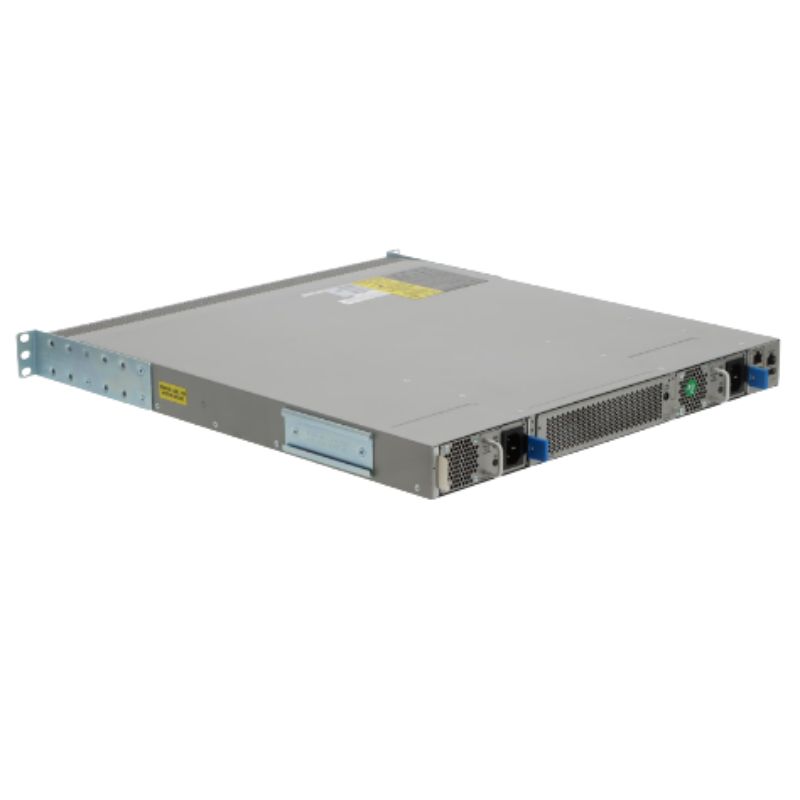
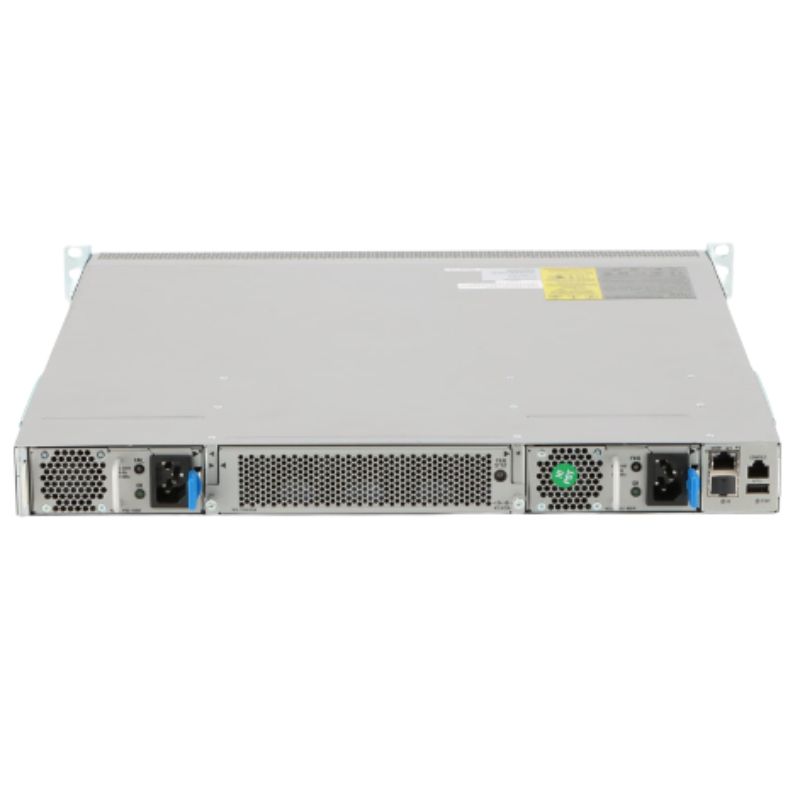
The switch is equipped with dual, hot-swappable power supplies and fan modules. This redundant design eliminates single points of failure for power and cooling. If one power supply fails, the other immediately takes over the full load without interruption. Similarly, the fan trays operate in an N+1 redundancy mode within the unit.
Cisco NX-OS offers in-service software upgrades (ISSU), allowing critical software updates to be performed with minimal disruption. For network path redundancy, the switch supports not only traditional STP variants (Rapid PVST+, MST) but also the more advanced virtual PortChannel (vPC) technology. vPC allows two physical Nexus switches to appear as a single logical entity to downstream devices, enabling active-active multi-chassis link aggregation without using STP, thus utilizing all available uplink bandwidth.


 Contact Us
 Information
 Catalog
 Solid State Drives (SSD)
 Network Switches
 Hard Disk Drives
 HBA & Controllers
 PC & Servers
 PC & Server Memory
 CPU & Processors
 Network Routers
 Power Supplies
 Tape Drives & Libraries
 Network Devices
 Computer & Network Cables