(7% discount is applied at checkout)
Cart is empty
Your go-to destination for cutting-edge server products
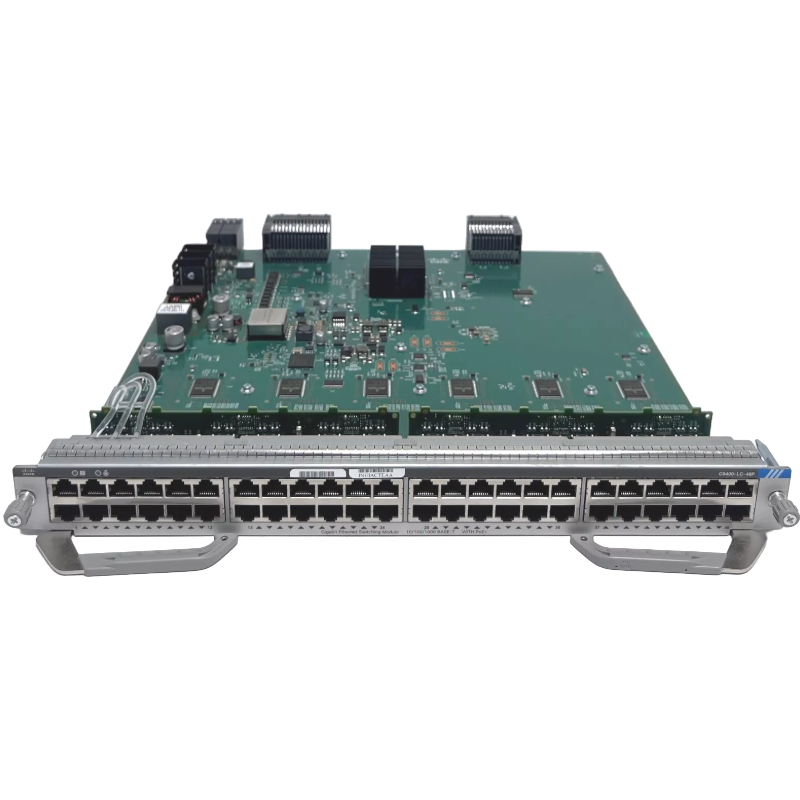


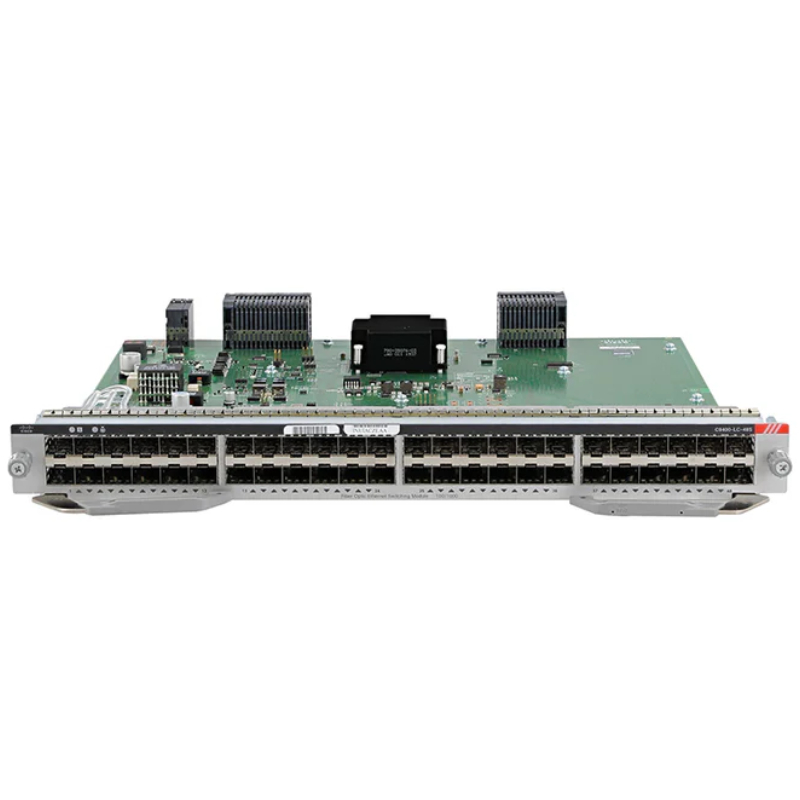
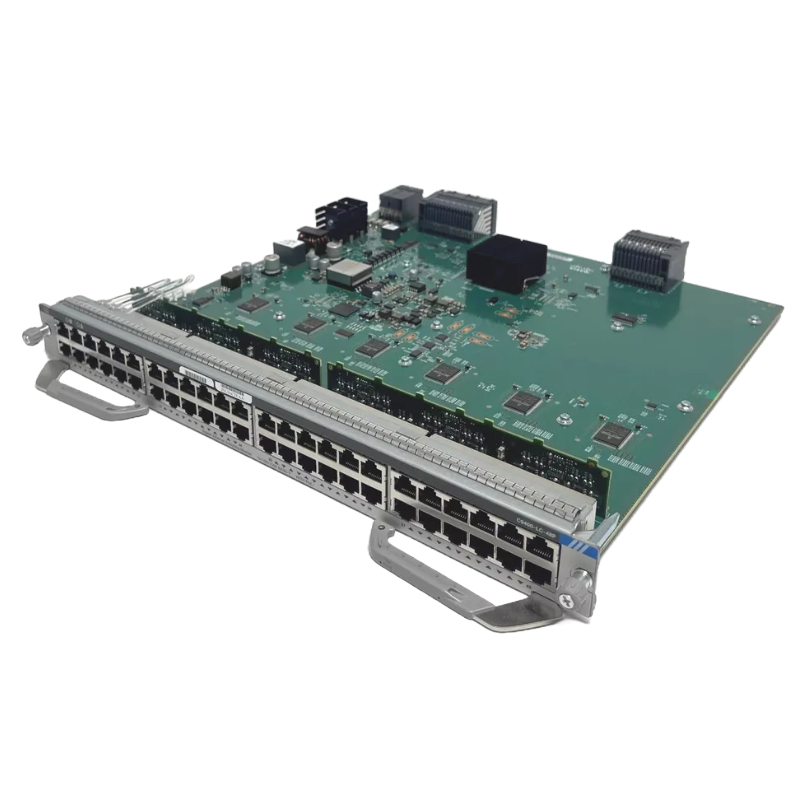
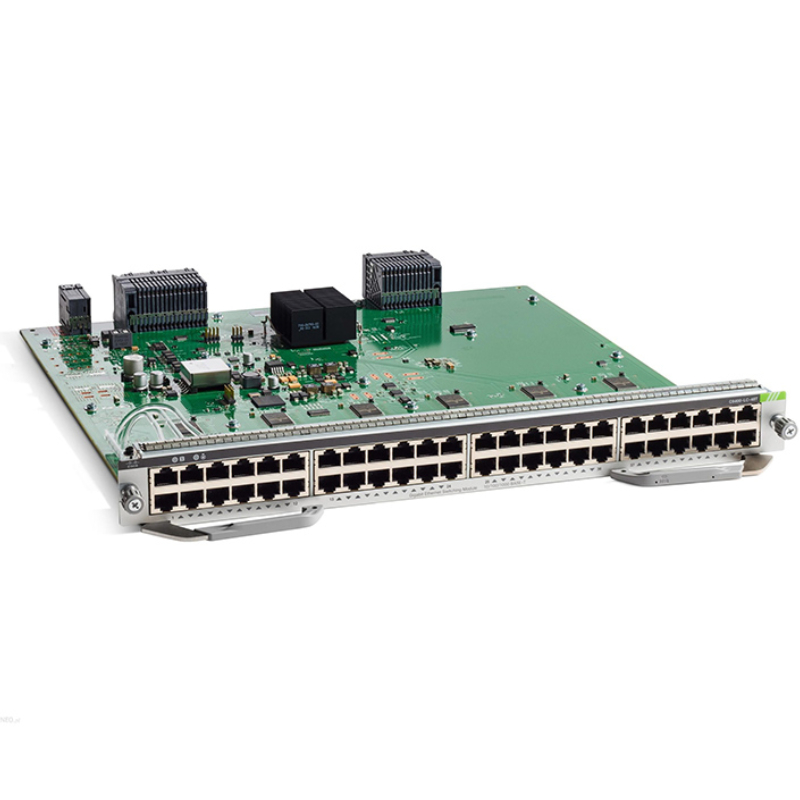
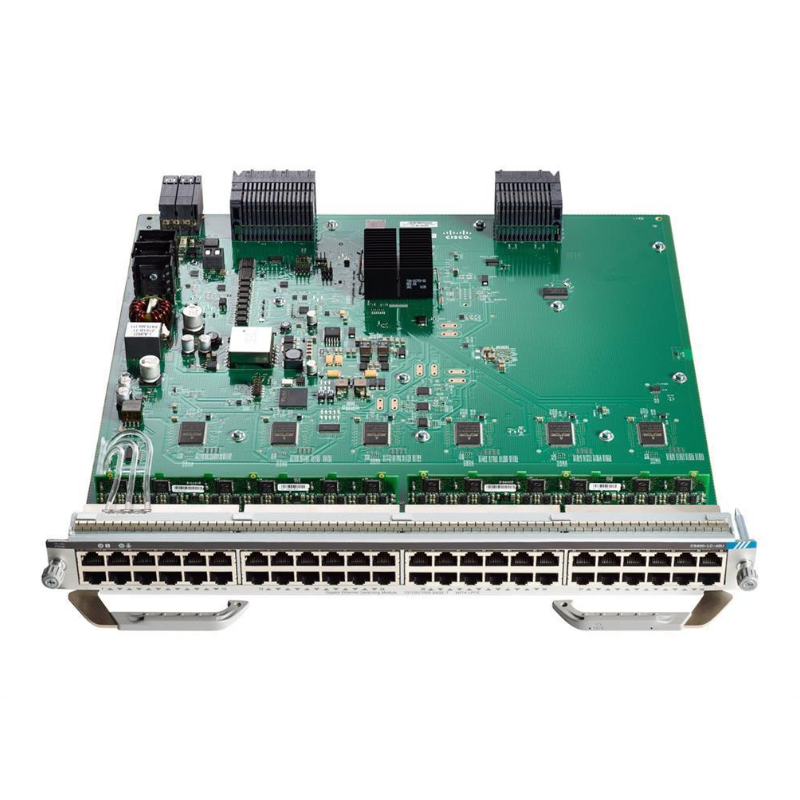
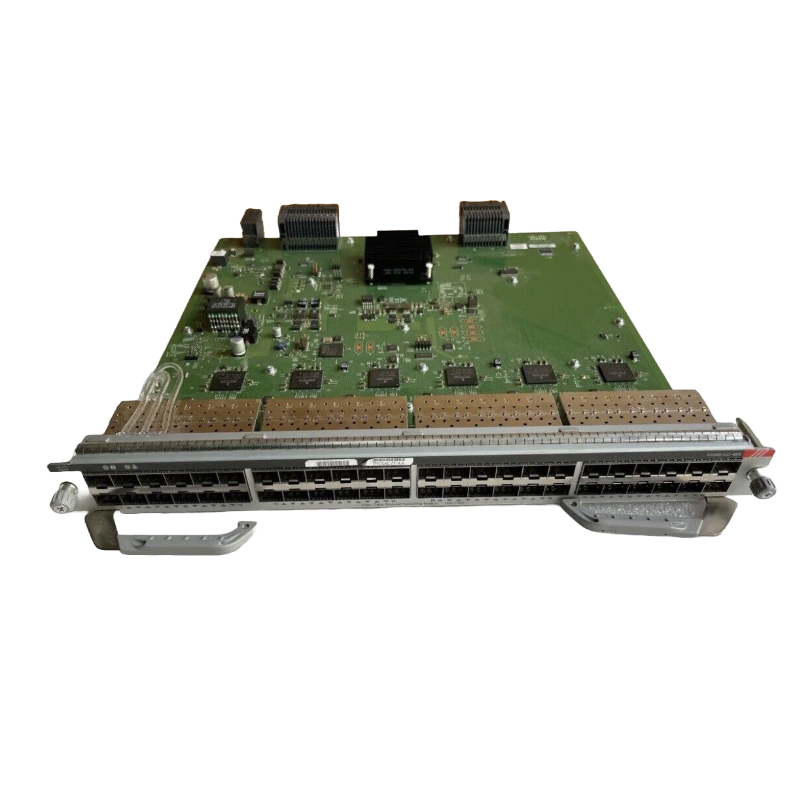
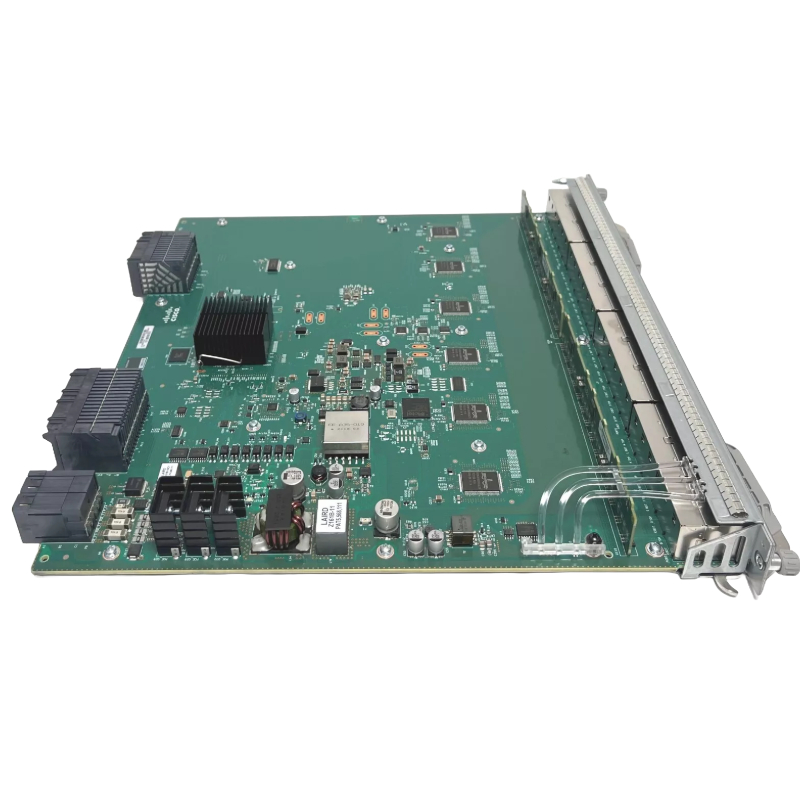
Cisco C9400-LC-48S 48 Ports Series Line Card Switch. Excellent Refurbished with 1 year replacement warranty
| SKU/MPN | Warranty | Price | Condition | You save |
|---|---|---|---|---|
| C9400-LC-48S | 1 Year Warranty | $3,395.00 | Factory-Sealed New in Original Box (FSB) | You save: $1,188.25 (26%) |
| C9400-LC-48S | 1 Year Warranty | $2,960.00 | Excellent Refurbished | You save: $1,036.00 (26%) |
The Cisco C9400-LC-48S is a high-performance 48-port line card engineered for the Catalyst 9400 modular platform, offering exceptional scalability, reliable architecture, and enterprise-grade connectivity. Designed for large organizations, data-intensive environments, and modern digital infrastructures, this module ensures resilient switching capabilities with enhanced throughput and optimized network traffic handling.
The C9400-LC-48S line card offers modern connectivity options suitable for large-scale infrastructure environments. With UPOE+ support, it provides high power output to connected devices, enabling seamless operation of equipment such as advanced wireless access points, IP security devices, and collaboration endpoints.
The Cisco C9400-LC-48S is a high-density 48-port line card designed for the Catalyst 9400 modular chassis family, engineered to deliver enterprise-class access switching performance. Targeted at campus aggregation and large access deployments, this line card supports 48 SFP/SFP+ fiber or copper SFP-based 1G/10G interfaces depending on module and transceiver choices, enabling flexible port configurations for modern campus, branch, and data-center-edge topologies. Built on Cisco's mature Catalyst 9400 architecture, the C9400-LC-48S offers deterministic performance, resilient hardware design, and deep feature parity with Cisco's IOS XE software platform.
At its core, the C9400-LC-48S is optimized to integrate with the Catalyst 9400 chassis and supervisor engine pairings, leveraging distributed forwarding and hardware acceleration to maintain line-rate switching across all 48 ports. The module supports advanced forwarding capabilities such as full wire-rate Layer 2 and Layer 3 switching, sophisticated QoS queuing, and ACL enforcement in hardware. With modularity as a primary design principle, this line card provides IT teams a predictable growth path: mix and match line cards and supervisor engines to scale port density, uplink bandwidth, and feature set while preserving consistent operational processes.
The 48 physical ports on the C9400-LC-48S accept SFP and SFP+ optics, which grants administrators the freedom to provision a mix of 1Gb and 10Gb links as network needs evolve. This optical flexibility supports fiber-based campus distribution and high-performance server-edge links without the need for wholesale platform replacement. Because optics are decoupled from the line card, organizations can tailor each port for distance, medium, and speed—ranging from multimode 1G to singlemode 10G optics—ensuring long-term adaptability and capex efficiency.
The line card forms part of a broader system switching fabric inside the Catalyst 9400 chassis. Performance is expressed both at the per-port level (guaranteed throughput and packet-per-second handling) and at the system level (fabric backplane capacity). The C9400-LC-48S, when paired with current Catalyst 9400 supervisors, supports low-latency switching suitable for latency-sensitive applications, and maintains hardware-based forwarding for common enterprise protocols such as STP, HSRP, VRF-lite, and dynamic routing protocols. The design supports predictable performance even under large broadcast domains and heavy east-west traffic flows typical of modern campus networks.
Software capability is a crucial differentiator for the Catalyst family. The C9400-LC-48S benefits from Cisco IOS XE’s modular OS architecture, which provides continuous feature updates, programmability, and segmentation through virtualization features. Key campus features such as scalable VLANs, flexible netflow, MACsec support on compatible ports, advanced security policies, and telemetry are delivered through the platform's software stack. Because IOS XE supports programmability via streaming telemetry and gNMI/NETCONF APIs, operations teams can integrate the C9400-LC-48S into automated workflows and centralized orchestration platforms.
Security functionality is implemented at both the control and data planes. The C9400-LC-48S supports industry-standard mechanisms to enforce microsegmentation and isolate traffic—these include VLAN and VRF constructs, role-based access control for management, and hardware-accelerated access control lists to block unauthorized flows at wire speed. When used with compatible supervisor engines and optics, the line card can also support MACsec encryption on SFP ports, protecting traffic on fiber links against passive eavesdropping without compromising forwarding performance.
Designed for enterprise availability, the Catalyst 9400 platform delivers redundant supervisor options, hot-swappable line cards, and graceful system failover. In common deployment models, two supervisor engines operate in an active/standby or active/active pairing to maintain control-plane continuity. The C9400-LC-48S contributes to network resilience by supporting non-disruptive insertion and removal (when the system and operations allow) and by enabling path redundancy through a combination of MLAG architectures and dynamic routing protocols. Such resiliency patterns are essential in campus core and distribution layers where downtime must be minimized.
Power budgets and thermal management matter, especially in densely populated racks. The C9400-LC-48S is engineered to work within the Catalyst 9400 chassis power and cooling envelope. Careful planning of optics, fan trays, and power-supply redundancy must be conducted to ensure sustained performance. For PoE requirements, pairing the line card with PoE-capable power supplies and appropriate supervisor configurations is necessary; note that the C9400-LC-48S itself primarily offers switching capacity rather than PoE sourcing on fiber ports, so hybrid deployments often combine copper PoE-enabled line cards with SFP-based fiber cards to address wired device power needs across a campus.
Scalability is achieved by combining additional line cards and supervisor modules within a Catalyst 9400 chassis or by stacking multiple chassis using Cisco StackWise Virtual or equivalent stacking technologies. This approach allows a predictable, linear increase in port capacity and uplink bandwidth while maintaining a unified control plane. The modular model simplifies upgrades: replace or augment line cards as port technology evolves, or add higher-performance supervisors to unlock additional throughput and feature capabilities without rip-and-replace cycles across the entire network.
When comparing the C9400-LC-48S with other line-card options, organizations should evaluate port types (fiber vs copper), supported transceiver speeds, MACsec capability, and per-port feature parity. Some line cards emphasize copper 1G/2.5G/10G RJ-45 ports with PoE support, while the C9400-LC-48S focuses on SFP/SFP+ density. Decisions typically hinge on whether the deployment requires powered access for endpoints or fiber aggregation for high-speed uplinks and long-distance links. Cost per port, optics strategy, and operational familiarity with IOS XE should also factor into the selection.
Optical transceiver choice influences both cost and performance. Cisco-certified SFP and SFP+ modules are recommended to ensure full feature support and transceiver diagnostics, though many customers choose validated third-party optics for cost efficiency when appropriate. Compatibility matrices should be consulted to verify supported optics, speeds, and distances. In multi-vendor environments, interoperability with existing upstream and downstream devices—routers, firewalls, and access switches—must be validated, particularly for features such as MLAG or redundancy protocols that rely on consistent behavior across devices.
Upgrading to the C9400-LC-48S should be planned around both hardware and software lifecycles. Migration strategies often start with a detailed inventory of current ports, optics, and traffic patterns. A common approach phases in C9400 chassis at distribution points while maintaining access switch portfolios, then consolidates services gradually by migrating uplinks and key server connections to the new line card’s fiber interfaces. During upgrades, software image compatibility, feature license requirements, and supervisor end-of-life policies must be addressed to avoid service interruptions and to preserve feature continuity across the network.
Operationalizing the C9400-LC-48S emphasizes configuration hygiene and lifecycle management. Use configuration templates, automation scripts, and image-management workflows to ensure consistency across chassis. Implement role-based access control to limit management plane exposure, and adopt centralized logging and telemetry to detect anomalies early. Regularly validate firmware and patch levels, run scheduled transceiver diagnostics, and track power/thermal telemetry to preempt hardware degradation. Backup configurations and maintain a tested rollback plan before making systemic changes to supervisors or line cards.
When procuring the C9400-LC-48S, buyers should confirm model numbers, software compatibility, supported optics, and warranty/service terms. Ensure that the chassis and supervisor being paired are certified for the desired feature set and that spare parts for field replacement are included in service agreements. Consider total port count requirements, uplink bandwidth needs, and anticipated growth to determine whether a 48-port density per line card meets mid- to long-term needs or whether a mixed population of cards is preferable for a heterogeneous access strategy.
Network hardware must meet regional regulatory standards for safety, emissions, and environmental handling. Verify the C9400-LC-48S’s compliance with local regulations for electromagnetic emissions and product recycling. Data center and wiring-closet deployments should also factor in cooling capacity, rack loading, and seismic anchoring where applicable. Proper labeling and documentation during deployment reduce future audit friction and simplify maintenance cycles.


 Contact Us
 Information
 Catalog
 Solid State Drives (SSD)
 Network Switches
 Hard Disk Drives
 HBA & Controllers
 PC & Servers
 PC & Server Memory
 CPU & Processors
 Network Routers
 Power Supplies
 Tape Drives & Libraries
 Network Devices
 Computer & Network Cables