(7% discount is applied at checkout)
Cart is empty
Your go-to destination for cutting-edge server products
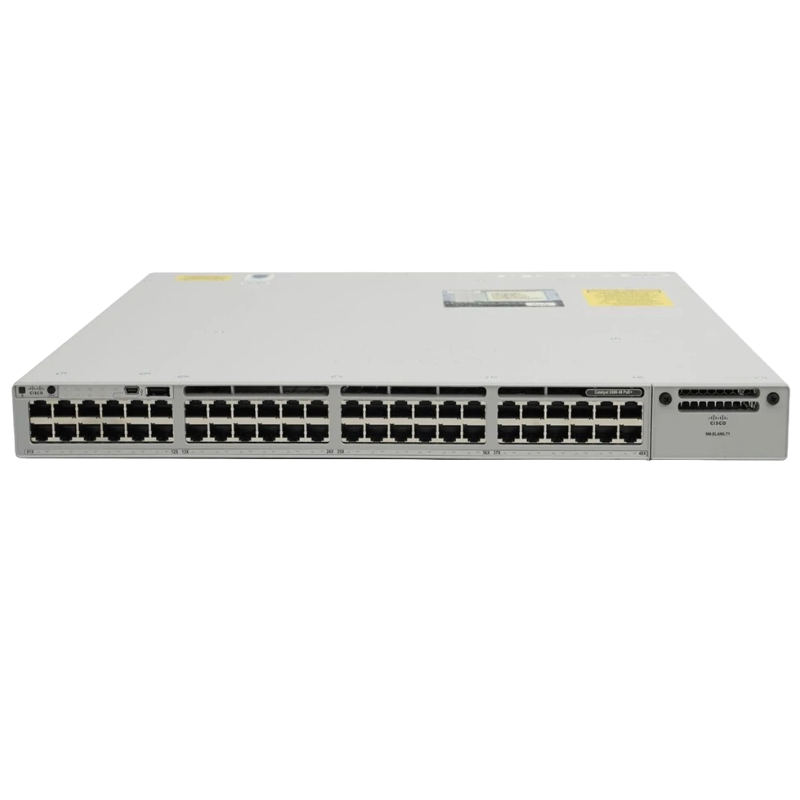


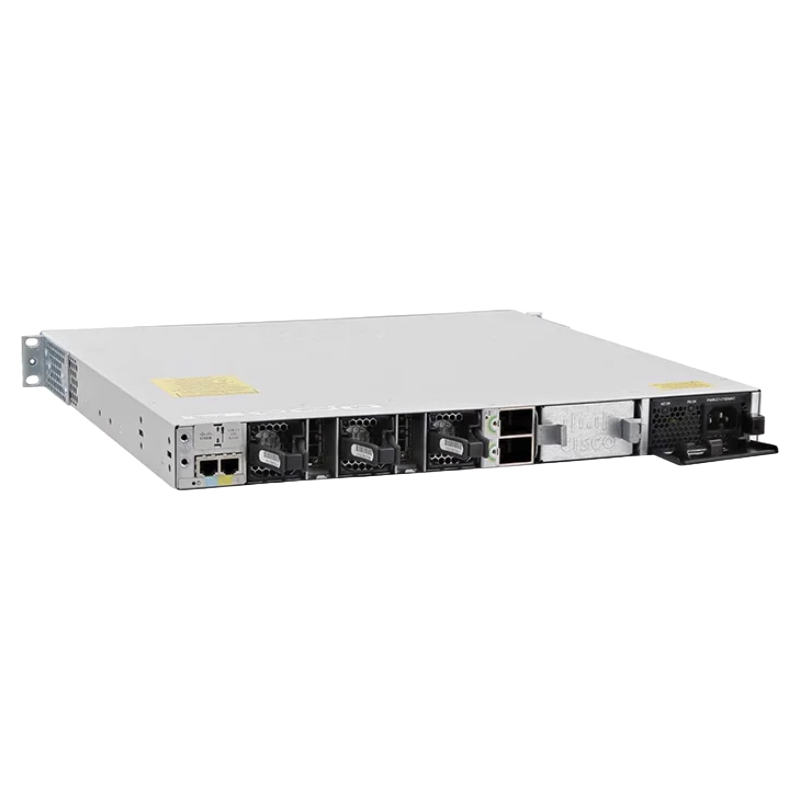
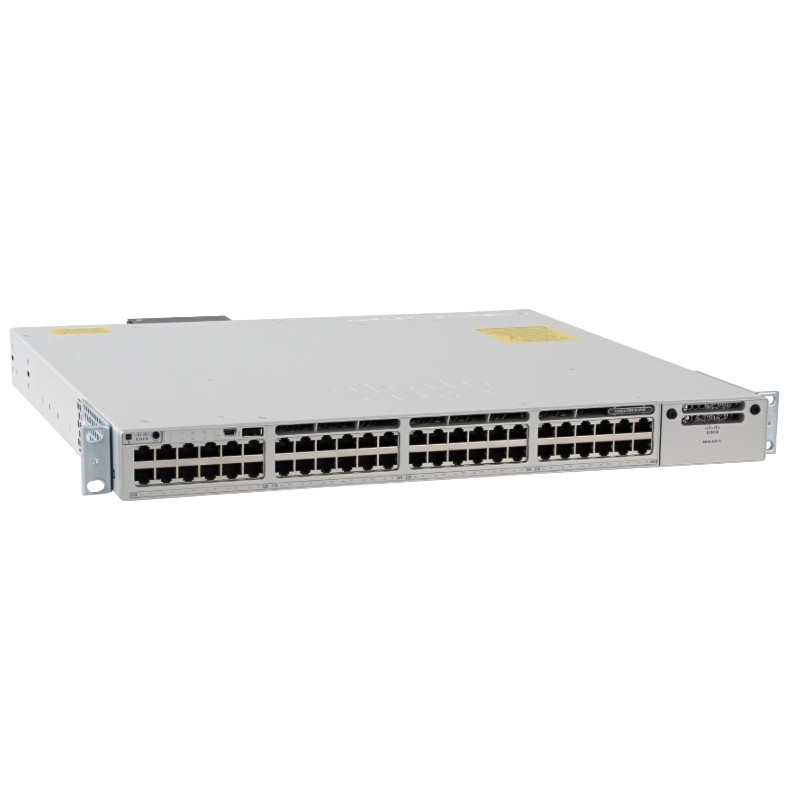
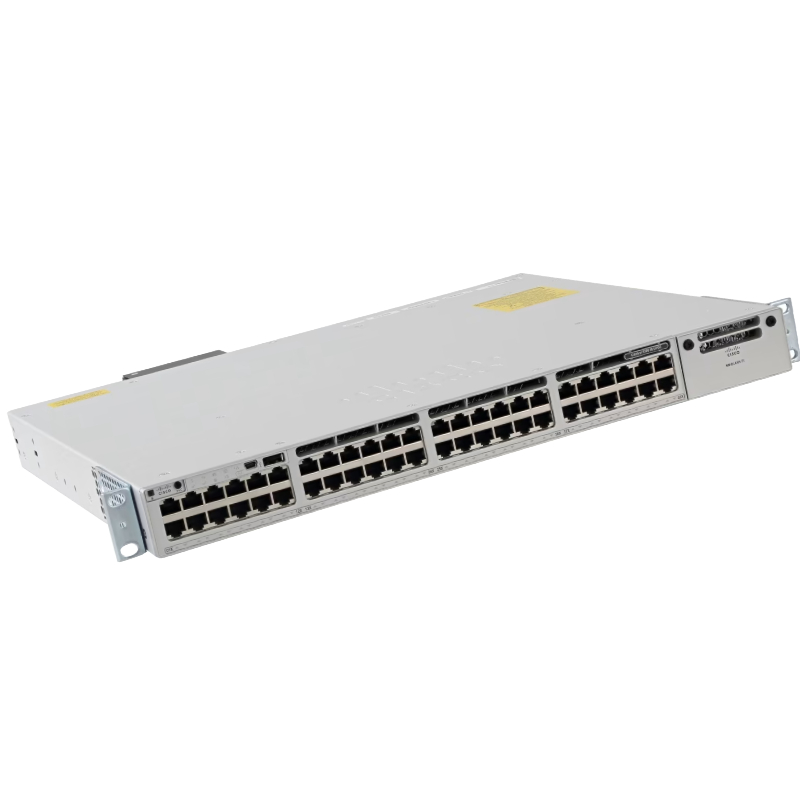
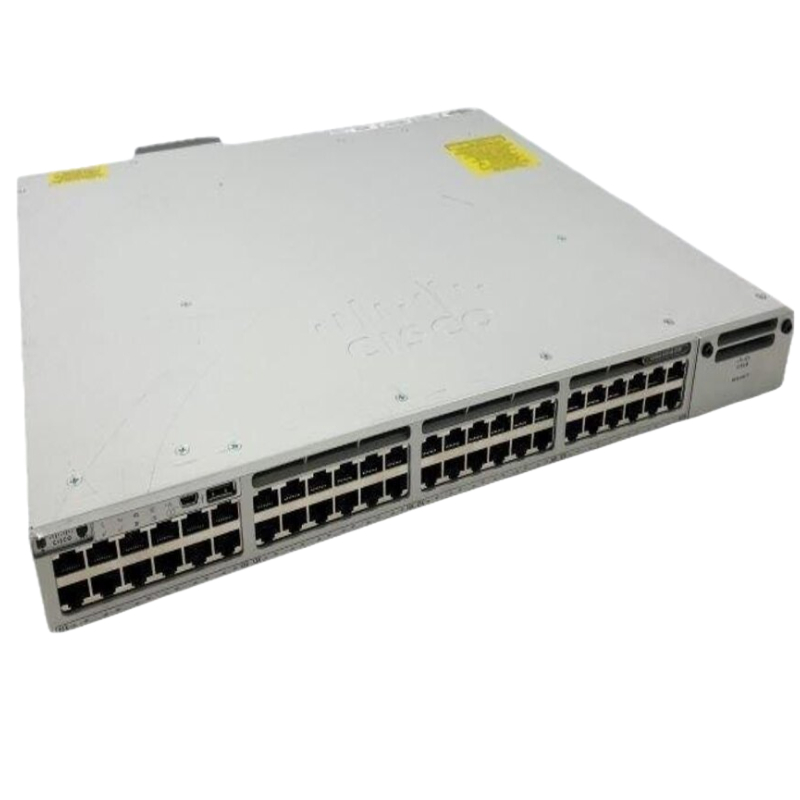
Cisco C9300-48S-E 48 Ports Stackable Switch Network Essentials Layer 3 SFP. Factory-Sealed New in Original Box (FSB) with 1 year replacement warranty
| SKU/MPN | Warranty | Price | Condition | You save |
|---|---|---|---|---|
| C9300-48S-E | 1 Year Warranty | $9,870.00 | Excellent Refurbished | You save: $3,454.50 (26%) |
| C9300-48S-E | 1 Year Warranty | $18,610.00 | Factory-Sealed New Retail in Original Box (FSB) | You save: $6,513.50 (26%) |
Highlight of Cisco Enterprise-Class Managed Switch
The Cisco C9300-48S-E Catalyst 9300 Network Essentials Switch is engineered to serve as a resilient foundation for modern enterprise networks. Built on Cisco’s trusted Catalyst platform, this managed Layer 3 switch delivers consistent performance, operational flexibility, and advanced routing intelligence for access-layer deployments. Its stackable design and high-throughput switching fabric allow organizations to scale network capacity while maintaining centralized control and simplified management.
Designed for demanding enterprise infrastructures, this rack-mountable switch supports dense connectivity scenarios such as campus networks, branch offices, and data-intensive business environments. The compact 1U form factor conserves rack space while still offering extensive port availability and advanced software-driven features.
The Cisco C9300-48S-E Rack-mountable Catalyst 9300 Managed 48 Ports Switch represents a core building block within enterprise access and aggregation layers, engineered to deliver consistent performance, advanced security, and flexible scalability. As part of the Catalyst 9300 family, this model is designed to support evolving network architectures that demand high availability, predictable throughput, and intelligent traffic management across campus, branch, and distributed enterprise environments. Its rack-mountable form factor ensures seamless integration into standard data center and network closets, while its robust hardware architecture provides long-term operational stability.
This category focuses on high-density fiber-based access switching, making the Cisco C9300-48S-E especially relevant for organizations transitioning toward fiber-rich infrastructures. With forty-eight SFP ports, the switch supports reliable connectivity for access points, servers, uplinks to aggregation layers, and fiber-based edge devices. The platform is optimized for continuous operation, supporting enterprises that require nonstop network availability and consistent performance across business-critical applications.
The hardware architecture of the Cisco C9300-48S-E is built around purpose-driven silicon that balances forwarding performance, security enforcement, and programmability. The switch is engineered to process traffic efficiently across all ports without bottlenecks, enabling deterministic latency and stable throughput even during peak usage. This hardware-based approach allows the device to handle advanced features such as quality of service enforcement, access control, and encryption without sacrificing forwarding speed.
Rack-mountable by design, the chassis integrates seamlessly into enterprise racks, supporting standardized airflow and power management practices. Redundant power supply support enhances resilience, reducing downtime risks associated with power-related failures. The internal cooling system is optimized for continuous operation, ensuring consistent thermal performance in dense network environments where multiple devices operate simultaneously.
The forty-eight SFP ports define the core identity of the Cisco C9300-48S-E category. These ports are designed to support a wide range of optical and copper transceivers, enabling flexible deployment scenarios across short-range, long-range, and inter-building connections. This flexibility allows organizations to standardize on a single switching platform while adapting connectivity options to suit diverse physical layouts.
Fiber-based access switching is particularly beneficial in environments where electromagnetic interference, distance limitations, or bandwidth requirements exceed what traditional copper cabling can reliably support. By leveraging SFP connectivity, enterprises can extend network reach while maintaining signal integrity and performance consistency.
The Cisco Catalyst 9300 platform incorporates modular uplink options that enable organizations to tailor upstream connectivity according to evolving network requirements. This modularity allows the Cisco C9300-48S-E to adapt to different aggregation and core architectures, supporting scalable bandwidth growth without requiring complete hardware replacement. As network demands increase, uplink modules can be selected to accommodate higher throughput and future expansion.
This design philosophy aligns with long-term infrastructure planning, ensuring that investments in access switching remain relevant as upstream network layers evolve. The ability to adjust uplink capacity contributes to lower total cost of ownership and simplified lifecycle management.
The Cisco C9300-48S-E category is defined not only by hardware strength but also by its comprehensive software capabilities. Built to operate with Cisco’s enterprise network operating systems, the switch supports a wide array of Layer 2 and Layer 3 features that enable intelligent traffic handling, segmentation, and policy enforcement. These capabilities allow network administrators to design architectures that balance performance, security, and operational simplicity.
Integrated management features provide visibility into network behavior, enabling proactive monitoring and rapid troubleshooting. By leveraging telemetry and analytics, administrators can gain insight into application performance, traffic patterns, and potential anomalies, supporting informed decision-making and efficient resource allocation.
The Cisco C9300-48S-E supports a comprehensive set of Layer 2 features, including advanced VLAN management, spanning tree enhancements, and link aggregation. These capabilities enable stable and loop-free network designs while optimizing bandwidth utilization across redundant paths. At the Layer 3 level, the switch supports dynamic routing protocols and inter-VLAN routing, allowing it to function as both an access and distribution layer device in appropriately sized networks.
This dual-layer functionality simplifies network design by reducing the need for additional routing devices in certain scenarios. It also supports segmented network architectures that isolate traffic for performance optimization and security enforcement.
Quality of Service features are central to the Cisco C9300-48S-E category, ensuring that latency-sensitive applications such as voice, video, and real-time collaboration receive appropriate priority. The switch can classify traffic based on multiple criteria, applying policies that allocate bandwidth and manage congestion effectively. This level of control is essential for organizations that rely on unified communications and cloud-based services.
By enforcing consistent QoS policies at the access layer, enterprises can maintain predictable application performance even during periods of high network utilization. This contributes to improved user experience and reduced operational disruptions.
Continuous network availability is a critical requirement for modern enterprises, and the Cisco C9300-48S-E is designed with resilience in mind. The switch supports features that minimize downtime and maintain service continuity during maintenance activities or unexpected failures. This category emphasizes reliability as a core value, ensuring that network operations remain stable under diverse conditions.
Hardware redundancy, intelligent failover mechanisms, and rapid convergence protocols all contribute to a robust availability profile. These features are essential for organizations that depend on uninterrupted access to digital resources.
The Cisco Catalyst 9300 platform supports advanced stacking technologies that allow multiple switches to operate as a single logical unit. Within the C9300-48S-E category, this capability enables simplified management, increased port density, and enhanced redundancy. Stacked configurations can distribute traffic and control functions across multiple units, reducing the impact of individual device failures.
Stacking also streamlines configuration and monitoring tasks, allowing administrators to manage a group of switches through a unified interface. This operational efficiency is particularly beneficial in large campus deployments.
Fast convergence protocols supported by the Cisco C9300-48S-E ensure rapid recovery from link or device failures. By minimizing reconvergence times, the switch helps maintain application availability and reduce user disruption. Redundant power and uplink options further enhance resilience, providing multiple layers of protection against common failure scenarios.
This focus on high availability aligns with enterprise requirements for business continuity and service-level assurance.
The Cisco C9300-48S-E category is designed to support network growth and technological evolution. Its scalable architecture allows organizations to expand capacity, integrate new services, and adopt emerging technologies without overhauling existing infrastructure. This future-ready approach ensures that the switch remains relevant as network demands evolve.
Support for programmability and automation enables integration with modern network management frameworks. By exposing APIs and supporting automation tools, the switch allows organizations to streamline operations and reduce manual configuration efforts.
The Cisco C9300-48S-E supports programmable interfaces that enable network administrators to automate routine tasks and integrate switching infrastructure with orchestration platforms. This capability supports intent-based networking models, where desired outcomes are defined at a high level and implemented automatically across the network.
Automation reduces configuration errors, accelerates deployment timelines, and enhances operational consistency. These benefits are particularly valuable in large-scale environments with frequent changes.
The Cisco C9300-48S-E is well-suited for a wide range of deployment scenarios, from enterprise campus access layers to aggregation roles in fiber-rich environments. Its high port density and advanced feature set make it an ideal choice for organizations that require reliable, secure, and scalable connectivity.
In campus environments, the switch can support access points, building interconnects, and high-performance endpoints. In enterprise networks, it can function as a distribution layer device, aggregating traffic from multiple access switches while enforcing policies and maintaining performance standards.
Within enterprise campuses, the Cisco C9300-48S-E supports dense user populations and diverse application requirements. Its fiber-based connectivity options enable flexible building layouts and long-distance connections between network segments. Branch deployments benefit from the switch’s compact rack-mountable design and comprehensive feature set, which supports local services while integrating seamlessly with centralized management frameworks.
This versatility allows organizations to standardize on a single switching platform across multiple locations, simplifying procurement and support.
Operational simplicity is a key consideration within the Cisco C9300-48S-E category. The switch is designed to reduce administrative complexity through centralized management, intuitive interfaces, and comprehensive monitoring tools. These capabilities enable IT teams to manage networks more efficiently and respond quickly to changing conditions.
Integration with enterprise management platforms allows administrators to monitor performance metrics, apply configurations, and troubleshoot issues from a centralized location. This reduces the time and effort required to maintain network health.
`


 Contact Us
 Information
 Catalog
 Solid State Drives (SSD)
 Network Switches
 Hard Disk Drives
 HBA & Controllers
 PC & Servers
 PC & Server Memory
 CPU & Processors
 Network Routers
 Power Supplies
 Tape Drives & Libraries
 Network Devices
 Computer & Network Cables