(7% discount is applied at checkout)
Cart is empty
Your go-to destination for cutting-edge server products
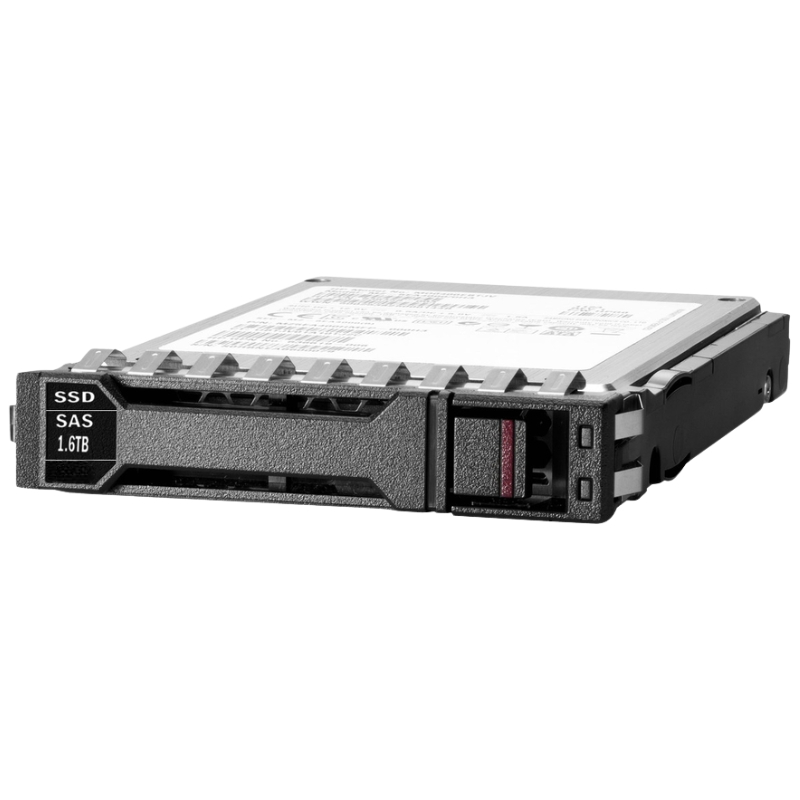


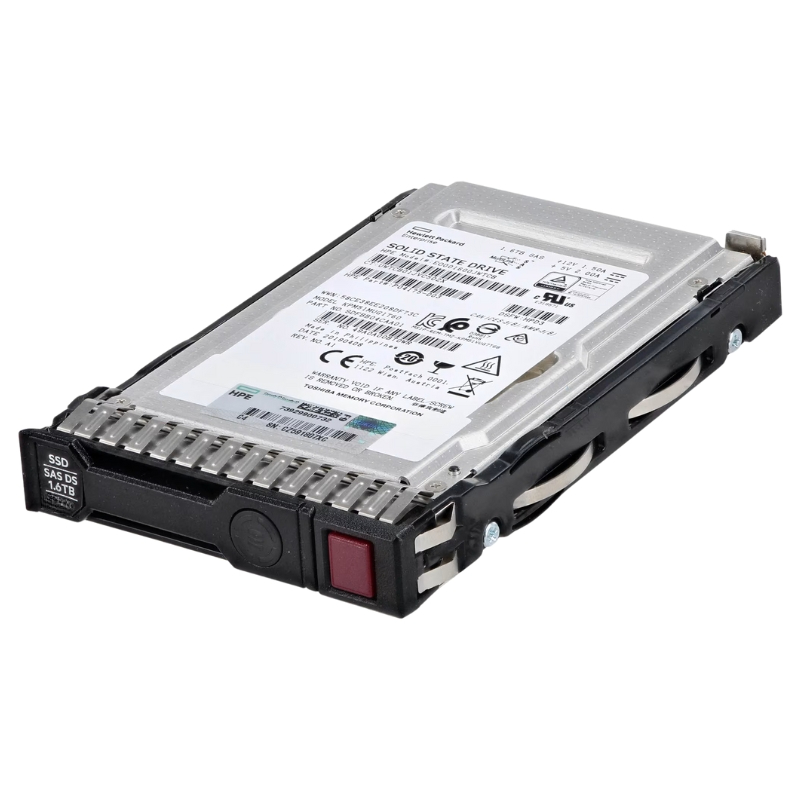
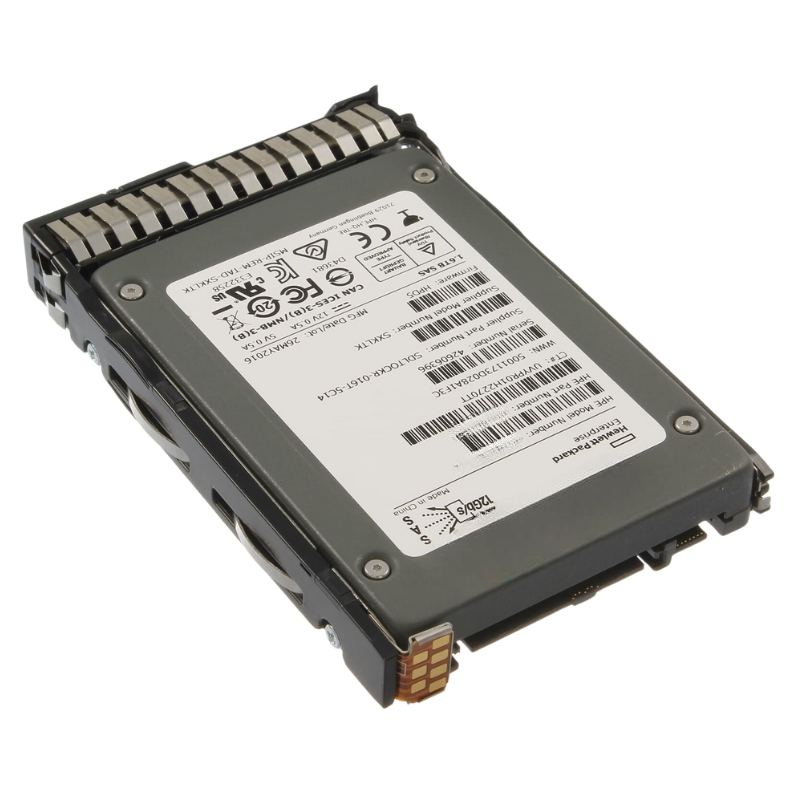
HPE P49032-B21 1.92TB SSD SAS-24Gbps Read Intensive. Excellent Refurbished with 1 year replacement warranty
The HPE P49032-B21 1.92TB SAS-24GBPS Read Intensive SSD is a high-end enterprise storage solution engineered to deliver outstanding speed, reliability, and endurance. It is ideal for data-intensive workloads that require consistent read performance and high availability.
Technical Specifications
Designed with a 24Gbps SAS interface, this SSD offers blazing-fast read speeds, reducing latency and improving data throughput for mission-critical applications.
Built for enterprise environments, it features advanced error correction, wear leveling, and power-loss protection for data integrity and longevity.
The HPE P49032-B21 is ideal for workloads with high read demands such as online transaction processing (OLTP), virtualization, web hosting, and cloud infrastructure.
Includes enterprise-grade data protection mechanisms and encryption to ensure your data remains secure and accessible at all times.
Designed to minimize downtime and maximize availability, supporting 24x7 operational workloads in business-critical systems.
Consumes less power while maintaining high throughput, making it both performance-efficient and environmentally friendly.
The HPE P49032-B21 1.92TB SAS-24Gbps Read Intensive SSD category centers on enterprise-grade, high-capacity solid-state drives engineered for read-heavy workloads in modern data centers. This category description explores the product’s intended use cases, technical characteristics, deployment patterns, and procurement considerations so you — whether an IT architect, systems administrator, or procurement manager — can quickly evaluate fit for your environment. The product name itself signals three essential attributes: the HPE part number (P49032-B21), a large usable capacity (1.92TB), and a high-speed SAS interface (24 Gbps), optimized for read-intensive applications. Throughout this section we break down the implications of those attributes and provide actionable guidance for selection, deployment, and lifecycle management.
The SAS-24Gbps interface in this category supports robust, low-latency connections typical for enterprise servers and storage arrays. 24 Gbps SAS (also referred to as 24G SAS) provides backward compatibility with older SAS generations while enabling high throughput and predictable latency for multi-threaded read workloads. For architects this means easier integration into existing HPE and third-party storage controllers and host bus adapters (HBAs), and strong interoperability with RAID controllers that expect SAS signaling and enterprise-class command sets.
A 1.92TB capacity point is intentionally chosen to balance high-density storage needs without pushing into the highest density (and typically higher-latency) QLC-only tiers. For many data center applications — such as metadata stores, virtual desktop infrastructure (VDI) read caches, boot volumes, and index/search nodes — 1.92TB provides a pragmatic middle ground: enough capacity to consolidate multiple smaller volumes while remaining in a performance-focused product stack.
The "read-intensive" designation is critical. SSDs sold under this category are optimized for workloads where read operations significantly outnumber writes. Typical target workloads include content delivery networks (CDNs), database read replicas, virtualization host read caches, analytics queries, search indexes, and large-scale file serving. These drives are engineered with controller firmware, flash allocation strategies, and endurance curves that favor high sustained read throughput and deterministic read latency, while still offering sufficient write endurance for normal administrative and update activity.
When evaluating drives in this category, focus on sustained throughput and read IOPS at realistic queue depths similar to your production environment. Read-intensive SSDs deliver strong sequential and random read performance; the SAS-24Gbps link helps minimize host-side bottlenecks. Latency should remain low and consistent under medium-to-high read concurrency — a crucial characteristic for latency-sensitive applications such as real-time analytics and front-end databases. Plan to benchmark with representative workloads and not only synthetic tests: real-world read patterns reveal how well a drive maintains performance under mixed operations and background maintenance tasks.
To get the most from the P49032-B21 class drives, tune host-side parameters such as queue depth, I/O scheduler settings, and RAID stripe sizes. Many enterprise controllers provide offload features that can reduce CPU overhead and improve latency, especially when using high-bandwidth SAS links. For virtualization and hyperconverged platforms, ensure storage multipathing is configured correctly to spread I/O across available paths without introducing unnecessary failover delays.
Firmware plays a decisive role in drive behavior. Firmware updates often include optimizations for latency, garbage collection, and rebuild behavior during RAID resyncs. Always validate firmware compatibility with your HPE servers, storage arrays, and controller firmware levels. Follow vendor guidance for approved firmware versions on specific platforms to ensure predictable service and support.
Read-intensive SSDs typically offer endurance ratings tuned to moderate write rates compared to mixed-use or write-intensive drives. Endurance is expressed in drive writes per day (DWPD) or total terabytes written (TBW) over warranty life. For environments dominated by reads, this endurance is often more than adequate. Nevertheless, when used for tasks like system logging, temporary data writes, or periodic snapshotting, ensure write activity remains within manufacturer ratings. If your application performs heavy background writes (e.g., bulk ingestion pipelines), consider a higher-endurance class drive instead.
Enterprise SSDs often include power-loss protection mechanisms and enhanced data integrity features such as end-to-end data path protection and robust ECC schemes. These protections reduce the risk of data corruption during unexpected power events or controller resets. For mission-critical deployments, correlate the drive-level features with your host platform’s power-loss and UPS strategies to maintain transactional consistency.
Mean time to failure (MTTF) and annualized failure rate (AFR) are useful metrics for long-term reliability planning. In addition to raw MTTF numbers, consider packaging and serviceability: hot-swapability, standardized drive trays, and HPE-branded service contracts simplify replacement and reduce mean time to repair (MTTR). Drives in this category are commonly integrated into HPE ProLiant servers and storage arrays with predictable servicing workflows.
The SAS-24Gbps interface and HPE part number indicate first-class compatibility with HPE Gen10/Gen11 server families and HPE storage enclosures that support 24G SAS. These drives are suitable for direct-attach use in server drive bays, as well as in external storage shelves and hybrid arrays where they can act as read-tier accelerators. Before deployment, verify model-level compatibility on HPE support matrices or your configuration management database to ensure full support for monitoring and predictive failure notifications.
When used in RAID arrays, consider RAID level selection carefully. Read-intensive SSDs often pair well with RAID 1, RAID 5 or RAID 6 configurations depending on redundancy and capacity needs. Rebuild times and rebuild-induced performance degradation are important: SSDs typically rebuild faster than HDDs, but the rebuild process can still affect latency. Configure rebuild throttling or use controllers with intelligent rebuild features to minimize impact on production I/O.
In virtualized environments, these drives are commonly used for read caches, template stores, and VDI boot volumes where high read density benefits many virtual machines. For hyperconverged infrastructure (HCI), they can serve as the persistent read tier, improving boot storms and read-heavy operations without requiring all-flash arrays for every node.
Read-heavy database workloads—such as read replicas, analytical query nodes, and BI dashboards—benefit from the deterministic read performance of this SSD class. Use these drives for index and cache volumes where rapid, consistent reads reduce query time and improve throughput. Pair with adequate RAM and CPU resources to avoid host-side bottlenecks that could mask the drive’s advantages.
For CDN edge servers and media streaming appliances that perform many concurrent reads of static or rarely changing content, the P49032-B21 class drives provide low-latency access and high concurrency without excessive cost compared to write-optimized models. Their capacity enables packing a significant catalog of frequently accessed assets into a single drive bay or array.
VDI environments often experience read spikes during login and boot storms. These drives can serve boot image repositories or host-level caches, dramatically speeding up boot times and profile loads during peak activity, especially when combined with intelligent caching software or deduplicating storage layers.


 Contact Us
 Information
 Catalog
 Solid State Drives (SSD)
 Network Switches
 Hard Disk Drives
 HBA & Controllers
 PC & Servers
 PC & Server Memory
 CPU & Processors
 Network Routers
 Power Supplies
 Tape Drives & Libraries
 Network Devices
 Computer & Network Cables