(7% discount is applied at checkout)
Cart is empty
Your go-to destination for cutting-edge server products
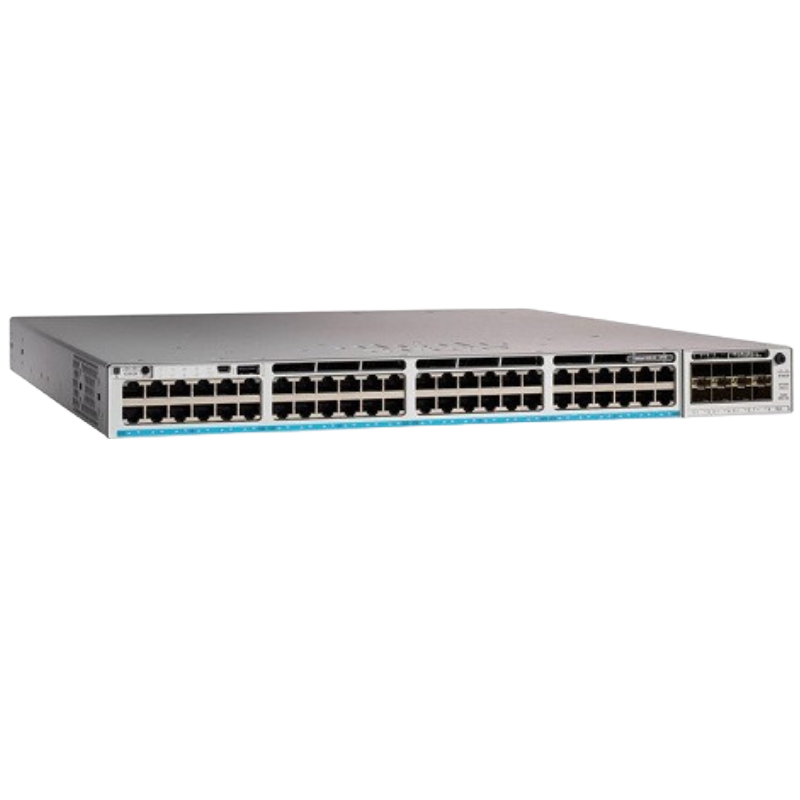


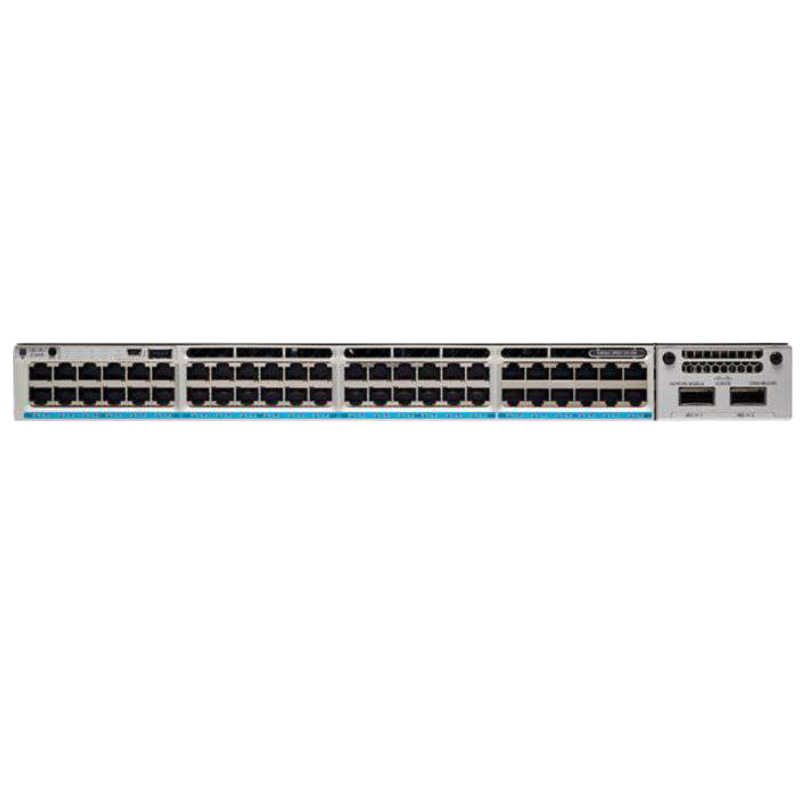
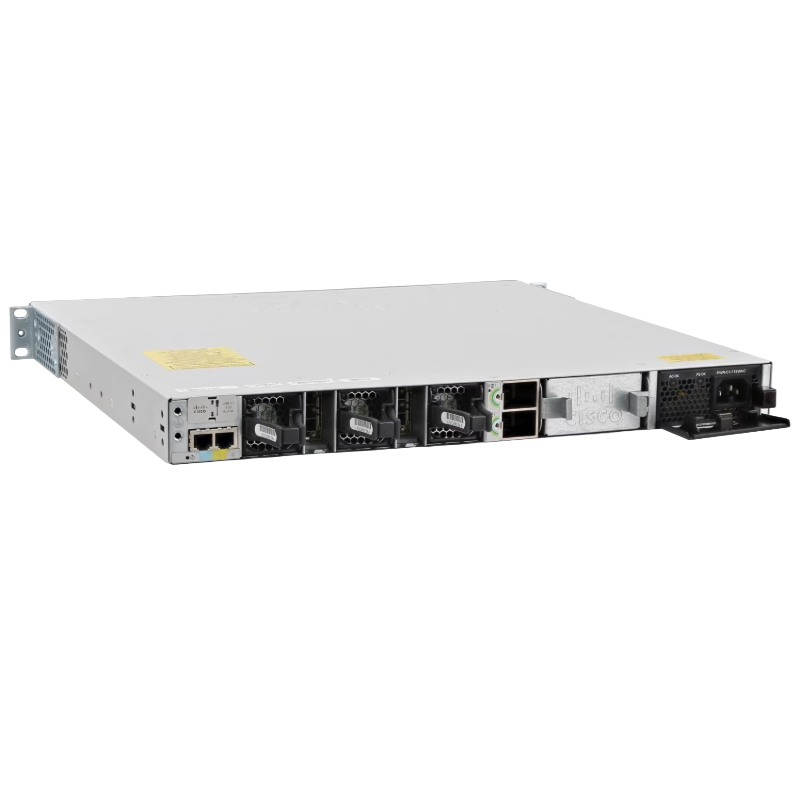
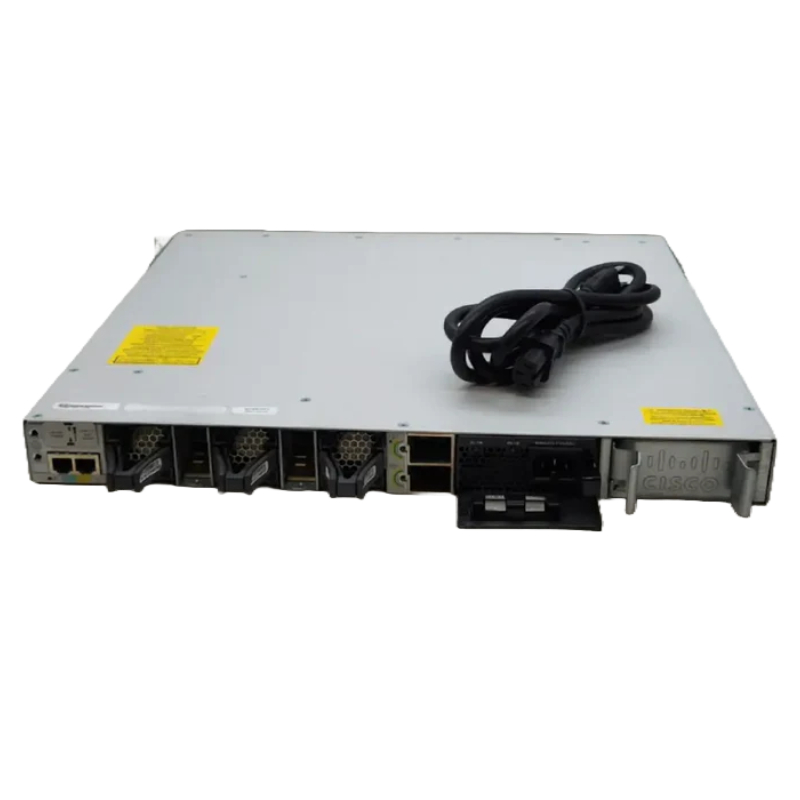
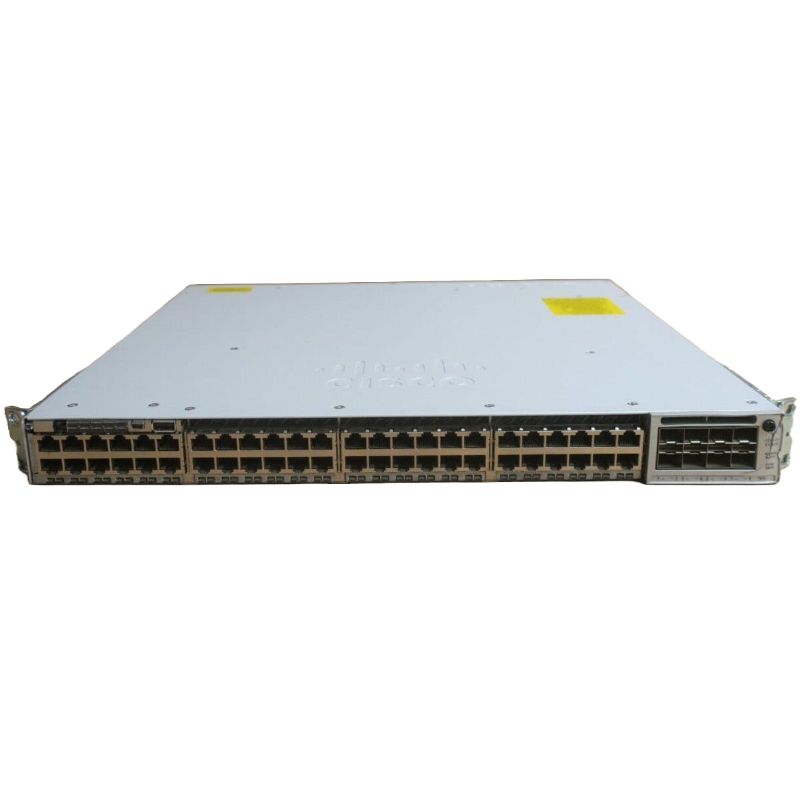
Cisco C9300-48H-A Catalyst 9300 48 X 10/100/1000 Rack-mountable UPOE+ L3 Managed Switch. Excellent Refurbished with 1 year replacement warranty
| SKU/MPN | Warranty | Price | Condition | You save |
|---|---|---|---|---|
| C9300-48H-A | 1 Year Warranty | $5,799.00 | Excellent Refurbished | You save: $2,029.65 (26%) |
| C9300-48H-A | 1 Year Warranty | $10,330.00 | Factory-Sealed New in Original Box (FSB) | You save: $3,615.50 (26%) |
The Cisco C9300-48H-A belongs to the Catalyst 9300 Series, engineered to deliver resilient, scalable, and intelligent campus switching. Designed for modern enterprise networks, this Layer 3 managed switch combines high-density Gigabit Ethernet connectivity with advanced UPOE+ power delivery, making it suitable for unified communications, IoT, and bandwidth-intensive applications.
The Cisco C9300-48H-A Catalyst 9300 48 X 10/100/1000 Rack-mountable UPOE+ L3 Managed Switch represents a core component of modern enterprise access layer design. Built to support high-density connectivity, advanced Layer 3 routing, and next-generation power delivery, this category focuses on scalable switching solutions engineered for performance, resiliency, and long-term network evolution. Devices in this class are optimized for organizations that demand secure, intelligent, and software-driven network infrastructures capable of supporting mission-critical applications.
This category addresses the needs of enterprises deploying converged networks that carry data, voice, video, and wireless traffic across a unified switching fabric. The Catalyst 9300 series, including the C9300-48H-A model, is designed to operate as a foundational access switch, seamlessly integrating with distribution and core layers while enabling consistent policy enforcement and automation across the network.
Switches in this category are engineered to provide 48 ports of 10/100/1000 Ethernet connectivity, enabling flexible support for a wide range of endpoint devices. From traditional desktop systems and IP phones to advanced wireless access points and IoT devices, the port density ensures efficient aggregation of edge traffic. The ability to auto-negotiate speeds allows seamless interoperability with both legacy and modern network hardware.
The port configuration supports environments where consistent throughput and low latency are essential. By delivering wire-speed performance across all ports, this category ensures that network congestion is minimized even during peak usage periods. The hardware architecture is optimized for simultaneous data forwarding and power delivery without compromising stability.
One of the defining attributes of this category is support for Universal Power over Ethernet Plus. UPOE+ enables significantly higher power output per port compared to standard PoE or PoE+, allowing switches to power advanced endpoints directly through Ethernet cabling. This capability is particularly valuable for high-performance wireless access points, digital signage, thin clients, and collaborative video devices.
The integrated power management architecture allows administrators to monitor and allocate power intelligently across ports. Dynamic power negotiation ensures that connected devices receive only the power they require, enhancing energy efficiency while protecting connected equipment. This makes the category suitable for large-scale deployments where centralized power management is a strategic priority.
Modern enterprise networks increasingly rely on endpoints that demand higher wattage. Devices such as multi-radio Wi-Fi access points and advanced security cameras benefit from UPOE+ support, eliminating the need for external power adapters. This simplifies installations, reduces cabling complexity, and supports cleaner, more organized infrastructure layouts.
This category emphasizes full Layer 3 switching capabilities, enabling advanced routing and segmentation directly at the access layer. By supporting static routing and dynamic routing protocols, these switches reduce reliance on upstream devices for inter-VLAN communication. This design improves overall network efficiency and reduces latency for local traffic flows.
Layer 3 features support scalable network architectures where policy enforcement and traffic control can be distributed closer to endpoints. This approach aligns with modern campus network designs that prioritize flexibility, security, and performance at scale.
Support for inter-VLAN routing, access control lists, and policy-based routing allows network administrators to segment traffic according to business requirements. This segmentation enhances security by isolating sensitive systems while maintaining efficient communication pathways. The category is particularly well-suited for enterprises with diverse departmental needs or multi-tenant environments.
Hardware-accelerated forwarding ensures that routing decisions are executed at line rate. This capability is critical for environments where real-time applications such as voice and video require predictable performance and minimal jitter.
The rack-mountable design of this category supports standardized data center and wiring closet installations. With a form factor optimized for space efficiency, these switches integrate seamlessly into existing racks while providing front-facing access to ports, indicators, and management interfaces.
Durable construction and efficient airflow design contribute to reliable operation in demanding environments. The physical layout supports hot-swappable components in supported configurations, reducing maintenance downtime and improving serviceability.
Efficient cooling mechanisms and intelligent fan controls help maintain optimal operating temperatures. This design reduces noise and power consumption while extending hardware lifespan. Power supplies are engineered for reliability and support redundancy options where applicable, ensuring continuous operation in enterprise settings.
This category is built with software-defined networking principles in mind. Integration with centralized management platforms allows administrators to configure, monitor, and troubleshoot the network from a unified interface. Automation capabilities reduce manual configuration tasks and help ensure consistent policy application across multiple devices.
Programmability features support integration with orchestration tools and APIs, enabling advanced workflows and custom automation. This makes the category suitable for organizations adopting DevOps-inspired network management practices.
By leveraging centralized controllers, network policies related to security, quality of service, and segmentation can be defined once and enforced consistently. This approach reduces configuration errors and simplifies ongoing network operations.
Enhanced telemetry and monitoring capabilities provide deep insights into traffic patterns, endpoint behavior, and application performance. This data-driven visibility enables proactive troubleshooting and informed capacity planning.
Security is a core focus of this category, with features designed to protect the network at the point of access. Advanced authentication mechanisms ensure that only authorized users and devices can connect. Integrated security features support compliance requirements and reduce the risk of unauthorized access.
The access layer plays a critical role in enforcing network security policies. By implementing security controls directly on the switch, organizations can detect and mitigate threats closer to their source.
Capabilities such as port-based access control, secure segmentation, and encrypted management traffic contribute to a robust security posture. These features help protect sensitive data and maintain network integrity across diverse deployment scenarios.
Automated onboarding processes simplify the addition of new devices while maintaining strict security controls. This balance of usability and protection is essential in dynamic enterprise environments.
The Cisco C9300-48H-A Catalyst 9300 series category is designed with long-term scalability in mind. Modular uplink options and software-based feature expansion allow organizations to adapt their network as requirements evolve. This future-ready approach protects infrastructure investments and supports gradual network modernization.
Scalability extends beyond hardware capabilities to include support for emerging technologies and standards. This ensures compatibility with next-generation wireless, security, and collaboration solutions.
Modular design elements enable incremental upgrades without complete hardware replacement. This flexibility reduces total cost of ownership and supports sustainable network growth.
As enterprise networks continue to expand in scale and complexity, switches in this category provide the performance headroom and feature depth required to support new applications and services.
This category is ideally suited for a wide range of deployment scenarios, including corporate campuses, educational institutions, healthcare facilities, and large commercial environments. The combination of high port density, advanced power delivery, and robust management features makes it adaptable to diverse operational requirements.
From centralized IT-managed environments to distributed branch deployments, these switches deliver consistent performance and policy enforcement. Their versatility supports both traditional wired networks and hybrid environments integrating wireless and IoT technologies.
Seamless integration with broader network architectures enables unified management across multiple locations. This consistency simplifies operations and enhances overall network reliability.


 Contact Us
 Information
 Catalog
 Solid State Drives (SSD)
 Network Switches
 Hard Disk Drives
 HBA & Controllers
 PC & Servers
 PC & Server Memory
 CPU & Processors
 Network Routers
 Power Supplies
 Tape Drives & Libraries
 Network Devices
 Computer & Network Cables