(7% discount is applied at checkout)
Cart is empty
Your go-to destination for cutting-edge server products
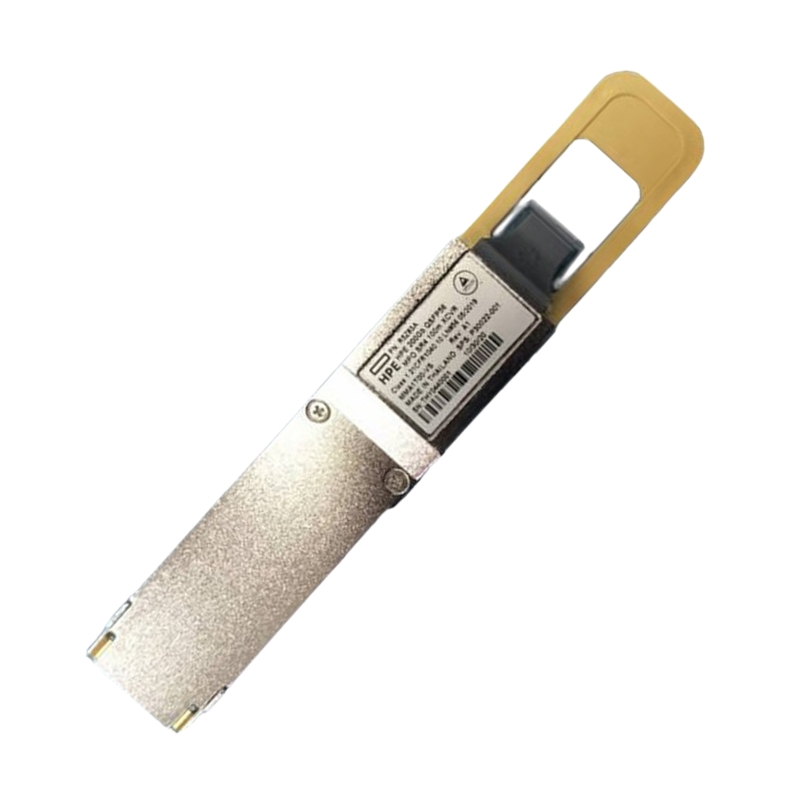


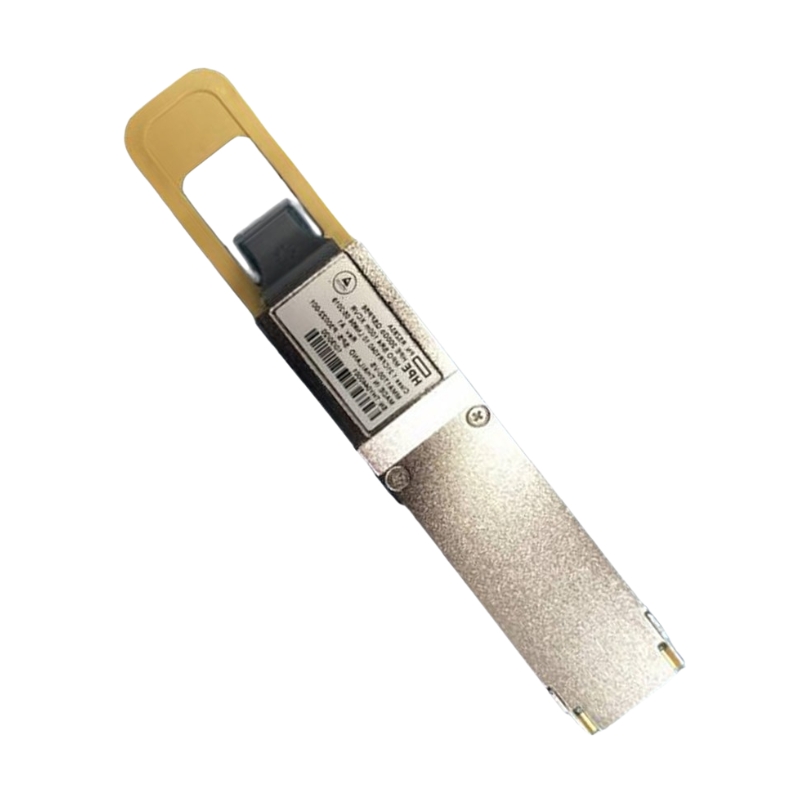
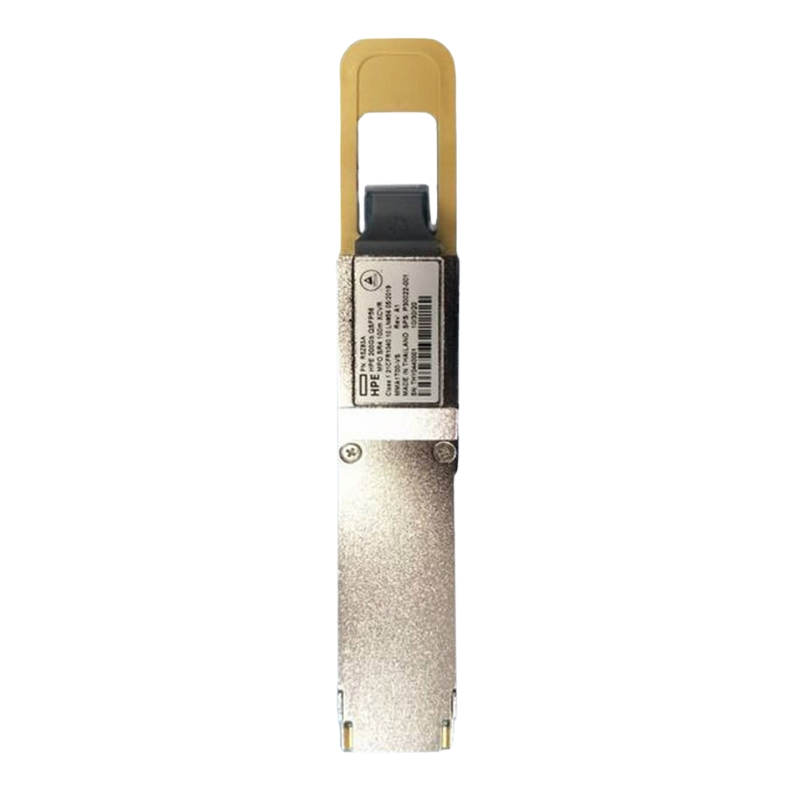
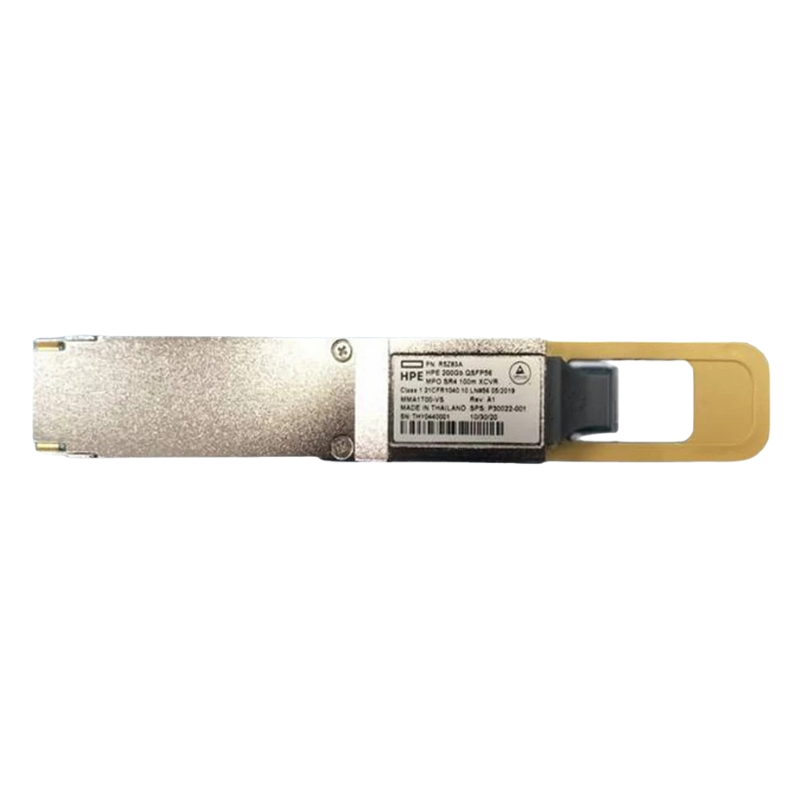
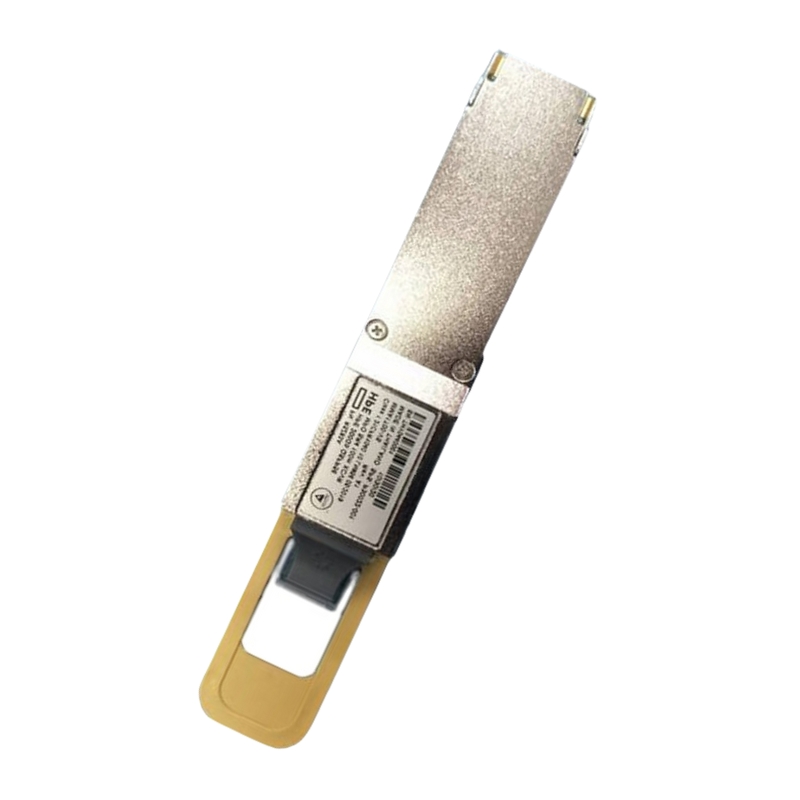
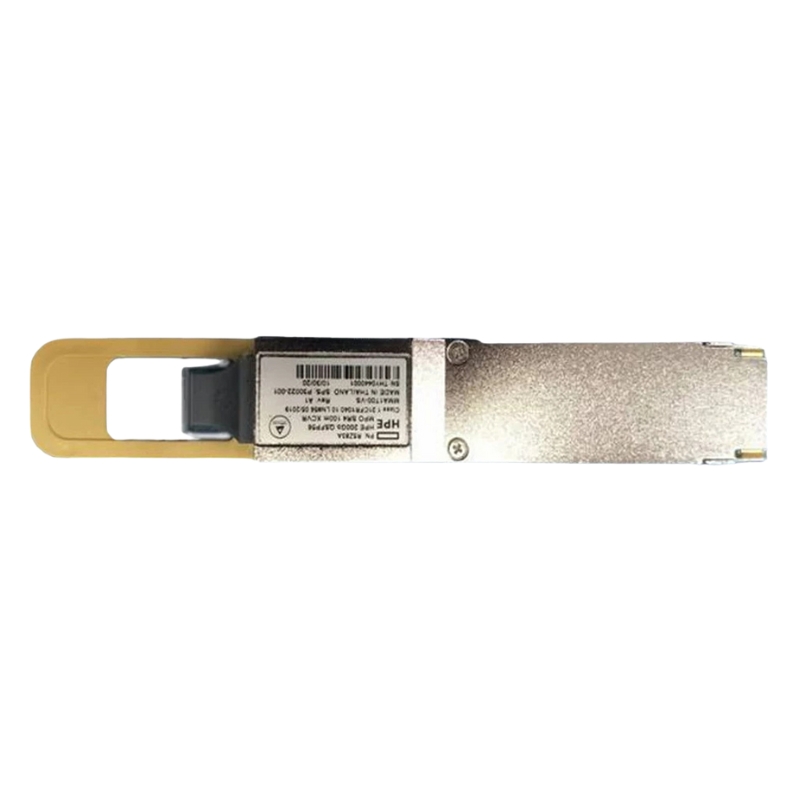
HPE R5Z83A 200 Gigabit QSFP56 MPO SR4 100m Multi Mode Transceiver Module. Excellent Refurbished with 1 Year Replacement Warranty
The HPE R5Z83A 200Gb QSFP56 MPO SR4 optical transceiver is a high-performance networking solution engineered for next-generation data centers, enterprise environments, and cloud infrastructures. Designed to deliver ultra-fast data transfer speeds, this module ensures seamless integration with HPE networking systems, offering dependable performance and energy-efficient operation for bandwidth-intensive applications.
Offering a blazing data rate of 200Gb, this QSFP56 module provides exceptional throughput for high-capacity environments such as artificial intelligence workloads, cloud platforms, and virtualization networks. With such speed, organizations can optimize data traffic without bottlenecks.
The transceiver supports multi-mode MPO-12 cabling, making it a cost-effective and scalable choice for short-distance connectivity within modern data centers. It is designed to ensure consistent signal integrity across fiber links.
The slim and portable form factor allows dense port configurations in racks and switches. Despite its compact size, the module guarantees durability, low power consumption, and a user-friendly plug-and-play design.
Perfectly suited for high-density data centers, this transceiver helps maintain reliable connections between servers, switches, and storage units. Its MPO-12 interface makes it easier to manage structured cabling systems efficiently.
Enterprises leveraging cloud computing and virtualization platforms will benefit from the R5Z83A module’s high throughput, ensuring real-time data exchange, seamless workload balancing, and uninterrupted application performance.
Designed for HPC clusters and AI-driven workloads, the transceiver minimizes latency while supporting parallel computing tasks that demand consistent, high-bandwidth connections.
The module’s low-power design ensures reduced operational costs and less heat generation, making it ideal for energy-conscious data centers.
Manufactured with premium-grade components, this optical module withstands rigorous workloads and offers stable performance in mission-critical infrastructures.
Whether in top-of-rack switches, spine-leaf architectures, or aggregation layers, the HPE R5Z83A delivers versatile connectivity options.
Being part of HPE’s ecosystem, this transceiver ensures smooth interoperability across a wide range of servers, storage, and networking solutions, helping IT teams build resilient and scalable infrastructures.
The HPE R5Z83A 200 Gigabit QSFP56 MPO SR4 100m Multi Mode Transceiver Module category covers high-performance short-range optical interfaces designed for modern data centers, hyperscale environments, and high-density networking racks. These modules deliver 200 Gigabit per second (200Gb) throughput using a QSFP56 form factor and MPO/MTP connectivity to support multi-mode fiber (MMF) links up to 100 meters over OM4 (and often OM3) fiber. This category page focuses on technical specifications, deployment guidance, compatibility notes, cabling strategies, best practices, and buyer guidance for network architects, IT procurement teams, and systems integrators searching for reliable 200Gb QSFP56 SR4 transceivers.
The HPE R5Z83A QSFP56 module presents a 200Gb Ethernet logical interface typically composed of four 50Gb lanes (often implemented as 4 x 50Gb PAM4 lanes). It supports host-side QSFP56 sockets and interoperates with switches and routers that accept HPE original equipment manufacturer (OEM) optics or compatible third-party transceivers. The module uses a standard QSFP56 electrical pinout and supports digital diagnostics monitoring (DDM) for real-time monitoring of laser bias current, temperature, optical power and voltage.
These transceivers are hot-pluggable QSFP56 modules designed for rack-mount top-of-rack or aggregation switches. Typical environmental specs to confirm include operating temperature range (commercial or extended), storage temperature, relative humidity tolerance, and shock/vibration ratings. HPE branded modules often adhere to extended operating temperature ranges suitable for data center and controlled-edge environments.
For optimized 100m performance, OM4 multimode fiber is the recommended cabling choice. OM4 offers a higher modal bandwidth than OM3 and provides better headroom for longer SR4 links. OM3 can be used in many deployments but may limit reach depending on the number of connectors, patch panels and overall loss. OM5 fiber is designed to support wideband multimode applications using SWDM but is less commonly required for standard QSFP56 SR4 links.
The MPO/MTP 12-fiber connector is the standard interface for SR4 parallel optics. When designing a link:
Typical deployment patterns for this category include:
The HPE R5Z83A is an OEM-branded transceiver and is explicitly validated for HPE networking platforms. When selecting optics, verify platform compatibility lists and firmware releases on target switches. Some HPE switches will accept third-party optics but may have feature or support limitations — always check the switch's compatibility matrix and release notes for QSFP56 200Gb SR4 support.
Although QSFP56 SR4 uses industry-standard physical and optical specifications, interoperability can be impacted by vendor-specific hardware checks or firmware locks. If you deploy HPE R5Z83A modules into a mixed-vendor environment, test link-up, DDM reporting, and advanced features (like forward error correction and telemetry) in a lab before large-scale rollout.
These modules support digital diagnostics monitoring (DDM) through standard SFF-8636/SFF-8631 registers. Network management systems can poll temperature, optical transmit and receive power, supply voltage and laser bias current. DDM support enables faster troubleshooting and proactive maintenance when integrated into your network monitoring platform.
In modern leaf-spine topologies, 200Gb QSFP56 SR4 transceivers are commonly used for spine-to-leaf and leaf-to-aggregation links where short-range, high-bandwidth interconnects are required. Their high density and parallel optics approach reduce cabling complexity and improve aggregate throughput in dense switch fabrics.
Deploy QSFP56 SR4 modules for ToR uplinks when aggregation points are within 100m of rack servers or adjacent racks. The MPO connector facilitates plug-and-play trunking between ToR switches and spine switches in medium-sized data halls.
HPC clusters and parallel file systems benefit from the low-latency, high-bandwidth links offered by 200Gb optics. Use these modules for inter-switch links in compute clusters and storage fabric backbones where traffic patterns demand high east-west bandwidth.
QSFP56 SR4 (200Gb) provides higher aggregate bandwidth than QSFP28 (100Gb) QSFP28 modules and may be preferred where future-proofing and higher spine-leaf bandwidths are required. However, SFP-DD and other modular interfaces may be attractive for different density or power-per-port trade-offs. Evaluate based on switch compatibility, port density, and cooling capabilities.
HPE R5Z83A modules conform to industry transceiver specifications for QSFP56 and SR4 operation. Ensure compliance with local electromagnetic compatibility (EMC) and safety regulations when deploying at scale. Check packaging and datasheets for specific regulatory markings and RoHS compliance statements.
Multilane QSFP56 optics are engineered for efficiency, but higher aggregate bandwidth increases heat density in switch fabrics. Factor in additional cooling capacity when densifying ports and consult switch thermal guidelines to prevent thermal throttling or elevated failure rates.
Investing in 200Gb infrastructure like the HPE R5Z83A provides headroom for future growth, consolidates cabling, and reduces the number of uplink ports needed to achieve equivalent bandwidth. These factors can lower operational overhead and improve application performance for bandwidth-sensitive workloads.
Use this category as a comprehensive repository for product pages, spec sheets, installation guides, and related accessories centered on the HPE R5Z83A 200 Gigabit QSFP56 MPO SR4 100m Multi Mode Transceiver Module. Combine the technical insights here with vendor datasheets and compatibility matrices to create a conversion-optimized product category that helps buyers compare options, evaluate risk, and accelerate procurement.


 Contact Us
 Information
 Catalog
 Solid State Drives (SSD)
 Network Switches
 Hard Disk Drives
 HBA & Controllers
 PC & Servers
 PC & Server Memory
 CPU & Processors
 Network Routers
 Power Supplies
 Tape Drives & Libraries
 Network Devices
 Computer & Network Cables