(7% discount is applied at checkout)
Cart is empty
Your go-to destination for cutting-edge server products
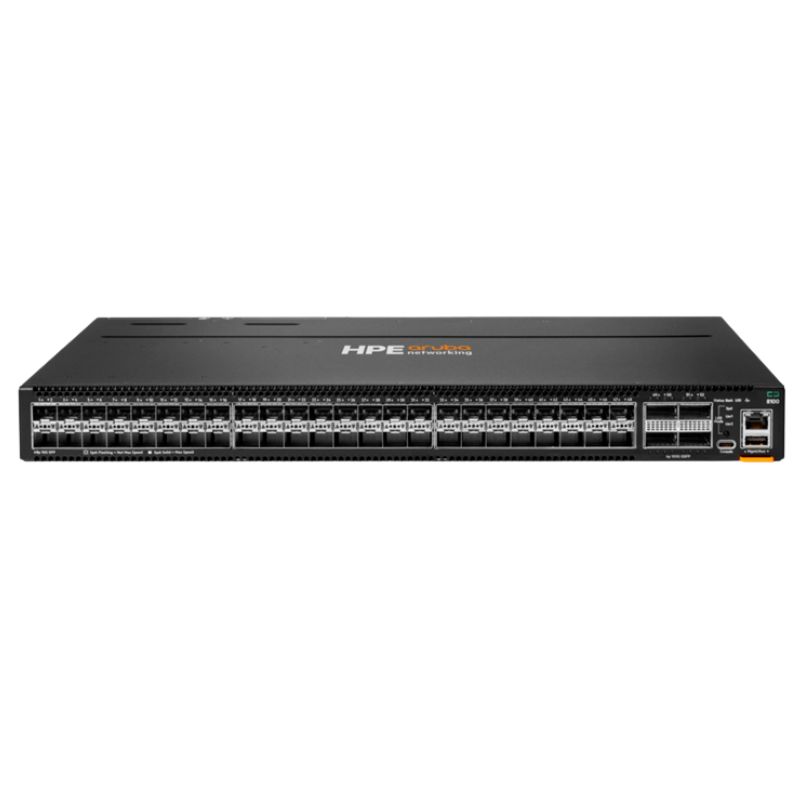


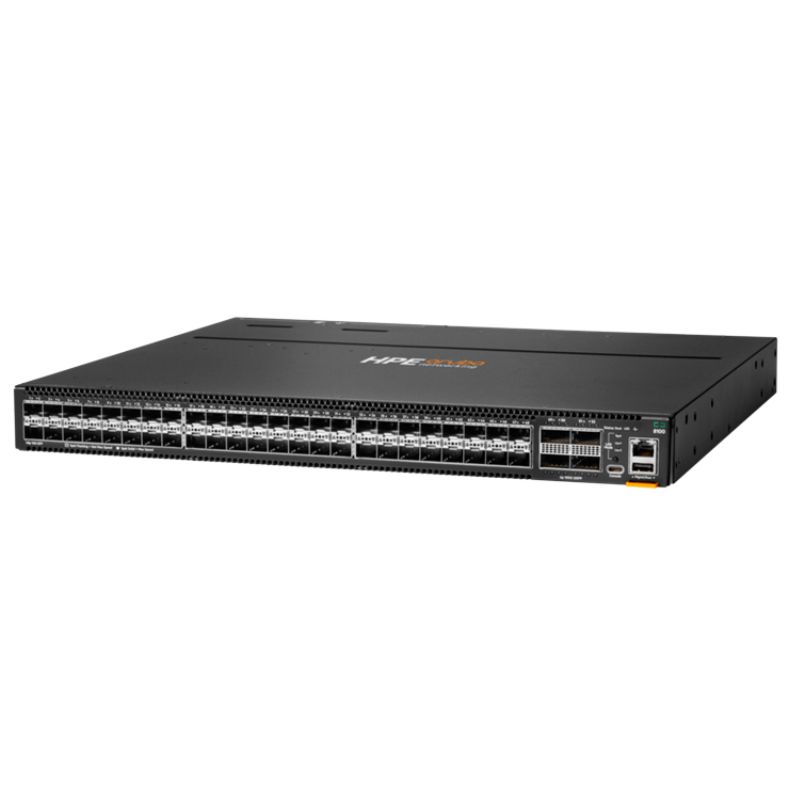
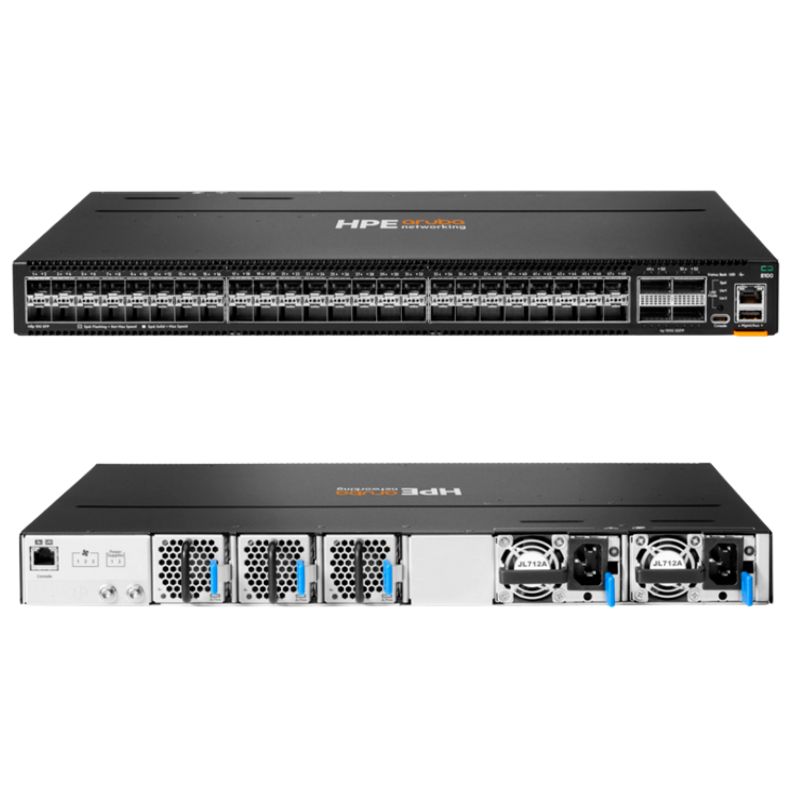
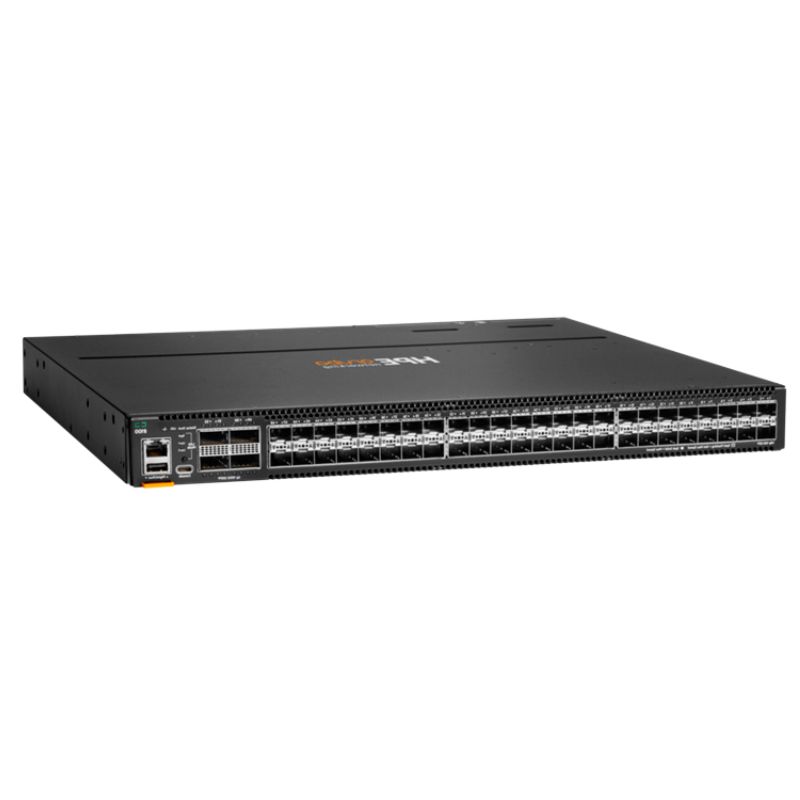
HPE R9W91A Aruba Networking Cx 8100 48 Ports 10g Sfp+ 4 Ports 40/100g Qsfp28 Bf Airflow 3f 2ac Psu Switch Bdl. Excellent Refurbished with 1 Year Replacement Warranty
Discover the HPE R9W91A (Aruba Networking CX 8100) — a high-performance, compact rack-mount switch bundle engineered for demanding data-centre and enterprise environments. This model combines versatile 10G connectivity with high-density uplinks for 40/100G aggregation, delivering predictable throughput, low latency and resilient power options in a 1U form factor.
The HPE R9W91A Aruba Networking CX 8100 48 Ports 10G SFP+ 4 Ports 40/100G QSFP28 BF Airflow 3F 2AC PSU Switch Bundle represents a high-performance, resilient, and future-ready switching category designed for modern enterprise networks. This category centers on compact, high-density 10GbE aggregation and spine/leaf architectures that demand low-latency forwarding, broad programmability, and robust redundancy. In this continuous category description we explore the technical strengths, deployment patterns, software and automation capabilities, lifecycle considerations, energy and thermal management, migration strategies from older switching platforms, and the business value organizations gain by selecting CX 8100 class switches for data center, campus core, and converged enterprise environments. Throughout this section the full product name is repeated and contextualized to support discoverability for buyers searching for HPE Aruba CX 8100 switches, 48-port 10G SFP+ deployments, and 40/100G uplink expansion options.
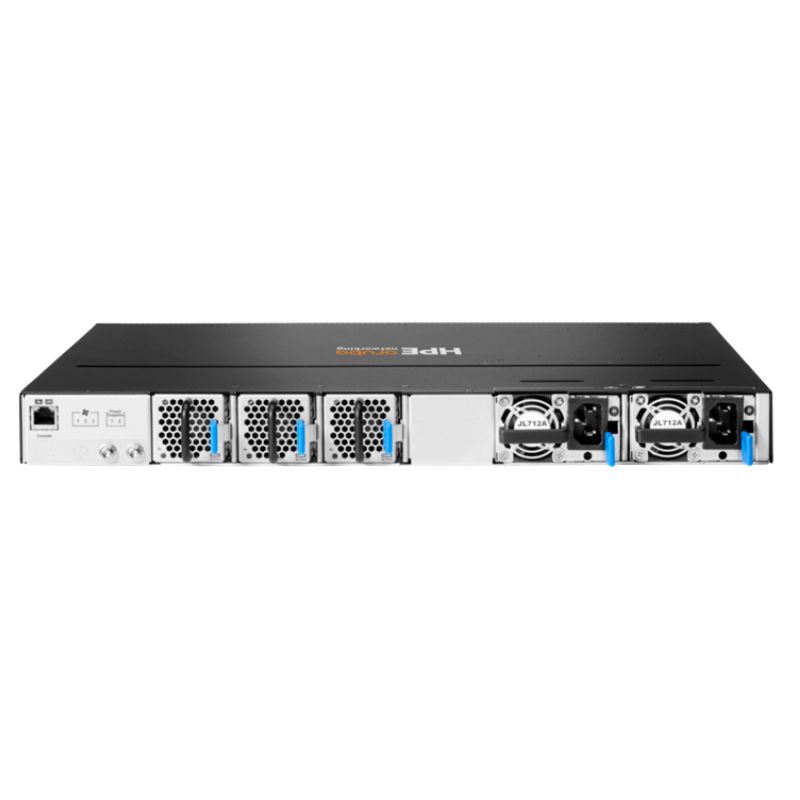
The HPE R9W91A Aruba Networking CX 8100 category emphasizes a fixed-configuration switching platform that places 48 10G SFP+ ports at the front line of dense server and hyperconverged infrastructure connections while offering four QSFP28 ports capable of 40G or 100G aggregation or uplink. This architecture is purpose-built for environments that require large numbers of high-bandwidth server-to-switch links with minimal oversubscription at the aggregation layer. The integrated airflow design and front-to-back or back-to-front cooling options in the CX 8100 series accommodate data center rack airflow patterns and thermal constraints. The included redundant AC power supplies (2AC PSU) in the bundle increase availability and simplify power redundancy planning, and the BF airflow variant indicates compatibility with front-to-back thermal designs common in modern rack deployments. From an architectural perspective, CX 8100 switches are commonly deployed as top-of-rack (ToR) switches in high-density compute racks, as leaf switches in spine-leaf fabrics, or as compact aggregation devices where 10G connectivity density is prioritized.
Port density is a primary selling point of the HPE R9W91A Aruba Networking Cx 8100 48 Ports 10G Sfp+ 4 Ports 40/100g Qsfp28 BF Airflow 3F 2ac Psu Switch Bdl category. Forty-eight SFP+ ports enable large numbers of 10GbE server, storage, and appliance links without immediate need for expensive 25G or 40G server NIC upgrades. The four QSFP28 ports provide strategic uplinks, allowing network architects to connect to 40G/100G spine switches or upstream aggregation layers, ensuring headroom for traffic growth and east-west data center flows. This combination of many 10G downlinks and fewer but powerful uplinks embodies a pragmatic balance for organizations transitioning from 10G-centric deployments toward higher-speed fabrics.
Beyond raw port counts, the CX 8100 category thrives on Aruba’s modern operating system capabilities which stress programmability, microservices-driven software architecture, and automation-friendly interfaces. The HPE R9W91A Aruba Networking CX 8100 supports advanced features such as segment routing, BGP EVPN for VXLAN overlays, comprehensive IPv4 and IPv6 routing, and robust multicast handling. The platform is designed for automation through RESTful APIs, native Python support, and integration with orchestration tools like Ansible and Terraform, enabling network teams to standardize configurations, apply intent-based policies, and speed configuration drift correction across large estates. Centralized lifecycle management through Aruba’s management tools simplifies firmware upgrades, telemetry collection, and configuration backup. For organizations prioritizing software-defined networking and operational efficiency, choosing the CX 8100 family means aligning physical switching investments with modern automation and telemetry strategies.
Security is a continuous concern across data center and campus environments, and the HPE R9W91A Aruba Networking CX 8100 category supports rich segmentation features to implement zero-trust and least-privilege designs. Role-based access control, secure management plane protocols, encrypted host-to-switch communication and MACsec capabilities on supported ports help defend churn-prone east-west traffic. VXLAN with EVPN enables multi-tenant segmentation, micro-segmentation policies can be enforced at the switch level, and hardware-accelerated ACLs give predictable performance even under heavy policy loads. These switches are suitable where security policies must be granular, scalable, and enforceable without causing undue CPU load or latency spikes. Operationally, the ability to program segmentation as code simplifies audits and supports compliance frameworks by generating repeatable, version-controlled policy artifacts.
The HPE R9W91A Aruba Networking CX 8100 category excels in several practical deployment scenarios. In the modern data center, these switches act as top-of-rack connectivity points for dense compute nodes and storage arrays, providing predictable 10G performance and 40/100G uplink capacity. In campus cores where converged voice, video, and data traffic traverse the network, the CX 8100 family offers the throughput and latency characteristics required to preserve application SLAs. For enterprise virtualization and containerized workloads, the CX 8100’s forwarding performance and overlay network capabilities deliver the flexibility necessary to move workloads quickly and securely. High-performance edge computing nodes, telco aggregation layers, and service provider POPs also benefit from the compact footprint and modular uplink options that this switch bundle category provides.
When used as leaf switches in a leaf-spine fabric, the HPE R9W91A Aruba Networking CX 8100 provides reliable connectivity to servers and storage while the four QSFP28 uplinks connect to the spine layer. This topology reduces oversubscription, supports predictable multi-pathing through ECMP, and simplifies east-west scaling. The switch’s hardware architecture and TCAM allocation are optimized for large numbers of flows and high rates of flow churn, common in virtualized and microservices environments. Because performance is delivered with deterministic hardware forwarding, infrastructure teams can confidently host latency-sensitive services and high-performance databases without undue concern about forwarding bottlenecks at the leaf layer.
In hyperconverged and software-defined storage clusters, the CX 8100 category is particularly valuable because it balances affordable 10G connectivity for many nodes with the uplink capacity needed for inter-cluster replication and backup traffic. Systems running software-defined storage protocols, east-west replication, or distributed filesystem workloads benefit from consistent forwarding behavior and low-latency links to peers. The predictable performance profile of the HPE R9W91A Aruba Networking CX 8100 supports the throughput demands of clustered architectures while providing the reliability expected for storage networks.
Power consumption and thermal management are central to rack planning and operational expenses. The BF airflow variant and the inclusion of dual AC power supplies in the HPE R9W91A Aruba Networking CX 8100 bundle indicate engineering focus on redundancy and compatibility with front-to-back airflow racks. The switch’s chassis design supports enterprise data center standards for cooling, and energy efficiency enhancements in the platform contribute to lower total cost of ownership. When designing rack layouts, consider port utilization patterns, heat dissipation from adjacent equipment, and redundant power feed capabilities. The dual-AC PSU configuration simplifies critical power path planning and supports uptime objectives by enabling hot-swap replacement and planned maintenance without traffic disruption when deployed within redundant power topologies.
Lifecycle management is a vital dimension when acquiring enterprise switches. The HPE R9W91A Aruba Networking CX 8100 category should be assessed not only on initial capability but also on long-term software support, firmware maintenance, and hardware replacement options. HPE and Aruba offer varied support tiers that include next-business-day hardware replacement, proactive monitoring, and extended warranty packages. Selecting an appropriate support level ensures predictable operational budgets and reduces the mean time to repair in failure scenarios. Additionally, software lifecycle policies and end-of-life notifications should be factored into procurement and refresh cycles so that network architects can plan upgrades and migrations without service interruptions.
For organizations migrating from older fixed- or modular switches, the CX 8100 category offers a pragmatic migration path. Compatibility with existing SFP+ cabling, SFP+ DACs, and breakout modules reduces rip-and-replace costs for server racks. When moving from legacy 1GbE or partially upgraded 10GbE deployments, migration strategies typically emphasize phased rollouts where rack-by-rack replacements maintain service continuity. Interoperability with existing core fabrics using standard routing and L2/L3 protocols simplifies initial integration, and the CX 8100’s support for modern overlay technologies enables a gradual shift to cloud-native operations without immediate hardware churn across the entire network estate.
Operational visibility is paramount in large environments. The HPE R9W91A Aruba Networking CX 8100 category integrates telemetry and monitoring features that facilitate proactive maintenance and detailed operational insight. Streaming telemetry, sFlow, and SNMP-based metrics provide multiple channels for performance data, while Aruba’s network management platforms aggregate and visualize telemetry to enable trend analysis and capacity planning. The switch’s support for gNMI and standards-based telemetry simplifies integration with third-party monitoring systems and custom analytics pipelines. These telemetry capabilities allow network teams to move from reactive troubleshooting to predictive maintenance, identifying potential issues before they escalate into outages and ensuring service-level objectives are consistently met.
Network automation reduces human error and accelerates provisioning tasks. The CX 8100 series is designed to be consumed by DevOps practices and infrastructure-as-code workflows. With a mature API surface and command-line tooling that supports scripted tasks, the HPE R9W91A Aruba Networking CX 8100 48 Ports 10G Sfp+ 4 Ports 40/100G Qsfp28 BF Airflow 3F 2AC PSU Switch Bdl fits into CI/CD pipelines for network configuration and testing. This integration enables network changes to be tested in staging environments and deployed automatically, ensuring consistency across production racks. As hybrid cloud and on-premises infrastructure converge, such programmatic control becomes vital to enforce policy uniformly across heterogeneous environments and to simplify multi-site operations.
For latency-sensitive applications such as high-frequency trading, real-time analytics, or voice and video conferencing, the forwarding performance and deterministic latency of the CX 8100 family are critical. Hardware-based switching and packet forwarding ensure minimal jitter and predictable latency across fabric paths. The switch’s TCAM allocation and ACL horsepower are dimensioned to support enterprise-grade security and QoS policies without sacrificing forwarding performance. When designing for low-latency, ensure uplink oversubscription is minimized and consider link aggregation and ECMP configurations to evenly distribute flows and avoid microbursts that can temporarily increase latency.
When evaluating the HPE R9W91A Aruba Networking CX 8100 category, purchasers should weigh not only acquisition cost but also lifecycle operating expenses, software subscription models, and support tiers. The initial purchase includes hardware and base firmware; however, advanced features, enhanced security modules, or premium support may require additional licenses or subscriptions. It is advisable to model multi-year TCO encompassing power, cooling, spare parts, support contracts, and the expected cadence of refresh cycles. In many cases the efficient port density and longevity of Aruba’s software roadmap translate into lower per-port costs over the lifecycle compared to piecemeal upgrades or short refresh cycles. Additionally, consolidating vendor relationships and standardizing on a single switching family reduces training overhead and streamlines procurement and support processes.
Prospective buyers commonly ask about interoperability with existing fabrics, detailed performance benchmarks under realistic workloads, warranty and replacement SLAs, and the cost implications of optional licenses. For interoperability, the HPE R9W91A Aruba Networking CX 8100 family adheres to standard Ethernet, L2/L3, and overlay protocols ensuring straightforward integration into mixed-vendor environments. For performance, hardware-based forwarding and dedicated TCAM resources mean ACL and QoS policies do not dramatically reduce forwarding capacity in typical enterprise scenarios. For warranty and support, Aruba provides multiple service levels tailored to business need including on-site hardware replacement and proactive health monitoring. For licensing, buyers should carefully evaluate which advanced features are required at purchase and which can be added later, balancing current needs against future growth projections.
Different industries derive different value from the HPE R9W91A Aruba Networking CX 8100 category. In financial services, deterministic forwarding and low-latency switching are essential for trading applications. In higher education and research, the combination of dense 10G ports with high-capacity uplinks supports large clusters and high-performance computing nodes. Healthcare providers benefit from the platform’s segmentation and security features to isolate medical devices and protect patient data. Cloud service operators and MSPs appreciate the modular uplink options that help standardize offerings across customer racks while providing headroom for bespoke service requirements. Each vertical can tailor deployment patterns and support options to meet compliance, uptime, and integration needs.
Scalability is a long-term concern. The CX 8100’s uplink flexibility and dense 10G profile make it a strong choice for organizations with phased growth plans where incremental upgrades are preferable to wholesale replacement. As server NIC speeds increase, organizations can repurpose CX 8100 switches in secondary roles, or use QSFP28 uplinks and breakout cables to bridge to higher-speed fabrics. Future-proofing also involves ensuring firmware and software support align with the organization’s roadmap; Aruba’s continued investment in software-defined features and automation ecosystems helps protect the value of the initial hardware investment by enabling new capabilities through software updates rather than hardware churn alone.
Selecting the HPE R9W91A Aruba Networking CX 8100 48 Ports 10G SFP+ 4 Ports 40/100G QSFP28 BF Airflow 3F 2AC PSU Switch Bundle should be considered when port density, predictable performance, modern software tooling, and operational simplicity are prioritized. The switch family is an investment in reliable, manageable, and programmable infrastructure suitable for a wide variety of enterprise and service provider workloads. When procuring, align the hardware bundle with planned rack cooling orientation, power redundancy requirements, license expectations, and upstream fabric design. By taking a holistic approach—evaluating immediate connectivity needs together with multi-year operational and automation goals—organizations can extract lasting value from the CX 8100 category while maintaining agility to evolve their networks as demands change.


 Contact Us
 Information
 Catalog
 Solid State Drives (SSD)
 Network Switches
 Hard Disk Drives
 HBA & Controllers
 PC & Servers
 PC & Server Memory
 CPU & Processors
 Network Routers
 Power Supplies
 Tape Drives & Libraries
 Network Devices
 Computer & Network Cables