(7% discount is applied at checkout)
Cart is empty
Your go-to destination for cutting-edge server products
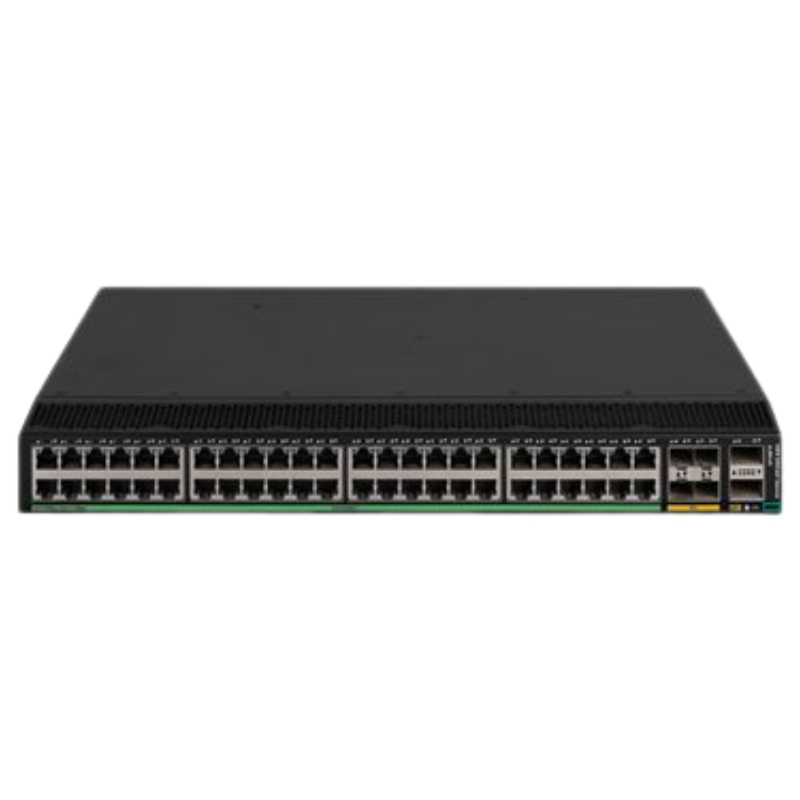


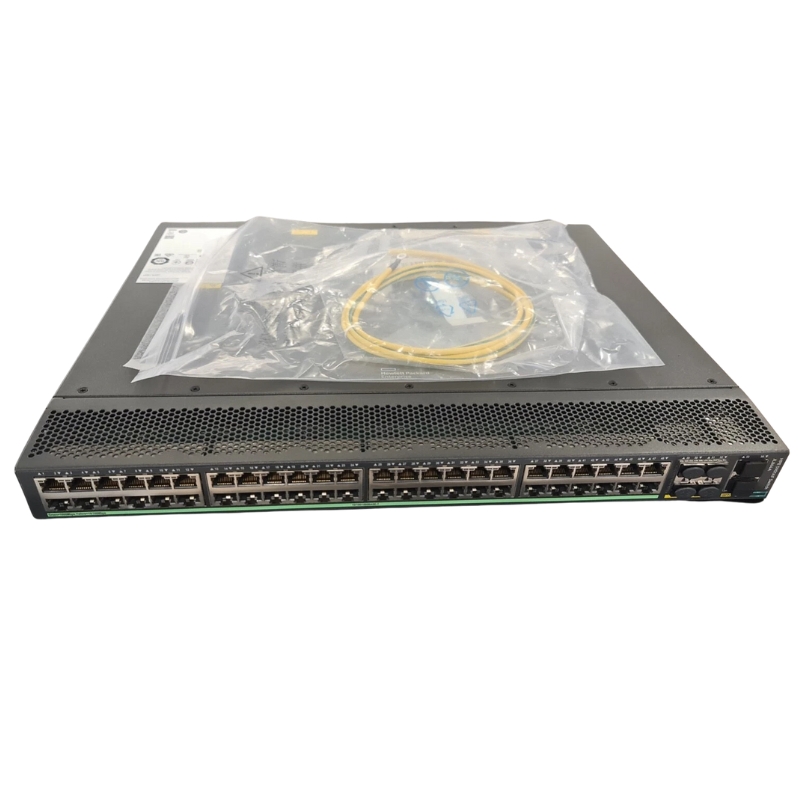
HPE JL864-61001 Flexfabric 5901AF 48 Ports 1GBase-t 4XG 2QSFP+ L3 1U Managed Rack-Mountable Switch. Excellent Refurbished with 1 year replacement warranty
The JL864-61001 HPE FlexFabric 5901AF 48 Ports 1GBase-T 4XG 2QSFP+ L3 1U Managed Rack-Mountable Switch sits in a category designed for high-density Gigabit Ethernet access with flexible uplink capacity and advanced Layer 3 capabilities. This class of switches is engineered for modern campus edge, aggregation for small to mid-size cores, and server access at the top of rack where a blend of copper 1G connectivity and high-throughput fiber uplinks is essential. With forty-eight RJ-45 1GBase-T access ports, a set of multi-gig or 10-gig–class “XG” uplinks, and dedicated QSFP+ slots for higher-bandwidth interconnects, the platform enables seamless growth, deterministic performance, and simplified operations in consolidated 1U rack space. Buyers researching this category typically prioritize resilient Layer 2/Layer 3 switching, predictable low latency, comprehensive security controls, robust Quality of Service (QoS), and a management stack that supports both traditional CLI and modern API-driven automation. The JL864-61001 designation within the HPE FlexFabric 5900-series lineage emphasizes balanced feature depth and investment protection—ideal for organizations standardizing on 1G copper user/device access while preparing for faster 10G and 40G links upstream. As a managed rack-mountable switch in a 1U form factor, it optimizes space while providing the power and intelligence demanded by contemporary wired networks.
The central promise of a “48 Ports 1GBase-T 4XG 2QSFP+” switch is its versatile port composition. Forty-eight copper RJ-45 interfaces provide ubiquitous device reach with PoE/PoE+ support models available in the broader category (buyers should confirm PoE budget needs for phones, access points, or cameras). Complementing these are uplink options typically intended for 10G-class fiber or DAC connections, allowing network designers to aggregate traffic cleanly and scale throughput. The two QSFP+ ports deliver additional headroom for stacking-style links, high-speed trunking, or connectivity to distribution or core layers where bandwidth consolidation matters most.
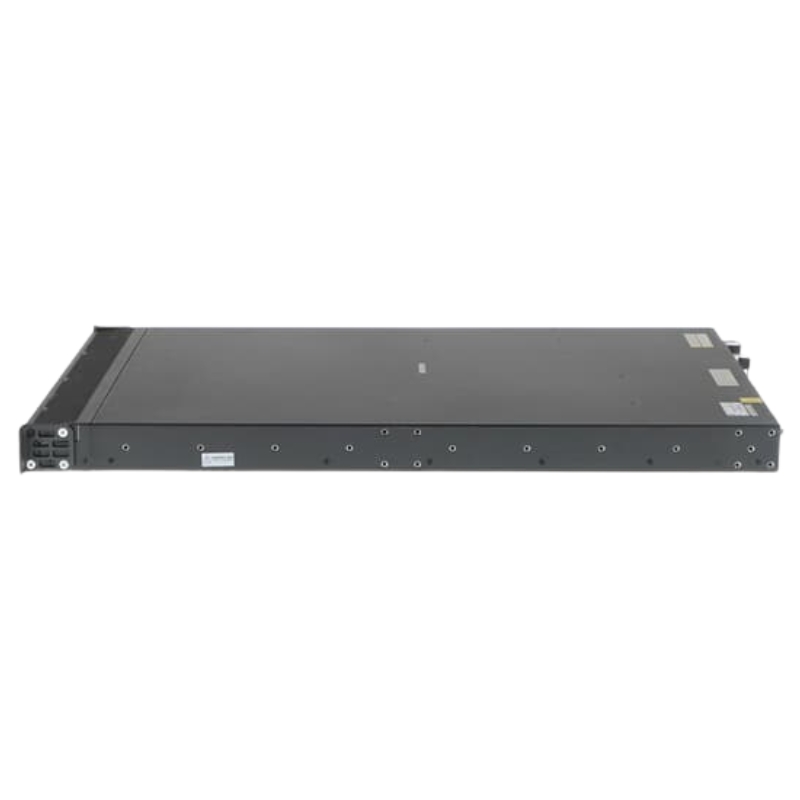
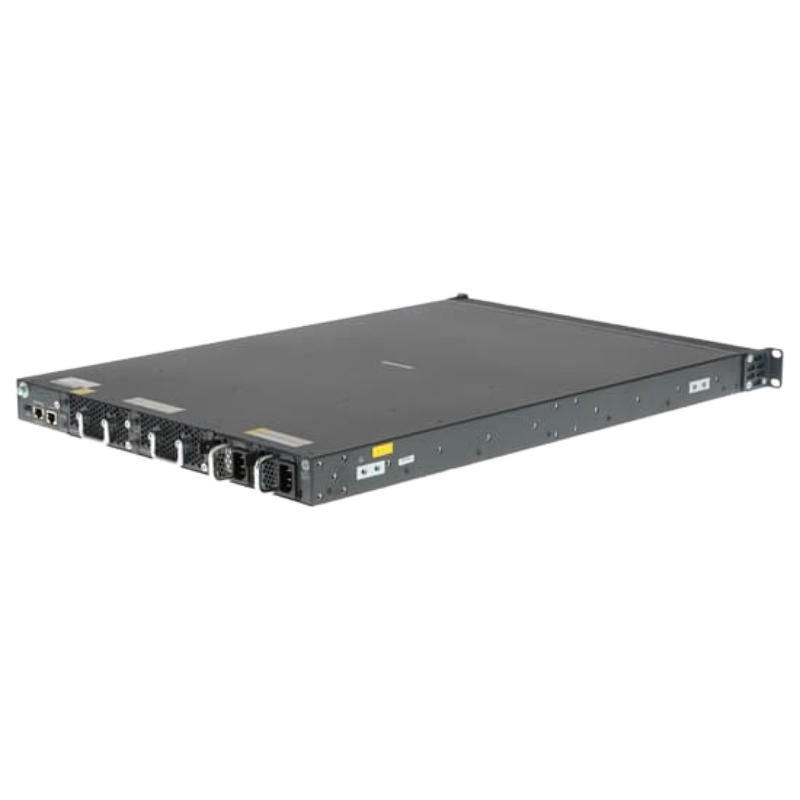
By arranging all this in a 1U rack-mountable chassis, the JL864-61001 category emphasizes high density without sacrificing airflow or access to cabling. The hardware form factor supports cable-management arms, front-to-back ventilation patterns common in data centers, and standardized rails. This ease of installation is crucial in closets and micro-data centers where every rack unit counts and where structured cabling needs to remain neat, labeled, and accessible.
A core reason to select the JL864-61001 HPE FlexFabric 5901AF L3 managed switch category is its balance of Layer 2 switching and Layer 3 routing. Typical capabilities include VLAN segmentation with 802.1Q tagging, Spanning Tree variants for loop prevention, link aggregation for higher bandwidth and resiliency, and storm control to protect the fabric from broadcast or multicast bursts. Where the category differentiates itself is in routing functions that move traffic between VLANs at wire speed, enabling routed access designs that offload the core and simplify policy enforcement at the edge.
Dual-stack campus designs remain common. A category anchored by the JL864-61001 HPE FlexFabric 5901AF ensures that both IPv4 and IPv6 routing, ACLs, and neighbor discovery security are considered. This supports gradual migrations: devices and applications can adopt IPv6 at their own pace while policy maintains parity. Operations teams benefit from consistent show commands, API endpoints, and telemetry that treat IPv6 as a first-class citizen rather than an afterthought.
The JL864-61001 HPE FlexFabric 5901AF 1U managed switch category provides the QoS scaffolding necessary to prioritize interactive and latency-sensitive traffic while protecting bulk data transfers from starving critical services. As enterprise applications distribute across cloud and on-premises, maintaining consistent markings and queueing behavior across the access, distribution, and core layers keeps user experience stable.
The JL864-61001 HPE FlexFabric 5901AF 48-port 1GBase-T switch category is versatile across many verticals. Its port mix and L3 abilities suit both traditional office networks and specialized environments where deterministic performance, security, and manageability are non-negotiable. Below are representative scenarios where this category excels.
In a typical enterprise building, each floor’s wiring closet must accommodate dozens to hundreds of endpoints. The JL864-61001 category provides 48 copper access ports—the sweet spot for a single rack unit—to onboard PCs, docked laptops, VoIP phones, and printers. Where wireless is prevalent, the uplink capacity handles AP backhaul with headroom for growth. Dynamic VLANs and 802.1X ensure workers and guests are segmented correctly, while QoS maintains crystal-clear voice/video during peak hours.
Hospitals and clinics need reliable wired access for EHR terminals, imaging workstations, badge printers, and bedside devices. The L3 segmentation at the access layer allows clinical and guest traffic to remain separate, supporting privacy mandates. The redundant uplink design prevents outages from affecting critical floors, and deterministic QoS helps with real-time telemetry and voice communications used by clinical staff. Port security rules can enforce strict admission for authorized medical equipment.
Universities often have diverse device populations and seasonal surges. Dorms, lecture halls, labs, and libraries all benefit from a 48-port 1G access density with fast uplinks. QoS templates can prioritize lecture capture streams and collaboration tools, while ACLs enforce isolation between student networks and administrative resources. With automation-friendly management, IT can scale consistent policies across dozens of buildings with minimal manual intervention.
Retail stores and distributed branches frequently need PoS terminals, IP cameras, digital signage, IoT sensors, and corporate endpoints to share the same closet. The JL864-61001 category’s L3 and ACL toolkit helps segment PCI-sensitive systems from general office traffic. Uplinks to SD-WAN or MPLS can be shaped and prioritized for transaction reliability. Multicast management enables synchronized digital signage feeds with minimal bandwidth overhead.
Architects can leverage the port composition to create topologies that balance cost, simplicity, and performance. Below are practical design patterns for the JL864-61001 class that avoid over-engineering while ensuring straightforward scalability.
In small or moderate sites, combining access and distribution reduces hardware count and cabling complexity. Use the 4XG uplinks to build port-channels between two JL864-61001-class switches for redundancy, then use QSFP+ to connect to a core or to an upstream router pair if the site backhaul requires higher throughput. Inter-VLAN routing at the access switches simplifies ACL placement and speeds convergence.
For larger campuses, deploy multiple JL864-61001 category switches at the access layer, each dual-homed via 10G-class uplinks to distributed pair(s) at the aggregation layer. The 2×QSFP+ ports provide higher-bandwidth trunks from aggregation to the core, allowing inter-building traffic to traverse oversubscribed links without bottlenecks. Leverage MSTP or link aggregation to ensure active paths and fast failover.
Some server racks still rely on 1G copper NICs for legacy systems or management networks. A JL864-61001-class 48×1G switch in ToR can consolidate these servers while uplinking via 10G or QSFP+ to the aggregation switches. This keeps management planes segregated and simplifies change windows by isolating legacy applications from the production data plane.


 Contact Us
 Information
 Catalog
 Solid State Drives (SSD)
 Network Switches
 Hard Disk Drives
 HBA & Controllers
 PC & Servers
 PC & Server Memory
 CPU & Processors
 Network Routers
 Power Supplies
 Tape Drives & Libraries
 Network Devices
 Computer & Network Cables