Your go-to destination for cutting-edge server products
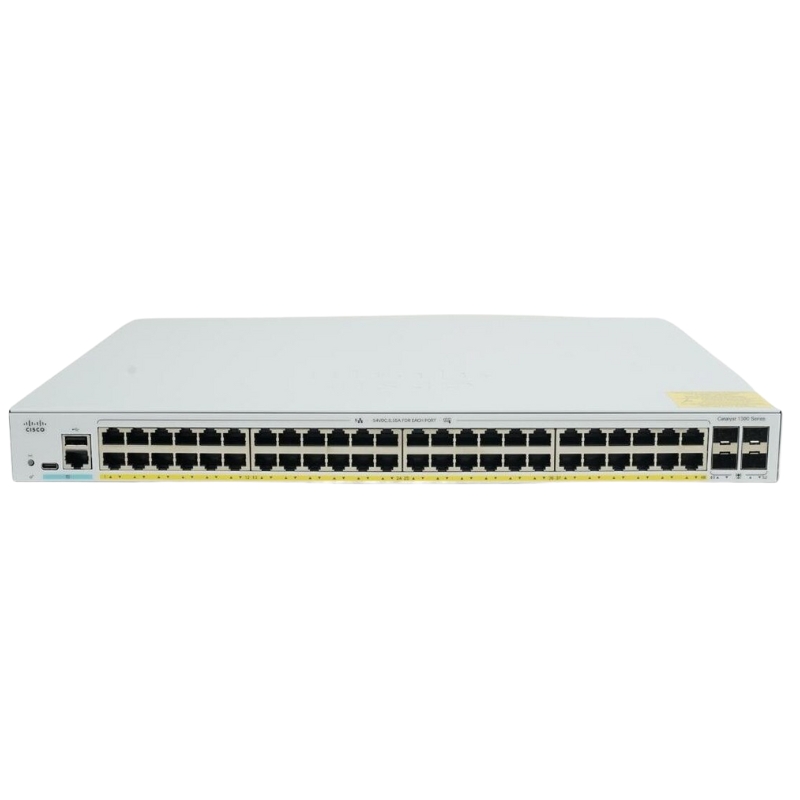
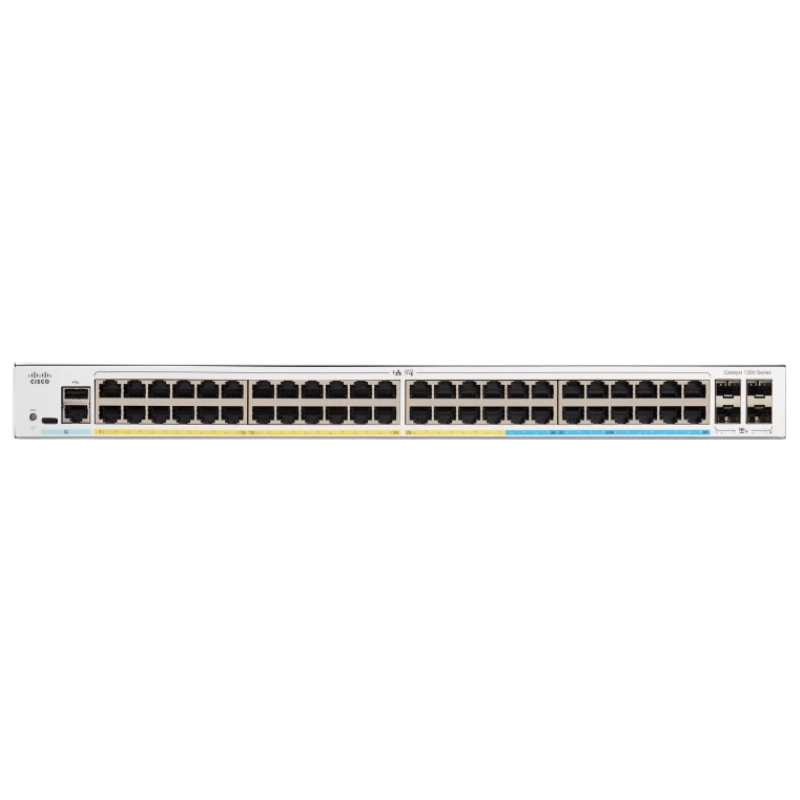
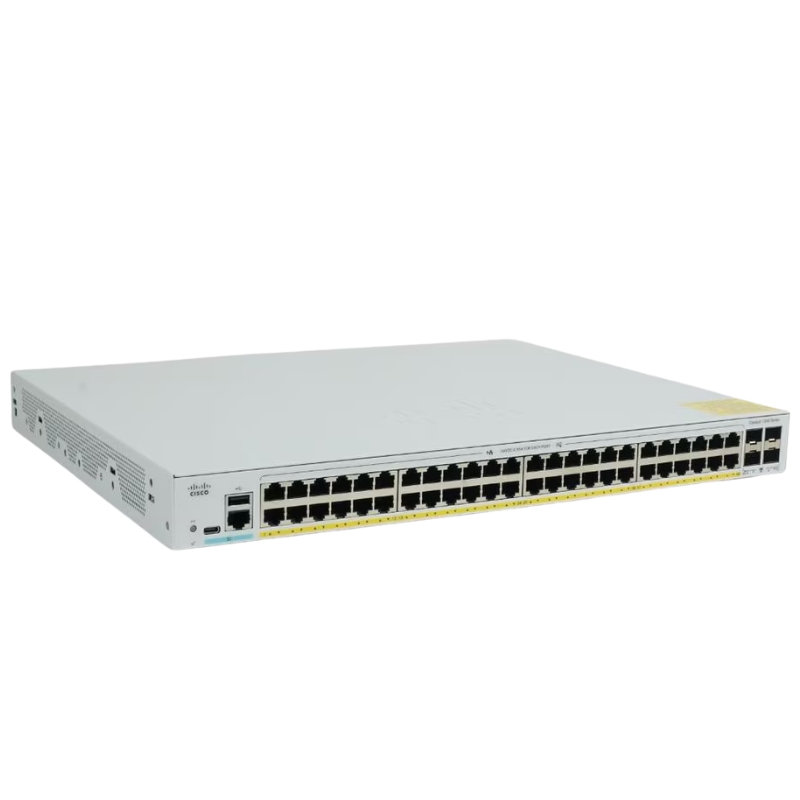
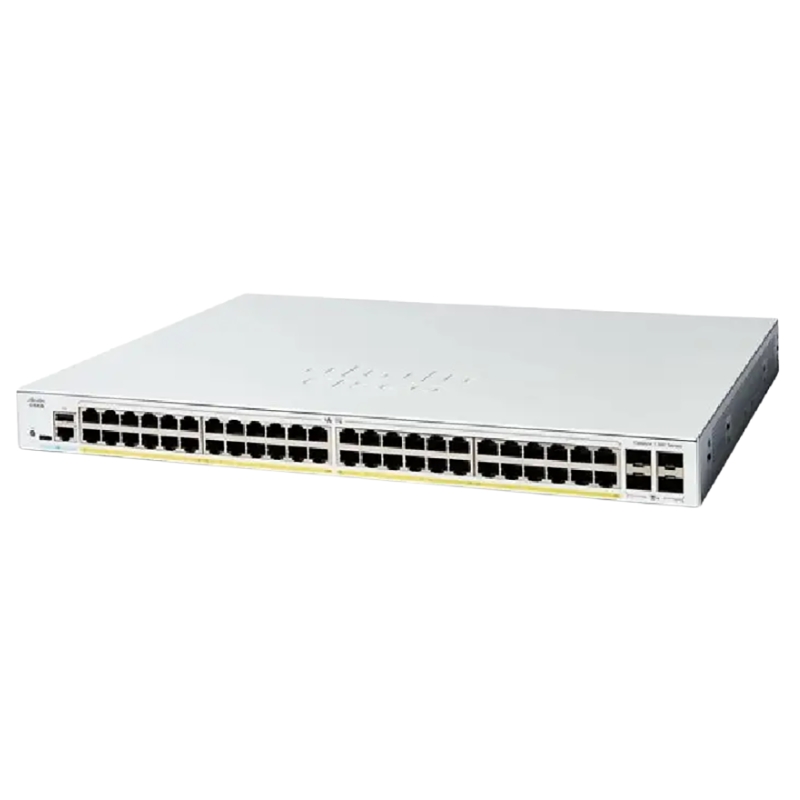
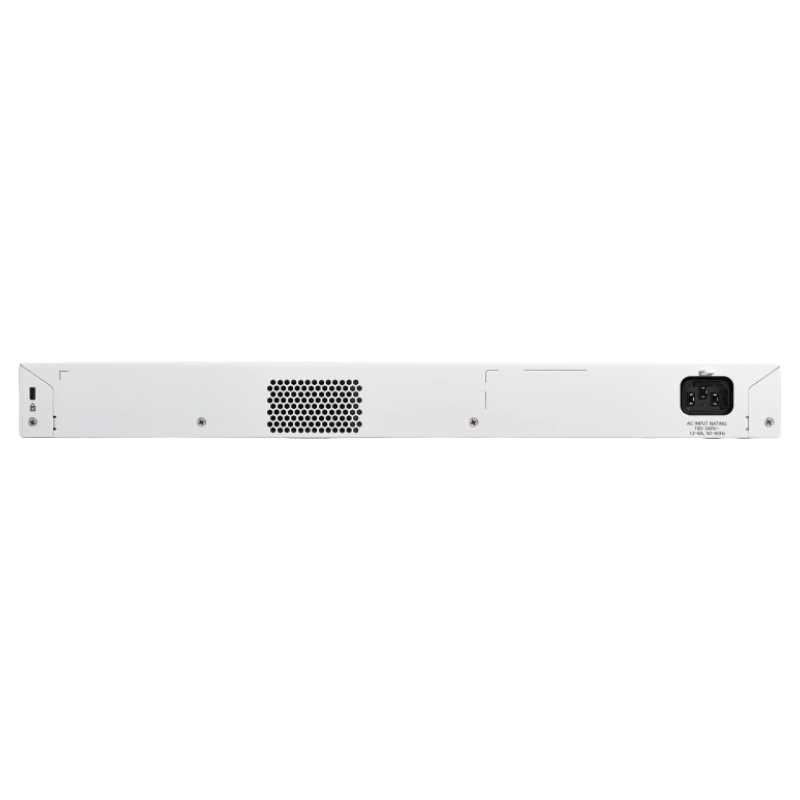
C1300-48MGP-4X Cisco Catalyst L3 Managed 48X 10 Gigabit Ethernet SFP+ Rack Mountable POE+ Switch.

C1300-48MGP-4X
* Product may have slight variations vs. image
Hover on image to enlarge

Brief Overview of C1300-48MGP-4X

Cisco C1300-48MGP-4X Catalyst L3 Managed 48X 10 Gigabit Ethernet SFP+ Rack Mountable POE+ Switch. Factory-Sealed New in Original Box (FSB) with 1 year replacement warranty

$3,429.00
$2,540.00
You save: $889.00 (26%)
Ask a question
Price in points: 2540 points
+
Quote
SKU/MPNC1300-48MGP-4XAvailability✅ In StockProcessing TimeUsually ships same day ManufacturerCisco Product/Item ConditionFactory-Sealed New Retail in Original Box (FSB) ServerOrbit Replacement Warranty1 Year Warranty
Google Top Quality Store Customer Reviews
Our Advantages
Payment Options
  • — Visa, MasterCard, Discover, and Amex
  • — JCB, Diners Club, UnionPay
  • — PayPal, ACH/Bank Transfer (11% Off)
  • — Apple Pay, Amazon Pay, Google Pay
  • — Buy Now, Pay Later - Affirm, Afterpay
  • — GOV/EDU/Institutions PO's Accepted 
  • — Invoices
Delivery
  • — Deliver Anywhere
  • — Express Delivery in the USA and Worldwide
  • — Ship to -APO -FPO
  • For USA - Free Ground Shipping
  • — Worldwide - from $30
Description

Highlights of Cisco C1300-48MGP-4X Catalyst Switch

The Cisco C1300-48MGP-4X Catalyst is a next-generation Layer 3 managed switch engineered to deliver exceptional network performance, robust scalability, and enterprise-grade security. Designed with 48 multi-gigabit Ethernet ports and 4 high-speed 10 Gigabit SFP+ uplinks, this switch provides businesses with flexibility, reliability, and seamless connectivity.

Technical Specification:

  • Brand: Cisco
  • Part-Number: C1300-48MGP-4X
  • Type: L3 Managed Switch, Rack-mountable, Stackable (up to 8)
  • Ports: 48 x 10G Multi-Gigabit Ethernet + 4 x 10G SFP+
  • PoE: PoE+ with 370W power budget
  • Switching Capacity: 224 Gbps | Forwarding Rate: 166.65 Mpps
  • MAC Table: 16K | Buffer: 3 MB | Jumbo Frames: 9000 bytes
  • Routing: Static IPv4/IPv6, RIP v2, IGMP v2/v3, MLD, MSTP, RSTP, STP
  • VLANs: 4093 IDs | IPv4 Routes: 990 | IPv4 Interfaces: 128
  • Security: ACL (1024), RADIUS, TACACS+, SSL, Storm Control, DHCP Snooping, IP Source Guard
  • Management: SNMP, RMON, CLI, SSH, Telnet, HTTP/HTTPS, Syslog
  • Processor: 1.4 GHz ARM | RAM: 1 GB DDR4 | Flash: 512 MB
  • Connectivity: 48 x RJ-45 (100/1000/2.5G/5G/10G) PoE+, 2 x SFP+ 10G, RJ-45 Console, USB-C Console
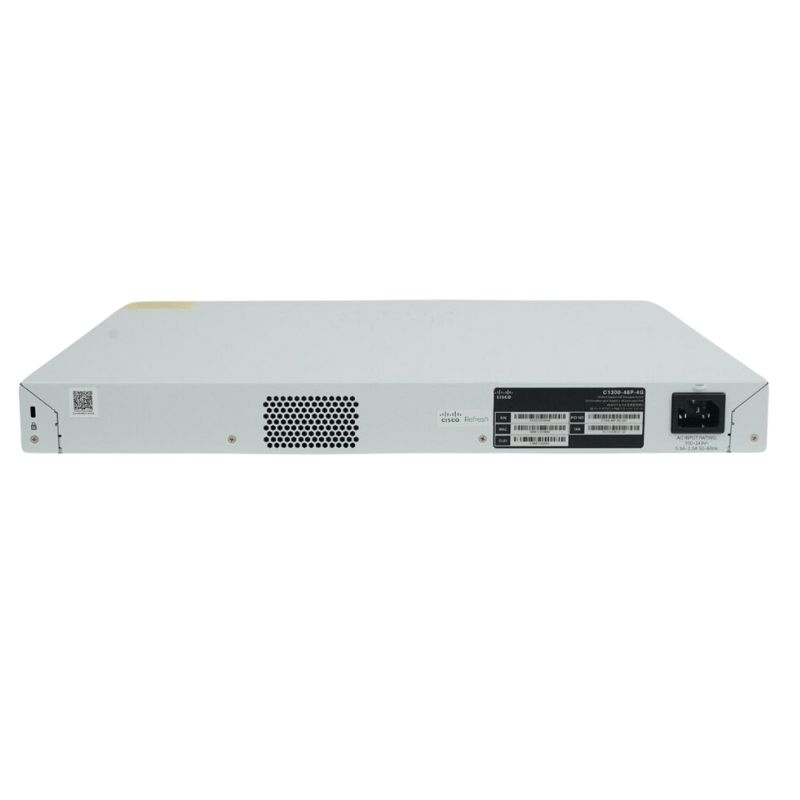
  • Power: Internal PSU | AC 100-240V | Energy Efficient Ethernet (EEE)
  • Compliance: IEEE 802.3/802.3u/802.3z/802.3ab, 802.1Q, 802.3af/at PoE+, 802.3ad LACP, 802.1w, 802.1s, 802.3az

General Characteristics

  • Device Type: Enterprise-class managed Layer 3 switch
  • Port Configuration: 48 x Multi-Gigabit Ethernet + 4 x 10G SFP+ uplinks
  • Form Factor: Rack-mountable, stackable design
  • Power Delivery: PoE+ support with a total power budget of 370W
  • Throughput: Forwarding rate of 166.65 Mpps
  • Switching Capacity: 224 Gbps for high-speed traffic handling

Performance and Reliability

Engineered to handle high-bandwidth applications, this switch offers remarkable throughput and efficiency. Its support for jumbo frames, advanced packet buffering, and strong switching fabric ensures smooth operation even in demanding environments.

  • Packet Buffer: 3 MB capacity
  • MAC Address Table: Up to 16,000 entries
  • Jumbo Frame Support: Up to 9000 bytes
  • Stacking: Up to 8 units within a single stack
  • Priority Queues: 8 queues for efficient traffic prioritization

Advanced Layer 3 Routing

Supported Protocols

  • Static IP Routing
  • Policy-Based Routing (PBR)
  • RIP v2, IGMP v2/v3
  • MLD v1/v2 for IPv6 multicast
  • MSTP, RSTP, PVST+, STP loop protection
  • IPv4 & IPv6 dual-stack support

Routing Features

  • IPv4 static routes: Up to 990
  • IPv4 interfaces: Up to 128
  • VLAN IDs: Up to 4093
  • Link Aggregation Groups: 8
  • IGMP multicast groups: 2000

Security and Data Protection

Security is a critical aspect of the Cisco C1300-48MGP-4X, which integrates multiple layers of authentication, encryption, and monitoring technologies. Businesses can rely on its robust protection against unauthorized access and network attacks.

Security Mechanisms

  • 802.1X Authentication (RADIUS, TACACS+)
  • Access Control Lists (ACLs) with 1024 rules
  • Storm Control (Broadcast, Multicast, and Unicast)
  • DHCP Snooping, ARP Inspection, IP Source Guard
  • DoS and DDoS attack prevention
  • MD5 and SSL encryption
  • BPDU Guard, Root Guard, RA Guard, DHCPv6 Guard

Quality of Service (QoS) Capabilities

  • DiffServ support for traffic prioritization
  • DSCP-based CoS assignment
  • WRR (Weighted Round Robin) for scheduling
  • Hol-blocking prevention mechanisms
  • Traffic shaping for iSCSI and latency-sensitive workloads

Comprehensive Management Options

Remote Management Protocols

  • SNMP v1/v2c/v3, RMON
  • SSH v1/v2, Telnet, SCP, TFTP
  • HTTP/HTTPS for web-based management
  • CLI for granular configuration
  • Syslog integration for event logging

Additional Features

  • Zero-touch deployment for simplified setup
  • PoE scheduling for power efficiency
  • LLDP-MED support for endpoint discovery
  • Persistent PoE across reboots
  • Dynamic VLAN assignment for endpoint devices

Expansion and Connectivity

  • 48 x RJ-45 multi-gigabit (100/1000/2.5G/5G/10G) PoE+ interfaces
  • 2 x 10GBASE-X SFP+ uplink ports
  • 1 x RJ-45 console port
  • 1 x USB-C console port

Hardware Specifications

  • Processor: 1.4 GHz ARM architecture
  • System Memory: 1 GB DDR4 SDRAM
  • Flash Storage: 512 MB
  • Indicators: System, PoE, Link/Activity/Speed LEDs
  • Cooling: 1 integrated fan

Power Efficiency

  • Internal power supply with universal input: AC 100-240V, 50/60Hz
  • PoE+ support with up to 370W budget
  • Energy-efficient Ethernet (EEE) compliance
  • Power scheduling and time-based operation

Industry Standards Compliance

  • IEEE 802.3, 802.3u, 802.3z
  • IEEE 802.1D, 802.1Q, 802.1p
  • IEEE 802.3af, 802.3at PoE+
  • IEEE 802.3ad LACP
  • IEEE 802.1w, 802.1s MSTP
  • IEEE 802.3az Energy Efficient Ethernet

Key Benefits for Businesses

  • High-capacity switching for demanding workloads
  • Advanced security features for safe networking
  • Optimized QoS for latency-sensitive applications
  • Scalable stacking for growing enterprises
  • Energy-efficient power management with PoE+
  • Seamless Layer 3 routing and dual-stack IPv4/IPv6 support

Product Category: Cisco Catalyst C1300-48MGP-4X — Layer 3 Managed 48x 10Gb SFP+ PoE+ Rack-Mount Switch

The Cisco Catalyst C1300-48MGP-4X stands at the intersection of high-density connectivity and intelligent enterprise networking. As a Layer 3 managed switch with forty-eight 10 Gigabit SFP+ ports and four uplink ports integrated in a rack-mountable chassis, this family delivers carrier-grade throughput while simplifying deployment and ongoing operations. Engineered for campus aggregation, wiring closet consolidation, and edge-to-core access tiers, the C1300 series offers advanced packet-forwarding capabilities, mature software features for security and segmentation, and robust Power over Ethernet Plus (PoE+) support for powering IP phones, wireless access points, cameras, and other endpoint devices. The category covers variants and compatible accessories that address diverse deployment scenarios, including high-availability configurations, redundant power options, and modular optics to tailor link distances and media types.

Key technical profile and capabilities

At its core, the C1300-48MGP-4X is designed to meet the stringent demands of modern enterprises: dense 10Gb connectivity, full Layer 3 routing, Quality of Service (QoS) controls, and comprehensive security features. This switch supports high-performance hardware switching fabrics capable of sustaining multi-gigabit flows across many simultaneous sessions, enabling real-time applications such as VoIP, video conferencing, and high-throughput storage access. The hardware includes an optimized forwarding engine and programmable silicon that accelerates routing and access control list (ACL) processing. Administrators benefit from predictable low-latency behavior and hardware-assisted features that reduce CPU load for control-plane tasks, resulting in consistent performance under heavy load. Because the unit is rack-mountable, it integrates seamlessly into standard 19-inch racks and network cabinets used in data centers and enterprise wiring closets.

Power over Ethernet Plus (PoE+) and device powering strategy

One of the defining aspects of this category is its PoE+ capability on a significant portion of access ports, allowing the network to deliver up to 30 watts per port to compatible devices. This capability simplifies cabling infrastructure by removing the need for separate electrical outlets for cameras, wireless access points, and other powered devices, and reduces the cost and complexity of deploying large numbers of endpoints. Power management features in the switch provide per-port power allocation, scheduling, and prioritization to guarantee that mission-critical devices receive power even when aggregate power demands approach the unit’s budget. Advanced power telemetry and monitoring report usage trends and help administrators plan capacity and future expansion. The PoE+ support combines with Layer 3 intelligence to enable per-VLAN power policies and endpoint-based energy governance across the network fabric.

Security, segmentation, and policy enforcement

Security is a central consideration in the design of the Cisco Catalyst C1300 family. The switch implements role-based access control, secure management protocols, and robust authentication mechanisms for endpoint devices. Integrated features include 802.1X network access control for dynamic port-based authentication, MACsec for link-level encryption where supported, and scalable VLAN and VRF segmentation for tenant isolation and multitenant networks. Comprehensive ACLs and dynamic packet inspection permit granular policy enforcement at line rate, reducing exposure to malicious traffic and lateral movement. In addition, the platform integrates with Cisco Identity Services Engine (ISE) and other policy controllers to deliver centralized policy orchestration, posture assessment, and automated remediation flows that align security posture with operational workflows.

Routing, high availability, and resiliency features

As a Layer 3 managed switch, this category supports a wide range of routing protocols and high-availability mechanisms suitable for enterprise designs. Static routing, OSPF, EIGRP, and BGP support provide flexible options for integrating the C1300 into existing routed networks and for building resilient topologies across campus and data center borders. Redundancy features include support for VRRP or HSRP for gateway failover, fast convergence characteristics for minimized downtime, and link aggregation to provide both higher throughput and port-level resiliency. For mission-critical environments, options for redundant power supplies and modular fan assemblies reduce single points of failure. The architecture supports graceful restart, nonstop forwarding, and other mechanisms that preserve traffic flows during control-plane events, making it suitable as an aggregation or distribution layer element.

Advanced management and lifecycle operations

Operational efficiency and ease of management figure prominently in this category. The switch supports both traditional CLI-based workflows and modern, model-driven management frameworks that align with intent-based networking practices. REST APIs and NETCONF/YANG models enable programmatic control for automation platforms and network orchestration tools. Integration with Cisco DNA Center and other controller-based systems brings centralized telemetry, template-driven provisioning, and policy-based configuration to simplify day-zero and day-two operations. Onboard monitoring exposes detailed switch health metrics, interface statistics, and environmental telemetry, which facilitates proactive maintenance, capacity planning, and rapid troubleshooting. Software image management, scheduled backups, and rollback capabilities reduce operational risk during upgrades and configuration changes.

Quality of Service (QoS) and traffic prioritization

To ensure reliable delivery of latency-sensitive services, the category offers advanced QoS capabilities. Traffic classification and queuing mechanisms allow administrators to prioritize voice and video streams, apply shaping or policing to bulk data transfers, and reserve bandwidth for service-level agreements. Hierarchical QoS constructs permit fine-grained control across both ingress and egress traffic, while DSCP-based classification enables consistent policy enforcement across routed domains. The switch hardware accelerates QoS processing to maintain deterministic behavior even under high utilization, making it possible to support converged networks where business-critical and best-effort traffic coexist without quality degradation.

Optics, cabling, and SFP+ flexibility

The inclusion of forty-eight 10 Gigabit SFP+ ports and four dedicated uplinks means that network planners can choose optics and transceivers that match their distance and medium requirements. The openness to various SFP+ modules — SR for multimode fiber, LR for single-mode, and DAC or AOC for short-reach connections — allows cost optimization by selecting the most appropriate transceiver for each link. This flexibility supports a mix of uplink designs, from short-distance server-to-switch connections using direct attach cables to long-haul backbone links using single-mode optics. Because the platform adheres to standard SFP+ form factors, third-party optics that meet enterprise standards may be used where supported, enabling additional sourcing and pricing flexibility for large-scale rollouts.

Scalability and future-proofing considerations

Scalability manifests in both port density and in the featureset of the C1300 family. High-density 10Gb ports are increasingly critical as endpoint demands grow and as Wi-Fi 6/6E and future wireless access technologies push greater backhaul capacity to the wired infrastructure. The switch supports stacking or virtual chassis technologies in selected deployments, enabling multiple units to behave as a single logical device for simplified management and aggregated throughput. Software features and licensing options accommodate incremental upgrades of routing or security capabilities, helping organizations adopt new services without wholesale hardware replacement. The chassis and thermal design account for sustained performance as traffic and device counts expand over time.

Use cases and deployment scenarios

The versatility of the Cisco Catalyst C1300-48MGP-4X makes it suitable for a broad set of scenarios. In campus environments it can function as a distribution switch that aggregates multiple access layer devices, provides PoE+ to edge endpoints, and enforces segmentation and access policies for different departments or tenant groups. In small data centers or server rooms it can serve as a top-of-rack or aggregation device that connects servers, storage arrays, and inter-rack links at 10 Gigabit rates. The platform is also applicable for branch consolidation, where high-density uplinks and integrated PoE reduce the need for multiple smaller devices. Vertical markets such as healthcare, education, and retail benefit from the combination of secure segmentation, powered endpoints, and integration options for centralized network management and compliance reporting.

Software features, licensing, and upgrade paths

Software defines much of the value proposition for managed switches in enterprise networks. The operating system associated with the C1300 category includes modular features that support robust routing, policy enforcement, application visibility, and telemetry. Licensing tiers allow organizations to select the feature bundle that reflects their operational needs, enabling a cost-effective entry point and predictable path to enable advanced functions when required. Upgradeability ensures that new protocols and security mitigations can be applied via software releases, and maintenance contracts often include access to updates and technical support. Clear upgrade paths and backward-compatible management APIs reduce the friction of evolving network architectures and help preserve investment over the product lifecycle.

Interoperability and migration strategies

Migrating to a new switch platform requires careful interoperability planning. The C1300 category is designed to operate alongside existing Catalyst and third-party switches, supporting common standards for routing, VLAN tagging, link aggregation, and spanning tree variants. Migration strategies often leverage dual-homing, phased cutovers, and test segments to validate behavior before full rollout. Because the device supports industry-standard management protocols, it integrates into monitoring and orchestration systems already deployed in the environment. Where legacy PoE devices exist, administrators can configure per-port legacy modes or power negotiation settings to maintain compatibility and avoid connectivity issues during migration.

Monitoring, telemetry, and observability

Visibility into network behavior is essential for operational excellence. The switch exposes rich telemetry through streaming telemetry, SNMP, sFlow, and syslog, allowing network operations teams to gather flow-level insights, interface-level counters, and environmental metrics. High-fidelity telemetry supports predictive analytics and anomaly detection, enabling teams to spot degraded links, resource exhaustion, or unusual traffic patterns before they impact users. Integration with centralized logging and observability platforms unifies metrics across the estate, and built-in event triggers can initiate automated remediation or alerting workflows. The result is reduced mean time to detection and resolution, and improved capacity planning based on concrete usage data.

Compliance, certifications, and enterprise readiness

Enterprises require platforms that meet regulatory and industry certifications. The C1300 category typically adheres to relevant safety, electromagnetic compatibility, and enterprise interoperability standards, and vendors commonly provide documentation to support audits, compliance reporting, and security posture assessments. Features that assist compliance include segmented VLANs, encrypted management channels, audit logs, and role-based administrative controls. These capabilities facilitate adherence to standards in industries such as finance, healthcare, and government where traceability and secure configurations are mandatory.

Features
Product/Item Condition:
Factory-Sealed New Retail in Original Box (FSB)
ServerOrbit Replacement Warranty:
1 Year Warranty