(7% discount is applied at checkout)
Cart is empty
Your go-to destination for cutting-edge server products
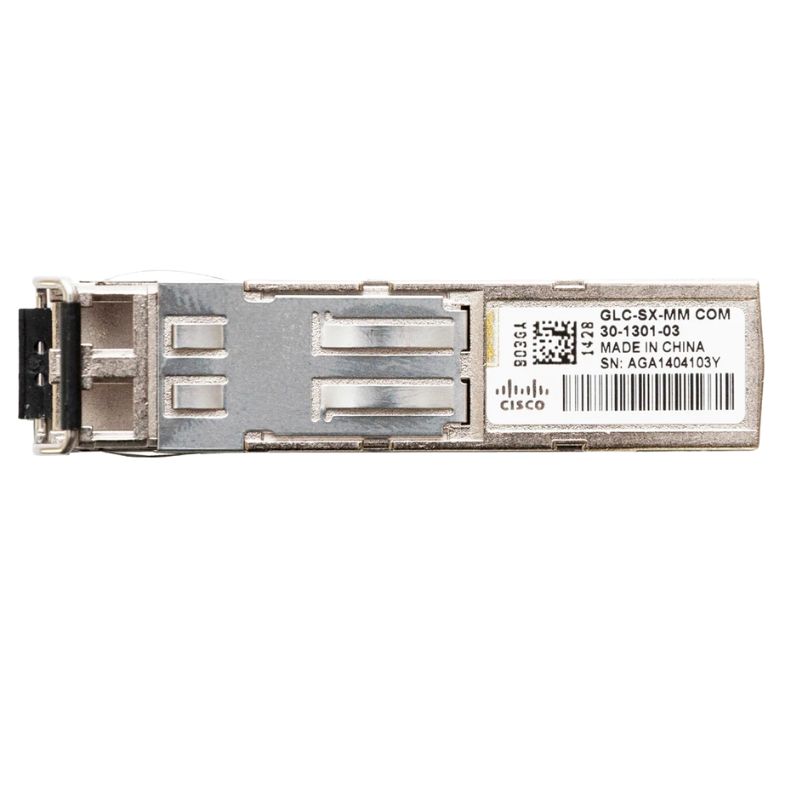


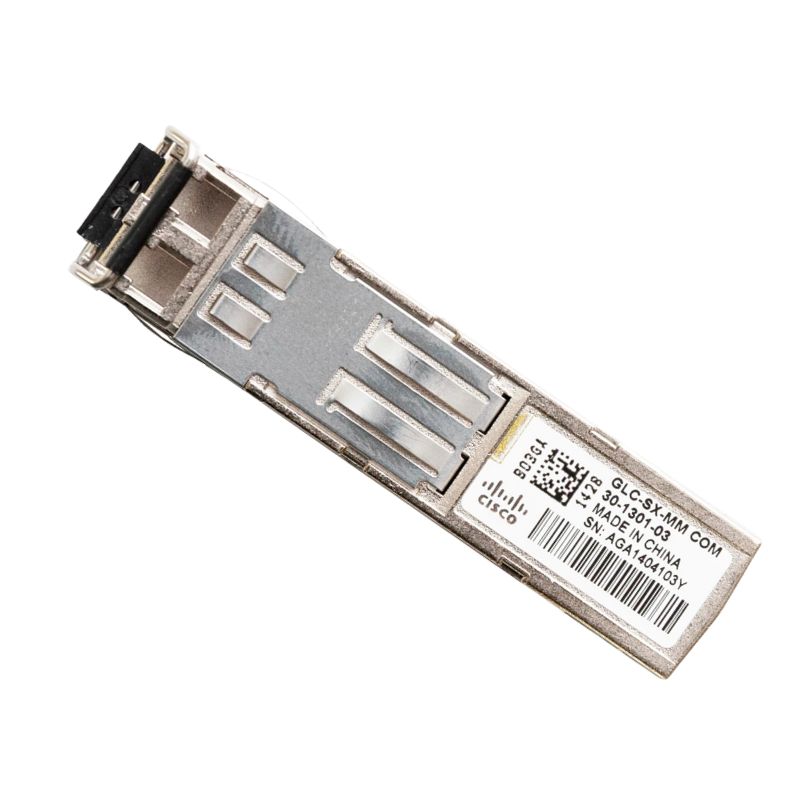
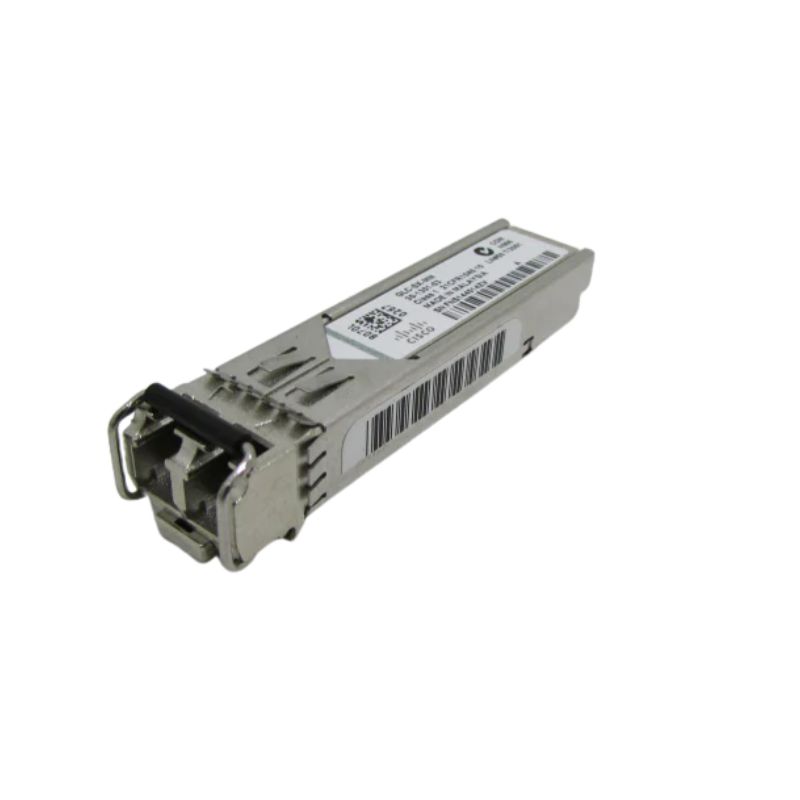
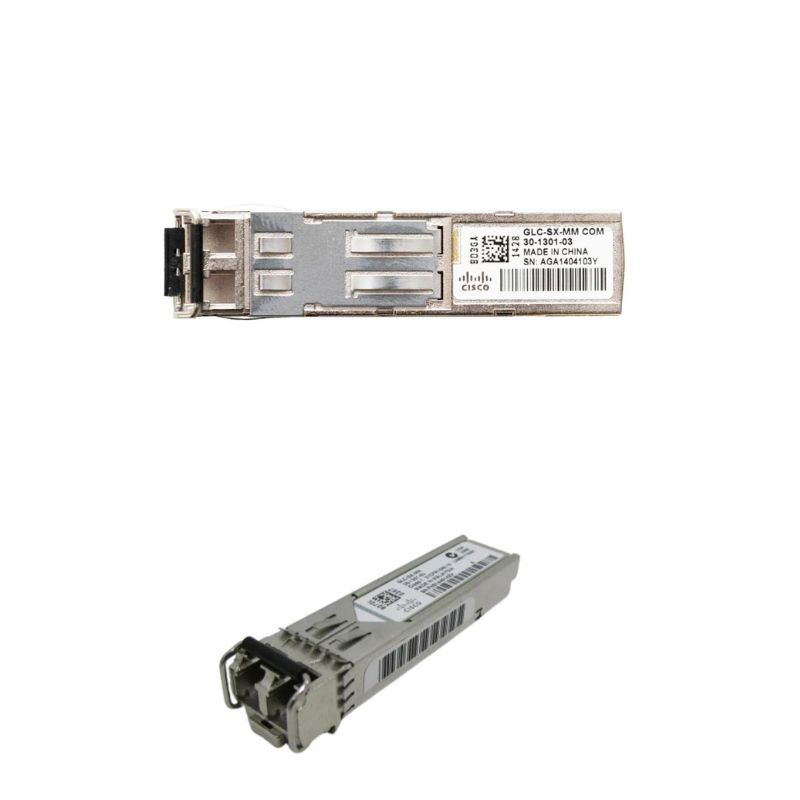
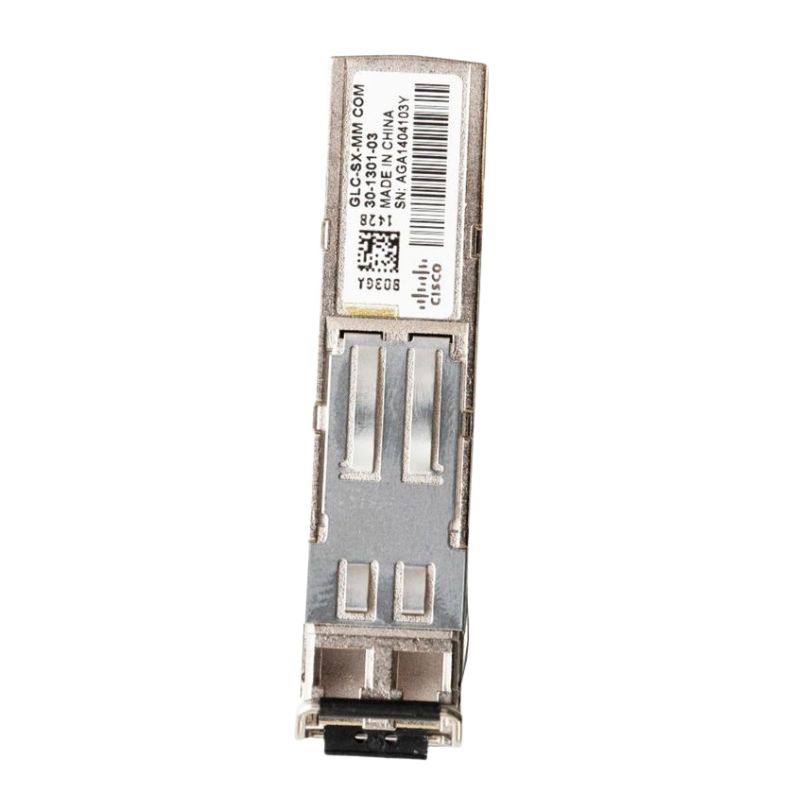
Cisco 30-1301-03 SFP (Mini-GBIC) Transceiver Module LC Multi-Mode. Excellent Refurbished with 1-Year Replacement Warranty
| SKU/MPN | Warranty | Price | Condition | You save |
|---|---|---|---|---|
| 30-1301-03 | 1 Year Warranty | $50.00 | Excellent Refurbished | You save: $17.50 (26%) |
| 30-1301-03 | 1 Year Warranty | $76.00 | Factory-Sealed New Retail in Original Box (FSB) | You save: $26.60 (26%) |
Cisco stands as a pioneering force in IP-based networking, delivering advanced solutions that form the backbone of the internet and enterprise infrastructures worldwide. From corporate offices to educational institutions and government systems, Cisco technologies enable seamless transmission of voice, video, and data across buildings, campuses, and global networks.
The Cisco 30-1301-03 SFP (Small Form-factor Pluggable) transceiver module adheres to the MSA (Multi-Source Agreement) standards for physical dimensions and electrical interfaces. This hot-swappable component measures approximately 56.5mm x 13.4mm x 8.5mm (2.22 x 0.53 x 0.33 inches) and weighs less than 30 grams. The compact design enables high port density configurations in network switches and routers, allowing network administrators to maximize rack space utilization while maintaining flexibility in connectivity options.
This transceiver module features a duplex LC connector interface, specifically designed for multi-mode fiber optic cabling. The LC connector's small form factor contributes to higher port density while providing secure and reliable fiber connections. The module is optimized for use with 62.5/125μm or 50/125μm diameter multi-mode fiber optic cables, which are standard in enterprise campus networks, data center interconnections, and building backbone applications.
The LC connector design offers several advantages over alternative fiber optic connectors. Its push-pull latching mechanism ensures secure connections while facilitating easy insertion and removal. The ceramic ferrule provides precise fiber alignment, minimizing insertion loss and back reflection. This design characteristic is particularly important in high-speed data transmission environments where signal integrity is paramount.
The Cisco 30-1301-03 SFP transceiver operates at 850nm wavelength, which is standard for multi-mode fiber applications. It supports data rates of 1Gbps (1000Mbps) with compatibility for 1GbE (Gigabit Ethernet), Fibre Channel, and other protocol standards. The module utilizes 850nm VCSEL (Vertical Cavity Surface Emitting Laser) technology, which provides cost-effective optical performance suitable for short to medium distance transmissions typically required in multi-mode fiber deployments.
This transceiver module supports transmission distances up to 550 meters on 50/125μm OM2 multi-mode fiber and up to 275 meters on 62.5/125μm OM1 multi-mode fiber. The maximum achievable distance depends on fiber quality, connector quality, and the number of connection points in the link. For optimal performance, Cisco recommends using higher grade OM3 or OM4 multi-mode fiber, which can extend the reach up to 1,000 meters under specific conditions while maintaining signal integrity.
The performance characteristics vary significantly based on the multi-mode fiber type employed. With OM1 fiber (62.5/125μm), the maximum supported distance is 275 meters. OM2 fiber (50/125μm) extends this to 550 meters. When using OM3 laser-optimized 50/125μm fiber, distances up to 1,000 meters are achievable. OM4 fiber provides similar distance capabilities to OM3 but with additional bandwidth headroom for future upgrades. The module automatically adjusts output power based on fiber characteristics to maintain optimal performance across these different fiber types.
The Cisco 30-1301-03 is designed to operate in commercial temperature ranges from 0°C to 70°C (32°F to 158°F). The storage temperature range extends from -40°C to 85°C (-40°F to 185°F). The module can withstand relative humidity levels from 5% to 95% non-condensing. These environmental specifications ensure reliable operation in typical data center and enterprise networking environments without requiring specialized cooling or humidity control systems.
Typical power consumption for the 30-1301-03 SFP transceiver is less than 1 watt during normal operation, contributing to energy-efficient network designs. The low power dissipation reduces thermal load on networking equipment, enabling higher port density configurations without exceeding thermal design limits. The module incorporates built-in digital diagnostics monitoring (DDM) capabilities that allow network management systems to monitor real-time temperature conditions and trigger alerts if thresholds are exceeded.
The Cisco 30-1301-03 SFP transceiver module is compatible with a wide range of Cisco switching and routing platforms. This includes the Catalyst 2960, 3560, 3750, 4500, and 6500 series switches, as well as Nexus 2000, 3000, 5000, and 7000 series data center switches. The module is also supported on ASR 1000 series routers and MDS 9000 series storage area network switches. Compatibility extends to both current and legacy Cisco platforms that support SFP interfaces, providing investment protection for organizations with mixed-generation network infrastructure.
This SFP transceiver complies with IEEE 802.3z 1000BASE-SX standards for Gigabit Ethernet over fiber optic cabling. It also supports Fibre Channel protocols up to 1GFC (1 Gigabit Fibre Channel), making it suitable for storage area network applications. The module adheres to SFF-8472 specifications for digital diagnostics monitoring, enabling real-time performance monitoring and predictive failure analysis through supported network management systems.
The Cisco 30-1301-03 meets numerous international regulatory standards including FCC Part 15 (Class A) in the United States, CE marking for European markets, and VCCI for Japan. It complies with RoHS (Restriction of Hazardous Substances) directives, ensuring minimal environmental impact. The module undergoes rigorous testing to meet Telcordia GR-468-CORE reliability standards for optoelectronic devices, guaranteeing consistent performance under demanding operating conditions.
The 30-1301-03 utilizes 850nm VCSEL (Vertical Cavity Surface Emitting Laser) technology, which offers superior reliability and longer operational lifespan compared to edge-emitting lasers. The laser output power is Class 1 LED/Laser compliant, making it safe for use in all environments without requiring special protective measures. The module incorporates automatic laser shutdown functionality that deactivates the transmitter when no fiber connection is detected or when the link is administratively disabled, ensuring compliance with laser safety regulations.
The transceiver module features a custom-designed IC (Integrated Circuit) that handles signal conditioning, clock data recovery, and limiting amplification. The IC converts the weak electrical signals from the network equipment into precisely modulated optical signals for transmission, and performs the reverse process for received optical signals. Advanced signal integrity features include baseline wander correction, adaptive equalization, and built-in jitter reduction, which collectively maintain signal quality across the maximum specified transmission distances.
In modern data center environments, the Cisco 30-1301-03 SFP transceiver is commonly deployed for server-to-switch connections in top-of-rack (ToR) switching architectures. The 1Gbps data rate provides sufficient bandwidth for enterprise application servers, while the multi-mode fiber connectivity enables cable runs up to 550 meters within the data center. The hot-swappable nature facilitates server maintenance and replacement without disrupting adjacent connections, and the compact form factor allows high-density server deployments without compromising connectivity options.
Within data center racks, these transceivers support both intra-rack connections between servers and top-of-rack switches, and inter-rack connections between ToR switches and end-of-row or middle-of-row aggregation switches. The 550-meter maximum distance on OM2 fiber provides flexibility in data center layout, allowing equipment placement throughout the facility without being constrained by copper cabling distance limitations. The LC connector interface enables clean cable management in high-density environments where space is at a premium.
In enterprise campus networks, the 30-1301-03 transceiver facilitates fiber optic connectivity between wiring closets and workgroup switches. The multi-mode fiber infrastructure supports higher bandwidth than traditional copper cabling while providing electrical isolation between buildings or floors. This is particularly valuable in environments with potential ground potential differences or where electromagnetic interference could degrade copper cable performance. The transceiver's commercial temperature range specification makes it suitable for uncontrolled environments typically found in enterprise wiring closets.
For building backbone and riser applications, these SFP transceivers enable high-speed connectivity between distribution layer switches across multiple floors or between buildings in a campus environment. The 850nm wavelength is ideal for these applications as multi-mode fiber installations are common in enterprise backbones, and the cost per connection is lower than equivalent single-mode solutions. The module's diagnostic capabilities assist network administrators in monitoring backbone link health and performing capacity planning based on utilization trends.
Beyond Ethernet applications, the Cisco 30-1301-03 supports 1Gbps Fibre Channel (1GFC) protocols, making it suitable for storage area network (SAN) deployments. In SAN environments, the transceiver connects servers to Fibre Channel switches or direct-attached storage systems. The deterministic latency characteristics of fiber optic connections are particularly important in storage networks where consistent performance is critical for application responsiveness. The module's compatibility with Cisco MDS 9000 series switches ensures seamless integration into enterprise SAN infrastructures.
For SAN extension applications within data centers or across campus environments, these transceivers provide the physical layer connectivity for extending storage networks beyond the limitations of copper cabling. While multi-mode fiber distance limitations restrict these applications to intra-campus deployments, the 550-meter reach enables flexible placement of disaster recovery infrastructure within campus boundaries. The transceiver's reliability characteristics are essential in these applications where storage network availability directly impacts business continuity.
The Cisco 30-1301-03 transmitter delivers an optical output power between -9.5 dBm and -3.0 dBm, while the receiver sensitivity is -17.0 dBm or better. This provides a typical power budget of approximately 7.5 dB to 14 dB, which accommodates connector insertion losses, splice losses, and fiber attenuation across the maximum specified distances. The receiver incorporates automatic gain control to maintain consistent performance across varying input power levels, ensuring stable operation as link conditions change over time.
The transceiver module is designed to achieve a Bit Error Rate (BER) better than 10⁻¹² under normal operating conditions. This exceptional error performance ensures data integrity for business-critical applications and storage networking where even occasional errors could cause significant performance degradation or data corruption. The module incorporates advanced forward error correction and signal conditioning techniques to maintain this error rate across the entire operating temperature range and throughout the specified lifetime of the product.
When connecting fiber optic cables, ensure the LC connectors are clean and undamaged before insertion. Inspect the fiber end faces with a microscope if possible, or use specialized fiber inspection tools. Push the LC connector straight into the transceiver port until it clicks into place. Avoid bending the fiber cable immediately after the connector, maintaining a minimum bend radius of 25mm (1 inch) for the cable to prevent microbending losses or fiber damage. Always use the dust caps provided when the transceiver or fiber cables are not connected.


 Contact Us
 Information
 Catalog
 Solid State Drives (SSD)
 Network Switches
 Hard Disk Drives
 HBA & Controllers
 PC & Servers
 PC & Server Memory
 CPU & Processors
 Network Routers
 Power Supplies
 Tape Drives & Libraries
 Network Devices
 Computer & Network Cables