(7% discount is applied at checkout)
Cart is empty
Your go-to destination for cutting-edge server products
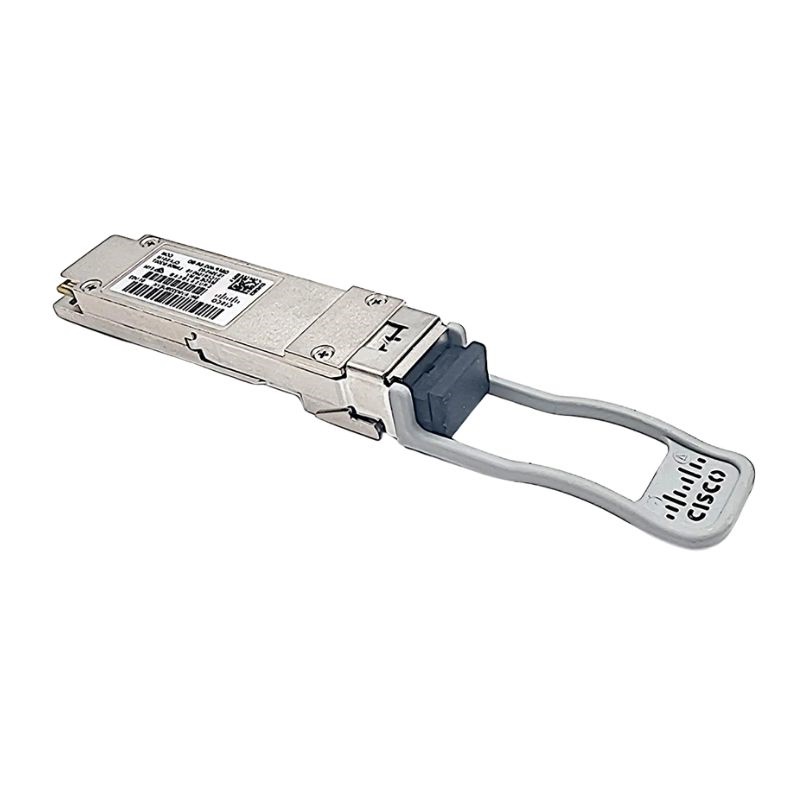


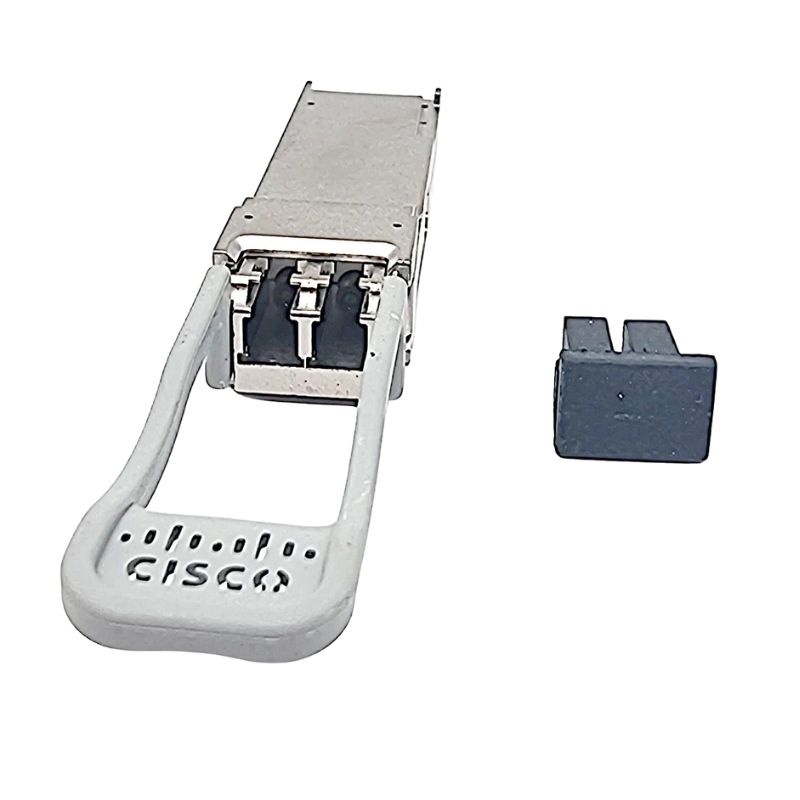
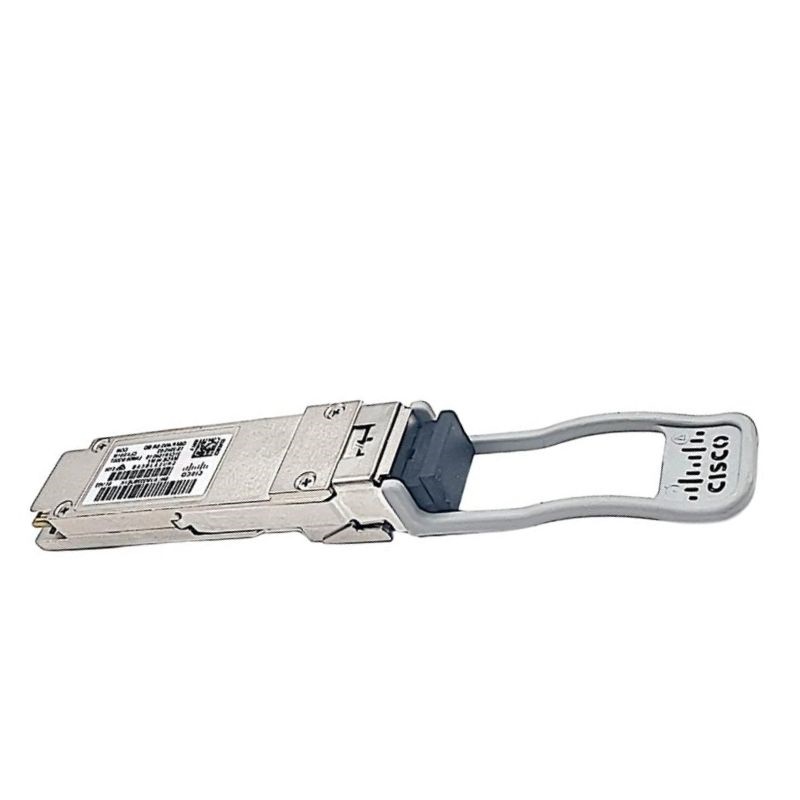
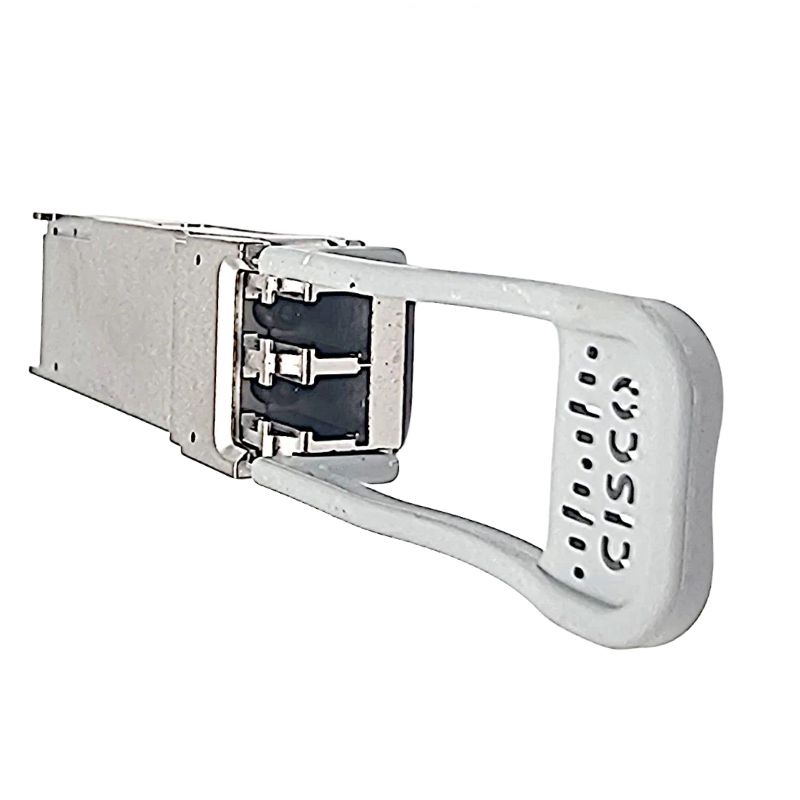
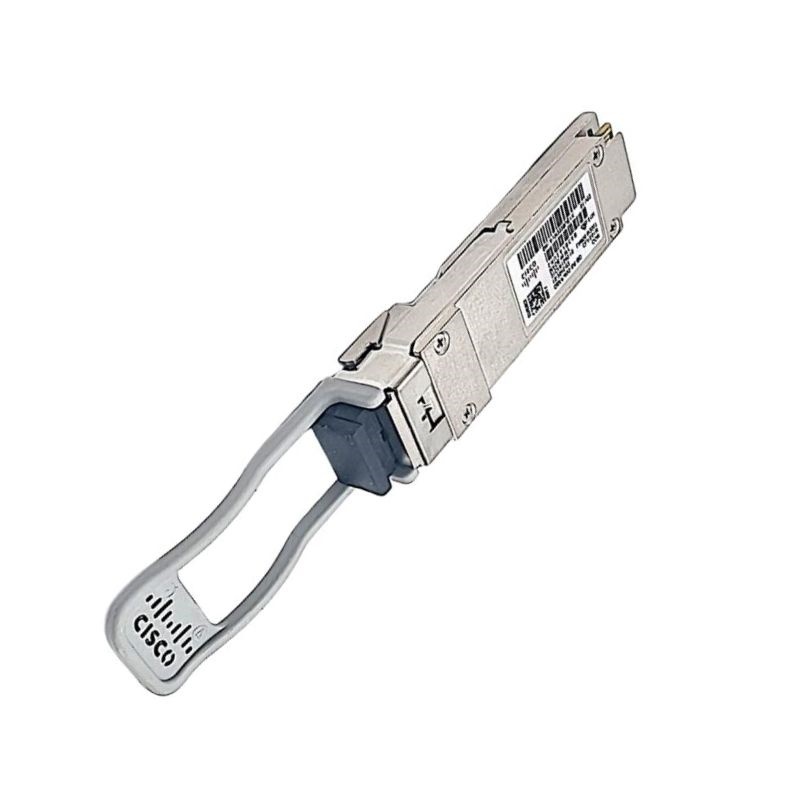
Cisco 10-2945-02 40GBPS BiDi Short-reach Lc Multi-mode Transceiver Module. Excellent Refurbished with 1 year replacement warranty
| SKU/MPN | Warranty | Price | Condition | You save |
|---|---|---|---|---|
| 10-2945-02 | 1 Year Warranty | $50.00 | Excellent Refurbished | You save: $17.50 (26%) |
| 10-2945-02 | 1 Year Warranty | $142.00 | Factory-Sealed New in Original Box (FSB) | You save: $49.70 (26%) |
Product Overview of Cisco 10-2945-02 QSFP-40G-SR-BD
The Cisco 10-2945-02 QSFP-40G-SR-BD is a high-performance QSFP+ transceiver engineered for short-reach 40-Gigabit Ethernet over duplex multimode fiber (MMF). Leveraging bidirectional (BiDi) optics, it enables 40G connectivity through a single pair of fibers, simplifying upgrades from legacy 10G links and reducing cabling complexity.
Unlike traditional 40G solutions that require multiple fibers, SR-BiDi sends traffic in both directions across one duplex pair using separate wavelengths. This approach preserves your existing LC-terminated MMF pathways and makes scaling bandwidth far more straightforward.
When pairing SR-BiDi modules across links, ensure matching transceiver types and validated switch software to maximize link stability and monitoring accuracy.
Evaluate link budget against the grade and condition of installed MMF to validate target distances before large-scale rollout.
The Cisco 10-2945-02 40Gbps BiDi short-reach LC multimode transceiver module category focuses on high-density, campus and data center optics designed to simplify 40 Gigabit Ethernet (40GbE) adoption over existing duplex multimode fiber. In this category, modules leverage bi-directional (BiDi) wavelength technology to send and receive traffic simultaneously over the same pair of fibers, permitting a dramatic reduction in new cabling while increasing port density and lowering the total cost of ownership. With an LC duplex interface and support for OM3/OM4 multimode fiber, these optics deliver short-reach connectivity typically used for top-of-rack (ToR), end-of-row (EoR), spine-leaf uplinks, and distribution/aggregation interconnects where consistent, low-latency performance is essential.
Positioned for operators who want a fast path from legacy 10GbE duplex MMF to 40GbE, the Cisco 10-2945-02 BiDi class reduces infrastructure friction by allowing existing fiber runs to remain in service. Compared to parallel 40G solutions that require eight-fiber MPO/MTP links, BiDi LC modules streamline operations, simplify patching, and minimize failure points. This category also emphasizes backward-compatible building blocks, clean migration strategies, and predictable performance over typical distances encountered within modern facilities, including wiring closets, server rooms, modular data halls, and enterprise colocation cages.
BiDi optics simultaneously transmit and receive over two wavelengths on a single duplex pair. For sites already cabled with OM3 or OM4, this means 40GbE links can be turned up with LC patch cords—no multi-fiber trunk upgrades, no MPO fan-outs, and far fewer patch panel changes. This preserves past investments and accelerates project timelines.
Using standard LC connectors reduces congestion at panels and switch faces. Technicians gain clearer labeling, easier port mapping, and faster mean time to repair (MTTR) because LC connections are familiar and accessible. The simplified design also reduces training overhead and inventory complexity.
Optimized for short-reach multimode runs commonly found between rows or pods, these modules deliver deterministic latency, stable error performance, and robust link margins when installed with proper cleaning and handling procedures. Typical deployments see reaches appropriate for intra-room and adjacent room interconnects on OM3 and OM4 fiber.
By avoiding new parallel fiber plants, facilities can reduce capital expenditure on cabling, connectors, and panels, while also cutting operational expenditure tied to documentation, troubleshooting, and spares stocking. Fewer components mean fewer potential points of failure and lower ongoing maintenance costs.
In modern Clos-style data center fabrics, 40GbE uplinks between leaf and spine switches must be dense, predictable, and easy to scale. BiDi LC multimode links support high-fanout architectures, allowing operators to connect many leaves to multiple spines using the existing LC duplex backbone. This reduces the number of cabling SKUs and installation steps across the entire fabric.
ToR switches frequently aggregate to end-of-row or mid-row 40GbE devices. BiDi LC transceivers facilitate these short runs cleanly along cable trays with familiar LC jumpers, enabling consistent dressing, labeling, and airflow preservation in racks and aisles.
Enterprise campuses upgrading from 10GbE distribution layers to 40GbE core uplinks can capitalize on the installed base of OM3/OM4. BiDi modules help bridge the performance gap without immediate recabling, smoothing migrations that might otherwise require disruptive MPO infrastructure changes.
Colo environments prioritize speed of turn-up and predictable power/cable management. With LC duplex BiDi optics, tenants and providers alike can provision 40Gbps cross-connects quickly, using standard patch fields and documented LC pathways that are already understood by hands-and-eyes contractors.
Modules in this category typically present a QSFP/QSFP+ mechanical form factor for 40GbE switch ports while exposing an LC duplex optical interface. The QSFP mechanical fit provides hot-swappable convenience, high front-panel density, and broad switch compatibility within Cisco ecosystems that support 40G BiDi operation modes.
BiDi LC optics operate over multimode fiber (MMF), typically OM3 or OM4. These fibers are common within enterprise and data center builds and are known for their short-reach optimization and cost-effective installation compared to single-mode solutions. The bi-directional design uses separate wavelengths in each direction over the same two cores, enabling full-duplex 40GbE with just the one LC pair.
Short-reach profiles are designed to cover intra-facility distances commonly encountered between equipment rows or adjacent rooms. In many deployments, operators plan for typical ranges observed on OM3 and OM4 when setting link budgets. Running proper cleaning and testing routines is essential to achieve the best margins and avoid insertion loss spikes from dust or worn connectors.
QSFP-class optics generally maintain efficient power envelopes suited to high-density faceplates. Planners should account for cumulative thermal loads when populating entire rows or chassis with 40G interfaces—ensuring adequate front-to-back or back-to-front airflow and observing vendor guidelines for intake temperatures, clearance, and cable bend radius to avoid impeding cooling pathways.
Digital optical monitoring is commonly available for real-time visibility into transmit (Tx) and receive (Rx) power, temperature, voltage, and laser bias. NOC engineers can leverage these parameters for proactive maintenance, trend analysis, and rapid isolation of degradation before alarms surface at the MAC layer.
Cisco platforms providing QSFP 40GbE ports and BiDi feature support are typically aligned with this category. Administrators should verify feature sets and software train guidance for the target platform, confirm that the transceiver PID or spare part code aligns with approved lists, and ensure that the port profile (speed, breakout behavior, and autonegotiation settings where applicable) is configured correctly.
One of the major strengths of BiDi LC optics is their synergy with installed duplex MMF plants. Existing pathways, trays, and patch fields can remain largely unchanged. When migrating a link from 10GbE SR to 40GbE BiDi, the same LC pair can be reused, provided the fiber quality, length, and cleanliness meet the optical budget.
Modules advertise identity, capabilities, and diagnostics over the standard QSFP management interface (I2C). Cisco devices can query EEPROM fields to verify compatibility, read DOM values, and raise alerts if module health deviates from expected ranges. Correct identification prevents configuration drift and simplifies inventory audits.
The principal migration advantage is reuse of duplex LC runs. Where a site formerly used SFP+ 10G SR optics, planners can transition the same pathways to QSFP BiDi 40G for higher bandwidth without immediate changes to patch panels or trunk topology. This approach accelerates time-to-value and minimizes tactical disruption during maintenance windows.
During staged migrations, it is common to operate mixed 10G and 40G domains. Because LC is ubiquitous, technicians can pre-stage new 40G links alongside existing 10G circuits, then coordinate a clean switchover that avoids service interruptions. Proper documentation and port labeling are critical to avoid accidental moves/adds/changes (MACs) affecting the wrong circuit.
Before cutover, teams should measure end-to-end loss and check that patch fields, jumpers, and bulk fiber meet vendor specifications. This includes verifying that connector counts and estimated insertion losses keep the total within the link budget, and validating that cleanliness and end-face geometry meet standards.
Every connector and splice adds loss. Design links to remain comfortably within the optical power budget, factoring patch panels, jumpers at each end, and any intermediate consolidation points. If measured loss approaches limits, re-terminate suspect connectors or reduce the number of mated pairs.
Maintain polished, clean LC connectors to reduce reflections. While multimode is less sensitive to ORL than single-mode, poor practices still increase bit error rates and reduce margin, particularly at high symbol rates associated with 40GbE.
OM3 and OM4 support different effective modal bandwidths; higher grades allow longer runs and better headroom. When planning new racks or pods, align row spacing and vertical distribution with the fiber grade in use to keep all runs inside recommended distances for short-reach BiDi operation.
Although optical links are inherently difficult to tap without detection, physical security controls such as locked patch panels, tamper-evident seals, and camera coverage in meet-me rooms help protect critical aggregation links. Document access, enforce change approvals, and log all physical interactions with core links.
40GbE BiDi LC multimode solutions align with Ethernet standards for link negotiation and framing while using vendor-implemented bi-directional optics within the QSFP ecosystem. Always reference platform release notes to confirm supported modes, diagnostics, and any special configuration parameters required.
By eliminating the need to pull new MPO trunks, BiDi LC optics reduce material consumption and the carbon footprint associated with cable manufacturing, shipping, and installation. Reuse drives environmental stewardship while also streamlining projects and reducing waste.
QSFP optics deliver favorable power per gigabit for short-reach links. Higher-density panels and simpler patching also reduce the number of passive components and materials, contributing to more efficient resource utilization across the physical layer.
Comparing BiDi LC Multimode vs. Parallel MMF MPO Solutions
Parallel MMF requires MPO connectors and typically eight fibers for 40G, increasing connector count and panel density requirements. BiDi LC uses a single duplex pair, slashing connector counts, simplifying documentation, and reducing the number of precision terminations that must remain clean.
BiDi LC excels in reuse scenarios where LC duplex is already deployed. MPO is powerful for very high-density structured cabling or for architectures targeting 100G/400G parallel paths, but it often implies new infrastructure and training, along with specialized cleaning tools.
For many enterprises, the simplicity of LC duplex patching wins in day-to-day operations. Parallel MMF shines in hyperscale environments that standardize on MPO cassettes and automate cable documentation. The Cisco 10-2945-02 category serves the vast middle ground: fast, practical 40GbE upgrades with minimal disruption.
Ideal for short distances within a row or between adjacent rows. Keep jumper lengths consistent, route along tray edges to avoid blocking airflow, and label both ends with port identifiers and circuit IDs.
Use LC panels to create stable demarcation points between switch rows, simplifying changes and enabling maintenance without disturbing end devices. Document panel positions, tray routes, and spare capacity. For growth, leave pre-terminated LC trunks dark and ready for quick activation.
Larger facilities may route LC trunks to central distribution panels. BiDi LC works well in this model, provided connector counts remain within the optical budget. Consider high-quality cassettes, low-loss adapters, and consistent inspection procedures at each node.
BiDi LC optics offer a clean four-fold increase in per-link throughput over 10G duplex SR. This step-function upgrade can relieve oversubscribed aggregation and improve east-west bandwidth in leaf–spine designs. Use traffic baselines to identify the most congested links for initial upgrades.
Balance leaf-to-spine uplinks to achieve target oversubscription (for example, 3:1 or 4:1) while retaining growth headroom. BiDi LC’s simplicity encourages adding capacity incrementally as utilization trends upward, avoiding large, disruptive recabling events.
While parallel MMF and single-mode solutions dominate higher speeds beyond 40G, the immediate ROI of BiDi LC for short-reach 40GbE remains compelling. Many organizations adopt a hybrid roadmap: leverage BiDi LC for today’s 40G needs while planning a future transition to higher speeds where warranted.
Measure insertion loss after installation and compare against budget. Record baseline readings with timestamps, serial numbers, and link endpoints. Store evidence in your change record to accelerate any future troubleshooting.
Run traffic generation tests at line rate using RFC 2544/Y.1564 methodologies where practical. Validate latency, jitter, and frame loss against internal SLAs. Confirm that FEC (if applicable) and flow-control settings behave as expected under peak load.
Deliver as-built diagrams, panel maps, DOM baselines, and cleaning logs. Ensure NOC teams know alarm thresholds and escalation paths. Good documentation transforms routine maintenance from reactive firefighting into proactive care.
Use consistent labels capturing the spare part identifier, speed, reach type, interface (LC duplex MMF BiDi), and installation date. Barcode or RFID tags accelerate audits and minimize misplacement.
Analyze historical failure rates, lead times, and criticality to size your spares pool. Keep a balanced stock across major sites to avoid bottlenecks. For remote PoPs, position at least one spare per critical link and maintain a courier plan for rapid replenishment.
Track end-of-sale/end-of-support notices for the parent platform, and align software images with recommended releases supporting BiDi features. Even when optics are largely plug-and-play, platform software can influence DOM visibility, telemetry formatting, or port behavior.
Ensure teams are comfortable with LC connector inspection, cleaning, and polarity. Provide hands-on labs covering DOM interpretation, link budget calculations, and troubleshooting with light sources and power meters.
Train NOC analysts on normal DOM ranges, expected temperature envelopes, and alarm thresholds. Build runbooks for common incidents such as dirty connectors or mis-patching, with decision trees and escalation criteria.
BiDi LC links mesh naturally into leaf–spine fabrics, supporting the east-west bandwidth required by micro-segmented, policy-driven networks. They enable rapid scale-out as additional leaves are added to accommodate growth or new services.
Because overlays rely on reliable underlay bandwidth and low latency, the predictable performance of short-reach BiDi LC helps maintain overlay SLA compliance. Consistent link characteristics simplify capacity planning for encapsulated traffic.
Work with qualified suppliers who provide authentic, properly coded Cisco-compatible modules where required, along with warranty support and serialized traceability. Verify RMA processes and turnaround times to maintain tight SLAs.
For large orders, perform sample testing of modules to confirm DOM reporting, optical power levels, and link stability before mass deployment. Keep batch records linked to circuits to streamline future diagnostics.
Coordinate changes with application teams to avoid peak transaction windows. Use standardized MOPs (Methods of Procedure) that include back-out plans and validation steps. Close the loop with post-change reviews and documentation updates.
Maintain logs of who performed what change, when, and why. Regular audits ensure that physical and logical inventories match and that optics remain within supported firmware and software matrices.
Integrate port counters, DOM, and syslogs into centralized observability platforms. Threshold-based or anomaly-detection alerts help identify slow drifts—like increasing Rx power variability—that precede hard failures.
Use APIs to keep diagrams, port maps, and asset systems up to date. Automation reduces human error, scales with growth, and ensures accurate change impact analysis when re-balancing fabrics or adding capacity.
Each leaf uplinks to all spines with 40GbE BiDi LC. The result is a balanced fabric with predictable oversubscription and minimum cabling complexity. Panels carry labeled LC circuits organized by leaf. DOM thresholds are tuned for rapid incident correlation.
Upgrade distribution-to-core uplinks from 10GbE to 40GbE by swapping SFP+ SR optics for QSFP BiDi LC at each end, reusing the same LC runs after cleaning and validation. Capacity increases without new MPO trunks or panel retrofits.
Some facilities combine OM3 and OM4 segments due to legacy build-outs. When a link spans mixed grades, budget for the lower grade and shorter distance, and consider re-terminating the weaker segment during a maintenance cycle to improve headroom.
Excessive adapter hops or aging panels can quietly erode margin. Map the physical path thoroughly and plan consolidation to reduce connector counts where feasible.
Although fiber is immune to electromagnetic interference, mechanical stress from tight bends, heavy cable weights, or repeated handling can cause intermittent faults. Follow bend radius guidance and support bundles properly to protect link integrity.
Track Rx power relative to minimum receive sensitivity and maintain comfortable headroom. Declining margin is an early warning sign of contamination or connector wear.
Monitor FCS errors and discards during peak hours. A clean optical layer should exhibit negligible errors at line rate; deviations signal a need for cleaning or re-termination.
Trend module temperatures across seasons and aisle-containment changes. Stable thermal behavior correlates with long optic lifespans and fewer surprise alarms.
Jumpers suffer the most wear. Swapping a suspect patch cord is a fast, deterministic test before exploring deeper optical path issues.
Uniform labels improve clarity during emergencies and reduce mean time to innocence when multiple teams touch the same panels.
Attach photos to change records. Visual context helps remote engineers direct on-site hands more effectively during escalations.
An optical technique that uses two different wavelengths to send and receive data over the same pair of fibers, enabling full-duplex communication without parallel fibers.
Classes of multimode fiber defined by effective modal bandwidth and attenuation characteristics; OM4 typically supports longer reaches and better margins than OM3 in short-reach Ethernet applications.
Quad Small Form-factor Pluggable transceiver form factor used for 40GbE and beyond, offering high density and hot-swappability on modern switches.
Digital Optical Monitoring/Digital Diagnostics Monitoring—telemetry from the transceiver reporting optical power, temperature, voltage, and laser bias to aid operations.


 Contact Us
 Information
 Catalog
 Solid State Drives (SSD)
 Network Switches
 Hard Disk Drives
 HBA & Controllers
 PC & Servers
 PC & Server Memory
 CPU & Processors
 Network Routers
 Power Supplies
 Tape Drives & Libraries
 Network Devices
 Computer & Network Cables