(7% discount is applied at checkout)
Cart is empty
Your go-to destination for cutting-edge server products
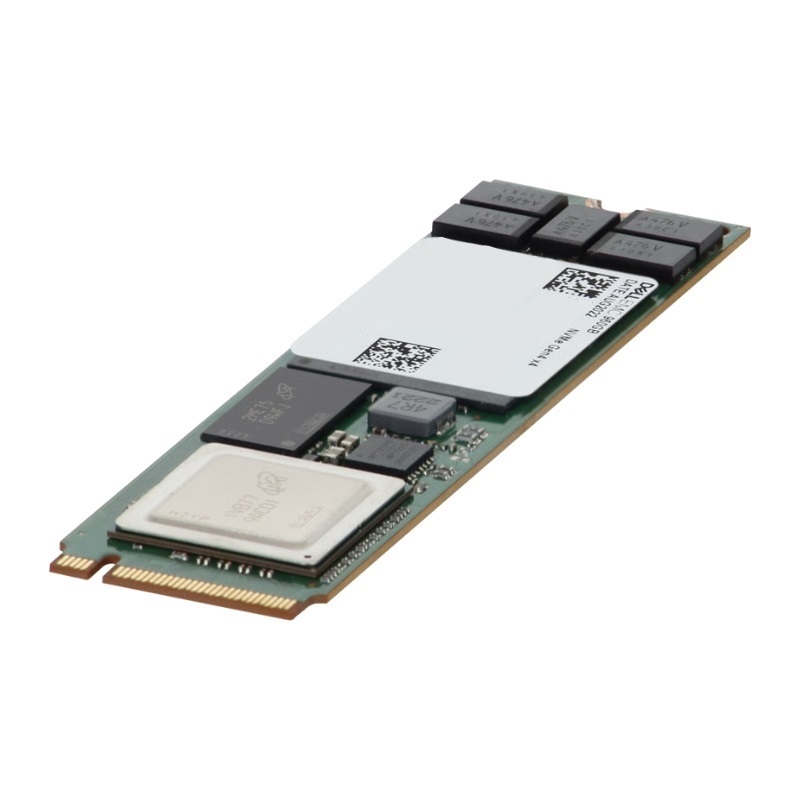


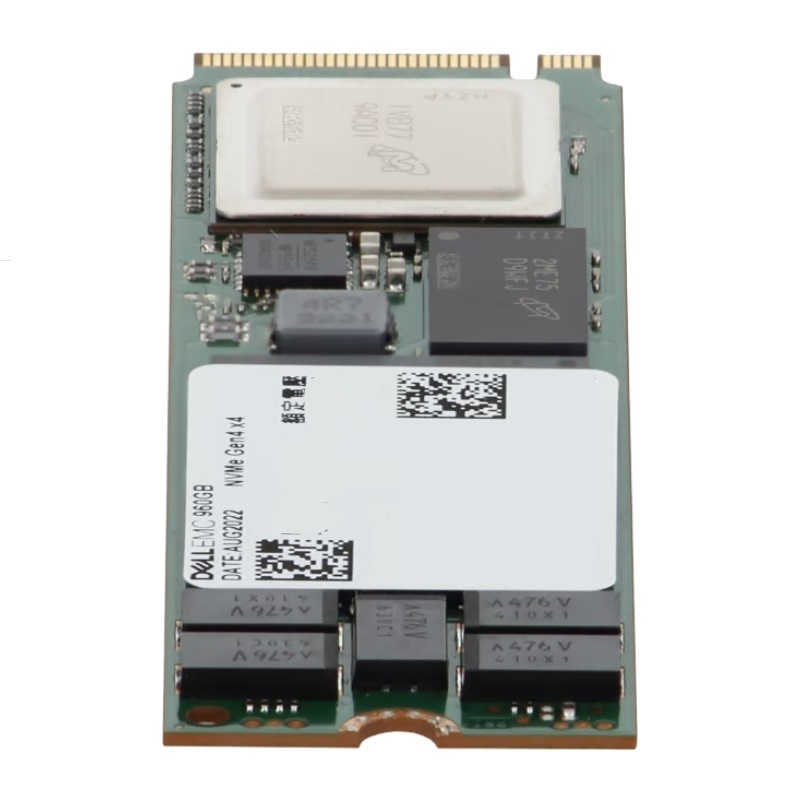
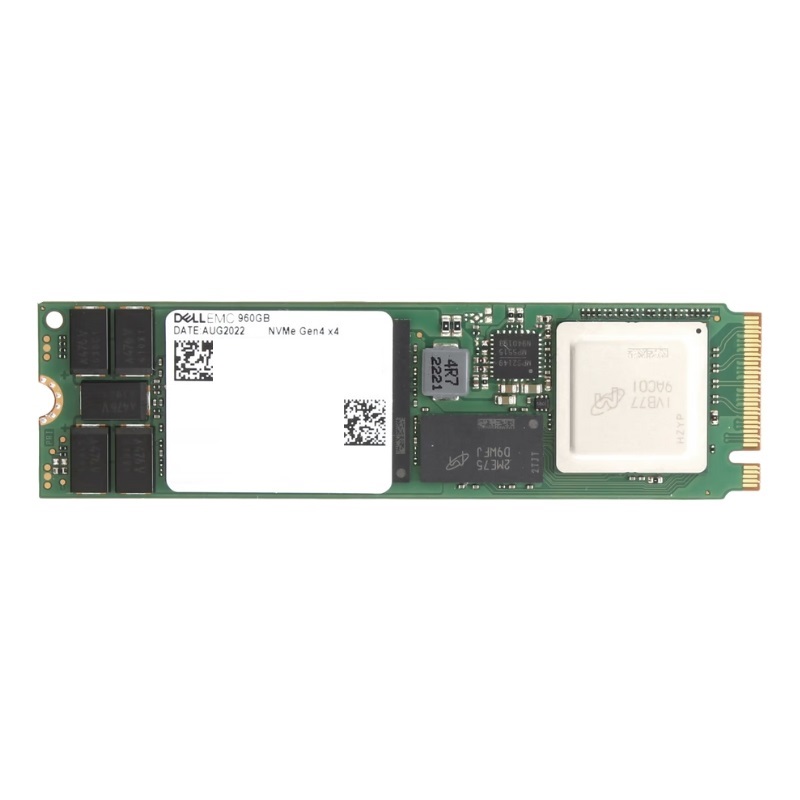
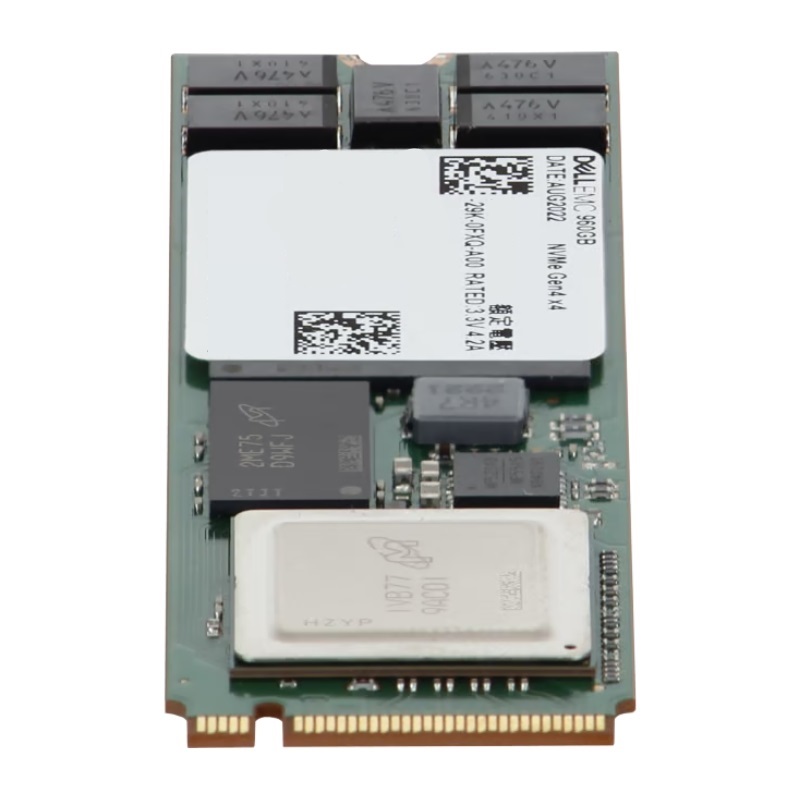
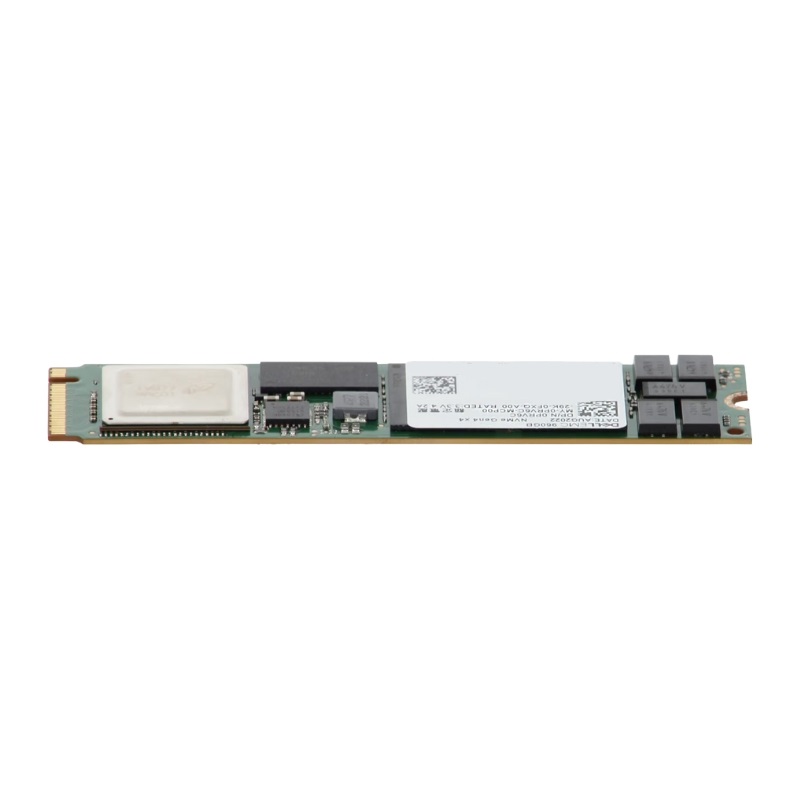
Dell 345-BKSQ 960GB NVMe M.2 2280 PCIe Gen4 X4 TLC Read Intensive SED Enterprise Solid State Drive. Excellent Refurbished with 1 year Replacement Warranty
The Dell 345-BKSQ 960GB Enterprise Solid State Drive is engineered for high-speed data processing, superior reliability, and enterprise-grade storage environments. Built with advanced PCIe Gen4 x4 technology and 3D TLC NAND flash memory, this M.2 2280 SSD delivers optimized performance for servers, data centers, and business-critical applications.
The Dell 345-BKSQ 960GB NVMe M.2 2280 PCIe Gen4 X4 TLC Read Intensive SED Enterprise Solid State Drive is engineered to deliver enterprise-grade storage performance, advanced reliability, and efficient data management for modern server and data center environments. Built for organizations that require dependable solid-state storage with accelerated throughput, low latency, and optimized read-intensive endurance, this enterprise SSD supports demanding workloads across virtualization, cloud infrastructure, analytics, enterprise applications, and high-performance computing platforms.
Designed around the PCIe Gen4 interface, this Dell enterprise SSD significantly improves bandwidth capabilities over previous-generation storage technologies. The integration of NVMe architecture allows faster communication between the storage subsystem and server processors, reducing bottlenecks and enabling improved responsiveness in mission-critical applications. Its compact M.2 2280 form factor further enhances deployment flexibility for dense server environments, hyper-converged infrastructure, and modern enterprise platforms where space optimization is essential.
The 960GB capacity offers an ideal balance between performance and storage scalability, making it suitable for operating systems, virtualization layers, frequently accessed datasets, transactional workloads, and enterprise boot configurations. The inclusion of TLC NAND technology ensures cost-effective enterprise storage while maintaining consistent performance and endurance characteristics required in professional IT infrastructures.
Modern enterprise environments depend on rapid data access and low-latency storage communication to maintain operational efficiency. The Dell 345-BKSQ leverages PCIe Gen4 X4 connectivity to provide enhanced throughput compared to legacy SATA SSDs and traditional hard drives. By utilizing four PCIe Gen4 lanes, the drive achieves faster read operations, improved parallel processing capabilities, and superior responsiveness for enterprise applications.
NVMe technology eliminates many of the limitations associated with older storage protocols. Instead of relying on outdated AHCI architectures originally designed for spinning disks, NVMe communicates directly with the CPU through optimized command queues and streamlined instruction handling. This reduces latency and enables significantly higher input/output operations per second, commonly known as IOPS.
PCIe Gen4 doubles the bandwidth available in PCIe Gen3 environments, creating substantial advantages for enterprise workloads. Organizations deploying modern server processors and high-speed memory architectures benefit from the improved storage throughput delivered by Gen4 NVMe SSDs. Applications involving virtualization, machine learning, cloud-native services, and large database environments experience enhanced responsiveness and shorter data retrieval times.
The Dell 345-BKSQ is especially valuable in environments where rapid read operations are critical. Read-intensive enterprise workloads frequently involve accessing large amounts of stored information with minimal delays. Examples include content delivery infrastructure, enterprise search engines, business intelligence systems, virtual desktop infrastructure, and application hosting platforms.
The Dell 345-BKSQ is categorized as a read intensive enterprise SSD, meaning it is specifically engineered for workloads that primarily involve data retrieval rather than constant write activity. Read-intensive drives offer an efficient balance between endurance, capacity, and performance for applications where information is frequently accessed but less frequently modified.
Many enterprise environments rely heavily on read-centric operations. Business analytics systems, web hosting platforms, virtualization infrastructures, and content streaming services often process significantly more read requests than write requests. By optimizing the SSD for these conditions, organizations can achieve excellent performance while controlling infrastructure costs.
The M.2 2280 form factor provides substantial flexibility for enterprise hardware deployments. Measuring 22mm wide and 80mm long, the compact design allows server manufacturers and IT administrators to maximize storage density while preserving airflow and physical space inside modern systems.
Data centers increasingly prioritize efficient hardware utilization because rack space, cooling, and power consumption directly influence operational costs. Compact M.2 enterprise SSDs help organizations build high-density server infrastructures without sacrificing storage performance.
Traditional 2.5-inch storage devices consume more physical space and often require additional cabling or drive bays. The M.2 architecture simplifies deployment by connecting directly to the motherboard interface. This streamlined approach reduces cable management complexity while improving airflow inside enterprise systems.
Compact SSD deployments are particularly beneficial in blade servers, edge computing appliances, hyper-converged infrastructure, and compact enterprise platforms where every inch of internal space matters. The Dell 345-BKSQ supports these modern infrastructure designs by combining enterprise performance with a highly efficient physical footprint.
Heat management is a critical consideration in enterprise environments. Efficient thermal characteristics contribute to long-term reliability and stable performance under sustained workloads. M.2 SSDs generally produce less heat than traditional spinning disks while enabling improved airflow pathways within servers.
The Dell 345-BKSQ is designed to operate reliably within enterprise thermal environments, supporting consistent operation even in dense server configurations. Efficient thermal management contributes to overall infrastructure stability and reduces the likelihood of thermal throttling during intensive activity.
The Dell 345-BKSQ utilizes TLC NAND flash memory technology, which stores three bits of information per memory cell. TLC technology has become widely adopted in enterprise environments due to its balance of capacity efficiency, cost optimization, and reliable performance characteristics.
Modern enterprise TLC NAND architectures include advanced controller technologies, wear leveling algorithms, error correction mechanisms, and firmware optimizations that enhance durability and consistency. These technologies ensure reliable operation for enterprise workloads while maintaining attractive cost-per-gigabyte economics.
Enterprise SSDs require consistent performance over long operational periods. The Dell 345-BKSQ incorporates enterprise-class firmware optimizations to maintain stable throughput and predictable latency. These capabilities are especially important for applications requiring dependable performance under sustained workloads.
Advanced NAND management techniques distribute write operations evenly across memory cells, helping maximize drive lifespan and preserve long-term reliability. Enterprise controllers continuously monitor health metrics and optimize storage behavior to ensure operational consistency.
TLC NAND provides a strong balance between affordability and enterprise-grade functionality. Organizations deploying large-scale storage infrastructures benefit from the improved storage density and cost efficiency offered by TLC technology. This enables broader NVMe adoption across data centers without excessive infrastructure spending.
The Dell 345-BKSQ helps enterprises modernize storage performance while maintaining practical budgeting strategies. Businesses can replace slower legacy drives with high-speed NVMe SSDs across multiple servers, improving operational efficiency and application responsiveness.
Many industries must comply with strict data security regulations and privacy requirements. Financial institutions, healthcare providers, government agencies, and multinational corporations often require encrypted storage infrastructures to support regulatory compliance.
Self-encrypting drives help organizations align with security standards by protecting stored data automatically. Hardware-based encryption reduces administrative complexity while enhancing operational security across enterprise environments.
Enterprise SSDs incorporate sophisticated error correction technologies and data integrity protections to ensure reliable information storage. These mechanisms continuously monitor and correct data inconsistencies while helping preserve system stability.
The Dell 345-BKSQ supports enterprise reliability requirements through advanced error management capabilities. Consistent data integrity is especially important for databases, virtualization platforms, and business-critical applications where corrupted information could lead to operational issues.
Virtualized environments place unique demands on enterprise storage infrastructure because multiple workloads share the same physical hardware resources. The Dell 345-BKSQ is well suited for virtualization and cloud infrastructure deployments due to its low latency, fast read performance, and efficient NVMe architecture.
Hypervisors, virtual machines, and containerized applications all depend on rapid storage responsiveness to maintain performance consistency. Enterprise NVMe SSDs help reduce storage bottlenecks and improve infrastructure scalability.
Virtual machines rely heavily on storage responsiveness during boot operations, application launches, patch installations, and transactional activity. Slow storage performance can negatively affect multiple workloads simultaneously within consolidated environments.
The Dell 345-BKSQ enhances virtual machine responsiveness by reducing latency and accelerating data retrieval. Faster read operations contribute to improved end-user experiences and more efficient workload consolidation.
Business intelligence systems process substantial volumes of information to generate reports and analytical insights. Delays in storage performance can slow reporting cycles and affect productivity. Enterprise NVMe SSDs minimize these delays by accelerating access to frequently queried datasets.
The Dell 345-BKSQ supports responsive analytical environments by enabling faster data retrieval and improved throughput for enterprise reporting applications.
The Dell 345-BKSQ is engineered to integrate with compatible Dell enterprise server platforms and storage infrastructures. Enterprise-certified storage devices undergo extensive validation to ensure interoperability, firmware stability, and reliable performance within supported hardware ecosystems.
Using validated enterprise SSDs helps organizations reduce deployment risks while maintaining infrastructure consistency. Certified compatibility also improves management efficiency and technical support alignment.
Enterprise IT environments require predictable hardware interoperability to minimize downtime and deployment complexity. The Dell 345-BKSQ supports seamless integration within compatible server platforms, simplifying storage upgrades and infrastructure expansion initiatives.
Certified enterprise SSDs are optimized to operate effectively with server BIOS configurations, thermal management systems, and enterprise monitoring tools. These optimizations contribute to stable and efficient infrastructure performance.
Compact M.2 SSDs and efficient NVMe architectures enable higher-density server deployments. Data centers can support more workloads within existing rack space while maintaining strong performance characteristics.
The Dell 345-BKSQ helps organizations maximize infrastructure scalability by combining compact physical dimensions with enterprise-grade storage capabilities.
Scalable storage infrastructure is essential for organizations experiencing growing data demands. The Dell 345-BKSQ supports scalable enterprise deployments by delivering high-performance NVMe storage in a flexible and compact form factor.
As businesses expand digital operations, cloud adoption, analytics capabilities, and virtualization footprints, enterprise SSDs become increasingly important for maintaining infrastructure responsiveness and operational efficiency.
The Dell 345-BKSQ can be deployed across various enterprise use cases, including boot storage, caching layers, virtualization clusters, edge computing appliances, and read-intensive application environments. This flexibility allows organizations to standardize storage strategies across multiple operational requirements.
Standardized enterprise storage deployments simplify maintenance, inventory management, and infrastructure planning. Organizations benefit from predictable performance characteristics and streamlined procurement processes.


 Contact Us
 Information
 Catalog
 Solid State Drives (SSD)
 Network Switches
 Hard Disk Drives
 HBA & Controllers
 PC & Servers
 PC & Server Memory
 CPU & Processors
 Network Routers
 Power Supplies
 Tape Drives & Libraries
 Network Devices
 Computer & Network Cables