(7% discount is applied at checkout)
Cart is empty
Your go-to destination for cutting-edge server products
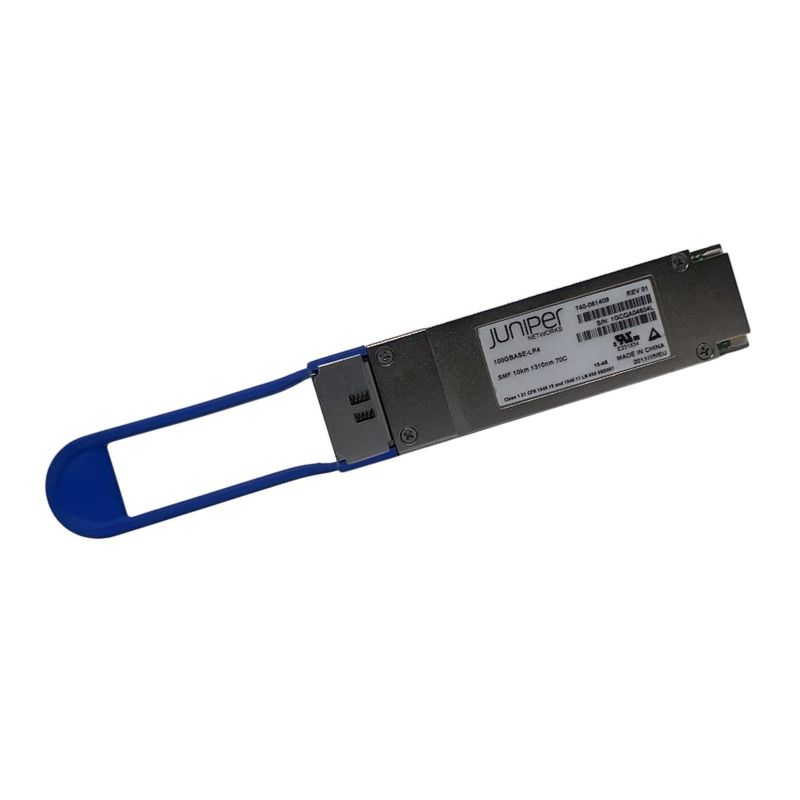


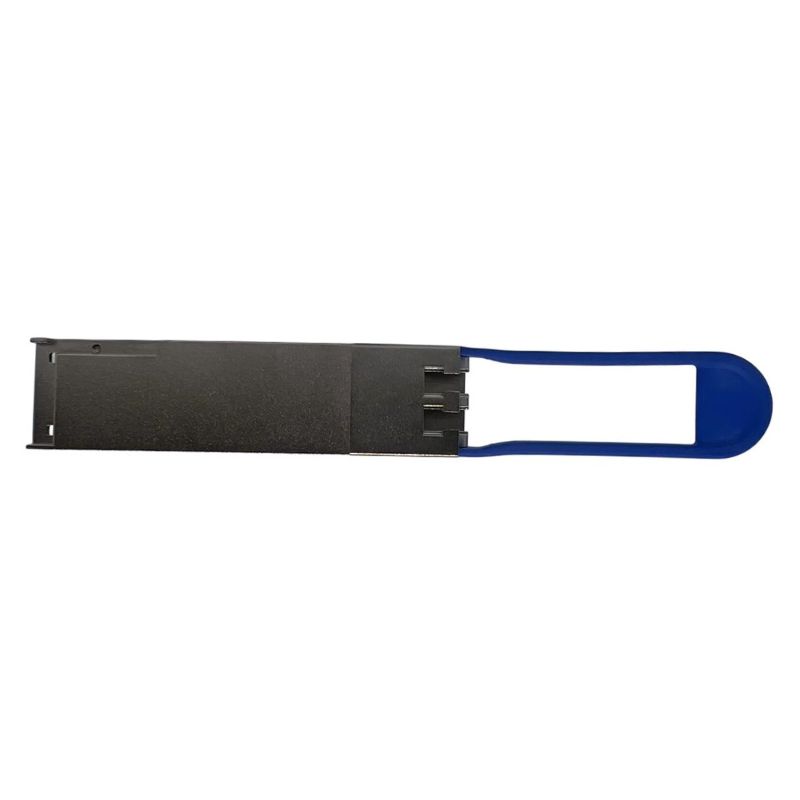
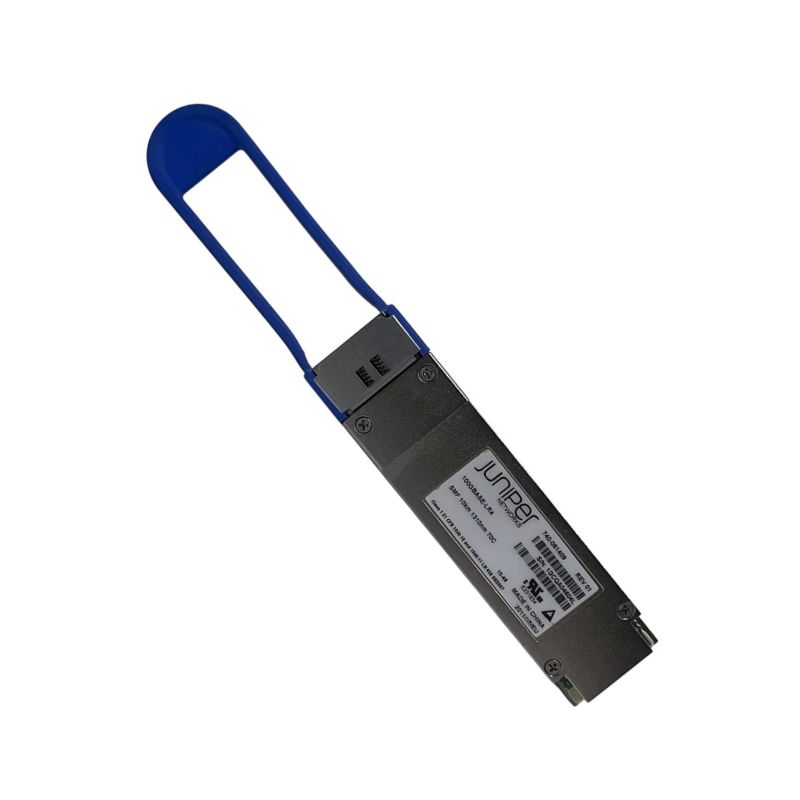
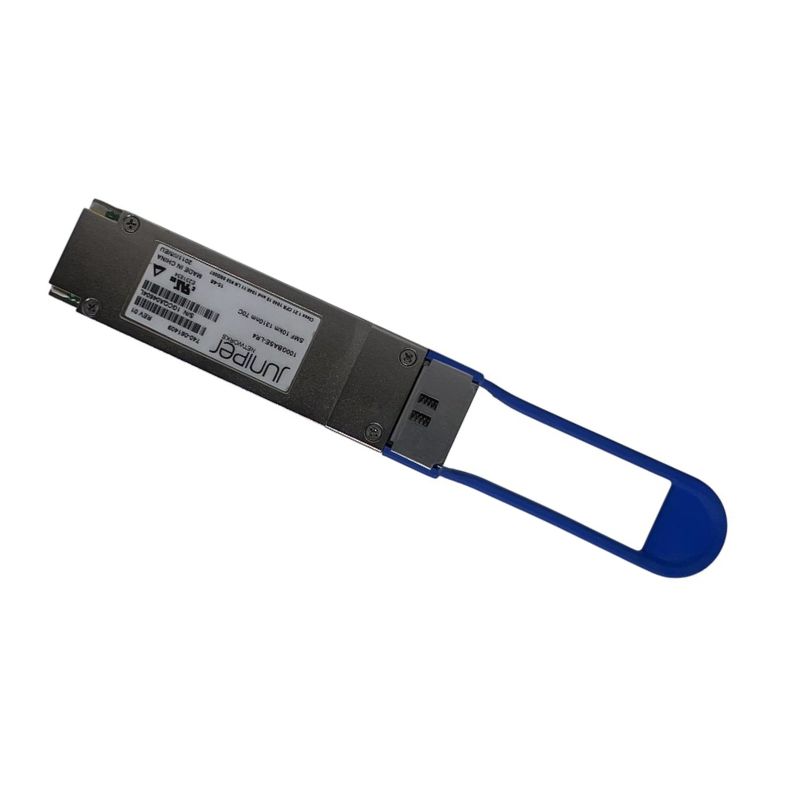
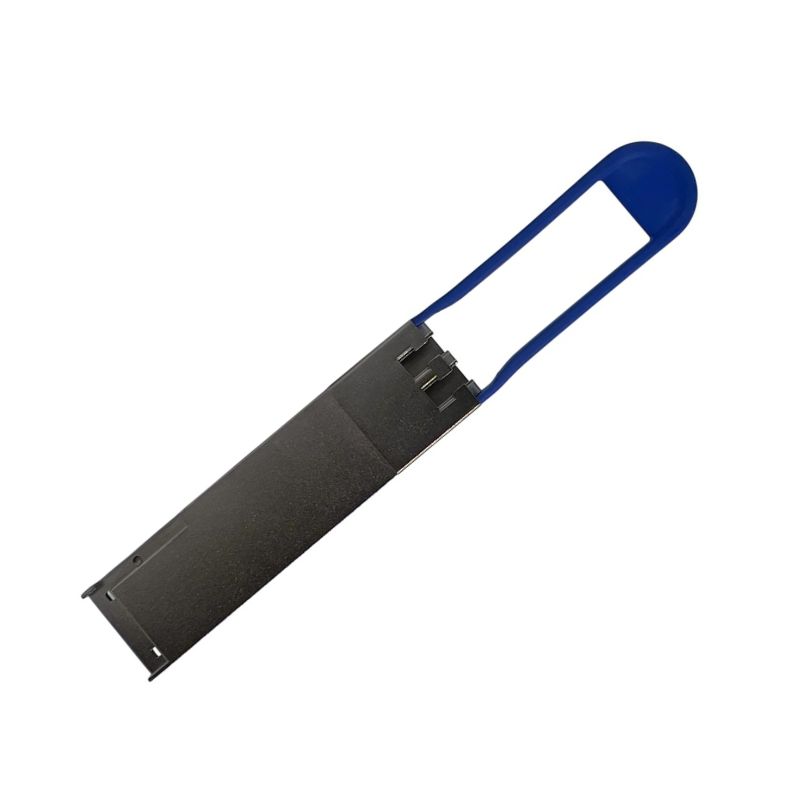
Juniper Networks QSFP-100G-LR4-T2 100GBPS Duplex Lc SMF 10km 1310nm QSFP+ Optical Transceiver Module. New Sealed with 1 Year Replacement Warranty
The Juniper Networks QSFP-100G-LR4-T2 is a high-performance 100 Gigabit Ethernet optical transceiver engineered for long-range data transmission across single-mode fiber infrastructure. Designed to support modern enterprise networks, cloud environments, service provider backbones, and high-density data centers, this QSFP28 module delivers reliable connectivity over distances of up to 10 kilometers.
The Juniper Networks QSFP-100G-LR4-T2 QSFP-28 100G-LR4 Transceiver is designed to support modern data center infrastructures, enterprise backbone environments, service provider networks, and cloud computing platforms that demand reliable 100 Gigabit Ethernet connectivity. As network traffic continues to increase due to virtualization, cloud applications, video streaming, and large-scale data transfers, organizations require optical transceivers capable of delivering high bandwidth, exceptional stability, and long-distance communication. This QSFP-28 transceiver fulfills these requirements by providing 100GbE performance across single-mode fiber environments while maintaining compatibility with advanced Juniper networking equipment.
The module is engineered to facilitate high-density networking deployments where scalability, efficiency, and network performance are critical. Organizations seeking to modernize network infrastructure can leverage the capabilities of this optical transceiver to establish dependable links between switches, routers, and aggregation platforms across enterprise campuses and data center facilities.
The QSFP-28 form factor represents a significant advancement in optical networking technology. Designed to support 100 Gigabit Ethernet applications, the QSFP-28 standard delivers increased bandwidth while maintaining a compact footprint. The Juniper Networks QSFP-100G-LR4-T2 enables network architects to maximize port density without compromising performance, making it ideal for modern networking environments where rack space and power efficiency are important considerations.
By utilizing a compact module design, organizations can deploy numerous high-speed connections within a single switch or router chassis. This capability enhances scalability and supports future growth without requiring extensive infrastructure modifications.
The transceiver incorporates advanced optical components that ensure stable signal transmission over extended distances. Precision laser technology, sophisticated optical circuitry, and carefully engineered signal processing mechanisms contribute to consistent data transfer performance. These technologies help maintain signal integrity while reducing transmission errors and network interruptions.
Reliable optical transmission is essential for business-critical applications. The QSFP-100G-LR4-T2 utilizes wavelength division multiplexing technology to transmit multiple data channels simultaneously over single-mode fiber. This approach allows high-capacity communication while optimizing fiber utilization and reducing infrastructure complexity.
Modern enterprises require network solutions capable of handling increasing volumes of data generated by applications, storage systems, virtualization platforms, and cloud services. The Juniper Networks QSFP-100G-LR4-T2 supports 100 Gigabit Ethernet connectivity, enabling organizations to transport large quantities of information with minimal latency.
This high-speed connectivity is particularly valuable for environments where rapid data access and efficient workload distribution are essential. Data center operators can use the transceiver to facilitate communication between servers, storage arrays, and networking equipment while maintaining optimal performance levels.
The growing adoption of artificial intelligence workloads, machine learning platforms, big data analytics, and cloud-native applications has increased demand for ultra-fast networking solutions. The QSFP-100G-LR4-T2 addresses these requirements by delivering sufficient throughput to support data-intensive operations while ensuring smooth network performance.
In environments where application responsiveness is critical, network latency can significantly affect user experience and operational efficiency. This transceiver helps minimize delays by supporting high-speed optical communication, enabling faster data exchanges between connected devices and network segments.
One of the primary benefits of the Juniper Networks QSFP-100G-LR4-T2 is its ability to operate over single-mode fiber infrastructure. Single-mode fiber provides superior transmission characteristics compared to multimode alternatives, making it suitable for long-distance networking applications.
Organizations with geographically distributed facilities or large campus environments can utilize this transceiver to establish high-speed optical links while maintaining reliable communication across extended distances. The ability to support long-reach networking contributes to greater deployment flexibility and infrastructure optimization.
Single-mode fiber technology minimizes signal attenuation and dispersion, allowing optical signals to travel farther without significant degradation. This characteristic helps preserve data integrity and reduces the need for intermediate signal regeneration equipment.
Businesses investing in single-mode fiber infrastructure can maximize their return on investment by deploying high-performance transceivers such as the QSFP-100G-LR4-T2. The combination of long-distance capabilities and high bandwidth creates a future-ready networking foundation capable of supporting evolving business requirements.
Modern data centers frequently employ spine-and-leaf architectures to enhance scalability and improve traffic flow. The QSFP-100G-LR4-T2 is well suited for these environments because it provides the bandwidth necessary to support east-west traffic between servers and network infrastructure.
By enabling high-speed interconnections between spine and leaf switches, the transceiver contributes to efficient workload distribution and reduced network congestion. This architecture supports cloud computing environments, virtualized workloads, and large-scale enterprise applications.
Data centers rely on robust communication between servers and storage systems to maintain application availability and performance. The transceiver facilitates these connections by providing reliable optical transport capable of handling substantial data volumes.
Cloud service providers and enterprise cloud environments require networking solutions capable of scaling rapidly while maintaining consistent performance. The QSFP-100G-LR4-T2 supports these objectives by enabling high-capacity optical links throughout cloud infrastructure deployments.
Virtual machines, containers, and software-defined networking technologies generate significant network traffic. This transceiver helps ensure sufficient bandwidth availability to accommodate these workloads while supporting efficient resource utilization across virtualized environments.
As organizations expand operations and increase digital capabilities, network infrastructures must evolve to accommodate growing demands. The Juniper Networks QSFP-100G-LR4-T2 enables seamless scalability by providing high-capacity connectivity that supports future network expansion initiatives.
Network administrators can deploy additional high-speed links as traffic requirements increase, helping organizations maintain optimal performance without extensive redesign efforts. This scalability contributes to long-term infrastructure sustainability and operational efficiency.
The transceiver's compatibility with advanced networking environments allows architects to create flexible designs tailored to specific business requirements. Whether supporting campus networks, enterprise backbones, or distributed computing environments, the module provides the performance necessary to achieve networking objectives.
High-speed optical connectivity facilitates efficient utilization of networking resources by reducing bottlenecks and supporting balanced traffic distribution. This capability improves overall network performance while enhancing user experiences across connected systems.
The QSFP-100G-LR4-T2 is engineered to integrate effectively with compatible Juniper networking equipment. This compatibility helps ensure reliable operation, simplified deployment processes, and consistent performance across supported platforms.
Organizations using Juniper routers, switches, and data center networking solutions can benefit from optimized interoperability that supports efficient network management and maintenance activities.
Compatibility between transceivers and networking hardware plays a critical role in maintaining network stability. The QSFP-100G-LR4-T2 is designed to meet rigorous operational standards, helping organizations achieve dependable connectivity and predictable performance outcomes.
Network administrators can implement the transceiver within existing infrastructures with minimal disruption. Standardized installation procedures and compatibility features help reduce deployment complexity while supporting rapid implementation schedules.
Energy consumption remains a significant consideration for modern data centers and enterprise facilities. The QSFP-100G-LR4-T2 is designed to deliver high-performance networking while supporting efficient power utilization. Lower energy consumption contributes to reduced operational costs and improved sustainability initiatives.
Organizations seeking to optimize power efficiency can benefit from deploying advanced optical transceivers that balance performance requirements with energy-conscious operation.
Efficient transceiver designs generate less heat during operation, helping reduce cooling demands within networking environments. This advantage can contribute to lower infrastructure costs and improved equipment longevity.
Effective thermal management plays a crucial role in maintaining networking equipment reliability. The QSFP-100G-LR4-T2 incorporates design elements that support stable operating temperatures and consistent long-term performance.
Reliable connectivity is essential for organizations that depend on uninterrupted access to applications, services, and data resources. The QSFP-100G-LR4-T2 supports continuous network operations by providing dependable optical communication across critical infrastructure components.
Stable connectivity helps minimize downtime risks, improve business continuity, and support organizational productivity objectives. Enterprises, cloud providers, and service operators can leverage the transceiver's capabilities to strengthen network resilience and maintain service quality.
Maintaining data accuracy during transmission is fundamental to network performance. Advanced optical technologies within the transceiver help preserve signal quality, reducing the likelihood of transmission errors and ensuring reliable data delivery across network links.
Organizations operating mission-critical applications require networking solutions capable of delivering consistent performance under demanding conditions. The QSFP-100G-LR4-T2 provides the bandwidth, reliability, and optical efficiency necessary to support these environments while enabling scalable growth and infrastructure modernization.
Digital transformation initiatives continue to drive increased demand for network capacity and performance. The Juniper Networks QSFP-100G-LR4-T2 positions organizations to address these evolving requirements through advanced 100 Gigabit Ethernet connectivity and long-reach optical transmission capabilities.
Emerging technologies such as edge computing, artificial intelligence, high-performance computing, and hybrid cloud architectures require robust networking foundations. This transceiver supports these initiatives by enabling reliable, high-speed communication between critical infrastructure components.
Organizations seeking long-term value from networking investments can benefit from deploying high-capacity optical solutions that accommodate future growth. The QSFP-100G-LR4-T2 supports infrastructure longevity by providing the performance characteristics necessary to meet current and future networking requirements.
As network designs evolve toward greater automation, virtualization, and cloud integration, high-performance optical connectivity becomes increasingly important. The transceiver serves as a critical component within next-generation architectures, enabling scalable communication frameworks that support innovation and operational excellence across enterprise, service provider, and data center environments.


 Contact Us
 Information
 Catalog
 Solid State Drives (SSD)
 Network Switches
 Hard Disk Drives
 HBA & Controllers
 PC & Servers
 PC & Server Memory
 CPU & Processors
 Network Routers
 Power Supplies
 Tape Drives & Libraries
 Network Devices
 Computer & Network Cables