(7% discount is applied at checkout)
Cart is empty
Your go-to destination for cutting-edge server products
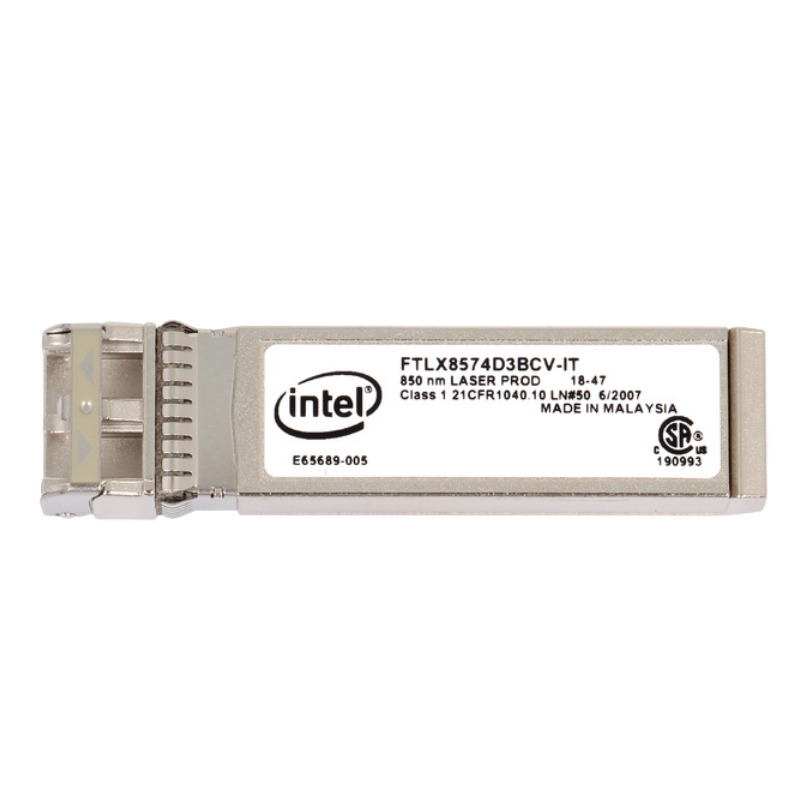


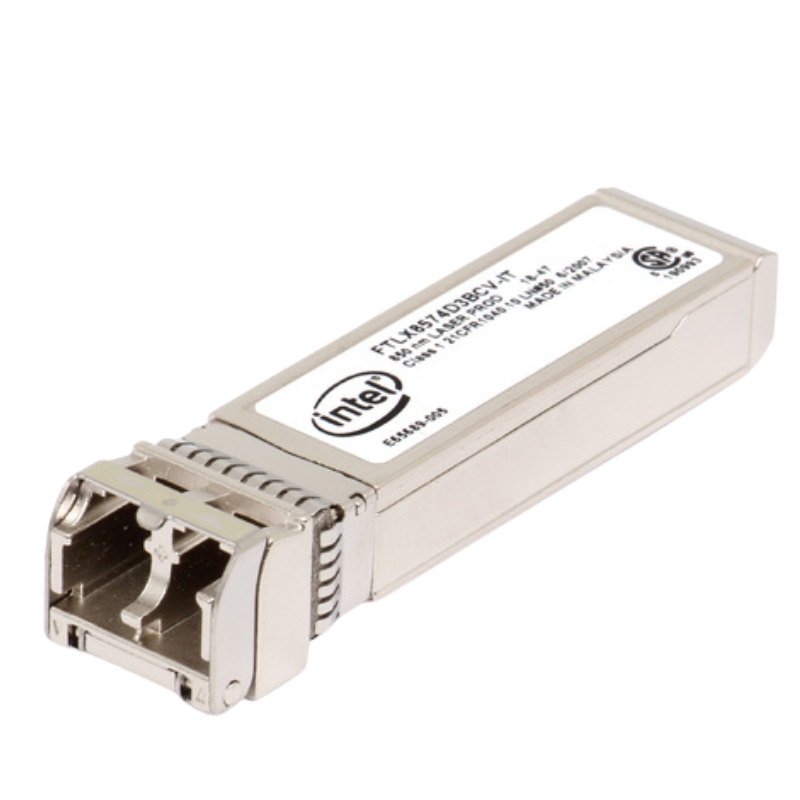
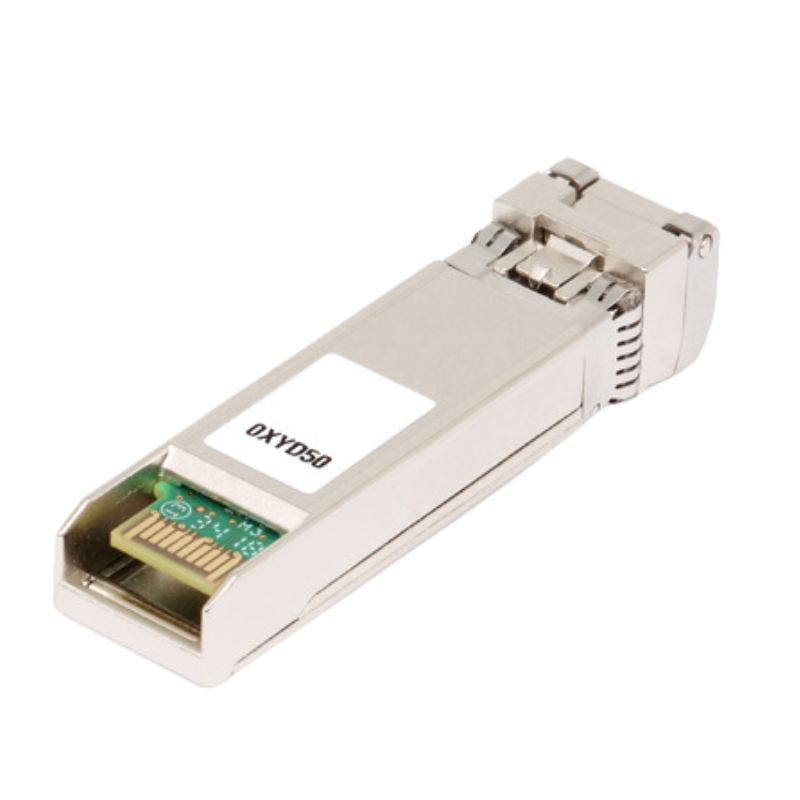
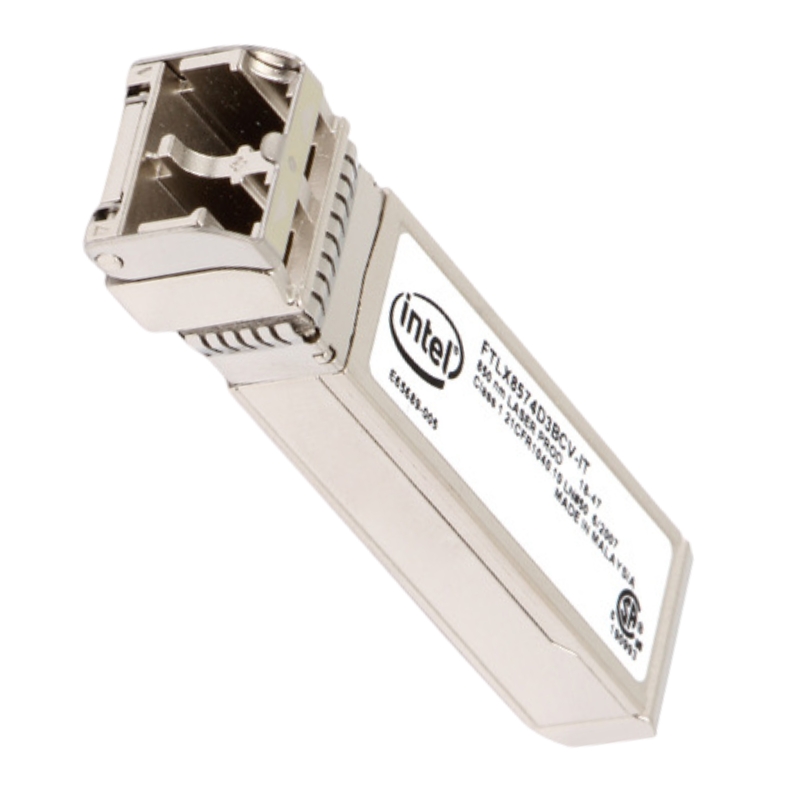
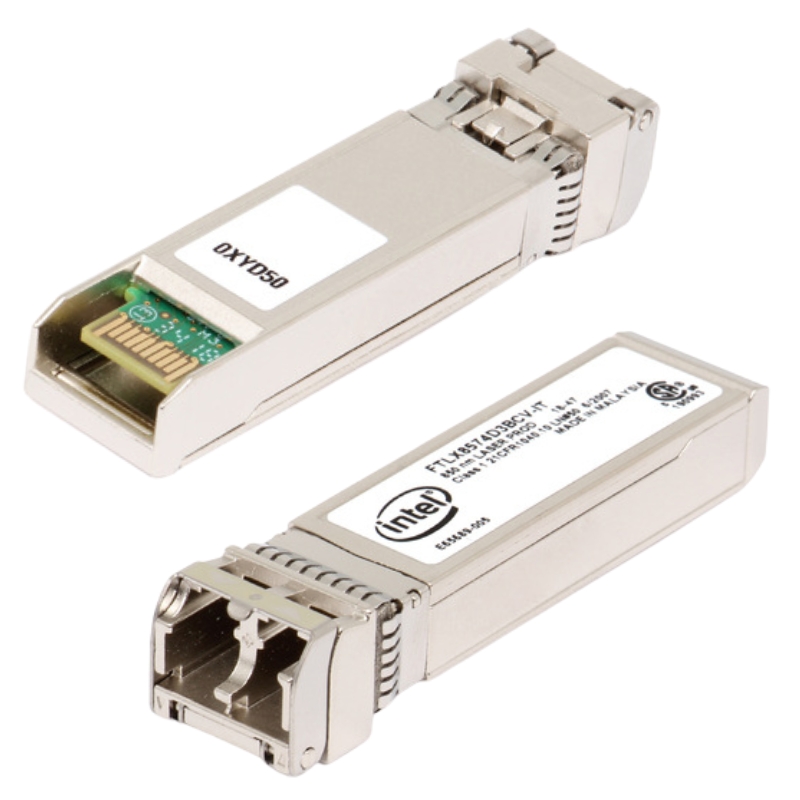
Intel AFBR-709DMZ-IN3 1G/10G Dual Rate Transceiver SFP+ Optical. Excellent Refurbished with 1 year replacement warranty
| SKU/MPN | Warranty | Price | Condition | You save |
|---|---|---|---|---|
| AFBR-709DMZ-IN3 | 1 Year Warranty | $54.00 | Excellent Refurbished | You save: $18.90 (26%) |
| AFBR-709DMZ-IN3 | 1 Year Warranty | $75.00 | New Sealed in Box (NIB) | You save: $26.25 (26%) |
Intel AFBR-709DMZ-IN3 is a high-performance SFP+ optical transceiver designed for both 1G and 10G dual-rate networking environments. It delivers reliable short-range fiber connectivity using advanced 850nm VCSEL technology, making it suitable for modern high-density data communication systems where stability, speed, and energy efficiency are essential.
Intel AFBR-709DMZ-IN3 1G/10G Dual Rate Transceiver SFP+
SFP+ optical transceivers represent a critical advancement in modern high-speed networking infrastructure. These compact, hot-pluggable modules are designed to support data transmission over fiber optic cables, enabling efficient communication between switches, routers, servers, and storage systems. The Intel AFBR-709DMZ-IN3 1G/10G Dual Rate Transceiver SFP+ Optical module belongs to a category of high-performance networking components that bridge the gap between flexibility and speed in enterprise and data center environments.
The growing demand for faster data exchange, low latency communication, and reliable connectivity has made SFP+ modules an essential part of networking architecture. These modules are widely used in environments where scalability, performance, and stability are key requirements. The dual rate functionality of this specific module enhances its adaptability, allowing seamless operation at both 1 Gigabit and 10 Gigabit speeds depending on network requirements.
In modern network design, optical transceivers are no longer optional components but foundational building blocks that support cloud computing, virtualization, big data processing, and real-time communication systems. The Intel AFBR-709DMZ-IN3 fits into this ecosystem by offering stable optical performance combined with efficient power usage and compatibility with a wide range of networking hardware.
One of the defining characteristics of the Intel AFBR-709DMZ-IN3 module is its dual rate capability. This feature allows the transceiver to operate at both 1 Gigabit per second and 10 Gigabits per second, making it suitable for mixed network environments. This flexibility is particularly valuable in infrastructures where legacy systems coexist with modern high-speed networks.
The ability to switch between speeds ensures smooth migration paths for organizations upgrading their network infrastructure. Instead of replacing all components at once, network administrators can gradually scale performance while maintaining backward compatibility. This reduces operational disruption and lowers overall upgrade costs.
Dual rate support also enhances load balancing and traffic management in dynamic network conditions. When network demand increases, the system can operate at higher bandwidth levels, while lower demand scenarios can utilize reduced speeds for energy efficiency and stability.
The Intel AFBR-709DMZ-IN3 operates using fiber optic transmission principles, where electrical signals are converted into optical signals for data transmission. These optical signals travel through fiber cables using light pulses, enabling high-speed communication over long distances with minimal signal degradation.
This method of communication provides significant advantages over traditional copper-based systems. Optical transmission is immune to electromagnetic interference, which ensures cleaner signal integrity even in environments with high electrical noise. It also supports greater bandwidth capacity and extended transmission distances.
The transceiver uses precise laser technology to generate optical signals and highly sensitive photodetectors to receive incoming data. This combination ensures reliable bidirectional communication with minimal latency and error rates.
The Intel AFBR-709DMZ-IN3 is designed for broad compatibility with networking equipment that supports SFP+ interfaces. It can be integrated into enterprise-grade switches, routers, and network interface cards that require high-speed optical connectivity.
This compatibility ensures that organizations can deploy the module across different network layers without requiring specialized hardware modifications. The plug-and-play nature of SFP+ modules simplifies installation and reduces configuration complexity.
Proper fiber optic cabling is essential for optimal performance of the transceiver. The module typically operates with multimode fiber systems designed for short to medium-range transmission. The quality of fiber connectors and cable alignment plays a significant role in maintaining signal strength and reducing loss.
High-grade fiber cables ensure minimal attenuation and stable performance across network links. Proper installation techniques, including secure connector placement and clean termination points, are critical for maintaining optical efficiency.
Low latency and high throughput are essential performance indicators for modern optical transceivers. The Intel AFBR-709DMZ-IN3 is optimized to deliver fast data transmission with minimal delay, making it suitable for time-sensitive applications such as financial trading systems, cloud computing, and real-time analytics.
Throughput performance depends on stable signal transmission and efficient processing within the module. The dual rate capability ensures that bandwidth allocation can be adjusted dynamically based on network demand, allowing consistent performance across varying workloads.
Maintaining signal integrity is a primary function of optical transceivers. The Intel AFBR-709DMZ-IN3 incorporates advanced error detection and correction mechanisms to ensure accurate data transmission. These systems help reduce packet loss and minimize retransmission requirements.
High-quality optical components and precise calibration ensure that signal distortion is minimized even over longer transmission distances. This improves overall network reliability and reduces operational disruptions.
Data centers are one of the primary application areas for the Intel AFBR-709DMZ-IN3. These environments require high-density, high-speed connectivity between servers, storage systems, and networking equipment. The module supports scalable infrastructure growth while maintaining consistent performance.
In large-scale data center operations, optical transceivers enable efficient traffic distribution and high-speed data processing. The dual rate functionality ensures compatibility with both legacy and modern systems within the same infrastructure.
Enterprise environments rely on stable and secure communication systems to support business operations. The Intel AFBR-709DMZ-IN3 provides reliable connectivity for internal networks, supporting applications such as file sharing, communication platforms, and cloud-based services.
Its flexibility allows IT administrators to integrate it into existing network architectures without major infrastructure changes. This makes it a practical solution for organizations undergoing digital transformation.
Cloud computing platforms depend heavily on efficient data transfer between distributed systems. Optical transceivers like the Intel AFBR-709DMZ-IN3 play a key role in ensuring smooth communication between cloud servers, storage clusters, and user access points.
The high-speed capabilities of the module support virtualization workloads, distributed computing tasks, and large-scale data synchronization processes.
Intel optical transceivers are known for their stable performance and long-term reliability. The AFBR-709DMZ-IN3 is engineered to operate under demanding network conditions while maintaining consistent output quality.
Energy efficiency is a key advantage in large-scale deployments. Lower power consumption reduces operational costs and contributes to more sustainable infrastructure development.
Compared to standard single-rate modules, the Intel AFBR-709DMZ-IN3 provides greater flexibility due to its dual rate capability. This allows it to adapt to evolving network requirements without requiring hardware replacement.
Its combination of performance stability, compatibility, and energy efficiency makes it suitable for both legacy and modern network environments, offering long-term value in infrastructure planning.
As network demands continue to grow, optical transceiver technology will evolve toward higher speeds, improved energy efficiency, and greater integration flexibility. Dual rate modules represent an important transitional technology that supports gradual infrastructure upgrades.
The Intel AFBR-709DMZ-IN3 reflects this evolution by offering adaptability across different network generations, ensuring continued relevance in future networking architectures.


 Contact Us
 Information
 Catalog
 Solid State Drives (SSD)
 Network Switches
 Hard Disk Drives
 HBA & Controllers
 PC & Servers
 PC & Server Memory
 CPU & Processors
 Network Routers
 Power Supplies
 Tape Drives & Libraries
 Network Devices
 Computer & Network Cables