(7% discount is applied at checkout)
Cart is empty
Your go-to destination for cutting-edge server products
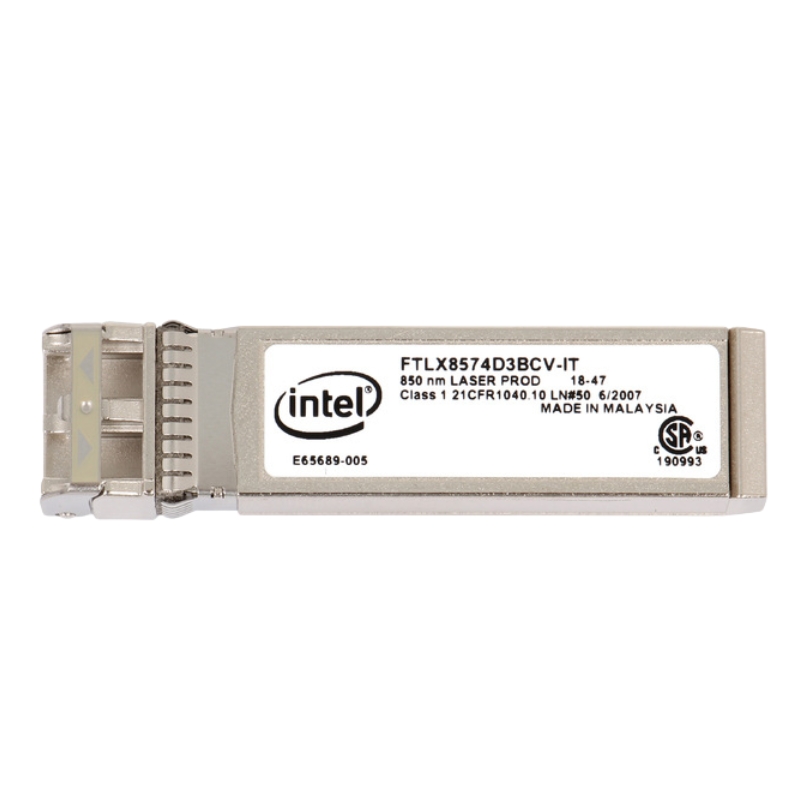


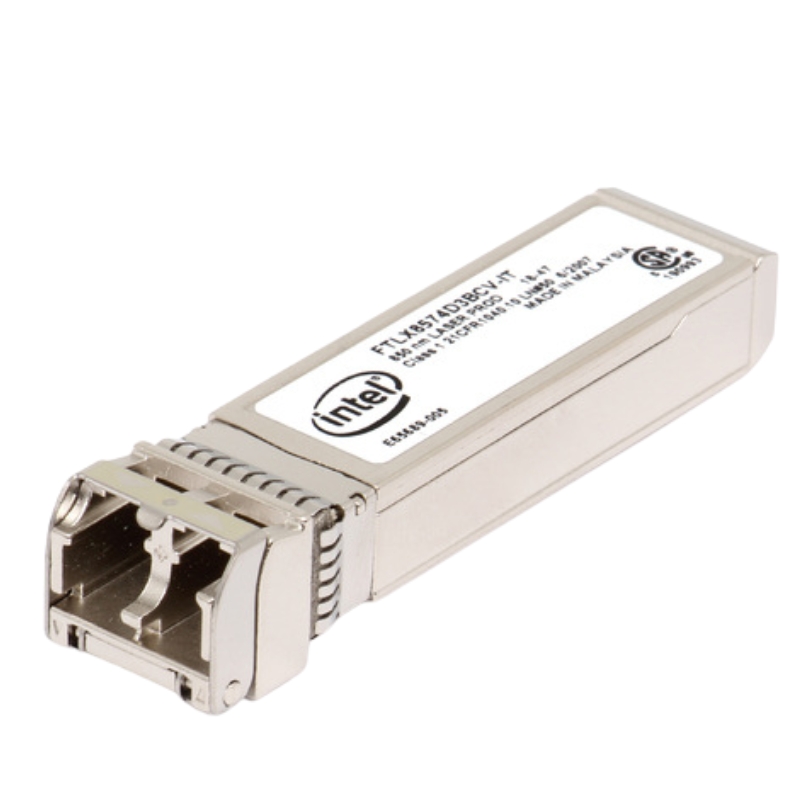
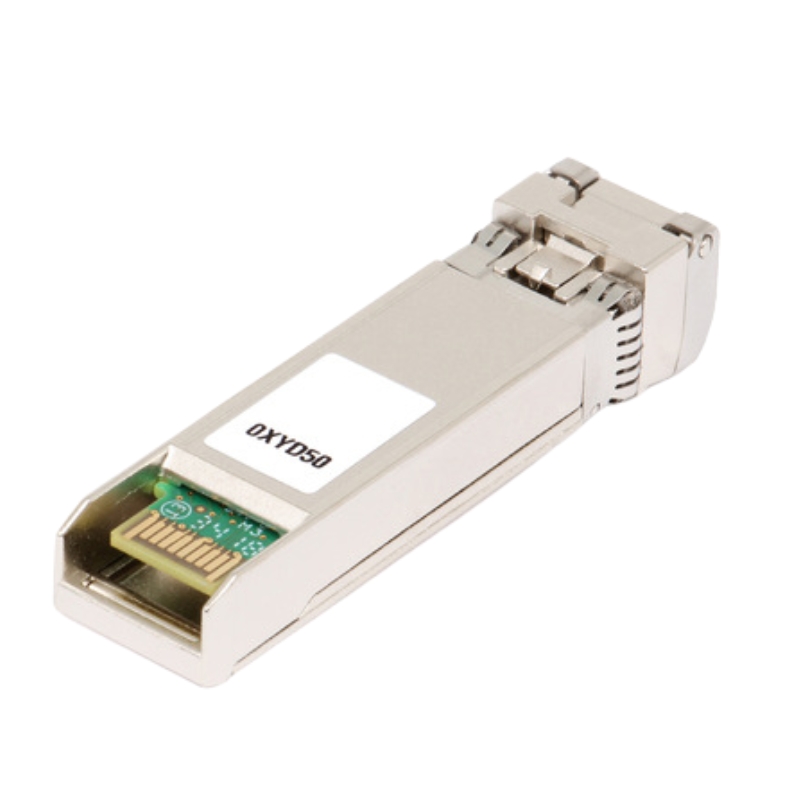
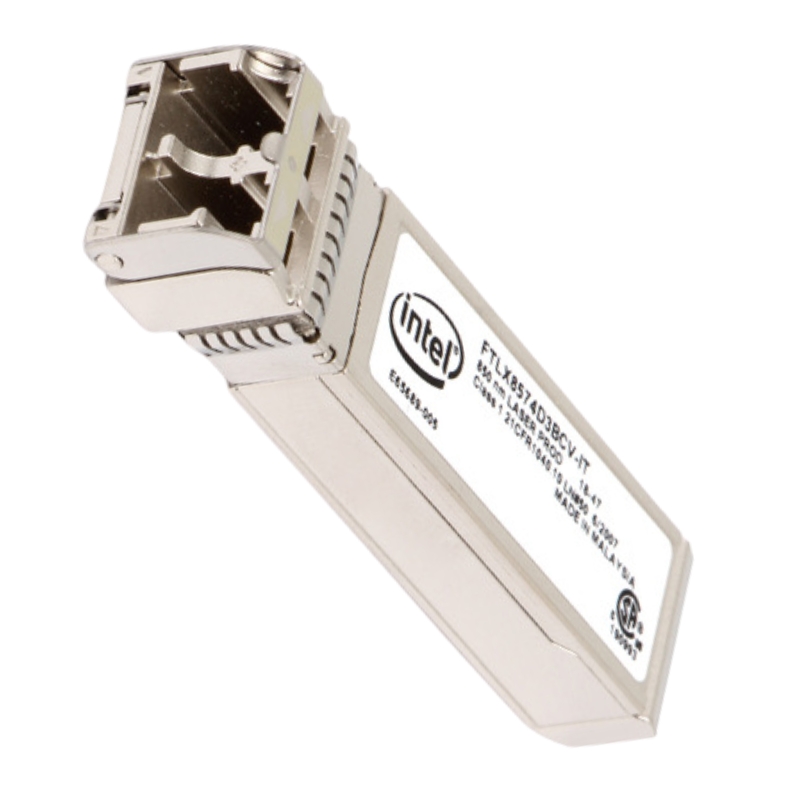
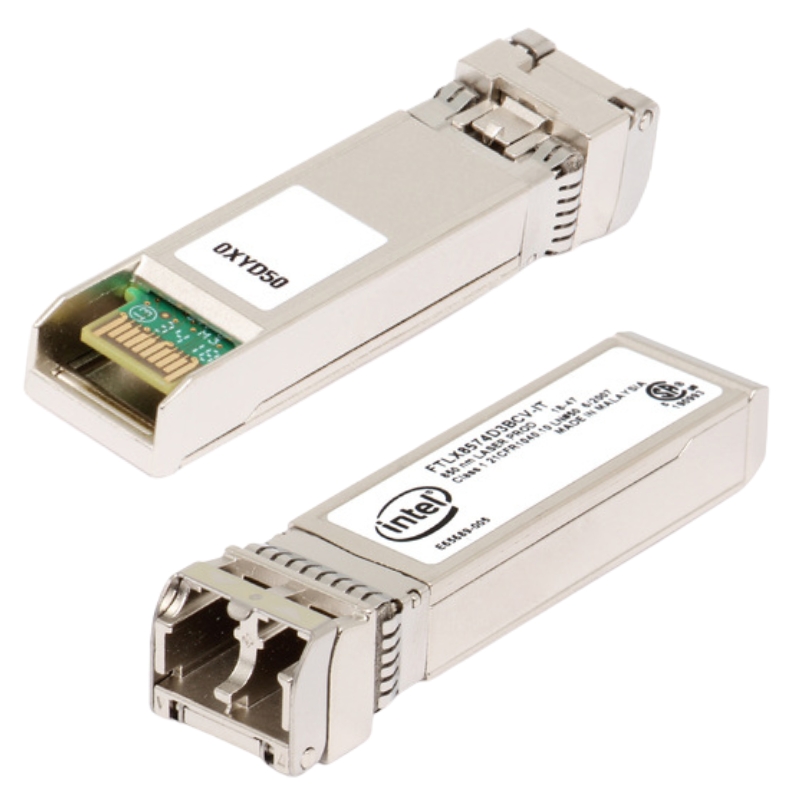
Intel AFBR-709DMZ-IN3 1G/10G Dual Rate Transceiver SFP+ Optical. New Sealed in Box (NIB) with 3 Years Warranty
| SKU/MPN | Warranty | Price | Condition | You save |
|---|---|---|---|---|
| AFBR-709DMZ-IN3 | 1 Year Warranty | $54.00 | Excellent Refurbished | You save: $18.90 (26%) |
| AFBR-709DMZ-IN3 | 1 Year Warranty | $75.00 | New Sealed in Box (NIB) | You save: $26.25 (26%) |
Intel AFBR-709DMZ-IN3 is a high-performance SFP+ optical transceiver designed for dual-rate operation supporting both 1G and 10G Ethernet connectivity. It is engineered for data centers, enterprise networking, and high-density switching environments where reliable fiber-optic transmission is essential. This module delivers stable optical communication using advanced VCSEL technology and ensures efficient power usage while maintaining strong signal integrity over multimode fiber links.
The optical transceiver category that includes the Intel AFBR-709DMZ-IN3 1G/10G Dual Rate Transceiver SFP+ Optical module represents a highly specialized segment of modern networking hardware designed for high-speed data communication over fiber optic infrastructure. These modules are engineered to support scalable network architectures where bandwidth flexibility, signal integrity, and long-distance data transmission are critical requirements. The SFP+ form factor provides a compact and hot-swappable solution that is widely deployed across enterprise networks, data centers, telecom systems, and cloud computing infrastructures.
The Intel AFBR-709DMZ-IN3 stands out in this category due to its dual-rate capability, supporting both 1 Gigabit Ethernet and 10 Gigabit Ethernet operations. This adaptability allows network administrators to deploy a single transceiver model across multiple network layers, reducing inventory complexity and improving operational efficiency. The integration of optical fiber technology ensures minimal signal loss, reduced electromagnetic interference, and enhanced transmission reliability across extended distances.
SFP+ optical transceivers are built on advanced photonic and electronic engineering principles. These modules convert electrical signals into optical signals and vice versa, enabling high-speed communication through fiber optic cables. The Intel AFBR-709DMZ-IN3 leverages laser-based transmission technology, typically using vertical-cavity surface-emitting lasers or similar optical emitters to achieve stable and high-performance data transfer rates.
Fiber optic communication works by transmitting light pulses through thin strands of glass or plastic fibers. These light signals carry encoded digital information, allowing data to travel at speeds close to the speed of light. The dual-rate functionality of the AFBR-709DMZ-IN3 ensures compatibility with both legacy and modern network infrastructures, making it a versatile solution for evolving enterprise environments.
The conversion process inside an SFP+ module involves multiple integrated components including a transmitter optical subassembly and a receiver optical subassembly. The transmitter converts electrical signals into modulated light signals, while the receiver converts incoming optical signals back into electrical form. This bidirectional conversion enables seamless communication between network devices such as switches, routers, and servers.
In the Intel AFBR-709DMZ-IN3 module, precision calibration ensures that signal distortion is minimized, and data integrity is preserved even in high-density networking environments. This is particularly important in data centers where thousands of simultaneous connections may be active at any given time.
One of the most important features of this category is the ability to operate at two distinct data rates. At 1 Gigabit per second, the module supports legacy systems and basic networking requirements. At 10 Gigabit per second, it enables high-performance computing, virtualization, cloud data exchange, and large-scale enterprise workloads.
This flexibility eliminates the need for multiple hardware models, simplifying network design and reducing operational costs. It also allows gradual network upgrades without requiring full infrastructure replacement.
Fiber optic infrastructure forms the backbone of modern high-speed networks. Unlike traditional copper-based systems, fiber optics use light to transmit data, resulting in significantly higher bandwidth capacity and reduced signal interference. The Intel AFBR-709DMZ-IN3 is designed to fully leverage this infrastructure, ensuring optimal performance in both single-mode and multi-mode fiber environments.
Single-mode fiber is typically used for long-distance communication due to its ability to transmit light with minimal dispersion. Multi-mode fiber, on the other hand, is more suitable for shorter distances within buildings or data centers. The transceiver category that includes the AFBR-709DMZ-IN3 is engineered to support different fiber types depending on deployment requirements.
This adaptability ensures that the module can be used across a wide range of networking scenarios, from campus networks to large-scale cloud infrastructure systems.
In data center environments, the need for high-speed, low-latency communication is essential. The AFBR-709DMZ-IN3 supports these requirements by providing reliable optical connectivity between server racks and switching infrastructure. Its compact SFP+ form factor allows for high port density, enabling efficient use of rack space.
High-speed data transfer capabilities ensure smooth operation of cloud computing services, virtualization platforms, and large-scale databases. This makes the module a critical component in modern digital infrastructure ecosystems.
The SFP+ form factor of the Intel AFBR-709DMZ-IN3 allows for hot-swappable installation, meaning the module can be inserted or removed without shutting down the system. This is particularly important in environments that require continuous uptime, such as financial systems, cloud platforms, and enterprise data centers.
Performance is a defining factor in optical transceiver selection. The Intel AFBR-709DMZ-IN3 is designed to deliver consistent throughput with minimal latency. Its optical design minimizes signal degradation over distance, ensuring reliable communication even in high-demand environments.
Error rates are significantly reduced due to advanced signal processing and optical stabilization techniques. This improves overall network efficiency and reduces packet loss in critical applications.
The module is engineered to operate under a wide range of environmental conditions. Temperature fluctuations, electromagnetic interference, and physical vibration are common challenges in data center and industrial environments. The AFBR-709DMZ-IN3 is designed to withstand these conditions while maintaining stable performance.


 Contact Us
 Information
 Catalog
 Solid State Drives (SSD)
 Network Switches
 Hard Disk Drives
 HBA & Controllers
 PC & Servers
 PC & Server Memory
 CPU & Processors
 Network Routers
 Power Supplies
 Tape Drives & Libraries
 Network Devices
 Computer & Network Cables