(7% discount is applied at checkout)
Cart is empty
Your go-to destination for cutting-edge server products
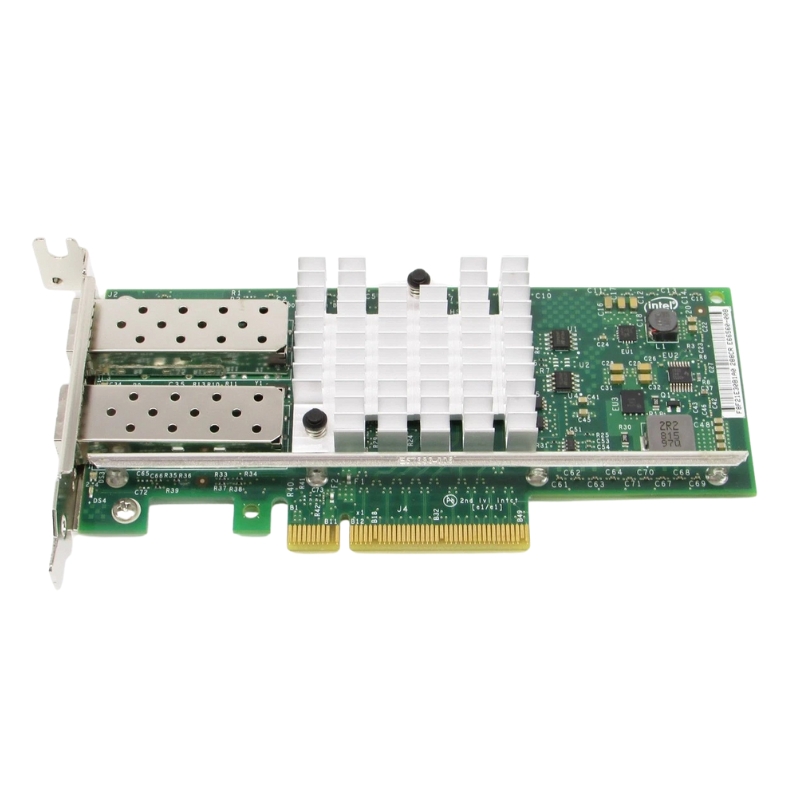


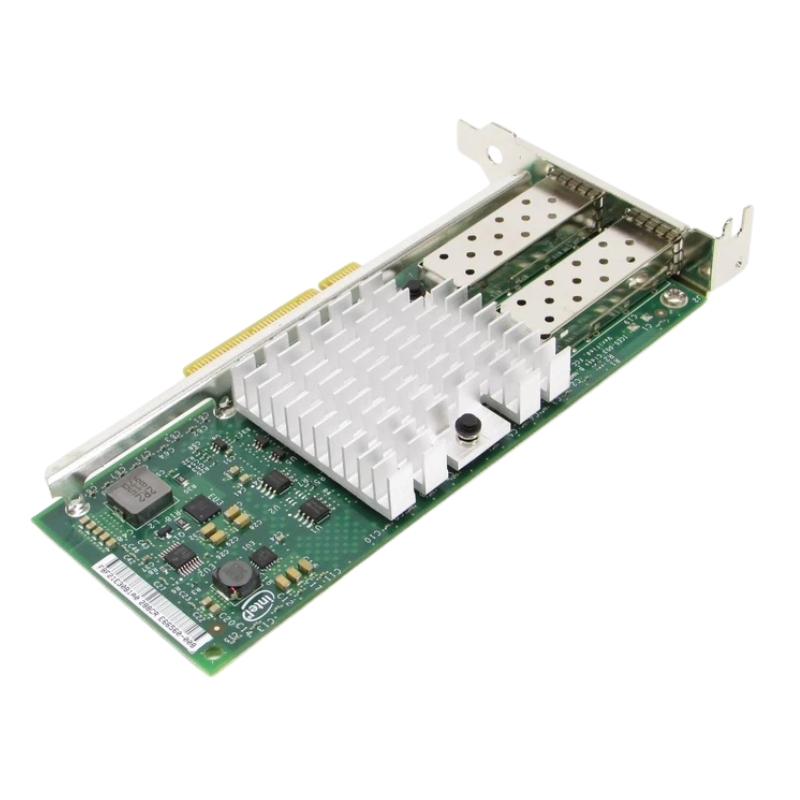
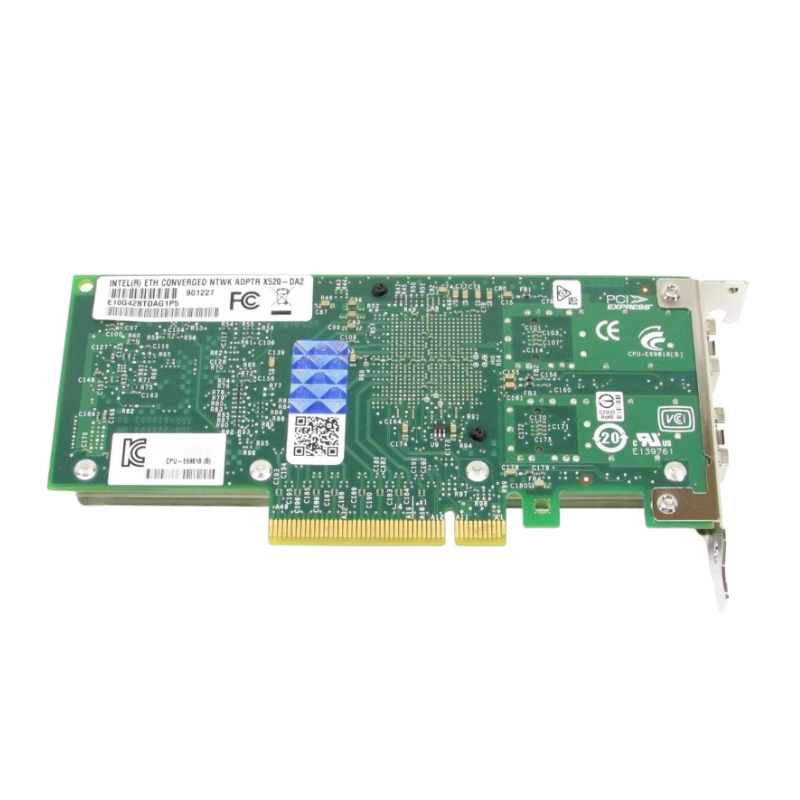
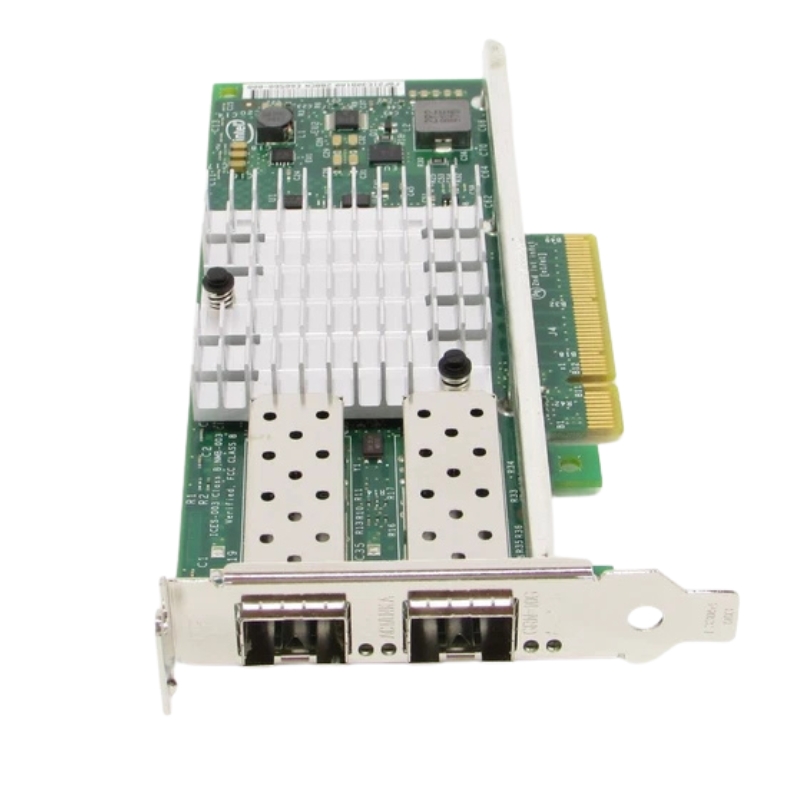
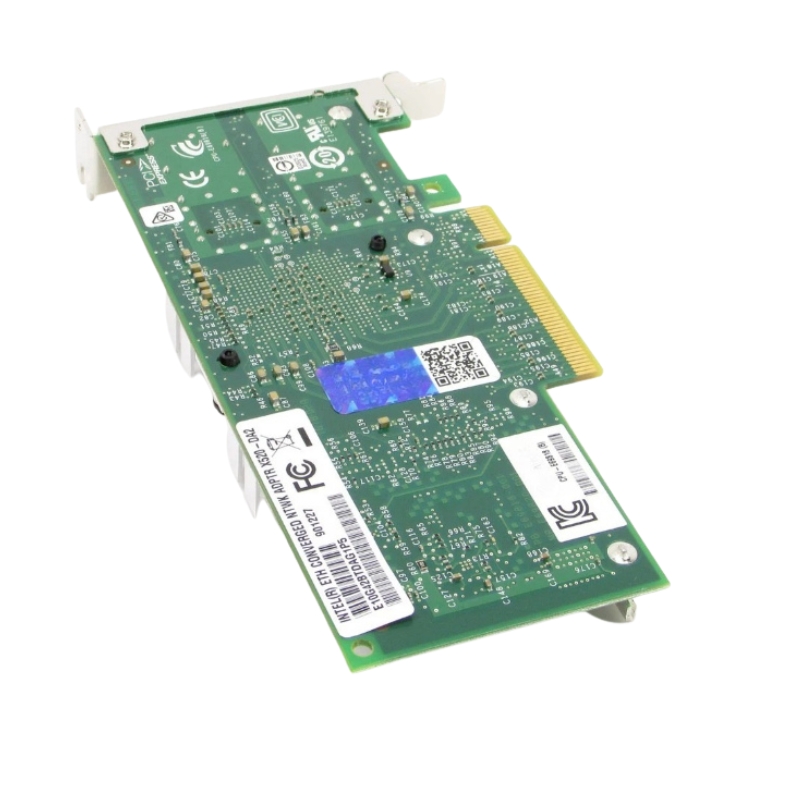
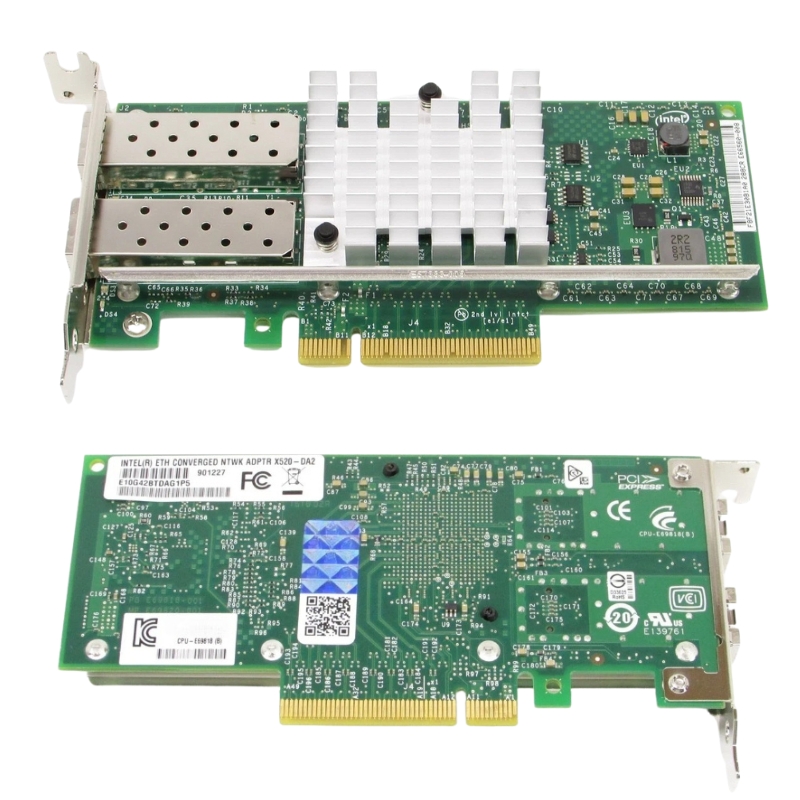
Intel E10G42BTDAPG1P5 Dual-Port 10 Gigabit Ethernet PCI-E 2.0 X 8 Server Adapter. Excellent Refurbished with 1-Year Replacement Warranty
Intel E10G42BTDAPG1P5 Dual-Port 10 Gigabit Server Adapter
The Intel E10G42BTDAPG1P5 Dual-Port 10 Gigabit Ethernet PCI Express Server Adapter is a high-performance networking solution engineered for enterprise servers, virtualization environments, cloud infrastructures, and data-intensive business applications. Designed to deliver exceptional throughput, low latency, and reliable connectivity, this dual-port network adapter enables organizations to maximize network efficiency while supporting growing bandwidth requirements.
Built on Intel's advanced Ethernet technology, the adapter provides robust network performance and seamless integration into modern server platforms. Its PCI Express 2.0 x8 interface ensures ample bandwidth between the server and network infrastructure, making it an ideal choice for mission-critical workloads.
The Intel E10G42BTDAPG1P5 Dual-Port 10 Gigabit Ethernet PCI-E 2.0 x8 Server Adapter belongs to a high-performance class of enterprise networking hardware designed to meet the growing demands of modern data centers, virtualization platforms, cloud computing infrastructures, and high-throughput server environments. Built around advanced network interface controller architecture from this adapter is positioned within the 10 Gigabit Ethernet server networking category, where low latency, high bandwidth, and scalable connectivity are essential requirements for mission-critical workloads.
This category of network adapters is specifically engineered to replace traditional Gigabit Ethernet solutions in environments where data flow intensity exceeds conventional limits. As applications evolve toward distributed computing models, real-time analytics, and large-scale virtualization, the need for dual-port 10GbE connectivity becomes increasingly important. This adapter class ensures that servers can handle simultaneous bidirectional traffic streams without bottlenecks while maintaining predictable performance under sustained load conditions.
The PCI Express 2.0 x8 interface is a critical foundation for the performance capabilities of the Intel E10G42BTDAPG1P5 adapter. This interface provides a dedicated high-speed communication channel between the network controller and the host system’s CPU and memory architecture. With eight lanes of PCIe connectivity, the adapter can efficiently manage large volumes of network traffic without saturating the internal bus, which is essential in high-density server environments.
The PCIe 2.0 standard effectively doubles the per-lane throughput compared to its predecessor, allowing the adapter to sustain the full performance potential of dual 10 Gigabit Ethernet ports. This architecture ensures minimal packet delay and reduces overhead in packet processing pipelines, which is particularly beneficial in latency-sensitive applications such as financial trading systems, virtualization clusters, and real-time database replication.
The internal data path design leverages hardware acceleration to offload network processing tasks from the CPU. This reduces processor utilization and frees computational resources for application-level workloads. By integrating intelligent packet handling mechanisms within the adapter hardware, the PCIe interface becomes more than just a communication channel; it functions as a high-efficiency data pipeline optimized for enterprise workloads.
One of the defining characteristics of this category is its dual-port 10 Gigabit Ethernet configuration. Each port operates independently, enabling simultaneous transmission and reception of data streams at extremely high speeds. This dual-channel design enhances redundancy, load balancing, and throughput aggregation, making it ideal for environments where network uptime and performance consistency are critical.
Dual-port functionality also allows administrators to segment network traffic logically. One port can be dedicated to storage traffic while the other handles application or user traffic, ensuring predictable performance separation. This architectural flexibility is a key reason why this adapter class is widely adopted in enterprise-grade server deployments.
The adapter’s throughput management capabilities ensure stable and consistent performance under heavy workloads. It supports advanced queue handling and packet scheduling mechanisms that distribute traffic efficiently across both ports. This minimizes congestion and ensures that no single port becomes a bottleneck in high-demand scenarios.
Low latency is a defining requirement for modern data center networking, and this adapter category is specifically optimized to reduce packet traversal time between server and network. By minimizing software overhead and leveraging hardware-based packet processing, the adapter ensures that data packets are transmitted with minimal delay. This is particularly important in applications that rely on real-time data synchronization or rapid transactional processing.
Sustained throughput stability is another critical characteristic. Unlike consumer-grade network interfaces, enterprise-class adapters must maintain consistent performance over long durations under continuous load. The Intel E10G42BTDAPG1P5 architecture is designed to avoid performance degradation by managing buffer allocation efficiently and preventing packet loss during peak traffic conditions.
Scalability is a core requirement in modern infrastructure design. This adapter category supports scalable network expansion by integrating seamlessly into multi-server architectures. Whether deployed in blade servers, rack-mounted systems, or virtualized clusters, it ensures consistent performance scaling as network demand increases.
Virtualization environments place significant strain on network infrastructure due to the large number of virtual machines operating on shared hardware resources. The dual-port 10GbE adapter class provides optimized support for virtual machine traffic segmentation and acceleration. It ensures that each virtual machine receives dedicated bandwidth allocation without interference from other workloads.
By leveraging hardware-level virtualization support, this adapter reduces the overhead associated with software-based networking layers. This leads to improved VM density per host and more efficient resource utilization across the data center.
In cloud computing environments, network adapters must support dynamic scaling and multi-tenant traffic separation. This category is well-suited for private and hybrid cloud deployments, where predictable performance and secure data isolation are essential. The dual-port configuration allows cloud administrators to implement redundant network paths, ensuring continuous availability even in the event of link failure.
Modern data centers increasingly rely on converged networking architectures where storage and data traffic share the same infrastructure. This adapter category supports high-speed storage communication protocols, enabling efficient interaction with SAN and NAS systems. The 10 Gigabit bandwidth ensures that storage operations such as replication, backup, and recovery are performed with minimal latency.
By eliminating traditional bottlenecks associated with legacy Gigabit Ethernet systems, this adapter significantly improves data transfer efficiency between storage arrays and application servers. This is particularly beneficial for workloads involving large datasets, such as big data analytics, media processing, and scientific computing.
The Intel E10G42BTDAPG1P5 adapter category is designed for broad compatibility across enterprise server platforms. It integrates into standard PCI Express slots and supports a wide range of operating systems commonly used in data center environments. This includes enterprise Linux distributions, Windows Server environments, and virtualization hypervisors.
Driver optimization plays a critical role in ensuring consistent performance. The adapter relies on highly optimized firmware and driver stacks that enable efficient communication between hardware and operating system networking layers. This ensures stable operation under diverse workloads and reduces the likelihood of packet loss or network instability.
Network segmentation and traffic prioritization are essential in enterprise environments where multiple applications compete for bandwidth. This adapter category supports intelligent traffic handling mechanisms that allow administrators to prioritize critical workloads over less time-sensitive data streams. This ensures that mission-critical applications maintain consistent performance even during peak network usage.
Robust error handling mechanisms are integrated into the hardware architecture to ensure packet integrity during transmission. This reduces retransmission rates and improves overall network efficiency. The adapter continuously monitors link quality and adjusts transmission parameters dynamically to maintain optimal performance.
Enterprise data centers require hardware that can operate continuously under heavy workloads. The Intel 10 Gigabit Ethernet adapter category is engineered for 24/7 operation, ensuring long-term reliability in mission-critical environments. Thermal management and power efficiency are optimized to support sustained workloads without degradation in performance.
Dual-port architecture inherently supports redundancy and failover mechanisms. In the event of a port failure, network traffic can be rerouted through the secondary interface, ensuring uninterrupted connectivity. This capability is essential for maintaining service continuity in high-availability systems.
The networking industry continues to evolve toward higher bandwidth standards beyond 10 Gigabit Ethernet, including 25GbE, 40GbE, and 100GbE technologies. However, the 10 Gigabit Ethernet category remains a foundational standard for many enterprise environments due to its balance of cost, performance, and compatibility. This adapter category continues to play a crucial role in bridging legacy infrastructure with next-generation networking systems.
Software-defined networking (SDN) is becoming increasingly important in modern data center architectures. This adapter category supports integration with SDN frameworks, enabling centralized network management and dynamic traffic control. This allows organizations to adapt quickly to changing workload demands without requiring physical network reconfiguration.
Energy efficiency is a growing concern in large-scale computing environments. This adapter category incorporates power optimization features that reduce energy consumption during low traffic periods while maintaining full performance capability when needed. This contributes to overall data center sustainability and operational cost reduction.
Operational efficiency is significantly enhanced through the use of high-performance network adapters. By reducing CPU overhead and improving data throughput, this category enables IT teams to focus on higher-level system optimization rather than network bottlenecks. This leads to improved overall system performance and reduced operational complexity.


 Contact Us
 Information
 Catalog
 Solid State Drives (SSD)
 Network Switches
 Hard Disk Drives
 HBA & Controllers
 PC & Servers
 PC & Server Memory
 CPU & Processors
 Network Routers
 Power Supplies
 Tape Drives & Libraries
 Network Devices
 Computer & Network Cables